What if the first step toward a sale-ready septic system isn’t a repair, but a clearer diagnosis? If you’re dealing with fixing septic system for home sale Canby, it’s understandable to worry that an inspection finding could stall negotiations or complicate closing. But different findings call for different responses, and guessing can lead to unnecessary work.
Start by understanding what the inspection actually found. A DEQ-certified septic inspection with a written report can clarify the system’s condition and give buyers and other transaction participants useful documentation. Lil’ Stinky Septic Service is based in Canby and brings more than 25 years of septic experience to sale-related inspections.
This guide explains how to interpret common septic concerns, choose practical next steps, and organize records before a home sale. You’ll also learn how pumping, drain cleaning, system design, or installation may relate to inspection findings, so you can make informed decisions instead of authorizing work based on assumptions.
Key Takeaways
- An inspection finding is a reason to investigate, not automatic proof that a sale will fail.
- For fixing septic system for home sale Canby, use the findings to decide whether pumping, drain-line evaluation, or further assessment is the appropriate next step.
- Gather system location details, past inspection reports, and maintenance records before arranging an assessment.
- Review the written findings before authorizing work, then keep records of completed services and follow-up.
- A DEQ-certified inspection and written report can help clarify system condition for a real estate transaction.
Why a Septic Problem Can Affect a Canby Home Sale
A septic inspection finding can raise immediate questions for a seller: Does the system need work, and could it affect the sale? Treat the finding as information to investigate, not proof that the sale has failed. Before deciding on work, understand what was observed, what it may mean for the system, and whether further assessment is appropriate.
Buyers may ask about reported problems, past maintenance, or the system’s condition. Unanswered questions can become harder to manage as transaction schedules move forward. Early clarity gives you time to review the findings and share useful records instead of making rushed decisions based on assumptions. For anyone considering fixing septic system for home sale Canby, a documented assessment connects the concern to a practical next step.
A documented assessment helps sellers make informed decisions by distinguishing observed concerns from confirmed system conditions.
Which septic concerns can surface during a sale?
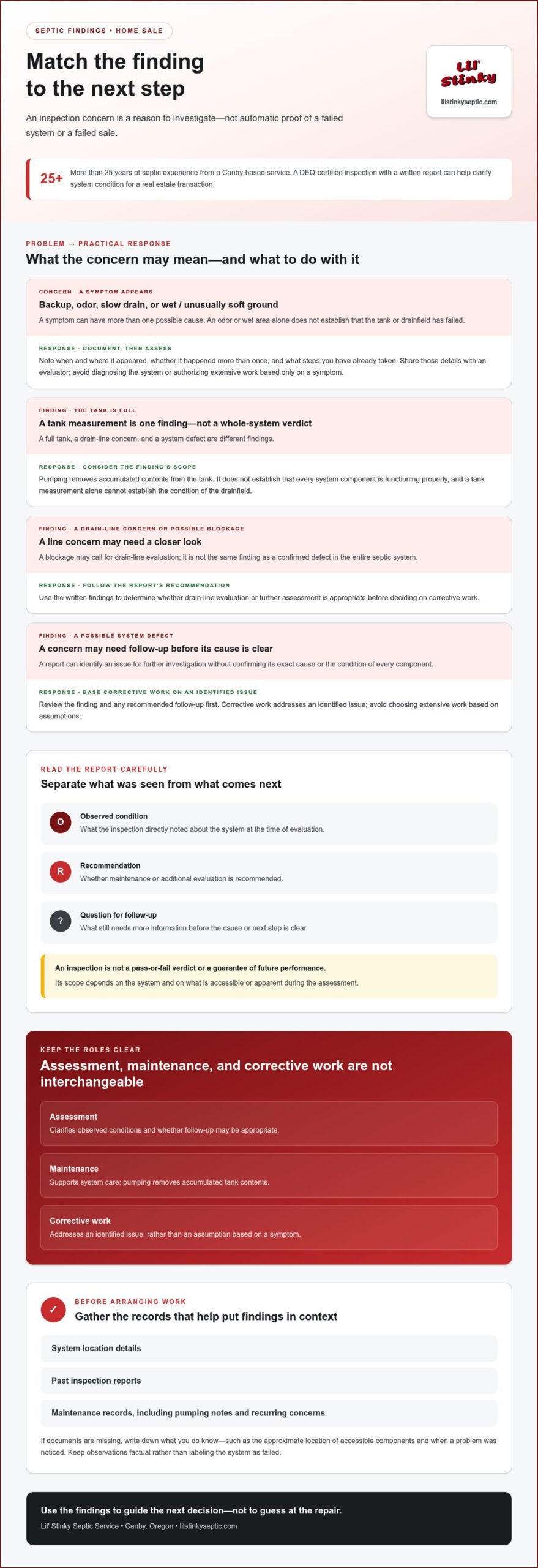
Concerns may come from a buyer’s questions, an inspection, or your own experience. Examples include a backup, persistent odor, wet or unusually soft ground near the system, or a history of maintenance issues. Note when and where a concern appeared, whether it has happened more than once, and what steps you’ve already taken. Those details can help an evaluator focus the assessment.
Symptoms aren’t a diagnosis. An odor or slow drain can have more than one possible cause, and a wet area alone doesn’t establish that a tank or drainfield has failed. Avoid telling a buyer that the system is fine or authorizing extensive work based only on a symptom. A qualified assessment can help determine whether the concern points to a system issue, needs further evaluation, or calls for a different response.
Why early clarity helps sellers and buyers
Clear findings give both sides a more useful basis for discussion. Instead of debating what a symptom might mean, you can share what was observed and whether follow-up was recommended. That helps transaction participants ask focused questions and consider next steps within their schedules. An assessment doesn’t guarantee a particular sale outcome, but it can replace guesswork with information.
Before arranging work, gather the records you already have. Look for system location details, prior inspection reports, and maintenance records, including notes about pumping or recurring concerns. If documents are missing, record what you do know, such as the approximate location of accessible components and when a problem was noticed. Keep observations factual rather than labeling the system as failed.
For Canby sellers, septic matters fall within Clackamas County’s onsite wastewater context. Requirements can depend on the property and the work being considered, so don’t assume a particular permit or transaction rule based only on a symptom. First establish the system’s condition and the scope of any proposed next step. That sequence helps you respond proportionately and gives buyers clearer records to review.
How a Septic Inspection Identifies What Needs Attention
A septic inspection assesses the system’s condition at the time of evaluation. It can help you understand what was observed and whether maintenance or further evaluation may be appropriate. An inspection isn’t a guarantee of future performance, and its scope depends on the system and the conditions found.
That distinction matters during a sale. A report may identify a concern that calls for more investigation, but that doesn’t automatically confirm a major defect or establish that every part of the system is working as intended. If you’re considering “fixing septic system for home sale Canby,” use the findings to guide the next decision rather than treating an inspection as a pass-or-fail verdict.
What an inspection can clarify for a home seller
An inspection can give you a clearer account of observed conditions and indicate whether maintenance or additional evaluation is recommended. Its scope can vary with the system type and what’s accessible or apparent during the assessment, so don’t assume every inspection follows an identical checklist. A DEQ-certified inspection with a written report can help communicate findings in a real estate transaction. Lil’ Stinky Septic Service provides these inspections and reports.
The written record separates what was observed from what may need follow-up. For background on how wastewater moves through the tank and drainfield, the EPA’s guide to How a Septic System Works explains the main components. Understanding how they work together helps explain why one observation doesn’t necessarily describe the condition of the entire system.
How to read findings without jumping to conclusions
Read the report closely. Note whether a statement describes a direct observation, a recommendation, or a question that requires additional evaluation. Those categories aren’t interchangeable. For example, a report may identify a concern that warrants follow-up without confirming its exact cause. Use the report’s specific language to identify what information is still needed.
A full tank, a drain-line concern, and a system defect are different findings with different possible next steps. Pumping removes accumulated contents from the tank, but it doesn’t establish that every component functions properly. A blockage may call for drain-line evaluation, while a tank measurement alone can’t establish the condition of the drainfield. Assessment, maintenance, and corrective work serve different purposes: assessment clarifies conditions, maintenance supports system care, and corrective work addresses an identified issue.
Before authorizing work, match the action to the documented finding. If a report recommends further evaluation, treat it as a distinct next step, not proof of a confirmed failure. Lil’ Stinky Septic Service’s DEQ-certified septic inspections include written reports for real estate transactions, giving sellers a practical record to review and share as discussions progress.
Repair, Pumping, or Further Evaluation: Match the Response to the Finding
A septic finding doesn’t point to one universal fix. A full tank, a drain-line blockage, and a suspected system or drainfield defect are different situations. Let the inspection report guide the next step. Pumping can help when the tank needs it, but it won’t repair every septic problem or confirm that the rest of the system is functioning properly.
Use the table as a starting point, not a diagnosis. The appropriate action depends on the system and the conditions observed.
| Finding | Possible next step | Documentation to retain |
|---|---|---|
| Tank condition indicates it’s full or due for maintenance | Arrange septic tank pumping as appropriate | Service record and date of pumping |
| Slow drainage or a reported blockage points to a line-flow concern | Evaluate the drain line; drain cleaning may be relevant if a blockage is identified | Assessment notes and drain-cleaning record, if completed |
| Findings raise concern about system or drainfield performance | Seek condition-specific evaluation before choosing corrective work | Inspection report, follow-up findings, and records of any work |
| System-level concerns indicate that design or installation may need consideration | Explore a site-appropriate design or installation plan | Written plans and records related to completed work |
When pumping or drain cleaning may be relevant
Pumping removes accumulated contents from a tank. It may be appropriate when the tank’s condition indicates a need for maintenance, but it doesn’t establish that the drain lines or drainfield are in good condition. Drain cleaning addresses line-flow concerns; it isn’t a universal remedy for system defects. Sellers comparing these options can review this septic tank pumping guide for more context.
Keep the record specific: note what service was performed and retain the paperwork. If symptoms continue after pumping or line work, don’t assume the concern is resolved. Use the inspection findings and any new observations to determine whether further evaluation is appropriate.
When findings point to design, installation, or more assessment
Some concerns call for more than routine maintenance. If findings suggest a system-level issue, additional assessment can help establish whether design or installation should be considered and what may suit the site. An alternative treatment technology (ATT) is one possible system category, not a default solution for every property. A septic installation planning guide can help sellers understand the planning context without assuming a particular outcome.
For fixing septic system for home sale Canby, base the next step on documented conditions, then keep the report and service records together for transaction discussions. A clear paper trail shows what was observed and what actions followed, without suggesting that pumping, cleaning, or installation guarantees future performance.
A Practical Canby Seller Checklist for Septic Work and Records
Preparation can make a septic assessment and any follow-up easier to manage. Keep the process in order: gather what’s available, understand the findings, then decide what work fits. This creates a clear record of what was known and what was done, without assuming that one document guarantees a buyer’s or lender’s acceptance.
- Collect existing records. Gather system location details, prior inspection reports, pumping records, maintenance notes, and system plans if you have them. Make a short list of recurring symptoms or past service so the inspector has relevant background.
- Arrange an assessment. Share the available records and identify known access points, such as tank covers. Keep components accessible, and avoid covering or obstructing them before the assessment.
- Review the findings. Read the written report carefully. Separate direct observations from recommendations for follow-up, and note questions that need clarification before you decide on work.
- Complete appropriate work. Match the next step to the documented condition. Pumping, drain cleaning, and further system evaluation address different concerns, so don’t treat one service as a fix for every finding.
- Retain the paperwork. Save the inspection report and records for any completed service. Keep the documents together so you can provide a clear history during transaction discussions.
Prepare the property and records before assessment
Before the assessment, collect prior inspection reports, pumping records, and system plans if available. Mark known access points on a simple property sketch or explain where they are, and share relevant history such as recurring backups or past maintenance. Don’t guess at hidden component locations. Leave known access areas clear so they can be reached, and avoid landscaping or storing materials over them beforehand.
Keep clear documentation after work
After service, retain written findings and records showing what was completed. Keep pumping and drain-cleaning documentation with the inspection report. If line flow is the concern, this septic drain cleaning guide offers related context. If design, permitting, or installation applies, keep the associated records as well. Requirements may depend on the transaction and jurisdiction, so verify current Oregon and local rules rather than relying on assumptions.
For fixing septic system for home sale Canby, organized records help you explain the sequence from assessment to follow-up. Keep copies together, note service dates, and share the documents through the appropriate transaction channels. They can show what was evaluated and what work was completed, but they don’t guarantee a particular buyer or lender decision.
For a documented starting point, schedule a septic inspection with Lil’ Stinky Septic Service, which provides DEQ-certified inspections and written reports for real estate transactions.
Get a Certified Septic Inspection for Your Canby Home Sale
A clear, written inspection report gives sellers and transaction participants a practical record of the septic system’s assessed condition. It can help you understand what was observed and whether maintenance or further evaluation should be considered. It isn’t a promise that the system will have no future problems or that a buyer or lender will accept a particular finding.
Lil’ Stinky Septic Service provides DEQ-certified septic inspections and written reports for real estate transactions. Based in Canby, the locally owned company brings more than 25 years of experience to septic service and is a licensed contractor, CCB #189693. If you’re fixing septic system for home sale Canby, a documented assessment is a practical starting point for deciding what to do next.
Schedule a septic inspection for your home sale to get a written assessment for your transaction.
What to expect from a sale-related inspection report
Use the report as a record of findings, not a guarantee of future performance. Its value is in helping you understand the assessment and distinguish an observation from a recommendation for maintenance or additional evaluation. The appropriate scope depends on the system and observed conditions, so don’t assume every report covers an identical checklist or meets every buyer’s expectations.
Read the findings alongside the system’s available history. If a report identifies a concern, note whether it calls for maintenance, additional assessment, or other follow-up. Keep the report with prior records and share it through the appropriate transaction channels. For background on certified inspections in Oregon, see this certified Oregon septic inspection guide.
Choose the next step based on the documented findings
Once you have the written assessment, use its specific findings to plan relevant follow-up. A maintenance need may point toward pumping; a line-flow concern may make drain cleaning relevant. A system-level concern may call for further evaluation or consideration of design and installation needs. These options address different situations, so don’t assume one service will resolve every finding.
If a transaction is underway, arrange the inspection early enough to review the report and consider recommended next steps within your schedule. Avoid assuming a turnaround time or that a particular finding will determine the transaction outcome. Instead, keep communication grounded in the written assessment and retain records of any completed work. That gives buyers and other participants useful information without overstating what the inspection can establish.
Move Forward With a Clear Septic Plan
A home sale can bring plenty of moving parts, but uncertainty about the septic system doesn’t have to steer your decisions. Give yourself time to understand the findings and coordinate the next step with the people involved in the transaction. A measured plan keeps conversations focused on what’s documented rather than what someone fears might be wrong.
If you’re weighing fixing septic system for home sale Canby, make a clear assessment your next move before committing to work. A written record gives you a useful reference as you discuss the property and organize follow-up. It won’t dictate the buyer’s decision, but it can help you approach the process with better information and confidence.
Schedule a certified septic inspection for your Canby home sale and take the next step with a clearer picture of the system. Ground your decisions in documented findings and keep the report available as the sale moves forward.
Frequently Asked Questions
Do I have to fix a septic system before selling a house in Oregon?
Oregon doesn’t require a septic inspection statewide just because a home is being sold, but that alone doesn’t determine whether a seller must address a particular issue. Your obligations may depend on the sale agreement, the system’s condition, and applicable local requirements. Review the written findings and transaction terms before deciding. For a Canby property, verify current requirements with the appropriate local authority rather than relying on a general rule.
What happens if a septic inspection finds a problem before closing?
The finding becomes a point for the buyer and seller to address through the transaction, but it doesn’t automatically cancel the sale. First, identify whether the report records an observed condition, recommends follow-up, or calls for additional evaluation. Then share relevant documentation and discuss options within the sale agreement. For example, a buyer may request more information about a specific concern, while the seller may provide service records or arrange further assessment.
Can pumping a septic tank fix a failed inspection?
Pumping can remove accumulated contents from a tank that needs it, but it doesn’t fix every reason an inspection raises concern. It doesn’t establish that a drain line or drainfield is functioning properly, either. If a report identifies a separate issue, keep the pumping record and follow the report’s recommended next step. Treat pumping as a specific maintenance action, not proof that every finding has been resolved.
How do I know whether a septic problem needs repair or further evaluation?
Use the report’s wording to distinguish a confirmed observation from a recommendation to investigate further. For instance, a documented line-flow concern and a suspected drainfield issue point to different questions and shouldn’t be treated as the same diagnosis. Clarify what evidence supports the finding and what remains uncertain. Then base any corrective work on the documented condition, not on a symptom or assumption alone.
Does a septic inspection report help with a home sale in Canby?
Yes. A written report gives transaction participants a record to discuss, though it can’t guarantee buyer or lender approval or predict future system performance. Lil’ Stinky Septic Service provides DEQ-certified inspections and written reports for real estate transactions. For fixing septic system for home sale Canby, that documentation can help you respond to specific questions with the assessment in hand instead of relying only on recollection or informal descriptions.
Can a septic issue delay closing on a home in Oregon?
It can affect the closing timeline if the buyer requests more information, the parties negotiate a response, or additional assessment or work needs coordination. The effect depends on the transaction and the finding, so there’s no single outcome for every sale. If a concern surfaces, share the report promptly with the relevant transaction participants and clarify what follow-up is being considered. Don’t assume that a finding automatically delays or prevents closing.
What septic records should I give a home buyer?
Share relevant records you have, such as inspection reports, pumping and maintenance documentation, system plans, and paperwork for completed drain cleaning or installation work. Include dates and service descriptions so the buyer can follow the system’s history. If records are missing, say what you know without guessing about past work or system condition. Keep copies for your files and provide documents through the transaction’s agreed process.