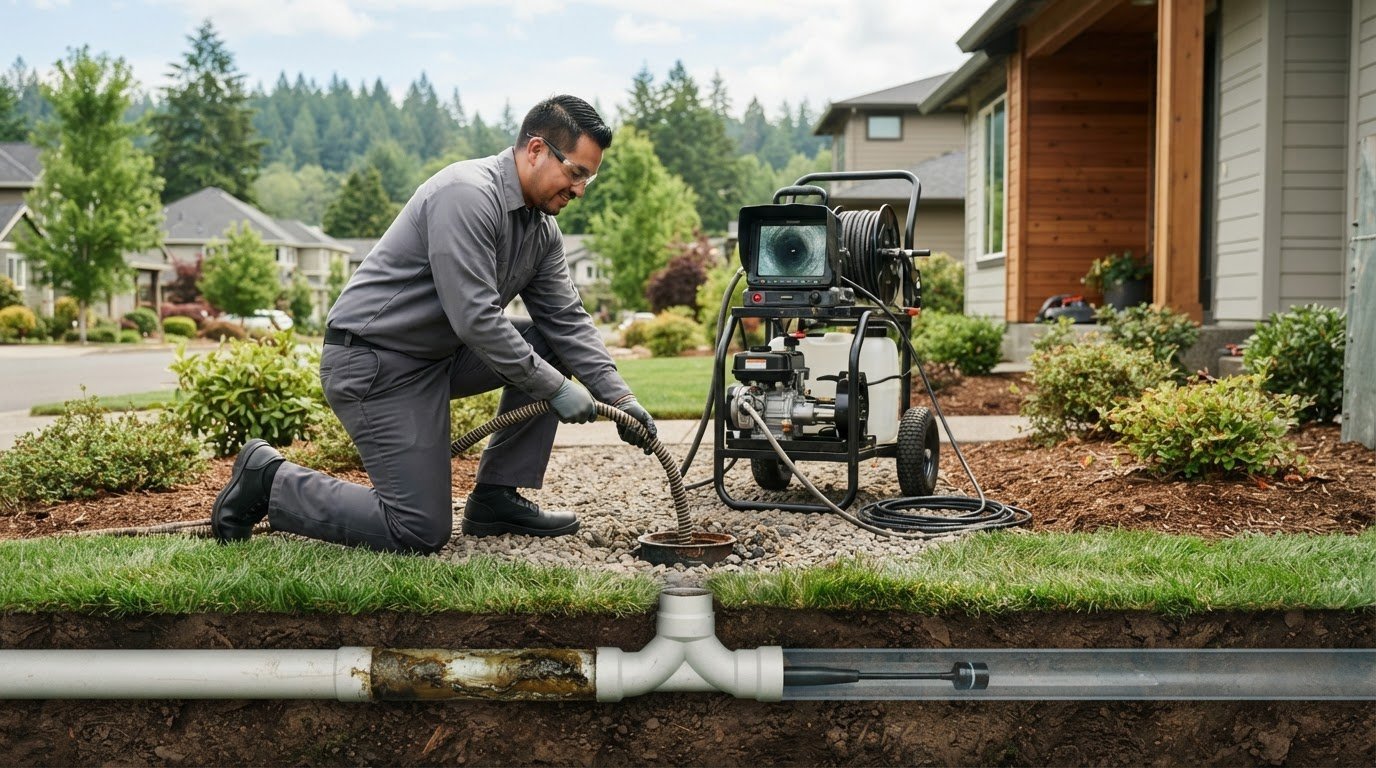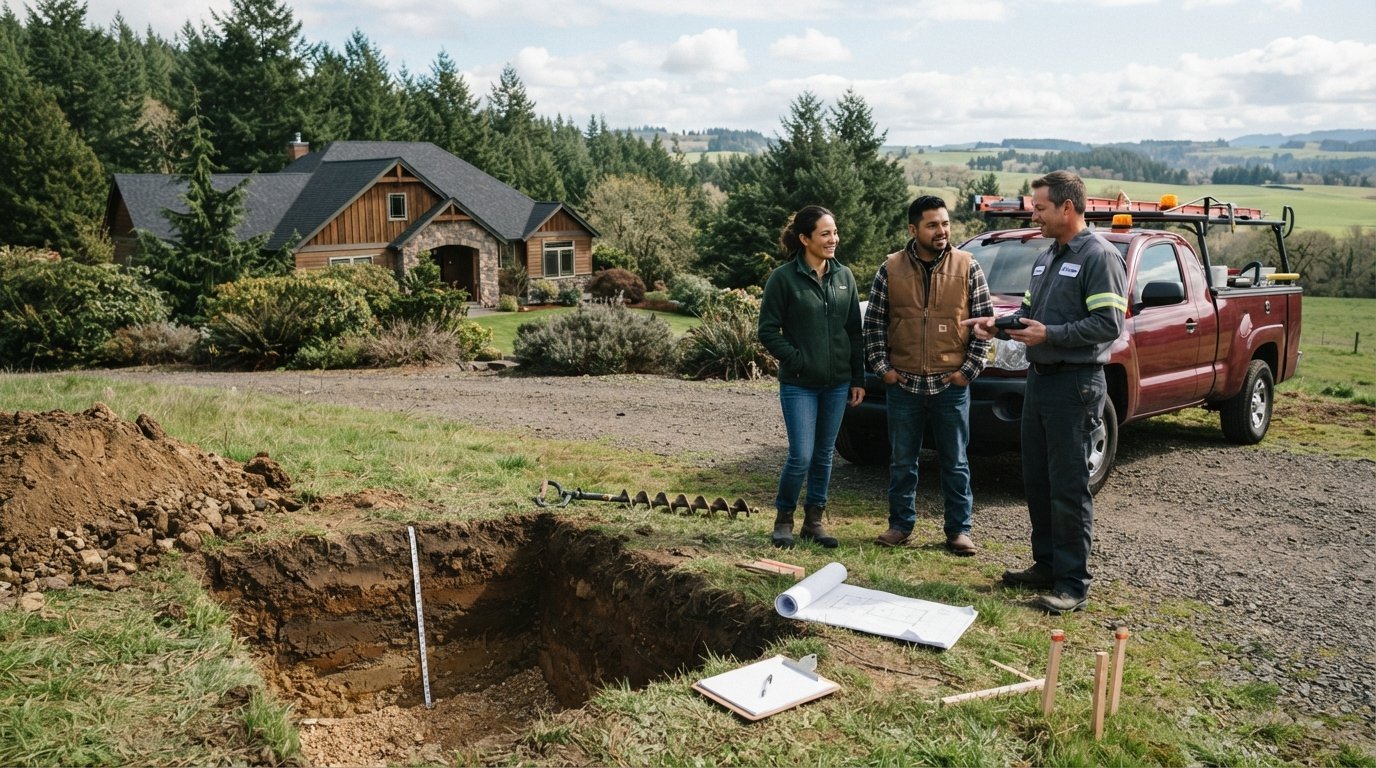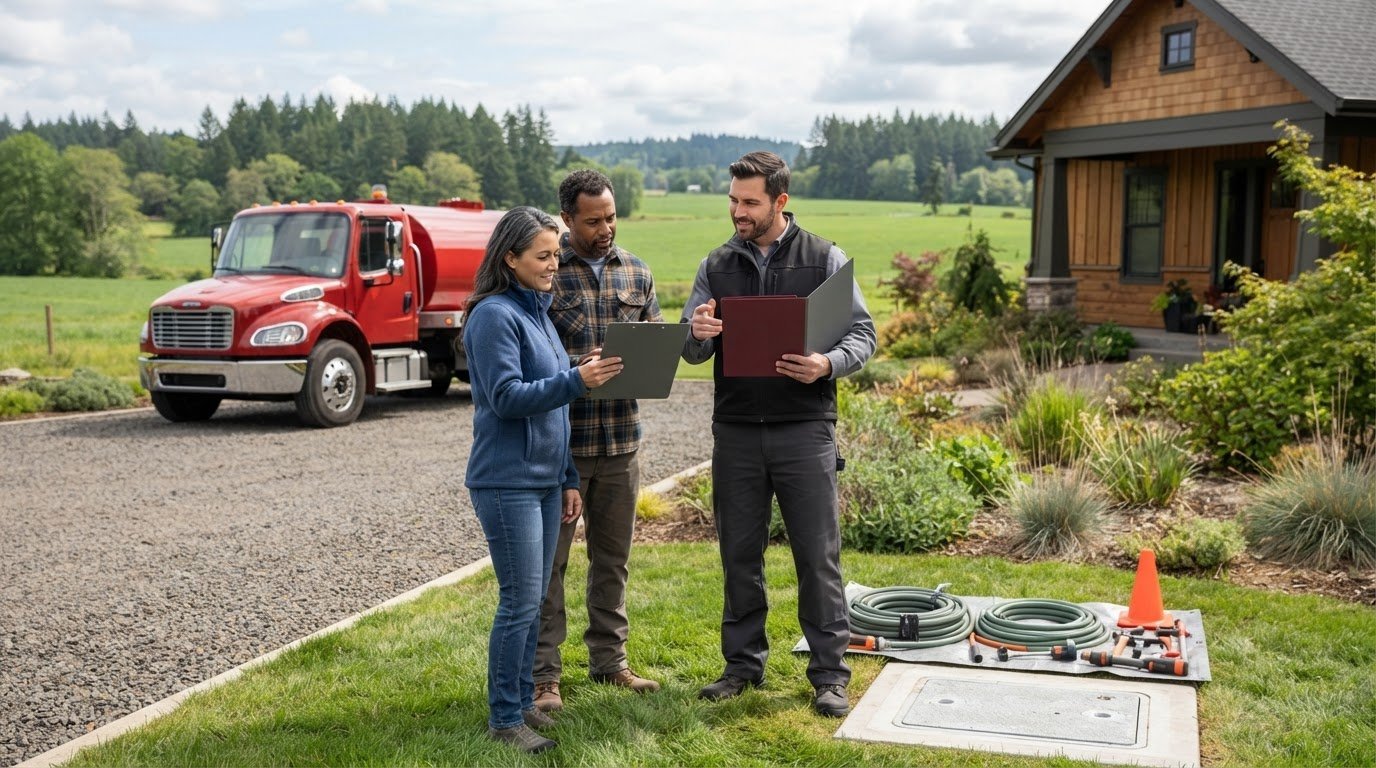
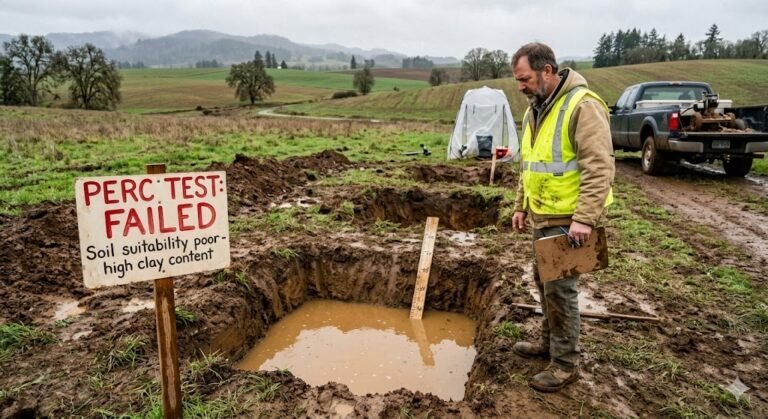
A failed perc test in Yamhill County does not mean your land is unbuildable or that your project is over. In many cases, homeowners and developers still have viable paths forward through alternative septic solutions, including state-approved Advanced Treatment Technology (ATT) systems that are specifically designed for sites where conventional systems cannot be installed.
Yamhill County’s soil conditions, particularly its heavy clay content in many areas, make failed percolation tests fairly common. This can feel like a major setback, especially if you’ve already invested time and money into a property or development plan.
In this article, we cover what a perc test actually measures, why failures happen, what your options are, and how ATT systems work as a legitimate and often highly effective alternative. Whether you’re a homeowner, builder, or real estate professional, understanding these options can help you make informed decisions and move forward with confidence.
Understanding Perc Tests in Yamhill County
In Yamhill County, a perc test is one of the first hurdles a property owner faces when planning a septic system. Knowing what the test measures, why it fails, and what the county requires helps you make informed decisions from the start.
What Is a Perc Test?
A percolation test — commonly called a perc test — measures how quickly water absorbs into the soil at a given site. We use this data to determine whether the soil can adequately filter wastewater from a conventional septic drain field.
The test involves digging test holes, saturating them with water, and timing how fast the water level drops. Results are expressed in minutes per inch (MPI).
| MPI Result | Soil Classification |
| 1–30 MPI | Suitable for conventional systems |
| 31–60 MPI | Marginal; may require alternatives |
| 61+ MPI | Failing; conventional systems not permitted |
Yamhill County uses these results alongside soil profile evaluations conducted by a licensed soil scientist or registered engineer before any septic permit is issued.
Why Perc Tests Fail
Most perc test failures in Yamhill County come down to soil composition. The county has significant areas with heavy clay soils, particularly in the Willamette Valley lowlands, where slow drainage is common.
The most frequent causes of failure include:
- Clay-heavy soil that absorbs water too slowly
- Shallow restrictive layers such as hardpan or fragipan beneath the surface
- Seasonal high water tables, especially on properties near the South Yamhill or North Yamhill rivers
- Compacted soils from prior agricultural use
A failing result doesn’t mean the land is unbuildable. It means a conventional gravity-fed drain field is not an approved option under current conditions.
Regulatory Landscape and Requirements
Yamhill County operates under Oregon Administrative Rules (OAR) Chapter 340, Division 71, which governs onsite wastewater treatment systems statewide. The county’s Environmental Health division administers these rules locally.
Before any construction permit is issued, the county requires:
- A site evaluation from a licensed site evaluator
- Submission of soil logs and perc test results
- Approval of a system design that meets the site’s specific conditions
If a conventional system cannot be approved, Oregon rules allow for alternative treatment technology (ATT) systems to be considered. We must submit a site-specific design prepared by a licensed engineer for county review before any ATT installation can proceed.
Challenges of a Failed Perc Test
A failed perc test in Yamhill County can block property development, expose the limitations of standard septic designs, and become significantly more complicated when soil conditions like clay or a high water table are involved.
Impacts on Property Development
A failed perc test doesn’t just delay a project — it can halt it entirely. In Yamhill County, a passing percolation test is required before the county will approve a conventional septic permit. Without that approval, a building permit for a new home or structure typically cannot move forward.
The financial impact is real. We’ve seen buyers walk away from land purchases after a failed test, and sellers face reduced property values or deals that fall apart at closing. In some cases, a parcel that seemed buildable becomes classified as unbuildable under standard methods.
Key development impacts include:
- Loss of financing or construction loan eligibility
- Reduced resale or appraised land value
- Delays of months while exploring alternative permitting paths
- Potential rezoning or use restrictions on the parcel
Septic Limitations for Small Lots
Standard gravity-fed septic systems require a substantial drainfield — often 1,000 to 2,500 square feet or more depending on soil type and household size. On smaller lots, that footprint simply isn’t available.
Yamhill County parcels under one acre face this regularly. Even if the soil absorbs some water, the available area may not meet the minimum required for a conventional system. This creates a situation where the soil isn’t the only problem — the geometry of the lot is.
A small lot with borderline soil absorption can fail not because drainage is impossible, but because there isn’t enough usable land to spread the effluent load across a compliant drainfield area.
Dealing With High Water Table or Clay Soil
Yamhill County’s Willamette Valley soils are frequently clay-heavy. Clay absorbs water slowly and can become nearly impermeable when saturated. During wet winters, the water table in low-lying areas rises significantly, leaving little vertical separation between the surface and groundwater.
Oregon’s DEQ requires a minimum 36-inch separation between the bottom of a drainfield and the seasonal high water table. In clay-dominant soils with a shallow water table, meeting that standard through conventional means is often not possible.
| Soil/Site Condition | Why It Causes Failure |
| Clay-heavy soil | Slow absorption causes effluent to pool or back up |
| High seasonal water table | Insufficient separation from groundwater |
| Compacted subsoil | Limits downward percolation rate |
| Sloped terrain with shallow bedrock | Reduces available drainfield depth |
These conditions don’t necessarily mean a lot is unusable. They mean a conventional system isn’t the right tool for the site.
Exploring Alternative Septic Solutions
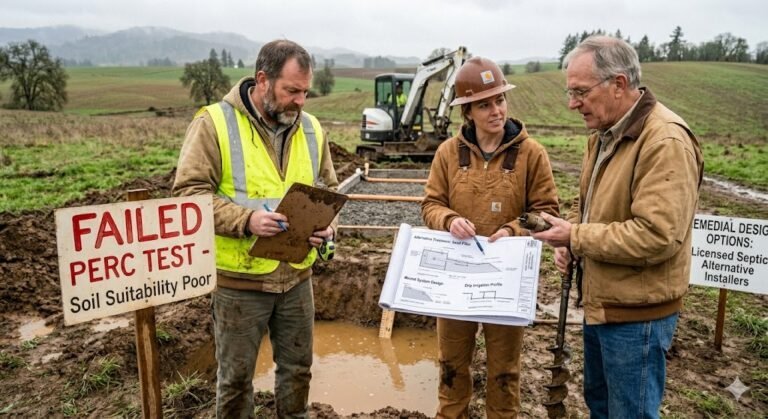
When a perc test fails in Yamhill County, a conventional septic system is no longer on the table — but that doesn’t mean construction or development has to stop. Alternative systems exist specifically for sites where soil conditions, lot size, or drainage rates make standard systems unworkable.
Conventional vs. Alternative Systems
A conventional septic system relies on the soil absorbing and filtering wastewater through a drain field. When the perc test fails, it means the soil can’t do that job adequately — either it drains too slowly (clay-heavy soils common in Yamhill County) or too quickly.
| Feature | Conventional System | Alternative System |
| Soil requirement | Must pass perc test | Designed for poor or failing soils |
| Treatment level | Primary/secondary | Secondary or advanced |
| Installation cost | Lower upfront | Higher upfront, more reliable on problem sites |
| Flexibility | Limited | Works on more site types |
Alternative systems use engineered components to treat and distribute wastewater in ways that don’t depend on ideal soil conditions.
When Alternative Systems Are Needed
Yamhill County’s mix of clay soils, rolling terrain, and seasonal high water tables puts many properties in a difficult position. A failed perc test is the most direct trigger, but alternative systems are also required when:
- Lot size is too small for a standard drain field setback
- Seasonal saturation raises the water table above usable depth
- Slopes or terrain restrict drain field placement
- Replacement systems are needed on existing developed lots
Oregon’s DEQ and Yamhill County Environmental Health both allow approved alternative systems as a compliant path forward on these sites.
Advanced Treatment Technology (ATT) Systems: A Superior Solution
A failed perc test in Yamhill County doesn’t have to end your project. ATT systems are engineered specifically for sites where soil conditions prevent conventional septic systems from functioning safely or legally.
What Sets ATT Systems Apart
Conventional septic systems rely entirely on the surrounding soil to filter and absorb wastewater. When that soil is clay-heavy, compacted, or has a shallow water table — all common conditions in Yamhill County — a standard system simply cannot process effluent safely.
ATT systems treat wastewater before it ever reaches the soil. This means the effluent dispersed into the drain field is significantly cleaner, reducing the demand placed on native soils.
Key differences include:
- Treatment level: ATT systems produce secondary or tertiary treated effluent vs. primary treatment from conventional systems
- Footprint flexibility: Smaller drain fields are often possible because the effluent quality is higher
- Regulatory compliance: ATT systems meet Oregon DEQ standards for sites that cannot support conventional systems
- Monitoring: Most ATT systems include built-in alarms and require periodic maintenance contracts
How ATT Works for Difficult Soils in Yamhill County
Yamhill County’s soils — particularly in rural areas around McMinnville, Carlton, and Sheridan — frequently contain heavy Jory and Willakenzie series soils with poor drainage. These soils absorb water slowly, which is exactly the problem a perc test measures.
An ATT system addresses this by using a multi-stage treatment process:
- Primary treatment — Solids settle in a standard septic tank
- Secondary treatment — A treatment unit (such as a media filter or aerobic processor) breaks down organic matter
- Dispersal — Pre-treated effluent is distributed through a drip irrigation system or shallow pressure-dosed drain field
Because the effluent entering the soil is already largely treated, it doesn’t require the same absorption rate that failed the original perc test. We can work with reduced hydraulic loading rates that poor soils can handle.
Benefits for Homeowners and Builders
| Benefit | Detail |
| Site viability | Turns a non-buildable lot into a buildable one |
| Property value | Preserves or increases land value after a failed perc test |
| Environmental safety | Reduced nitrogen and pathogen levels protect local waterways |
| Long-term reliability | Engineered components with consistent performance standards |
For builders working on subdivisions or multi-lot developments in Yamhill County, ATT systems can be the difference between a project moving forward or stalling entirely.
Real-World Success Stories
We’ve seen ATT systems approved and installed on rural residential lots in the Chehalem Mountains area where perc tests failed due to shallow restrictive layers above bedrock. A drip dispersal ATT system allowed a 2-acre parcel to receive a building permit that would otherwise have been denied.
In another case near Newberg, a homeowner with a 1.5-acre lot and a seasonal high water table used a recirculating textile filter ATT system. It met DEQ’s strict effluent standards and was installed within the required setbacks — something a conventional system could never have achieved on that site.
Steps to Move Forward After a Failed Perc Test
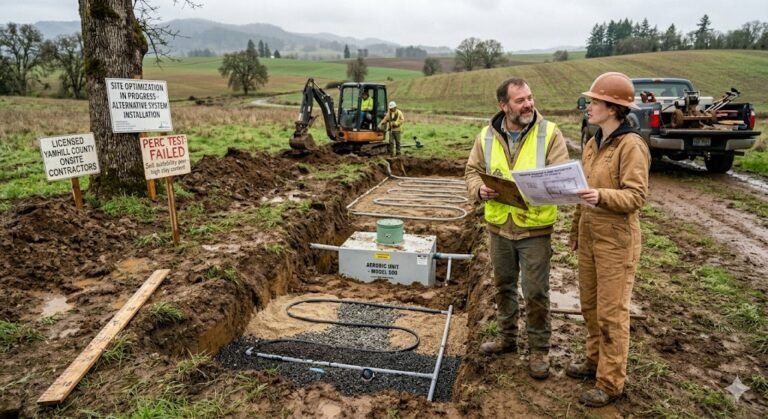
A failed perc test in Yamhill County doesn’t mean the property is unbuildable — it means the path forward requires more deliberate steps, including a thorough site evaluation, professional guidance, and the right permit approvals.
Initial Site Assessment
After a failed perc test, the first step is understanding why the soil failed. Common causes in Yamhill County include clay-heavy soils, high seasonal water tables, and shallow bedrock — each of which points toward a different solution.
We recommend requesting a detailed soil morphology report from a licensed soil scientist or Oregon DEQ-certified evaluator. This goes beyond the standard perc test and examines soil texture, structure, and depth to restrictive layers.
Key data points gathered during this phase:
- Soil percolation rate (minutes per inch)
- Depth to seasonal high water table
- Presence of clay pans or hardpan layers
- Available drain field area on the lot
This information directly determines which alternative system types are viable and what the designer will need for permitting.
Consulting With a Septic Professional
Once the site data is in hand, we bring in an Oregon-licensed onsite systems designer or professional engineer. They interpret the soil report and identify systems that meet both DEQ standards and site-specific conditions.
In Yamhill County, designers frequently work with ATT (Advanced Treatment Technology) systems, mound systems, and drip irrigation systems for sites with failed conventional perc results. The designer’s job is to match the right system to your specific soil profile and lot layout.
Bring the following to your initial consultation:
- Soil morphology report
- Property survey or plat map
- Intended use of the structure (bedroom count, daily flow estimate)
- Any prior system applications or test results
Choosing a designer familiar with Yamhill County’s DEQ office speeds up the permitting process considerably.
Permitting and Design Considerations
Yamhill County septic permits are issued through the Oregon DEQ’s onsite program. After a failed perc test, the application must include an engineered system design rather than a standard site evaluation form.
The permit application typically requires:
| Document | Purpose |
| Soil morphology report | Confirms site limitations |
| Engineered system design | Shows DEQ the proposed solution |
| Site plan with setbacks | Verifies compliance with lot requirements |
| Operation and Maintenance agreement | Required for ATT and alternative systems |
Review timelines at the Yamhill County DEQ office can range from 4 to 12 weeks depending on system complexity and application volume.
Installation and Long-Term Maintenance
Installation must be performed by a DEQ-licensed installer using the approved engineered design. Deviating from the approved plan — even slightly — can void the permit and trigger re-inspection requirements.
Alternative systems, particularly ATT systems, require a formal Operation and Maintenance (O&M) contract with a certified service provider. In Oregon, this is a legal condition of the permit, not optional.
Typical maintenance obligations include:
- Quarterly or semi-annual inspections of mechanical components
- Annual effluent sampling to verify treatment performance
- Alarm monitoring for systems with pumps or aerators
- Reporting to DEQ if performance thresholds aren’t met
Budgeting $300–$600 per year for routine maintenance is a realistic baseline for most ATT systems in Yamhill County.
Common Misconceptions About ATT and Alternative Systems
ATT systems are often misunderstood — many property owners assume they cost more, hurt resale value, or demand constant upkeep, but the reality is more nuanced than that.
Are ATT Systems More Expensive?
The upfront cost of an ATT system is typically higher than a conventional septic system. In Yamhill County, a standard gravity-fed septic system might run $8,000–$15,000, while an ATT system can range from $15,000–$30,000 depending on site conditions and system type.
However, when a perc test fails, a conventional system is simply not an approved option. The real cost comparison isn’t ATT vs. conventional — it’s ATT vs. an unbuildable or unsellable lot.
- Without ATT: No permit, no development, no sale
- With ATT: The property becomes viable and usable
Framed that way, the investment is straightforward.
Will They Affect Property Value?
A common concern is that having an ATT system will flag a property as problematic during a sale. In practice, the opposite is often true. A permitted, properly installed ATT system demonstrates that the septic challenge has been resolved, not ignored.
Buyers and lenders are more cautious about properties with no approved wastewater solution than they are about properties with a functioning alternative system. Oregon requires ATT systems to be inspected and maintained under a formal service contract, which actually gives buyers documented proof that the system is being managed responsibly.
A permitted ATT system on record is a selling point, not a liability.
Do ATT Systems Require More Maintenance?
ATT systems do require scheduled maintenance — typically quarterly or semi-annual inspections by a licensed service provider. This is a real commitment. Oregon DEQ mandates ongoing service contracts for most ATT systems, so this isn’t optional.
That said, the maintenance process is straightforward:
| Task | Frequency |
| System performance inspection | Every 3–6 months |
| Effluent quality monitoring | Per DEQ service contract |
| Component checks (pumps, alarms) | Each service visit |
The maintenance cost averages $300–$600 per year. For a system that makes an otherwise undevelopable property usable, most owners find that trade-off entirely reasonable.
Conclusion and Next Steps
A failed perc test in Yamhill County is not the end of the road for your property. There are real, code-compliant pathways forward — and ATT systems are one of the most reliable among them.
Here is a clear picture of where to focus your energy:
- Consult a licensed Oregon onsite system designer who understands Yamhill County’s specific soil and setback requirements
- Request a site evaluation to determine which alternative system type suits your lot conditions
- Review your timeline and budget early, since ATT systems require more planning than conventional septic
- Contact the Yamhill County Environmental Health department to understand permit requirements before breaking ground
ATT systems work where conventional systems cannot. If your soil has poor drainage, sits above a high water table, or simply failed the perc test, an ATT system processes wastewater to a higher standard before it ever reaches the ground. That is what makes them a practical fit for difficult sites.
We encourage you not to let a failed test stall your project indefinitely. Getting the right professional involved early can save months of back-and-forth with the county.
| Next Step | Who to Contact |
| Site evaluation | Licensed onsite system designer |
| Permit questions | Yamhill County Environmental Health |
| ATT system options | Certified ATT installer or designer |
| Financing or timeline planning | Your contractor or project manager |
Reach out to us today to discuss your site conditions and find the right path forward.
Frequently Asked Questions
Soil conditions in Yamhill County create specific hurdles for property owners, and understanding the technical and regulatory details behind alternative septic options can make the difference between a buildable lot and a stalled project.
What does it mean when a soil site evaluation indicates the drainfield area will not absorb water fast enough?
A soil site evaluation measures how quickly water moves through the ground using a percolation test or a soil morphology assessment. When results show absorption rates are too slow, it means the native soil cannot adequately filter and disperse treated wastewater at the volume a household produces.
In Yamhill County, slow absorption typically results from clay-heavy soils or compacted layers that restrict downward water movement. Oregon DEQ uses these results to determine whether a standard drainfield can be permitted on that parcel.
Which property factors most commonly prevent approval of a standard septic drainfield in this region?
The most common factors include clay soils, shallow bedrock, seasonal high water tables, and insufficient lot size to accommodate required setbacks and reserve drainfield areas. Yamhill County’s Chehalem Mountains and valley floor properties frequently present combinations of these conditions.
Steep slopes can also limit where a drainfield can be placed. Even if soil absorption rates are marginally acceptable, a property may still fail approval if the usable area is too small to meet Oregon’s minimum square footage requirements for a conventional system.
What alternative onsite wastewater options are typically considered when a conventional system is not feasible?
Oregon DEQ recognizes several alternative systems when conventional drainfields are not approvable. The most common options considered in Yamhill County include mound systems, pressure distribution systems, and ATT (Advanced Treatment Technology) systems.
Mound systems raise the drainfield above native soil using imported fill material. Pressure distribution spreads effluent more evenly across a drainfield to prevent saturation. ATT systems treat wastewater to a higher standard before dispersal, which allows them to be used on sites where none of the other options would meet DEQ requirements.
How do advanced treatment systems improve effluent quality and expand siting options compared to a traditional septic tank and drainfield?
A conventional septic tank provides primary treatment — it separates solids and allows basic settling — but the effluent it discharges still contains significant biological and chemical contaminants. An ATT system adds secondary or tertiary treatment stages, such as aeration, filtration, or UV disinfection, producing effluent that is substantially cleaner before it ever reaches the soil.
Because the effluent quality is higher, Oregon DEQ allows ATT systems to operate with reduced setbacks and smaller drainfield areas. This matters directly on Yamhill County properties where space is limited or where soil conditions require treated effluent to meet stricter standards before dispersal.
ATT systems can also be permitted on sites with slower soil absorption rates that would disqualify a conventional system. The cleaner effluent places less biological demand on the soil, making marginal sites viable.
What permitting steps and professional reports are usually required before selecting and installing an alternative onsite system?
The process begins with a site evaluation conducted by an Oregon-licensed site evaluator or professional engineer. That evaluation produces a written report documenting soil conditions, absorption rates, seasonal water table depth, and available drainfield area, which is submitted to Yamhill County Environmental Health.
If a conventional system is not approvable, the designer — typically a licensed onsite system designer or PE — prepares an alternative system design that meets Oregon Administrative Rule Chapter 340, Division 071. Yamhill County reviews the design, and DEQ may need to be involved depending on the system type and site classification.
A construction permit is issued before any installation begins. After installation, a licensed installer must complete the work and a final inspection is required before the system can be placed into service.
How do installation costs, operating expenses, and maintenance responsibilities compare between alternative systems and conventional septic systems?
Conventional septic systems in Yamhill County generally range from $8,000 to $20,000 installed, depending on site conditions and drainfield size. ATT and other alternative systems typically cost more — often between $15,000 and $40,000 or higher — due to additional components, engineered designs, and more complex installation requirements.
Operating costs differ as well. Conventional systems require periodic pumping every 3–5 years, which averages $300–$500 per service. ATT systems require more frequent monitoring — often quarterly or semi-annual inspections by a licensed operation and maintenance provider — and may have annual O&M contract costs ranging from $400 to $800 or more.
Oregon requires ATT system owners to maintain a signed O&M service contract as a condition of their permit. That ongoing obligation is worth factoring into total cost of ownership, particularly for rural Yamhill County properties where service provider access may affect pricing.