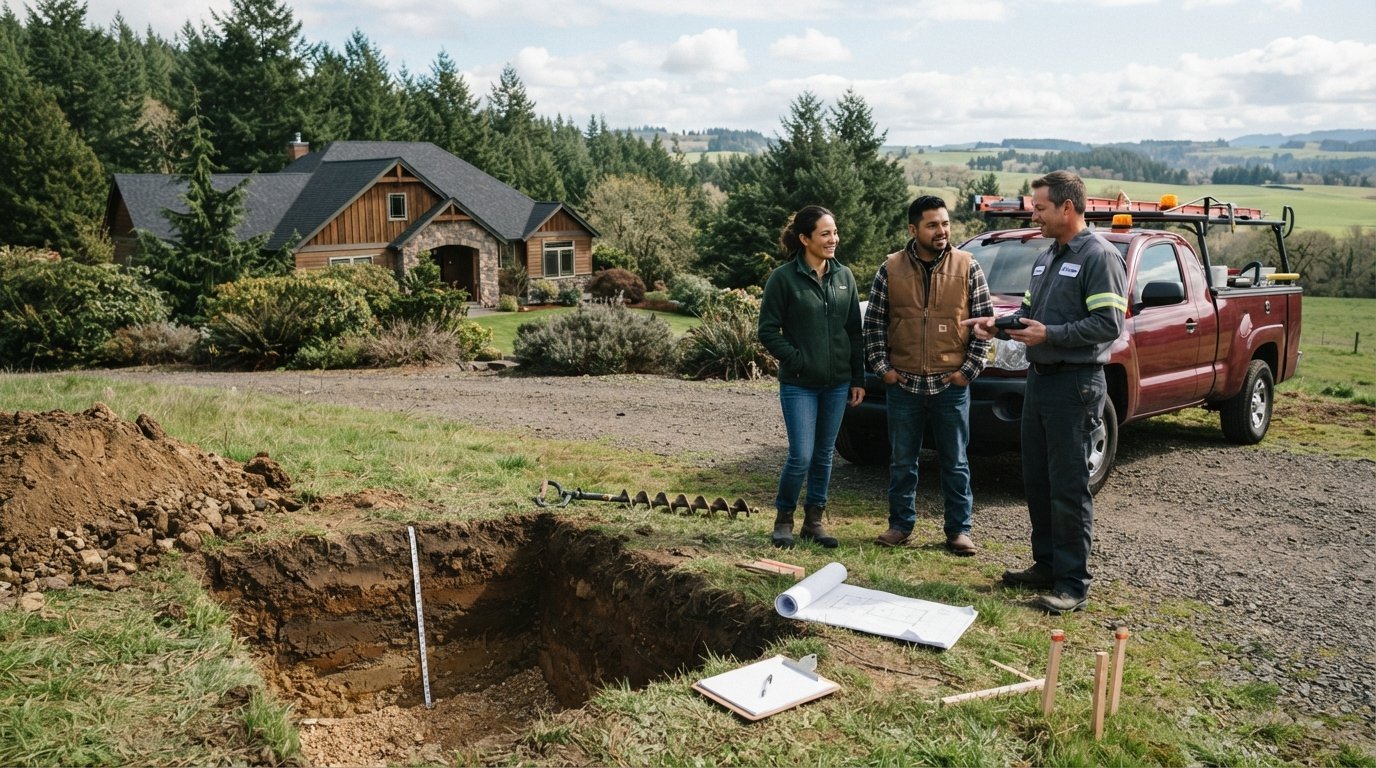
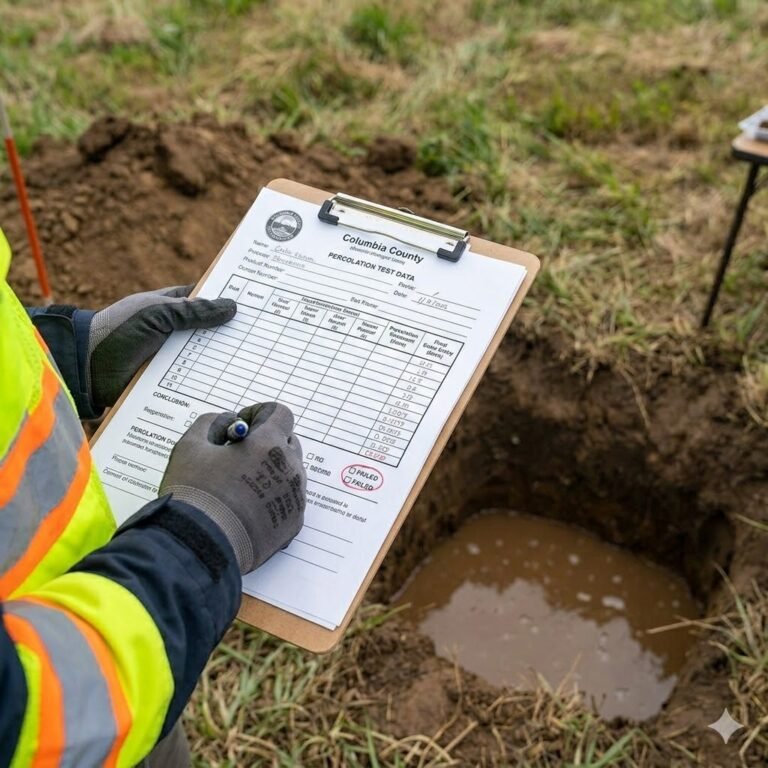
A failed perc test in Columbia County doesn’t have to mean the end of your property plans. If your land has failed a percolation test, you still have viable paths forward — including permitted alternative treatment technology (ATT) systems designed specifically for sites where conventional septic systems won’t work.
Columbia County has specific regulations governing onsite wastewater treatment, and navigating them after a perc test failure can feel overwhelming. We’ll walk you through exactly what a failed result means, what your options are, and how modern ATT systems have helped property owners move forward on sites that once seemed unbuildable.
From understanding why perc tests fail in the first place to selecting the right system and getting it permitted, we cover the full picture. Whether you’re a homeowner, a builder, or a real estate professional, this guide gives you the practical information you need to make informed decisions and keep your project on track.
Understanding Perc Tests and Their Importance
A perc test determines whether your land can support a conventional septic system — and in Columbia County, failing one doesn’t have to mean the end of your building plans.
What Is a Perc Test?
A percolation test, commonly called a perc test, measures how quickly water absorbs into the soil at a specific site. During the test, we dig test holes to a required depth, saturate them with water, and then measure how many minutes it takes for the water level to drop one inch.
This rate is expressed as minutes per inch (MPI). The result tells us whether the soil can adequately filter and absorb wastewater from a septic system.
| Result | Absorption Rate | Meaning |
| Pass | 1–60 MPI | Soil absorbs at an acceptable rate |
| Fail | >60 MPI or <1 MPI | Too slow or too fast for conventional systems |
Why Perc Tests Matter for Septic System Approval
In Columbia County, a passing perc test is required before the health department will approve a conventional septic system permit. Without it, construction cannot legally move forward on an unsewered lot.
The test protects public health by ensuring wastewater is properly filtered before it reaches groundwater. A system installed in poorly absorbing soil risks contaminating wells, streams, and neighboring properties.
For buyers and builders, the perc test is often a critical contingency in real estate transactions. A failed test can stall a sale, delay a build, or reduce a property’s perceived value — even when solutions exist.
Common Reasons for Perc Test Failure
Several soil and site conditions cause perc test failures in Columbia County:
- Heavy clay soil — absorbs water too slowly, often exceeding 60 MPI
- High water table — saturated soil cannot accept additional wastewater
- Compacted soil — reduces permeability, especially on previously developed lots
- Bedrock close to the surface — leaves insufficient depth for a drain field
- Seasonal saturation — some sites fail only during wet months due to rising groundwater
Clay soil is particularly common in parts of Columbia County, making perc test failures more frequent than many property owners expect.
Consequences of a Failed Perc Test in Columbia County
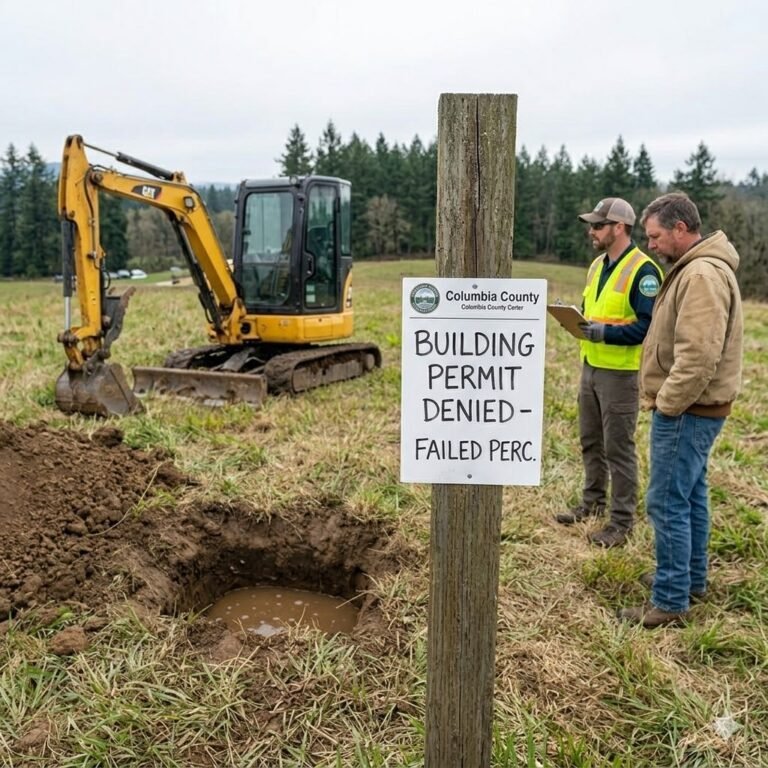
A failed perc test in Columbia County doesn’t just pause your project — it can block construction permits, complicate property sales, and reduce what buyers are willing to pay.
Immediate Impacts on Property Use
When a parcel fails a percolation test in Columbia County, the Health Department will not issue a septic system permit. Without that permit, no building permit can be approved for a home or structure requiring wastewater disposal.
This means construction must stop — or never begin. The land cannot be legally developed for residential use under conventional methods until a compliant wastewater solution is identified and approved.
In practical terms, you’re looking at project delays that can stretch from weeks to several months while alternatives are evaluated, tested, and submitted for approval.
What It Means for Homeowners and Builders
For homeowners, a failed perc test means the property cannot support a standard septic system. You’ll need to pursue an alternative — and that process involves additional soil evaluations, engineer involvement, and regulatory review.
For builders, the consequences are more immediate. Timelines shift, budgets expand, and contracts with buyers may fall through if a solution isn’t identified quickly.
Key challenges we often see include:
- Permit delays of 30–90+ days while alternative system designs are reviewed
- Additional engineering costs for soil assessments and system design plans
- Contract contingencies that give buyers the right to walk away
- Re-submission requirements if the first alternative proposal is rejected
Acting quickly and working with a licensed engineer familiar with Columbia County’s Health Department requirements is critical.
Potential Effects on Property Value
A failed perc test becomes part of the public record in many cases and must be disclosed during a property sale. This directly affects how buyers and lenders assess the land.
Undeveloped parcels with a failed test can sell for significantly less than comparable lots with approved septic permits — sometimes 20–40% lower depending on location and lot size.
Even if an alternative system can be installed, buyers may negotiate lower prices to offset the added cost and complexity. Lenders may also hesitate to finance construction on land without an approved wastewater solution in place.
Next Steps After a Perc Test Failure
A failed perc test in Columbia County doesn’t close the door on development — but it does require a clear, methodical response. Contacting the right authorities and taking a hard look at your soil data are the two most important actions you can take immediately.
Consulting With Local Health Departments
Our first call after a failed perc test should be to the Columbia County Environmental Health Department. They oversee on-site sewage permitting and can tell us exactly why the test failed and what alternatives are permitted on our specific parcel.
We should ask for:
- A written explanation of the failure reason
- A list of approved alternative system types for our soil conditions
- Information on the variance or waiver process, if applicable
- Any required waiting periods before retesting
Some failures are procedural rather than geological. If the test was conducted under poor conditions — saturated soil after heavy rain, for example — a retest may be authorized. The health department can confirm whether that’s an option in our case.
Reviewing Site Conditions and Soil Reports
After consulting with the county, we need to review the soil evaluation report from the original perc test. This document identifies the specific layers, percolation rates, and limiting conditions — such as clay hardpan or a seasonal high water table — that caused the failure.
Key details to look for in the report:
| Factor | What It Tells Us |
| Percolation rate | How quickly water moves through the soil |
| Soil texture/structure | Whether clay, silt, or rock is limiting drainage |
| Depth to water table | Whether groundwater is interfering with absorption |
| Soil horizon depth | How much usable soil depth is available |
We should bring this report to a licensed soil scientist or septic system designer. They can identify whether a site is a candidate for an ATT system or other engineered solution, even when a conventional drainfield isn’t viable.
Alternative Solutions for Onsite Wastewater Treatment
A failed perc test in Columbia County doesn’t mean a property is unbuildable. Understanding the limitations of conventional systems and knowing when to pursue alternatives can change the entire outcome for your project.
Conventional Septic System Limitations
A standard septic system depends on soil that absorbs and filters effluent at a specific rate. When a perc test fails, it means the soil can’t meet that standard — and forcing a conventional system into poor soil creates real problems.
Common reasons conventional systems fail or aren’t approved:
- Clay-heavy soil — absorbs water too slowly, causing effluent to pool or back up
- High water table — insufficient separation between the drain field and groundwater
- Limited lot size — not enough usable land for a full drain field footprint
- Shallow bedrock — prevents adequate soil depth for treatment
These aren’t edge cases in Columbia County. Clay soils and seasonal groundwater fluctuations are common across the region, which means many properties genuinely cannot support a conventional system.
When to Consider Alternative Septic Solutions
We recommend exploring alternatives any time a perc test fails or when site conditions indicate a conventional system is unlikely to be approved. Waiting for a second failed test only delays the project.
Situations that typically point toward alternative systems:
| Site Condition | Why It Matters |
| Percolation rate too slow | Drain field won’t function |
| Lot under 1 acre with poor soil | Insufficient space for conventional layout |
| Seasonal high water table | Risk of groundwater contamination |
| Steep or irregular terrain | Complicates drain field placement |
The earlier we identify these conditions, the sooner we can pursue a system designed to work with the site rather than against it.
ATT Systems: Advanced Options for Challenging Sites
A failed perc test doesn’t have to end your project. ATT systems are engineered specifically for sites where soil conditions, lot size, or groundwater depth make conventional septic systems impractical or impossible.
What Are Advanced Treatment Technology (ATT) Systems?
ATT systems are state-approved wastewater treatment systems that process sewage to a higher standard than a conventional septic tank before dispersing effluent into the soil.
Where a standard septic system relies almost entirely on the soil to filter waste, an ATT system does much of that treatment mechanically or biologically before the effluent ever reaches the ground. This means the soil doesn’t need to work as hard.
Common ATT system types include:
- Aerobic Treatment Units (ATUs) – inject oxygen to accelerate bacterial breakdown
- Drip irrigation systems – distribute treated effluent through shallow, pressurized tubing
- Mound systems – elevate the drain field above native soil using engineered fill
- Textile filter systems – use layered media to treat effluent before dispersal
Why ATT Systems Are Critical After a Failed Perc Test
When a perc test fails in Columbia County, it means the native soil cannot absorb wastewater at a rate acceptable for a conventional system. This is common in areas with heavy clay soils, shallow bedrock, or seasonally high water tables.
Without an alternative, the property cannot legally receive a septic permit. An ATT system is often the only path forward.
Columbia County’s health department will typically accept an ATT system as a permitted alternative when:
- The soil has a percolation rate slower than 60 minutes per inch
- Seasonal high water table is within 24 inches of the surface
- The available drain field area does not meet minimum square footage for a conventional system
How ATT Systems Outperform Conventional Septic Designs
The core advantage is that ATT systems don’t depend on native soil quality to achieve safe treatment. They treat wastewater before dispersal, which reduces the treatment burden placed on the soil significantly.
| Feature | Conventional Septic | ATT System |
| Soil dependency | High | Low |
| Effluent quality at dispersal | Basic | Advanced |
| Suitable for clay soil | No | Yes |
| Works on small lots | Limited | Yes |
| Requires monitoring | Minimal | Periodic inspection |
ATT systems do require a service contract in most jurisdictions, including Columbia County. This is a trade-off worth understanding upfront.
Tailored ATT Case Study: Overcoming Clay Soil and High Water Table in Columbia County
Consider a 1.2-acre parcel in rural Columbia County where the perc test recorded an absorption rate of 90 minutes per inch, and the seasonal water table was found at 18 inches below grade. Both conditions disqualified the site for a conventional system.
We recommended a textile filter ATT system paired with a shallow drip dispersal field. The drip tubing was installed at 8–10 inches deep, well above the saturated zone, and the textile filter pre-treated the effluent to near-drinking-water clarity before dispersal.
The result was a permitted, functioning wastewater system on a lot that had previously been considered unbuildable. The homeowner’s construction timeline was delayed by roughly six weeks for engineering and permitting, but the project moved forward successfully.
Selecting the Right ATT System for Your Property
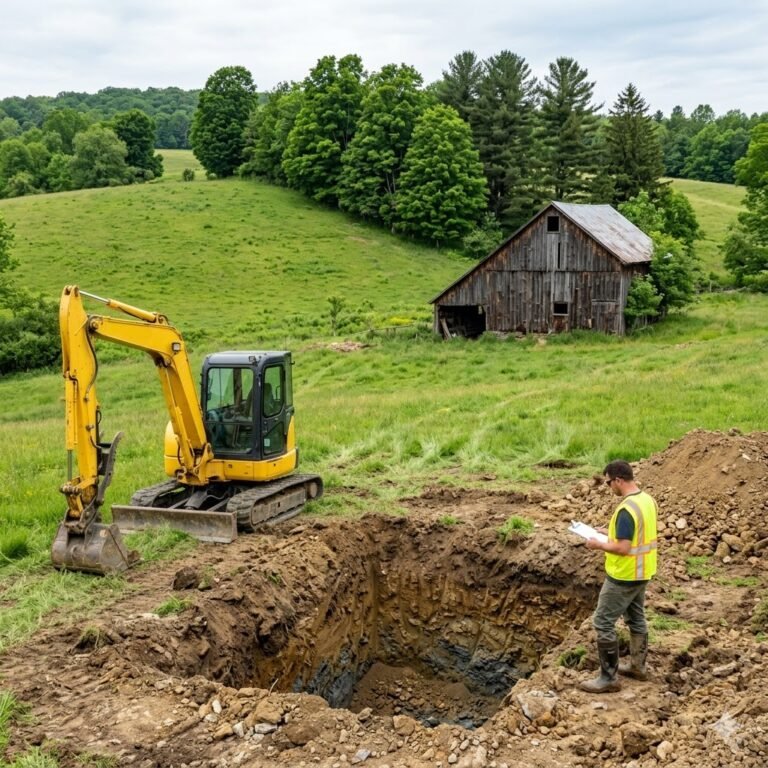
Not all ATT systems perform the same way, and the right choice depends on your soil conditions, lot size, local Columbia County requirements, and long-term budget.
Key Factors to Evaluate
Columbia County’s Health Department requires that any ATT system meet specific performance standards before installation approval. The right system needs to match your site’s actual conditions — not just pass on paper.
Key factors we look at when evaluating ATT systems for a failed perc test site:
- Soil type and depth to bedrock — clay-heavy soils common in Columbia County limit drainage and affect which dispersal method works
- Lot size and setback requirements — smaller parcels restrict where a drainfield or dispersal area can be placed
- Depth to seasonal high water table — systems like drip irrigation or mound systems handle high water tables better than standard leach fields
- Daily wastewater flow — based on bedroom count, which determines system sizing under New York State standards
- Site slope and topography — affects whether gravity-fed or pump-assisted systems are viable
Cost and Maintenance Considerations
ATT systems cost more upfront than conventional septic systems, but they’re often the only viable path forward after a failed perc test. Typical installed costs in Columbia County range from $15,000 to $35,000+, depending on system type and site complexity.
Ongoing costs matter just as much as installation. Most ATT systems in New York require an annual maintenance contract with a certified operator — typically $300–$600 per year. This isn’t optional; it’s required by the county as a condition of the operating permit.
| System Type | Est. Install Cost | Annual Maintenance |
| Drip Irrigation | $18,000–$30,000 | $400–$600 |
| Mound System | $15,000–$25,000 | $300–$500 |
| Recirculating Sand Filter | $20,000–$35,000+ | $500–$700 |
Finding a Qualified ATT Installer
In New York, ATT systems must be designed by a licensed professional engineer or a certified sewage disposal system designer. Not every septic contractor is qualified to install them.
We recommend verifying that any installer you hire holds current New York State DEC certification and has documented experience with the specific system type being proposed. Ask for references from completed ATT projects in Columbia County specifically — local experience with the county’s permitting process matters.
The Columbia County Department of Health can confirm whether a contractor is approved to work on ATT installations in the county before you sign any contract.
Permitting and Approval Process in Columbia County
In Columbia County, getting approval for an ATT or alternative septic system requires working directly with the Columbia County Environmental Health Department and meeting specific state and local code requirements before any installation can begin.
Navigating Local Regulations for ATT and Alternative Systems
Columbia County operates under Georgia’s Rules for On-Site Sewage Management Systems (Chapter 511-3-1), administered locally through the Environmental Health office. ATT systems fall under the “alternative system” category, which means they require additional review beyond a standard septic permit.
A few key points to understand:
- A licensed engineer or system designer must evaluate your site and propose an approved ATT system type
- State-approved ATT systems in Georgia include aerobic treatment units (ATUs), drip irrigation systems, and mound systems
- The Environmental Health Department must pre-approve the system design before installation begins
- Ongoing maintenance contracts are mandatory — inspections are typically required every 6 to 12 months
We recommend contacting the Columbia County Environmental Health Department early in the process to confirm which systems are currently approved for your specific soil and lot conditions.
Preparing Required Documentation
Having the right paperwork ready speeds up approval considerably. The typical documentation required includes:
| Document | Details |
| Site evaluation report | Conducted by a licensed soil scientist or engineer |
| System design plan | Stamped by a licensed professional engineer |
| Maintenance agreement | Must be with a state-certified ATT service provider |
| Property survey | Shows lot boundaries, setbacks, and well/water line locations |
We also need to submit a completed permit application to the Columbia County Environmental Health office along with the applicable permit fee. Fees vary based on system type and lot classification.
All documents should be accurate and current. Incomplete submissions are a common cause of delays.
Long-Term Benefits of ATT Systems
ATT systems offer measurable environmental protection and can directly expand what a property can do — including lots that a failed perc test would otherwise leave unbuildable.
Environmental Advantages
Conventional septic systems rely on soil absorption to filter wastewater, which means poor soil equals poor treatment. ATT systems treat effluent before it reaches the soil, using processes like aerobic digestion and UV disinfection to remove pathogens and reduce nitrogen levels significantly.
In Columbia County, where clay-heavy soils and seasonal high water tables are common, undertreated effluent from failing systems can reach groundwater or nearby streams. ATT systems reduce this risk by delivering treated effluent that meets stricter discharge standards.
Key environmental benefits include:
- Reduced nitrogen output — critical near wells and water bodies
- Lower pathogen levels in discharged effluent
- Less strain on surrounding soil, preserving natural drainage over time
- Compliance with NYSDEC standards for sensitive or restricted sites
Increasing Property Usability and Value
A failed perc test doesn’t just delay a project — it can make a parcel appear unbuildable to buyers, lenders, and developers. Installing an approved ATT system changes that designation and restores the lot’s development potential.
We’ve seen properties in Columbia County gain significant usability after ATT approval, moving from “unbuildable” status to receiving full building permits. That shift has a direct impact on resale value and marketability.
Consider what ATT approval can unlock:
| Scenario | Without ATT | With ATT |
| Failed perc test lot | Unbuildable | Permit-eligible |
| High water table parcel | Restricted | Approved for construction |
| Small acreage site | Denied conventional system | Alternative system approved |
Lenders are also more willing to finance construction on lots with a documented, permitted wastewater solution in place.
Conclusion
A failed perc test in Columbia County is not the end of the road for your property. It is a signal that the standard approach will not work — and that a more targeted solution is needed.
Here is a quick summary of your key options and next steps:
- Request a retest if conditions were unfavorable on the day of testing
- Explore soil remediation to improve drainage in borderline cases
- Consult a licensed engineer to assess alternative system eligibility
- Consider an ATT system if conventional septic is ruled out entirely
ATT systems have helped many Columbia County property owners move forward with builds that once seemed impossible. They treat wastewater to a higher standard than conventional systems, making them suitable for challenging soil conditions, smaller lots, and sites near sensitive environmental areas.
Working with a qualified installer who understands Columbia County’s specific Health Department requirements is critical. Permits, site evaluations, and ongoing maintenance agreements are all part of the process, and having the right team makes it significantly smoother.
If your perc test has come back with unfavorable results, we encourage you to act quickly. Delays can affect your timeline for permits, financing, and construction.
Ready to move forward? Contact us to schedule a site evaluation and find out whether an ATT system is the right fit for your property. We work with homeowners, builders, and real estate professionals across Columbia County to find practical, approved solutions for difficult sites.
Frequently Asked Questions
A failed perc test in Columbia County raises a lot of immediate questions about next steps, costs, and whether a property can still be used. Below we cover the most common concerns around soil evaluations, permit requirements, site improvements, and the treatment system options available when conventional designs fall short.
What does it mean when a soil evaluation fails, and what are the most common causes?
A failed soil evaluation means the soil on a given parcel cannot adequately absorb and treat wastewater at the rate required for a conventional drainfield. The test measures how quickly water moves through the soil — if it moves too slowly or too quickly, the site fails.
In Columbia County, the most common causes include:
- Clay-heavy soil that absorbs water too slowly, causing effluent to back up or surface
- High seasonal water tables that bring groundwater too close to the surface, reducing the safe treatment depth available
- Shallow bedrock that leaves insufficient separation between the drainfield and rock
- Small lot size that doesn’t provide enough usable area to meet required setbacks and drainfield dimensions
- Previously saturated or disturbed soil from grading, fill, or prior construction activity
Failing one perc test does not automatically disqualify a property. It means the site cannot support a conventional system under standard conditions.
What immediate steps should I take after a failed soil evaluation before buying, building, or applying for permits?
The first thing we recommend is requesting the full written report from the evaluator. This document identifies the specific reason for the failure and gives an engineer or health department reviewer a clear starting point.
If you are a buyer, we strongly advise pausing any purchase contract deadlines until you have a professional opinion on whether the site is salvageable. A failed evaluation without a viable path forward can render a parcel unbuildable for residential use.
Contact a licensed professional engineer or a certified onsite sewage system designer with experience in Columbia County’s specific soil and regulatory conditions. They can review the evaluation results and tell you whether alternative system options are available before you invest further in the property.
Which site improvements can sometimes help a marginal property qualify, and when are they not worth pursuing?
Some marginal properties — those that came close to passing — can qualify for a conventional system after targeted site improvements. The most practical options include:
- Mound systems, which raise the drainfield above the natural soil surface to create additional treatment depth
- Soil fracturing or deep tillage, used occasionally when compaction is the primary issue
- Lot grading adjustments that redirect surface water away from the proposed drainfield area
- Identifying an alternate drainfield location on the same parcel with better soil conditions
These improvements are worth pursuing when the evaluation shows marginal failure numbers and there is enough usable land. When soil percolation rates are severely outside the acceptable range, or when the water table is consistently high rather than seasonally elevated, site modifications rarely produce a passing result.
We advise against spending significant money on site prep before getting a professional assessment that specifically addresses whether those improvements are likely to change the outcome.
What alternative wastewater options are typically considered when a conventional drainfield won’t work on a property?
When a conventional gravity-fed drainfield is not feasible, there are several alternative pathways that Columbia County and Georgia’s onsite sewage rules allow:
- Engineered mound systems that elevate the treatment area above poor native soil
- Drip irrigation systems that distribute treated effluent at a slow, controlled rate across a wider area
- Advanced Treatment Technology (ATT) systems, which treat wastewater to a higher standard before it reaches the soil, reducing the soil’s required treatment burden
- Connection to a public sewer system, if the property is within reach of an available municipal line — though this is not always possible in rural Columbia County areas
- Variance applications, which in limited cases allow reduced setbacks or modified design criteria under engineer supervision
Each option depends on lot size, soil type, proximity to wells and water features, and what the Columbia County Environmental Health office will approve for a given parcel.
How do advanced treatment systems differ from conventional septic designs, and why are they often recommended for challenging sites?
A conventional septic system relies heavily on the soil itself to treat wastewater. Effluent flows from the tank into a drainfield, and the soil does most of the biological and chemical treatment work. When soil conditions are poor, that process breaks down.
ATT systems change that equation. They treat wastewater mechanically and biologically before it reaches the soil, reducing the level of pathogens, nitrogen, and suspended solids in the effluent to a much higher standard. By the time effluent leaves an ATT unit, the soil’s treatment requirements are significantly lower.
This matters in Columbia County for a few specific reasons:
- High clay content limits absorption, but highly treated effluent can disperse through a smaller or less ideal drainfield footprint
- Seasonal high water tables require more separation between effluent and groundwater — ATT pre-treatment helps meet that standard even with reduced vertical separation
- Smaller lots that can’t accommodate a full-size conventional drainfield may qualify with an ATT system because the treated output requires less dispersal area
ATT systems are not a workaround. They are a Georgia EPD-permitted solution that meets or exceeds the treatment standards required for safe wastewater disposal on challenging sites.
What documents, tests, and timeline should I expect when working with an engineer and the health department to move a project forward?
The process of getting an alternative system approved in Columbia County involves several steps, and realistic planning matters. A compressed or unrealistic timeline leads to missed deadlines on closings, construction starts, or permit applications.
Documents and tests typically required:
- Original soil evaluation report from a certified soil scientist or evaluator
- Site survey showing lot dimensions, setbacks, well locations, and property boundaries
- Engineered system design prepared and stamped by a licensed professional engineer
- Soil morphology data and, in some cases, additional soil borings
- Percolation test data, even for alternative system applications
- Completed application forms for Columbia County Environmental Health
Timeline expectations:
The soil evaluation and engineering design phase typically takes 4 to 8 weeks depending on evaluator availability and site complexity. Health department review in Columbia County can add another 2 to 6 weeks. If revisions are requested, that adds additional time.
We recommend starting this process as early as possible — before a purchase closes or a building permit application is submitted. Having a permitted system design in hand before closing removes a significant point of uncertainty from the transaction.