Alternative Treatment Technology Septic Systems: Components, Designs & Options Explained
Not every property can use the same septic system. Soil conditions, lot size, water table depth, and local regulations all influence which system is appropriate for a given site.
Alternative treatment technology (ATT) septic systems go beyond conventional soil absorption by incorporating processes like aeration, disinfection, and nutrient removal to treat wastewater more effectively. These systems are designed for properties where standard septic systems are not feasible.
This article covers the main types of septic systems, their core components, and the design options available — including both conventional and alternative systems — so you can understand what may be right for your property.
Key Takeaways
- Septic systems vary widely in design, and the right type depends on your specific property conditions and local requirements.
- Understanding the core components of a septic system helps clarify how different designs treat and disperse wastewater.
- Alternative treatment technologies offer viable solutions for sites where conventional septic systems cannot perform adequately.
Overview of Septic System Types
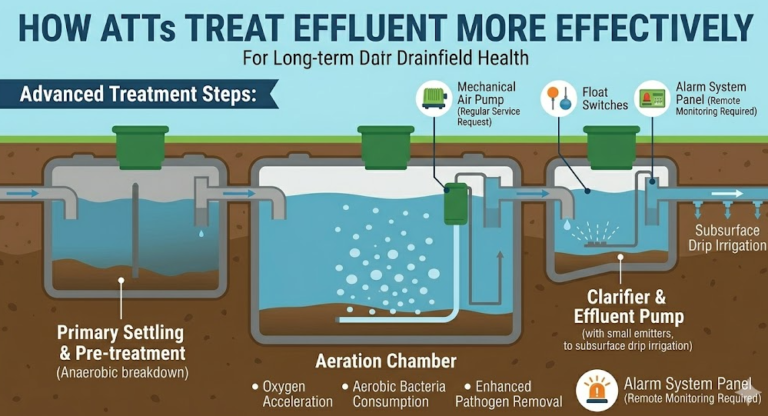
Septic systems range from simple gravity-fed designs to engineered alternatives built for challenging soil conditions, limited space, or stricter environmental requirements.
Conventional Gravity Septic Systems
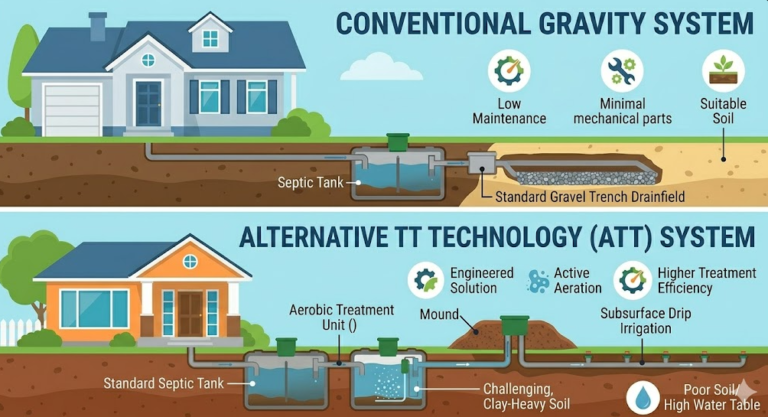
A conventional gravity system is the most widely used septic design. Wastewater flows from the home into a septic tank, where solids settle and liquid effluent separates. That effluent then moves by gravity into a drainfield — also called a leach field — where it disperses into the soil.
Key components:
- Septic tank – holds and partially treats waste
- Distribution box – splits flow evenly to the drainfield
- Drainfield/leach field – filters effluent through soil
This system works well on flat or gently sloping lots with suitable soil percolation. It requires minimal mechanical parts, which keeps long-term maintenance straightforward and costs relatively low.
Alternative Treatment Technologies
Alternative treatment technologies (ATTs) are engineered systems used when conventional gravity systems aren’t feasible. Poor soil percolation, high water tables, limited lot size, or local regulations can all require an ATT.
Common ATT options include:
|
System Type |
Best Used For |
|
Aerobic Treatment Units (ATUs) |
Poor soil, small lots |
|
Drip irrigation systems |
Sites needing effluent dispersal over larger areas |
|
Constructed wetlands |
Environmentally sensitive areas |
|
Pressure distribution systems |
Uneven terrain or inconsistent soil |
ATUs use oxygen to break down waste more thoroughly than a standard septic tank, producing a cleaner effluent before it enters the soil. These systems typically require more frequent inspections and have higher operating costs due to mechanical components like pumps and aerators.
Mound and Sand Filter Systems
Mound systems are built above ground when the natural soil layer is too shallow, too dense, or too close to groundwater. A pump moves effluent from the septic tank up into a raised sand or gravel mound, where it filters before reaching the native soil.
Sand filter systems work similarly — effluent passes through a constructed sand bed before dispersal. Both designs add a controlled treatment layer that compensates for poor native soil conditions.
These systems cost more to install than conventional systems and require a pump, which adds a mechanical element that needs regular maintenance.
Key Components and Design Options
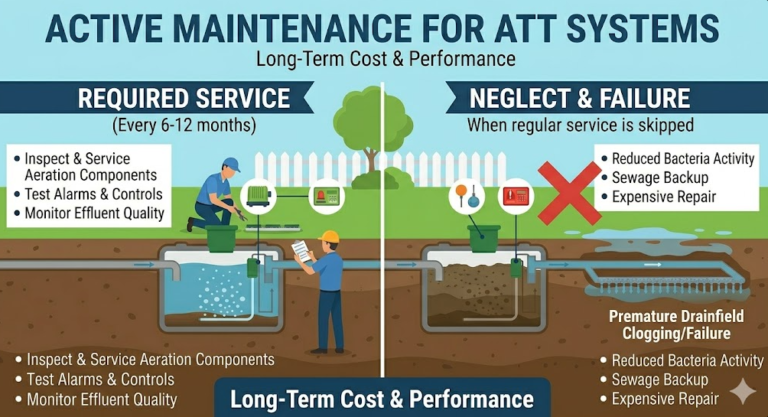
Alternative treatment technology septic systems are built around a core set of components — the treatment unit, the dispersal method, and the maintenance requirements that keep everything functioning correctly.
Septic Tanks and Treatment Units
Every septic system starts with a primary treatment unit. In conventional systems, this is a standard septic tank that separates solids from liquid waste through settling and anaerobic bacterial activity.
Alternative systems often include advanced treatment units (ATUs) that provide a higher level of processing before effluent reaches the drainfield. Common options include:
- Aerobic Treatment Units (ATUs) — inject oxygen to accelerate bacterial breakdown
- Mound systems — pair a tank with an elevated drainfield for poor soil conditions
- Recirculating Sand Filters — pass effluent through sand media multiple times before dispersal
- Constructed Wetlands — use biological and plant processes for treatment
The type of treatment unit selected depends on soil conditions, lot size, local regulations, and the volume of wastewater generated.
Drainfield Variations
The drainfield handles final dispersal and soil filtration of treated effluent. Standard aggregate-filled trenches work well in stable, permeable soils with adequate depth to groundwater.
When site conditions are difficult, alternative dispersal options are used:
|
Drainfield Type |
Best Use Case |
|
Conventional trench |
Good soil, adequate space |
|
Mound system |
High water table or poor drainage |
|
Drip irrigation |
Sloped or limited sites |
|
Bottomless sand filter |
Rocky or low-permeability soils |
|
Pressure distribution |
Uneven terrain, more controlled dispersal |
Drip irrigation systems deliver effluent directly to the root zone of soil through small emitters, which allows treatment on sites that would otherwise fail a standard percolation test.
Maintenance Considerations
Alternative systems require more active maintenance than conventional systems. Most ATUs include mechanical parts — air pumps, timers, and floats — that need regular inspection.
Typical maintenance requirements include:
- Scheduled inspections every 6–12 months
- Pump-outs every 3–5 years depending on usage
- Effluent quality testing where required by local code
- Replacing or servicing aeration components as needed
Neglecting maintenance on an ATU can cause premature drainfield failure, which is significantly more expensive to repair than the cost of routine service.