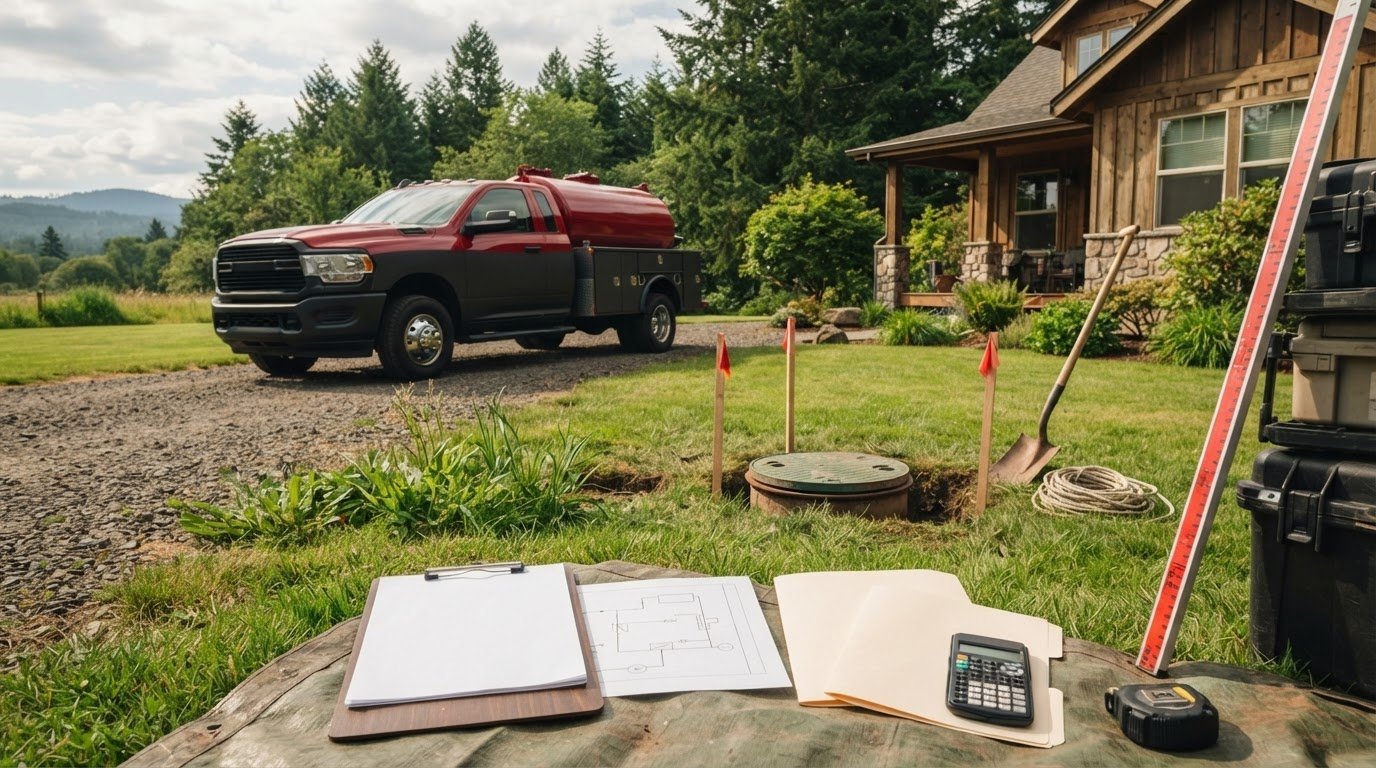
Emergency Septic Pumping Near Me: Oregon Regulations, Permits & Key Considerations
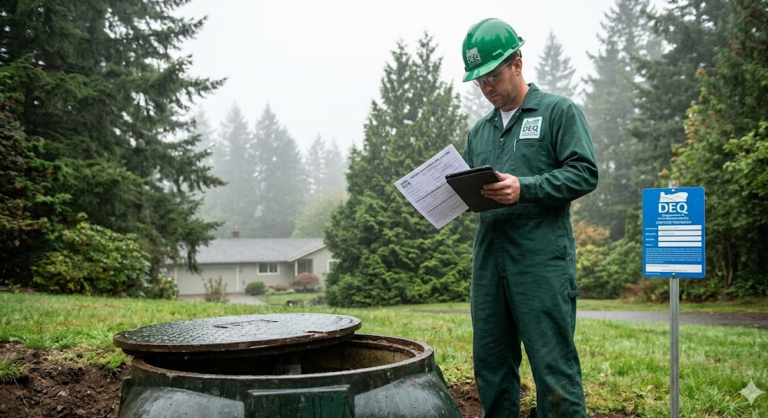
Septic systems in Oregon are subject to specific state and county regulations that affect everything from installation to routine maintenance. If you own property with a septic system, understanding these rules can help you avoid fines, system failures, and costly emergency situations.
Oregon requires permits for most septic system work, including new installations, repairs, and certain types of pumping or inspection services, and these permits are issued through the Oregon Department of Environmental Quality (DEQ) or your local county authority. Skipping this step can result in legal and financial consequences. Knowing when your system needs emergency attention — and who to call — is just as important as understanding the permit process.
Lil’ Stinky Septic serves the Portland area and surrounding Oregon communities with emergency septic pumping and full system services. This article covers the regulations and permits that apply to Oregon septic systems, along with key considerations for handling a septic emergency quickly and correctly.
Key Takeaways
- Oregon septic systems are regulated by the DEQ and local county authorities, and most system work requires a permit.
- Acting quickly during a septic emergency and calling a licensed local provider can prevent serious property damage and regulatory violations.
- Choosing a certified, experienced septic service in your area ensures the work meets Oregon’s legal requirements.
Septic Tank Regulations and Permits in Oregon
Oregon regulates septic systems through the Department of Environmental Quality (DEQ) and county-level health departments. Permits are required for new installations, major repairs, and in some cases, replacement of existing systems.
Statewide Septic System Requirements
The Oregon DEQ sets the baseline rules for all septic systems in the state under Oregon Administrative Rules Chapter 340. These rules apply regardless of county.
Key statewide requirements include:
- Tank materials: Tanks must be constructed of concrete, fiberglass, steel, or other non-corrosive materials approved by the DEQ. Steel tanks must use 12-gauge or thicker steel.
- Minimum tank size: A 1,000-gallon tank is standard for a three-bedroom home.
- System components: Every system must include a septic tank and a drainfield where soil bacteria treat effluent.
- Pumping frequency: This varies by household size. A three-bedroom home housing six people requires pumping roughly every 1.5 years; a two-person household every 5.9 years.
Older systems installed before current rules may have smaller tanks that require more frequent maintenance.
Local County and City Permitting Processes
While the DEQ sets statewide standards, permits are issued at the county level. Before installing or significantly repairing a septic system, you must apply through your local county health department or environmental services office.
The permit process typically involves:
- Site evaluation — A licensed professional assesses soil type, lot size, and proximity to water sources.
- Application review — The county reviews the proposed system design.
- Approval or denial — Denial notices must specify the reasons based on DEQ rules or relevant Oregon statutes, including ORS 454.655 and ORS 454.685.
Timelines and fees vary by county. Contacting your county office directly is the most reliable way to get current requirements.
Documentation Needed for Septic Tank Installation or Pumping
The documents required depend on what work is being done.
For new installation or major repair:
|
Document |
Purpose |
|
Permit application |
Required before any work begins |
|
Site evaluation report |
Shows soil suitability |
|
System design plan |
Details tank size, drainfield layout |
|
Licensed contractor credentials |
Oregon requires licensed septic system businesses |
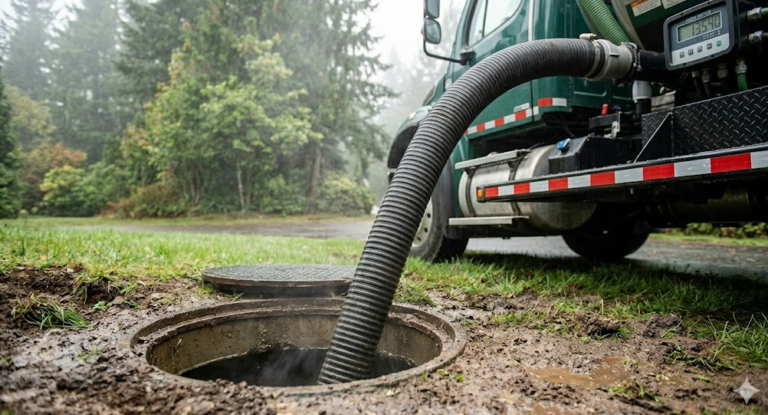
For routine pumping, a permit is generally not required. However, the pumping must be performed by a licensed septic contractor, and service records should be kept on file. These records can be important if you sell the property or need to demonstrate maintenance history.
Key Considerations for Emergency Septic Pumping Near Me
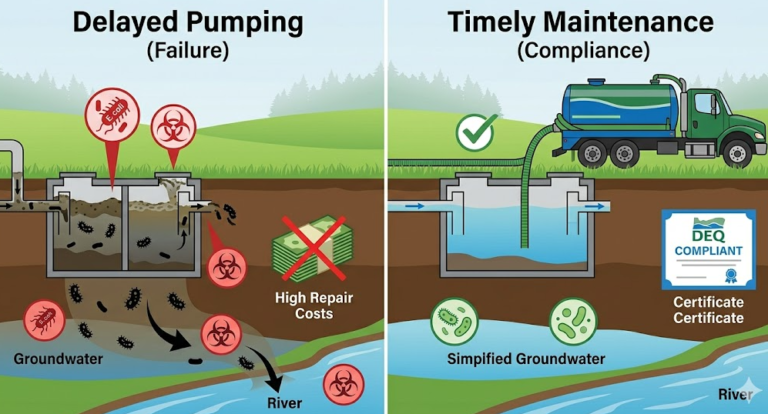
Knowing when to call for emergency septic pumping, how to pick a licensed Oregon contractor, and what happens when you wait too long are the three things that matter most when a septic system fails.
When Emergency Septic Pumping Is Necessary
A septic emergency requires immediate action. Waiting even a few hours can turn a manageable problem into a costly repair.
Call for emergency pumping if you notice any of the following:
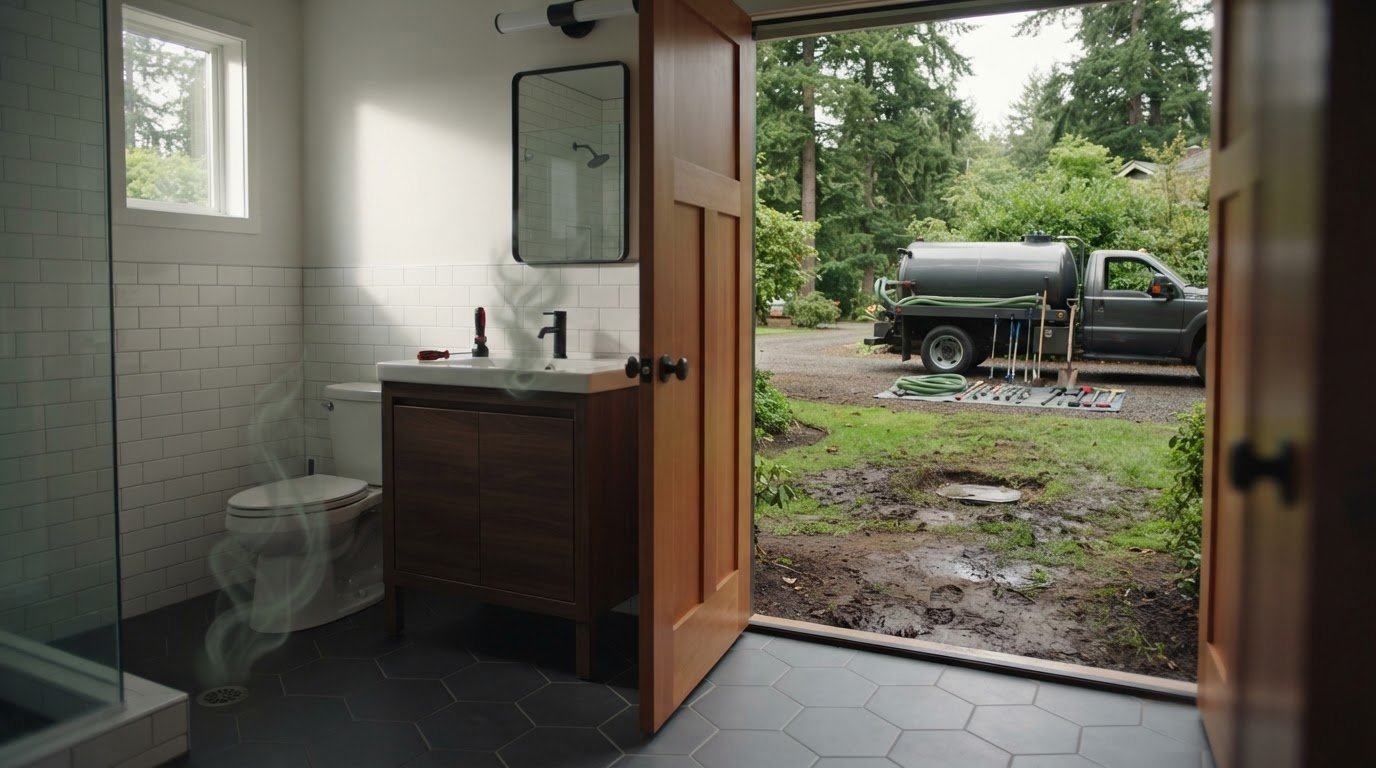
- Sewage backing up into toilets, sinks, or drains inside the home
- Standing water or wet spots over the drain field that weren’t there before
- Strong sewage odors inside the home or directly above the tank or drain field
- Gurgling sounds in drains after flushing or running water
- Unusually lush, green grass over the drain field, which can indicate effluent surfacing
These signs typically mean the tank is at or beyond capacity, or there is a failure somewhere in the system. In Oregon, a surfacing effluent issue is also a reportable condition under state environmental rules.
How to Choose a Licensed Oregon Septic Company
In Oregon, septic contractors must be licensed through the Oregon Department of Environmental Quality (DEQ). Always verify a contractor’s license before hiring.
Look for these qualifications:
|
What to Check |
Why It Matters |
|
Oregon DEQ license |
Required by law for septic work in Oregon |
|
24/7 availability |
Emergencies don’t happen on a schedule |
|
Local experience |
Familiarity with Oregon soil types and permit requirements |
|
Pumping and inspection services |
Combines immediate relief with a diagnosis |
Ask directly whether the company can file any required DEQ notifications if surfacing effluent or a system failure is found. Not all pumping companies handle this step.
Environmental and Health Impacts of Delayed Pumping
Untreated sewage contains pathogens including E. coli, salmonella, and hepatitis A. A failing septic system can contaminate nearby groundwater, private wells, and surface water.
Oregon’s groundwater is a protected resource under ORS Chapter 468B. A system that is actively discharging untreated waste to the surface or into waterways can result in DEQ enforcement action against the property owner.
Beyond legal risk, delayed pumping increases repair costs significantly. A simple pump-out may cost a few hundred dollars, while drain field replacement in Oregon can run $10,000 or more.