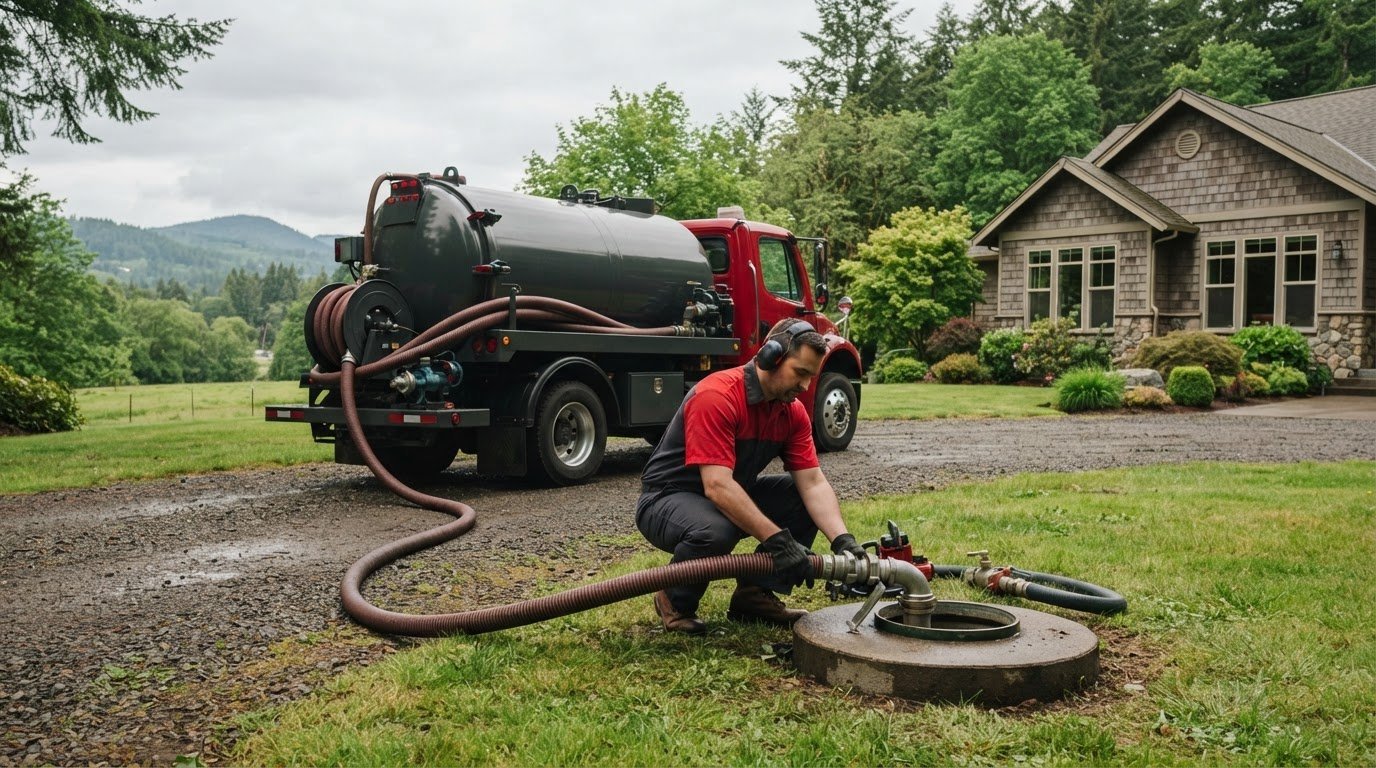
How Septic Tanks Work: A Simple Guide for Homeowners
If you’re on a septic system, knowing how it works isn’t just useful — it can save you thousands in repairs. Most homeowners never think about their septic tank until something goes wrong, and by then, the damage is often already done.
A septic tank is an underground chamber that collects all wastewater from your home, separates solids from liquids, and slowly releases the treated effluent into a drain field where the soil filters it naturally. The process relies on gravity and naturally occurring bacteria, with no complicated machinery involved.
Understanding the basics of your system helps you make smarter decisions about what goes down your drains and when to schedule maintenance. This guide covers how the system works from start to finish, and what you can do to keep it running properly.
Key Takeaways
- A septic system is made up of a tank, a distribution box, and a drain field that work together to treat household wastewater on your property.
- Solids, liquids, and scum separate naturally inside the tank, and beneficial bacteria break down waste over time.
- Regular pumping and mindful water use are the most important steps to keeping your septic system functioning long-term.
Understanding Septic Tank Systems
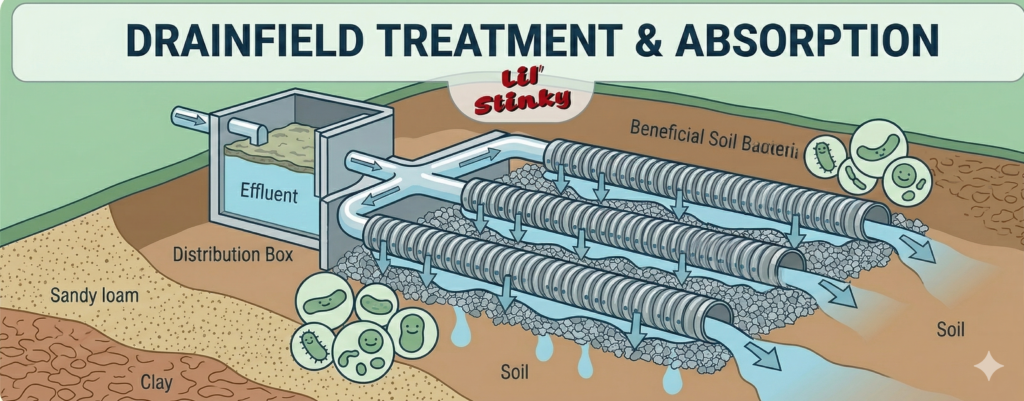
A septic system treats household wastewater on-site using a tank to separate waste and a drain field to filter the liquid into the ground. Knowing how each part works helps you catch problems early and keep the system running properly.
The Basic Components of a Septic System
A standard septic system has four main parts:
- Inlet pipe – carries wastewater from the house to the tank
- Septic tank – a buried, watertight container (typically 1,000–1,500 gallons) that holds and separates waste
- Distribution box – routes effluent evenly to the drain field
- Drain field (leach field) – a network of perforated pipes buried in gravel trenches
The tank itself is usually made from concrete, fiberglass, or polyethylene. Most tanks have two compartments to improve separation of solids from liquid.
How Wastewater Travels Through the Septic Tank
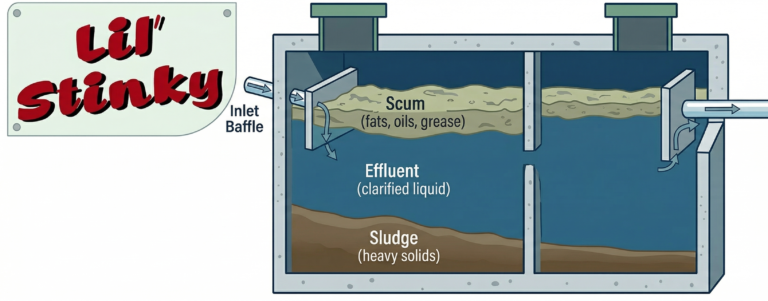
Wastewater flows from the home through the inlet pipe and enters the first compartment of the tank. Heavier solids sink, lighter materials float, and the liquid layer in the middle — called effluent — moves toward the outlet.
A baffle at the inlet slows the incoming flow so it doesn’t disturb settled solids. A second baffle near the outlet keeps floating scum from exiting into the drain field. The effluent then flows out through the outlet pipe toward the distribution box.
What Happens to Solids and Liquids
Inside the tank, waste separates into three distinct layers:
|
Layer |
What It Contains |
Where It Goes |
|
Scum |
Fats, oils, grease |
Floats at the top |
|
Effluent |
Clarified liquid |
Exits to drain field |
|
Sludge |
Heavy solids |
Sinks to the bottom |
Naturally occurring anaerobic bacteria break down the organic solids in the sludge layer over time. This process reduces the volume of solids, but it doesn’t eliminate them entirely. Sludge and scum accumulate gradually, which is why tanks need to be pumped every 3 to 5 years.
The Role of Soil Absorption
Once effluent leaves the tank, it moves through the distribution box and into the perforated pipes of the drain field. The liquid seeps out of the pipes and into the surrounding gravel and soil.
The soil acts as a natural filter. As effluent passes through it, bacteria, viruses, and nutrients are removed before the water reaches the groundwater table. Soil type matters — sandy soil drains quickly, while clay-heavy soil drains slowly and may cause backups if the system isn’t sized correctly.
The drain field must remain uncompacted and free of tree roots to function properly. Driving vehicles over it or planting deep-rooted vegetation nearby can damage the pipes and reduce absorption capacity.
Maintaining Your Septic Tank
Septic tanks need routine pumping every 3–5 years, annual inspections, and careful attention to what goes down your drains to stay functional and avoid expensive repairs.
Routine Inspection and Pumping
Annual inspections help catch problems early before they become costly. A professional will check the tank, outlet baffle, and drainfield for signs of wear or failure.
How often to pump your tank depends on a few factors:
|
Household Size |
Recommended Pumping Frequency |
|
1–2 people |
Every 5 years |
|
3–4 people |
Every 3–4 years |
|
5+ people |
Every 2–3 years |
Heavy water use and garbage disposals increase how quickly solids accumulate. Keep records of every inspection and pump-out — this helps track your system’s health over time and is useful if you sell your home.
Warning Signs of Septic System Problems
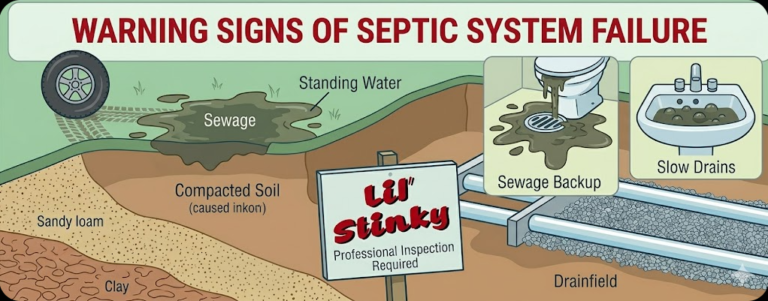
Catching a problem early can mean the difference between a simple pump-out and a full drainfield replacement. Watch for these warning signs:
- Slow drains throughout the house, not just one fixture
- Gurgling sounds in pipes after flushing or draining
- Foul odors near the tank or drainfield area
- Standing water or wet spots in the yard above the drainfield
- Sewage backups inside the home
Any one of these signs warrants a call to a septic professional. Do not wait to see if the problem resolves on its own — it typically won’t.
Best Practices for Septic Tank Care
What goes into your system matters. Flushing the wrong items can clog pipes, kill beneficial bacteria in the tank, and accelerate system failure.
Avoid flushing or draining:
- Wipes, even “flushable” ones
- Paper towels, feminine hygiene products, or medications
- Grease, oils, and harsh chemical cleaners
- Excessive amounts of bleach or antibacterial soap
Habits that protect your system:
- Spread laundry loads throughout the week to avoid flooding the tank
- Fix leaky faucets and toilets to reduce unnecessary water flow into the tank
- Keep vehicles and heavy equipment off the drainfield to prevent soil compaction