Causes of Septic Emergencies: What Leads to System Failure
A septic emergency rarely happens without warning, and it almost never has just one cause. Understanding what leads to these failures can help homeowners act before a small issue becomes a costly, hazardous problem.
Most septic emergencies trace back to a combination of neglect, system overload, and physical damage to the tank or drain field. Some causes are gradual, like years of skipped maintenance or slow biomat buildup in the soil. Others are more sudden, like a crushed pipe or a surge of water overwhelming the system.
There are also secondary factors that many homeowners overlook, such as what goes down the drains, the age of the system, and soil conditions around the drain field. This article covers the full range of causes so you know exactly what to watch for and why it matters.
Key Takeaways
- Septic failures typically result from a combination of direct causes like neglect and physical damage, not a single isolated issue
- Several secondary factors, including household habits and soil conditions, quietly contribute to system emergencies over time
- Knowing the full range of causes allows homeowners to take targeted steps to prevent a septic emergency before it occurs
Primary Causes of Septic Failure
Septic systems fail for a few consistent, well-documented reasons: too much water entering the system, skipped maintenance, and drainfield blockages. Addressing these three issues is the most direct way to avoid a septic emergency.
System Overloading and Excessive Water Use
A septic tank is sized for a specific daily water volume. When that volume is regularly exceeded, the tank cannot separate solids and liquids properly, pushing partially treated wastewater into the drainfield before it’s ready.
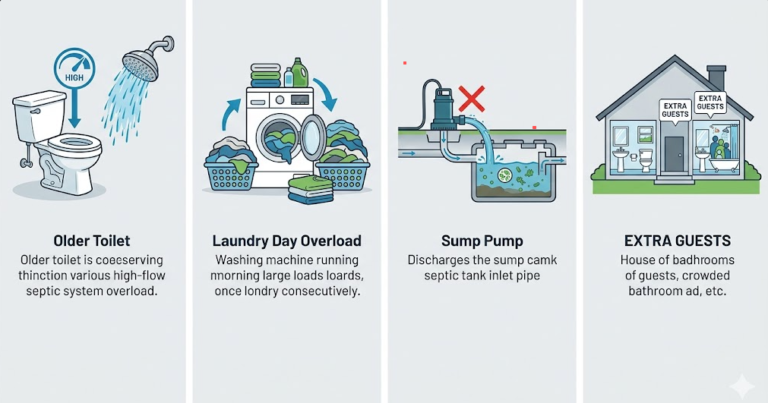
Common sources of overloading include:
- High-flow fixtures like older toilets and showerheads
- Large loads of laundry done in a single day
- Sump pumps or roof drains routed into the septic system
- Houseguests temporarily increasing daily water use
Even short-term overloading can cause lasting damage to the drainfield. Spreading water use throughout the week — rather than concentrating it — reduces strain on the system significantly.
Lack of Regular Pumping and Maintenance
Solids accumulate in the bottom of a septic tank over time. Without regular pumping, that layer of sludge grows until it overflows into the drainfield, causing clogs and contamination.
The EPA recommends:
Factor | Recommended Interval |
Full system inspection | Every 1–3 years |
Tank pumping | Every 3–5 years |
Pumping frequency depends on tank size and household size. A 1,000-gallon tank serving four people will fill faster than a 1,500-gallon tank serving two.
Flushing non-biodegradable items — wipes, paper towels, feminine products — accelerates sludge buildup. Using antibacterial soaps and harsh cleaners in excess can also kill the beneficial bacteria that break down solids inside the tank.
Clogged or Blocked Drainfields
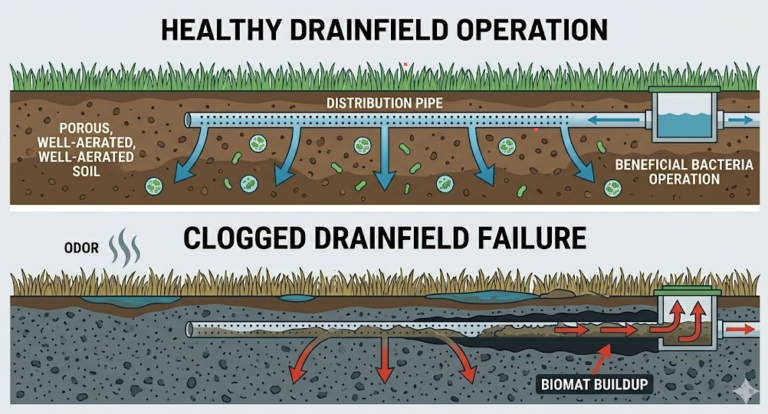
The drainfield disperses liquid wastewater into the surrounding soil. When it becomes saturated or clogged, that liquid has nowhere to go, which causes backups inside the home or wet, odorous patches in the yard.
Drainfield failure is often caused by:
- Biomat buildup — a thick layer of organic material that blocks soil absorption
- Tree root intrusion into drainfield pipes
- Soil compaction from vehicles or heavy equipment driving over the drainfield area
- Excessive grease entering the system from kitchen drains
Drainfields cannot easily be unclogged once severely damaged. In many cases, replacement is the only option, making prevention far more cost-effective than repair.
Secondary Contributors to Septic Emergencies
Flushing the wrong materials, invasive tree roots, and deteriorating components are three specific factors that push already-stressed systems into full failure. Catching these issues early is often the difference between a repair and a complete system replacement.
Improper Disposal of Household Materials
The septic tank relies on bacterial activity to break down waste. Introducing the wrong materials kills that bacteria or causes physical blockages that stop the system from functioning.
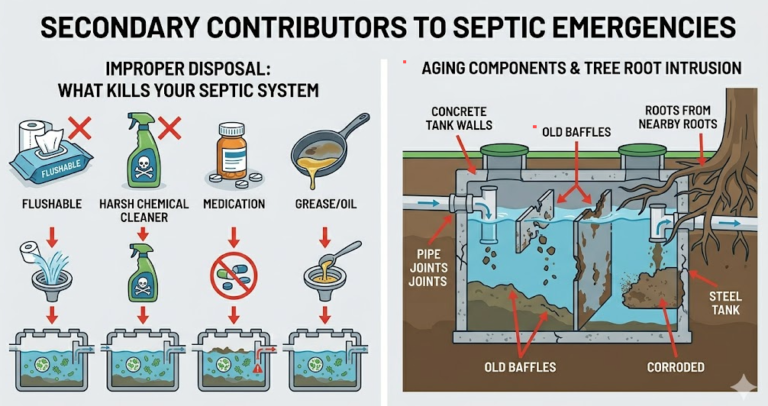
Items that commonly cause septic emergencies:
- Wipes — even products labeled “flushable” do not break down in a septic tank
- Grease and cooking oils — solidify in pipes and the tank inlet
- Medications — kill the beneficial bacteria that process waste
- Paper towels and feminine hygiene products — accumulate as solids faster than normal waste
- Harsh chemical cleaners — bleach and antibacterial products disrupt the bacterial balance
These materials accelerate solid buildup, which leads to backups, drain field clogs, and sewage surfacing above ground.
Tree Root Intrusion and Soil Issues
Tree roots naturally seek out moisture, and septic pipes and tanks are a reliable source. Roots penetrate pipe joints, crack tank walls, and infiltrate the drain field over time.
Common soil and root problems include:
Issue | Effect on System |
Root intrusion into pipes | Blockages and pipe fractures |
Root damage to tank walls | Structural leaks |
Compacted soil over drain field | Prevents wastewater from dispersing |
Saturated soil (high water table) | Wastewater backs up into tank |
Parking vehicles or heavy equipment over the drain field also compacts soil and can crush pipes, which is a frequently overlooked cause of drain field failure.
Aging or Damaged Septic Components
Most septic tanks have a functional lifespan of 20 to 40 years, depending on the material and maintenance history. Concrete tanks crack over time. Steel tanks corrode. Older systems often lack effluent filters, which are now standard in modern installations.
Damaged baffles are a specific concern. The inlet and outlet baffles direct flow inside the tank. When they deteriorate, solids pass directly into the drain field, clogging it rapidly.
Routine inspections every 1 to 3 years allow a technician to identify cracked components, failed baffles, and early signs of pipe damage before they escalate.