Septic Systems Explained: Maintenance Tips to Prevent Costly Repairs and Backups
Most homeowners don’t think about their septic system until something goes wrong. By then, repairs can run into thousands of dollars and cause serious disruption to daily life.
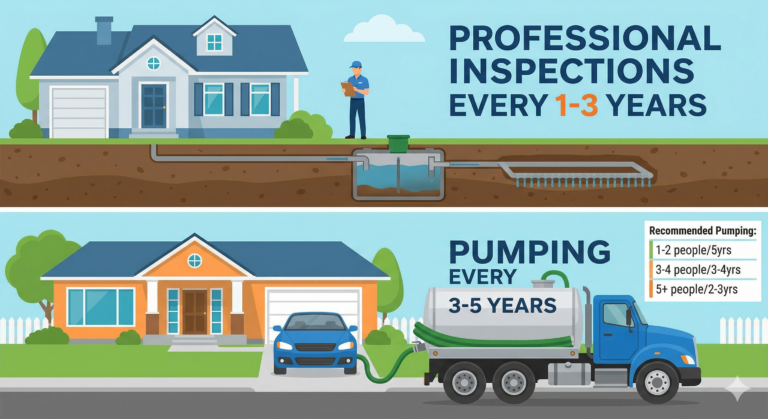
Regular inspections every 1-3 years and pumping every 3-5 years are the most effective ways to prevent backups, odors, and expensive damage to your septic system. Knowing what to put down your drains, recognizing early warning signs, and scheduling routine service can extend the life of your system significantly.
This article covers how septic systems work, what maintenance tasks matter most, and how to spot trouble before it becomes a costly problem.
Key Takeaways
- Routine pumping and inspections are the foundation of a healthy septic system
- Simple daily habits, like watching what you flush, can prevent the majority of common septic failures
- Slow drains, odors, and wet spots in your yard are early warning signs that your system needs attention
Essential Septic Maintenance Tips to Prevent Costly Repairs & Backups
Keeping a septic system in good working order comes down to consistent pumping schedules, mindful waste habits, water usage control, and protecting the drainfield from physical damage.
Regular Professional Inspections and Pumping
A septic tank should be pumped every 3 to 5 years for a typical household. The exact frequency depends on tank size and the number of people in the home.
|
Household Size |
Recommended Pumping Frequency |
|
1–2 people |
Every 5 years |
|
3–4 people |
Every 3–4 years |
|
5+ people |
Every 2–3 years |
Professional inspections catch early warning signs like slow drains, unusual odors, or wet spots near the drainfield before they turn into full system failures. A licensed technician will check the baffles, measure sludge levels, and assess the condition of the drainfield. Skipping inspections is one of the most common reasons minor issues become expensive problems.
Proper Waste Disposal Habits
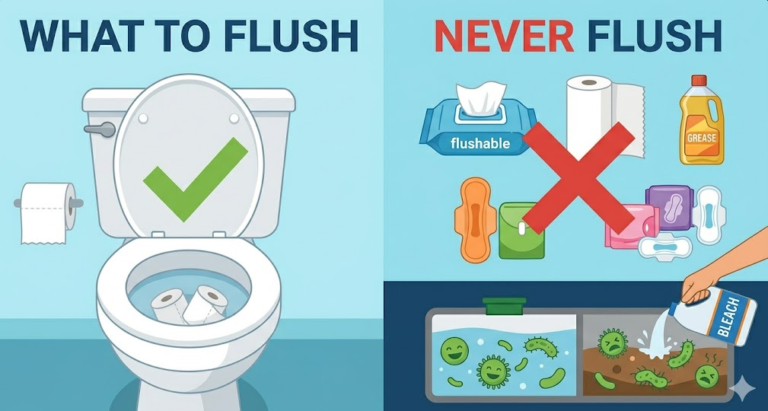
What goes down the drain directly affects how well the system functions. The bacteria in the septic tank break down waste, and certain materials disrupt or kill that bacterial activity.
Never flush or drain the following:
- Wipes, even those labeled “flushable”
- Feminine hygiene products
- Paper towels or tissues
- Cooking grease or oils
- Medications
- Harsh chemical cleaners or bleach in large quantities
- Paint or solvents
Garbage disposals add significant solid waste to the tank and can shorten the time between required pumpings. Use them sparingly or avoid them entirely if possible.
Household cleaners should be used in moderate amounts. Small quantities of standard cleaning products are generally tolerable, but consistently dumping large amounts of antibacterial soaps or disinfectants can reduce the bacteria needed to process waste effectively.
Water Conservation Strategies
Excess water entering the tank at once can push solids into the drainfield before they break down properly. Spreading out water use throughout the day reduces that risk.
Practical steps to reduce water load:
- Fix leaking faucets and running toilets — even a slow leak adds significant water volume over time
- Run dishwashers and washing machines on full loads only
- Stagger laundry loads across multiple days rather than doing all laundry in one day
- Install low-flow fixtures to reduce overall water consumption
High-efficiency toilets and showerheads lower daily water volume without requiring major changes to daily routines.
Landscape Maintenance Around the Septic System
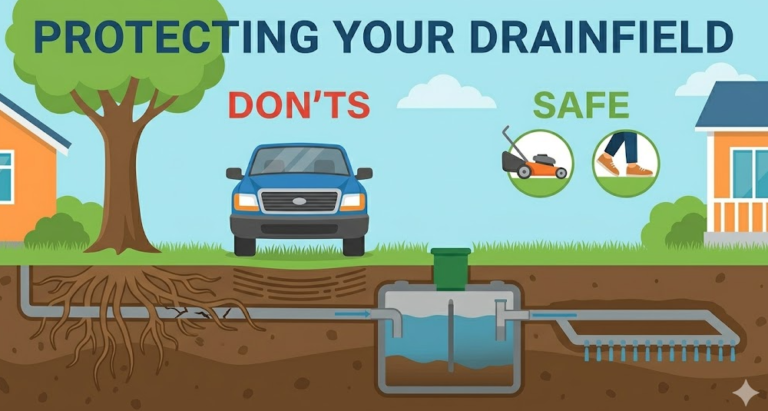
The drainfield needs clear, open soil to function. Tree and shrub roots can infiltrate the pipes and cause serious blockages or structural damage.
Keep trees and large shrubs at least 10 feet away from the drainfield, and keep any deep-rooted plants further back. Grass is the ideal cover over a drainfield because its shallow roots do not interfere with the system.
Avoid doing the following over the drainfield:
- Parking vehicles or heavy equipment
- Building structures like sheds or decks
- Installing impermeable surfaces like concrete or asphalt
Compacted soil reduces the drainfield’s ability to absorb and filter effluent. Keeping foot traffic and weight off that area helps maintain proper drainage.
Identifying Warning Signs and Implementing Preventative Measures
Catching septic problems early can save thousands of dollars in repairs. Slow drains, odors, and soggy yard patches are often the first indicators that something is wrong.
Recognizing Early Symptoms of Septic System Failure
The most common warning signs include:
- Slow-draining sinks, tubs, or toilets — especially in multiple fixtures at once
- Gurgling sounds from drains or toilets after flushing
- Sewage odors inside the home or near the drain field
- Pooling water or unusually green grass over the drain field area
- Sewage backup in the lowest drains of the home
A single slow drain is often a localized clog. Multiple slow drains happening at the same time typically point to a full tank or a failing drain field.
Ignoring these signs leads to more extensive damage. A system that backs up repeatedly may require drain field replacement, which can cost $5,000–$20,000.
Immediate Steps to Take During Minor Backups
When a minor backup occurs, stop using water in the home immediately. Running more water into a stressed system accelerates overflow and potential contamination.
Do the following right away:
- Avoid flushing toilets or running faucets until the issue is assessed
- Check if the tank is due for pumping — most tanks need pumping every 3–5 years
- Call a licensed septic technician for inspection before the problem worsens
- Avoid using chemical drain cleaners, as they kill the beneficial bacteria that break down waste
Do not attempt to open the tank yourself. Septic tanks contain toxic gases that pose serious health risks.
Long-Term Practices to Extend System Lifespan
Consistent habits make a measurable difference in how long a septic system lasts.
|
Practice |
Recommended Frequency |
|
Professional pumping |
Every 3–5 years |
|
System inspection |
Every 1–3 years |
|
Drain field area check |
Annually or after heavy rain |
Avoid flushing wipes, grease, medications, or anything non-biodegradable. These materials clog pipes and disrupt bacterial activity inside the tank.
Spreading water use throughout the day reduces strain on the system. Large loads of laundry done back-to-back, for example, can flood the drain field before it has time to absorb properly.