Septic Tank Maintenance Basics: What Every Homeowner Should Know
Septic Tank Maintenance Basics
Septic systems rely on a specific process to treat household wastewater, and they require routine care to keep working properly. Knowing how yours works, what parts to watch, and when something is wrong can help you avoid expensive repairs.
How Septic Systems Work
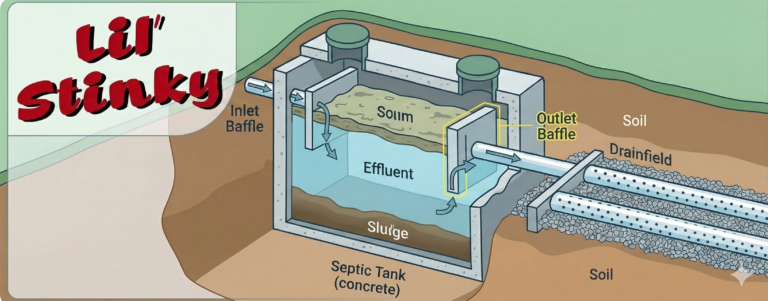
Wastewater from your home flows through a main drain pipe into the septic tank. Inside the tank, solids sink to the bottom and form sludge, while lighter materials like grease float to the top as scum. The liquid layer in the middle — called effluent — flows out to the drainfield.
In the drainfield, the effluent filters slowly through the soil, which removes harmful bacteria and nutrients before the water re-enters the groundwater supply. The whole process depends on balance. Too much water or the wrong materials entering the tank can disrupt it.
Key Components of a Septic Tank
|
Component |
Function |
|
Septic Tank |
Holds wastewater and separates solids from liquids |
|
Inlet Baffle |
Slows incoming wastewater to reduce disturbance of settled solids |
|
Outlet Baffle |
Prevents scum and sludge from flowing into the drainfield |
|
Drainfield |
Disperses effluent into the soil for final treatment |
|
Soil |
Filters and treats effluent naturally before it reaches groundwater |
The tank itself is typically made of concrete, fiberglass, or polyethylene. Most residential tanks hold between 1,000 and 1,500 gallons.
Signs Your Septic Tank Needs Maintenance
Catching problems early prevents small issues from turning into major repairs. Watch for these warning signs:
- Slow drains throughout the house, not just in one fixture
- Gurgling sounds in pipes after flushing or draining water
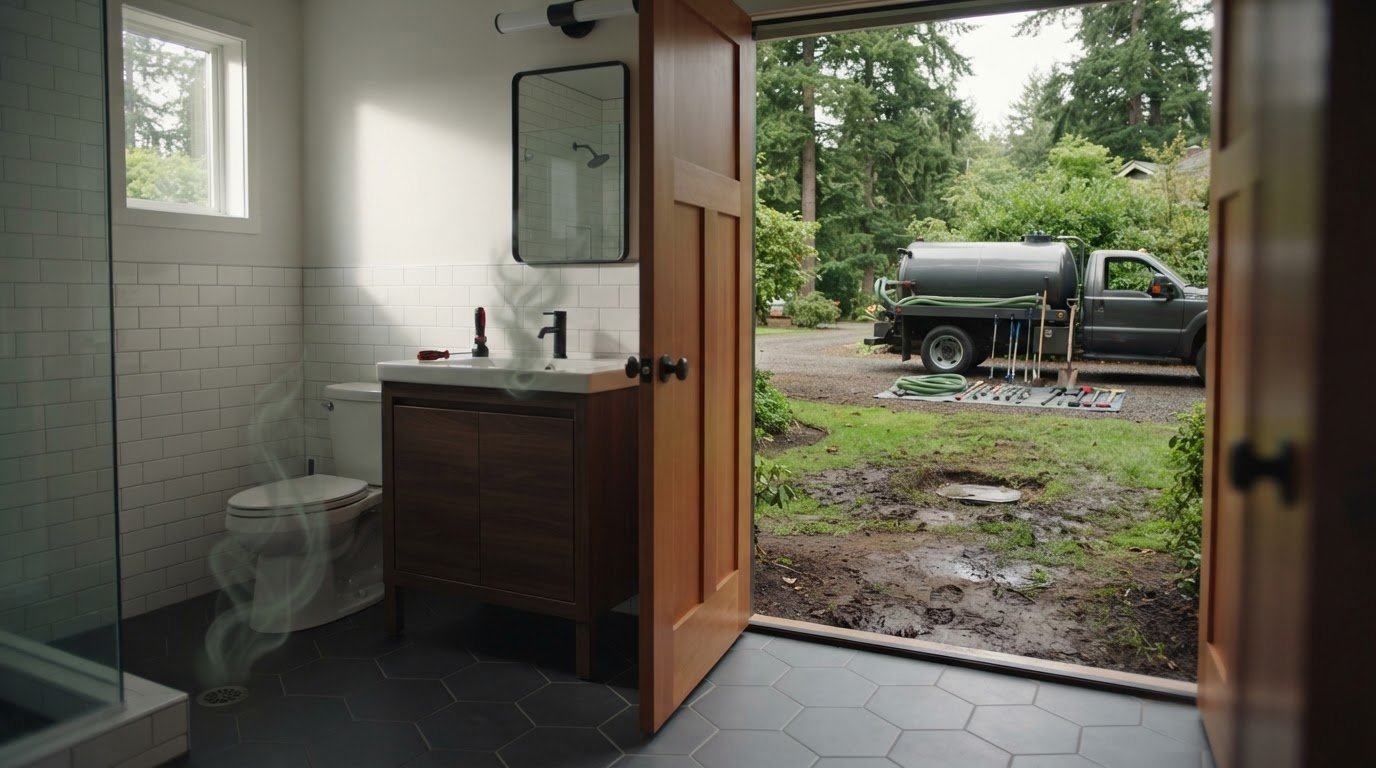
- Sewage odors inside or outside the home
- Wet or soggy ground above the drainfield, even without rain
- Unusually green or lush grass over the drainfield area
- Sewage backing up into sinks, tubs, or toilets
Any one of these signs warrants a professional inspection. Multiple signs appearing at the same time indicate the system may already be failing.
Practical Maintenance Tips for Homeowners
Septic systems require consistent attention to avoid expensive failures. Pumping on schedule, being careful about what goes down your drains, and protecting your drainfield are the three areas that matter most.
Routine Inspections and Pumping
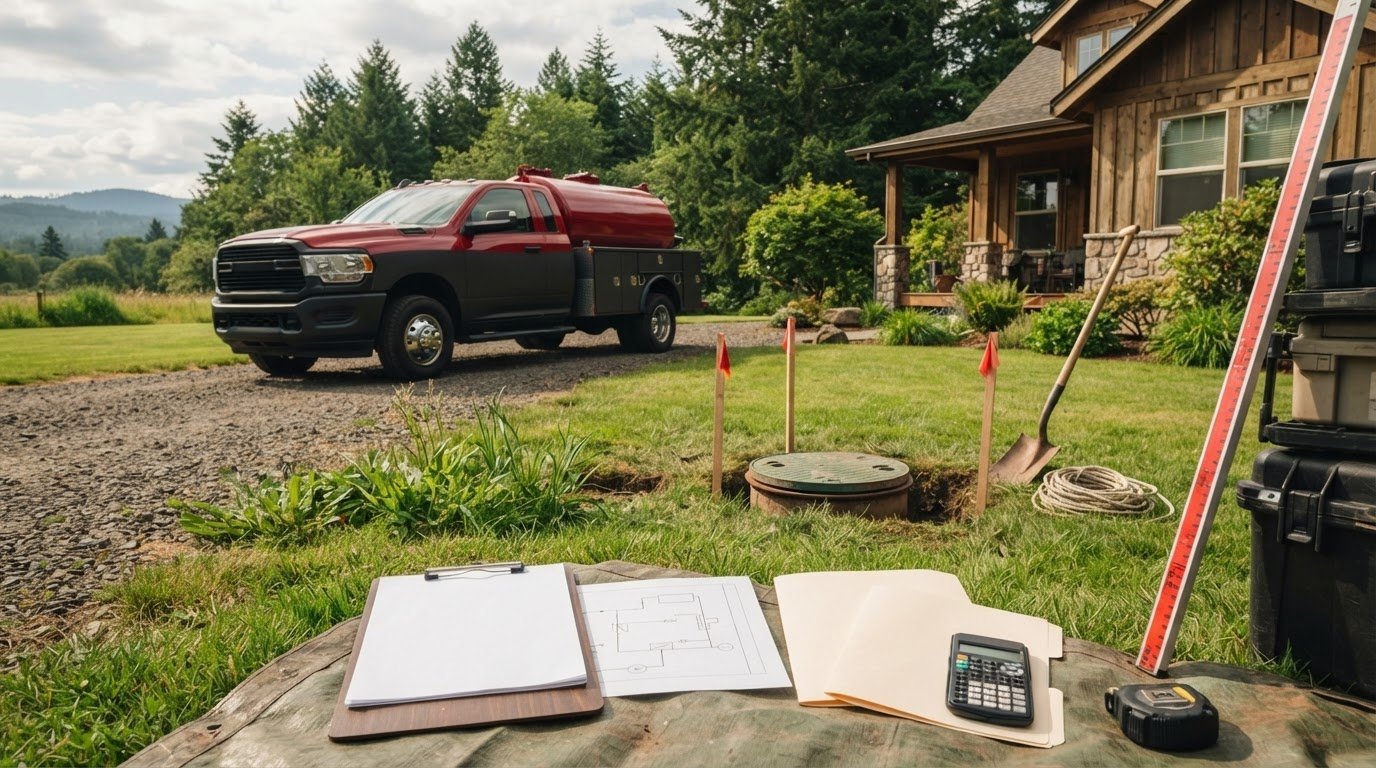
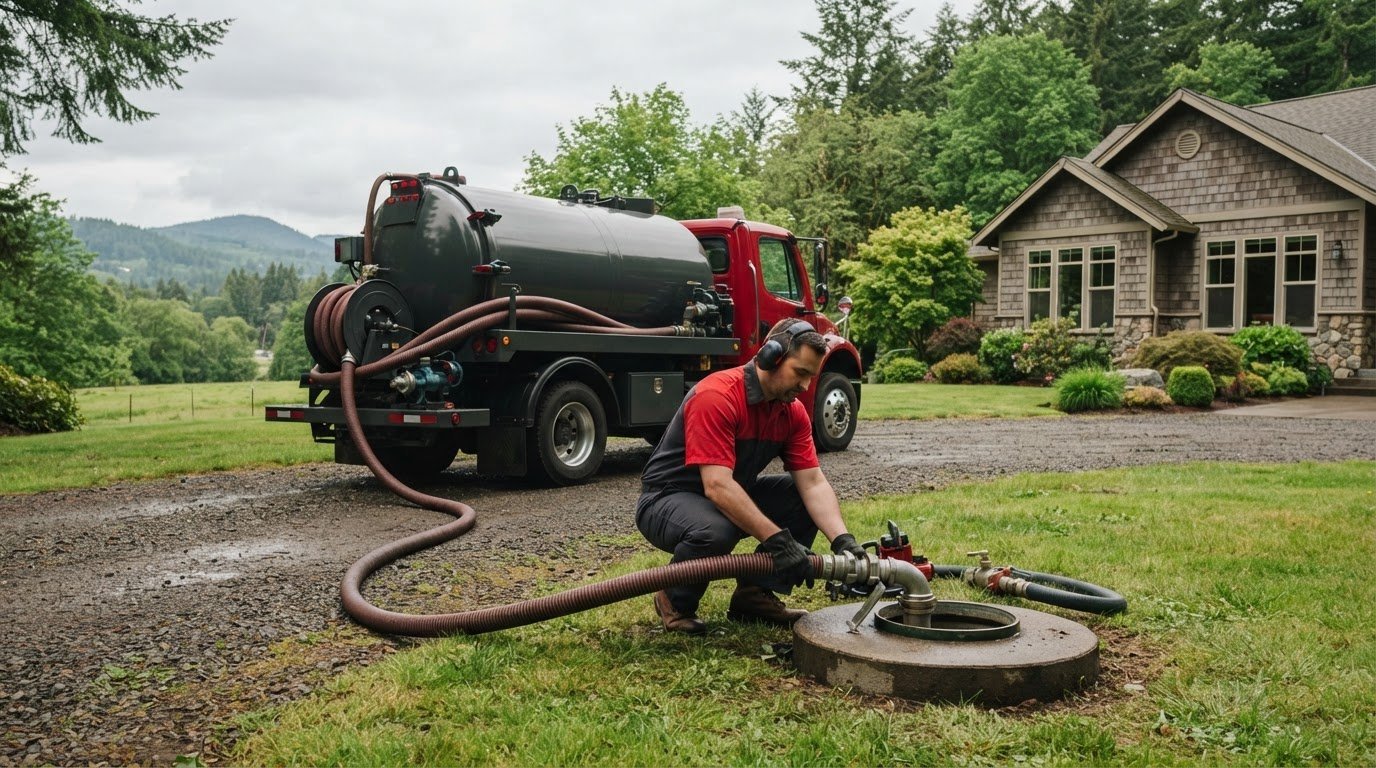
Most households should have their septic tank pumped every 3 to 5 years, but this depends on tank size and how many people live in the home. A 1,000-gallon tank serving a family of four typically needs pumping closer to every 3 years.
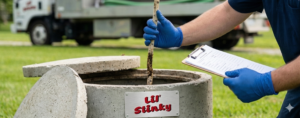
Professional inspections should happen at the same time as pumping. A licensed technician will check the T-shaped outlet baffle, inspect for cracks, and assess sludge and scum levels to determine if the system is functioning correctly.
Keep a written maintenance record with dates, findings, and any work performed. This record helps you track pumping intervals and is useful if you ever sell the property.
Best Practices for Waste Disposal
What you put into your septic system directly affects how well it works. Bacterial balance inside the tank can be disrupted by flushing the wrong materials.
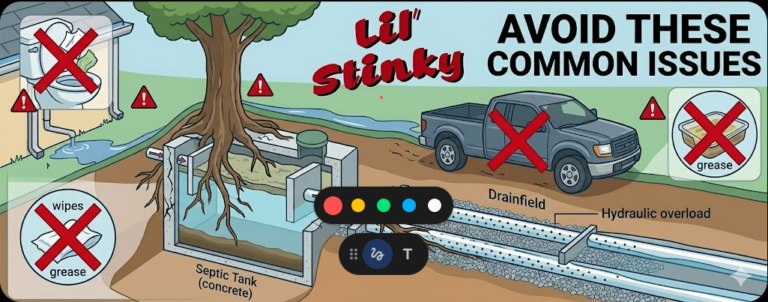
Do not flush or drain the following:
- Wipes, even those labeled “flushable”
- Paper towels or feminine hygiene products
- Cooking grease or oils
- Medications
- Harsh chemical cleaners or bleach in large quantities
- Coffee grounds or food scraps from a garbage disposal
Limit your use of antibacterial soaps and cleaners, as they can reduce the beneficial bacteria your tank needs to break down waste effectively.
Preventing Common Issues
Protecting the physical area around your septic system is just as important as what you put into it. Do not park vehicles or place heavy structures over the tank or drainfield, as this can compact the soil and damage buried components.
Divert rainwater runoff and roof drainage away from the drainfield. Excess water saturation prevents the soil from properly treating effluent.
Plant only grass over the drainfield area. Tree and shrub roots can infiltrate pipes and the tank itself, causing serious structural damage over time.
Watch for these early warning signs that something may be wrong:
- Slow-draining sinks or toilets
- Gurgling sounds in pipes
- Wet or unusually green patches of grass over the drainfield
- Sewage odors indoors or near the tank