Winter Septic Problems: What Every Homeowner Needs to Know
Winter is hard on septic systems. Frozen ground, increased indoor water use, and cold temperatures slowing bacterial activity can all create real problems for homeowners who aren’t prepared.
The most common winter septic issues — frozen pipes, slow drainage, and backups — are largely preventable with the right maintenance habits. Knowing what causes them and how to address them early can save you from expensive repairs and unpleasant surprises.
This guide covers what goes wrong with septic systems in cold weather, why it happens, and what you can do to protect your system through the season.
Key Takeaways
- Winter conditions like freezing temperatures and heavy water use put real stress on septic systems
- Frozen pipes, sluggish drainage, and backups are the most common cold-weather septic problems homeowners face
- Regular maintenance and simple preventative steps can protect your system from costly cold-weather damage
Common Winter Septic Problems and Their Causes
Cold temperatures can freeze pipes, lock up drain fields, and allow ice and snow to damage key components above ground. Each of these problems has a distinct cause and can lead to system failure if left unaddressed.
Frozen Pipes and Tank Components
Frozen pipes are the most common and costly winter septic issue, with repairs typically ranging from $1,000 to $3,000. The freeze usually happens in the lines running between your home and the tank, or between the tank and the drain field.
Several conditions make freezing more likely:
- Low or no water use — Pipes that rarely carry warm water lose heat faster and freeze more easily
- Shallow pipe installation — Lines buried above the frost line are directly exposed to ground freeze
- Missing or thin insulation — Pipes without adequate insulating cover, like soil or foam wrap, are vulnerable
- Compacted soil over pipes — Foot traffic or vehicle weight compresses the soil, reducing its insulating effect
Bacterial activity inside the tank also slows significantly in cold temperatures. This reduces how efficiently the tank breaks down waste, which can contribute to backups.
Snow and Ice Buildup Around the System
Snow sitting over your septic tank or access lids may seem harmless, but it creates real problems. A layer of undisturbed snow actually insulates the ground beneath it — but ice is different.
Ice forming directly on the soil surface blocks heat exchange and accelerates ground freeze around the tank and pipes. It also adds weight that can crack or shift plastic risers and access covers.
Do not remove all snow from above the tank during winter. A natural snow cover of several inches helps retain ground heat. Focus on preventing ice sheets from forming, particularly after freeze-thaw cycles in late winter.
Drainfield Saturation or Freezing
The drain field is particularly vulnerable in winter because it sits close to the surface and depends on soil bacteria to process effluent. When the ground freezes, that bacterial activity essentially stops.
Two specific scenarios cause drainfield failure in winter:
- Frozen soil prevents effluent from absorbing, causing it to back up into the tank and eventually the home
- Saturated soil from snowmelt or rain before a freeze traps excess moisture, which then freezes solid and blocks absorption entirely
A drain field that was already struggling before winter — due to age, overuse, or prior saturation — is far more likely to fail when temperatures drop.
Effective Solutions and Preventative Measures for Cold Weather Septic Issues
Protecting your septic system in winter comes down to three things: insulation, water management, and scheduled professional service.
Insulating Critical Septic System Parts
Frozen ground is one of the primary causes of septic system failure in winter. When soil temperatures drop below 32°F, the liquid in your pipes and tank can freeze, causing blockages or cracked components.
Key areas to insulate:
- Inlet and outlet pipes – These are the most vulnerable points where freezing typically starts
- The tank lid and riser – Exposed lids lose heat faster than buried components
- The drain field – Compacted or bare soil over the drain field offers little thermal protection
Adding 8–12 inches of straw, mulch, or foam insulation boards over the tank and exposed pipe runs is a practical way to retain ground heat. Avoid using leaves alone, as they compress and lose insulating value when wet.
Do not drive vehicles or heavy equipment over the drain field. Compacted soil loses insulating air pockets and increases freeze risk significantly.
Smart Water Usage During Winter
Consistent water flow through your system actually helps prevent freezing. A system that sits unused for days — such as in a vacation home — is far more likely to freeze than one in daily use.
Practical habits that reduce freeze risk:
- Run water briefly each day if the home will be partially unoccupied
- Spread laundry loads throughout the week rather than doing multiple back-to-back loads
- Fix any slow drips or leaks — cold water trickling into the tank without heat can accelerate freezing
- Avoid flushing excessive cold water at once
Overloading the system with water during a single day is also a problem. It can push partially treated wastewater into the drain field before it has warmed adequately.
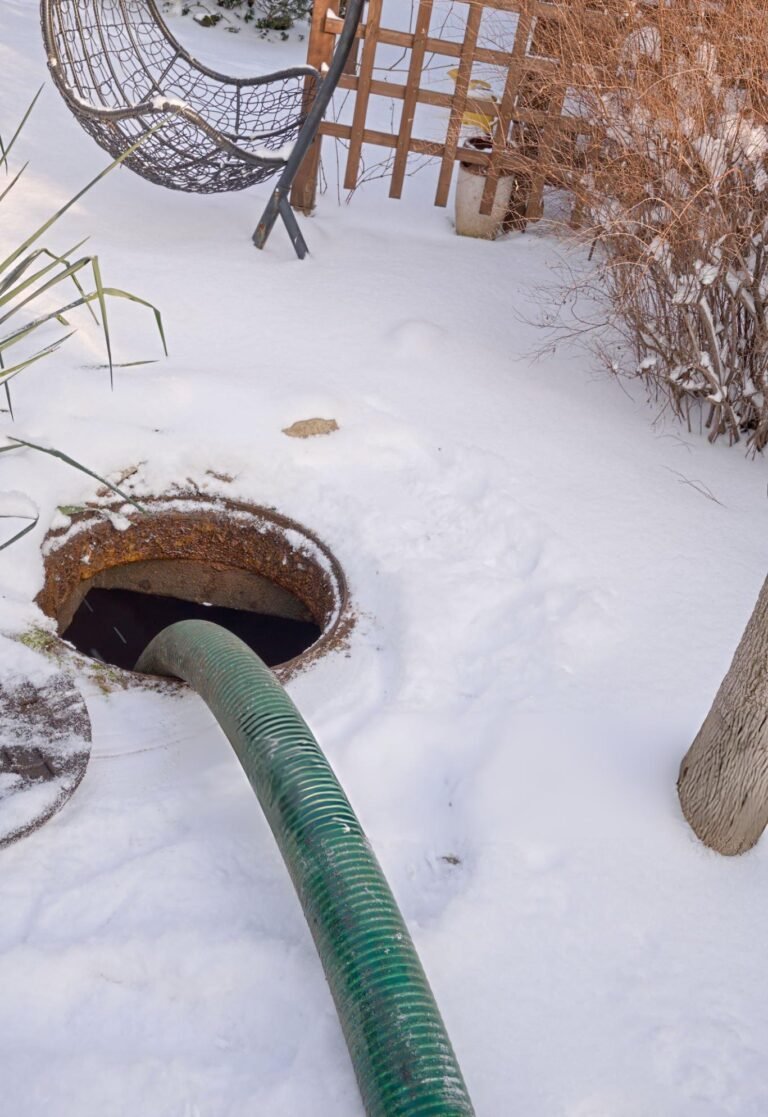
Professional Maintenance Strategies from Lil Stinky Septic
Scheduling a pump-out before winter is one of the most effective steps a homeowner can take. A full tank has less thermal mass and freezes faster than a properly maintained one.
Recommended professional steps:
Service | Why It Matters in Winter |
Tank pumping | Reduces freeze risk and prevents overflow |
Pipe inspection | Identifies cracks before ground freezes |
Baffle check | Damaged baffles cause solids to reach the drain field |
Riser and lid inspection | Ensures no cold air is entering the tank directly |
Lil Stinky Septic recommends scheduling service in early fall before temperatures consistently drop below freezing. Waiting until a problem appears in January means working in frozen ground, which increases repair time and cost.