In Oregon, replacing a drain field isn’t just a simple repair; it’s a full-scale regulatory event that the DEQ now treats as a brand-new installation. If you’re starting the septic drain field replacement process Oregon requires in 2026, you’re already facing a 33 percent increase in state fees and a mandatory shift to the new ePermitting system. It’s frustrating to watch your budget climb while worrying about heavy machinery destroying your landscaping. We know you want a reliable system without the stress of a torn-up yard or months of bureaucratic delays.
This guide simplifies the path forward under the latest state standards. You’ll learn how to satisfy the new OAR Division 73 requirements, discover cost-saving alternatives to total excavation, and see how soil science can work in your favor. We’ll walk through the current permit timeline, compare repair versus replacement options, and explain how to get your project approved through the state’s digital system with minimal friction. Whether you’re dealing with a failing system or planning an upgrade, we’ll help you protect your property and your wallet.
Key Takeaways
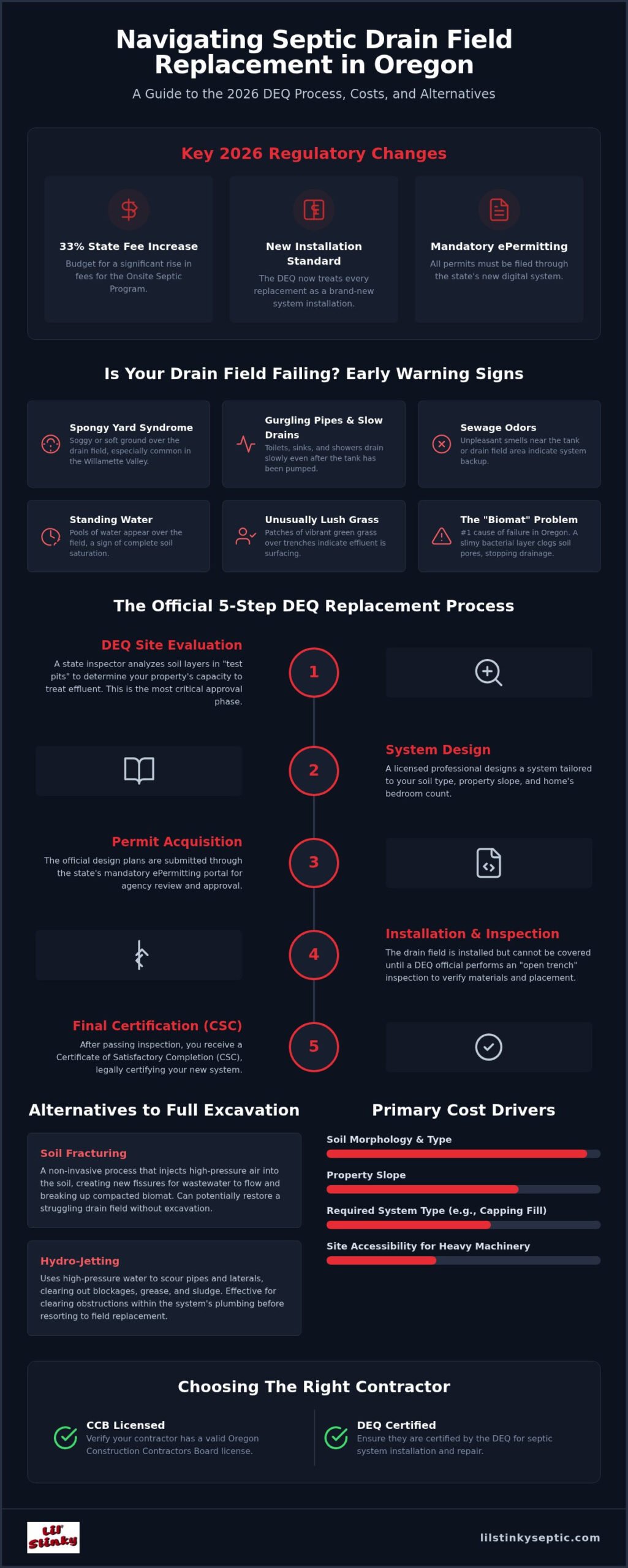
- Recognize early failure signs like gurgling pipes and the “spongy yard” syndrome common in the rainy Willamette Valley.
- Master the septic drain field replacement process Oregon requires in 2026, including the mandatory ePermitting system and critical DEQ site evaluations.
- Discover how non-invasive alternatives like soil fracturing and hydro-jetting can potentially save your yard from a full excavation.
- Learn why soil morphology and property slope are the primary drivers of replacement costs and system design.
- Verify contractor credentials like CCB licensing and DEQ certification to ensure your project meets all local environmental standards.
Signs of Failure: When Your Oregon Drain Field Needs Attention
Is your backyard feeling a bit like a sponge lately? For many homeowners in the Willamette Valley, a soggy lawn is the first warning that the septic drain field replacement process Oregon requires might be in their future. While some issues are simple fixes, others indicate that your system’s ability to process wastewater has reached its limit. Recognizing these signs early can be the difference between a manageable repair and a total system collapse.
Many people assume that slow-draining sinks or gurgling toilets mean the septic tank is simply full. While a pump-out might offer temporary relief, these symptoms often point to a deeper problem in the soil. If your drains remain sluggish even after the tank is emptied, the effluent has nowhere to go because the ground is saturated. To understand the basics of these systems, you might ask, What is a Septic Drain Field? Essentially, it’s the final treatment stage where liquid waste filters through soil. When this area fails, the waste eventually backs up into your home or pools on the surface.
The ‘Biomat’ Problem Explained
Biomat is a dense, slimy layer of anaerobic bacteria that naturally forms at the soil-trench interface. Over time, this layer becomes so thick that it seals off the soil’s pores, preventing liquid from filtering through. Pumping your tank won’t solve this because the blockage is actually in the ground, not the tank. Biomat is the #1 cause of field failure in Oregon. Once this biological mat becomes impermeable, the system can no longer breathe or drain, leading to the dreaded spongy yard syndrome.
Environmental Red Flags in the Pacific Northwest
Oregon’s climate presents unique challenges for onsite wastewater systems. Our heavy winters and consistent rainfall can overwhelm even well-maintained fields. In areas like Clackamas County, high water tables often rise during the rainy season, leaving the soil with no room to absorb additional effluent. This saturation accelerates the failure of older systems that weren’t designed for today’s environmental standards.
If you notice standing water or exceptionally lush, green grass over your trenches during a dry spell, your field is likely struggling. Catching these issues during the summer or fall is critical before the winter rains make the situation worse. For those looking to avoid a full replacement, investing in septic drain cleaning Clackamas County services can sometimes clear minor obstructions before they turn into structural failures. However, if the soil itself is no longer absorbing water, you’ll need to begin the formal replacement process to stay in compliance with DEQ regulations.
The Step-by-Step Septic Drain Field Replacement Process in Oregon
The septic drain field replacement process Oregon homeowners face is more structured than ever. As of July 1, 2026, the state has fully transitioned to a mandatory online ePermitting system, and fees for the Onsite Septic Program have increased by 33 percent. You cannot simply dig a hole and hope for the best. The process follows a strict legal sequence designed to protect groundwater and public health.
- Step 1: The DEQ Site Evaluation. This is the most critical phase where an inspector analyzes your soil’s ability to treat effluent.
- Step 2: System Design. A licensed professional creates a plan based on soil morphology and your home’s bedroom count.
- Step 3: Construction Permit Acquisition. All plans are submitted through the digital ePermitting portal for agency approval.
- Step 4: Installation and Open Trench Inspection. The field is installed, but it cannot be covered until a DEQ official verifies the materials and placement.
- Step 5: Certificate of Satisfactory Completion (CSC). This final document legally certifies that your system is operational and compliant.
Navigating the DEQ Site Evaluation
To start, you must provide “test pits.” These are specific rectangular holes dug by a backhoe that allow the inspector to see the soil layers. What the test pit reveals determines your property’s soil capacity. If the soil is too dense or the water table is too high, a standard system might be rejected. In these cases, you may be approved for a “capping fill” system, which uses imported soil to create the necessary depth for drainage. An unsuccessful site evaluation can stop a project before it starts, so proper pit placement is vital.
Permit Timelines and Oregon Regulations
Expect some waiting. In the Portland Metro area, permit approval timelines often range from four to eight weeks depending on the county’s backlog. Oregon law is very clear: you must have a certified septic inspection Oregon report on file before making major structural changes to your system. Additionally, all work must be performed by a contractor with a valid Construction Contractors Board (CCB) license and DEQ onsite certification. Attempting a DIY replacement without these credentials is illegal and will result in heavy fines and a refusal of the CSC. If you’re feeling overwhelmed by the paperwork, reaching out for professional septic system design can help you stay on schedule and in compliance.
Alternatives to Septic Drain Field Replacement: Saving Your Yard
Do you really need a backhoe in your flowerbeds? Many homeowners assume that a failing system automatically means a total excavation, but that isn’t always the case. Before you commit to the full septic drain field replacement process Oregon regulations demand, it’s worth exploring remediation. If your soil isn’t completely “dead,” technology like hydro-jetting or mechanical aeration can often break up the biomat layer we discussed earlier. These methods use high-pressure water or air to clear out the sludge and restore the soil’s natural ability to absorb liquid.
Another non-invasive option is the Terralift process. This involves driving a long probe into the ground and injecting air at high pressure to fracture the soil. It creates new pathways for wastewater to travel without digging a single trench. While these solutions don’t work for every property, they can provide immediate relief and add years to your system’s life. Just be wary of chemical “miracle cures” sold in jugs. Most of these additives fail to meet Oregon’s strict environmental standards and can actually harm the beneficial bacteria your system needs to function.
Alternative Treatment Technology (ATT) Systems
If your lot is too small for a standard replacement or your soil quality is poor, an ATT system might be your best bet. These units act like a mini-municipal treatment plant on your property. They treat wastewater to a much higher standard before it ever reaches the soil. Because the effluent is cleaner, the DEQ often allows for a significantly smaller drain field footprint. This is frequently the only way to save a “failing” lot that doesn’t have the space for a traditional 100-foot trench system.
Is Remediation Right for You?
Success depends entirely on timing. Remediation works best when the system is not yet fully ‘surfaced’. If you already have raw sewage pooling on your lawn, the soil pores are likely too clogged for air or water pressure to help. We usually recommend a cost-benefit analysis before you decide. While hydro-jetting is much cheaper than a new installation, it’s a waste of money if your pipes are structurally collapsed or your soil morphology simply won’t allow for drainage. If you’re unsure where your system stands, we can help you evaluate whether a repair or a full septic drain field replacement process Oregon permit is the smarter investment for your property’s long-term health.
Factors Affecting Replacement Costs and Project Timelines
Why does one neighbor pay thousands more than another for the same project? In Oregon, the answer usually lies beneath your feet. The septic drain field replacement process Oregon mandates is heavily influenced by your specific zip code and the dirt in your yard. While the DEQ sets statewide standards, local variables like property slope and county level permit fees create significant price swings. You need to account for these factors before the first shovel hits the ground.
Soil Morphology and System Design
Category 1 soil, which is primarily sandy and well-draining, is the gold standard for septic systems. If your property has this, your system design will be straightforward and generally less expensive. However, many parts of the Willamette Valley are packed with heavy clay or silt. These poor draining areas often require ‘Sand Filter’ systems or ATT units. These involve importing specific types of sand to act as a secondary filter, which adds material and labor costs. For a detailed breakdown of how these factors influence your budget, check out our septic system installation cost Oregon guide for 2026 pricing factors.
Hidden Costs in the Replacement Process
Don’t forget about the phase after the pipes are in the ground. Excavation is naturally messy. You should budget for landscaping restoration and potential driveway repairs if heavy machinery needs to cross your asphalt. Additionally, DEQ rules require the formal decommissioning of your old tank or field. This involves pumping, crushing, or filling the old components with sand to prevent future sinkholes. We offer a ‘Best-Price Guarantee’ to help you manage these expenses. When you evaluate competing bids, ensure the contractor includes these decommissioning steps so you aren’t hit with unexpected charges later.
County lines matter too. Permit fees in Clackamas County often differ from Washington or Multnomah County, and their inspection backlogs vary. Timing your project for the summer is ideal because dry soil is easier to work with and less prone to compaction, but it is also the busiest season. We recommend starting the septic drain field replacement process Oregon requires at least two months before the rainy season begins to avoid weather delays. If you’re ready to get a clear picture of your project’s scope, request a professional onsite consultation to review your soil and property layout.
Choosing the Right Oregon Septic Contractor for Your Project
Selecting the right partner is the most important decision you’ll make in the septic drain field replacement process Oregon requires. You aren’t just hiring someone to operate a backhoe; you’re hiring a professional liaison who understands the nuances of local soil morphology and state environmental law. In Oregon, any individual or company working on an onsite wastewater system must hold a valid Construction Contractors Board (CCB) license and specific DEQ certifications. At Lil’ Stinky, we’ve held CCB #189693 for over 25 years. This longevity means we know the inspectors in Clackamas and Multnomah counties personally, which helps us navigate the new ePermitting system with fewer delays.
Major system overhauls are stressful, especially if a backup occurs during the middle of the project. This is why 24/7 support matters. You need a team that is responsive and ready to handle emergencies while your yard is under construction. We simplify the entire process by managing the design and permit phases on your behalf, ensuring every technical detail meets the 2026 OAR Division 73 standards before the first trench is even dug.
Questions to Ask Your Installer
Before you sign a contract, get clear answers to these three specific questions to ensure your property is in good hands:
- Do you handle the DEQ permit application on my behalf? You shouldn’t have to navigate the state’s digital portal alone. A full service contractor manages the paperwork from the initial site evaluation to the final certificate.
- What is your plan for protecting my existing landscaping? Replacement is invasive by nature. Ask about the size of the equipment they use and how they plan to minimize the footprint on your lawn and driveway.
- Can you provide a firm timeline for the ‘Open Trench’ inspection? Your yard cannot be filled back in until a DEQ official signs off on the work. A seasoned contractor coordinates this timing to prevent your property from sitting open for weeks.
The Lil’ Stinky Advantage: 25 Years of Oregon Expertise
We built our reputation on “straight talk” and integrity. If our evaluation shows that your system can be saved through remediation rather than a full septic drain field replacement process Oregon permit, we will tell you. We never push for unnecessary replacements when a targeted repair will solve the problem. Our goal is your long term peace of mind and property safety.
Once your new field is installed, protecting that investment is your next priority. We recommend enrolling in a septic maintenance plan Portland OR homeowners trust to catch minor issues before they lead to another failure. With our best price guarantee and deep local roots, you can feel secure knowing your system is built to last. Contact Lil’ Stinky for a professional drain field evaluation today!
Take the Stress Out of Your Oregon Septic Project
Managing a failing drain field is one of the most stressful parts of homeownership, but you don’t have to handle it alone. The septic drain field replacement process Oregon mandates in 2026 is designed to protect our local environment, and following those steps correctly ensures your property stays safe and compliant for decades. From navigating the new ePermitting system to choosing between remediation and a full excavation, having the right information is your greatest asset in avoiding unnecessary costs and yard destruction.
Lil’ Stinky Septic is here to provide the “straight talk” you need. With over 25 years of Portland area experience and our CCB #189693 license, we’ve seen every soil type the Willamette Valley has to offer. We offer a best-price guarantee on all major repairs to ensure you get high-quality workmanship without the corporate markup. Let us handle the inspectors and the technical design while you focus on your home. Get a Professional Drain Field Evaluation from Lil’ Stinky Septic today. We’re ready to help you get your system running right the first time.
Frequently Asked Questions
How long does the septic drain field replacement process take in Oregon?
The full timeline usually spans four to eight weeks from the initial application to final approval. While the physical digging and pipe laying only take two to five days, the septic drain field replacement process Oregon requires includes waiting for DEQ site evaluations and “Open Trench” inspections. In the Portland Metro area, permit backlogs can fluctuate seasonally, so starting your application in early spring or summer helps avoid the autumn rush.
Can I replace my own drain field in Oregon if I own the property?
Oregon law allows homeowner-builder permits for owner-occupied properties, but it’s rarely recommended for drain fields. Because these systems must meet strict 2026 OAR Division 73 standards and pass a final inspection, most homeowners hire a CCB-licensed professional. A licensed installer provides the necessary bonding and insurance that protects your property value. We handle the complex engineering and digital ePermitting paperwork so you don’t have to navigate the bureaucracy alone.
What is the difference between a repair permit and a replacement permit?
A repair permit covers minor fixes like replacing a broken pipe or a distribution box. A replacement permit is much more involved because the DEQ treats it as a brand-new installation. This triggers a requirement for a fresh site evaluation and a modern system design that complies with current environmental codes. If your soil is saturated, a simple repair won’t solve the underlying drainage issue, making a full replacement necessary.
How much does a DEQ site evaluation cost in 2026?
Effective July 1, 2026, the Oregon Legislature authorized a 33 percent increase in fees for the Onsite Septic Program. The exact cost for a site evaluation depends on your specific county, such as Clackamas or Washington, and the complexity of your lot. These fees are paid directly to the regulatory agency through the mandatory ePermitting portal. We recommend checking with your local county office in Canby for the most current 2026 fee schedule.
Do I have to move my drain field to a new location on my property?
In most cases, yes. You generally can’t install a new field directly on top of a failed one because the soil pores are clogged with biomat. Most properties have a designated “replacement area” identified during the original construction. If your lot is small or lacks a secondary site, we may need to look at Alternative Treatment Technology (ATT) systems. These units treat waste more efficiently, often allowing for a much smaller footprint.
Can I build a deck or shed over my new drain field?
You cannot build any permanent structures over your drain field or the designated replacement area. Decks, sheds, and driveways compact the soil and prevent the oxygen exchange necessary for bacteria to break down waste. Covering the area also makes it impossible for technicians to perform maintenance or repairs. It’s best to keep the area clear and planted only with shallow-rooted grass to ensure the system functions correctly for years.
What happens if my soil fails the DEQ site evaluation?
If your soil fails a standard evaluation, it doesn’t mean your property is unusable. It simply means a traditional gravity system won’t work due to high water tables or dense clay. In these situations, the DEQ often requires an engineered solution like a sand filter or an ATT system. As a licensed installer in Canby, we specialize in these complex designs, helping you find a compliant way to process wastewater even in challenging soil.
Does homeowners insurance cover drain field replacement in Oregon?
Standard homeowners insurance policies rarely cover the septic drain field replacement process Oregon homeowners face. Most carriers view a failing field as a maintenance issue resulting from age or wear and tear. Coverage only typically kicks in if the damage was caused by a sudden, accidental event like a vehicle driving over the pipes or a falling tree. It’s always wise to review your specific policy and ask about septic riders.