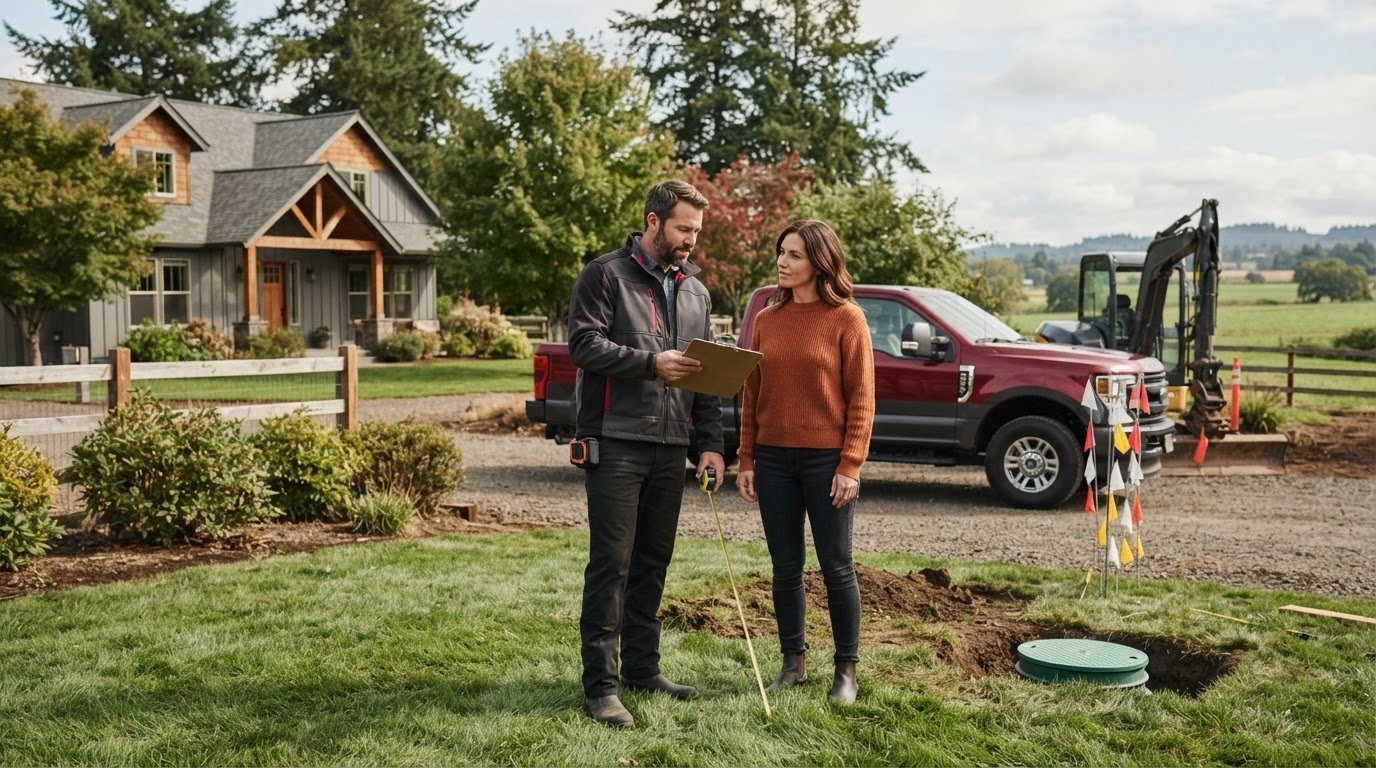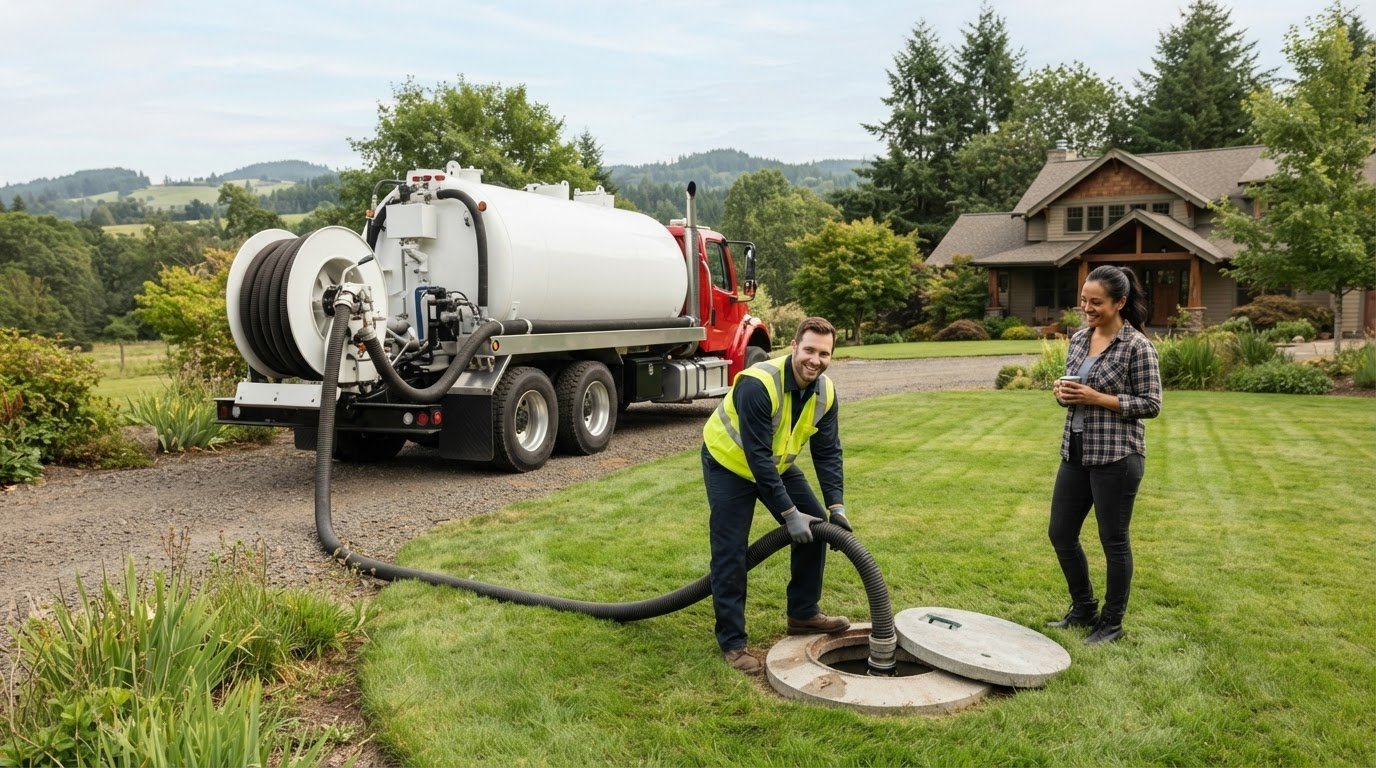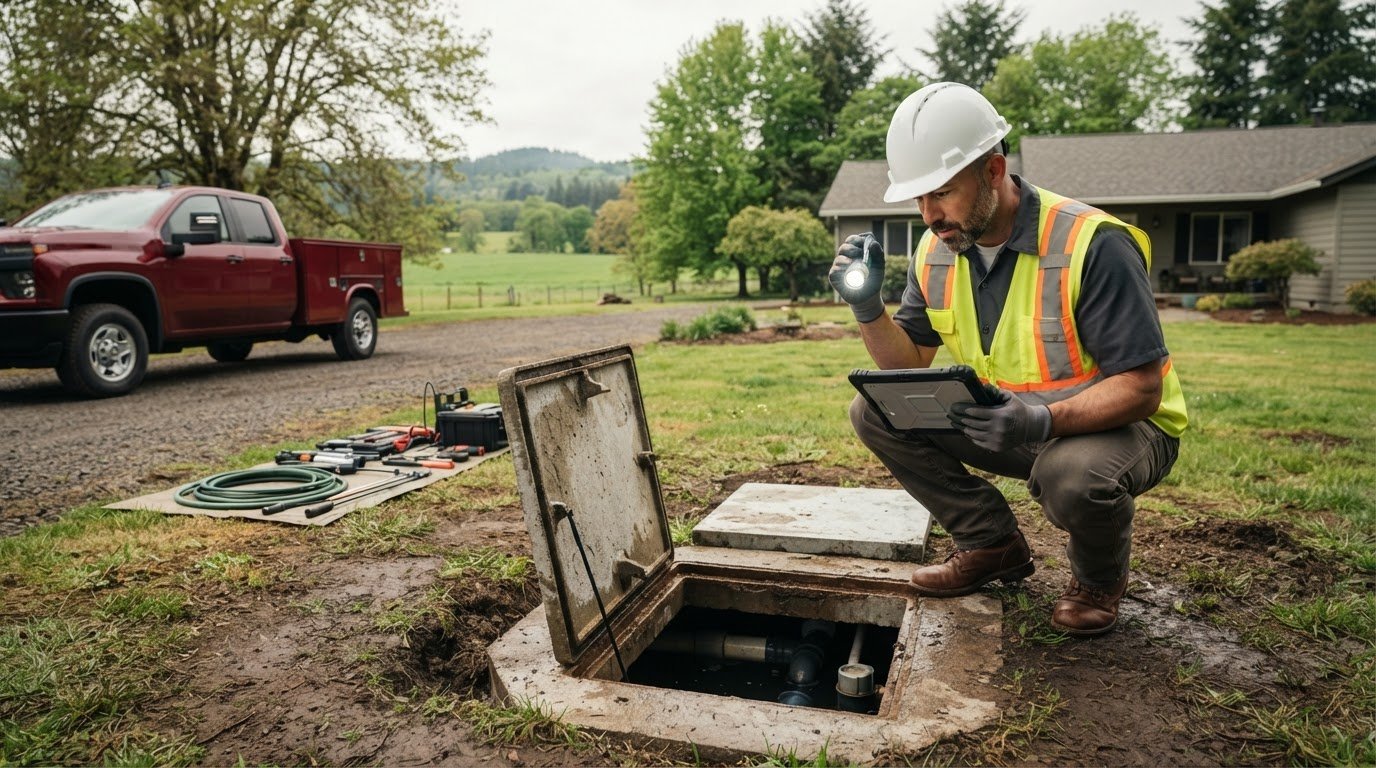
A general home inspector checks whether the toilets flush, but they cannot certify the underground system handling your wastewater. When escrow is moving fast and lender deadlines loom, hiring a certified septic inspector Canby property owners trust is the only way to verify what is actually happening beneath the surface.
Real estate transactions are stressful enough without the fear of an undetected drainfield failure or a rejected closing document. Discover how an Oregon DEQ-certified septic inspection protects your Canby real estate transaction and prevents costly system failures by thoroughly evaluating the septic tank, distribution box, and absorption field. Below, we break down local Clackamas County regulations, explain who is legally qualified to evaluate your system, and show you exactly what to expect during an official onsite assessment.
Key Takeaways
- Standard home inspections only test fixture drainage, leaving critical underground tank and absorption components unverified.
- Working with a certified septic inspector Canby property owners trust ensures your system receives an official subsurface evaluation that satisfies lender closing requirements.
- Canby’s unique river bottom soils and high seasonal water tables demand specialized scrutiny to catch early absorption field saturation.
- Locating historical county permits and clearing tank lid access before your appointment prevents costly escrow delays.
- Partnering with an established, licensed Oregon contractor guarantees your official inspection report complies with the latest DEQ regulations.
Why You Need a Certified Septic Inspector in Canby, Oregon
Buying or selling a rural property involves substantial financial stakes. When an onsite wastewater system is part of the deal, assumptions can prove disastrous. While a standard home inspector evaluates visible indoor plumbing, they aren’t trained or credentialed to certify subterranean infrastructure. Hiring a certified septic inspector Canby lenders and county officials recognize is essential for uncovering hidden system defects before closing.
Oregon DEQ Certification vs. General Home Inspection
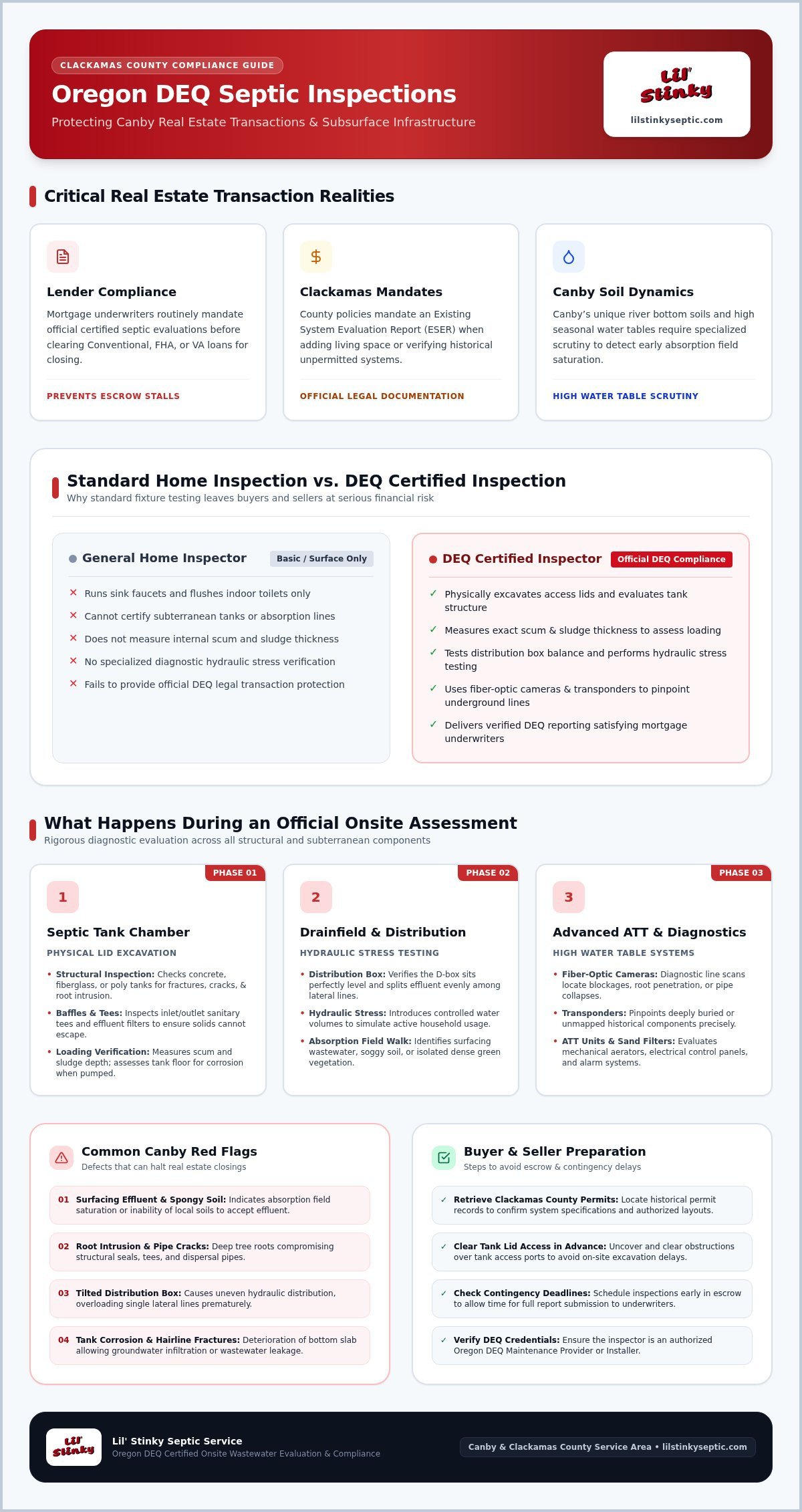
General home inspectors perform a basic visual inspection, often doing little more than running water down the sink to verify drainage. However, understanding what a septic system is and how its subterranean components function requires specialized diagnostic training. Under Oregon Administrative Rules, an official onsite wastewater evaluation requires credentials approved by the Oregon Department of Environmental Quality (DEQ), such as a DEQ Installer, Maintenance Provider, or an authorized wastewater specialist.
Certified evaluators physically access the tank, assess structural integrity, measure scum and sludge layers, and evaluate dispersal lines. An official DEQ evaluation report provides legal documentation that protects both parties from liability, ensuring buyers aren’t inheriting failed infrastructure and shielding sellers from post-closing disputes.
Real Estate Transactions and Clackamas County Mandates
While Oregon doesn’t enforce a universal statewide mandate for time-of-sale inspections, real estate transactions in Clackamas County face rigorous oversight. Mortgage underwriters routinely require an official septic evaluation before approving conventional, FHA, or VA loans. In addition, Clackamas County mandates an Existing System Evaluation Report (ESER) for specific land use actions, such as adding living space or verifying unpermitted historical systems.
Working with an experienced, certified septic inspector Canby buyers rely on helps you navigate these transactions cleanly by ensuring:
- Strict purchase agreement contingency deadlines are met without stalling escrow.
- Subsurface failure risks are documented clearly, preventing disputed escrow holdbacks.
- Lender-compliant paperwork is submitted correctly the first time to keep funding on schedule.
Skipping a certified evaluation puts your entire transaction at risk. A verified assessment delivers the clarity needed to sign closing papers with complete confidence.
What Happens During an Official Oregon DEQ Septic Inspection
An official evaluation goes far beyond lifting an access cap and shining a flashlight inside. A certified septic inspector Canby property owners hire follows a systematic protocol to inspect every structural and functional component. Technicians use electronic transponders to pinpoint buried components and run fiber-optic cameras through line segments to uncover hidden blockages. Following an established homeowner’s guide to septic maintenance helps sellers prepare, but an onsite certified evaluation leaves nothing to guesswork.
Visual and Structural Septic Tank Evaluation
Technicians physically excavate the tank lids to inspect the interior chamber. They examine concrete, fiberglass, or poly tanks for structural cracks, root intrusion, and groundwater infiltration. The inspector evaluates inlet and outlet sanitary tees, effluent filters, and baffle walls to ensure solids cannot escape into the absorption area. Measuring scum and sludge thickness reveals past loading habits. Pumping the tank during the appointment is often recommended, as an empty vessel allows a thorough inspection of the tank bottom for hairline fractures or corrosion.
Drainfield Performance and Hydraulic Stress Testing
Downstream from the tank, the inspector checks the distribution box to confirm it sits level and divides wastewater evenly across lateral lines. Introducing a controlled volume of water simulates active household usage, testing whether the soil absorbs effluent efficiently under hydraulic stress. The evaluator walks the entire dispersal area to check for surfacing effluent, spongy soil, or uneven patches of lush vegetation. To learn more about full system verification, review our guide to a certified septic inspection Oregon buyers rely on during escrow.
Advanced Alternative Treatment Technology (ATT) Inspections
Properties with shallow soil depths or high water tables often rely on Alternative Treatment Technology (ATT) units or sand filters. These advanced systems demand rigorous mechanical and electrical verification:
- Inspectors test mechanical aerators, electrical control panels, and audio-visual warning alarms.
- Secondary filtration media and recirculation loops are checked for organic clogs and biomat accumulation.
- The evaluator verifies ongoing maintenance service contracts required by Oregon administrative rules.
If your real estate transaction involves complex treatment components, scheduling an evaluation with Lil’ Stinky Septic Service ensures your system meets current regulatory benchmarks before closing.
Common Septic Inspection Red Flags in the Canby Area
Canby’s unique geography along the Willamette and Molalla river basins creates specific underground conditions that directly impact onsite wastewater systems. Out-of-area inspectors often overlook regional soil profiles and seasonal rainfall dynamics. Working with an experienced certified septic inspector Canby residents rely on ensures these localized red flags are caught before they turn into catastrophic failures.
Soil Saturation and Seasonal High Water Tables
Canby features fertile alluvial soils, often consisting of dense, silty loams. While fantastic for local agriculture, these fine soils drain slowly once saturated. Relentless Pacific Northwest winter rainfall causes groundwater tables to rise dramatically. This seasonal saturation can force groundwater backwards into absorption trenches. An experienced inspector knows how to distinguish between temporary hydraulic overload caused by winter conditions and a permanently clogged, dead drainfield.
Root Intrusion and Damaged Baffles
Lush regional greenery presents a constant threat to underground piping. Mature Douglas firs, bigleaf maples, and invasive Himalayan blackberries send thirsty root networks toward warm septic lines. These roots penetrate tank access grommets, crack aging distribution pipes, and shatter connection joints. Once roots compromise the system, floating solids easily bypass broken inlet or outlet baffles. Scheduled maintenance and targeted septic drain cleaning Clackamas County homes require can clear these blockages before roots destroy subterranean components.
Sludge Accumulation and Distribution Box Deterioration
When tanks go unpumped for years, settling solids accumulate until sludge washes out into the disposal field. In older properties, concrete distribution boxes take the brunt of this damage:
- Sewer gases convert into sulfuric acid, eating away at concrete walls until the box crumbles.
- Ground shifting causes the distribution box to tilt, flooding one trench while leaving others unused.
- Bituminous fiber piping, commonly known as Orangeburg pipe, collapses under soil weight.
Hiring a certified septic inspector Canby homeowners trust catches these structural flaws early, allowing minor repairs to save the larger system.
Preparing Your Canby Property for an Inspection: Seller & Buyer Checklist
Escrow timelines in Oregon move quickly, leaving little room for scheduling delays or missing documentation. Standard real estate purchase agreements typically allow a 10 to 14 business-day inspection contingency window. When transactions hinge on subterranean wastewater approval, advanced preparation makes all the difference. Booking a certified septic inspector Canby realtors trust as soon as mutual acceptance is reached keeps your closing date firmly on track.
Locating System Records and As-Built Drawings
Start your preparation by pulling historical records directly from the Clackamas County Onsite Wastewater program. You need the original installation permit and the accompanying as-built map, which shows the exact locations of your tank, distribution network, and reserve absorption field. In addition, gather recent service invoices to prove consistent maintenance history. If you added bedrooms, constructed shops, or modified plumbing without updating county records, notify your technician upfront so they can evaluate the system under its current load requirements.
Clearing Riser Access and Tank Lids
Save valuable time by preparing the physical site before the service truck arrives. Technicians must access the primary inspection ports to conduct their diagnostic work. Follow these steps prior to the appointment:
- Locate the tank lids and clear away sod, decorative rock, bark mulch, or patio flagstones covering them.
- Ensure surface risers are unobstructed by patio furniture, planters, or encroaching landscaping.
- Keep domestic pets secured indoors and ensure children remain away from work zones while heavy concrete covers are opened.
Understanding Inspection Reports for Lenders and Escrow
Once the evaluation concludes, your technician issues an official DEQ Existing System Evaluation Report. This detailed paperwork categorizes system conditions into clear operational statuses: acceptable, minor repair needed, or non-compliant. If the assessment uncovers needed repairs, such as replacing a broken baffle or securing a loose riser seal, obtaining licensed contractor estimates within your contingency period enables prompt negotiations. Timely paperwork delivery keeps mortgage underwriters satisfied and eliminates last-minute closing holdbacks.
Ready to get your property prepared for sale or verify a pending purchase? Schedule your certified septic inspection today to ensure full county compliance and protect your investment.
Why Choose Lil Stinky Septic Service for Your Canby Inspection
Selecting the right certified septic inspector Canby property owners trust means working with professionals who understand local soils, administrative codes, and real estate timelines. Wastewater issues can quickly stall a sale if handled by an inexperienced technician. Having a dedicated, hometown specialist ensures your system assessment is thorough, accurate, and fully compliant with state standards.
Over 25 Years of Local Canby Experience and CCB Licensing
Lil’ Stinky Septic Service brings over 25 years of hands-on experience to rural acreages and residential neighborhoods across Clackamas County. As a fully licensed, bonded, and insured Oregon contractor (CCB #189693), our team adheres strictly to DEQ testing standards and administrative guidelines. We deliver honest, straight-talk assessments without high-pressure sales tactics. Our technicians evaluate what is actually happening underground, giving buyers and sellers clear, unvarnished facts about their system’s true condition.
Full-Service Diagnostic and Pumping Capabilities
Unlike independent evaluators who only visually inspect components, we provide comprehensive diagnostic and field solutions. If an assessment reveals that the tank must be emptied to check the bottom floor for hidden fissures, our crew handles the job directly. In addition to thorough inspections, our service capabilities include:
- High-resolution camera line evaluations to pinpoint root intrusion and underground breaks.
- Complete maintenance for standard gravity setups as well as advanced Alternative Treatment Technology units.
- Professional pump-outs matching the standards outlined in our guide to septic tank pumping Portland OR area residents count on.
Scheduling Your Certified Septic Inspection in Canby
Real estate escrow deadlines don’t wait. Our dispatch team coordinates promptly with homeowners, buyers, and real estate agents to ensure on-time property visits during brief contingency periods. Following the evaluation, we provide rapid, legible digital reports formatted specifically to meet the underwriting criteria of mortgage lenders, escrow officers, and county officials.
When pending property transfers or system maintenance demand a certified septic inspector Canby depends on, protect your transaction with proven local professionals. Contact Lil Stinky Septic Service today to book your official DEQ septic inspection.
Secure Your Canby Property with an Official DEQ Evaluation
Real estate transactions carry enough moving parts without unexpected wastewater surprises. Relying on a surface-level plumbing check leaves your finances vulnerable to severe underground failures. An official DEQ evaluation verifies structural tank integrity, confirms balanced distribution flow, and ensures your drainfield can handle Canby’s wet winter soils.
Partnering with a certified septic inspector Canby property owners trust protects your closing date and satisfies strict lender requirements. Based directly in Canby with over 25 years of hands-on experience, Lil’ Stinky Septic Service (CCB #189693) provides thorough diagnostic testing, certified pumping, and dependable system care. Don’t let hidden septic issues derail your escrow timeline. Schedule your certified Canby septic inspection with Lil Stinky Septic Service today! You will move forward with complete confidence knowing your wastewater system is fully compliant and built to last.
Frequently Asked Questions
What is the difference between a DEQ septic inspection and a home inspection?
General home inspectors only evaluate indoor plumbing fixtures and fixture drainage rates. In contrast, a certified septic inspector Canby relies on evaluates the buried structural components required by Oregon DEQ. That inspection includes excavating tank lids, assessing internal baffles, checking effluent filter integrity, evaluating distribution boxes, and testing absorption fields. General home inspectors aren’t credentialed to issue official DEQ compliance reports.
How long does a certified septic inspection take on a Canby property?
A standard onsite DEQ inspection typically takes between two and three hours to complete. The exact duration varies depending on soil depth, component accessibility, and whether the property uses standard gravity or an Alternative Treatment Technology setup. If tank lids require deep excavation or if full hydraulic stress testing and tank pumping occur simultaneously, the evaluation can take slightly longer.
Do I need to pump the septic tank before or during an official inspection?
You shouldn’t pump the septic tank before the inspector arrives. The technician must observe operating liquid levels and measure scum and sludge accumulation to evaluate historical usage and baffle condition. Pumping during the inspection, however, is often highly recommended. Emptying the chamber onsite allows the specialist to thoroughly inspect the tank bottom and interior seams for structural fractures or leaks.
Who pays for the septic inspection during a Canby home sale transaction?
Payment terms depend directly on the terms negotiated in the Oregon purchase agreement. In most Clackamas County transactions, the buyer hires and pays for the inspection as part of their contractual due diligence. Sellers often agree to cover routine tank pumping or split diagnostic costs to keep escrow moving and satisfy mortgage underwriting conditions before closing deadlines arrive.
What happens if a septic system fails its real estate inspection?
A failed inspection does not automatically cancel your purchase transaction. The official report outlines specific system defects, such as a damaged distribution box, clogged lateral pipes, or an oversaturated absorption area. Buyers and sellers can negotiate price adjustments, repair credits, or escrow holdbacks to fund required corrections. Sellers can then pull necessary Clackamas County repair permits to restore full system compliance.
Can a certified septic inspector also perform required repairs if issues are found?
Yes, provided the inspector holds proper Oregon Construction Contractors Board licensing and DEQ installer credentials. Partnering with a full-service certified septic inspector Canby property owners trust, like Lil’ Stinky Septic Service (CCB #189693), eliminates the headache of hiring multiple contractors. A fully licensed provider can diagnose defects, pull county repair permits, perform corrective pipe or tank work, and re-inspect the system smoothly.
How far in advance should I schedule an inspection during home closing escrow?
Schedule your evaluation immediately once mutual contract acceptance is finalized. Oregon inspection contingency periods typically run 10 to 14 business days. Scheduling on day one ensures adequate time for county record retrieval, physical excavation, hydraulic stress testing, and report delivery. Early booking also preserves critical time to negotiate seller credits or obtain repair bids before your contractual objection deadline closes.