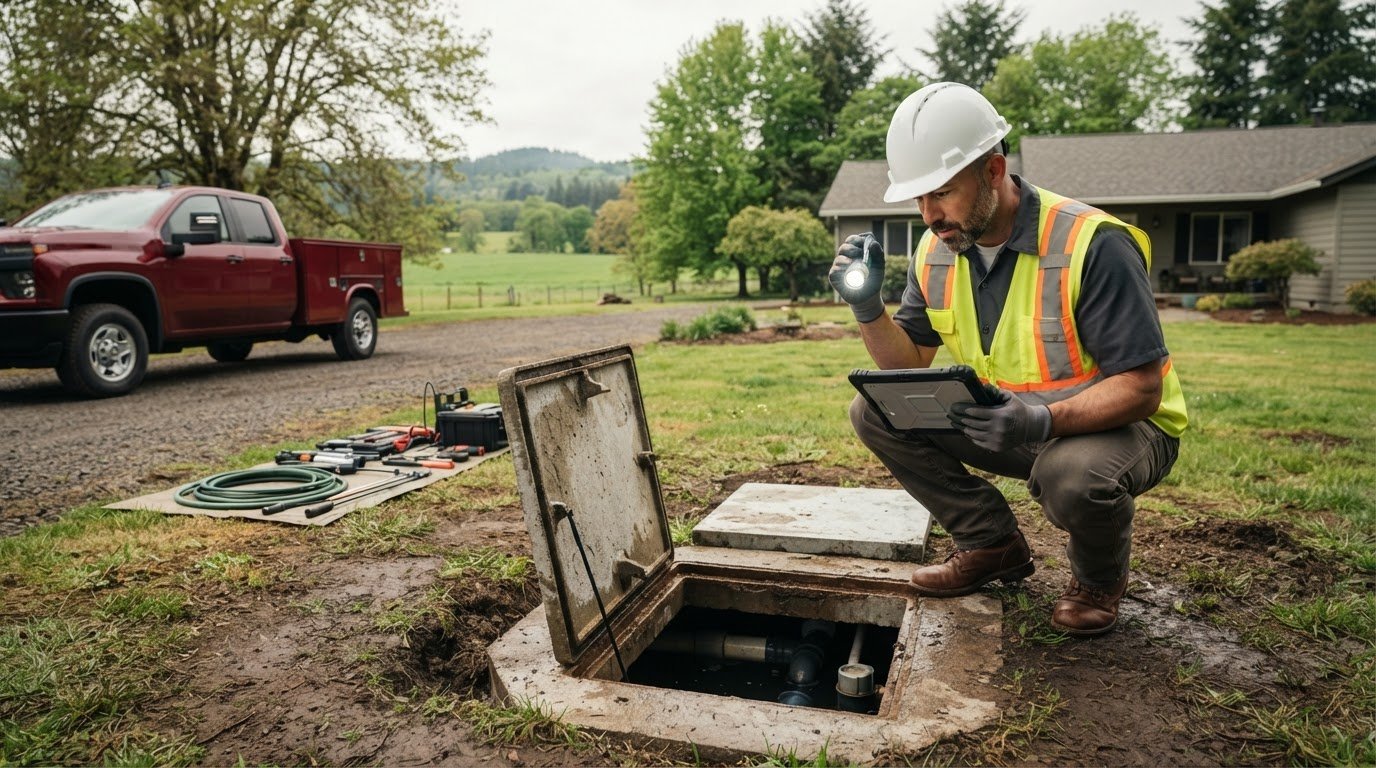
Imagine walking into your bathroom on a rainy Oregon evening only to find the floor covered in a foul-smelling backup. It’s the ultimate homeowner nightmare; your first thought is likely the massive bill for a new drainfield. Effective septic system troubleshooting Canby residents can perform starts with staying calm and looking for specific clues. You don’t have to be a certified technician to recognize when your system is struggling, but you do need to know which signs demand immediate action to save your yard and your wallet.
We understand the stress of not knowing if you should call a general plumber or a dedicated septic specialist. It’s frustrating to feel like your property’s safety is at risk while you’re stuck in “wait and see” mode. This guide promises to give you a clear diagnostic path so you can identify issues before they turn into costly property disasters. We’ll walk through common symptoms like slow drains and soggy patches in the yard, explain the “why” behind them, and provide actionable steps to take right now. You’ll learn exactly when it’s safe to monitor a situation and when you need to call for 24/7 emergency service to protect your home.
Key Takeaways
- Spot early warning signs like slow sinks and gurgling pipes to stop a septic backup before it reaches your bathroom floor.
- Follow a clear, 4-step process for septic system troubleshooting Canby homeowners can use to identify if the problem is a simple clog or a tank emergency.
- Master the “Stop the Water” rule to protect your home from sewage damage the moment you suspect your system is failing.
- Understand why avoiding chemical additives and using high-tech camera inspections saves you money and protects your drainfield in the long run.
- Learn when it’s safe to wait and when you must call for professional, DEQ-certified support to maintain local compliance and property safety.
Common Warning Signs of Septic Trouble in Canby
Your septic system works silently until it doesn’t. Understanding what a septic system is helps you spot trouble before a disaster strikes. In Canby, we often see homeowners ignore small signs that lead to big bills. Catching these indicators early allows for simple repairs rather than a total system overhaul. Effective septic system troubleshooting Canby residents can rely on begins with simple observation of how your drains and yard behave.
Gurgling sounds in your pipes are a classic early warning. It’s the sound of air being trapped by a backup or a full tank. If your sinks drain slowly even after you’ve cleared the hair from the trap, the issue is likely deeper in the line. This is your system’s way of asking for help before the waste has nowhere else to go but back into your home.
Then there’s the “green grass paradox.” A lush, bright green patch of lawn over your drainfield might look nice, but it’s a major red flag. It means the soil is receiving too much liquid, which acts like fertilizer, or the effluent isn’t being properly absorbed. If the rest of your yard is brown during a dry spell but your drainfield is thriving, your system is struggling.
Pay attention to smells. A rotten egg odor inside usually points to a dry P-trap or a vent issue. However, if that same smell is wafting through your backyard, your tank might be overfull or the drainfield could be failing. This diagnostic step is a critical part of septic system troubleshooting Canby families need to prevent health hazards.
Canby Soil and Your Drainfield
Canby is famous for its rich soil, but Willamette silt loam presents unique challenges. This heavy soil holds moisture tightly. During Oregon’s intense rainy season, the ground in Clackamas County becomes saturated. This leaves no room for your system’s wastewater to go. You might notice localized flooding in your yard that doesn’t disappear after the rain stops. This isn’t just a puddle; it’s a sign that your drainfield can’t keep up with the water load.
Physical Symptoms You Can’t Ignore
Some signs are impossible to overlook and require immediate attention. If you notice any of the following, stop using water immediately:
- Sewage surfacing: If you see dark, smelly water ponding in your yard, your drainfield has likely reached its limit or is clogged with solids.
- Lowest drain backups: Check your basement floor drain or the shower on the lowest level. These are the first places sewage will appear when the main line is blocked.
- Stubborn toilets: If a plunger doesn’t fix a slow flush, the blockage is probably in the main line or the tank itself rather than the toilet trap.
A Homeowner’s 4-Step Septic Troubleshooting Checklist
Is your sink draining slowly, or is your entire system on the verge of failure? Before you assume the worst, follow this diagnostic framework. Effective septic system troubleshooting Canby homeowners can perform starts with a systematic check of your hardware. By following these steps, you’ll determine if you’re dealing with a simple pipe blockage or a serious tank emergency.
- Step 1: Check the main line. Locate your cleanout pipe, usually a white PVC cap near the house foundation. Carefully unscrew it. If you see standing water inside the pipe, the clog is between the house and the tank. If the pipe is dry, the problem is further down the line.
- Step 2: Inspect the tank levels. If you can safely access your tank lid, check the liquid level. Water should be at the bottom of the outlet pipe. If the water is higher than the pipe or touching the lid, your tank isn’t draining properly.
- Step 3: Evaluate the distribution box. This box sends water to different parts of your drainfield. If it’s flooded, your drainfield is likely saturated or clogged with solids.
- Step 4: Review your records. Check your last service date. Most systems need pumping every 3 to 5 years. If you’re past that window, your tank might simply be full. Following consistent septic system maintenance is the only way to prevent these sudden failures.
Locating Your System Components
Finding your tank shouldn’t be a guessing game. Most Canby properties have “as-built” drawings on file with Clackamas County or the DEQ. These maps are the blueprints of your buried system. They show exactly where your lids, distribution box, and drainfield lines are located. If you don’t have these, look for depressions in the soil or areas where the grass grows at a different rate than the rest of the yard. Knowing your layout is crucial for troubleshooting because it tells you exactly where to dig if an inspection is needed.
The ‘Water Load’ Test
You can perform a simple water load test to check your system’s capacity. Run a garden hose into the cleanout for about 10 to 15 minutes. If the water level rises quickly and stays there, you have a hard blockage. If the water drains but does so slowly, your system is likely sluggish due to age or soil saturation. Safety is paramount here. Never enter a septic tank or lean over an open lid. The gases inside are lethal and can cause you to lose consciousness in seconds. If you’re uncomfortable checking these components yourself, a professional septic inspection is the safest way to get answers.
Internal Clog vs. Septic Failure: Identifying the Root Cause
Knowing whether to call a standard plumber or a septic specialist can save you hundreds of dollars in unnecessary service fees. The first rule of septic system troubleshooting Canby residents should remember is the “power of numbers.” If a single bathroom sink is sluggish while the rest of the house drains perfectly, you’re likely facing a localized clog in a branch line. However, when multiple fixtures on the lowest floor start backing up simultaneously, the issue is almost certainly at the main line or the tank itself.
The main cleanout serves as your diagnostic border. If you open the cleanout and see standing water, the blockage is downstream toward the tank. To get a definitive answer without digging up your yard, we utilize high-tech pipe camera inspections. This technology allows us to see exactly what’s happening inside the pipe, whether it’s a root intrusion, a collapsed line, or a buildup of grease that’s choking the flow.
When to Call a Plumber
If you’ve isolated the problem to a single room, a plumber is usually your first call. You might notice gurgling in just one shower or a toilet that bubbles when the sink runs. This often points to a venting issue or a local pipe obstruction. Whatever you do, avoid the temptation to reach for chemical drain cleaners. These harsh liquids can kill the beneficial bacteria your system needs to break down waste, which directly contradicts EPA guidelines on septic system care. Stick to mechanical clearing methods to protect your tank’s ecosystem.
When to Call Lil’ Stinky Septic
If you’re looking for a professional team to help with indoor issues, you can explore Residential and Commercial Plumbing Services to see the standard of expertise required for complex home systems.
In addition to plumbing repairs, maintaining the quality of your water supply is a key part of home care. If you are considering a new system, Tradewinds Water Filtration provides a guide on how to avoid common installation issues with whole-house filters.
When the backup affects the whole house or you see sewage surfacing in the yard, it’s time for specialized septic help. These symptoms often mean your tank has reached its maximum capacity or the outlet filter is completely blinded by grease and solids. A broken baffle or a failing drainfield can also cause water to push back toward the house. In these high-stress moments, professional emergency septic pumping is the only way to relieve the pressure and allow for a proper inspection of the system’s mechanical components. We can quickly determine if the issue is a simple overfill or a more complex structural failure.

Emergency Response: What to Do During a Septic Backup
When a backup starts, your priorities for septic system troubleshooting Canby change from “what’s wrong” to “how do I stop the damage.” The most critical step you can take is the “Stop the Water” rule. Every time a toilet flushes or a faucet runs, you’re adding volume to a system that’s already overwhelmed. This extra liquid has nowhere to go but up through your lowest drains, potentially destroying flooring and cabinetry. Stop all water usage immediately, including the dishwasher and washing machine, until the issue is resolved.
Raw sewage is a serious health hazard containing pathogens and bacteria. Keep children and pets away from any affected areas in the home or yard. If the backup is significant, you may need to shut off your home’s main water valve to ensure no one accidentally uses a fixture. Taking these steps protects your family and limits the eventual cleanup costs.
The No-Fly List: What NOT to Do
Desperation often leads to mistakes that make a bad situation worse. Never pour “miracle” septic additives or harsh chemical cleaners down the drain to clear a backup. These products rarely work on a full tank and can destroy the bacterial balance needed for long-term health. Avoid flushing “flushable” wipes or pouring grease down the sink during a crisis; these only add physical mass to the blockage. Finally, keep vehicles and heavy equipment off the drainfield. Canby’s saturated soil is easily compacted, and driving over a struggling system can crush pipes and lead to a total field failure.
Immediate Mitigation Steps
While you wait for help, take a few minutes to document the situation. Capture photos of the backup location and any surfacing water in the yard. These records are invaluable for insurance claims or for our technicians to see the “peak” of the problem. If you have a distribution box or tank lids that are easy to access, clear away any overgrown grass or debris so the technician can get to work the moment they arrive. However, never attempt to open a tank lid yourself during a backup. The pressure and gases involved are dangerous; leave the heavy lifting to the professionals.
Preparing your property for a service truck can save precious time during an emergency. Ensure there is a clear path to the tank and that any gates are unlocked. If you’re currently facing a backup and need a 24/7 response, contact our team for emergency septic pumping to get your home back to normal fast.
Professional Septic Solutions in Canby, Oregon
Solving complex septic issues requires more than just a truck and a hose; it requires decades of local knowledge. Lil’ Stinky Septic Service has spent over 25 years helping neighbors in our community manage their wastewater systems effectively. When you’re dealing with septic system troubleshooting Canby homeowners often find that what looks like a total disaster is actually a manageable repair if caught in time. We offer a best-price guarantee on our services because we believe quality maintenance should be accessible to everyone in Clackamas County. Our goal is to provide a solution that protects your property value and your family’s health without breaking the bank.
A certified septic inspection is the most reliable way to secure long-term peace of mind. These inspections go beyond a simple visual check; they provide the technical data needed to make informed decisions about your property’s future. Whether you’re buying a new home or troubleshooting a sluggish system, professional certification ensures that your system meets all current Oregon DEQ standards.
The Lil’ Stinky Difference
We pride ourselves on “straight talk.” You won’t find corporate ambiguity or hidden fees when you work with us. Our team is deeply integrated into the community and understands the specific environmental regulations that govern our local area. We provide 24/7 rapid response because we know that septic emergencies don’t wait for convenient business hours. This local expertise ensures your system remains compliant and your property stays safe from environmental hazards. Our technicians are trained to be both bold problem-solvers and meticulous technicians, ensuring that every job is done correctly the first time.
Next Steps: Get Your System Back on Track
Scheduling a diagnostic visit is a straightforward process that starts with a simple phone call. When our technician arrives, they’ll listen to your observations and then use tools like electronic locators and sewer cameras to map your system without tearing up your lawn. You’ll receive a clear explanation of whether you need a simple pump-out, a baffle repair, or a more involved system adjustment. Once we’ve resolved the immediate problem, we can help you set up a septic maintenance plan tailored to your household’s water usage. This proactive approach is the most effective way to eliminate the need for emergency septic system troubleshooting Canby residents often face during the rainy season.
Contact Lil’ Stinky Septic for expert troubleshooting in Canby today!
Take Control of Your Septic Health
Dealing with drainage issues doesn’t have to be a source of constant stress. By recognizing early warning signs like gurgling drains and understanding the difference between a simple clog and a tank failure, you can prevent minor hiccups from becoming expensive disasters. Remember the “Stop the Water” rule during any backup and use your main cleanout to isolate the problem area. Effective septic system troubleshooting Canby residents can perform starts with these simple, proactive steps.
When the situation requires professional expertise, you don’t have to face it alone. Lil’ Stinky Septic Service brings 25+ years of Clackamas County expertise to every job. We’re licensed and insured (CCB #189693) and ready to provide the “straight talk” you need to get your system back on track. Whether you need a routine pump-out or a high-tech camera inspection, our team is here for you. Schedule Emergency Septic Troubleshooting in Canby Now and benefit from our 24/7 emergency service. Your property safety and peace of mind are just a phone call away.
Frequently Asked Questions
How do I know if my septic tank is full or if the drainfield is failing?
A full tank usually causes slow drains throughout the house. A failing drainfield shows up in your yard as soggy patches or standing water even during dry spells. If you see dark liquid surfacing above your pipes, your soil can no longer absorb effluent. We use specialized tools for septic system troubleshooting Canby properties to determine if you need a simple pump-out or a more complex field repair.
Can I use a snake to clear a septic backup?
You can use a plumbing snake if the blockage is a physical obstruction in the main line between your home and the tank. However, a snake won’t solve a backup caused by a full tank or a saturated drainfield. If you clear the line and the water returns quickly, the issue is deeper. Using a snake on the wrong problem can sometimes push the clog further or damage plastic baffles.
What are the most common causes of septic failure in Canby?
The primary culprits are heavy Willamette silt loam soil and excessive water loads during the rainy season. Many homeowners also wait too long between pump-outs; we recommend service every 3 to 5 years. Flushing “flushable” wipes or pouring cooking grease down the drain also leads to premature failure. These habits choke the effluent filter and prevent the system from processing waste naturally through the soil.
Is a septic smell always a sign of a major problem?
Not necessarily. A faint odor inside might just be a dry P-trap in a guest bathroom or a blocked roof vent. If the smell is localized to the yard, it’s a stronger indicator of a full tank or a leak. While a smell isn’t always a catastrophe, it’s a signal that your system’s gases aren’t being vented or processed correctly. It’s best to investigate before the odor turns into a backup.
How much does a septic troubleshooting call cost in Oregon?
Costs for diagnostic visits vary depending on the complexity of the issue and the equipment needed, such as sewer cameras. We offer a best-price guarantee to ensure our neighbors get fair rates for expert service. Because every system in Clackamas County is unique, we provide transparent pricing after an initial assessment. This approach prevents corporate ambiguity and ensures you only pay for the specific repairs your system actually needs.
Should I pump my septic tank if the ground is already saturated from rain?
You should pump if you’re experiencing a backup, but you need a professional who knows the local soil. Pumping a tank in saturated ground can be risky because the high water table can exert upward pressure, potentially causing the tank to float or shift. We have 25 years of experience managing these conditions in Canby. We’ll assess the ground saturation levels before starting to ensure your tank stays securely in place.
Can a clogged septic filter cause the house to back up?
Yes, a blinded effluent filter is a very common cause of whole-house backups. This filter is designed to keep solids from reaching and ruining your drainfield. If it gets clogged with grease or hair, it stops all liquid from exiting the tank. Cleaning or replacing the filter is a relatively simple part of septic system troubleshooting Canby homeowners can rely on to restore flow without replacing the entire system.
What should I do if sewage is pooling in my yard?
Stop using all indoor water immediately to prevent more sewage from surfacing. This liquid is a biohazard that carries pathogens; keep your family and pets far away from the area. Pooling usually means the drainfield is either clogged or completely saturated. You’ll need a professional diagnostic visit to see if the lines can be jetted or if the tank simply needs an emergency pump-out to relieve the pressure and protect your property.