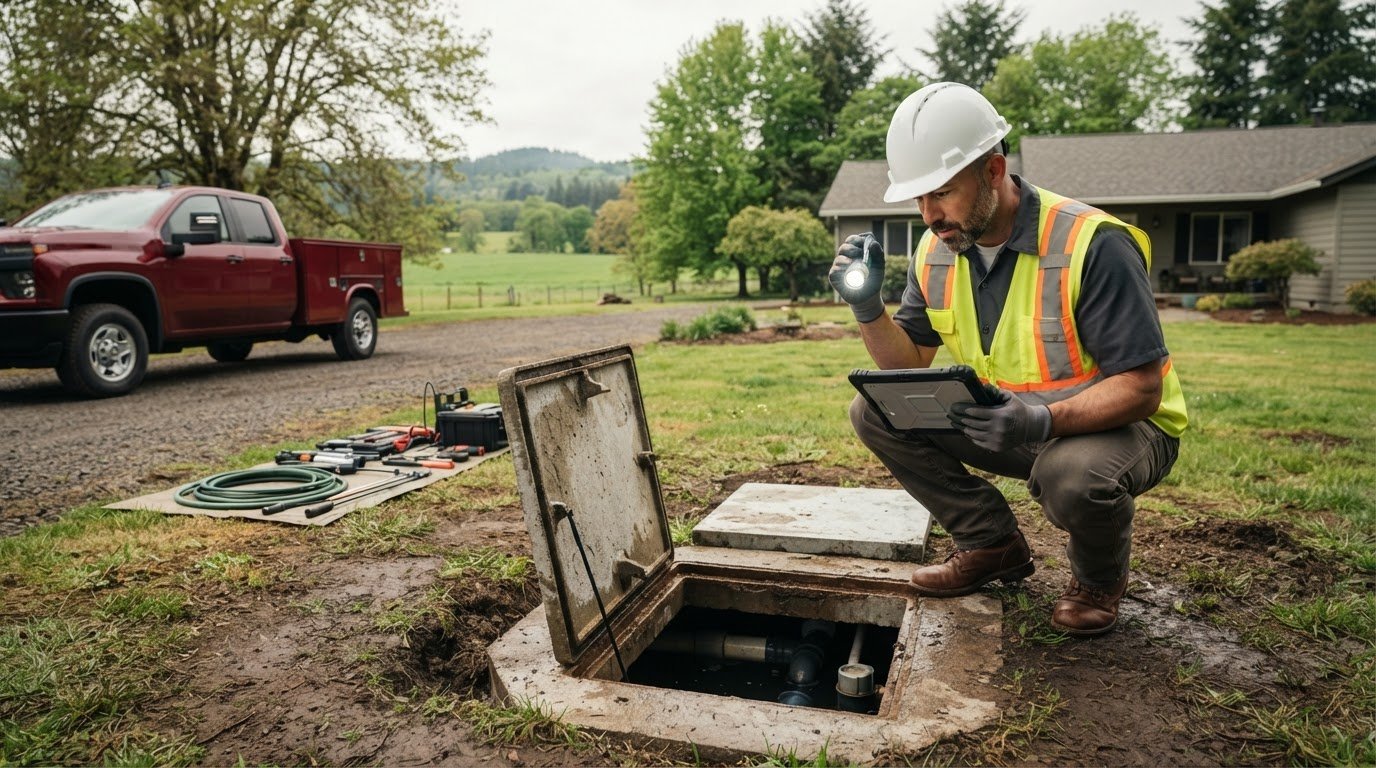
What if the lowest bid comes from a contractor who isn’t qualified for the system your property needs? Searching for “licensed septic installer Canby OR” is a useful start, but a license alone won’t tell you whether an installer understands your site or has clearly defined the work.
It’s reasonable to have questions. You may need to verify credentials, understand whether site conditions call for a standard system or an Alternative Treatment Technology (ATT) system, and compare proposals that cover different tasks. For Canby properties, local review may also affect the project, so clarify who handles each step.
This guide explains how to check relevant credentials, assess experience with different system types, and compare written proposals line by line. You’ll also find questions to ask about project scope, exclusions, and next steps before you commit. Lil’ Stinky Septic Service is based in Canby and reports more than 25 years of experience with septic system design and installation, including standard and ATT systems. A careful review can help you choose a qualified professional with a plan that fits your property.
Key Takeaways
- Before choosing a licensed septic installer Canby OR, check that the contractor’s credentials apply to the work your property needs.
- Contractor licensing, septic system design, and inspections are separate roles. Confirm who handles each part of the project.
- Ask how the system recommendation accounts for your property’s conditions. Compare proposals by system type, included work, and exclusions.
- Before signing, clarify who is responsible for applications, installation, inspections, and customer updates.
- Lil’ Stinky Septic Service is based in Canby and offers septic system design and installation, including gravity and ATT systems.
Choosing a Licensed Septic Installer in Canby, OR: What to Verify First
A septic installation is a property project, not simply a tank purchase. The system needs to suit the site, and the work should be clearly scoped before you sign. If you’re looking for a licensed septic installer Canby OR, first check the contractor’s credentials for the proposed work. Then ask how their experience relates to your project.
Check Oregon Construction Contractors Board (CCB) licensing and relevant septic qualifications separately. A CCB listing and a contractor’s claim of septic experience are not the same proof. Ask which credentials apply to the proposed work, and confirm details with the CCB and Oregon Department of Environmental Quality (DEQ). Requirements can depend on the work involved, so use this guide to help evaluate contractors, not as a legal determination.
If you’re new to septic systems, a brief overview of how septic systems work can help you follow an explanation of the tank and other system components. Use that background to ask clearer questions, not to select a design before your property has been evaluated.
How Canby homeowners can check an Oregon contractor’s license
Search the contractor’s name or CCB number in the official CCB lookup and review the current status. Compare the listed business name with the name on the proposal and contract. If they don’t match, pause and ask why before proceeding. Ask the contractor or the CCB whether the credential applies to the specific work in your proposal. For septic-specific qualifications, confirm applicable requirements with Oregon DEQ instead of relying on a general claim of being “licensed.”
Which septic installation experience should you ask about?
Ask about projects similar to yours. If relevant, request examples of gravity or Alternative Treatment Technology (ATT) installations. Find out who handles design, coordinates installation, and communicates with reviewing authorities. Different people may have these responsibilities, so ask for clear answers rather than assuming one contractor manages every step.
Request references or project examples that show comparable work. Before sharing identifying details about a past customer or property, the contractor should confirm they have permission. Look for specific explanations of the project and the contractor’s role, not just broad claims such as “experienced” or “local specialist.” Those descriptions don’t explain what work was done or whether it resembles yours.
Oregon Septic Installer Credentials: Separate Licensing from Design and Inspection
A contractor may be licensed, offer system design, or hold qualifications related to inspections. These are different claims, and one does not automatically prove the others. Before hiring a licensed septic installer Canby OR, ask who handles each part of your project and verify the credentials that apply.
Oregon’s Construction Contractors Board (CCB) is the state contractor licensing authority. Oregon DEQ oversees the statewide onsite wastewater program, while project review and coordination may also involve local authorities. Confirm current requirements with the CCB and Oregon DEQ, and check current Clackamas County procedures for your property. Don’t rely on a general statement that a contractor “takes care of everything.”
What does CCB licensing tell a septic installation customer?
A CCB license record helps you verify the contracting business and its current status. Match the record to the exact business named on the proposal and contract, including any difference between a company name and its legal business name. If you’re unsure whether the credential applies to the proposed work, ask the CCB or contractor to clarify. A license is a credential to verify, not a guarantee of workmanship, site suitability, or project approval.
When should you ask about DEQ or county involvement?
Ask which agency reviews the project and what coordination the contractor will provide. Confirm current processes with Oregon DEQ and Clackamas County rather than assuming every property follows the same steps. Then check the proposal: does it include design work, application support, installation only, or some combination? Before signing, get the responsible person and your own responsibilities stated clearly.
Also ask who prepares or reviews the system design and who communicates with the reviewing authority. A clear answer shows where the installer’s role ends and where another professional or agency becomes involved. If a contractor describes an inspection credential, ask what the inspection covers and how it differs from installation. The Oregon septic inspection guide explains the inspection side, helping you distinguish that work from design and construction.
For a Canby-area project, you can also review Lil’ Stinky’s septic design and installation services and ask which parts of your project they handle. Ask the same questions of every contractor, then compare the answers with their written scope and verified credentials.
Compare Canby Septic Installation Proposals by Site Conditions and System Fit
Two proposals may recommend different systems because they rely on different site information, assumptions, or project boundaries. Don’t choose a design based on the proposal alone. Ask what property evaluation supports the recommendation, and confirm any applicable review process with the appropriate local authority. A qualified licensed septic installer Canby OR should be able to explain the reasoning clearly without presenting an unverified system choice as final.
What site information should an installer explain?
Ask what information informs the proposed design and whether factors such as soil, slope, setbacks, existing system components, or equipment access affect the scope. These details can vary from property to property, so don’t assume a neighbor’s system will suit your lot. Ask the contractor to identify assumptions that could change after further evaluation or agency review.
Before comparing proposal totals, check whether each contractor is working from the same information and scope. One proposal may describe an initial recommendation, while another includes more design or coordination work. Ask each contractor to clarify:
- What site information supports the proposed system type?
- What work is included, and what is excluded?
- Which design or scope details are assumptions that may change?
- Who is responsible for the next steps and customer updates?
How to compare gravity and ATT system proposals
A gravity system uses gravity to move wastewater through the system. An Alternative Treatment Technology (ATT) system uses an alternative treatment approach. These descriptions are only a starting point: the proposal should explain why the recommended system fits the evaluated site. ATT isn’t automatically necessary or better, and a gravity system shouldn’t be assumed suitable without a site-specific assessment.
Compare the components and responsibilities described in each written proposal. If contractors recommend different systems, ask them to explain the site information behind their recommendations and any maintenance responsibilities associated with the proposed systems. Clear answers help you determine whether you’re comparing equivalent scopes or different project plans.
For more background on planning considerations and factors that can affect installation costs, review the Oregon septic installation cost and planning guide. Use it to prepare questions, then rely on a property-specific evaluation and detailed written proposal to understand your project.
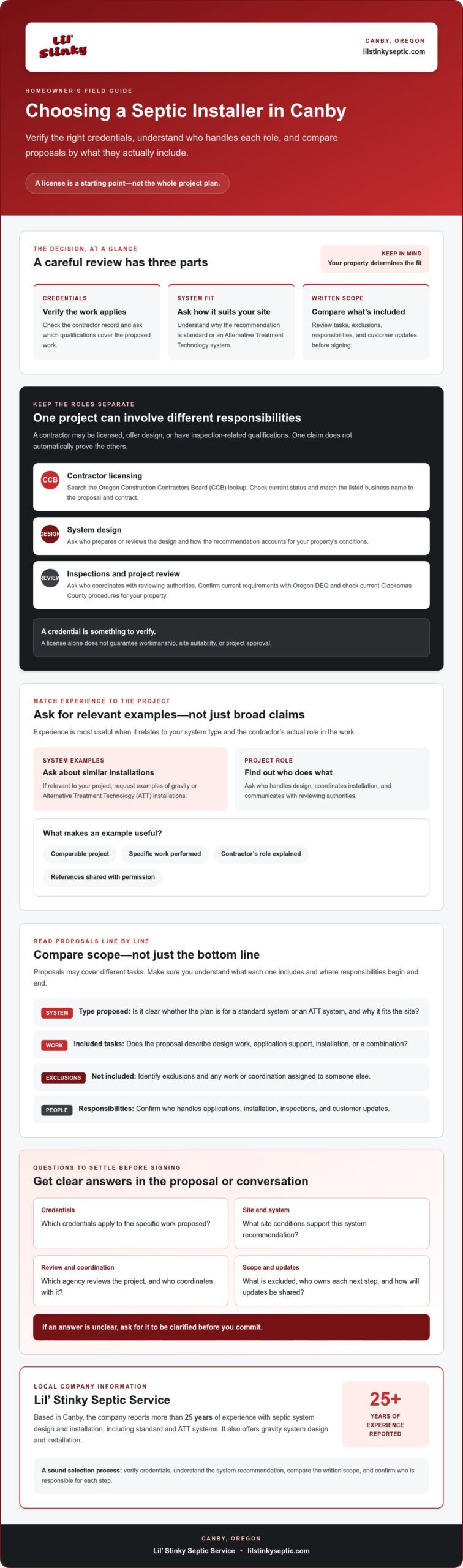
Questions to Ask a Septic Installer Before Signing in Canby
Before you commit, make sure the proposal explains who is doing what, what could change, and how you’ll receive updates. A conversation can clarify details, but the written scope and agreement should record the answers. Ask every contractor the same questions so you can compare their responses fairly.
Questions about project scope, schedule, and communication
- What work is included, and what’s excluded? Ask whether the scope covers design, application support, installation, and coordination for any required inspections. Confirm what depends on site findings or review.
- Who handles each project responsibility? Identify who prepares or reviews the design, coordinates applications, completes installation, and communicates with reviewing authorities. Ask who will be your main contact.
- What sequence should I expect? Request a written outline of the anticipated stages and any dependencies, such as further evaluation or review. Treat it as a sequence, not a guaranteed timeline.
- How will you tell me about changes? Ask what happens if site conditions differ from the proposal’s assumptions. Find out how added work, scope changes, and related costs will be described and approved before proceeding.
- How will I receive updates? Agree on who will provide progress updates, how you’ll receive them, and whom to contact with questions.
Questions about workmanship and system care
- What records or closeout information will I receive? Ask whether the agreement identifies installation records, operating instructions, or other project information you’ll receive when work is complete.
- What care does this system require? Ask which maintenance responsibilities apply to the proposed system and who can explain them. Don’t assume the same care applies to every system type.
- How are post-installation concerns handled? Ask how to report an issue and what the written agreement says about follow-up. Read the terms rather than relying on a verbal assurance.
Compare the answers with each contractor’s written proposal. If a response is vague, ask for written clarification before signing. This matters when comparing a licensed septic installer Canby OR whose proposal covers a different scope from another contractor’s bid. Clear responsibilities and documented changes can help prevent misunderstandings.
Have questions about project scope? Ask Lil’ Stinky about septic installation and clarify which parts of your project are included in its proposed work.
Why Consider Lil’ Stinky for Septic Installation in Canby, OR?
Once you’ve compared credentials, site-fit explanations, and written proposals, you may want to speak with a contractor based near your property. Lil’ Stinky Septic Service is a locally owned Canby business offering septic system design and installation, including standard gravity and Alternative Treatment Technology (ATT) systems. Its experience with more than one system type may be useful as you discuss possible approaches, but the right recommendation still depends on an evaluation of your property.
How Lil’ Stinky’s local installation services may fit your project
The company’s Canby location and stated service coverage in Clackamas County make it a local option to contact about installation or design. Confirm directly that your property and project are within its current service coverage and that it is accepting the work you need. Ask what evaluation informs a system recommendation, who handles design and installation, and what coordination is included. Don’t assume a particular system will suit your site before it has been assessed.
Lil’ Stinky reports more than 25 years of experience and lists CCB #189693. Verify these details rather than treating them as a substitute for your own checks. Confirm the CCB number’s current status and whether it applies to the proposed work. You can also ask what comparable gravity or ATT projects the company has completed and who will be responsible for each part of your project.
What to have ready when you contact an installer
A little preparation can make the first conversation more useful. Gather the property location, any information you have about the existing septic system, and a short description of why you’re considering installation. Then ask focused questions:
- What information or evaluation is needed before recommending a system?
- Who prepares or reviews the design, and what parts of the project does the proposal cover?
- Which agency reviews the project, and what coordination is included?
- What assumptions could change the scope, and how will changes be explained?
- What next steps do you recommend, and can you provide them in writing?
If you’re searching for a licensed septic installer Canby OR, start with a direct conversation and follow it with a clear written scope. Contact Lil’ Stinky about septic installation in Canby to discuss your property and request clarification before deciding. Compare the answers with other proposals, and verify credentials and project responsibilities before signing.
Choose Your Canby Septic Contractor with Confidence
A sound hiring decision starts with more than a license claim. Verify the contractor’s current credentials for the proposed work, ask how the system recommendation fits your property, and compare written scopes to understand what’s included and who handles each responsibility. These steps can help you choose a licensed septic installer Canby OR with a clear plan before you commit.
Lil’ Stinky Septic Service is based in Canby and serves the greater Portland area, including Clackamas County. The company offers septic system design and installation for gravity and ATT systems, and reports more than 25 years of experience and CCB #189693. Verify the current license details and confirm the company’s service coverage and project availability directly. Then ask for a clear explanation of the proposed scope and next steps.
Have questions about your property? Talk with Lil’ Stinky about your Canby septic installation project. Verify credentials, compare written scopes, and ask for a plan you understand before moving forward.
Frequently Asked Questions
How do I verify a septic installer’s license in Oregon?
Search the contractor’s name or CCB number in the Oregon Construction Contractors Board’s official license lookup and check the current status. Confirm that the listed business matches the name on your proposal and contract. If you’re considering a licensed septic installer Canby OR, ask the CCB whether the license applies to the proposed work. Also confirm relevant septic qualifications with Oregon DEQ, since contractor licensing alone doesn’t verify every role.
Does a licensed septic installer handle permits in Clackamas County?
Not necessarily. A contractor may coordinate applications or related project steps, but the proposal should state what they handle and what remains your responsibility. For a Canby property, verify current procedures with the Clackamas County Onsite Septic Program. Ask who prepares or submits required documents, who communicates with the county, and whether those tasks are included in the written scope. Don’t assume a contractor makes approval decisions.
Is a septic system designer the same as a septic installer in Oregon?
No. Design and installation are different project roles, even if one business offers both. A designer develops or prepares a system plan based on property conditions, while an installer carries out the work described in the approved project scope. Ask who is responsible for design, what qualifications apply, and who installs the system. Confirm current Oregon DEQ and Clackamas County requirements, since responsibilities can depend on the project.
Can a septic installer recommend an ATT system for a Canby property?
An installer can discuss whether an Alternative Treatment Technology (ATT) system may fit, but the recommendation should be based on a property-specific evaluation and the applicable review process. ATT isn’t automatically required or superior to a gravity system. Ask what site information supports the recommendation, who prepares or reviews the design, and what care the proposed system involves. Confirm current requirements with the appropriate local authority before treating a system choice as final.
What should a septic installation proposal include?
A useful proposal identifies the proposed system and the site information or design basis behind it. It should also describe included work, exclusions, responsibilities, assumptions, and what may change after evaluation or review. Look for clear answers about who handles design, applications, installation, inspections, and customer updates. Ask how additional work will be explained and approved. If a proposal is unclear, request written clarification before comparing it with another contractor’s scope.
How do I compare septic installation contractors in Canby, OR?
Compare more than the proposal total. Verify each contractor’s current credentials, ask about comparable project experience, and check whether proposals rely on similar site information. Then compare system recommendations, included work, exclusions, responsibilities, and how changes will be documented. Ask each contractor to explain their reasoning in plain language. A clear written scope makes it easier to identify differences between bids and decide which plan best addresses your property’s evaluated needs.
What is the difference between a septic installer and a DEQ-certified inspector?
A septic installer performs installation work, while a DEQ-certified inspector evaluates a septic system and provides inspection findings within the scope of that inspection. These roles aren’t interchangeable: an inspection doesn’t establish who will design or install a system. Ask what the inspection covers, who performs it, and what report or records you’ll receive. For installation, separately confirm the contractor’s relevant credentials and the responsibilities listed in the written proposal.