What matters most when you review a septic repair quote may not be the price, but the evidence behind the diagnosis. If you’re searching “getting a second opinion on septic repair quote Canby,” you likely want to know whether the proposed work addresses the actual cause of the problem. That’s a reasonable concern when system components and technical recommendations are difficult to interpret.
A second opinion isn’t about assuming the first recommendation is wrong. It gives you another opportunity to understand what was inspected, what the findings mean, and how the repair scope relates to those findings. If a repair may be urgent, clearer information can help you make a careful decision while still addressing the need to act.
This guide explains what to look for in a septic repair quote, which questions may need answers, and how to compare recommendations based on the same scope and evidence. Based in Canby, Lil’ Stinky Septic Service brings more than 25 years of experience to septic inspections. Learn how another assessment can help you understand your system and choose a sensible next step for your Canby-area property.
Key Takeaways
- A second opinion can clarify whether inspection findings support the diagnosis and proposed repair scope.
- Look for a clear connection between symptoms, evidence, repair tasks, materials, and stated limitations.
- Compare recommendations side by side, noting differences in diagnosis, work scope, and unanswered questions.
- For getting a second opinion on septic repair quote Canby, gather your quote, system records, plans, and maintenance history before arranging an inspection.
- Lil’ Stinky Septic Service brings over 25 years of experience and Oregon CCB #189693 to septic inspections and related system work.
Why get a second opinion on a septic repair quote in Canby?
A septic repair recommendation can be stressful, especially if it calls for substantial work and the diagnosis or technical terms are hard to follow. You may wonder what was observed, why the repair is needed, and whether the proposed work addresses the source of the problem. Asking those questions is a practical part of understanding a repair, not a challenge to someone’s expertise.
A second opinion is another assessment of your system’s condition and the proposed repair scope. The goal is to understand the evidence and how it supports the work, not to automatically reject the first recommendation. A septic inspection can put observations in context, whether they involve the tank, distribution components, or another part of the system. For basic background on how septic tanks work and their components, see Understanding Septic Tanks.
A diagnosis explains what may be wrong; a repair proposal explains what work is intended to address it. Keeping those two parts distinct helps you judge whether the proposed tasks follow from the inspection findings.
When a septic repair quote deserves another look
Consider another assessment if the reported symptoms are vague, the recommendation doesn’t explain what was found, or the proposed work isn’t tied to specific observations. For example, a quote might name a component for replacement without describing the condition that led to that recommendation. Before approving a major repair, make sure you understand the diagnosed cause and what evidence supports it.
Clarifying an existing quote and arranging another inspection are different steps. You can first ask for a clearer explanation of the findings or scope. An additional inspection provides another assessment of the system’s condition. Identify the information you’re missing: if the explanation answers your questions, that may be enough; if you still can’t connect the findings to the proposed work, another assessment may offer useful perspective.
What a second opinion can and cannot settle
An inspection can clarify conditions that are observable during the assessment and explain how they relate to potential repair needs. It can help you understand whether the proposed scope appears consistent with the observed condition or whether more information is needed. Its value is a better-informed decision, not automatic agreement or disagreement with the original recommendation.
One visit may not reveal every cause. Intermittent symptoms or a component that isn’t accessible during the assessment can limit what an inspection establishes. Describe when symptoms occur and what has changed, then consider the results alongside your records and the first recommendation. A second opinion can’t guarantee lower costs or prevent future repairs, but it can help you understand the system and decide on a sensible next step. For homeowners getting a second opinion on septic repair quote Canby, clear findings matter more than simply collecting another number.
What should a Canby septic repair quote explain?
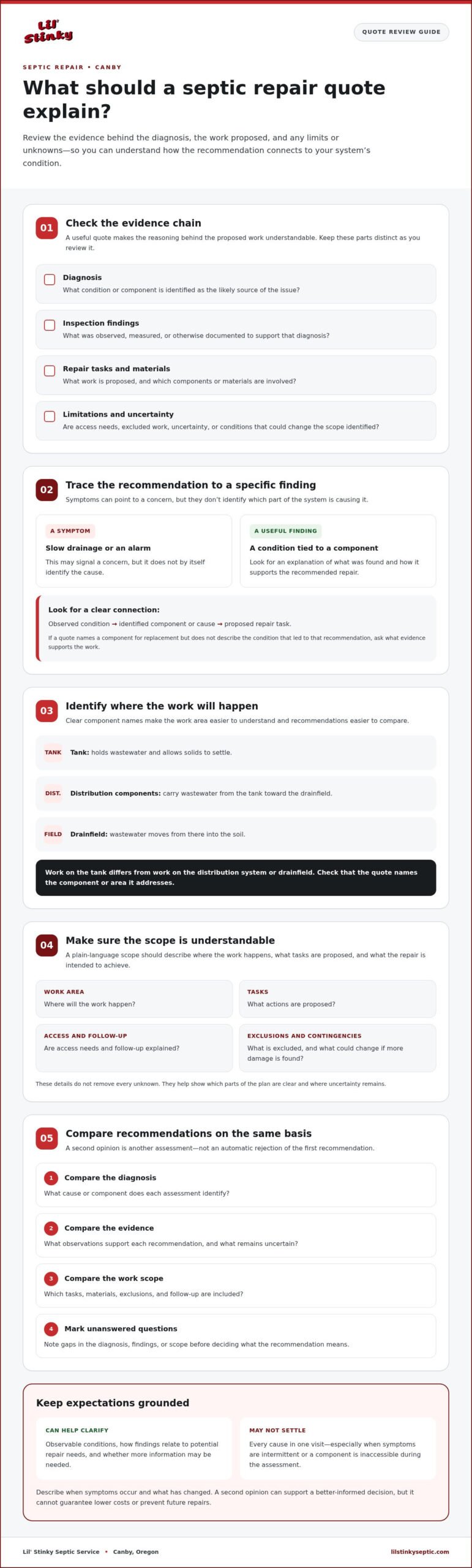
A useful quote makes the reasoning behind the proposed work understandable. It connects the problem you’ve noticed with inspection findings and the recommended repair. A symptom such as slow drainage or an alarm can point to a concern, but it doesn’t identify which part of the septic system is causing it. Look for a clear description of what was observed and how that evidence supports the proposed work.
Keep these parts distinct as you review the quote:
- Diagnosis: The condition or component identified as the likely source of the issue.
- Inspection findings: What was observed, measured, or otherwise documented.
- Repair tasks and materials: The work proposed and the components or materials involved.
- Limitations: Any uncertainty, excluded work, access needs, or conditions that could change the scope.
Connect the diagnosis to the proposed repair
Check whether the findings identify a specific component or condition that explains the recommendation. A symptom can have more than one possible cause, so separate observed facts from assumptions and open questions. If a report notes a symptom but doesn’t explain what was found, there’s a gap between the concern and the proposed repair. The EPA’s EPA Septic System Care Guidelines offer background on system care and common concerns.
Identify which part of the system the quote addresses. The tank holds wastewater and allows solids to settle. Distribution components carry wastewater from the tank toward the drainfield, where it moves into the soil. Work on the tank differs from work on the distribution system or drainfield. Clear component names help you understand the work area and compare recommendations accurately.
Check whether the scope is understandable
A plain-language scope should describe where the work will happen, what tasks are proposed, and what the repair is intended to achieve. Check whether it explains access needs, exclusions, follow-up, and contingencies, such as what may happen if additional damage is found after work begins. These details don’t eliminate every unknown, but they show which parts of the plan are clear and where uncertainty remains.
If a quote refers to a permit or another local requirement, don’t assume the same rule applies to every repair. Requirements can depend on the work involved. The proposal should identify what is included and flag requirements that still need to be determined, rather than presenting an assumption as settled fact.
For getting a second opinion on septic repair quote Canby, a focused septic inspection can help clarify system condition and how the findings relate to the proposed scope. Lil’ Stinky Septic Service provides septic inspection services in Canby, helping homeowners understand system observations before deciding on a next step.
How to compare two septic repair recommendations fairly
Two recommendations can differ without either being careless. The assessments may have examined different components, captured conditions at different times, or relied on different assumptions about the cause. Compare the observations and intended outcomes before deciding what the differences mean. A side-by-side review helps identify where the assessments agree, where they diverge, and what still needs explanation.
Matching scope matters more than comparing totals alone. A lower total may cover fewer tasks, while a broader proposal may address a different condition. First check whether both recommendations describe the same problem and work area.
Compare findings, not just the proposed work
Line up the symptoms you reported, the components each assessment examined, and the cause each one identifies. Separate direct observations from possible explanations. If one assessment describes a visible or measurable condition and the other doesn’t address it, note that gap rather than assuming one recommendation is right.
Use a simple comparison with one column for each assessment and rows for these points:
- Symptoms: What you reported and whether each assessment considered it.
- Components inspected: Which parts of the system were examined and which weren’t.
- Evidence and cause: What was observed, what cause was proposed, and what remains uncertain.
- Questions: Any finding or assumption that needs a clearer explanation.
This format makes differences visible without turning the comparison into a contest. If the assessments don’t cover the same components, note that first. Their conclusions may not be directly comparable.
Understand differences in repair scope
Next, compare the work each recommendation includes. Note which components are addressed, what tasks are proposed, and what falls outside the scope. One plan may describe a limited correction intended to improve a symptom; another may address a specific diagnosed cause. Don’t label either approach temporary or complete without enough information about its intended outcome and supporting findings.
Repair and replacement are different decisions, so compare them only when the inspection findings make that distinction relevant. If one proposal discusses repair and another suggests replacing a system or component, identify the evidence supporting each approach. Look for an explanation of the condition the work is meant to address and what could remain unresolved afterward.
Before choosing a next step, list the differences that affect your decision: mismatched inspection areas, conflicting explanations of the cause, different components included, or open questions about the expected result. Focus follow-up discussions on those gaps. This keeps the conversation grounded in evidence rather than broad claims or a single bottom-line figure. For homeowners getting a second opinion on septic repair quote Canby, a fair comparison means weighing like against like while recognizing where the findings differ.
How Canby homeowners can prepare for a septic second opinion
A little preparation can make an assessment more useful. Give the inspector a clear picture of the repair recommendation, the system’s history, and what you’ve noticed around the property. You don’t need to diagnose the problem yourself. Focus on collecting records and describing symptoms accurately.
Gather records and describe the problem
Start with the paperwork you have, even if it’s incomplete. A current repair proposal, previous inspection or service records, system plans, and maintenance history can provide helpful context. If you don’t have a particular document, make a note of that rather than delaying the assessment while searching for it.
Write down when symptoms began and where they occur. Include which fixtures are affected, whether the issue comes and goes, and what was happening around the time it appeared. For example, note whether a backup followed heavy household water use or whether a wet area is limited to one part of the yard. These are observations, not proof of a specific cause, but they can help guide the inspection.
Keep your notes simple and factual:
- Timing: When you first noticed the symptom and whether it has changed.
- Location: Which fixtures or areas of the property are involved.
- Conditions: Weather or household-use changes that coincide with the symptom.
- History: Relevant maintenance, service visits, and previous findings.
Don’t walk through wet or soft areas to investigate, dig, or open system components. Leave access and inspection work to the person assessing the system. If symptoms include a line backup or drainage issue, describe exactly where it occurs. That detail can help distinguish a household drain concern from a broader septic-system question.
Arrange an independent assessment and compare results
Once your records and notes are together, arrange an inspection. Lil’ Stinky Septic Service provides septic inspections for homeowners who want a clearer understanding of system condition and a proposed repair. Share the original recommendation and point out the symptoms you documented. This gives the inspection useful context without steering the findings toward a predetermined answer.
Afterward, review what was observed, which system areas were assessed, and how the findings relate to the proposed work. Set the results beside your existing quote and note any differences, remaining questions, or limits on what the inspection could establish. If the assessments don’t align, focus on the specific finding or scope difference that needs explanation. Getting a second opinion on septic repair quote Canby is more productive when the assessment is grounded in clear records and observations.
Have your notes and repair proposal ready when you schedule a septic inspection with Lil’ Stinky. The information can help focus the assessment on your system and the questions you want answered.
Get a clearer septic repair assessment from a local Canby team
A repair recommendation is easier to evaluate when you understand what was observed and how it relates to your property. Based in Canby, Lil’ Stinky Septic Service brings over 25 years of experience to septic work. Its services include septic inspections and system design, along with installation and alternative treatment technology (ATT) systems. An inspection can clarify observed system conditions and help you understand a recommendation before deciding on a next step.
What local experience adds to the assessment
Local experience means working with homeowners and properties in the Canby area, not assuming every system or repair is the same. A useful assessment focuses on the findings at your property, explains what they may mean in plain language, and identifies where questions remain. That clarity can help you weigh a recommendation without treating a second opinion as an automatic rejection of earlier work.
Lil’ Stinky holds Oregon CCB license #189693. This is a contractor license, not an endorsement by the Oregon Department of Environmental Quality. An inspection focuses on your system’s condition and the information you need to make a considered decision. Clear explanations can help you understand what was observed, what the proposed work is intended to address, and what still needs clarification.
Choose a clear next step for your property
Gather the repair proposal and the records you have, then arrange an inspection to review the system’s condition. Bring your questions and describe any symptoms you’ve noticed. Afterward, compare the observations with the proposed scope. If the findings differ, focus on the specific components or assumptions that need further explanation. This keeps your decision tied to evidence and your property’s needs.
For context about inspection documentation and Oregon reporting, refer to the certified septic inspection guide. If your concern includes active backups or line symptoms, the septic drain-cleaning guide may help you understand that part of the issue. A guide can provide general information, while an inspection considers the conditions observed at your property.
Getting a second opinion on septic repair quote Canby can help you make sense of an unfamiliar recommendation without rushing to a conclusion. An inspection can help clarify what the findings mean for your property and what questions remain.
Take the next step with a clearer picture
You don’t need every technical answer before moving forward. Focus on the question that matters most for your property: what do the inspection findings support, and what remains uncertain? If the recommendation is clear and the evidence makes sense, you can consider the proposed work with greater confidence. If questions remain, write them down and use them to guide your next conversation.
Don’t let the search for perfect certainty keep you from addressing a concern that may need attention. A focused inspection can help clarify the system’s condition, so your next decision is based on what’s observed rather than guesswork. For homeowners getting a second opinion on septic repair quote Canby, the goal is a practical path forward that respects both the evidence and the needs of the property.
Lil’ Stinky Septic Service is based in Canby, serves residential and commercial customers, and brings over 25 years of experience. The company holds Oregon CCB license #189693. Schedule a septic inspection with Lil’ Stinky to discuss your system and take a clear next step.
Frequently Asked Questions
Is it worth getting a second opinion on a septic repair quote?
It can be worthwhile if the diagnosis, supporting evidence, or proposed work is hard to understand, especially when making a major decision about your property. For homeowners researching “getting a second opinion on septic repair quote Canby,” the goal is to clarify what was observed and why the work was recommended. A second assessment doesn’t guarantee a lower bill or mean the original recommendation was wrong. Compare the documented findings and scope.
What should I bring to a second septic system inspection in Canby?
Bring the repair quote, any system plans you have, previous inspection or service records, and maintenance history. Note when symptoms began, which fixtures or property areas are affected, and whether rain or heavy water use seems to change them. These details help explain the system’s history. Don’t open a tank or disturb wet ground to gather information; leave access and inspection work to the professional.
Can a second septic inspection disagree with the first quote?
Yes. Inspectors may observe different conditions, review different records, or interpret symptoms differently. A disagreement alone doesn’t establish that either recommendation is incorrect. Compare which components each assessment covered, what evidence supports its stated cause, and what work it proposes. If the difference remains confusing, ask for the findings to be explained in plain language, including what is confirmed and what may require further evaluation.
Does a second opinion mean I need to replace my septic system?
No. Getting another assessment doesn’t itself indicate that replacement is necessary. The inspection is intended to clarify the system’s observed condition and the work being considered. Depending on the findings, the next step might involve a repair, more evaluation, or another option. Avoid making the decision based on a general rule. Ask how the recommendation relates to your system and what inspection evidence supports it.
How long does it take to get a second opinion on a septic repair quote?
Timing varies with the inspection needs, access to the system, available records, and the condition being assessed, so there isn’t a set turnaround to assume. You can help keep the inspection focused by having the quote and system history ready and describing symptoms clearly. If you’re arranging service because of an active backup or another urgent condition, explain that when making arrangements.
Should I approve septic repairs before getting a second opinion?
If there’s no immediate emergency, take time to understand the diagnosis, proposed work, and any stated risks of waiting. Don’t ignore an active sewage backup or another immediate safety concern while seeking clarification. The appropriate timing depends on the conditions observed, so ask the inspector to identify urgent concerns clearly. A second opinion can add context, but it shouldn’t delay action on a condition that needs prompt attention.
Can Lil’ Stinky inspect a septic system in Canby for a second opinion?
Yes. Lil’ Stinky Septic Service is based in Canby and provides septic inspections for residential and commercial customers. Share the existing quote and relevant system records so the assessment can consider your concerns. The company has over 25 years of experience and Oregon CCB license #189693. An inspection can help clarify observed findings, though the results depend on the conditions found at your property.