The lowest estimate isn’t automatically the safest choice. To find a reliable septic company in Canby, compare written estimates alongside emergency response, warranties, relevant experience, credentials, reviews, recommendations, and response times. For routine maintenance, a general guideline in Canby is to have a septic tank pumped every 3 to 5 years, though household use and tank size affect the right schedule.
It’s reasonable to want clear answers before anyone works on your property. A useful estimate explains the proposed work and what it includes, while a straightforward conversation helps you judge how clearly the company communicates and responds.
This guide shows you how to compare estimates without focusing on price alone, assess service and warranty details, and weigh experience, credentials, and customer feedback. You’ll also learn what to consider when you need urgent help, so you can make a steady, informed choice for your home.
Key Takeaways
- Compare written estimates by the work included and the clarity of the terms, not price alone.
- Use the 3-to-5-year pumping guideline as a starting point, then consider how household use and tank size affect your system’s needs.
- Weigh a company’s relevant experience, credentials, environmental practices, and warranty terms together.
- Look for review details about communication, completed work, and response times, and compare them with recommendations from people you trust.
- Match the service to the need, whether that means routine pumping, an inspection, or help with an installation or ATT system.
Estimates, emergency service, and warranties
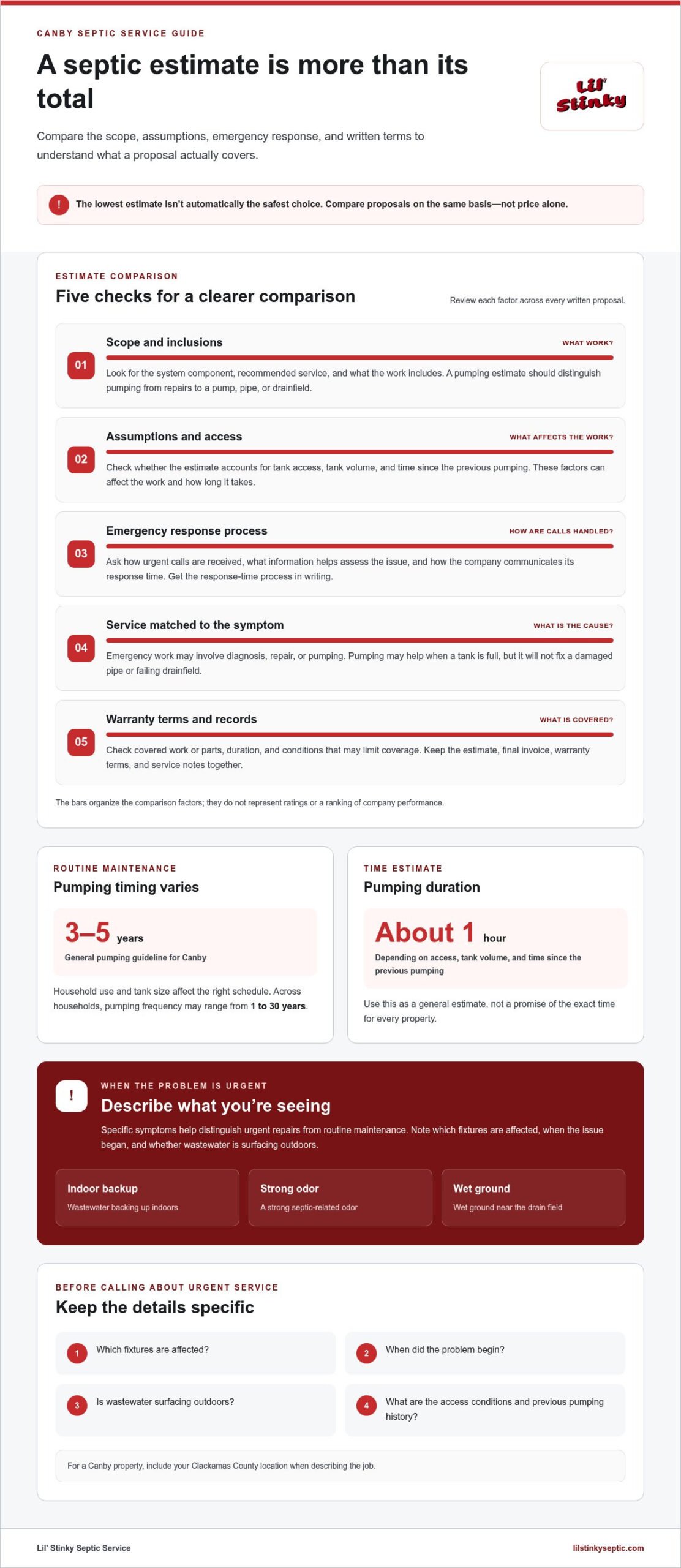
A useful estimate explains the work, not just the total. Ask for a written scope that identifies the septic system component involved, the recommended service, and what it includes. For example, a tank-pumping estimate should distinguish pumping from repairs to a pump, pipe, or drainfield. Clear details let you compare proposals on the same basis.
Compare each estimate by checking its assumptions. Access to the tank, tank volume, and time since the previous pumping can affect the work. In Canby, septic tank pumping generally takes about an hour, depending on those factors. A general pumping guideline is every 3 to 5 years, but household use and tank size can shift the schedule. Across households, pumping frequency may range from 1 to 30 years.
Ask how the company handles urgent calls before an emergency happens. A 24-hour emergency septic service should explain how it receives calls, what information helps assess the problem, and how it communicates its response time. Describe symptoms precisely: wastewater backing up indoors, a strong odor, or wet ground near the drain field. Those details help distinguish urgent septic repairs from routine maintenance.
Emergency septic service may involve diagnosis, repair, or pumping, depending on the cause. Pumping may help when a tank is full, but it won’t fix a damaged pipe or failing drainfield. Note which fixtures are affected, when the problem began, and whether wastewater is surfacing outdoors. Share those details when you call.
Review any written service terms alongside the estimate. Check what work or parts are covered, the duration, and any conditions that could limit coverage. Keep the estimate, final invoice, and service notes together. If a later problem involves the same component, those records make it easier to understand what work was completed and which terms apply.
- Compare estimates with the same scope and listed exclusions.
- Get the response-time process for urgent calls in writing.
- Match the proposed work to the symptom, not just the word “pumping.”
- Save warranty terms and service records with your septic system documents.
For Canby properties, clear estimates and emergency procedures make septic service easier to assess. When contacting Lil’ Stinky Septic Service, include your Clackamas County location when describing the job. Briefly explain the symptoms, access, and prior pumping so the company can identify a practical next step and distinguish scheduled maintenance from an urgent repair.
Company experience and years in business
Years in business can indicate experience with recurring septic work, but they don’t tell you who will handle your job. Ask who will assess the system and perform the work. A company should be able to explain relevant jobs, such as diagnosing slow drainage, completing routine maintenance, or planning a replacement.
For Canby properties, local experience matters because each septic system has its own layout, access points, and service history. Ask how the company approaches an unfamiliar system. A useful answer may explain how technicians locate the tank, review available records, and assess visible components before recommending work. Specific steps are more informative than a broad claim of expertise.
Check whether the company’s experience matches your project. Routine septic tank pumping calls for different knowledge than an installation or system replacement. A pumping visit may focus on tank access and condition, while installation involves planning around the property and system design. Ask for a clear explanation of the process and what findings could change the recommendation.
Technician experience also matters. Ask who will inspect or service the system, how that person’s role fits the job, and whether the same crew handles follow-up work. If a technician identifies a problem, they should be able to explain which component is affected and why. A clear description helps you understand the difference between an observed issue and a proposed repair.
Equipment should suit the task and the property. For example, a narrow driveway may affect how a service vehicle reaches the tank. Ask how the crew plans to access the work area and protect nearby landscaping. For an installation, ask how the team plans the work around site conditions. Practical answers show the company has considered your property, not just the service name.
Use these steps to compare experience:
- Match the company’s past work to your need, such as routine service, repair, or replacement.
- Ask who will assess the system and explain the findings.
- Discuss access, equipment, and the work sequence for your property.
- Look for consistent details in customer feedback about communication and completed work.
Finally, consider whether the company explains options in plain language and connects recommendations to what technicians observe. To see how a local provider describes its approach, review Lil’ Stinky Septic Service septic service information.
Drawing on years of practical experience, industry experts recommend hiring licensed professionals for septic tank installations because proper setup requires specialized knowledge and heavy equipment. That guidance underscores why installation experience should be considered separately from routine service, with close attention to whether the company can clearly explain the specialized work involved.
Licensing, insurance, and environmental compliance
To verify a septic company in Canby, search its exact business name or CCB number in Oregon’s Construction Contractors Board records, then review its insurance documentation. For license and complaint checks, use the CCB’s contractor lookup and complaint records to compare the business identity and credential details.
Licensing Credentials
A contractor credential helps identify the business responsible for the work. Compare the name on the estimate with the name tied to its CCB number, and confirm they match. Ask which credential applies to your project, such as an inspection or installation. A clear answer should explain the company’s role and the work involved, not rely on a broad claim of experience.
License and Complaint Checks
Search Oregon Construction Contractors Board records using the company’s exact name or CCB number. Review the listed business identity and available complaint information, then compare those details with the estimate and service paperwork. If multiple similar names appear, use the credential number to distinguish the businesses.
Environmental compliance starts with the property and the proposed work. In Canby, septic systems are regulated by the county where the job site is located. A soil feasibility test must be conducted before system design and permit approval. For an installation, ask how the proposed process accounts for that test and the county’s role. These steps help connect the design to the site rather than treating every residential lot alike.
Insurance is a separate check from licensing. Ask for current insurance documentation and compare the insured business name with the company named on your estimate. Review the coverage dates and ask what work the documentation applies to. For example, a quote for an inspection and a proposal for installation may involve different work activities. Keep the document with your project records so the coverage details remain easy to find.
Use a simple record-matching process:
- Compare the estimate, CCB record, and insurance document for the same business name.
- Save the CCB number and the date you reviewed the record.
- Keep county communications and soil feasibility paperwork with design documents.
- Match the scope in the paperwork to the planned inspection, repair, or installation.
Keep project documents organized from initial assessments through design and approval. For example, file site information with design documents and retain permitting paperwork alongside the final service records. Organized records make it easier to understand which steps apply to your property and what has been completed.
Septic company reviews and homeowner ratings
Look for reviews describing completed work, communication, and follow-through, not just star ratings. Be cautious of pressure to approve work immediately, a vague diagnosis, or payment requests without a clear written scope.
Homeowner Reviews and Ratings
Read reviews from homeowners who describe similar septic systems or services. A detailed account might explain how promptly the company responded, what the technician inspected, and whether the completed work matched the estimate. Those specifics are more useful than a rating alone.
Compare comments across review platforms such as Google and Yelp, and look for recurring themes. One complaint may describe an isolated problem; repeated reports about missed appointments or unclear explanations deserve closer attention. Also read company responses. A calm, specific reply to a concern can show how the business handles communication after a difficult job.
Check the review date and service type. A comment about an installation may not tell you much about routine septic tank pumping. Focus on recent, relevant accounts that explain the customer’s experience from scheduling through completion. Treat unusually brief praise or criticism as limited evidence unless other reviews provide context.
Warning Signs and Scams
Be cautious if a company pressures you to approve extensive work before explaining its findings. A recommendation to replace a septic tank, for example, should identify the observed problem and connect it to the proposed work. A reliable discussion gives understandable reasons, not fear or urgency in place of an explanation.
Watch for inconsistent business details, refusal to provide a written scope, or payment requests that don’t match the documented work. Compare the name on the estimate with the company’s public information and service records. If a technician says the system needs immediate attention, ask which component is affected and what supports that conclusion.
Use reviews to screen companies, then compare what they say with the service documents. A report of prompt arrival is useful, but it doesn’t prove the company performed a thorough inspection. Look for comments explaining what the technician checked, what they found, and how the work was completed.
- Prioritize detailed reviews about the same service you need.
- Look for repeated patterns in punctuality, communication, and follow-through.
- Match review claims against the written estimate and completed work.
- Pause if pressure or unclear documentation replaces a clear explanation.
Before discussing a septic concern, record the symptoms and questions you want answered. This helps you compare each company’s explanation with the problem at your home instead of relying on ratings alone.
Company recommendation rates and response times
A recommendation carries more weight when it comes from someone with a similar septic system. Ask Oregon neighbors what work they hired a company to do, how communication went, and whether the crew followed through. Someone who had a tank pumped can offer a different perspective from a homeowner who needed an installation.
A rating can summarize customer sentiment, but the percentage alone doesn’t explain the experience. Look at what it measures, how many reviews it reflects, and whether comments describe specific jobs. A clear account of scheduling, updates, and completed work can offer more context than a rating without details.
Response time depends on the issue and the company’s schedule. For routine service, ask when the company can assess the system and how it will confirm the appointment. For an urgent problem, describe the symptoms, such as a backup inside the home or pooling water near the drainfield. Ask what response to expect for your situation rather than relying on a general claim of prompt service.
Keep a note of when you contacted the company, what response it gave, and whether it followed up as promised. For example, if the company says it will call after reviewing your system details, note whether you receive that update. Clear communication helps you plan, especially when a bathroom or kitchen drain is affected.
Before choosing, compare recommendations with the service plan. A neighbor’s positive experience with routine pumping may not answer questions about a repair or failing drainfield. Ask what the technician will inspect, what the proposed work addresses, and how the company will explain its findings. This connects a recommendation to your actual septic concern.
Affordable service means a clear scope and sensible plan, not simply the lowest estimate. Costs depend on the job, so request an estimate and compare what it includes. Access, tank size, and the requested work can affect the scope. Review each estimate’s details before deciding what fits your household.
- Ask neighbors about the specific septic work they received.
- Read review details alongside recommendation rates.
- Describe symptoms clearly and ask for a response window.
- Record promised updates and compare the proposed work with your needs.
If you’re ready to discuss a septic concern, request septic service and explain the symptoms, property access, and timing needs.
Lil’ Stinky Septic Service: Septic Tank Pumping
Lil’ Stinky Septic Service provides septic tank pumping for homeowners who need routine maintenance or help with a septic concern. If symptoms suggest a system problem, a septic inspection can help identify what needs attention before you decide on next steps.
With over 25 years of experience, the company is fully licensed under CCB #189693 and provides 24/7 emergency response. Its service area includes Clackamas County, where Canby is located. Choose septic tank pumping for maintenance needs, or ask about an inspection when you need a clearer picture of your system’s condition.
Contact Lil’ Stinky Septic Service to discuss your septic system needs.
Take the Next Step With Confidence
Finding a reliable septic company in Canby starts with a clear description of what your property needs. Before reaching out, note the system’s service history, current symptoms, and any questions about access or paperwork. That preparation turns a broad concern into a focused conversation about the next step.
For routine care, septic tank pumping may be the right service. If you’re unsure what’s causing a problem, an inspection can assess the system. For a new system, discuss installation needs and the information your project requires. Choose the service that fits your situation, then share the details you’ve gathered.
Lil’ Stinky Septic Service offers septic tank pumping, septic inspections, and septic installation. Contact Lil’ Stinky Septic Service to discuss your septic needs and decide on a practical next step. With a clear plan, you can move forward with greater confidence and care for your property.
Frequently Asked Questions
What certifications and experience should a reliable septic company have?
Look for an Oregon contractor credential relevant to the work, plus technicians with experience handling your specific system and job type. For example, an installation requires different project knowledge than routine maintenance. Ask who will do the work, what training or certification applies, and how the company documents findings. Lil’ Stinky Septic Service is a licensed and certified contractor, with DEQ-certified technicians for pumping, installation, and inspections.
How can I find and compare septic companies serving Canby, Oregon?
Start with companies serving Canby, then compare how each responds to the same description of your needs. Explain whether you need routine maintenance, an inspection, or installation, and ask what the next step involves. Compare the clarity of each explanation, the work scope, and scheduling communication. To find a reliable septic company in Canby, consider how well its answers address your property.
What should a septic service estimate include, and how can I compare quotes?
A useful estimate identifies the work, the system components involved, and any exclusions or conditions that could affect the scope. Compare estimates by matching those details, not by treating different services as equivalent. An inspection and a repair proposal, for example, address different needs. Ask how additional work will be discussed and documented before it begins, and keep estimates for a side-by-side comparison.
What questions should I ask before hiring a septic company?
Ask who will perform the work, what the visit includes, and how the technician will explain the findings. For an inspection, ask what written documentation you’ll receive. For pumping, ask what access the crew needs and how to prepare for the visit. Clarify how scheduling updates work and who to contact with follow-up questions. Specific answers help you understand the process before work starts.
How do Canby-area reviews, references, and complaints help assess a septic company?
Reviews describe customer experiences, references can provide direct context, and complaint records may flag issues for closer attention. Read comments about work similar to yours and look for details about communication and follow-through. For Oregon contractor records, search the Construction Contractors Board using the business name or credential number. Compare the record with the estimate and consider how the company responds to concerns.