In Canby, septic approval starts with the land, not the installation. To understand how to get a septic system approved in Canby, start with a soil feasibility study. Clackamas County regulates septic installation, and the study is required before system design and other permits.
It’s easy to focus on the tank or permit form, but soil conditions help determine whether a system can work on your property and what design it needs. Following the right sequence helps you understand the decisions ahead before installation begins.
This guide explains who needs a septic permit, what a site evaluation examines, and how soil findings and property details shape the plans submitted for county approval. It also covers the fee process and installation steps, so you can see what happens first and what comes next.
Key Takeaways
- Start with a soil feasibility study before designing the system or pursuing other permits; county approval depends on whether the site can support the proposed design.
- A site evaluation examines soil absorption and filtration, helping establish the drainfield size and suitable system areas.
- Gather property and household details for the design plans, since soil conditions, home plans, and equipment specifications all shape the county review.
- Plan for separate project costs such as the site evaluation, design work, application, and installation; the project scope and site conditions affect the total.
- Watch tank levels as part of ongoing care: according to the Oregon Department of Environmental Quality, pumping is needed when the bottom of the scum layer is within 6 inches of the bottom of the outlet tee.
Who needs a permit for a septic system?
New and replacement septic systems require permits through the local jurisdiction. In Canby, Clackamas County regulates septic installation, and a site evaluation helps establish whether the property can support the proposed system.
Permit Eligibility
To understand how to get a septic system approved in Canby, first identify whether the work involves a new installation, replacement, or repair. New and replacement systems require a permit. Minor repairs may have different requirements, so describe the specific work when starting the county process.
Canby-area home buyers should check whether a septic permit is on file with the Oregon Department of Environmental Quality or the local county agency. Match the record to the property and system rather than relying only on a seller’s description. If a record isn’t readily available, the county property file can help clarify the system’s documented status.
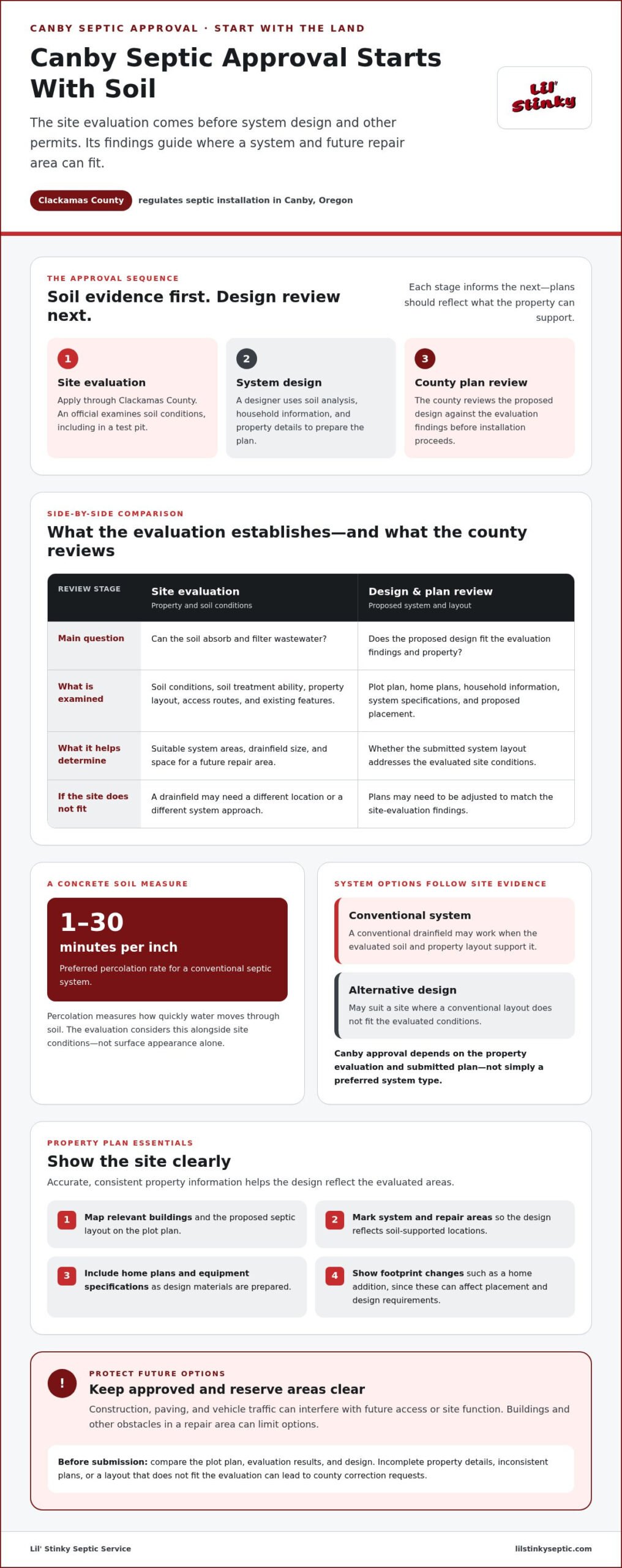
To learn how to get septic system approval in Canby, apply for a site evaluation through Clackamas County and provide the required property information. The evaluation comes before system design and other permits. Approval timing depends on the application, site-evaluation scheduling, design preparation, and county plan review. Complete documents can help avoid delays caused by correction requests.
Agency Reviews and Inspections
Clackamas County regulates and approves septic systems in Canby, Oregon. A site evaluation examines whether the soil can absorb and filter wastewater, while county plan review assesses the proposed system design. Follow the county’s inspection requirements so the installed work can be reviewed against the approved plans before the system is approved for use.
Before applying, prepare accurate property details and a plot plan showing relevant buildings and the proposed septic layout. Include the site-evaluation findings with the design materials as the project advances. If a home addition changes the building footprint, show that change on the plan because it can affect system placement and design requirements.
Common application problems include incomplete property details, inconsistent plans, or a proposed layout that doesn’t fit the site-evaluation findings. Soil conditions that can’t support the proposed design may also require a different system approach. Compare the plot plan, evaluation results, and design before submission, then address county correction requests before installation proceeds.
For a repair, identify whether the work affects only a component or changes the system itself. A broken pipe connection, tank lid, or distribution box shows why the repair description matters. Don’t assume repairs and replacements follow identical approval steps. Clackamas County’s requirements depend on the proposed work.
How site evaluations determine approved and repair areas
A site evaluation determines whether Canby soil can absorb and filter wastewater. Its findings help identify suitable areas for the system and future repairs.
Site Evaluation Areas
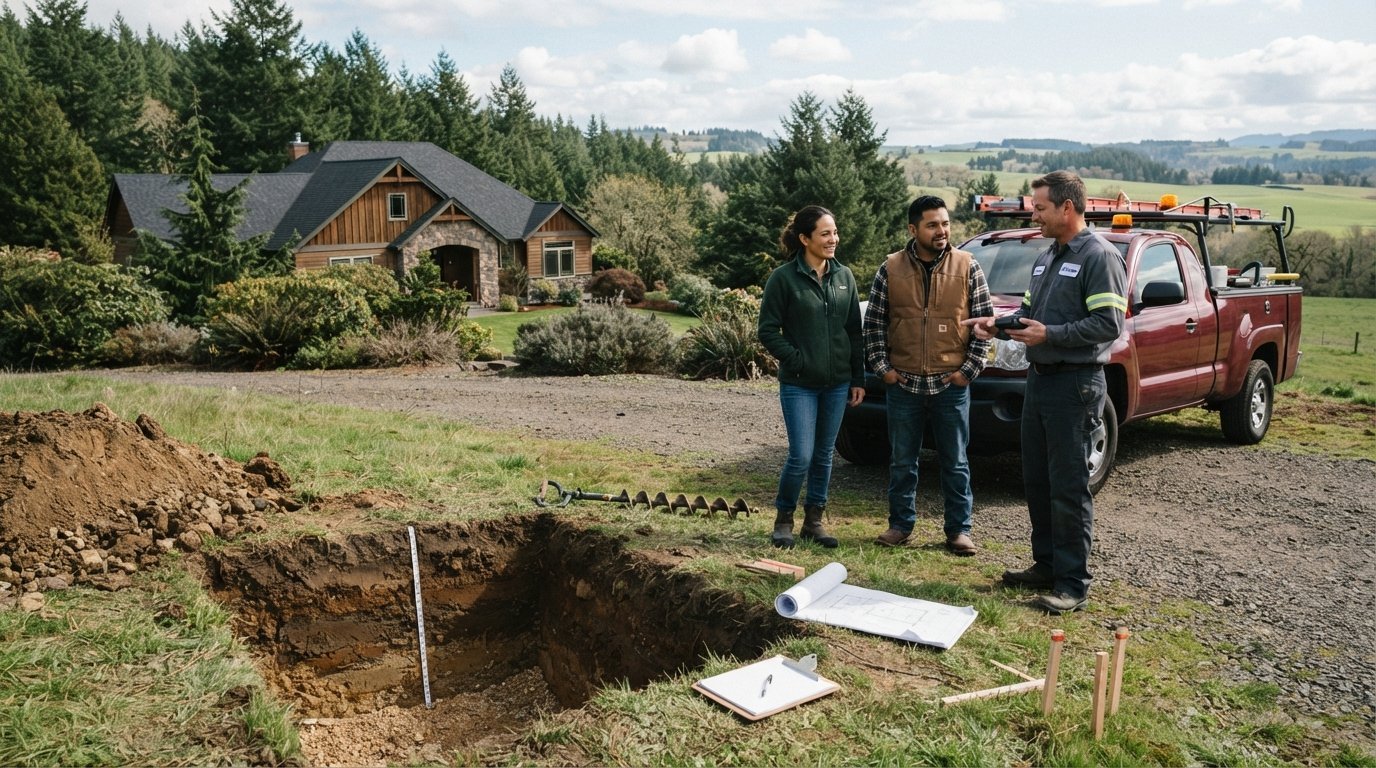
The evaluation includes a test pit, where an official examines soil conditions and the soil’s ability to treat effluent. Soil quality helps determine drainfield size, while the property layout shows where the system and repair area can fit.
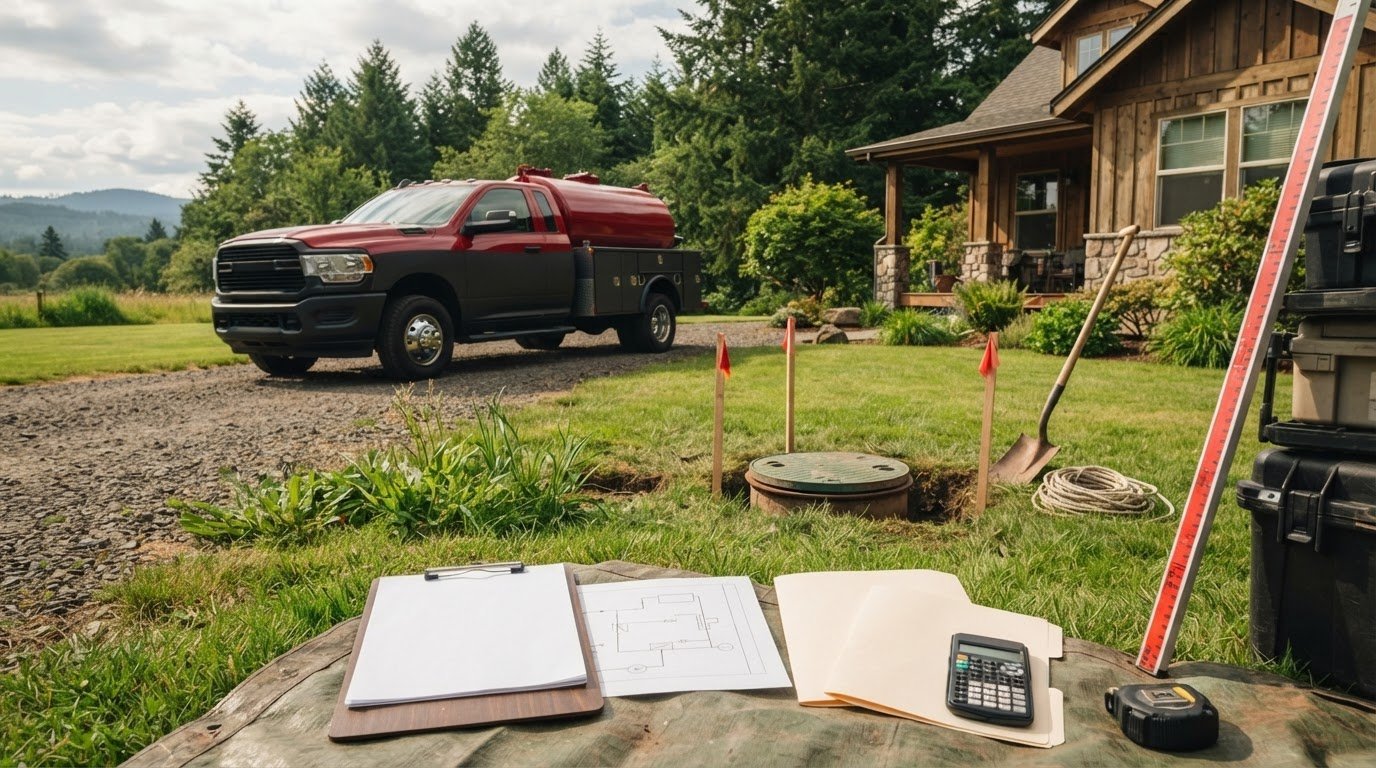
Consider the soil findings alongside the house, access routes, and existing features. A suitable repair area needs space and appropriate soil for a future drainfield; buildings and other obstacles there can limit options. Mark the proposed system and repair locations clearly on the property plan so the design reflects the areas supported by the evaluation.
Percolation gives another measure of soil performance. The preferred rate for a conventional septic system is between 1 and 30 minutes per inch. An evaluation compares how quickly water moves through the soil with the site’s conditions, rather than relying on surface appearance alone.
If the proposed drainfield area can’t properly absorb and filter effluent, the design may need a different location or system approach. This can affect installation, repair, or replacement plans. Protect approved and reserve areas from construction, paving, and vehicle traffic, which can interfere with future access or site function.
System Options and Requirements
Conventional systems and alternative designs are assessed against the property’s soil and layout. The site evaluation helps establish whether a conventional drainfield can work, and the county then reviews the design against those findings. An alternative system may suit a site where a conventional layout doesn’t fit the evaluated conditions.
Canby approval depends on the property evaluation and submitted plan, not simply a preferred system type. A designer uses soil analysis and household information to prepare a design that addresses wastewater treatment, drainfield placement, and repair-area needs. Keep the evaluation findings with the plans so each decision reflects the site evidence.
To find installers and designers serving Canby, use Oregon Construction Contractors Board records to review contractor license status. Compare the proposed work with the site evaluation and submitted design, including how the installer will follow the approved layout. A designer’s experience with the specific site conditions also matters.
Repairs and maintenance should preserve the approved system layout. If sewage backs up or a drainfield shows signs of failure, identify the affected component before choosing repair or replacement work. Routine system inspections can help owners spot concerns early. For project planning, septic system installation support can help connect the approved design with the work on site.
Septic tank and drainfield installation
A conventional septic system has two main parts: a septic tank and a drainfield. The tank separates solids from wastewater, then the drainfield releases liquid into soil, where microbes help purify it. In Canby, installation follows the approved design, so tank placement, piping, and drainfield location must match the site plans.
Tank size depends primarily on the number of bedrooms in the household. Soil conditions, household details, and equipment specifications also inform the design. A conventional layout may not suit every site; an alternative treatment system can be considered when conditions call for a different approach. The approved plans establish the system type and layout for the property.
Installation follows the approved design, with excavation and placement of the tank, connecting pipes, and drainfield components. Keep the work within the designated areas. A Canby septic tank installation takes about one week from groundbreaking to initial operation, not including the additional time for plans and permits. Site access and the approved layout guide the work.
The drainfield is part of wastewater treatment, not spare yard space. Soil microbes help purify wastewater as it moves through the soil. Keep construction, paving, and vehicles off the drainfield and reserve area. Compaction or damage can interfere with soil treatment and make future repairs harder.
Watch for signs of drainfield trouble, such as sewage backing up into the home or wet areas near the field. These symptoms signal a problem that needs assessment, but don’t identify the cause by themselves. A failed tank component, blocked pipe, or drainfield issue may each require different work. Avoid driving over the area while the problem is assessed.
Maintenance helps owners track tank condition and identify concerns before they affect the drainfield. Typical gravity-fed septic systems should be inspected at least every three years. In Oregon, a tank needs pumping when the bottom of the scum layer is within 6 inches of the bottom of the outlet tee, according to the Oregon Department of Environmental Quality.
Use inspection findings to guide maintenance instead of relying only on a calendar. The tank also needs pumping when the top of the sludge layer is within 12 inches of the bottom of the outlet tee. Keep household waste that is hard to decompose, such as cigarette butts, hair, and food scraps, out of the system. Medicines and hazardous materials shouldn’t go down the drain.
Application fees
For a Canby septic project, treat county fees as part of the approval process and separate them from installation costs. The amount depends on the application and project type, so identify the required county approvals before budgeting. A new system, replacement, site evaluation, and plan review involve distinct steps; the applicable fee schedule determines which charges apply.
Clackamas County’s current fee schedule is the relevant reference for a Canby property. Septic application fees are updated every year, so use the schedule in effect when preparing your submission. Don’t base a project budget on an older receipt or a fee from another Oregon county. Different jurisdictions may charge differently, and a California Water Board fee structure doesn’t establish Canby costs.
Start by assembling documents that connect the property to the proposed work. Include the county application information, a property plot plan, and the soil feasibility findings needed to proceed to design. Plans should reflect household data and equipment specifications, since these details affect the system layout. Clear documents help the county review the same property and design information you intend to use on site.
Before submitting, match each document to the approval step. In Canby, a site evaluation comes before system design and other permits. Keep the evaluation results, plot plan, and application details together, then follow Clackamas County’s submission instructions for the relevant application. Check that the property description and proposed work match across documents; inconsistencies can prompt questions or require corrections.
Separate county approval expenses from other project expenses. Design work and installation differ from application fees, while inspections and later maintenance are separate activities. Pumping addresses tank maintenance, not a new-system permit. Separate budget lines make it easier to see what each payment covers and prevent a service charge from being mistaken for a county fee.
For a replacement or repair, accurately describe the intended work before submitting. The scope helps determine which review applies, while site conditions and the approved system layout shape the necessary plans. Don’t assume a repair follows the same application path as a replacement. If the project changes after review, update the documents through the county’s process before work proceeds.
Once the application package is ready, submit it using Clackamas County’s stated method and retain copies of the documents and payment record. Track follow-up requests with the application so corrections, inspections, and plan changes remain tied to the right project. An orderly record helps keep the fee, evaluation, and approval steps clear from submission through installation.
Septic system design and county plan approval
In Canby, Clackamas County regulates septic installation, and a soil feasibility study comes first. Its results inform key design choices: whether the soil can absorb and filter wastewater, where system components can fit, and what layout the county can review. Design plans should follow the evaluated site, not assumptions about the property.
Use the soil analysis alongside household data and equipment specifications to shape the plan. These details help determine system capacity and drainfield arrangement. For example, adding to a home may require a larger septic system, so include proposed changes before finalizing plans. A design based on outdated household or building information can miss important project requirements.
The plan should show how the proposed layout fits the property and evaluation findings. Check the tank, drainfield, buildings, and access against the site plan before submission. In Clackamas County, the minimum setback from a drainfield to a building is 10 feet. That separation must be reflected in the proposed layout, not left for installers to resolve during construction.
County plan review connects the design to the site evaluation and applicable requirements. Make sure the plans clearly identify the proposed system and drainfield location, and use the property’s actual soil findings. If the county identifies a conflict, revise the plan before installation. Changes to the home or site can affect the design and may require updated plans.
Keep the approved design available during installation. Tank and drainfield work should follow its locations and specifications; moving components on site can create a mismatch with the reviewed plan. Use the approved layout to coordinate excavation and protect the designated area. The drainfield’s soil-treatment function depends on placing it where the evaluation supports wastewater absorption and filtration.
Before submitting, compare the soil evaluation, household information, equipment details, and site plan as one package. Look for discrepancies in proposed building locations or drainfield placement, especially if the property plan has changed. A complete, consistent submission gives the county a clear basis for reviewing the design and helps keep on-site work aligned with the plans.
For an addition, replacement, or new build, settle the layout before ground work begins. A properly matched design guides county review and installation, while protecting the intended drainfield area for future use. If you’re planning septic installation in Canby, request septic installation service to discuss the project’s next steps.
Lil’ Stinky Septic Service: Septic Tank Pumping
Lil’ Stinky Septic Service provides septic tank pumping for owners whose tanks need service, along with septic inspections to assess system condition. Pumping removes accumulated solids from the tank; an inspection can help identify concerns with the tank or drainfield. These services support routine care but don’t replace county permits, site evaluations, or approval for a new installation.
Use inspection findings to understand whether maintenance or further septic work is needed. If your tank needs pumping or you want its condition assessed, Lil’ Stinky Septic Service can help. For septic service in Canby, contact Lil’ Stinky Septic Service or visit lilstinkyseptic.com.
Move Your Septic Project Forward
Understanding how to get a septic system approved in Canby gives you a strong starting point. Next, turn the approved plan into careful work on your property. Keep project documents together and use them to guide decisions as work moves forward. Clear communication across planning, installation, and ongoing care helps keep your system’s needs in view.
Lil’ Stinky Septic Service offers septic installation, septic inspections, and septic tank pumping in Canby. These services help homeowners address installation needs and maintain or assess an existing system. Choose the service that fits your current need, whether you’re preparing for installation or arranging care for a system already in use.
Ready to discuss your septic project or system care? Contact Lil’ Stinky Septic Service to take the next step with a clearer plan.
Frequently Asked Questions
Does a repair need a permit?
Replacing a septic system requires a permit, while a limited component repair is different from a replacement. In Canby, Clackamas County regulates septic installation, so describe the specific work and affected components in the application or county inquiry. Replacing a tank, for example, isn’t the same project as fixing a pipe connection. Keep the repair scope clear so the county can apply the relevant local requirements.
What is the process to apply for a permit?
Begin with Clackamas County’s site-evaluation application, then assemble the property information and plot plan needed for review. Arrange the site assessment before system design, because its findings guide the layout. Submit the application package using the county’s instructions and keep copies of the application and supporting records. If the county requests corrections, update the relevant documents before the next review step.
What permits are required for a new septic system in Canby?
A new or replacement septic system requires a permit through the local jurisdiction. In Canby, Clackamas County regulates septic installation and reviews the project’s site findings and plans. Other construction work on the property may require separate approvals, so keep septic-system authorization distinct from building project paperwork. The septic permit process starts with the county’s site evaluation, which informs the design submitted for review.
What are the steps to get septic system approval in Canby?
Start by identifying the property and proposed work, then apply for a site evaluation through Clackamas County. Use the results to prepare a system design and submit the plans for county review. Address requested changes before installation, then keep the approved plans available during construction. This sequence helps ensure a home addition or changed site layout is included in the septic design.
What soil and site requirements must a Canby property meet for septic approval?
The site must have soil and space that support wastewater treatment and the proposed system layout. A test pit lets an official assess whether soil can absorb and filter effluent. For a conventional system, the preferred percolation rate is between 1 and 30 minutes per inch. The property plan should also account for the drainfield’s relationship to buildings, access, and the area reserved for future repair.
How much do septic permits, site evaluations, and inspections cost in Canby?
Canby project costs depend on applicable county fees and the work required, including site evaluation, design, plan review, and inspections. The application fee is updated every year, so use the current schedule when preparing a budget. Keep county charges separate from installation or maintenance expenses. The scope, soil conditions, and whether the project is new, a replacement, or a repair affect which costs apply.
What documents and site plans are needed for a Canby septic permit application?
Prepare the county application, property plot plan, site-evaluation findings, and design information that matches the proposed work. Household details and equipment specifications help the designer create a plan suited to the property. Check that the property description and proposed building locations agree across the documents. If a renovation changes the home’s footprint, update the plot plan before submitting so the drainfield layout is assessed against the current proposal.
What inspections are required before a septic system can be approved for use in Canby?
A site evaluation checks whether the soil can absorb and filter wastewater. Before the system is approved for use, county inspections review the installed work against the approved plans.