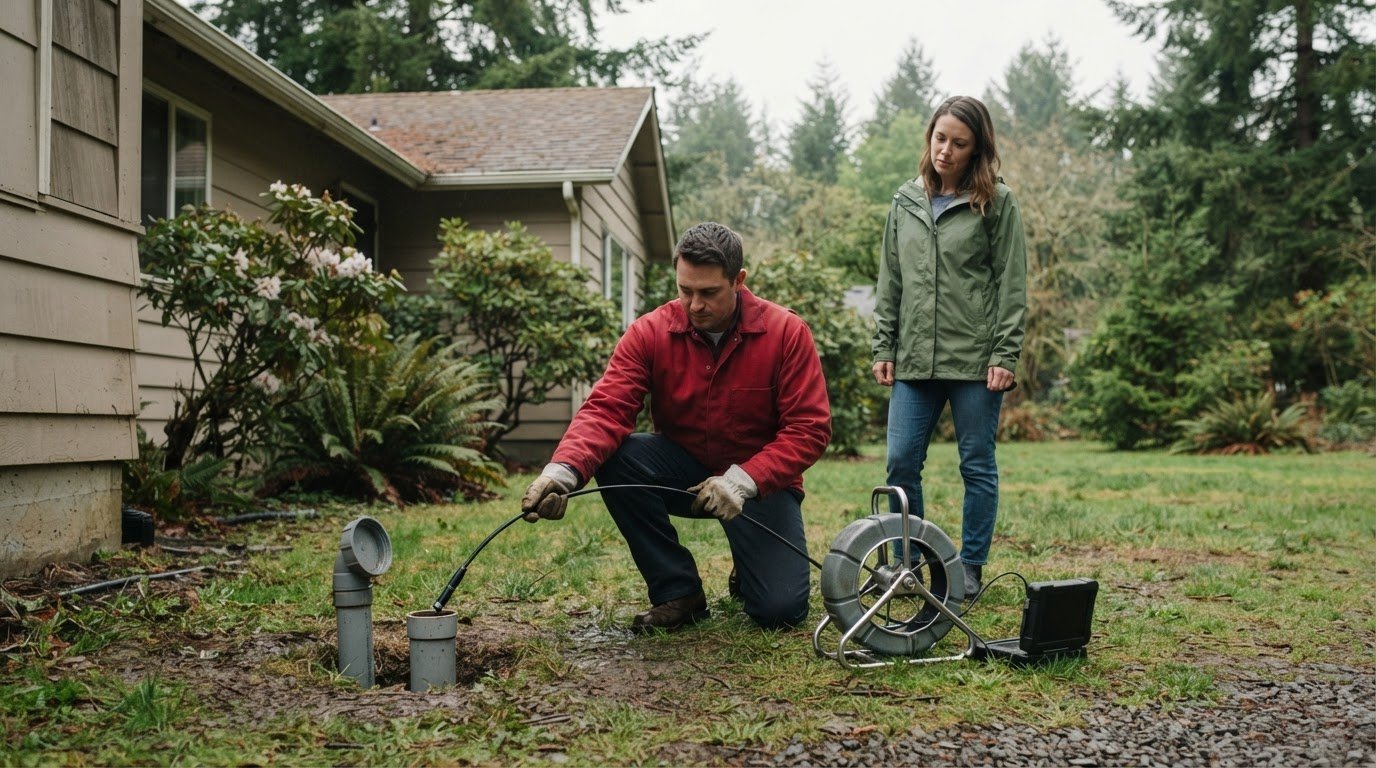
Oregon DEQ septic system requirements are set out in Oregon Administrative Rules Chapter 340, with Division 71 covering onsite wastewater treatment systems. The rules address system construction, alteration, repair, operation, and maintenance, while soil and site conditions help determine which system can work on a property.
Choosing a septic system means more than selecting a tank. Soil, site slope, groundwater conditions, and the wastewater produced by household fixtures all affect which system may be suitable under Oregon DEQ septic system requirements.
This guide explains how Oregon rules shape system selection and what a site evaluation considers, including soil, slope, and available absorption areas. It also covers why household wastewater sources must connect to an approved sewage system and how these factors come together when planning an onsite system.
Key Takeaways
- Oregon’s onsite wastewater rules cover system construction, alteration, repair, operation, and maintenance, so permit and design requirements matter from the start.
- Site suitability depends on soil, groundwater, slope, and usable absorption areas; Oregon evaluations generally include two test pits about 75 feet apart.
- Slope affects which system options can work, with specific criteria applying when the slope does not exceed 30 percent.
- In Deschutes County, all plumbing fixtures and other sources of human wastewater must connect to an approved sewage system.
Division 71 onsite wastewater treatment systems
Rules for onsite wastewater treatment systems set requirements for their design and construction. These rules shape permits, system design, repairs, and inspections for properties using onsite sewage treatment.
Onsite wastewater rules and statutes
Oregon’s onsite wastewater rules sit in Oregon Administrative Rules Chapter 340, and Division 71 covers system construction, alteration, repair, operation, and maintenance. Oregon Revised Statutes Chapter 454 addresses sewage treatment and disposal systems. Together, these requirements guide how a property’s wastewater is managed and help protect public health and water quality.
For new construction, a site evaluation and construction-installation permit generally come before work begins. Existing homes remain subject to rules for alterations and repairs, so an older system isn’t exempt from permit and inspection requirements.
Alternative system certification and approval
Alternative treatment systems use approved technologies when a conventional system isn’t suitable for the site or wastewater needs. The Oregon Department of Environmental Quality approves Alternative Treatment Technology systems, and alternative technologies must be tested by an NSF/ANSI organization meeting ISO/IEC 17025 – 2005 requirements.
The approval determines which system can be installed and what ongoing maintenance it requires. For example, an ATT system in Central Oregon requires a contract with a DEQ-certified maintenance provider, as well as annual reporting and fee requirements.
Permits, installation, and inspections
Most new onsite installations, upgrades, and repairs require a permit. A Water Pollution Control Facilities permit is required for projected daily sewage flow greater than 2,500 gallons, systems using technology DEQ identifies as warranting regulation, and systems handling sewage stronger than residential wastewater.
According to the Oregon Department of Environmental Quality, the person responsible for installation generally must be a certified installer, unless that person is the permittee or the permittee’s regular employee. Once the work is complete, installers must request a pre-cover inspection before backfilling, unless a waiver applies. Unpermitted or failing systems can raise pollution concerns, and repairs or replacements must still follow applicable permit and inspection rules.
System sizing, setbacks, and repairs
Tank size and setbacks depend on system design and property conditions. Oregon septic system permit records may size a four-bedroom home’s system at 450 gallon per day, while site evaluations consider slope, wells, nearby water, soil, and usable absorption areas. These factors affect where system components can go and how wastewater can be treated.
Repairs and replacements fall under the rules for onsite system work, including permit and pre-cover inspection requirements. The listed 2024 construction-installation permit fee is $1,008 for a standard system up to the first 1,000 gallons per day; alternative-system fees range from $864 and $1,520 for the first 1,000 gallons per day, with a $96 addition per 500 gallons per day above that capacity and a $60 surcharge. Inspection costs depend on the project’s scope and site conditions.
Soil and site conditions affecting system selection
Soil, groundwater, slope, and usable land determine whether a property can support onsite wastewater treatment. Oregon’s site evaluation documents these conditions before a construction-installation permit can be obtained.
Site characteristics and evaluation reports
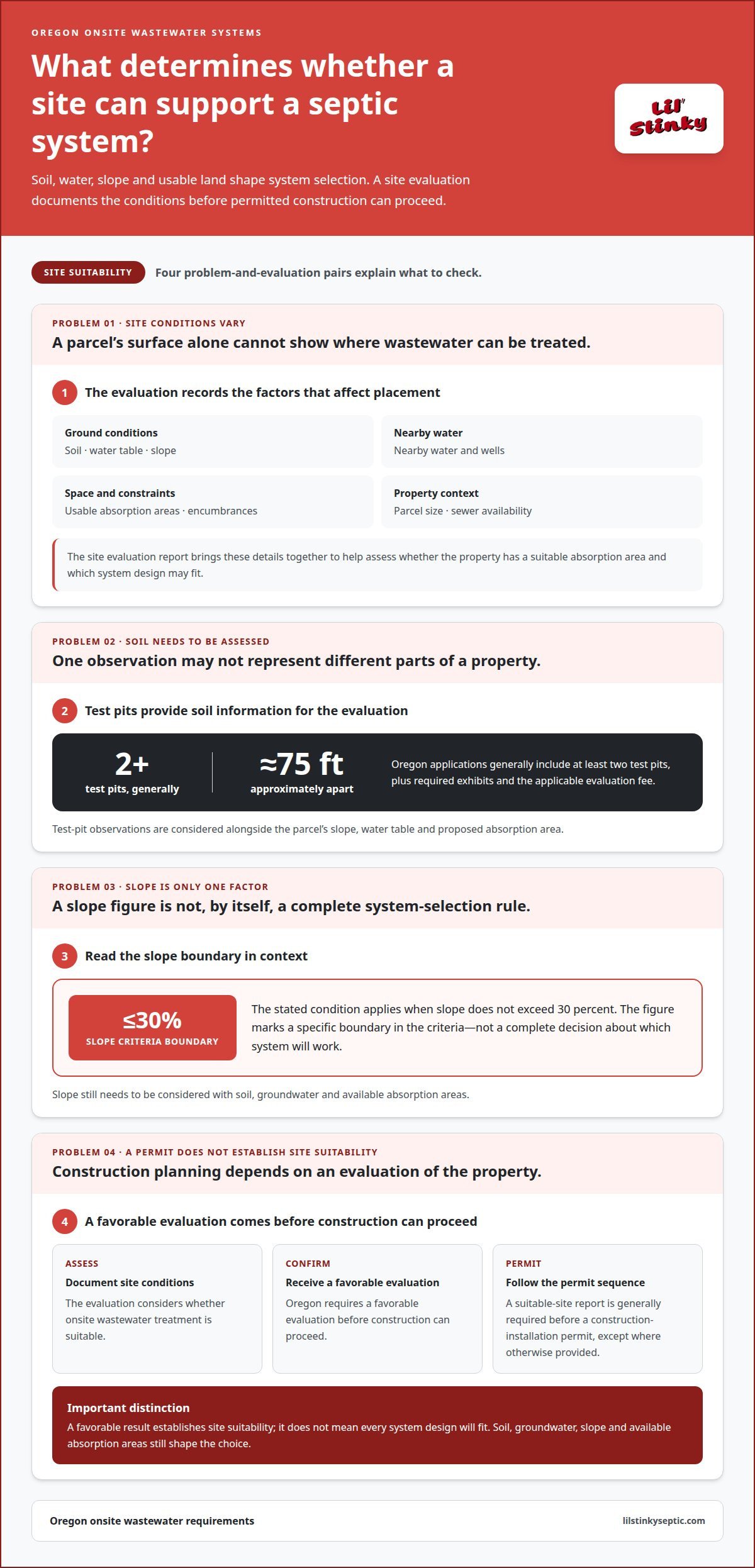
A site evaluation report records property features that affect wastewater treatment and system placement. It considers parcel size, slope, nearby water and wells, soil, the water table, usable absorption areas, encumbrances, and sewer availability.
These details help determine where wastewater can be treated and whether the property has a suitable absorption area. A high water table or limited usable land, for example, can affect which system design fits the site. The report gives the county or environmental quality program information to assess that fit.
Evaluation applications and test pits
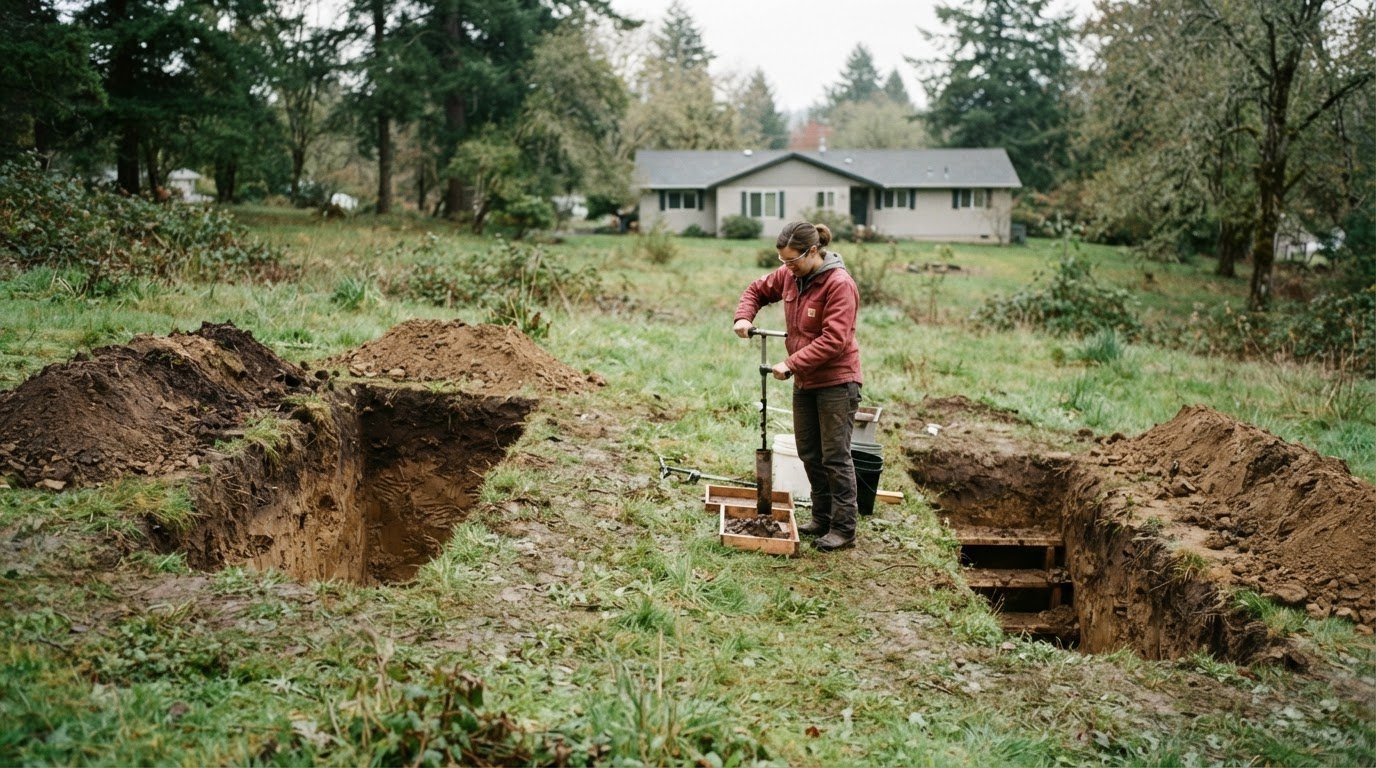
A site evaluation application requests an assessment of whether a property can support an onsite system. Oregon applications generally include at least two test pits, located approximately 75 feet apart, plus required exhibits and the applicable evaluation fee.
Test pits reveal soil conditions, and their spacing helps represent different parts of the property. The application and report relate those observations to the parcel’s slope, water table, and proposed absorption area. This information supports system selection before permitted construction can proceed.
Property suitability and favorable evaluations
A property is suitable when the site evaluation finds conditions appropriate for onsite wastewater treatment. Oregon requires a favorable evaluation before construction can proceed. A suitable-site report is generally required before obtaining a construction-installation permit, except where otherwise provided.
That sequence matters when buying undeveloped land: an unevaluated parcel hasn’t established septic suitability. A favorable result also doesn’t mean every system design will fit; soil, groundwater, slope, and available absorption areas still shape the choice. Where site conditions call for alternative treatment, explore ATT systems as a possible system option.
Slope criteria for onsite systems
Oregon’s onsite wastewater slope criteria state that the condition applies when the slope does not exceed 30 percent. This figure marks a specific boundary in the criteria, not a complete system-selection rule. A parcel’s slope still needs to be considered alongside the site’s other physical conditions. The Oregon Department of Environmental Quality’s requirements address onsite wastewater treatment, while the evaluation connects land features to a proposed system layout.
Slope describes how quickly the ground rises or falls across a horizontal distance. On a sloping property, that change can affect where a system’s components can fit and how a proposed layout relates to the ground. The 30 percent threshold should be read as written: it identifies when the stated slope condition applies. It does not, by itself, establish that a parcel is suitable or identify which alternative system would work.
For property owners, the practical takeaway is to consider slope as part of the full site evaluation, not as a standalone percentage that settles the question. The application and evaluation address the actual parcel, including how its landform relates to possible onsite wastewater placement. The county or department handling the application reviews that information under the applicable process. Slope can affect layout choices, but it does not replace the other site findings.
Consider a parcel where the ground changes elevation across the area being considered for wastewater treatment. The evaluator must interpret that landform in context, then determine how it affects the potential system location and design. If a design relies on an alternative treatment system, the site’s physical conditions remain relevant to selection. A maintenance provider’s contract applies to ongoing ATT care, not to the meaning of the slope threshold. Keep the distinction clear: 30 percent describes when the stated slope condition applies, while site suitability depends on the evaluation as a whole.
Wastewater fixtures that must connect to an approved sewage system
In Deschutes County, all plumbing fixtures and other sources of human wastewater must connect to an approved sewage system. This includes household sources such as toilets, sinks, showers, and laundry fixtures. The rule is about where wastewater goes, not simply whether a home has a septic tank. Every source must be accounted for in the system serving the property.
This requirement matters when planning a new fixture, remodeling a room, or adding living space. A toilet or laundry connection adds a wastewater source that must flow to an approved system. Sinks and showers also produce wastewater. Keeping every connection within the approved sewage system helps prevent untreated wastewater from being discharged elsewhere.
Think of the plumbing as one connected path: fixtures carry wastewater from the home to the system, which treats and disposes of it. Changes to the home’s plumbing can affect that path, so consider where each new drain leads before work begins. The system design and permitted scope determine which connections it can serve.
In Deschutes County, properties without public sewer use an onsite wastewater treatment system. It may be conventional or use approved alternative treatment technology, depending on the site and design. The key requirement is that all human wastewater sources connect to an approved sewage system. A disconnected drain or separate discharge does not meet that requirement.
If plumbing changes, backups, or wet areas raise questions about the system’s connections, a septic inspection can help assess the system’s condition and configuration. For an existing septic tank, pumping is a separate maintenance service, not a substitute for connecting every wastewater source correctly. Schedule a septic inspection to assess your onsite system and its connections.
Lil’ Stinky Septic Service: Septic Tank Pumping
Lil’ Stinky Septic Service provides septic tank pumping when accumulated solids need attention. Oregon guidance says homeowners should have a tank pumped by a DEQ-licensed pumper when solids accumulation is greater than 40 percent. Pumping removes accumulated material from the tank, but it doesn’t replace an inspection or resolve every system problem.
Warning signs such as sewage backing up into the home, soggy areas near the drainfield, or foul odors may warrant an inspection to assess the system. For routine tank service, septic pumping is the relevant next step. The right service depends on the need, whether that is pumping, inspection, installation, or an ATT system.
Contact Lil’ Stinky Septic Service to discuss septic tank pumping for your system.
Plan the Right Next Step for Your Property
The next step is to match your onsite system’s needs with the right work. Applying Oregon DEQ septic system requirements to a property means considering its approved system, current condition, and planned changes together. Keeping maintenance, evaluation, and installation distinct helps you identify the appropriate work.
Lil’ Stinky Septic Service provides septic pumping, septic inspections, and septic installation for different system needs. An inspection assesses the system, pumping removes accumulated tank solids, and installation is for projects requiring a new system. The right service depends on the work your property needs.
Whether you’re planning a project or addressing a system concern, take the next step with a clear description of what’s happening on your property. Talk with Lil’ Stinky Septic Service about the work your onsite system needs. A practical plan can help you move forward with confidence.
Frequently Asked Questions
What are Oregon DEQ septic system design and installation requirements?
Oregon DEQ septic system requirements call for designs that account for wastewater flow and site conditions. Division 71 covers onsite wastewater systems, while Division 73 sets construction standards. For example, permit records may size a four-bedroom home’s system at 450 gallon per day. Alternative treatment systems must use DEQ-approved technology and meet applicable testing requirements before installation.
How do I apply for an Oregon septic site evaluation and construction permit?
Begin with a site evaluation application, then apply for a construction-installation permit after the site is found suitable. Oregon DEQ septic system requirements include application materials such as a site evaluation report, a land use compatibility statement signed by the local land use authority, and installation plans and specifications. Site evaluation applications generally include required exhibits, an applicable fee, and at least two test pits approximately 75 feet apart.
How often must Oregon septic systems be inspected or pumped?
Inspection and pumping intervals depend on the system, household use, and location. Oregon homeowners should have tanks inspected approximately every 5 to 7 years for solids accumulation. In Central Oregon, a certified professional should inspect the system at least every three years, and tanks typically need pumping every 3 to 5 years, depending on tank size and household usage. Pumping is advised when solids exceed 40 percent.
What septic system requirements apply in each Oregon county?
County administration varies: twenty-four Oregon counties manage the onsite septic program under contract with DEQ, while DEQ directly manages the program in 12 counties. Local administration can affect permit processing and system review, while statewide onsite standards also apply. For a Canby property, the relevant county process informs site evaluation, installation, and system records, so local requirements matter alongside Oregon’s statewide rules.