A failed septic inspection doesn’t always mean the system has stopped working. Common reasons for a failed septic inspection include damaged tanks or pipes, clogged lines, drainfield problems, missing permits, and code issues. The findings may point to anything from a repairable defect to a system that can’t safely handle wastewater.
It’s understandable to worry about sewage backing up or an expensive replacement, but a failed inspection and a complete system breakdown aren’t the same thing. A clogged pipe between the house and tank, for example, can slow or stop drainage and affect the findings without proving that every part of the system has failed.
This guide explains what a failed inspection means, what may cause it, and how inspectors distinguish a test result from a breakdown. You’ll also learn how to interpret common warning signs and why the findings matter when deciding what to do next.
Key Takeaways
- Notice patterns such as slow drains across multiple fixtures, plumbing gurgles, wet spots, or unusual odors, which can help point to a septic system problem.
- A blockage between the house and tank can interrupt drainage; roots or physical damage may be involved, so the inspection findings matter.
- A failed inspection may identify a code or component issue even when the system still operates, so read the specific findings before assuming a full breakdown.
- The tank, drainfield, baffles, filters, and distribution components all affect system performance and may help determine whether the issue calls for repair or replacement.
What Does a Failed Septic Inspection Mean?
A septic system fails when it can no longer collect, treat, and disperse wastewater. Inspection findings show whether a defect affects the system’s function, local code compliance, or both.
Recognizing Failure Warning Signs
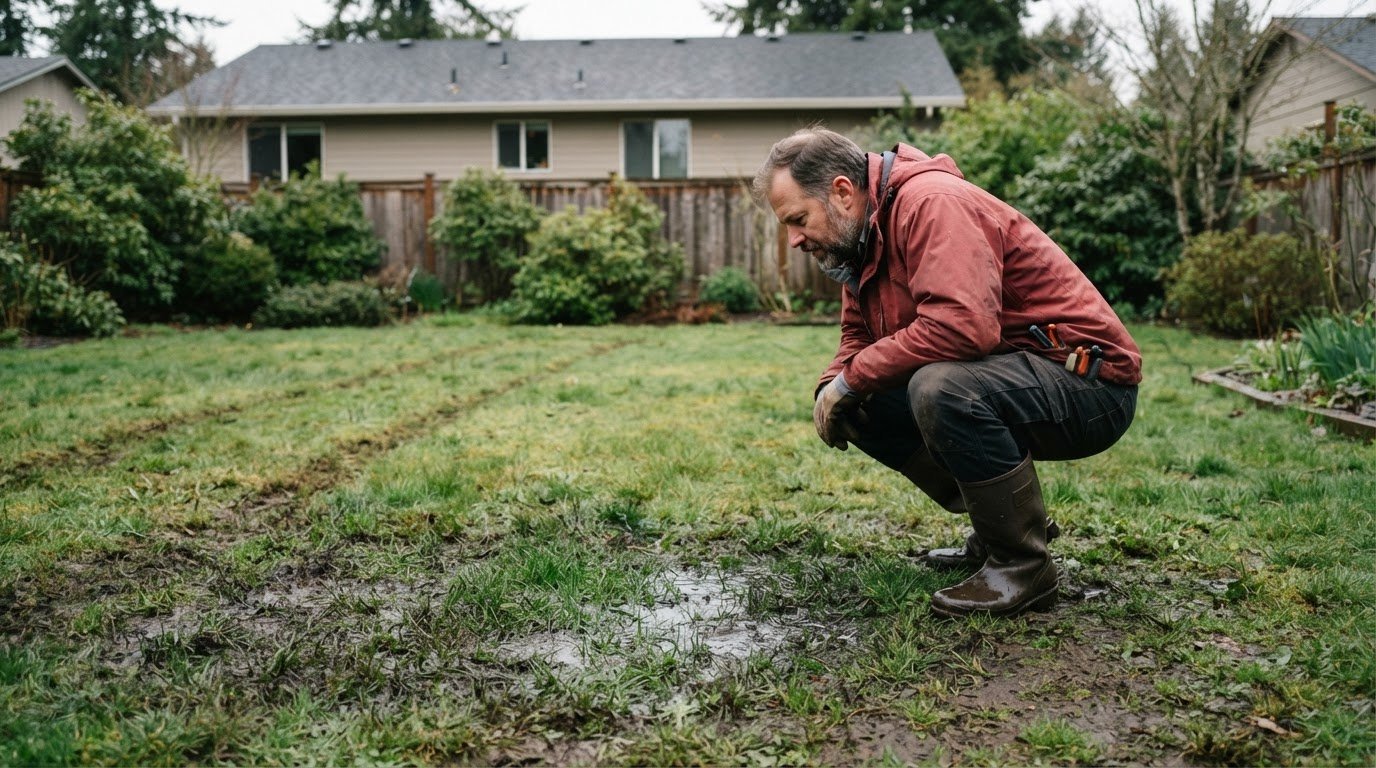
Warning signs include slow drains, plumbing gurgles, sewage odors, and wet spots near the tank or drainfield. Unusually lush grass above the drainfield can also signal wastewater surfacing. High nitrate or coliform bacteria in well water may indicate contamination. These signs matter because untreated sewage can back up indoors or reach soil and water. Reduce water use and seek a professional assessment when symptoms appear.
Common Inspection Failure Causes
Tank damage, clogged lines, standing sewage, missing permits, and drainfield problems can lead to inspection failure. A blocked outlet baffle or effluent filter may cause backups, while excess solids can damage the drainfield. Plumbing issues and excessive wastewater use can also affect results. System age and upkeep matter: traditional systems have an approximate life expectancy of 20 to 40 years. Washington State Department of Health says typical household tanks are usually pumped every three to five years. Records of pumping, repairs, and upgrades help explain system condition.
Applicable Rules and Passing Standards
Inspection rules and passing standards vary by state, county, and municipality, so the requirements depend on the property’s location. Findings may involve local health codes, permits, system components, or wastewater dispersal. A system can still operate and fail inspection because it doesn’t meet local requirements. Before an inspection, gather existing permits, inspection reports, and maintenance records. Flush only human waste and toilet paper, and avoid excessive water use.
Repair and Replacement Costs
Repair costs depend on what failed and how much work the system needs. A clogged line or filter may call for a limited repair, while a failed drainfield may require rehabilitation or replacement. Extensive damage can mean replacing the entire system. The price depends on the specific work and is provided after a quote request; the main factors are the damaged components, repair scope, and site conditions. Inspection findings help distinguish a targeted fix from a larger project.
Clogged house-to-tank pipe
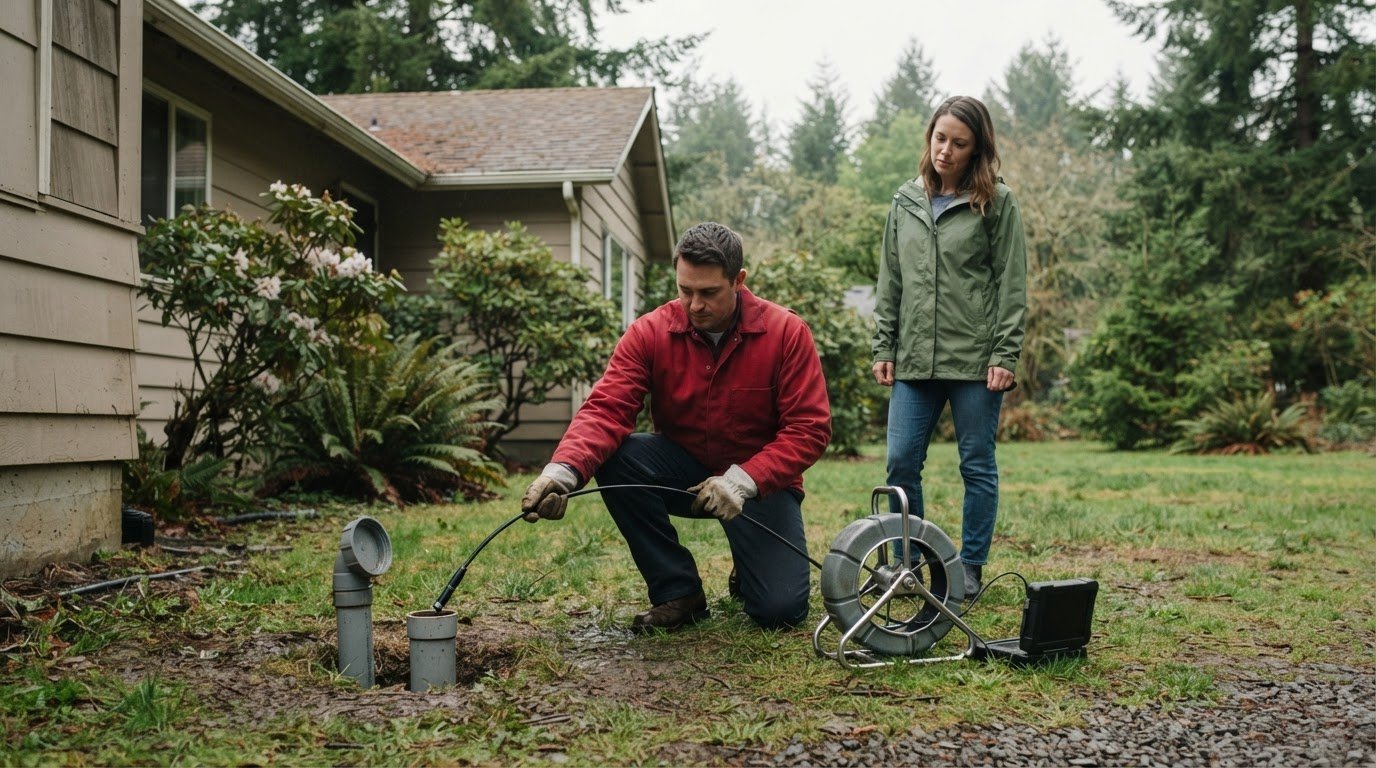
The pipe from the house to the tank carries wastewater from household plumbing into the septic tank. If a blockage restricts that route, sinks, toilets, or showers may drain slowly or stop draining. These symptoms can affect an inspection even when the blockage is limited to the connecting pipe.
Roots are one possible obstruction, particularly in older systems. They can enter joints or damaged areas and restrict wastewater flow. Vehicle or animal traffic above a buried pipe can also crush or break it. Drainage problems, for example, may appear after heavy traffic crosses the route between the house and tank.
Look at the pattern of symptoms, not just one fixture. If several drains are slow or stopped, wastewater may be unable to travel through the shared pipe. A single slow drain can have a separate plumbing cause, so the symptom alone doesn’t identify the source. During an inspection, the pipe’s condition and drainage help distinguish a connection problem from a broader system concern.
A blocked pipe can cause wastewater to back up into the home. That’s disruptive, but it doesn’t by itself prove the tank or drainfield has failed. The inspection needs to establish where flow is restricted and whether other components are functioning. Clearing an obstruction won’t fix a crushed pipe or root damage, so identifying the underlying cause matters.
Keep vehicle and animal traffic away from the buried pipe route where possible, since pressure can damage it. If drains slow or stop, limit water use to reduce the wastewater entering the line. Avoid treating repeated backups as a simple fixture issue; a professional assessment can locate the restriction and clarify what the inspection result means. A focused septic pipe assessment can help identify whether the connection is affecting drainage.
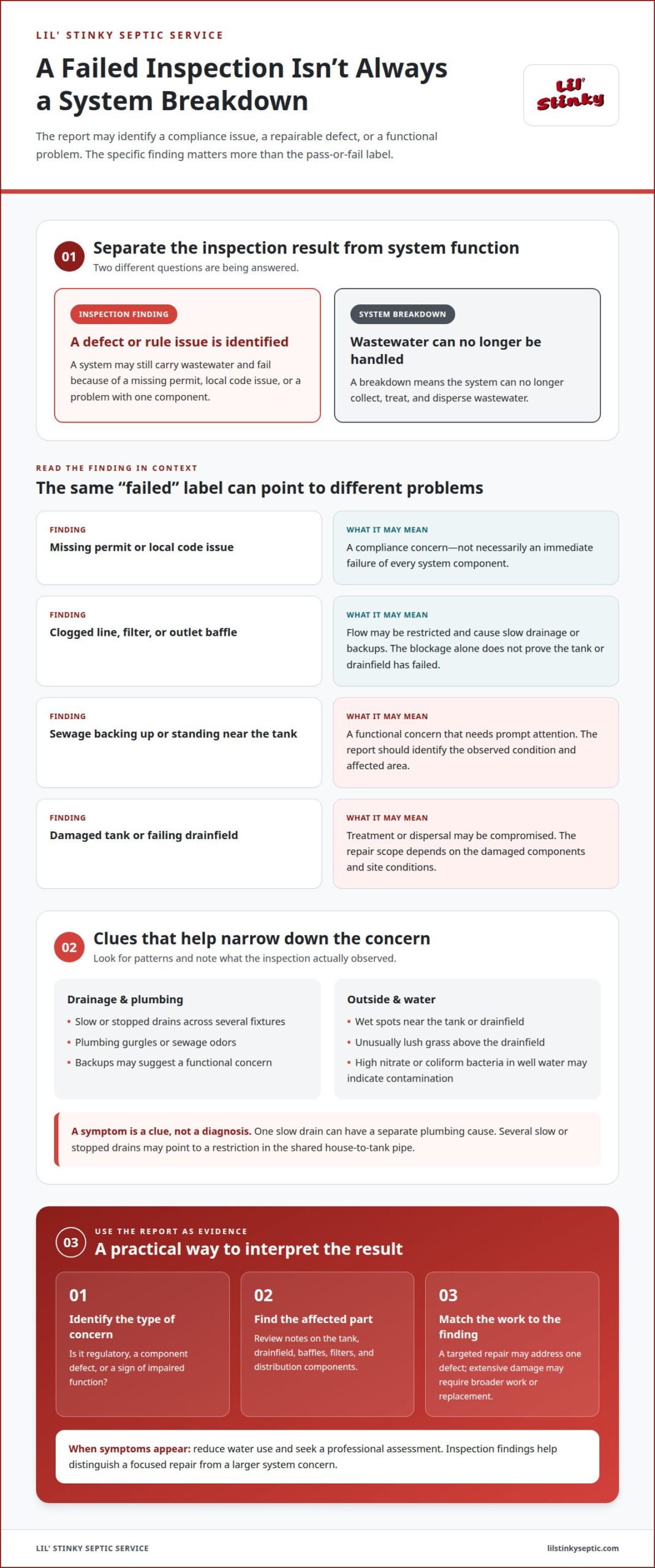
Difference between a failed test and system breakdown
A failed septic inspection and a complete system breakdown describe different problems. An inspection can identify a code or component concern even while wastewater still moves through the system. A breakdown means the system can no longer collect, treat, and disperse wastewater. This distinction explains why a failing report doesn’t always mean the home’s system has stopped functioning.
For example, a system may still carry wastewater while an inspection identifies a missing permit or local code issue. That points to a compliance problem, not necessarily an immediate failure of every component. By contrast, sewage backing up into building pipes or standing near the tank suggests a functional concern that needs prompt attention. The written findings should identify the observed condition.
Component details matter. A professional review can assess the tank, drainfield, baffles, filters, distribution components, and overall function. A clogged filter may affect flow, while a damaged tank or failing drainfield can compromise wastewater treatment or dispersal. These findings call for different repairs. The inspection report should connect the observed problem to the affected part, rather than treating every failed result as total system failure.
Read the result as a description of evidence, not just a pass-or-fail label. Note whether it identifies a permit or code issue, a damaged component, or symptoms such as backups and sewage surfacing. Use those findings to understand whether the concern is operational, regulatory, or both. A targeted repair may address one defect; extensive damage may require broader work or replacement.
Don’t assume a system is safe simply because the toilets still flush. Wastewater may continue moving even when treatment or dispersal is impaired. Likewise, don’t assume every failed inspection means the system has completely stopped working. The key is whether the report identifies a specific compliance issue, a functional defect, or both. That distinction helps homeowners understand the result and decide what to do next.
Common reasons septic inspections fail
Several reasons for failed septic inspection results involve a specific component, wastewater handling, or local requirements. The cause matters: a clogged filter calls for a different response than a drainfield that can no longer disperse wastewater. Focus on the report’s findings, not just its pass-or-fail label.
- Tank damage: A damaged tank may not contain wastewater properly, affecting system function and inspection results.
- Baffles and filters: A clogged outlet baffle or effluent filter can restrict flow, causing sewage to back up indoors or surface near the tank.
- Drainfield overload: Too much solid material reaching the drainfield can contribute to premature failure. Excess water use or floodwater can saturate the field.
- Permit or location concerns: A missing existing permit or a leach field too close to water may create inspection problems.
Some problems develop through a chain of events. Excess solids reaching the drainfield can impair dispersal, while saturated soil leaves less capacity for wastewater. Standing sewage or wet ground may point to a drainfield issue, while a damaged tank or permit concern indicates a different finding. The inspection report should identify the affected component or condition.
System age, maintenance, and use also affect its condition. Poor maintenance, excessive use, and aging can contribute to failure. Flush only human waste and toilet paper, limit excessive water use, and keep pumping and repair records together. Vehicle or animal traffic can also crush or break buried pipes, adding physical damage to the possible causes.
Understanding the reasons for failed septic inspection results helps connect the finding to an appropriate next step. A clogged filter differs from a failed drainfield, which may need replacement if it cannot be rehabilitated. If an inspection identifies a defect, book a septic inspection to clarify the system’s condition and the work indicated by its results.
Lil’ Stinky Septic Service: Septic Inspections
Lil’ Stinky Septic Service provides septic inspections to clarify what a failed result means and which parts need attention. The inspection reviews system components and function, helping distinguish a localized issue from broader damage. That detail can guide your next decision, whether the concern involves maintenance, a repair, or replacement.
If the findings point to full system replacement, septic installation may be the appropriate next step. If the system needs routine maintenance, septic tank pumping can remove accumulated solids. The right response depends on the inspection findings, not just the word “failed” on a report.
For a clear assessment of your septic system, contact Lil' Stinky Septic Service.
Use the Findings to Plan Your Next Move
Let the inspection report guide your decision. Understanding the reasons for failed septic inspection helps you focus on what the findings actually identify, rather than making assumptions about the entire system. Use the report to discuss the affected component, the work needed, and how the next steps fit your property plans.
If you’re preparing for a sale or planning repairs, clear information can keep conversations practical. Keep the findings and any follow-up work with your system records. This gives everyone involved a shared reference as you decide how to proceed.
Lil’ Stinky Septic Service can help you understand the inspection findings and consider the appropriate next step. Talk with Lil’ Stinky Septic Service about your septic system and the results you received. A clear plan starts with understanding what the report says.
Frequently Asked Questions
What happens when a septic system fails?
Wastewater may back up into the home, surface outdoors, or escape treatment and dispersal. If sewage appears inside or outside, reduce water use and keep people and pets away from affected areas. Note where the problem appears and whether it changes after household water use. These details can help a professional assess the situation and determine what attention the system needs.
Can my failing septic system contaminate the water?
Yes. A failing system can release untreated wastewater that reaches groundwater or surface water. If a private well serves the property, nitrate or coliform bacteria can indicate a possible concern. Don’t assume water is safe based on its appearance or taste. Arrange appropriate water testing if contamination is a concern, and assess the septic problem alongside any relevant well-water results.
How can I prevent a failure?
Use the system carefully and keep maintenance records. Flush only human waste and toilet paper, and avoid sending large amounts of water into the system at once. For example, spread laundry loads across different days rather than running several back-to-back. Keep pumping and repair records together; they can help reveal recurring concerns and support informed maintenance decisions over time.
What are some common reasons a septic system doesn’t work properly?
A system may stop working properly because of age, poor maintenance, excessive water use, physical damage, or blockages. These issues can compound: excess solids reaching a drainfield can interfere with dispersal, while floodwater can saturate the field. Changes in household water use or visible ground damage provide useful context when describing the problem during an assessment.
What are the major symptoms of a septic system failure?
Watch for drains that slow in several rooms, plumbing noises, persistent sewage odors, or wet ground near system components. Unusually bright grass in a drainfield area can also be a clue. Record where and when symptoms occur, including whether several fixtures slow together. A pattern across the home can help distinguish a system concern from an isolated fixture problem.
What are the most common reasons a septic system fails inspection?
Common reasons for failed septic inspection findings include missing permits, a leach field too close to water, damaged components, and drainfield problems. Results may also involve local requirements or wastewater function. Gather available permits and maintenance records, then use the report to understand whether the concern involves documentation, a specific component, or several issues together.