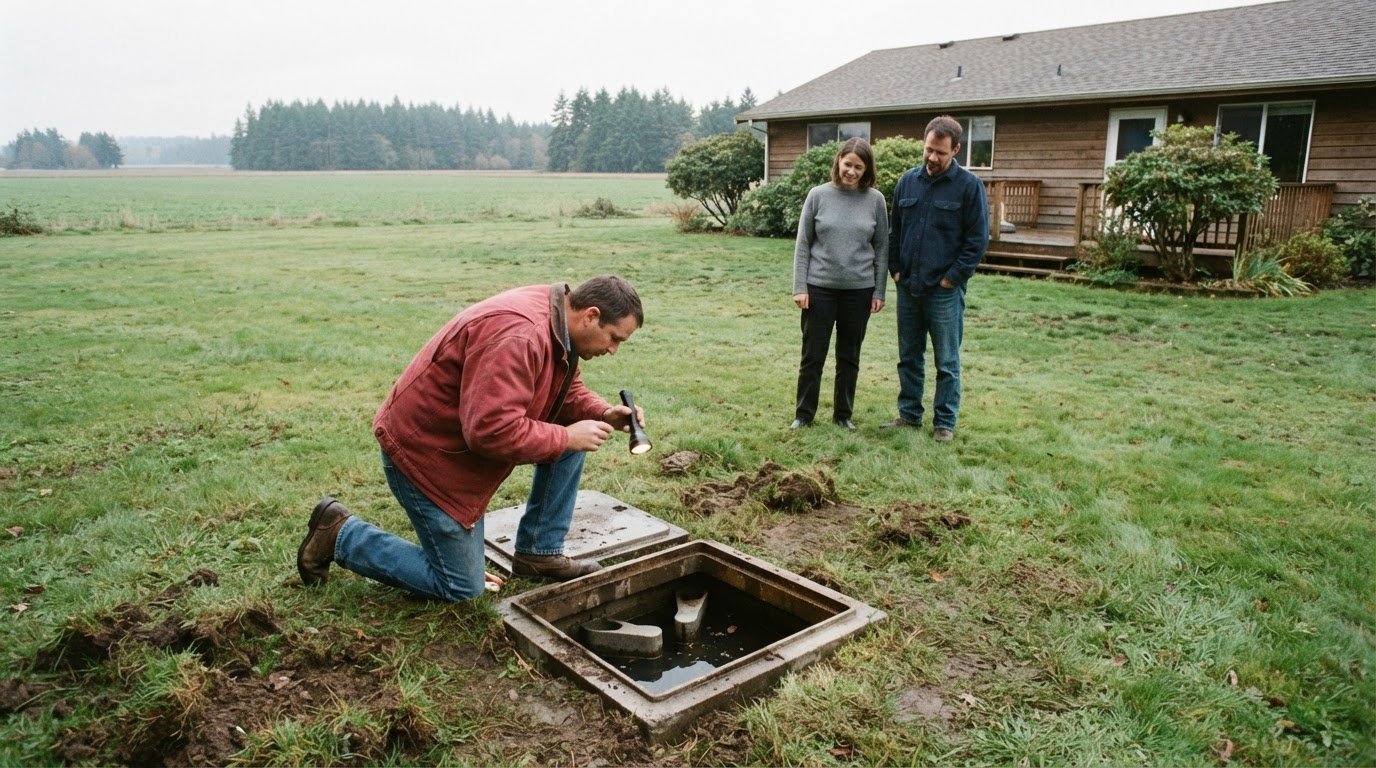
A pumped tank alone doesn’t show that the whole septic system is working. For septic certification for a home sale in Canby, Oregon has no other statewide requirements for home sales involving a well and septic tank, though a lender may have additional requirements. The state also has no official criteria for inspecting septic systems already in operation.
That can leave buyers and sellers unsure what septic certification for a home sale should cover. Pumping is useful, but it cannot repair a damaged drainfield or replace a closer examination of the system. A clear picture of the tank, drainfield, and available records helps both parties understand what may need attention before closing.
This guide explains how pumping and inspection fit into a Canby home sale, when county septic officials can help, and which permits and maintenance records to review. You’ll also learn how a written evaluation can inform decisions, so you can rely on more than a pump-out receipt.
Key Takeaways
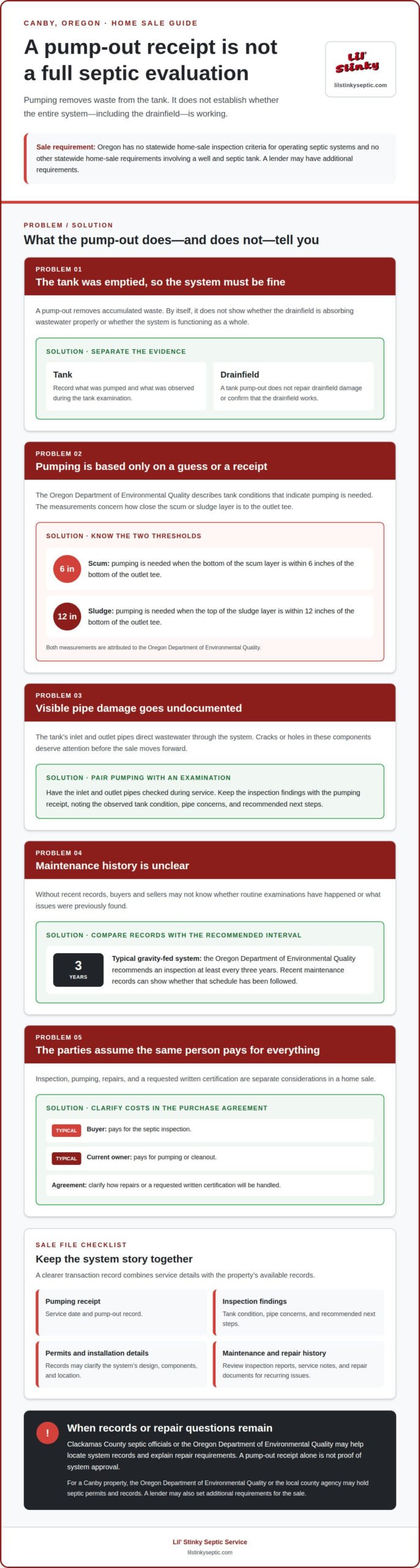
- According to the Oregon Department of Environmental Quality, pumping is needed when the bottom of the scum layer is within 6 inches of the bottom of the outlet tee.
- A pump-out alone doesn’t establish the condition of the drainfield, so understand what the tank examination covers.
- County septic officials can help locate system records and explain repair requirements when questions come up.
- Review permits, installation details, and maintenance records to build a clearer picture of the system before closing.
1. Pumping and examining the septic tank
A septic tank pump-out removes accumulated waste, but it doesn’t tell the full story of a septic system. In Oregon, a tank needs pumping when the bottom of the scum layer is within 6 inches of the bottom of the outlet tee, according to the Oregon Department of Environmental Quality. It also needs pumping when the top of the sludge layer is within 12 inches of the bottom of the outlet tee, according to the Oregon Department of Environmental Quality. These measurements help determine whether solids are getting too close to the outlet.
Arrange an inspection alongside pumping. During the service, the tank’s inlet and outlet pipes should be checked for cracks or holes. These components direct wastewater through the system, so visible damage deserves attention before the sale moves forward. The Oregon Department of Environmental Quality recommends inspecting a typical gravity-fed system at least every three years. Recent maintenance records can show whether that schedule has been followed.
Keep the tank and drainfield distinct. A tank that has gone a long time without pumping may have a damaged drainfield, but pumping will not repair that damage. An emptied tank alone does not show whether the drainfield is absorbing wastewater properly. If an inspection identifies concerns, document the findings and clarify what further evaluation or repair is needed before treating the pump-out as evidence of the system’s condition.
Who pays? In a typical home sale, the buyer pays for the septic inspection, while the current owner pays for pumping or cleanout. The purchase agreement should clarify how the parties will handle repairs or a requested written certification, so those costs remain separate from routine pumping.
For a clearer transaction record, keep the pumping receipt and inspection findings together. Note the service date, observed tank condition, pipe concerns, and recommended next steps. If pumping reveals a damaged outlet pipe, for example, that gives the buyer and seller a specific issue to address. A documented inspection provides more information than a receipt showing only that the tank was emptied.
2. Getting help from county septic officials
For a Canby home, county septic officials can help locate system records and explain repair requirements. Contact the septic system official for Clackamas County or the Oregon Department of Environmental Quality if the property file is incomplete, the tank location is unclear, or you have questions about planned repairs. Officials can help identify the next step, but a pump-out receipt alone is not proof of system approval.
What are Canby and Clackamas County rules for septic system inspections during a home sale? Oregon has no official criteria for inspecting septic systems already in operation and no other statewide home-sale requirements involving a well and septic tank. A lender may set additional requirements, so include any lender conditions in the sale timeline.
How long does septic certification take in Canby, and how long is it valid? Oregon sets no official inspection criteria for operating systems, so there is no statewide inspection duration or validity period to quote. Timing depends on scheduling, access to the tank and drainfield, available records, and whether further evaluation is needed.
Which agency issues septic system records or approval in Canby, Oregon? The Oregon Department of Environmental Quality or the local county agency may hold septic permits and records. Request the property file and, if available, a system map from the appropriate office. These records can show the system’s location and distribution layout, helping clarify what an evaluator should examine.
How do you arrange an inspection or certification? Arrange an Existing System Evaluation with a certified Onsite Maintenance Provider to assess whether the system is working. Provide the property address and any permits, maps, or maintenance documents available, then coordinate access to the system. If repairs are indicated, county septic officials can explain applicable requirements. To arrange a septic system evaluation, share the property details and records you have.
3. Permits and maintenance records
For a Canby sale, permits and maintenance records help establish which system serves the property and how it has been cared for. Start with the septic installation records and property map. Oregon homebuyers are advised to request both from the county office responsible for septic permits. The map can help locate the system, while installation records may clarify its design and components.
Look for a permit on file with the Oregon Department of Environmental Quality or the local county agency. If no permit appears in the file, the system may have been installed without one or may be very old. If it later fails or creates a public health risk, the homeowner could be held responsible. Treat a missing permit as a reason to investigate the property’s history, not as proof of a specific problem.
Maintenance records provide another view of the system’s condition. Review inspection reports, service notes, and repair documents for recurring issues or components that may need attention. Buyers can use these records to identify potential repair concerns and understand what work has already been done. For example, a report describing a repaired component gives more context than a record listing only a service date.
Some systems have specific ongoing record requirements. In Oregon, owners of alternative treatment technology and sand filter systems installed after Jan. 1, 2014, must maintain a service contract with a certified maintenance provider. Covered systems must be inspected by a certified maintenance provider at least once every year. The provider submits inspection reports and required fees to the Oregon Department of Environmental Quality.
Keep these documents together for the sale: the permit, installation records, property map, service contract, inspection reports, and repair notes. If a report is missing, the county permit file may help fill gaps about the system’s location or installation. An organized file gives buyers and sellers concrete details to discuss, especially when records indicate repairs or ongoing maintenance needs.
4. Is a septic system inspection or certification required to sell a home in Canby, Oregon?
Sale-related paperwork can vary, and a lender may have additional requirements. The state also has no official criteria for inspecting septic systems already in operation. For a Canby sale, distinguish lender conditions from statewide rules when planning the inspection and paperwork.
A septic certification is a written document stating that an onsite sewage disposal system was inspected and found in satisfactory condition according to current standards. Because Oregon has no official inspection criteria for operating systems, buyers and sellers should clarify what a written evaluation covers. A useful document identifies the system examined, the findings, and any recommended follow-up.
Canby homebuyers are advised to have a certified Onsite Maintenance Provider perform an Existing System Evaluation to assess whether the septic system is working. This focuses the assessment on the septic system itself, rather than assuming a general home inspection includes a septic evaluation. The findings can also help the parties discuss concerns before closing.
Timing depends on the system’s use and access. A hydraulic load test may be needed if the home has been vacant for more than 7 days. The test can help assess system function after a period without normal wastewater use. Plan for that possibility when coordinating the sale, especially if the property has stood empty and the buyer wants an evaluation before closing.
Keep the lender’s requirements, evaluation findings, and any certification with the sale documents. If a lender requires additional review, that condition may affect which documents the parties need. A written evaluation can clarify the system’s condition, but it does not establish a statewide inspection standard or replace a lender’s requirements.
Need an evaluation for a Canby property? Request a septic system evaluation to document the system’s condition and give the sale discussion a clear starting point.
Lil’ Stinky Septic Service
Lil’ Stinky Septic Service helps Canby buyers and sellers understand system condition with septic inspections and pumping. An inspection provides information about the septic system, while pumping removes accumulated tank waste. The company also handles septic installations and ATT Systems when findings point to larger system needs.
Bring available maintenance records, permits, and evaluation findings when discussing the property. These details connect its documented history with work that may be needed, whether you’re preparing to sell or reviewing a home as a buyer.
For help with septic questions during a home sale, contact Lil’ Stinky Septic Service.
Set up the next step with confidence
Septic certification for a Canby home sale can give buyers and sellers a clearer basis for decisions. The next step is to turn questions into an organized plan: coordinate the evaluation with the sale timeline, keep the findings with the property documents, and make sure both parties understand which issues need attention before closing. Clear communication can help prevent a late discovery from becoming a last-minute source of stress.
If you’re preparing a home for sale or reviewing a property with a septic system, gather your questions and available records before arranging service. This gives the conversation a practical starting point and helps focus attention on the property’s specific needs.
Connect with Lil’ Stinky Septic Service to discuss a septic concern related to your home sale. A well-organized next step can make the process easier to manage.
Frequently Asked Questions
1. Selling or buying a home with a well and septic tank?
Treat the well and septic system as separate parts of the sale, with distinct records and evaluations. Oregon requires well water testing for bacteria and nitrate during a home sale, with results submitted to the Oregon Health Authority; the tests don’t have to pass. Arrange a separate septic evaluation and keep its findings apart from the well test results.
2. Should I pump the septic tank before listing?
Base the decision on the tank’s condition and maintenance history, not simply on the listing date. An inspection can assess whether pumping is needed and document the tank examination’s findings. If you’re the seller, discuss the inspection and any planned pumping with the buyer early, then record the work completed. This helps prevent a pump-out from being mistaken for a full system evaluation.
3. What if my septic system fails the buyer’s inspection?
Use the written findings to identify the specific concern and the next evaluation or repair needed. A problem with one component, such as a pipe, calls for a different response than a possible drainfield issue. Ask the county septic official about repair requirements, then discuss the documented work and sale terms with the buyer. Keep repair records with the property documents.
4. What does a septic certification for a home sale in Canby include?
The report should document what was inspected and the findings for the system evaluated. Lil’ Stinky Septic Service’s septic inspections include an eight-page DEQ inspection form. Use the report to understand observed conditions and recommended follow-up, and share it with the buyer or lender as needed. The form records inspection information; it does not create a statewide pass standard for operating systems.
5. What happens if a septic system fails inspection before a Canby home sale?
A failed inspection means the reported issue needs a clear next step before the parties decide how to proceed. Review the finding, determine whether further evaluation is needed, and ask the county septic official about applicable repair requirements. Keep written diagnoses, permits, and repair documents together. These records help the buyer understand what was addressed and what system information remains relevant after closing.
6. How can I find septic permits, maintenance records, and system location for a Canby property?
Request installation records and a system map from the county office responsible for septic permits; the Oregon Department of Environmental Quality or local county agency may also hold records. Ask the seller for maintenance reports and repair documents, then keep them with the official file. Reports from a service provider who maintained the system can add useful detail about past work.