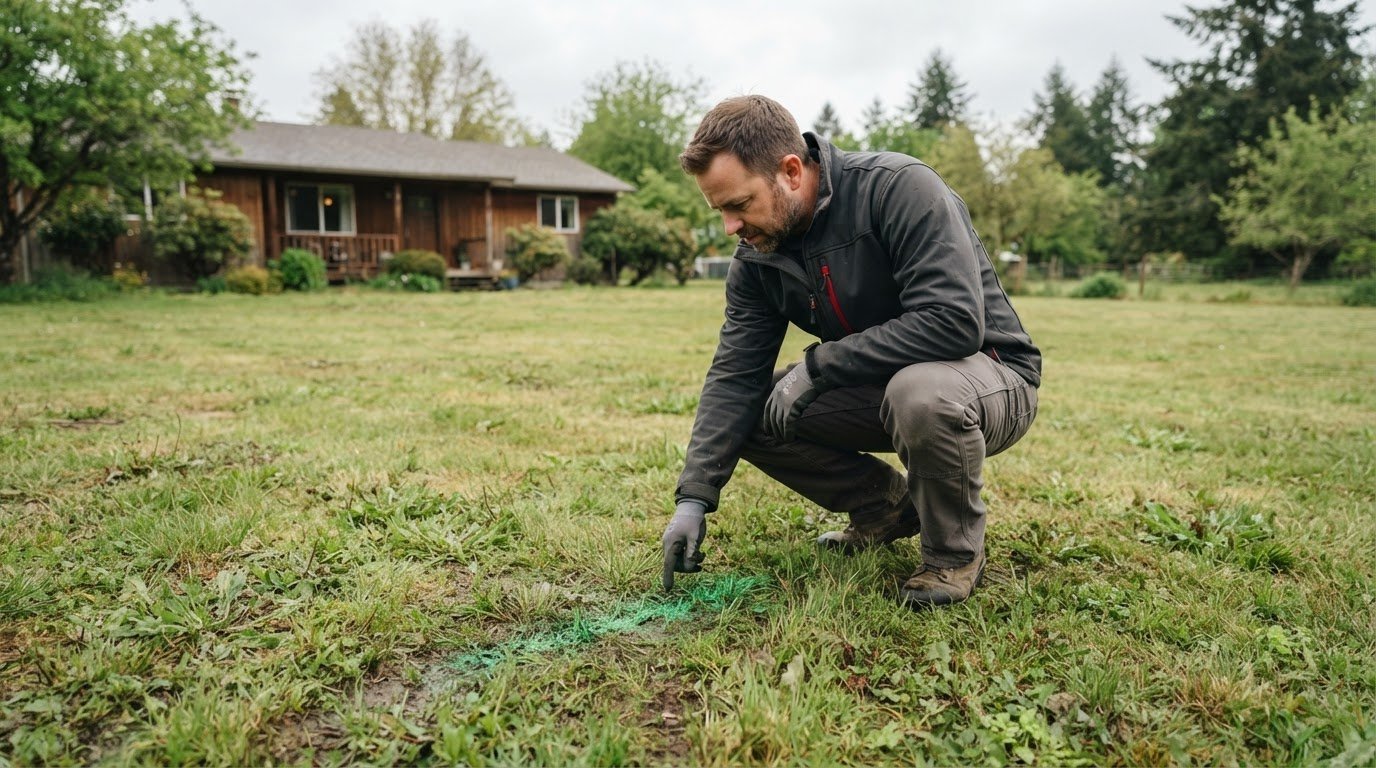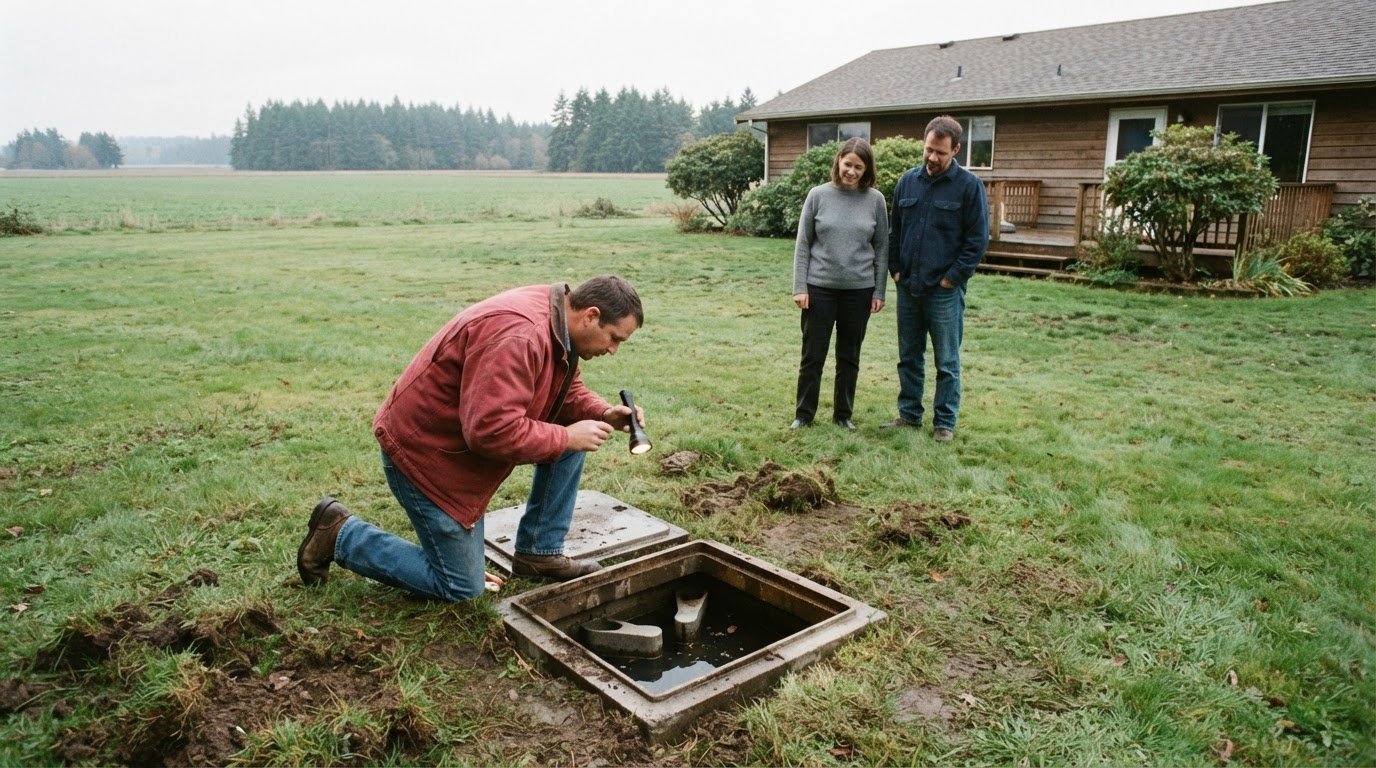
A failed septic dye test can complicate a home sale, but it doesn’t tell the whole story. In Canby, OR, a septic dye test uses colored dye flushed through a toilet to help show whether wastewater is escaping where it shouldn’t. Dye visible on the ground indicates a failed result and means the system needs closer attention.
It’s understandable to want a clear answer about what the result means and what comes next. This guide explains what the test checks, how to interpret a pass or failure, and why rain, vegetation, and other site conditions can affect what’s visible. It also covers cost: pricing depends on system complexity, site access, and the scope of evaluation, and is provided after a quote request. You’ll learn why a dye test is only one part of understanding a septic system’s condition, and when a more complete inspection can help clarify the next step.
Key Takeaways
- The test uses dye and water to trace wastewater flow; the water volume depends on the tank size and absorption-field length.
- Testing costs vary with the scope of evaluation, site access, and system complexity, so understand what the assessment includes.
- Rain, snow, leaves, and tall grass can hide visible dye, and no dye appearing doesn’t rule out every septic problem.
- A dye test can point to leaks or incorrect connections, while a septic inspection helps assess the system’s broader condition.
What is a Septic Dye Test?
A septic dye test traces wastewater through a septic system using colored dye and water. It requires no excavation and reveals only conditions visible above ground.
Dye and Water Amounts
A tester adds several ounces of concentrated red or green dye to a toilet connected to the system. Water carries the dye through the household plumbing and septic components. The amount used depends on tank size and absorption-field length. During testing, water may run for about 10 to 15 minutes to move dye through the system and toward the drain field. These amounts affect how dye travels and where it may become visible.
Testing Timing and Triggers
A dye test is a targeted check, not a substitute for routine septic inspections. For a home purchase or sale, the suggested frequency is one test per transaction. Systems with past trouble or a failing drain field may warrant checks every 2-3 years or as recommended. A home inspector or licensed plumber can perform the test. For a basic DIY test, use a septic dye kit, flush dye down a connected toilet, limit other water use for about 24 hours, then check the area after 24-48 hours. Professional observation may last 24-72 hours, depending on weather and site conditions.
Testing During a Home Purchase
During a home purchase, dye testing can help identify wastewater escaping into the yard or surface water, but it doesn’t establish the system’s full condition. Buyers can seek an Existing System Evaluation from a certified Onsite Maintenance Provider. Septic permits may be on file with the Oregon Department of Environmental Quality or the local county agency. Canby homeowners unsure where their tank, distribution lines, or drain field are located can seek an evaluation from a certified Onsite Wastewater Inspector. Dye testing doesn’t test drinking water, so it cannot determine whether a private well’s water is safe.
Dye test cost ranges and pricing factors
There isn’t one fixed price for septic dye testing in Canby. The cost depends on the situation and the scope of the evaluation. System complexity, site access, and the work included all affect the price. A straightforward visual dye check differs from tracing wastewater across multiple locations or adding video inspection and lab confirmation.
The work included matters. A basic test follows dyed water from a household toilet and looks for visible effluent on the ground or in surface water. A broader field evaluation may trace where wastewater travels and assess more of the distribution area. Additional locations and testing steps can increase the work involved.
Access also shapes the assessment. An inspector needs to observe relevant parts of the property and identify where dye could become visible. Tall grass, leaves, or wet ground can make observations harder, while a larger or more complex layout may call for a wider evaluation. These conditions affect the scope, not simply the amount of dye used.
Before requesting a quote, clarify whether the goal is a basic dye test, a field evaluation, or a more detailed investigation. For example, a failed result near one section of the drain field may call for follow-up to locate the source. Dye testing can help identify a wastewater pathway, but it doesn’t establish drinking water safety or assess every septic component. If you need a broader system assessment, explore septic system inspection information as a related next step.
Limitations and possible inaccurate results
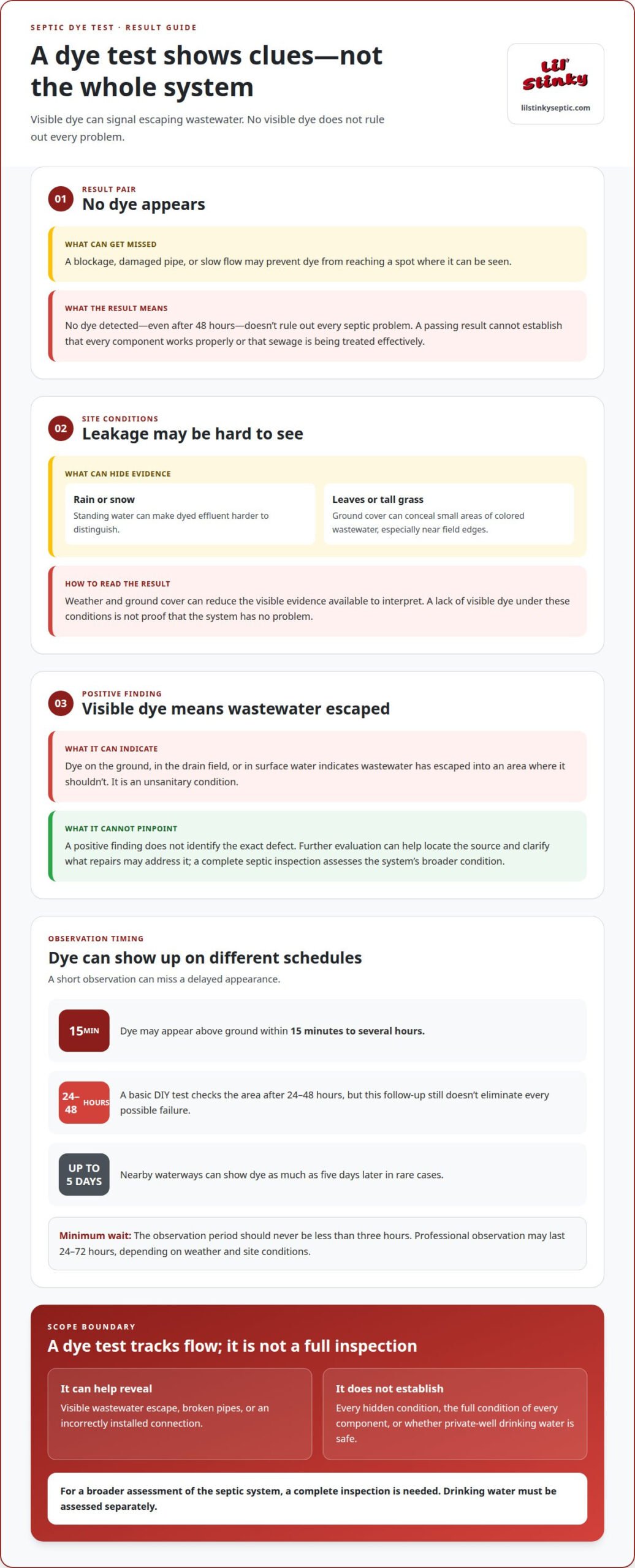
A septic dye test shows visible evidence, not every condition inside a septic system. No dye detected after 48 hours doesn’t rule out all problems, because a blockage, damaged pipe, or slow flow may prevent dye from reaching an observable spot. A passing result therefore can’t establish that every component works properly or that sewage is being treated effectively.
Weather and ground cover can hide leakage from the drain field. Recent rain or snow may leave standing water that makes dyed effluent harder to distinguish. Leaves and tall grass can cover small areas of colored wastewater, especially near field edges. In these conditions, there may be less visible evidence to interpret, even when dye has moved through the system.
Timing matters, too. Dye may appear above ground within 15 minutes to several hours, while nearby waterways can show dye as much as five days later in rare cases. A short observation can miss a delayed appearance. For this reason, the waiting period should never be less than three hours, and a basic test’s 24-48-hour follow-up still doesn’t eliminate every possible failure.
A positive finding has its own limitation: visible dye indicates an unsanitary condition, but it doesn’t pinpoint the defect. Dye in the yard, drain field, or surface water can signal escaping wastewater; further evaluation can help identify where it is coming from and what repairs may address it. A complete septic inspection is needed to assess the system’s condition. For a Canby property with a private well, assess drinking water separately, because dye testing traces wastewater rather than measuring water quality.
What septic dye tests check
A septic dye test follows colored wastewater through the household plumbing and septic system. Dye is flushed into a toilet connected to the system being tested, then the inspector looks for visible dye along the septic tank, distribution boxes, drain field, and nearby surface areas. This can show whether wastewater escapes from broken pipes or an incorrectly installed connection. It can also help identify whether a household appliance or drain sends wastewater to the septic system as intended.
The test focuses on flow and visible leakage, not every hidden component. Dye appearing on the ground or in a nearby waterway indicates that wastewater has escaped into an area where it shouldn’t be. Dye testing may also help assess whether the system handles its current waste volume. It cannot reveal every underground condition because it requires no excavation and is generally limited to what can be seen above ground.
Homeowners may use a dye test to investigate a suspected leak, check a plumbing connection, or gather information during a property review. A home inspector can observe the test, but its result is only one piece of evidence. No visible dye doesn’t prove that the septic tank, field, and other components are working properly. Site conditions and how wastewater moves through the system affect what becomes visible.
A dye test and a full septic inspection answer different questions. Dye testing traces wastewater and can reveal visible escape points; a full inspection assesses the system’s broader condition. If you need a closer evaluation beyond dye tracing, schedule a septic inspection to assess the system and discuss appropriate next steps.
Lil’ Stinky Septic Service
Lil’ Stinky Septic Service helps Canby property owners understand what a dye test result may mean and what septic care could follow. If visible dye suggests a leak, a septic inspection can provide a broader assessment of the system and help clarify next steps. A dye test alone doesn’t identify every defect or determine which repairs are needed.
For other system needs, Lil’ Stinky Septic Service also provides septic pumping, septic installation, and Alternative Treatment Systems (ATT). The right service depends on the system’s condition and type, not simply on whether dye appeared above ground. If your test raised questions about your system, contact Lil’ Stinky Septic Service to discuss your concerns.
Turn the test result into a practical next step
A dye test can point to a possible wastewater pathway, but the useful next step is understanding what the finding means for the property. If you’re arranging a septic dye test in Canby, OR, consider how the results fit with the system’s broader condition and any decisions you’re making about the home. A visible concern calls for a clear assessment, while no visible dye shouldn’t replace a complete evaluation if other issues remain.
Lil’ Stinky Septic Service can help you consider the next step through septic inspections, septic tank pumping, or septic installation when the system’s needs call for it. Share the test findings and your main concern so the conversation can focus on the property’s situation. Contact Lil’ Stinky Septic Service to discuss what comes next and move forward with a clearer plan.
Frequently Asked Questions
How Does a Failed Test Affect Me?
A failed result can complicate a home sale and may lead to repair requirements. Some municipalities may require repairs before a sale proceeds. For buyers, visible wastewater can raise questions about the system’s condition and next steps. Treat the result as evidence of a concern to investigate, not a complete diagnosis of the cause or the work required.
How Quick Can It Take for These Tests to Take Place?
The active test may take 20 to 30 minutes when wastewater moves through the system at its traditional rate. A slower-moving system can take as long as five days to reveal dye. That’s why the time spent adding dye and water isn’t the same as the full observation period. A delayed appearance may matter, especially if the property is being evaluated during a sale.
What is a septic dye test and what does it detect?
A septic dye test uses colored dye to show where wastewater travels through the system. For example, it can help reveal whether a laundry drain connects to the system or whether effluent escapes from a damaged pipe. Visible dye in a yard or waterway signals a concern, but it doesn’t identify every hidden defect or prove the rest of the system is sound.
What is the typical cost of a septic dye test near Canby, OR?
The cost depends on the situation and the work involved. A basic visible dye check differs from a field evaluation involving multiple locations, lab confirmation, or video inspection. Site access and system complexity can also affect the scope. The key comparison is what the assessment covers, not just whether it includes dye.
Do Clackamas County or Oregon rules require a septic dye test for property sales or permits?
A suggested test for a property transaction isn’t, by itself, a county or state legal requirement. Testing frequency and permit rules are separate matters. Some municipalities may require repairs before a sale proceeds after a failure. Buyers reviewing a Canby property can look into whether septic permits are on file with the Oregon Department of Environmental Quality or the local county agency.