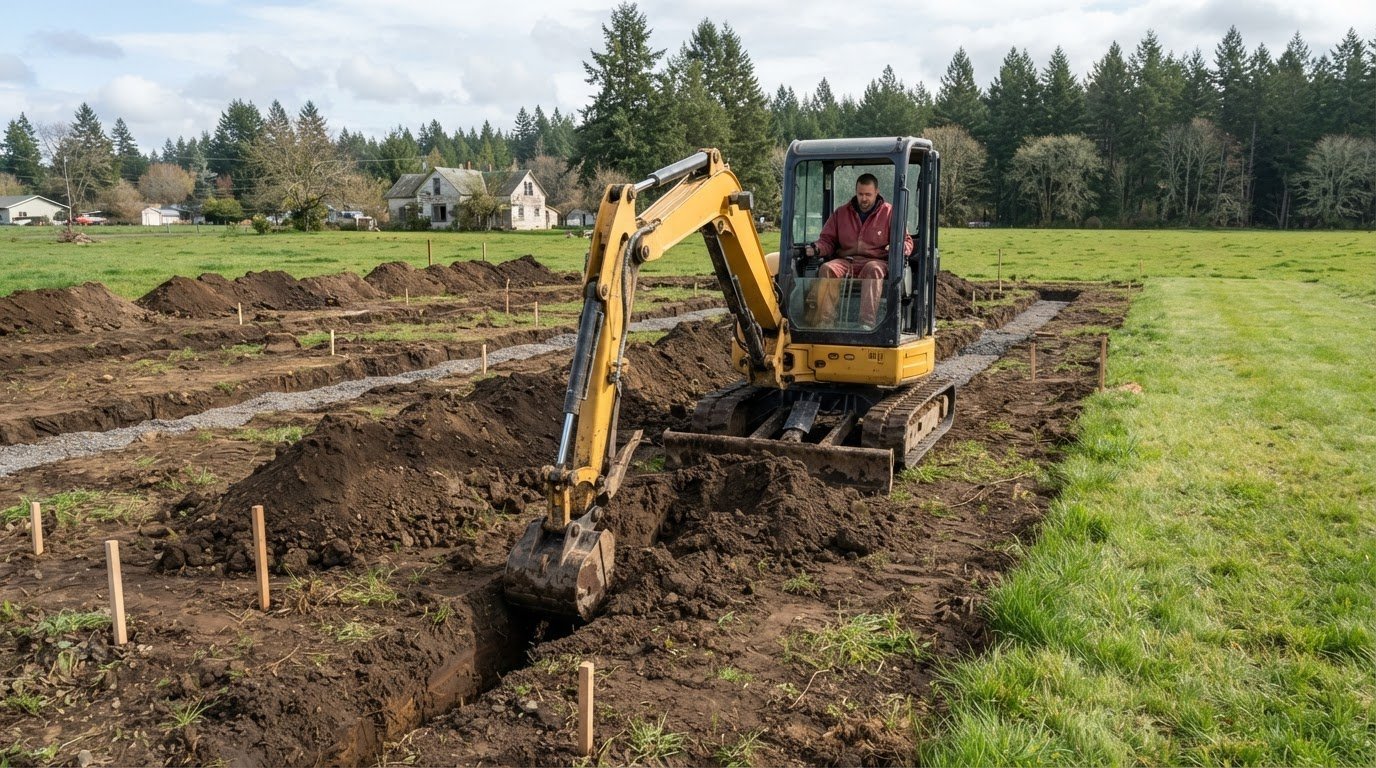
Good septic work starts before the tank or drainfield goes in. A septic excavation contractor in Canby prepares the site, digs trenches for the system, and plans drainage and equipment access around the installation area. Careful preparation helps keep the work organized and protects the space needed for the septic system.
It’s easy to focus on the tank, but the surrounding ground matters just as much. Trenching, grading, drainage, and equipment access all shape how installation proceeds and how the property can be used afterward.
This guide explains what septic excavation in Canby can involve, how site preparation and trenching fit into the work, and which property conditions affect the plan. You’ll also learn how drainage and equipment access are considered, what to look for when choosing a contractor, and when septic installation services may be the next step.
Key Takeaways
- Keep the drainfield and reserve area clear when planning construction or paving to protect the septic system and space for future replacement.
- Understand how trench routes and utility access affect the excavation plan and the work area.
- See which site conditions can shape an excavation estimate, including the layout and drainage needs.
- Learn what information helps make an estimate useful and how septic installation services fit into the next step.
Site preparation, trenching, and drainage
Septic excavation prepares the area for the tank, connecting pipes, and drainfield. The site layout, soil, drainage, and equipment access all influence the work.
Site and Soil Requirements
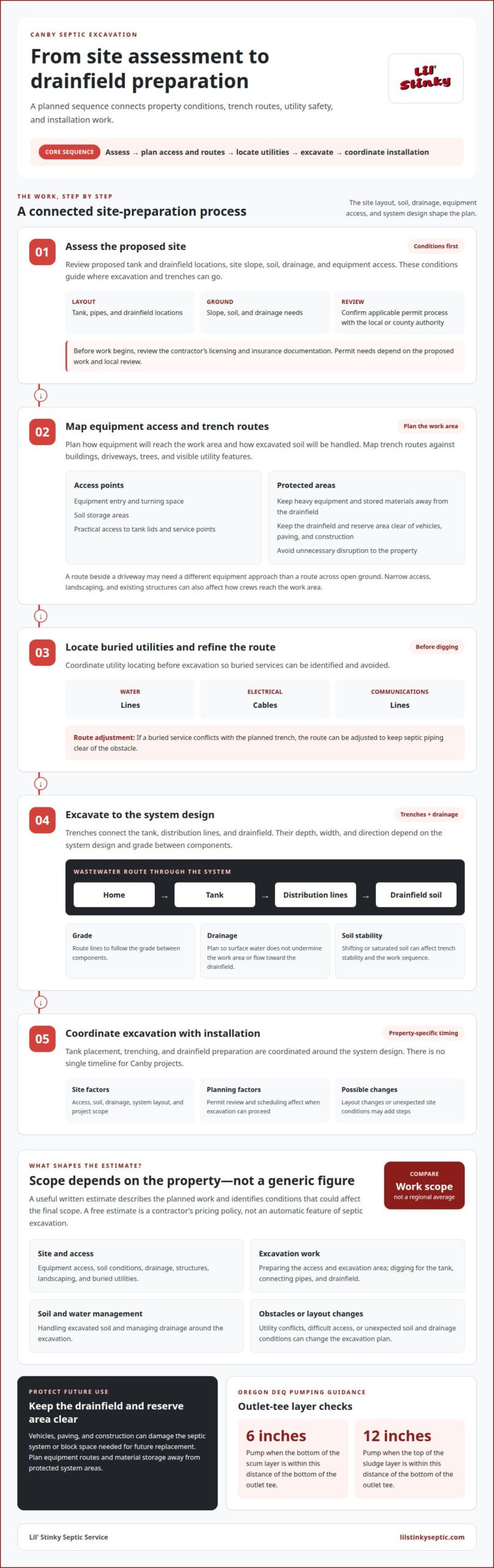
A septic excavation contractor assesses the proposed tank and drainfield locations, site slope, soil, and equipment access. These conditions guide excavation and trench placement. The contractor also plans drainage so surface water does not undermine the work area or flow toward the drainfield. In Canby, permit needs depend on the proposed work and local review; confirm the applicable process with the responsible county or local authority before excavation. Licensing and insurance are contractor-specific, so review the contractor’s documentation before work begins.
Excavation Estimates and Costs
Excavation costs depend on the site and work scope, including access, soil conditions, drainage, trench layout, and whether existing septic components need repair. Difficult access or unexpected site conditions can change the amount of excavation required. A free estimate is a contractor’s pricing policy, not an automatic feature of septic excavation. A useful written estimate should describe the planned work and identify the conditions that could affect the final scope, without relying on a generic cost figure.
Excavation and Installation Timing
There is no single timeline for septic excavation and installation in Canby. The sequence depends on access, soil, drainage, system layout, and project scope. Permit review and scheduling also affect when excavation can proceed. The work is planned around the system design, with tank placement, trenching, and drainfield preparation coordinated as part of the installation. Changes to the layout or site conditions may add steps, so the schedule should reflect the property rather than a generic estimate.
In a septic system, wastewater flows from the home into a tank, where solids settle and lighter material rises. Liquid then moves through distribution lines into the drainfield, where it disperses into the soil. Keep vehicles, paving, and construction away from the drainfield and reserve area; they can damage the system or block future replacement. Oregon Department of Environmental Quality says a septic tank needs pumping when the bottom of its scum layer is within 6 inches of the bottom of the outlet tee. The department also says pumping is needed when the top of the sludge layer is within 12 inches of the bottom of the outlet tee.
Trenching and utility access
Trenches connect the septic tank, distribution lines, and drainfield. Their route must follow the system layout while allowing equipment to reach the work area. A contractor maps the trenches in relation to buildings, driveways, trees, and visible utility features. For example, a pipe route beside a driveway may require a different equipment approach than one across open ground. Careful planning helps limit unnecessary disruption to the property.
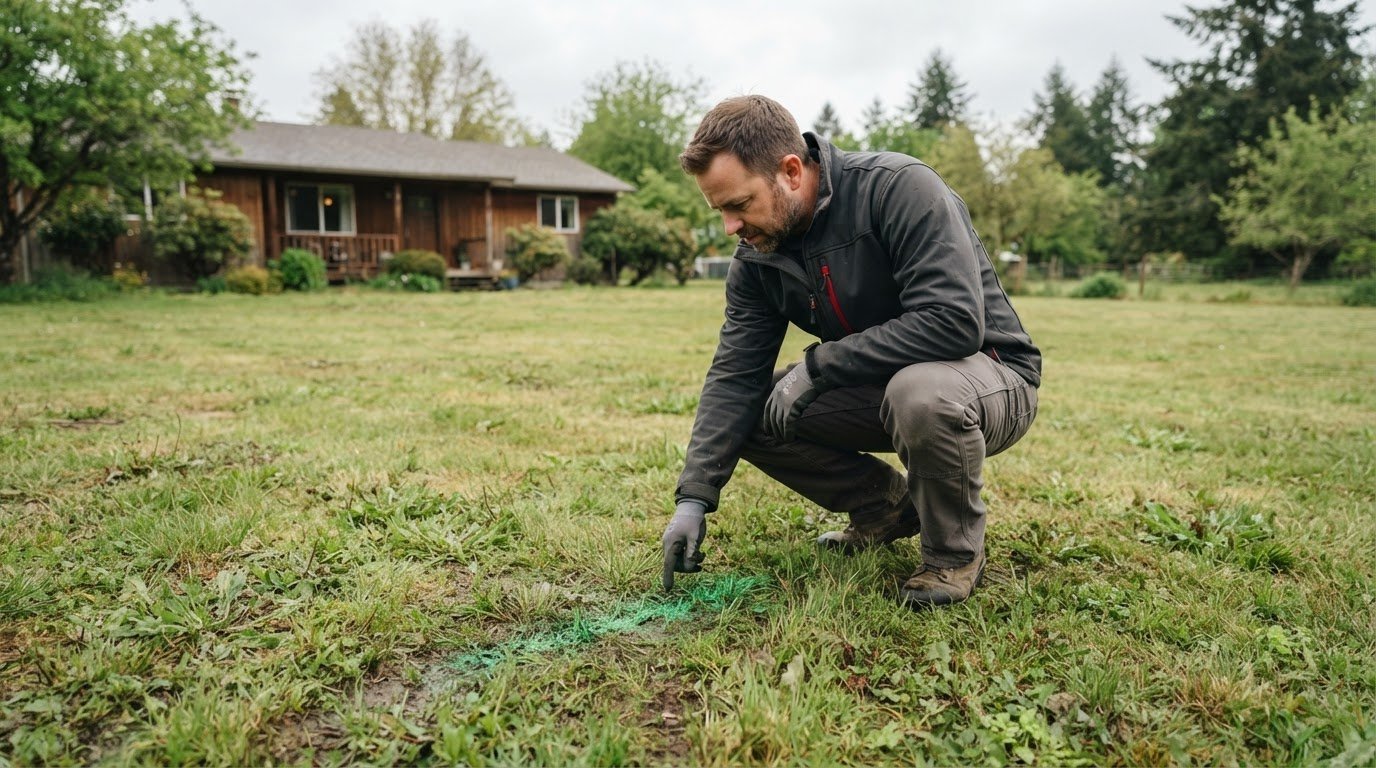
Before digging, the contractor coordinates utility locating so buried services can be identified and avoided. Water lines, electrical cables, and communications lines may cross the planned work area. The trench route can then be adjusted to keep septic piping clear of those obstacles. In Oregon, the work plan also accounts for the access needed to bring equipment in and remove excavated soil without crossing protected system areas.
Trench depth, width, and direction depend on the system design and grade between components. A consistent route helps wastewater move from the tank toward the distribution area as intended. On a sloped property, the contractor considers how the line follows the grade and where water may collect. Shifting or saturated soil can also affect trench stability and the work sequence.
- Access: Identify equipment entry, turning space, and soil storage areas.
- Route: Align trenches with the system plan and avoid known buried services.
- Protection: Keep heavy equipment and stored materials away from the drainfield.
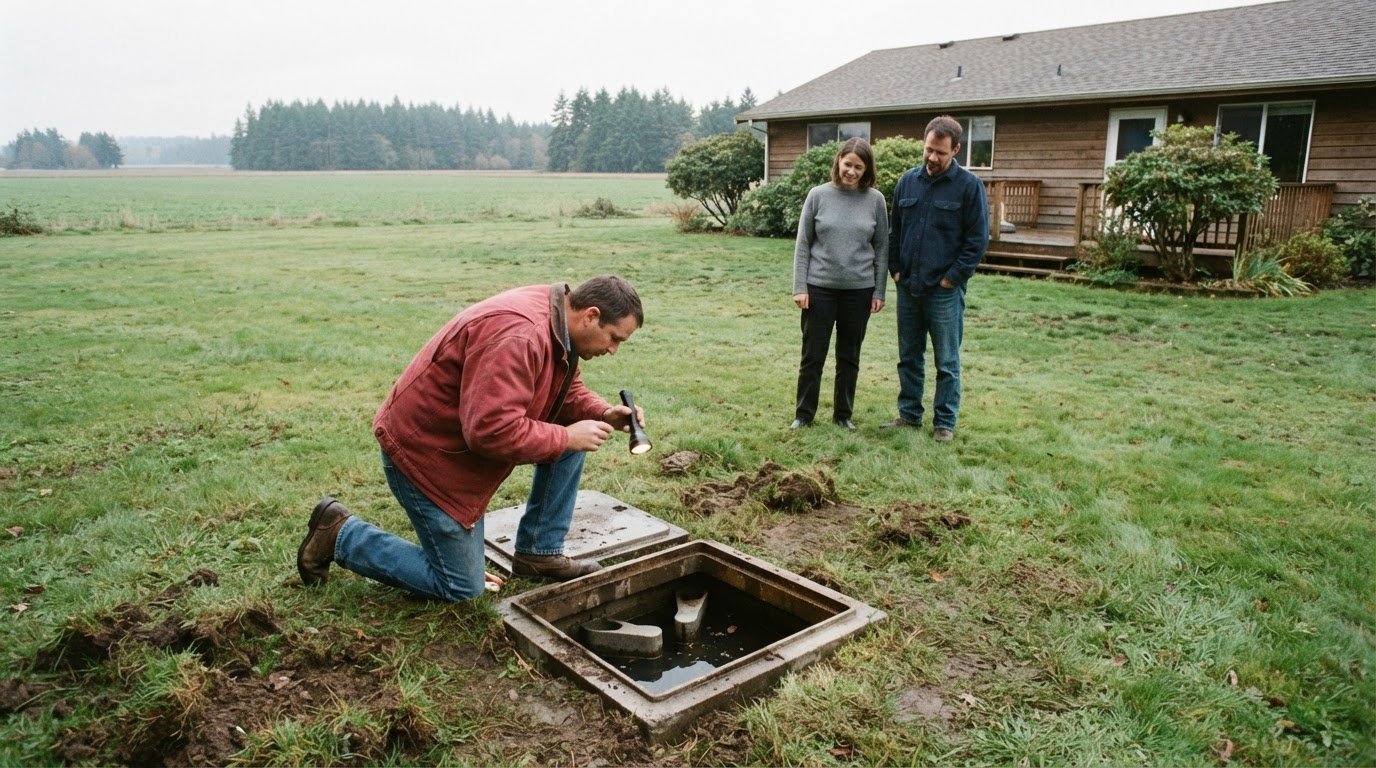
Utility access also matters after installation. Tank lids and service points need a practical approach for future inspection or maintenance. A route that crosses a garden bed or narrow side yard may need extra protection during construction. Discuss these access points as the site plan takes shape. For help coordinating septic system planning around trench routes and property access, explore septic site planning.
What is the typical cost of septic system excavation in Canby?
There isn’t one excavation price for every Canby property. The cost depends on the site and project scope. Replacing a tank on an open, accessible lot involves different work from installing a new system on a sloped site with limited equipment access. The excavation scope, rather than a generic regional average, determines what the estimate needs to cover.
Several site details shape the scope. The contractor considers the planned tank and drainfield locations, trench routes, soil, drainage, and machinery access. For example, a narrow side yard may limit equipment movement, while a long pipe route may require more trenching. Existing structures, landscaping, and buried utilities also affect how crews reach the work area and where excavated soil can go.
A useful estimate separates the main work items, such as:
- Preparing access and the excavation area.
- Digging for the tank, connecting pipes, and drainfield.
- Managing soil and drainage around the excavation.
- Addressing site obstacles or changes to the planned layout.
Ask for an estimate that describes the included work and the conditions that could change its scope. If a utility conflict appears along a planned trench, for example, the route may need adjustment. Unexpected soil or drainage conditions may also change the excavation plan. Clear scope details help you understand what the quoted work covers without relying on an unsupported cost range.
Compare estimates by matching the tasks described, not just the totals. Check whether each covers the same system area, trenching, access needs, and site preparation. A septic installation estimate may include work beyond excavation, so identify which tasks belong to each part of the project. This makes it easier to discuss differences and plan around the property’s actual layout.
Do Canby septic excavation contractors provide free estimates?
Some contractors provide free estimates, while others charge for a site visit or detailed assessment. There is no single estimate policy for septic excavation in Canby, so don’t assume a quote is free. The estimate should explain the proposed work and its price before excavation begins.
A useful estimate starts with the property and project scope. The contractor considers the tank location, trench route, drainfield area, equipment access, soil, and drainage. For example, an open lot may allow a direct equipment route, while a narrow driveway could limit access. Those details shape the work plan and the amount of excavation involved.
Clarify what the estimate covers. It should distinguish excavation from related installation tasks and identify assumptions about the site. Look for descriptions of:
- Tank and drainfield excavation.
- Trenching and soil handling.
- Equipment access and site preparation.
- Conditions that could change the work scope.
Ask how changes are handled if the site differs from initial expectations. A buried obstruction, utility conflict, or drainage issue may require a revised route or additional work. Clear terms explain how changes are described and priced, helping prevent confusion once the crew is on the property.
Compare estimates by matching their scope, not just their totals. One proposal may include trenching and site preparation, while another may describe excavation alone. Check whether each covers the same tank area, drainfield work, access needs, and soil handling. The price depends on the case and is given after a quote request; the project scope and site conditions shape the amount.
For a clearer picture of the work on your property, request an excavation estimate and share the project details, including the planned system location and any known access constraints.
For Oregon systems, owners of alternative treatment technology and sand filter systems installed after Jan. 1, 2014, must maintain a service contract with a certified maintenance provider. Certified maintenance providers in Oregon must inspect covered alternative treatment technology and sand filter systems once every year and submit a report and required fees to the DEQ. If relevant to your project, ask whether these ongoing service obligations apply to the system being installed and clarify what the excavation estimate covers.
Lil’ Stinky Septic Service
Lil’ Stinky Septic Service can connect your excavation questions with the needs of your septic system. If you’re planning a new or replacement system in Canby, its septic installation service includes design, permits, and installation. Septic inspections, including an eight-page DEQ inspection form, can also help clarify the condition and layout of an existing system before you plan changes.
Share the property’s location, project goals, and known site constraints when discussing next steps. Details such as a proposed building addition, limited equipment access, or an existing system concern help frame the conversation. Lil’ Stinky Septic Service also provides septic pumping and Alternative Treatment Systems for relevant system needs.
For guidance on your septic project, contact Lil’ Stinky Septic Service.
Plan the next step for your property
Before excavation begins, connect the site plan with the septic work it supports. A septic excavation contractor in Canby can coordinate digging with the planned installation, while an inspection can clarify an existing system’s condition. The right next step depends on whether you’re preparing for new construction, addressing a system concern, or arranging routine care.
Lil’ Stinky Septic provides septic installation, inspections, and pumping in Canby. Share your project goals and property details to focus the conversation on the work your system needs. With free estimates, honest, upfront pricing, and a Best Price Guarantee, you’ll have a clear starting point for discussing the site and deciding how to proceed.
Contact Lil’ Stinky Septic Service to talk through your septic project. Take the next step with a clearer plan for your property.
Frequently Asked Questions
Which septic excavation contractors serve Canby, Oregon?
Lil’ Stinky Septic Service is based in Canby and serves local residential and commercial customers. For a Canby property, describe whether the project involves a new system, an existing system, or a real estate inspection. That context helps clarify which septic work is relevant. The company is a licensed and insured contractor, with license number #189693.
What septic excavation services are available in Canby, OR?
In Canby, Lil’ Stinky Septic offers septic installation, inspections, pumping, and Alternative Treatment Systems. Installation is relevant for a new or replacement system, while an inspection can assess an existing system. Pumping supports routine tank maintenance. Share the property’s situation to discuss which service fits your septic needs, with free estimates, honest, upfront pricing, and a Best Price Guarantee.
What should I compare when choosing a septic excavation contractor near Canby?
Compare the written work scope, site access plan, proposed trench route, and how the estimate handles changes if site conditions differ. Also consider whether the contractor is licensed and insured, and whether the work matches your project, such as installation or inspection. Lil’ Stinky Septic Service is licensed under #189693 and insured. Clear scope details help you understand what the planned work covers.