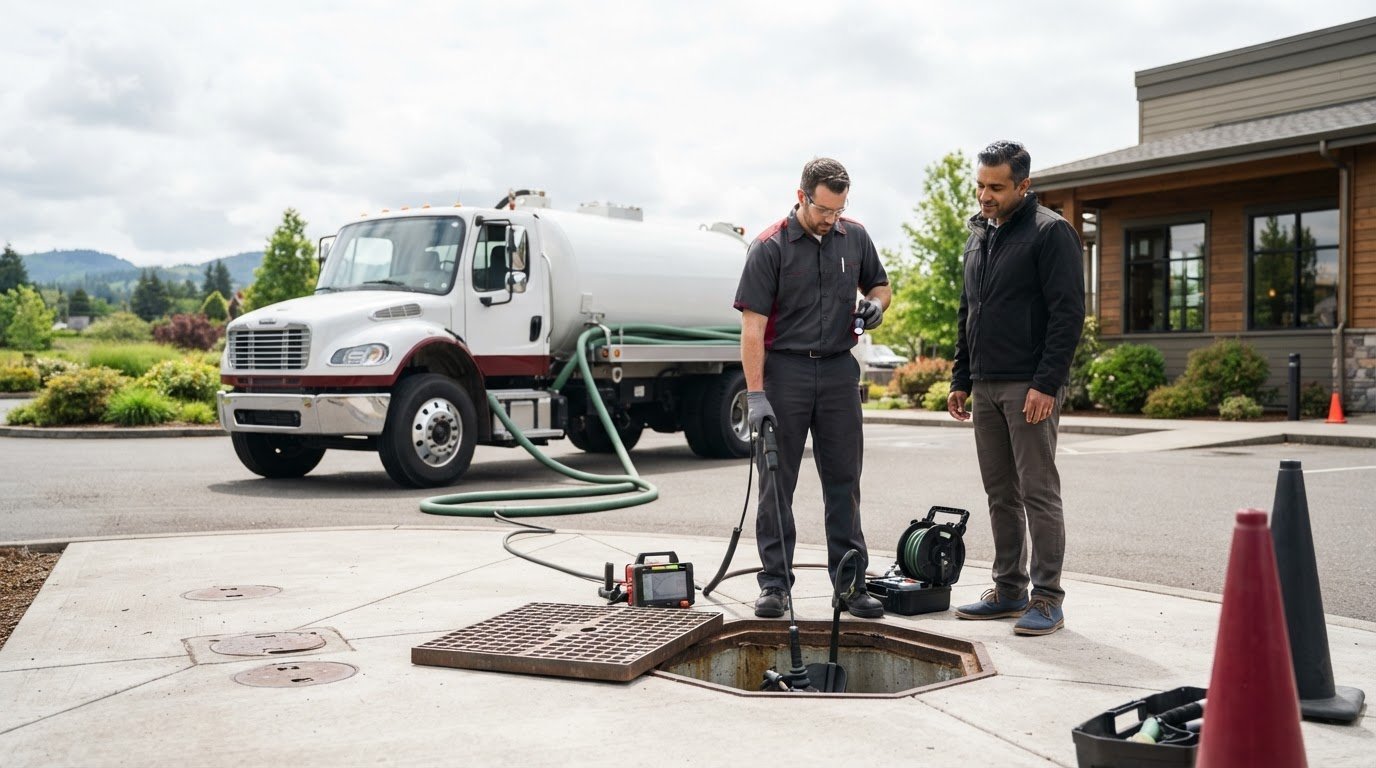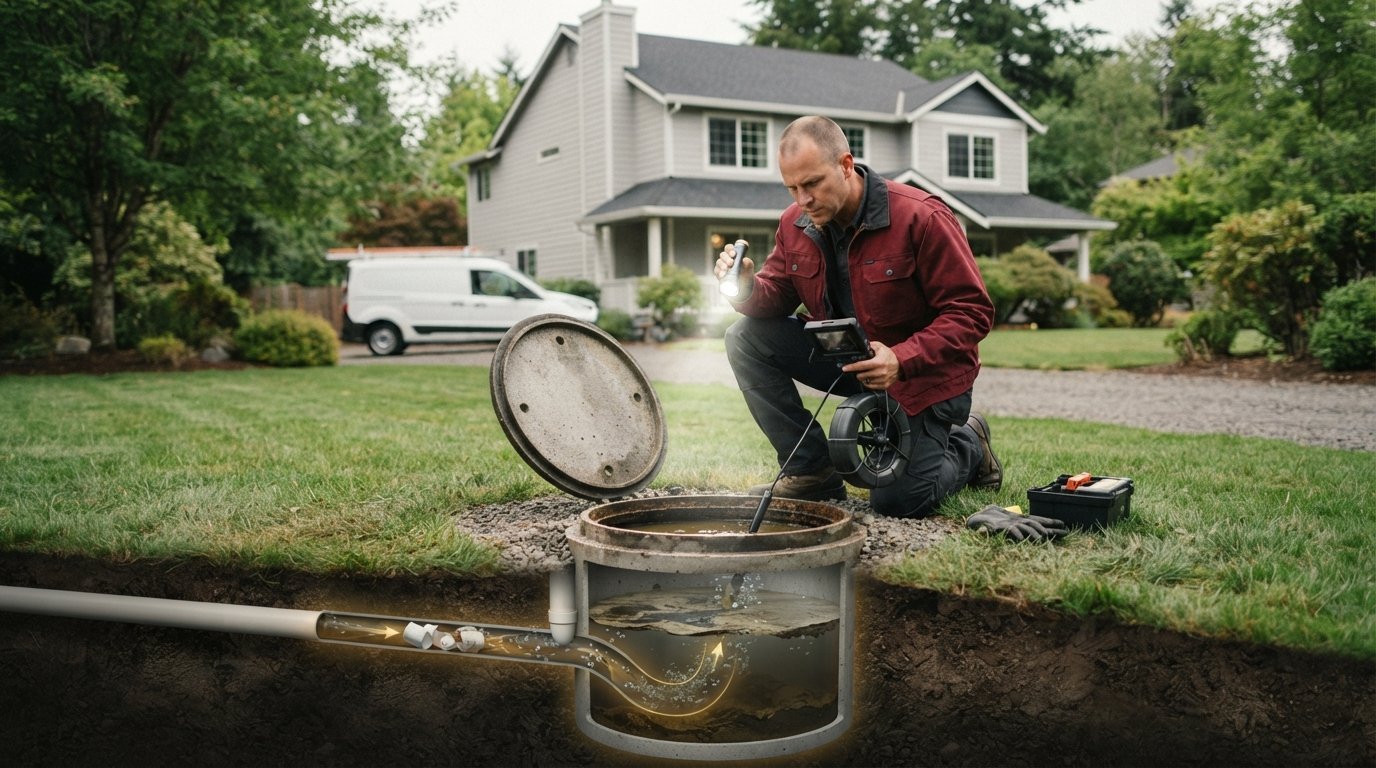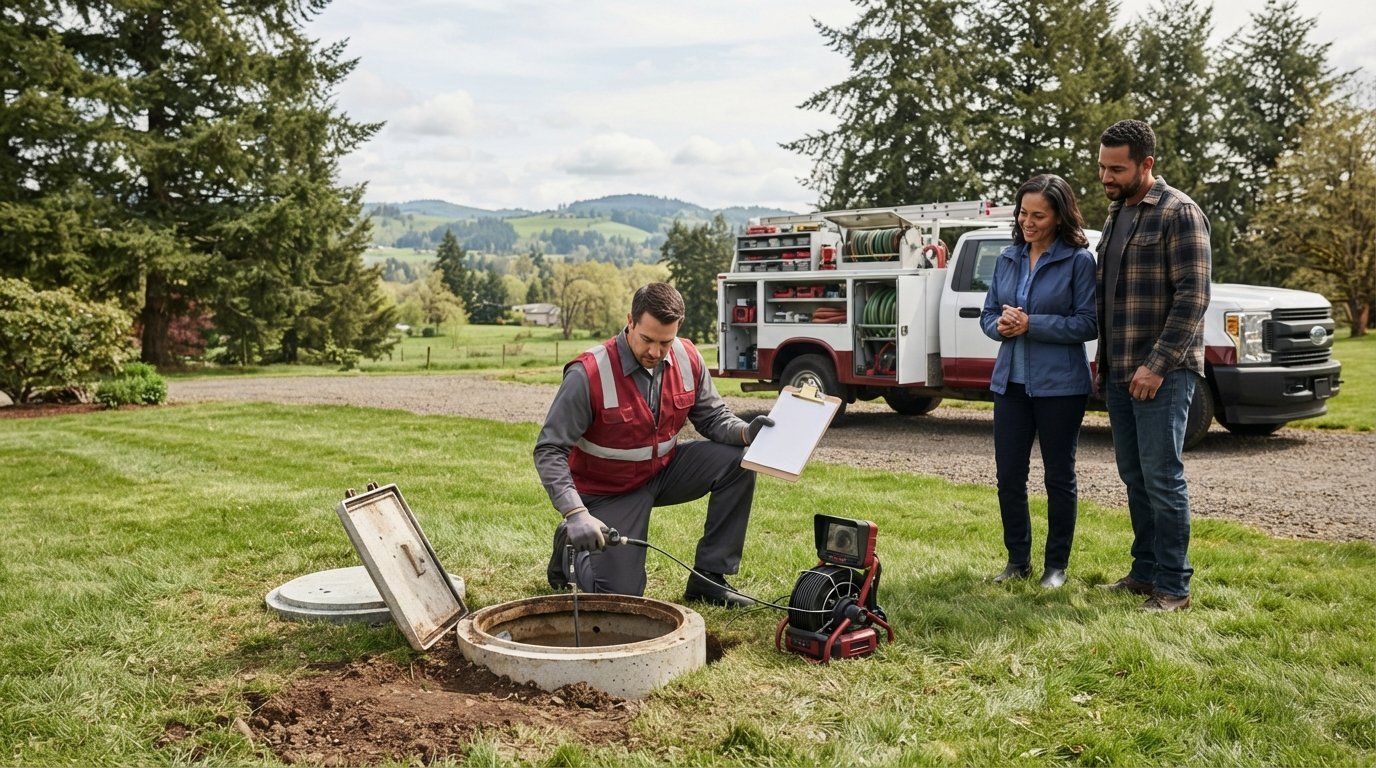
Imagine walking into your Canby restaurant or retail space on a busy afternoon only to find sewage backing up into your floor drains. For a local business owner, this isn’t just a plumbing issue; it’s a public health emergency that triggers immediate closure by Clackamas County authorities. Staying on top of commercial septic tank maintenance Canby is the only way to prevent these catastrophic failures and the high costs that come with emergency repairs. When your doors are closed, you aren’t just losing daily revenue; you’re risking your reputation in the community.
We know you would rather focus on your customers than worry about DEQ reporting or the 25% rule for grease interceptors. It’s stressful to manage high-volume systems while trying to stay compliant with Oregon’s strict environmental standards. This guide provides a clear roadmap to protect your property and your bottom line. We will walk you through essential maintenance schedules, explain the latest DEQ surcharge updates, and show you how professional inspections keep your business running without a single hour of downtime. Lil’ Stinky Septic Service has supported this community for over 25 years (CCB #189693), and we’re here to make sure your system remains an asset, not a liability.
Key Takeaways
- Understand why proactive maintenance is a critical business continuity strategy that prevents emergency closures and permanent drainfield damage.
- Identify the essential roles of grease traps and Alternative Treatment Technology (ATT) systems in managing high-strength commercial wastewater.
- Learn the optimal frequency for commercial septic tank maintenance Canby businesses need to handle high-volume usage and peak fixture loading safely.
- Stay compliant with Oregon DEQ standards by mastering the annual inspection and reporting cycle required for Clackamas County businesses.
- Discover how 24/7 emergency response and 25 years of local expertise (CCB #189693) keep your operations running without interruption.
Why Commercial Septic Tank Maintenance in Canby is Different
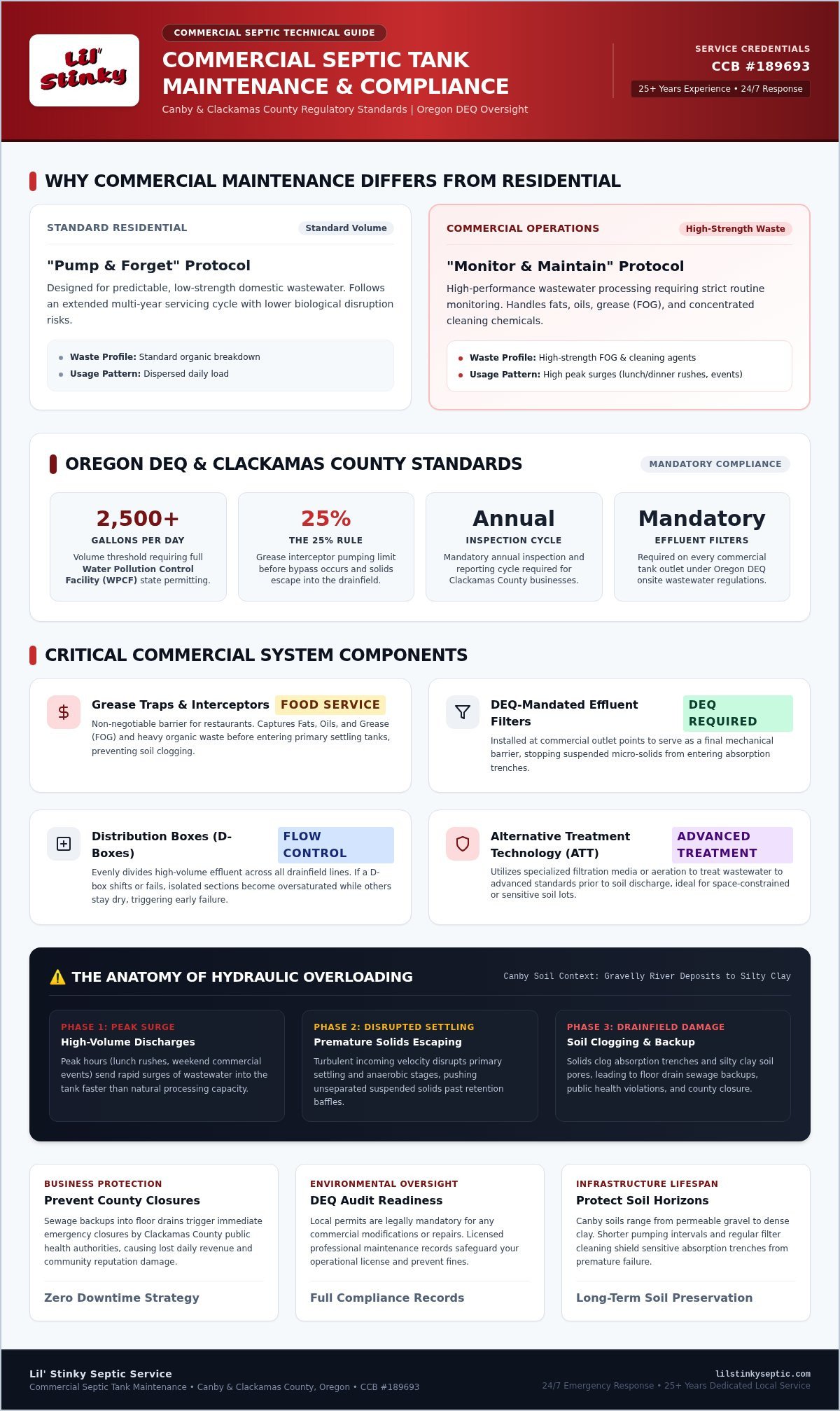
Commercial septic systems aren’t just larger versions of residential setups. They are high-performance wastewater processors designed to handle significantly more stress and volume. While a homeowner might follow a “pump and forget” schedule every few years, commercial septic tank maintenance Canby requires a proactive “monitor and maintain” strategy. Businesses generate high-strength waste, often containing fats, oils, and grease (FOG) or concentrated cleaning chemicals that can disrupt the delicate biological balance of the tank. Understanding how septic tanks work is essential; the primary settling and anaerobic stages must function perfectly to prevent solids from escaping. In Canby’s Willamette Valley geography, our soils range from highly permeable gravelly deposits near the river to much denser silty clay horizons. This variability means your system is uniquely sensitive to the waste it processes.
High-Volume Load Factors for Canby Businesses
Canby’s local economy thrives on hospitality and retail, but these sectors put immense pressure on septic infrastructure. Restaurants, for instance, introduce high-strength organic loads that residential systems never face. Peak usage times, such as lunch rushes or weekend events, send massive surges of water through the system at once. These surges can lead to hydraulic overloading. Hydraulic overloading is the condition where wastewater flows into the septic tank at a rate faster than the system can process, causing effluent to push solids into the absorption field prematurely. To combat this, commercial systems often require shorter pumping intervals and specialized components like effluent filters to protect the soil’s long-term health.
Regulatory Compliance: DEQ and Clackamas County Standards
Compliance isn’t optional for Canby business owners. The Oregon DEQ and Clackamas County set strict standards for commercial wastewater disposal. If your system handles more than 2,500 gallons per day, you move into the territory of Water Pollution Control Facility (WPCF) permits. Even for smaller systems, local permits are mandatory for any modifications or repairs. Having a licensed professional on record is a legal necessity. Lil’ Stinky Septic Service holds CCB #189693, ensuring that every commercial septic tank maintenance Canby plan meets the specific reporting requirements for our region. Failing to document your maintenance can lead to fines or permit revocation. Professional oversight acts as a form of insurance for your daily operations, keeping you in the good graces of environmental regulators while protecting the local watershed.
Critical Components of a Commercial Septic System
Commercial infrastructure is far more complex than a standard residential tank. A robust system relies on specialized parts to handle high-volume flow and high-strength waste. For instance, distribution boxes (D-boxes) play a vital role in managing higher flow rates by evenly splitting effluent among various drainfield lines. If a D-box fails or shifts, one part of your drainfield will become saturated while others stay dry, leading to premature failure. Additionally, every commercial outlet in Oregon must have an effluent filter under Oregon DEQ onsite wastewater regulations. These filters act as a final screen, catching small solids before they can clog the soil in your absorption trenches. Regular cleaning of these filters is a cornerstone of effective commercial septic tank maintenance Canby.
Alternative Treatment Technology (ATT) Systems
Many Canby businesses operate on lots where traditional drainfields aren’t feasible due to soil sensitivity or space constraints. In these cases, we install Alternative Treatment Technology (ATT) systems. These advanced units use specialized filtration media or aeration to treat wastewater to a much higher standard before it ever touches the ground. Because they are more mechanical, they require strict annual oversight and specific reporting. If you’re considering an upgrade or a new build, checking an ATT Septic System Oregon guide can help you plan for the specific maintenance and installation requirements involved.
Grease Traps and High-Strength Waste
For the food service industry, grease traps are non-negotiable. Oregon law requires these interceptors to prevent fats, oils, and grease (FOG) from entering the main septic tank. We follow the “25% Rule” strictly: when the combined depth of floating grease and bottom sludge reaches 25% of the liquid depth, it’s time for service. Ignoring this leads to “grease carryover,” which can solidify in your pipes and ruin your drainfield. Maintaining these traps is a key part of commercial septic tank maintenance Canby for any kitchen or bakery. If you’re unsure about your current levels, a quick professional check can save you from a major backup.
The Role of Pipe Camera Inspections
You can’t fix what you can’t see. We use high-definition video technology to peer inside your drainage lines. These camera inspections allow us to identify structural issues, such as root intrusion or pipe sagging, before they trigger a total system shutdown. For high-traffic commercial sites, catching a partial blockage early means we can perform targeted septic drain cleaning instead of dealing with a midnight emergency. This proactive approach keeps your business running smoothly and ensures your facility stays compliant with local health codes. If it’s been a while since your last inspection, it’s a good idea to schedule a professional evaluation to ensure your system is in top shape.
Preventative Maintenance vs. Emergency Repairs: An ROI Analysis
Every dollar you spend on routine care is a deposit into your business’s longevity. For many local owners, commercial septic tank maintenance Canby feels like just another line item on the ledger. However, looking at the return on investment (ROI) reveals a different story. A planned pumping service is predictable and efficient. Compare that to an emergency excavation that costs tens of thousands and forces you to close your doors. At Lil’ Stinky Septic Service, we offer a best-price guarantee for routine pumping because we want to help you avoid the financial sting of a preventable failure. We believe in straight talk: it’s much cheaper to pump a tank than to replace a drainfield.
The True Cost of a Commercial Backup
A septic failure is a business killer. When waste begins to surface or fixtures stop draining, the Clackamas County health department can issue an immediate closure order. This isn’t just about the bill for a 24/7 emergency response; it’s about the revenue lost every hour your lights are off. Beyond the immediate cash flow, consider your brand’s reputation. A “Closed for Repairs” sign due to sewage issues can drive customers to competitors permanently. Emergency pumping often carries surcharges for after-hours work and expedited disposal. Staying ahead of these issues with a septic maintenance plan acts as a low-cost insurance policy against these high-stakes risks.
Extending System Life Through Routine Pumping
The science behind system failure is simple. Over time, sludge and scum accumulate in the tank. If not removed, these solids flow into the drainfield, where they clog the soil pores and cause permanent compaction. Once a drainfield is ruined, the only solution is a total replacement, which can disrupt your landscaping and parking lots for weeks. Following EPA septic maintenance guidelines ensures that your system processes waste effectively. By committing to a consistent schedule, you can easily reach a 25-year lifespan for your infrastructure, effectively deferring the massive capital expenditure of a new installation.
We’ve seen businesses in Canby save significant amounts of money by catching small issues during a routine pump. Our technicians (CCB #189693) look for signs of stress in your baffles and filters every time we visit. This level of oversight ensures that your commercial septic tank maintenance Canby strategy is focused on prevention rather than reaction. It’s much easier to manage a scheduled visit during your slow hours than to deal with a crisis in the middle of a Friday night rush.
Steps to Ensure DEQ Compliance and System Longevity
Staying compliant with state and local regulations is a full-time job for many Canby business owners. In Clackamas County, the rules for high-volume systems are strict and involve multiple layers of oversight. Effective commercial septic tank maintenance Canby requires more than just a quick pump every few years; it demands a meticulous paper trail. You need to maintain accurate pumping logs that show the date, volume removed, and the disposal site for all waste. These logs aren’t just for your records. They serve as vital evidence during a certified septic inspection. If the DEQ or Clackamas County auditors request your maintenance history, having these documents ready can prevent unnecessary fines and permit delays.
Scheduling Your Annual System Health Check
Routine inspections are the backbone of a reliable commercial system. During a professional evaluation, our technicians do much more than check the sludge levels. We perform a comprehensive stress test on your lift station, ensuring that alarms and float switches are fully operational. If a float switch fails in a high-volume retail environment, you could have a backup within hours. We also inspect the structural integrity of your tank and baffles. Baffles are critical because they prevent solids from entering the drainfield. If a baffle is corroded or missing, your system’s lifespan will drop significantly. Catching these mechanical issues early is the simplest way to avoid a total system shutdown.
Filing Official Reports with Oregon DEQ
The regulatory environment in Oregon is becoming more complex. As of July 1, 2026, the mandatory statewide DEQ administrative surcharge increased to $159 for every septic permit and application. Additionally, Clackamas County requires an annual Operation and Maintenance (O&M) report for advanced systems, which carries a $123 review fee. Missing these deadlines isn’t just a minor oversight; it can lead to permit revocation and mandatory business closure. Lil’ Stinky Septic Service takes the stress out of this process. We handle the technical documentation and ensure your reports are filed correctly and on time. Our team (CCB #189693) has been navigating these local requirements for over 25 years, so we know exactly what inspectors are looking for. Don’t leave your business’s future to chance. Schedule your compliance inspection today to keep your operations running smoothly.
Why Lil’ Stinky is the Choice for Canby Commercial Septic
Lil’ Stinky Septic Service isn’t just a name you see on trucks around town; we’re a fixture in the Canby community. For over 25 years, we’ve focused on one thing: keeping local wastewater systems running perfectly. When you choose us for commercial septic tank maintenance Canby, you’re hiring a team that lives and works in the same ZIP code as your business. We hold CCB #189693 and carry full insurance coverage, providing the peace of mind that comes with professional accountability. We don’t hide behind corporate jargon. Instead, we offer the “straight talk” you need to make informed decisions about your property’s infrastructure.
The Benefit of a Local Partner
Speed matters when a system shows signs of stress. Because we’re based directly in Canby, our response times are significantly faster than Portland-based competitors who have to fight I-5 traffic to reach you. We’ve spent decades building relationships with the Clackamas County permitting office, which helps us navigate the paperwork for your repairs or upgrades more efficiently. We also possess an intimate understanding of the specific soil types in the Molalla and Clackamas River basins. This local knowledge allows us to calibrate your maintenance schedule to the exact drainage conditions of your lot, ensuring your system isn’t overworked or under-serviced.
Comprehensive Commercial Offerings
Our expertise goes far beyond simple pumping. We’re a full-service partner capable of handling everything from routine sludge removal to complex ATT system design and installation. If you’re dealing with recurring clogs, our technicians use high-resolution video camera diagnostics to pinpoint the issue without unnecessary digging. We know that businesses don’t stop when the sun goes down, which is why we offer a 24/7 emergency septic service. Whether it’s a holiday weekend or the middle of a night shift, we’re ready to respond.
We take pride in doing things correctly the first time. We don’t just pump your tank; we evaluate the health of your entire system to prevent future headaches. From managing grease interceptor schedules for local kitchens to ensuring retail centers meet their annual DEQ reporting requirements, we provide a complete protection plan for your business. It’s time to stop worrying about what’s happening underground and focus on what’s happening in your shop. Contact Lil’ Stinky Septic Service today to schedule a comprehensive evaluation of your commercial system and experience the difference that local expertise makes.
Securing Your Business Future in Canby
Your business is an investment in the local community, and your wastewater infrastructure shouldn’t be a source of constant stress. By prioritizing routine care and staying ahead of DEQ reporting requirements, you prevent the kind of catastrophic backups that lead to health department closures. High-volume systems require a specialized approach that accounts for local soil conditions and high-strength waste loads. Consistent commercial septic tank maintenance Canby is the most effective way to protect your bottom line and ensure your facility remains operational for decades.
Lil’ Stinky Septic Service brings over 25 years of experience and a deep understanding of Clackamas County regulations to every job. We hold CCB #189693 and provide 24/7 emergency response to ensure you never have to face a crisis alone. Protect your business with Canby’s commercial septic experts at Lil’ Stinky Septic Service. Let us handle the technical details and compliance paperwork so you can focus on what you do best. We’re proud to be your local partner in keeping Canby’s business district running smoothly.
Frequently Asked Questions
How often should a commercial septic tank be pumped in Canby?
Most commercial systems in Canby require pumping every 1 to 3 years, though high-volume facilities like restaurants may need service more frequently. We recommend following the “25% Rule” for grease interceptors, which usually means cleaning every 30 to 90 days. Regular commercial septic tank maintenance Canby businesses schedule prevents solids from reaching the drainfield. Our technicians evaluate your specific usage levels to create a custom pumping timeline that fits your operations.
What are the DEQ requirements for commercial septic systems in Oregon?
Oregon DEQ requires all commercial systems to have a functioning effluent filter and a watertight access riser. If your business generates more than 2,500 gallons of sewage per day, you must obtain a Water Pollution Control Facility (WPCF) permit. For smaller systems, Clackamas County acts as the DEQ agent. You are legally responsible for submitting annual Operation and Maintenance (O&M) reports for advanced systems to ensure environmental compliance and avoid regulatory fines.
Can a septic backup force my business to close temporarily?
Yes, a septic backup is considered a major public health hazard that can trigger an immediate closure order from the Clackamas County Health Department or OSHA. You cannot legally operate a business without functional restrooms and safe wastewater disposal. A backup often results in lost revenue, inventory disposal costs, and potential fines. This is why proactive commercial septic tank maintenance Canby services are essential for maintaining business continuity and protecting your professional reputation.
What is an ATT septic system and does my Canby business need one?
An Alternative Treatment Technology (ATT) system uses advanced filtration or aeration to treat wastewater to a higher standard than a standard gravity tank. Your Canby business may need an ATT system if your property has poor soil permeability, high groundwater, or limited space for a traditional drainfield. These systems are common for high-strength waste producers. We specialize in the design and installation of these complex units to meet strict Oregon environmental standards.
Is 24/7 emergency septic service available in Canby?
Lil’ Stinky Septic Service provides 24/7 emergency response for businesses in Canby and the surrounding Clackamas County area. We understand that a system failure at 2:00 AM can jeopardize your morning shift. Our local technicians are always on standby to handle backups, pump failures, or alarm activations. Since we’re based directly in Canby, we arrive quickly to resolve the issue and minimize any disruption to your business operations or customer service.
How do I know if my commercial drainfield is failing?
Common signs of drainfield failure include persistent sewage odors, lush green patches of grass over the absorption area, or standing water on your property. Inside the building, you might notice slow-draining sinks or gurgling sounds in the pipes. These symptoms often indicate that the soil is no longer absorbing effluent correctly. If you spot these red flags, contact a professional immediately to prevent permanent soil compaction and the need for a total system replacement.
What information is included in a certified septic inspection report?
A certified inspection report provides a detailed analysis of your system’s structural and mechanical health. It includes verified sludge and scum levels, the condition of the inlet and outlet baffles, and a functional test of any pumps or alarms. The report also documents the integrity of the tank and the current performance of the drainfield. These official documents are required for real estate transactions and DEQ compliance, serving as a vital record of your maintenance history.
Does Lil’ Stinky handle septic system design and permitting in Clackamas County?
We handle the entire process of septic system design and permitting within Clackamas County. Our team coordinates with local engineers and county inspectors to ensure your new installation or system upgrade meets all current codes. With over 25 years of experience (CCB #189693), we navigate the complex paperwork and site evaluation requirements so you don’t have to. We manage everything from the initial soil test to the final inspection and system activation.