Did you know that a single paperwork error could cost you thousands in non-refundable fees before you even break ground on your new septic system? It’s a stressful reality for many homeowners who find themselves tangled in local regulations. We understand that the Washington County septic permit process feels like an endless maze of forms, site evaluations, and shifting DEQ requirements. You just want your project to move forward without the fear of a rejection letter or lost investment.
We’ve spent over 25 years helping neighbors navigate these exact hurdles with total transparency. This guide provides a clear, step-by-step roadmap to ensure your application gets approved the first time. You’ll learn exactly what to expect regarding the 2026 fee increases, how to manage the mandatory site evaluation sequence, and how to find a local expert to handle the technical design for you. Let’s get your project out of the permit office and into the ground.
Key Takeaways
- Understand why the Site Evaluation is the absolute first step in the sequence to avoid non-refundable application rejections.
- Identify whether your project requires a New Construction Permit or a Repair Permit to ensure you pay the correct fees and follow the right regulations.
- Follow our clear, step-by-step roadmap for the Washington County septic permit process to move from initial design to final approval without bureaucratic delays.
- Learn about the 2026 DEQ fee increases and local surcharges so you can build an accurate budget for your septic installation or repair.
- Discover how partnering with a licensed specialist to handle technical design and filing can save you weeks of stress and potential paperwork errors.
The Foundation: Starting Your Washington County Septic Permit Journey
Washington County doesn’t treat septic permits as optional red tape. Every modification, from a tank replacement to a full system install, requires formal oversight to protect our community’s groundwater. The Washington County septic permit process follows rigorous standards established by the Oregon Department of Environmental Quality (DEQ). These regulations ensure that Onsite sewage facilities (OSSF) operate safely without contaminating the local environment or nearby Tualatin River tributaries.
Homeowners in the Tualatin Valley face specific challenges. Our region is known for heavy clay soils and high seasonal water tables that simply don’t drain as easily as sandy ground. Because of these local conditions, the county requires proof that your land can actually process effluent before they grant any construction rights. Your permit options are dictated by the dirt under your feet, and ignoring these soil realities is the fastest way to a rejected application.
What is a Site Evaluation?
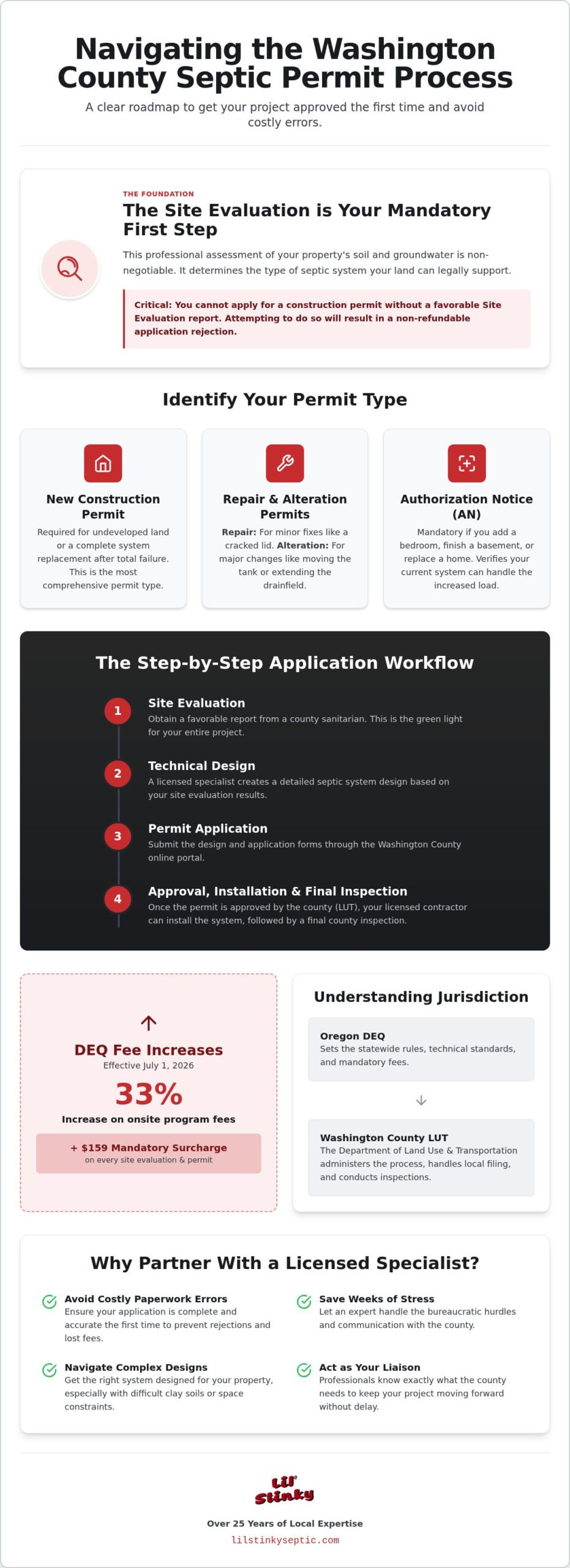
Think of the Site Evaluation as the mandatory first hurdle. During this process, a professional examines test pits on your property to determine soil texture, structure, and the depth of the “restrictive layer” or groundwater. You cannot apply for a construction permit without a favorable evaluation report in hand. The Site Evaluation is the ‘DNA’ of your septic design. It tells the designer exactly what type of system is legal for your lot. In Washington County, these evaluations are typically performed by county sanitarians. We often help homeowners prepare these sites to ensure the test pits provide the most accurate data possible for a successful filing.
Washington County Jurisdiction vs. DEQ
Understanding who holds the rubber stamp is key to avoiding delays. The Washington County Department of Land Use & Transportation (LUT) handles the local administration and filing of your permit. However, they follow the DEQ’s statewide rules. It’s a partnership that saw significant changes recently; as of July 1, 2026, the DEQ increased onsite program fees by 33%. This includes a mandatory $159 surcharge on every site evaluation and permit. You’ll submit your application through the county’s online Public Permitting and Services Portal. While the portal makes filing easier, the technical requirements remain complex. We act as your liaison, ensuring the county gets exactly what they need so your project stays on schedule.
Understanding Permit Types: From Minor Repairs to New Systems
Identifying the right permit is the first step toward a successful approval. The Washington County septic permit process categorizes projects based on their environmental impact and potential wastewater load. Choosing the wrong type doesn’t just waste time; it can lead to non-refundable fee losses and project delays. Every project is unique, so you need to know exactly which category your work falls into before you file.
New Construction Permits are the most comprehensive. These are required for any undeveloped land or when an old system has failed so completely that it needs a total replacement. These permits require full documentation and a approved site evaluation. If your property has difficult soil or space constraints, you might need an Alternative Treatment Technology (ATT) permit. We specialize in these advanced systems, which use specialized filters to treat waste more effectively than standard gravel trenches. This guide for homeowners explains how these systems protect your investment and the local environment.
The Authorization Notice (AN)
Don’t assume that keeping your existing tank means you can skip the permit office. An Authorization Notice (AN) is mandatory if you plan to add a bedroom, remodel a basement into living space, or even replace a manufactured home. For homeowners planning a major renovation, companies like River City Construction Inc demonstrate how professional general contracting can transform a home’s layout before the septic permits are even finalized. The county needs to verify that your current system is sized correctly for the new potential occupancy. While AN approvals generally move faster than new construction permits, they still require a field visit to confirm the system’s location and condition. If you’re dealing with a temporary medical hardship, a specific hardship permit can allow for a temporary second dwelling on the same system, provided the soil can handle the extra load.
Washington County distinguishes between fixing a component and changing the system’s footprint. A minor repair permit might cover a cracked lid or a broken inlet pipe. However, an alteration permit is a major part of the Washington County septic permit process whenever you move the tank or extend the drainfield. If a drainfield has failed, the county often requires a full redesign to meet modern 2026 environmental standards. Understanding these nuances is critical for budgeting your project accurately. You can explore our insights on septic system design Oregon requirements to see how these rules apply to your specific lot. If you’re feeling overwhelmed by the options, our team can help you determine the most cost-effective permit path for your home.
The 2026 Step-by-Step Application Workflow
The Washington County septic permit process isn’t a single event; it’s a logical sequence of approvals that ensures your system won’t fail or contaminate the local water table. Missing a single step or submitting documents out of order can reset your timeline and lead to non-refundable fee losses. By following a structured roadmap, you can move from a bare lot to a fully functional system without the typical bureaucratic headaches.
- Step 1: Secure a favorable Site Evaluation. As we discussed earlier, this is your prerequisite. You must have a signed report from the county sanitarian before any design work begins.
- Step 2: Hire a licensed designer. You’ll need a professional to create a system plan based on your soil’s specific “perc” rates and the footprint of your home.
- Step 3: Submit the application. Use the Washington County Public Permitting and Services Portal to upload your designs and pay the required fees, including the 2026 DEQ surcharges.
- Step 4: Technical Review. County officials review the engineering to ensure it meets all state and local codes. They may request “redline” corrections during this phase.
- Step 5: Permit Issuance. Once approved, you receive a “Ready to Install” status. Only then can your contractor begin the actual construction.
Gathering Your Documentation
Precision matters when you’re filing paperwork. You’ll need detailed plot plans that show property lines, existing structures, and any nearby wells or water sources. If you’re modifying an older system, accurate “As-Built” drawings are essential. These are the historical maps of where your current pipes and tanks are buried. One of the most common reasons applications stall in Washington County is simply a missing signature from a property owner or a licensed contractor on the land use forms. Double-check every line before hitting submit.
The Inspection Phase
Approval doesn’t end when the permit is issued. The county requires a pre-cover inspection once the tanks are set and the trenches are dug, but before any dirt is put back. The sanitarian looks for proper leveling, correct pipe pitch, and adherence to the approved design. After the system is buried and the electrical components are wired, a final inspection is conducted. You’ll then receive a Certificate of Satisfactory Completion. Don’t use your indoor plumbing until this final sign-off is in your hands; doing so can result in fines and a voided permit. We handle these coordination steps for our clients to ensure every inspection passes without a hitch.
Timelines, Fees, and Common Pitfalls to Avoid
Timing is everything when you’re planning a home project. In 2026, the Washington County septic permit process generally moves through the technical review phase in four to eight weeks. However, this timeline depends heavily on the season. Oregon winters bring heavy rain that saturates the Tualatin Valley soil, making it nearly impossible to get accurate perc readings or dig safe test pits. If you wait until the rainy season to start your evaluation, you might find your project stalled until late spring when the ground finally dries out.
Fees are another area where homeowners often feel the pinch. As of July 1, 2026, the Oregon DEQ implemented a 33% fee increase for onsite wastewater programs. You’ll also see a mandatory $159 surcharge applied to every site evaluation, report, and permit application. While these government costs are non-negotiable, the biggest financial risk is the “Incomplete Application” trap. If your filing is missing a single signature or an accurate plot map, the county may reject the entire package. This forces you to pay re-submission fees and moves your project to the back of the line, potentially doubling your wait time.
Why Septic Permits Get Denied
Denied permits usually stem from three avoidable issues. First, inadequate setbacks are a major dealbreaker. Your system must maintain a specific distance from wells, property lines, and water bodies to prevent contamination. Second, denials happen when soil profiles don’t match the proposed system design. If you’ve planned for a standard system but the soil is too heavy, the county will reject the plan. Finally, zoning conflicts or unresolved land-use issues can halt an application before the technical review even begins. We review these details before filing to ensure your application is airtight.
Managing Your Budget
Your budget needs to account for more than just the permit itself. You’ll encounter hidden costs like the excavation of test pits for the sanitarian’s visit and professional consultant fees for the technical design. On average, the permit fee itself is only a small fraction of the total installation costs. For a deeper look at the numbers, check out our septic system installation cost Oregon guide. We help you map out these expenses early so there aren’t any surprises halfway through the build. If you want to avoid costly paperwork errors and keep your project on track, contact our team today to handle the design and filing for you.
Professional Support: Why Licensed Contractors are Essential
The Washington County septic permit process isn’t just about filling out forms anymore. In 2026, environmental regulations are tighter than ever, and the technical requirements for soil science and engineering have become increasingly complex. While the county allows homeowners to apply for their own permits, doing so often leads to a frustrating cycle of rejections and technical corrections. You need a partner who understands the nuances of the Tualatin Valley’s unique soil profiles and how they interact with modern DEQ standards. Lil’ Stinky Septic Service has spent 25 years building professional relationships with local county sanitarians. They know our work and trust that our designs meet every regulatory benchmark, which often helps your project move through the review phase with fewer roadblocks.
Our deep roots in the community mean we aren’t just names on an application; we’re specialists who take pride in protecting our local groundwater. We understand the “straight talk” you need when a project hits a snag. Instead of corporate ambiguity, Lil’ Stinky Septic Service provides clear solutions that keep your installation on schedule. By handling the technical design and the bureaucratic legwork, we ensure your system is compliant from day one. This expertise isn’t just about getting a signature on a permit; it’s about the long-term safety and value of your property.
Lil’ Stinky Septic Service’s Design & Permit Service
We don’t just dig holes; we manage the entire design-to-permit-to-install pipeline. Our team creates expert system designs tailored to your specific lot, whether you need a standard gravity setup or a complex Alternative Treatment Technology (ATT) system for a difficult site. We handle the heavy lifting of navigating paperwork so you don’t have to visit the county office or spend hours struggling with the online permitting portal. Our commitment is to get it right the first time. By identifying potential setback issues or soil conflicts during the design phase, we save you from the stress of a failed inspection or a denied permit later in the project.
Beyond the Permit: Installation and Maintenance
Once your “Ready to Install” status is secured, we transition seamlessly into the physical construction of your system. Our crews respect your property and ensure the installation matches the approved engineering perfectly. However, your responsibility as a homeowner doesn’t end when the trenches are covered. Keeping your system healthy for decades requires a proactive approach. Investing in a septic maintenance plan Portland OR is your next step to ensure long-term compliance and protect your investment from premature failure. Regular inspections and timely pumping prevent costly emergencies and keep you in the county’s good graces. Ready to start? Contact Lil’ Stinky Septic Service for a consultation and let us simplify your permitting journey today.
Secure Your Septic Approval the First Time
Navigating the Washington County septic permit process doesn’t have to be a source of stress or unexpected delays. As we’ve explored, success starts with a professional site evaluation and a design that respects the specific soil conditions of the Tualatin Valley. By understanding the 2026 fee changes and the mandatory sequence of inspections, you can avoid the common pitfalls that often stall projects and lead to non-refundable costs. Accuracy in your initial filing is the best way to keep your timeline on track and your budget intact.
You don’t have to tackle this complex bureaucracy alone. With 25+ years of local experience and a team of licensed DEQ inspectors, Lil’ Stinky provides full design and installation support for every type of system. We specialize in handling the technical filings and coordinating with county sanitarians to ensure your project meets every regulatory benchmark. Let us take the paperwork off your plate so you can focus on your property’s future. Get Expert Help with Your Washington County Septic Permit today. Your peace of mind is our priority, and we’re ready to help you build a system that lasts.
Frequently Asked Questions
How long does it take to get a septic permit in Washington County?
Expect the technical review phase of the Washington County septic permit process to take between four and eight weeks. This timeframe depends on the complexity of your system and current county staffing levels. Seasonal weather in the Tualatin Valley also plays a role; heavy winter rains can delay the initial site evaluation. We recommend starting your application in late spring or summer to avoid weather-related setbacks and ensure a smoother approval timeline.
Can I design my own septic system in Oregon?
Oregon law allows homeowners to design their own systems for a residence they intend to occupy. However, the technical requirements for soil science and engineering are extremely high. Most DIY designs face multiple rejections during the county’s technical review. We suggest hiring a professional designer or a specialist like Lil’ Stinky to handle the engineering. This ensures your plan meets DEQ standards the first time and avoids costly re-submission fees.
Do I need a permit to repair a broken septic pipe?
Yes, most structural repairs require a permit to ensure the fix meets modern environmental codes. While clearing a simple clog doesn’t need a permit, replacing a broken inlet pipe or a cracked tank lid typically falls under a minor repair classification. Washington County officials must verify that the repair won’t lead to future groundwater contamination. Always check with the county or a licensed contractor before starting any excavation or pipe replacement on your property.
What is the cost of a septic permit in Washington County for 2026?
Permit costs changed significantly on July 1, 2026, due to a 33% increase in DEQ onsite program fees. Every new application now includes a mandatory $159 statewide surcharge. Total costs vary based on whether you need a new construction permit, an alteration, or a minor repair. While we don’t quote specific county fees, you should budget for the evaluation, the permit itself, and potential excavation costs for test pits required during the process.
What happens if my soil fails the Site Evaluation test?
A failed test usually means your soil cannot support a standard gravity system due to high clay content or groundwater levels. This doesn’t mean you can’t build; it often means you must use an Alternative Treatment Technology (ATT) system. These advanced systems use specialized filters to treat effluent more effectively. Our team specializes in designing ATT systems for difficult lots in the Portland area, helping homeowners turn unbuildable land into viable home sites.
How long is a Washington County septic permit valid for?
Most septic construction permits in Washington County are valid for one year from the date of issuance. If your project is delayed, you may be able to apply for a one-time renewal before the original permit expires. It’s important to coordinate your installation timeline with your contractor to ensure the work is completed and inspected within this window. Expired permits often require a full re-application, including new fees and updated site reviews to meet current standards.
Do I need a new permit if I’m adding a bedroom to my house?
Yes, adding a bedroom triggers a mandatory review known as an Authorization Notice. The Washington County septic permit process requires this to ensure your existing system can handle the increased wastewater load. Even if you aren’t moving any pipes, the county must verify that the tank and drainfield are sized correctly for the new occupancy. We can help you navigate this review to ensure your remodel stays compliant with current DEQ regulations.
Who is responsible for the final septic inspection?
The Washington County sanitarian is responsible for the final inspection and sign-off. However, the installer or homeowner must coordinate the timing to ensure the system is visible before it’s covered with soil. This inspection verifies that the physical installation perfectly matches the approved engineering plan. Once the sanitarian is satisfied, they will issue a Certificate of Satisfactory Completion. This document is essential for your property records and any future real estate transactions in Canby or beyond.