Poor soil conditions are one of the most common reasons a septic system fails — and one of the most overlooked during the planning stage. When soil cannot properly absorb or filter wastewater, untreated effluent can back up, surface in the yard, or contaminate groundwater. This is a serious problem for homeowners, builders, and anyone investing in a property that hasn’t passed a percolation test.
We see this issue regularly with clay-heavy soils, compacted ground, shallow bedrock, and sites with high water tables. These conditions prevent conventional drain fields from doing their job, leaving property owners stuck with a system that was never going to work long-term. Understanding why soil matters — and what your options are when it doesn’t cooperate — can save you from costly repairs or a condemned system.
This article breaks down the science behind septic failure in poor soils, what warning signs to watch for, and why Advanced Treatment Technology (ATT) systems have become a reliable solution for sites where conventional systems simply aren’t viable. We’ll also address common questions homeowners and builders ask when dealing with difficult soil conditions.
Why Septic Systems Fail in Poor Soil Conditions
Poor soil is one of the most common reasons a septic system stops working — and it’s a problem that doesn’t fix itself. The soil beneath your drainfield determines whether wastewater is properly filtered, absorbed, or left to back up into your yard or home.
Soil Types and Their Impact on Drainage
The drainfield relies on soil to absorb and filter liquid waste after it leaves the septic tank. When the soil can’t do that job, the entire system breaks down.
Different soil types create very different problems:
| Soil Type | Problem |
| Clay | Absorbs water slowly; becomes saturated quickly |
| Hardpan | Nearly impermeable; wastewater pools on top |
| Rocky soil | Insufficient depth for filtration to occur |
| Fine silt | Compacts easily; clogs over time |
Clay soil is the most common offender. It expands when wet and drains so slowly that effluent never fully absorbs — it just sits there.
Sandy soil is the opposite problem. It drains too fast, meaning wastewater passes through before the soil can filter out pathogens.
Signs of Septic System Failure
Catching failure early prevents far more expensive damage. These are the most telling signs:
- Sewage odors near the drainfield or inside the home
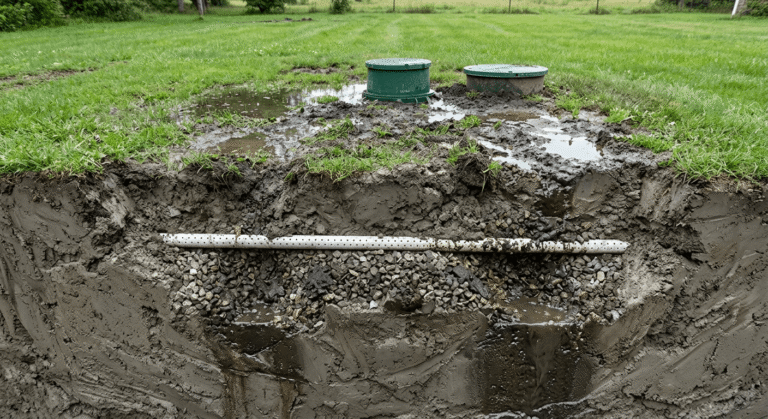
- Wet, spongy ground over the drainfield, even in dry weather
- Slow drains or gurgling pipes throughout the house
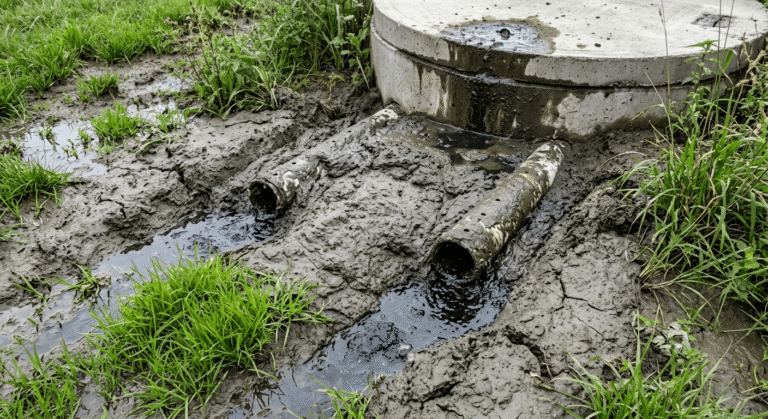
- Sewage backing up into toilets or floor drains
- Bright green, unusually lush grass directly over the drainfield
The lush grass sign is frequently misread as healthy lawn growth. It’s actually a sign that partially treated wastewater is surfacing and fertilizing the grass from below.
If two or more of these signs appear together, the system has likely already failed — not just slowing down.
Health and Environmental Risks
A failing septic system doesn’t just create a mess — it creates a genuine public health hazard. Untreated wastewater contains E. coli, nitrates, and pathogens that contaminate groundwater and nearby wells.
Children and elderly individuals face the highest exposure risk when sewage surfaces in yards or play areas. Contaminated groundwater can affect neighbors, not just the property where the system failed.
Nitrate contamination is particularly serious in rural areas where well water is the primary drinking source. The EPA has linked high nitrate levels in drinking water to methemoglobinemia, commonly known as blue baby syndrome, in infants.
Conventional Solutions and Their Shortcomings
The standard response to a failing drainfield is to install a new one — but in poor soil, that rarely solves the underlying problem.
Common conventional fixes include:
- Drainfield expansion — requires space and still fails in clay or hardpan
- Soil fracturing — temporarily improves absorption but doesn’t change soil composition
- Mound systems — add imported soil above grade, but they’re bulky and still struggle in high-clay environments
Mound systems are often presented as the go-to fix for poor soil, but they have real limitations. They require significant lot space, are visually intrusive, and can still fail if the native soil beneath them becomes saturated.
These approaches treat the symptom rather than the cause. When the soil simply cannot support conventional treatment, a fundamentally different approach is needed.
Advanced Treatment Technology (ATT) Systems: The Next Step for Problematic Soils
When conventional septic systems can’t perform in poor soil conditions, ATT systems offer a proven, code-compliant path forward by treating wastewater to a higher standard before it ever reaches the ground.
How ATT Systems Work Differently from Conventional Septics
A conventional septic system relies almost entirely on the native soil to filter and absorb effluent. In clay-heavy or compacted soils, that process breaks down fast.
ATT systems treat wastewater before dispersal using active mechanical or biological processes. Common technologies include:
- Aerobic Treatment Units (ATUs) — inject air into the treatment tank to accelerate bacterial breakdown
- Textile filters — pass effluent through engineered media for additional filtration
- Drip irrigation dispersal — deliver highly treated effluent in controlled doses to shallow soil layers
This pre-treatment significantly reduces the biological oxygen demand (BOD) and suspended solids in the effluent. The result is liquid that’s clean enough to be dispersed in soil conditions that would reject conventional septic output entirely.
Benefits of ATT Systems in Challenging Soil Conditions
ATT systems don’t just work around poor soil — they reduce how much the soil needs to do.
| Challenge | Conventional Septic | ATT System |
| Clay soil / low percolation | Fails or backs up | Pre-treated effluent disperses more readily |
| High water table | Risk of contamination | Reduced pathogen load minimizes contamination risk |
| Failed perc test | Site deemed unbuildable | ATT may allow permitting to proceed |
| Small or restricted lot | Insufficient drain field space | Smaller dispersal footprint often required |
Because ATT effluent meets higher treatment standards, regulatory agencies in many jurisdictions will approve reduced setbacks and smaller drain fields. That directly expands what’s possible on a difficult site.
Real-World Example: Reclaiming Unusable Properties
Consider a residential lot with heavy clay subsoil that failed its percolation test — standard result: no permit issued, property unsellable.
After installing an aerobic treatment unit paired with a drip dispersal system, the same lot received a permit. The drip system delivered small, timed doses of pre-treated effluent across a shallow zone, avoiding the saturated lower layers entirely.
This isn’t an unusual outcome. We regularly see ATT systems turn properties that engineers flagged as unbuildable into fully permitted, livable homesites. The key is matching the specific ATT technology to the specific soil limitation on that parcel.
Choosing the Right ATT Solution for Your Site
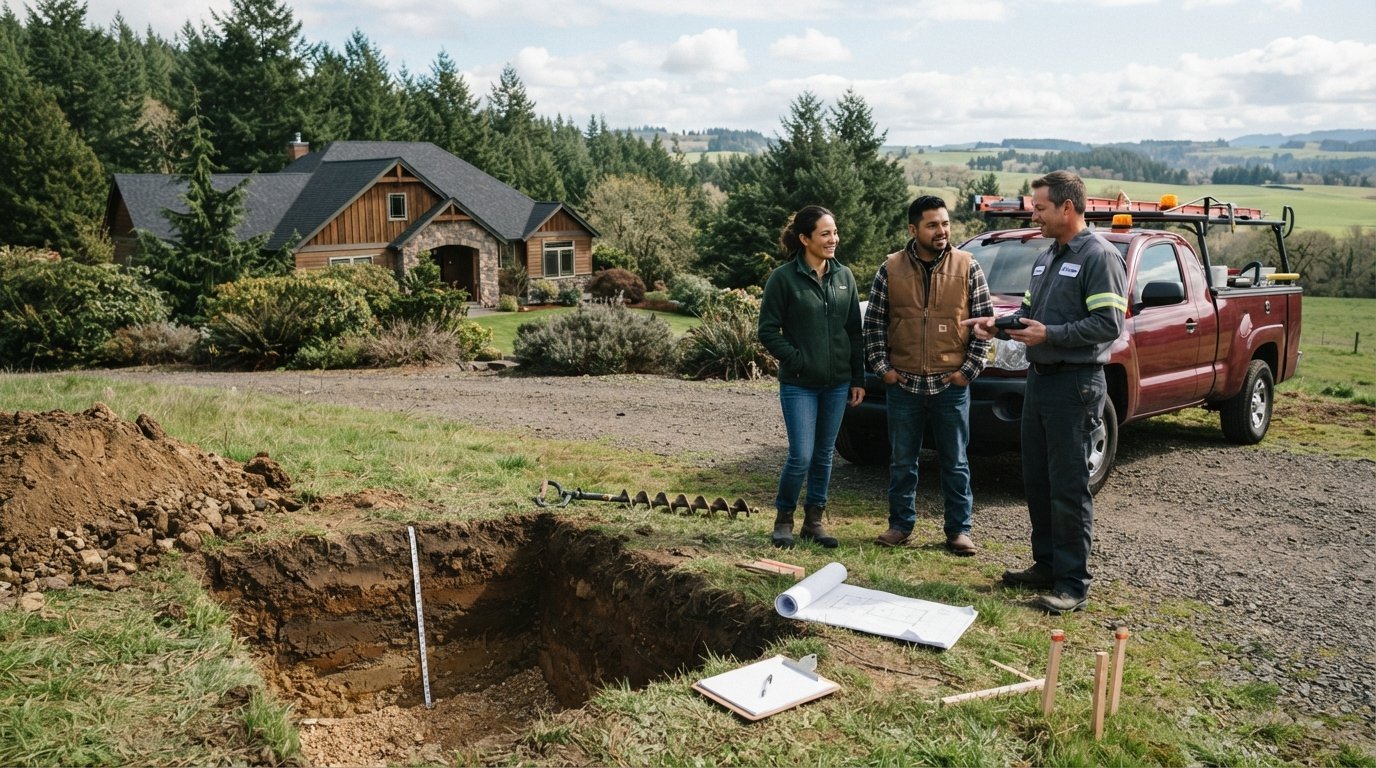
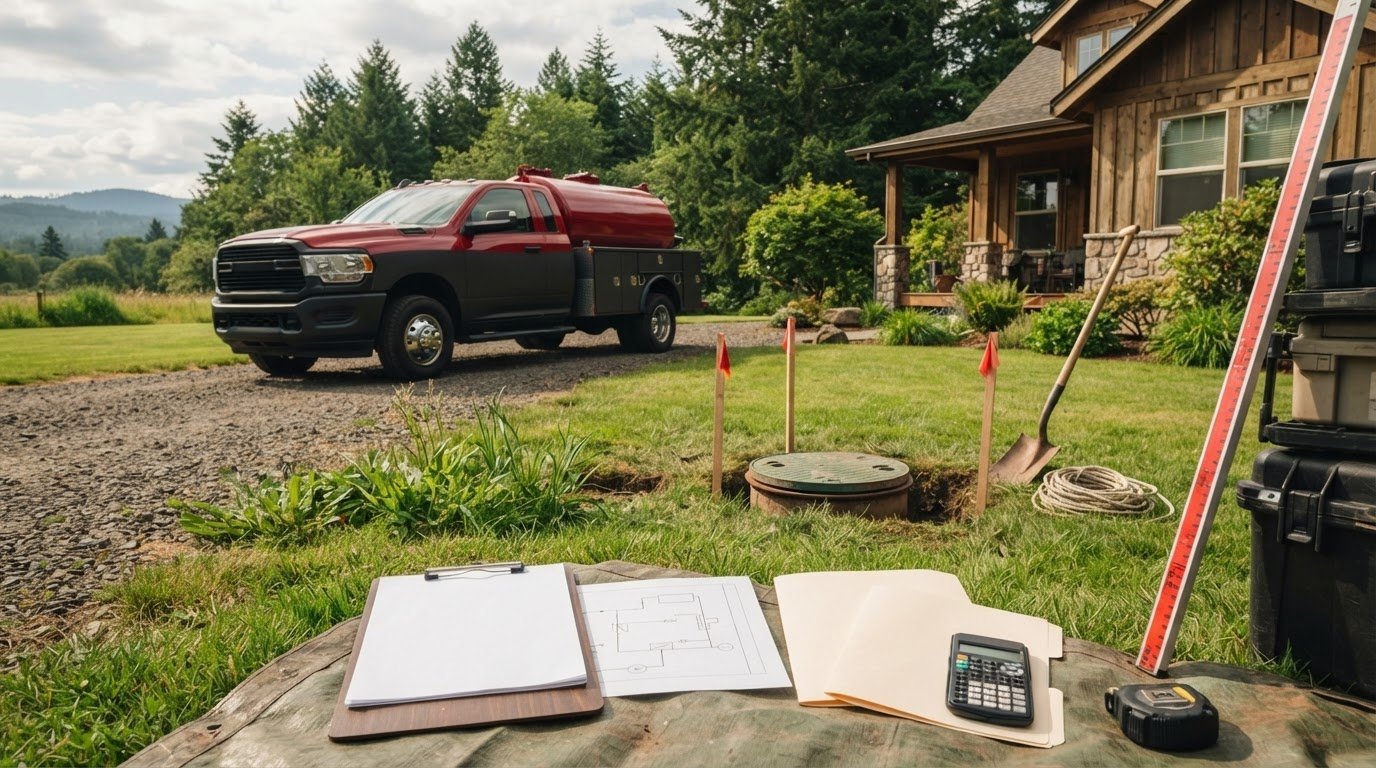
Not every ATT system fits every problem soil. The selection process should start with a detailed site evaluation that includes soil borings, water table depth measurements, and a review of local permitting requirements.
Key factors to assess:
- Soil texture and percolation rate — determines dispersal method
- Seasonal water table depth — affects system placement and design
- Lot size and setback restrictions — influences dispersal field layout
- Local health department standards — some jurisdictions approve specific ATT brands or configurations only
Working with a licensed engineer or certified ATT installer is not optional — it’s the only way to ensure the system is sized, permitted, and installed correctly for your conditions.
Frequently Asked Questions
Soil permeability, perc test results, drainfield degradation, and system selection are among the most common concerns we hear from homeowners dealing with difficult ground conditions. Understanding how each factor works helps clarify why some properties require more than a standard septic approach.
What soil conditions are most likely to cause a septic system to fail, and why?
Clay-heavy soils are among the most problematic because clay particles are extremely fine and pack tightly together, leaving little room for water to move through. When effluent from a drainfield cannot absorb into the surrounding soil, it backs up and surfacing occurs.
Saturated or seasonally wet soils present a similar problem. If the water table rises to within two feet of the drainfield trenches, there is nowhere for treated wastewater to go. Rocky soils and shallow bedrock create the same absorption barrier, just through physical obstruction rather than density.
How can a homeowner tell the difference between normal wet ground and a septic system problem?
Normal seasonal wet areas tend to appear broadly across a yard after heavy rain and dry out within a few days. A septic-related wet spot, by contrast, tends to concentrate over or near the drainfield and may persist regardless of recent rainfall.
Other indicators of a failing system include:
- Sewage odor near the drainfield or around the tank
- Slow drains or gurgling toilets inside the home
- Unusually green or lush grass growing directly over drainfield lines
- Sewage backup into lower-level fixtures
If two or more of these signs appear together, that combination points strongly toward a system issue rather than simple ground saturation.
What does a perc test measure, and what options exist when a property does not pass?
A percolation test measures how quickly water moves through the soil at a potential drainfield site. Technicians dig test holes, saturate them, and then record how many minutes it takes for the water level to drop one inch. Most jurisdictions require a rate between 1 and 60 minutes per inch for a conventional system to be approved.
When a property fails the perc test, that does not necessarily mean it cannot support a septic system. Options we typically see considered include:
- Mound systems that raise the drainfield above the natural soil surface
- Engineered fill brought in to replace unsuitable native soil
- Advanced treatment technology (ATT) systems that reduce the treatment burden before effluent ever reaches the soil
- Drip irrigation dispersal paired with a treatment unit for very slow-perc soils
The appropriate alternative depends on lot size, setback requirements, and how severely the soil failed.
How do clay-heavy soils and seasonal groundwater changes affect drainfield performance over time?
Clay soils tend to clog drainfield aggregate progressively. Biomat — the biological layer that forms at the trench bottom — builds up faster in clay because the soil cannot flush itself through natural drainage cycles. Over several years, even a system that initially functioned adequately can experience reduced absorption capacity.
Seasonal groundwater fluctuations compound this. A drainfield installed when the water table sits at four feet below grade may be effectively submerged during spring snowmelt or a wet weather season. Each saturation event causes anaerobic conditions that accelerate biomat formation and kill aerobic soil bacteria responsible for final treatment.
The cumulative effect is a drainfield that degrades measurably faster than one installed in well-draining sandy loam.
When is an advanced treatment system the most practical alternative to a conventional drainfield?
An ATT system becomes the most practical choice when the soil cannot provide adequate treatment on its own and no straightforward physical workaround — like a mound or fill — is feasible due to lot constraints, cost, or regulatory limits.
ATT systems treat wastewater to a significantly higher standard before it disperses into the ground. This reduces the organic and pathogen load reaching the soil, which means the soil itself does not need to do as much work. In clay-heavy or high water table conditions, that reduction in soil treatment demand can be the difference between a system that functions and one that fails repeatedly.
We see ATT systems applied most often in these scenarios:
- Failed perc tests where no conventional alternative fits within setback requirements
- Small lots where there is insufficient space for a standard drainfield and a full replacement area
- Proximity to wetlands or water bodies where stricter effluent quality standards apply
- Sites with recurring drainfield failures due to persistent seasonal saturation
What maintenance and operating costs should be expected with advanced treatment compared to a standard system?
ATT systems involve more moving parts than a conventional septic system, and that translates to higher ongoing costs. Most systems require an annual service contract, which typically runs between $300 and $600 per year depending on the system type and regional service rates. Some jurisdictions require this contract by law as a condition of the operating permit.
Conventional septic systems generally need pumping every three to five years, costing between $300 and $600 per pump-out, with minimal other routine costs. ATT systems may need pump-outs at similar intervals, but they also require periodic inspection of mechanical components, replacement of UV bulbs or media filters, and occasional alarm response.
The trade-off is significant but measurable. A homeowner paying an extra $200 to $400 annually for ATT maintenance is often avoiding the far greater expense of repeated drainfield repairs or full system replacement — which can run $10,000 to $30,000 or more depending on site conditions and local labor costs.