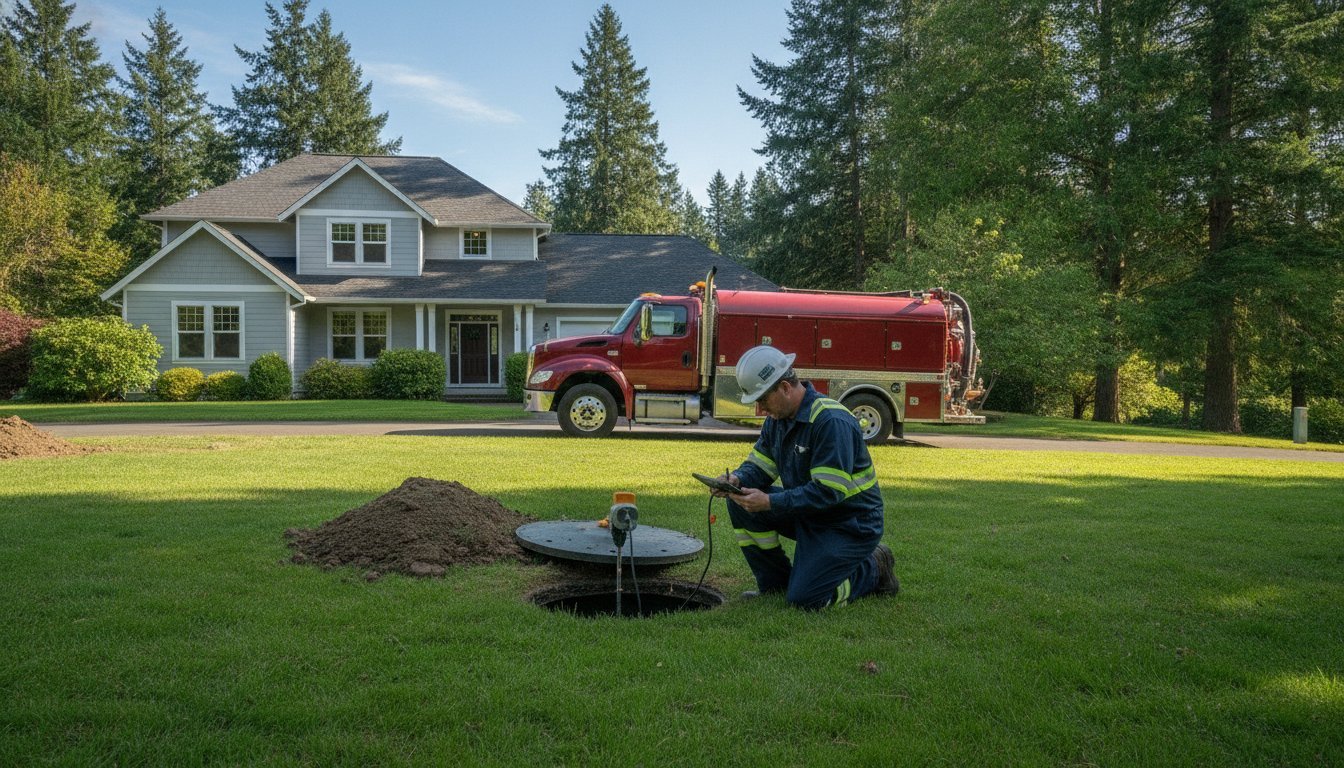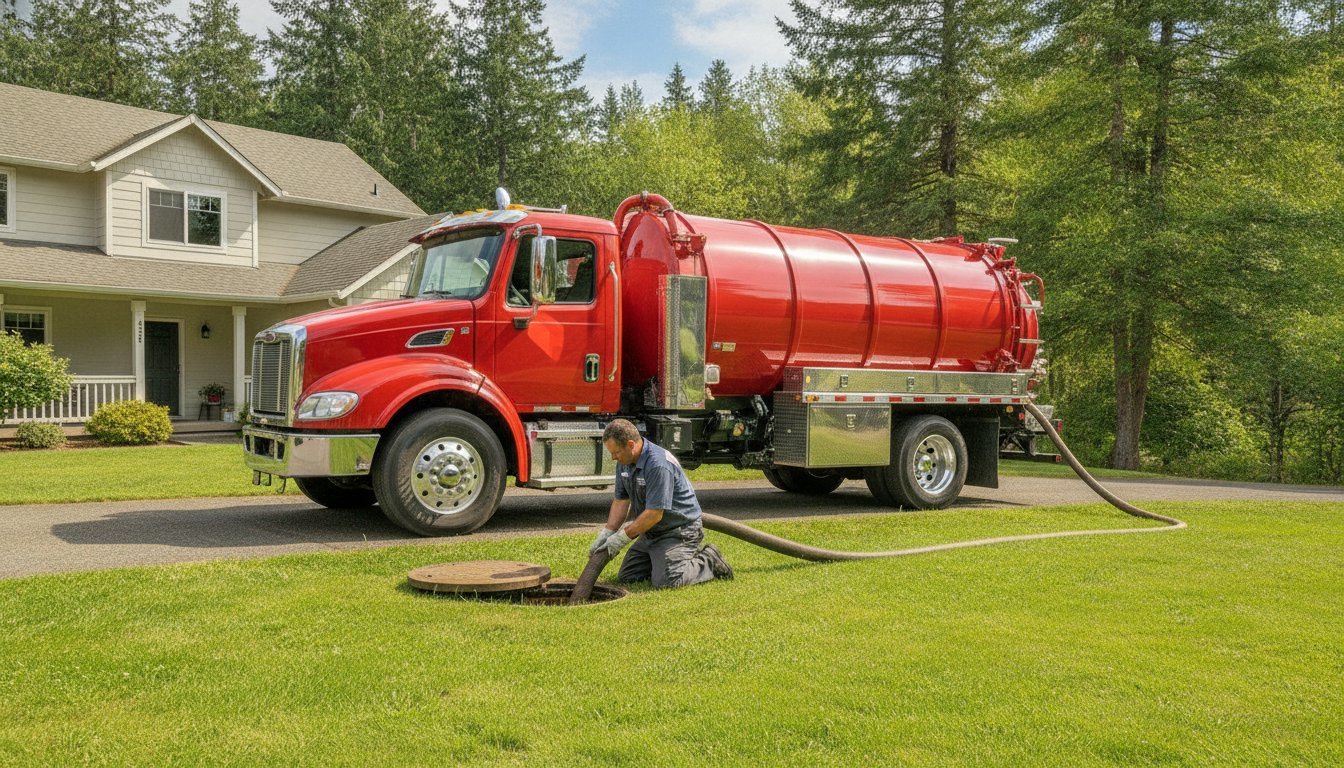
Imagine you’re hosting a weekend dinner when your guest bathroom suddenly starts gurgling and backing up. It’s every homeowner’s worst nightmare. You thought you had more time, but now you’re left wondering how often to pump septic tank systems to keep this from happening again. Most people wait until there’s a crisis, but by then, you’re looking at emergency fees and a lot of unnecessary stress.
It’s frustrating when your neighbor swears by a five-year rule while local DEQ regulations seem to change every season. You just want a straight answer so you can protect your property and your wallet. We’re here to give you that clarity. This guide will show you the exact factors that determine your specific pumping schedule so you can avoid those messy, expensive backups before they start.
We’ll break down the 2026 Oregon DEQ updates, including how the new online permitting and fee changes impact your maintenance. From household size to system biology, you’ll learn how to create a reliable timeline that ensures your home stays safe and your long-term repair costs stay low.
Key Takeaways
- Discover why the standard 3 to 5 year rule is only a starting point for most modern households.
- Identify the two main variables, tank size and waste volume, that dictate how often to pump septic tank units for long term safety.
- Understand the “invisible failure” concept and why your system could be at risk even if your drains are flowing perfectly.
- Learn the simple two-step process to calculate your own custom maintenance schedule based on your specific home habits.
- Save money by choosing predictable routine maintenance over the high cost of emergency repairs and property damage.
The 3-to-5 Year Rule: Why Timing Matters for Your Septic System
Every septic system relies on a delicate balance of biology and mechanics to process your home’s waste. Septic pumping is the physical removal of accumulated solids, known as sludge, that the system can’t break down naturally. Without this regular maintenance, your tank loses its ability to separate waste, which eventually forces raw solids into your drainfield. Septic pumping is the essential reset button for your home’s wastewater health.
While every home is different, the industry standard suggests that most residential tanks require professional attention every 3 to 5 years. Homeowners often ask exactly how often to pump septic tank units to avoid a disaster. If you wait too long, those solids reach the outlet pipe and clog the soil in your drainfield. Once a drainfield is packed with sludge, it stops absorbing liquid, leading to surface ponding or sewage backups inside your home.
The Biology of Your Tank: Scum vs. Sludge
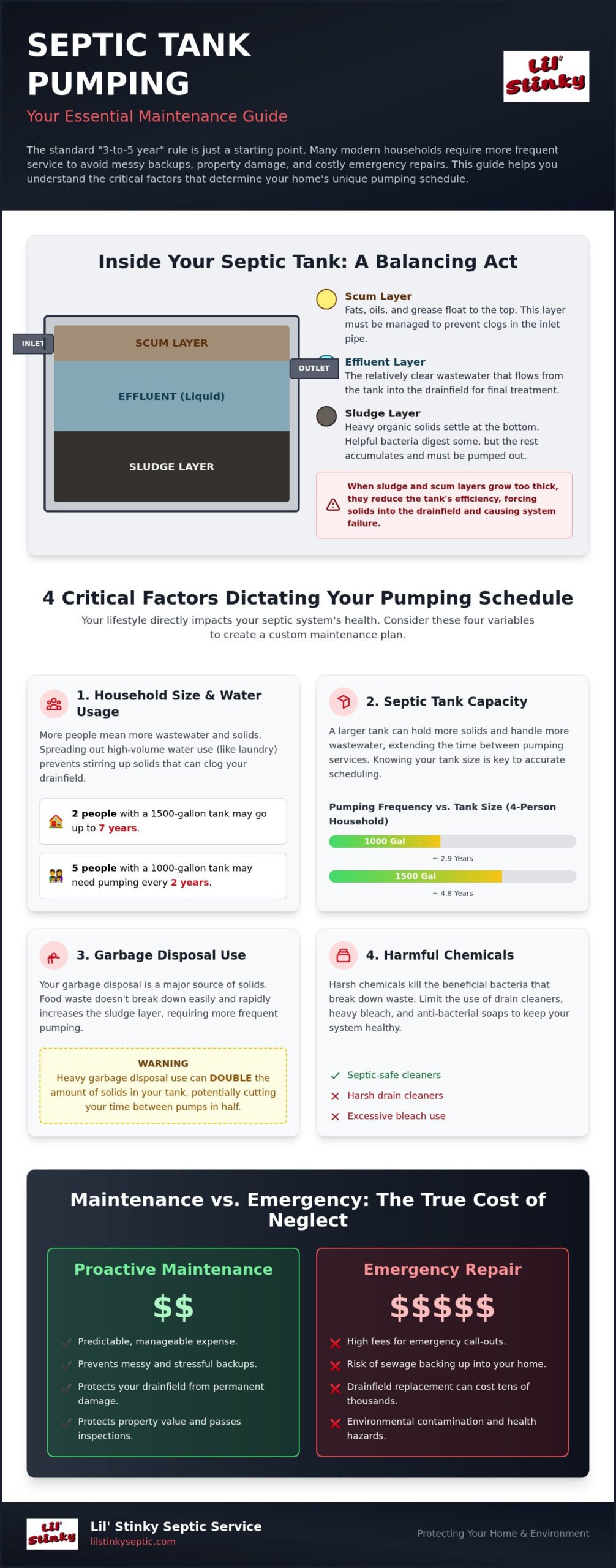
Inside your tank, waste separates into three distinct layers. The top layer is the scum, consisting of fats, oils, and grease that float on the surface. The middle layer is the effluent, which is relatively clear water that exits to the drainfield. The bottom layer is the sludge, made of heavy organic solids.
Helpful bacteria live in your tank and work around the clock to digest these solids. However, these microbes can’t keep up with everything we flush. Over time, the sludge layer grows deeper while the scum layer grows thicker. To know when it’s time for a service, technicians use a “sludge judge.” This is a clear, calibrated tube that allows us to see exactly how many inches of waste have built up. When the combined thickness of the scum and sludge takes up too much of the tank’s capacity, the liquid doesn’t have enough time to settle before it’s pushed out.
Risks of Ignoring the Pumping Schedule
Skipping your maintenance schedule is a gamble that rarely pays off. The biggest risk is total system failure. While a pumping service is a manageable expense, replacing an entire drainfield can cost tens of thousands of dollars. It’s much cheaper to maintain the system you have than to install a new one from scratch.
There are also environmental and legal risks to consider. In the Willamette Valley, protecting our groundwater is a community priority. A failing system can leak nitrates and pathogens into the local water table, creating a health hazard for you and your neighbors. Additionally, unmaintained systems are a major red flag during Oregon real estate inspections. To ensure your entire property is in top shape, professional services like Lin Inspects offer the precision and peace of mind needed for real estate investments. If you decide to sell your home, a neglected tank could delay the closing or force you to pay for expensive repairs as a condition of the sale. Staying on top of how often to pump septic tank systems ensures your property value remains protected.
4 Critical Factors That Dictate Your Specific Pumping Frequency
The general 3 to 5 year rule is a helpful baseline, but it isn’t a one-size-fits-all solution for every Canby homeowner. Determining how often to pump septic tank systems requires a look at your household’s unique footprint. Your tank is a living biological filter. When the input exceeds its processing capacity, the system fails. Four main factors determine how quickly that happens: your household size, the total capacity of your tank, the volume of solids you introduce, and your use of specific appliances. As Oregon implements stricter onsite septic rules in 2026, understanding these variables is more than just good maintenance; it’s a regulatory necessity.
Household Size and Water Usage
A family of five generates significantly more wastewater than a couple living alone. If five people share a standard 1,000 gallon tank, they might need service every 2 years. In contrast, a retired couple with a 1,500 gallon tank could potentially wait 7 years. It’s a simple matter of volume. High volume water events also play a role. If you save all your laundry for a “marathon Sunday,” the massive surge of water can stir up the sludge layer. This prevents solids from settling and forces them into your drainfield pipes. Following EPA guidelines for spreading out water usage and installing low-flow fixtures can buy you extra time between pumps.
The Impact of Modern Appliances and Chemicals
Your garbage disposal is arguably the biggest enemy of a healthy maintenance schedule. These units grind up food waste that bacteria struggle to break down, which can double the amount of solids in your tank. If you use a disposal daily, you should plan to pump much more frequently than the average neighbor. Chemicals also change the math. Harsh drain cleaners, heavy bleach, and certain detergents kill the microbes that naturally reduce sludge volume. When these bacteria die, the sludge builds up faster. Even water softeners can cause issues, as the salt brine discharge can interfere with the settling process. If you’re concerned about your current waste volume, scheduling a routine septic inspection is the best way to get a customized timeline for your property.
Maintenance vs. Emergency: Why Waiting for Signs Is a Mistake
Many homeowners believe that if the toilets flush and the sinks drain, everything is working perfectly. This leads to the “invisible failure” trap. Your septic tank can reach a critical level of sludge long before you see a single symptom in your bathroom. Waiting for a sign before deciding how often to pump septic tank units is like waiting for your engine to seize before changing the oil. Proactive maintenance is the only way to ensure your system remains functional and safe.
One common myth involves that surprisingly vibrant patch of lawn over your drainfield. While it looks great, “lush green grass” in that specific spot usually means your tank is overflowing. The effluent is rising to the surface rather than filtering through the soil, effectively over-fertilizing the grass. At Lil’ Stinky Septic Service, we give it to you straight: if you can smell sewage in your yard or home, the crisis has already arrived.
Early Warning Symptoms You Shouldn’t Ignore
Even though you shouldn’t wait for them, you must recognize the red flags of a system in distress. These symptoms indicate that your tank’s capacity is maxed out and waste has nowhere else to go. Watch for these indicators:
- Slow-draining sinks or showers that don’t respond to standard plunging.
- Gurgling noises coming from your pipes after you flush or run the dishwasher.
- Persistent sewage odors that linger near the tank area or inside your home.
- Standing water or unusually soggy soil around the septic lid.
The True Cost of ‘Emergency’ Service
There is a massive gap between a planned maintenance visit and an emergency call-out. Routine pumping is a predictable line item in your home budget. In contrast, an emergency repair is a full-blown financial crisis. When you call for help on a Saturday night because sewage is backing up into your tub, you’ll face premium weekend rates that far exceed standard service fees.
Beyond the money, the stress of an emergency is immense. A backup often requires you to stop all water usage immediately. This means no showers, no laundry, and no flushing until the pumper arrives. Staying informed about how often to pump septic tank systems and following EPA septic system maintenance guidelines helps you avoid these disasters. For a detailed look at what you can expect to pay, check out our septic tank pumping cost Portland OR guide, which breaks down 2026 rates and helps you spot hidden fees before they surprise you. We help you transition from reactive repairs to proactive care.
How to Determine Your Ideal Pumping Schedule
Calculating your specific maintenance timeline goes beyond reading a generic chart. To accurately determine how often to pump septic tank systems on your property, you need to combine your tank’s physical specs with your family’s actual behavior. It’s a four-step process that moves from basic data to expert consultation. Following these steps ensures you aren’t spending money on unnecessary service while also preventing a catastrophic overflow.
Start by locating your tank and identifying its total gallon capacity. Most residential properties in the Portland area use either 1,000 or 1,500 gallon tanks. Once you know the size, track your household habits for 30 days. Be honest about your water use, laundry frequency, and whether you’re using a garbage disposal. System age is the third major variable. Older concrete tanks, particularly those over 20 years old, may have degraded baffles or smaller capacities that require a more watchful eye. Finally, talk to a specialist who knows our local geography. Soil in Clackamas County ranges from heavy clay to rocky loam; these conditions directly impact how efficiently your drainfield handles the liquid coming from your tank.
Calculating Your Household Load
Your “household load” isn’t just about the number of people living under your roof. If you’ve recently added an accessory dwelling unit (ADU) or frequently host guests through a vacation rental, your system’s load is significantly higher than a standard family home. These surges in waste volume mean you’ll need a tighter pumping window. Additionally, modern high-efficiency setups like an ATT septic system Oregon homeowners are increasingly installing have specific maintenance intervals. These systems use advanced technology to treat waste, and their filters require professional attention to keep the biology of the tank in balance.
The Role of Professional Inspections
Pumping without a visual inspection is only half the job. A thorough technician will check the inlet and outlet baffles and the effluent filter. These small components are what prevent solids from escaping into your drainfield. Staying compliant with local rules is also vital in 2026. As of July 1, 2026, the Oregon DEQ has moved all onsite septic applications to the online ePermitting system, and program fees have increased by 33%. We stay current on these regulatory changes and technical standards so you don’t have to guess about your system’s status. If you haven’t had a professional look at your system in the last three years, you should schedule your 2026 septic service to confirm your ideal pumping frequency and ensure your system meets all current DEQ requirements.
Expert Septic Pumping in Canby and the Greater Portland Area
Lil’ Stinky Septic Service has spent more than 25 years as the Trusted Local Specialist for families across the Portland area. We’ve built our reputation on professional reliability and “straight talk” that homeowners can actually use. Whether you’re in Canby, Portland, or anywhere in Clackamas County, we treat your property with the same care we’d give our own. We understand the specific environmental standards of the Willamette Valley and maintain full DEQ certification to ensure your home stays compliant with the latest 2026 regulations. When you partner with us, you get a Best-Price Guarantee and a team that values your peace of mind above all else.
Deciding how often to pump septic tank units doesn’t have to be a guessing game. Our experienced technicians, licensed under CCB #189693, bring a level of meticulous detail to every job that goes far beyond a simple pump-out. We don’t just show up to empty the tank; we provide a comprehensive inspection of the entire system to catch small issues before they turn into five-figure repair bills. We’re proud to serve Multnomah, Clackamas, and Washington counties with transparent service and no hidden disposal fees.
What to Expect During Your Lil’ Stinky Visit
We know that inviting a service crew onto your property can be stressful. Our technicians are clean, professional, and trained to respect your landscape. We use specialized equipment designed to minimize the impact on your lawn and garden beds. Unlike some competitors who only remove the easy liquid layer, we perform a full extraction of both liquids and solids. This is a critical distinction. If the heavy sludge at the bottom isn’t removed, your tank’s effective capacity remains reduced, and you’ll be calling for service again much sooner than expected.
After we finish the extraction, we provide a detailed health report. This document outlines the current condition of your tank, the state of your baffles, and a recommended date for your next service. This data-driven approach removes the uncertainty from your maintenance schedule and helps you plan your home budget years in advance.
Schedule Your Maintenance Before the Rain Hits
Oregon winters are famous for a reason. During the heavy rainy season, the soil in our region becomes saturated, making it much harder for your drainfield to process effluent. If your tank is already near its limit when the rains arrive, you’re at a significantly higher risk for a backup. We always recommend scheduling your pump-out during the drier months to ensure your system is prepared for the winter workload. To make things even easier, you can join our Protection Plan. This service includes automated maintenance reminders, so you never have to worry about how often to pump septic tank systems again. Contact Lil’ Stinky Septic Service today for a free estimate!
Protect Your Property and Your Peace of Mind
Maintaining a healthy septic system doesn’t have to be a source of stress. By understanding your household’s specific water usage and following the 2026 DEQ guidelines, you can accurately determine how often to pump septic tank units to prevent costly failures. Waiting for a backup is a financial gamble you don’t need to take. Routine maintenance is always more affordable and predictable than an emergency repair. It’s the simplest way to ensure your home remains safe and your property value stays protected. Similar to how homeowners rely on experts like kcchimney.com for chimney safety, proactive care is the key to preventing major household disasters.
Lil’ Stinky Septic Service brings over 25 years of local experience to every property. Our team is fully licensed, bonded, and DEQ-certified, ensuring your system meets all technical and environmental standards. While we provide 24/7 emergency service for those unexpected crises, our goal is to help you avoid them altogether through thorough inspections and professional pumping. Don’t leave your home’s safety to chance by following outdated advice or ignoring the signs of a full tank.
Schedule your routine septic pumping with Lil’ Stinky today! We’re here to be your dependable ally in home maintenance, offering the straight talk and expert care you deserve. Your system works hard for your family; give it the professional attention it needs to last a lifetime.
Frequently Asked Questions
How often should a family of 4 pump their septic tank?
A family of four using a standard 1,000 gallon tank should typically pump every 2 to 3 years. This frequency ensures that the sludge layer doesn’t grow deep enough to escape into your drainfield. If your household uses a garbage disposal or runs multiple loads of laundry daily, you should lean toward the 2 year mark. This is the best way to manage how often to pump septic tank systems for a busy home.
Can I pump my septic tank myself to save money?
You cannot pump your septic tank yourself. In Oregon, the DEQ requires all septage to be handled by licensed professionals with an approved management plan. Beyond the legalities, septic tanks contain toxic gases like methane that can be fatal if inhaled. It also requires specialized vacuum equipment and heavy duty trucks to properly remove and dispose of the heavy sludge from the bottom of the tank.
What happens if I never pump my septic tank?
If you never pump your tank, it will eventually suffer a total system failure. The accumulated solids will fill the tank and flow into your drainfield, clogging the soil and preventing liquid from filtering through. This leads to raw sewage backing up into your home’s drains or pooling on your lawn. Once the drainfield is ruined, you’re looking at a replacement cost that can reach tens of thousands of dollars.
Does the size of the tank change how often it needs pumping?
Tank size significantly impacts your maintenance schedule because smaller tanks have less room for solids to settle. A 1,000 gallon tank will reach its capacity much faster than a 1,500 gallon model under the same usage. Understanding your specific gallon capacity is the first step in deciding how often to pump septic tank units on your property. Larger tanks provide a longer “clear zone” for wastewater to settle before exiting.
Are there additives I can use to avoid pumping my tank?
No additive can replace the need for physical pumping. While some products claim to break down waste, they cannot dissolve inorganic solids or the heavy sludge that naturally accumulates. These materials will always build up at the bottom of your tank over time. Pumping is the only reliable way to remove this buildup and protect your drainfield from permanent damage. Save your money and stick to a professional pumping schedule.
How much does it usually cost to pump a septic tank in Oregon?
The cost to pump a tank in Oregon depends on your tank’s size and the volume of waste removed. Pricing also reflects the labor involved in uncovering the lids and the fees for transporting waste to a certified DEQ disposal site. While routine pumping has a cost, it’s a fraction of the price of an emergency repair or a full system replacement. For a full breakdown of current 2026 rates and what to watch out for, see our detailed septic tank pumping cost Portland OR pricing guide. We always provide a clear estimate before starting any work.
Is it normal for a septic tank to be full of water all the time?
It is perfectly normal for your septic tank to stay full of liquid. The system is designed to maintain a specific operating level where the water sits just below the outlet pipe. This allows the effluent to flow out to the drainfield while the solids stay trapped inside. If you open the lid and the water level is above the outlet pipe or the baffles, your system is failing and needs immediate attention.
Do I need to be home when the septic company pumps the tank?
You don’t usually need to be home as long as we have clear access to the tank. We need the tank lids uncovered and a clear path for the vacuum hose to reach the opening. If your tank is behind a locked gate or if you have pets that need to be secured, please let us know beforehand. We’ll perform the service, conduct our inspection, and leave a detailed health report for you to review.