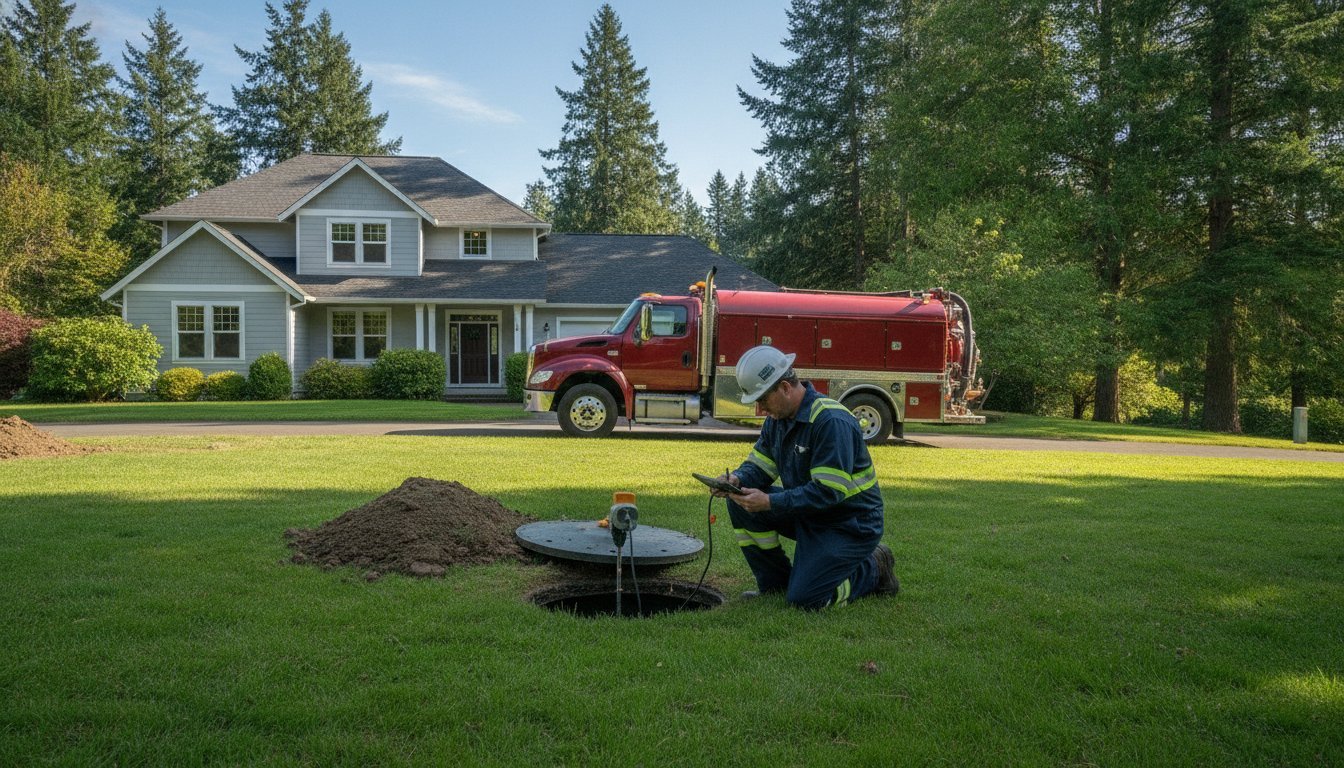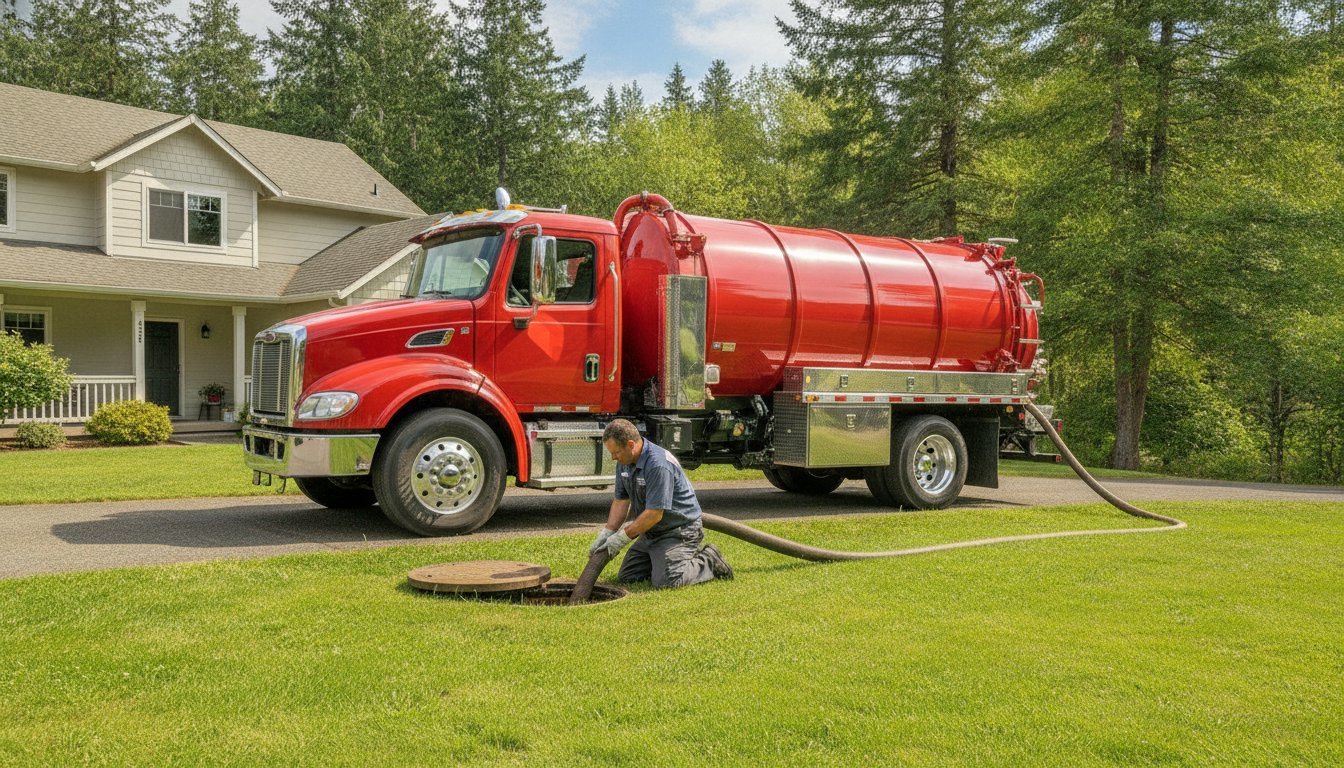
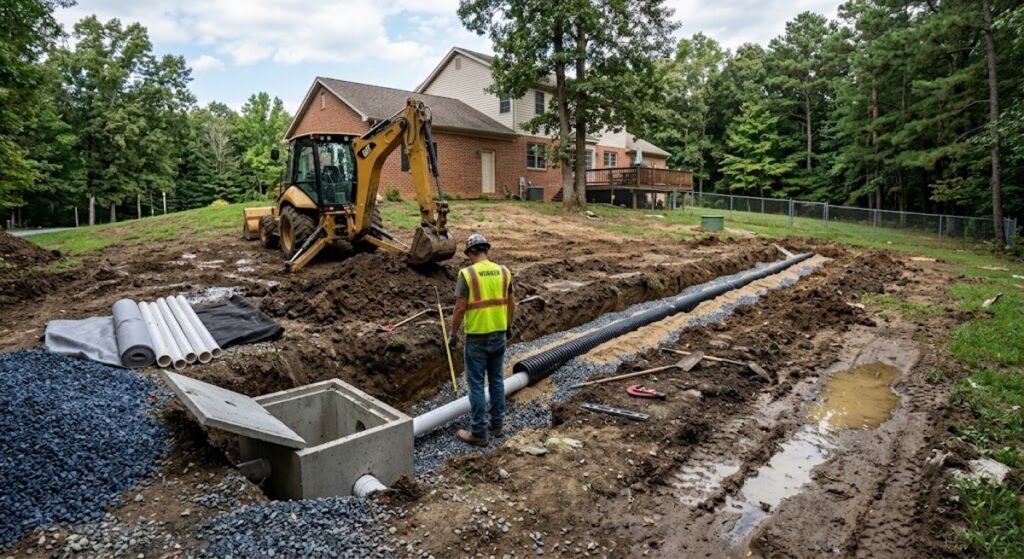
Poor drainage is one of the most overlooked factors in septic system design, yet it directly determines whether a system will function properly for years or fail within months. When soil can’t adequately absorb and filter wastewater, the consequences range from sewage surfacing in your yard to contaminated groundwater affecting your entire property.
Many homeowners and builders discover drainage issues only after purchasing land or starting construction, leaving them scrambling for solutions. Understanding the relationship between site drainage and septic design from the start can save significant time, money, and frustration.
We’ll walk through how drainage conditions shape septic system requirements, why conventional systems often fall short on difficult sites, and how Advanced Treatment Technology systems offer a reliable path forward when standard approaches aren’t viable.
Understanding Drainage Problems and Septic Design
Poor drainage and septic design failures are closely linked — soil conditions, water table depth, and site-specific factors all determine whether a system will function correctly or fail within a few years.
Common Signs of Drainage Issues
Drainage problems rarely appear overnight. They typically develop gradually and show up in recognizable patterns on the property.
Watch for these warning signs:
- Soggy or saturated ground near the drain field, even during dry weather
- Slow-draining fixtures inside the home, including sinks, toilets, and showers
- Sewage odors near the yard or around the septic tank lid
- Lush, unusually green grass directly over the drain field — a sign of surfacing effluent
- Gurgling sounds from drains or toilets after flushing
Standing water near a septic system is not just a nuisance. It signals that effluent is not being absorbed into the soil properly, which creates a public health risk.
Key Factors Influencing Septic System Design
A septic system cannot be designed in isolation from the land it sits on. Several site-specific variables directly shape what type of system is viable.
| Factor | Why It Matters |
| Lot size | Determines available space for the drain field and setback distances |
| Soil permeability | Controls how quickly effluent moves through the ground |
| Depth to bedrock | Limits how deep components can be installed |
| Proximity to water sources | Affects required setbacks from wells, streams, and wetlands |
| Slope of the land | Influences gravity flow and the risk of surface breakout |
Perc test results are one of the primary data points used during design. A failed perc test does not always mean a property cannot have a septic system — it means a conventional system may not be appropriate.
Impact of Soil Type and Water Table on System Performance
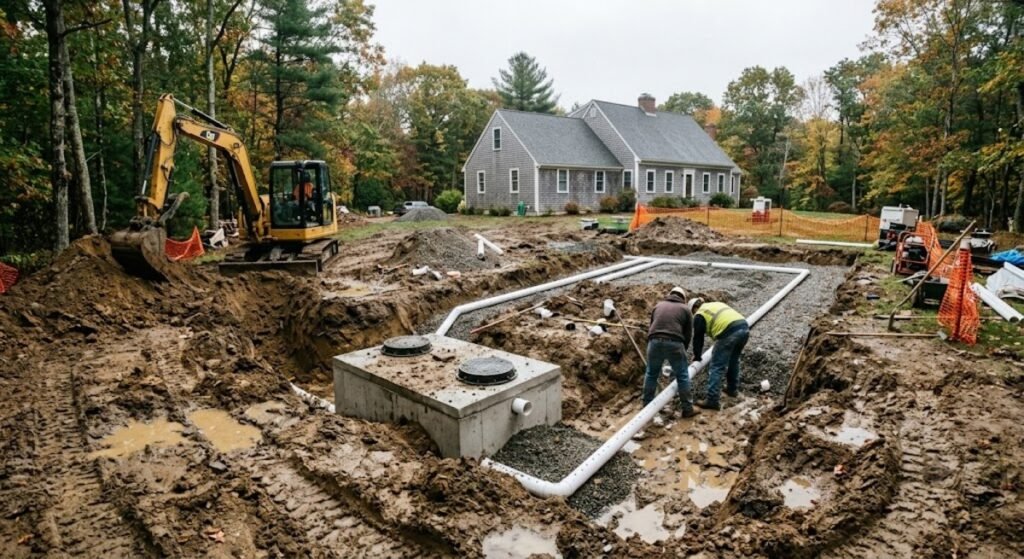
Soil type is arguably the single most important variable in septic system performance. Clay-heavy soils absorb water slowly, which causes effluent to back up rather than percolate. Sandy soils drain quickly but may not filter contaminants effectively before they reach groundwater.
A high water table — meaning saturated soil sitting close to the surface — reduces the available separation distance between the drain field and groundwater. Most regulations require a minimum of 24 to 36 inches of unsaturated soil for treatment to occur.
When that separation distance does not exist naturally, the system either needs to be elevated using engineered fill, or an alternative treatment approach must be considered entirely.
Advanced Treatment Technology (ATT) Systems: Superior Solutions for Challenging Drainage Conditions
When conventional septic systems fail due to poor drainage conditions, ATT systems offer a proven, code-compliant path forward by treating wastewater to a higher standard before it ever reaches the soil.
What Makes ATT Systems Unique for Problematic Sites
ATT systems treat wastewater through multiple active treatment stages before dispersal, unlike conventional systems that rely almost entirely on soil absorption. This distinction matters most on sites where the soil simply cannot do the work a standard system expects of it.
On lots with clay-heavy soil, high water tables, or failed percolation tests, a conventional septic system creates a direct risk of sewage surfacing or contaminating groundwater. ATT systems reduce biological oxygen demand (BOD) and total suspended solids (TSS) to levels low enough that even marginal soil can safely receive the treated effluent.
Key treatment stages in most ATT systems include:
- Pre-treatment tank – separates solids from liquid waste
- Aerobic treatment unit (ATU) – introduces oxygen to accelerate bacterial breakdown
- Disinfection stage – UV light or chlorine reduces pathogens to safe levels
- Dispersal field – distributes highly treated effluent into the soil
Advantages of ATT Over Conventional Septic Solutions
The core advantage is flexibility. Because ATT systems produce cleaner effluent, they can legally operate on sites that would otherwise be denied a septic permit entirely.
| Factor | Conventional Septic | ATT System |
| Effluent quality | Basic treatment | Advanced, near-potable |
| Minimum lot size required | Larger | Smaller lots eligible |
| High water table suitability | Poor | Approved in many jurisdictions |
| Clay or slow-perc soil | Often fails | Viable with proper design |
| Regulatory approval on problem sites | Frequently denied | Frequently approved |
ATT systems also tend to have a smaller physical footprint, which matters significantly on tight urban or suburban lots.
Real-World Examples: ATT Success on Small Lots and Difficult Soil
Consider a 0.4-acre lot in a rural area where the percolation rate tested at 90 minutes per inch — well outside the acceptable range for a standard drainfield. A properly designed ATT system with a pressurized shallow drip dispersal field allowed the homeowner to obtain a permit and build without connecting to a municipal sewer.
In another common scenario, a property sitting 18 inches above a seasonal high water table would automatically disqualify a conventional system under most state codes. We regularly see ATT systems with raised or mound-style dispersal approved on exactly these properties because the effluent quality meets the stricter standards required for reduced soil separation distances.
These are not rare edge cases. Difficult drainage conditions are among the most frequent reasons clients contact us, and ATT systems resolve the majority of them.
Frequently Asked Questions
Drainage problems and septic design raise specific technical questions about soil behavior, water table conditions, percolation testing, and when treatment upgrades become necessary. Understanding these details helps homeowners and builders make informed decisions before a system fails or a permit gets denied.
What are the most common signs that a property’s drainage issues are affecting the septic system?
Slow drains throughout the home, gurgling sounds from plumbing fixtures, and sewage odors near the drainfield are among the earliest indicators. Wet or soggy patches of ground directly above the leach field — especially during dry weather — suggest the soil is no longer absorbing effluent at an adequate rate.
Sewage backing up into lower-level fixtures like basement toilets or floor drains points to a system under hydraulic stress. These signs often worsen after heavy rainfall when the surrounding soil is already saturated and has no additional capacity to accept wastewater.
How do soil types like clay, sand, or loam change leach field performance and design requirements?
Clay soil absorbs water slowly, often measured at percolation rates exceeding 60 minutes per inch. This slow rate requires larger leach field areas or, in many cases, disqualifies a conventional drainfield entirely under local health codes.
Sandy soil drains very quickly — sometimes too quickly — meaning effluent passes through before biological treatment is complete. Loam sits in the middle and typically offers the most favorable conditions, though the presence of restrictive layers below the surface still affects how deep a system can be installed.
Design requirements shift based on these measurements. A site with clay-heavy subsoil may require elevated mound systems or pressure-dosed fields to distribute effluent more evenly and avoid oversaturation at any one point.
Why does a high water table create septic failures, and what design strategies can reduce the risk?
A high water table reduces the vertical distance between the bottom of the leach field and saturated ground below it. Regulatory guidelines typically require a minimum separation — often 24 to 36 inches — to allow adequate treatment before effluent reaches groundwater.
When that separation is compromised, untreated wastewater can migrate directly into the water table, creating both a system failure and a public health concern. Seasonal water tables also rise and fall, meaning a site that passes inspection in August may be non-compliant by March.
Design strategies include installing raised or mound systems that elevate the drainfield above seasonal high water, reducing effluent volume through water conservation measures, and using advanced pre-treatment to deliver cleaner effluent with lower biological oxygen demand to the soil.
What does a failed percolation test typically indicate, and what options are available when it happens?
A failed perc test means the soil absorbs water either too slowly or too quickly to meet the minimum thresholds required for a conventional drainfield. It does not necessarily mean the lot is unbuildable — it means a standard system is not appropriate for that specific soil condition.
Options following a failed test include soil analysis to identify whether the failure is at the surface or at depth, retesting after seasonal changes, or redesigning the system entirely around an alternative treatment approach. In many jurisdictions, a failed perc test opens the door to permitted alternative systems that meet treatment standards through different mechanisms.
Mound systems, drip irrigation drainfields, and advanced treatment units are all paths that have successfully moved forward after conventional perc failures.
When is an advanced treatment system the right choice compared with a conventional septic tank and drainfield?
An advanced treatment system becomes the practical choice when site conditions prevent a conventional system from functioning safely or receiving a permit. This includes lots with high seasonal water tables, dense clay soils, steep slopes, small lot sizes that limit drainfield area, or prior system failures.
We also recommend considering advanced treatment on properties near sensitive water bodies, drinking water wells, or protected wetlands where effluent quality standards are stricter than what a standard septic tank can deliver. Some local health departments now require advanced treatment as a baseline in designated protection zones regardless of soil conditions.
Advanced treatment systems are not just a workaround — they produce measurably cleaner effluent and can make development viable on land that would otherwise sit unused.
What maintenance and monitoring should homeowners expect with an advanced treatment system over time?
Advanced treatment systems have more mechanical components than conventional septic tanks, which means regular maintenance is a real requirement, not optional. Most systems include an aerator, pump, filtration media, and a disinfection stage — each of which requires inspection on a scheduled basis.
Service contracts are commonly required by the permitting authority, typically calling for inspections every three to six months. During these visits, a certified technician checks the aerator function, measures effluent quality, clears any accumulated solids, and verifies that the disinfection component — usually UV light or chlorine tablets — is operating correctly.
Homeowners should also monitor their own water use and avoid putting harmful substances like grease, medications, or harsh cleaning chemicals into the system. These materials disrupt the biological treatment process and can lead to faster component wear or permit violations.