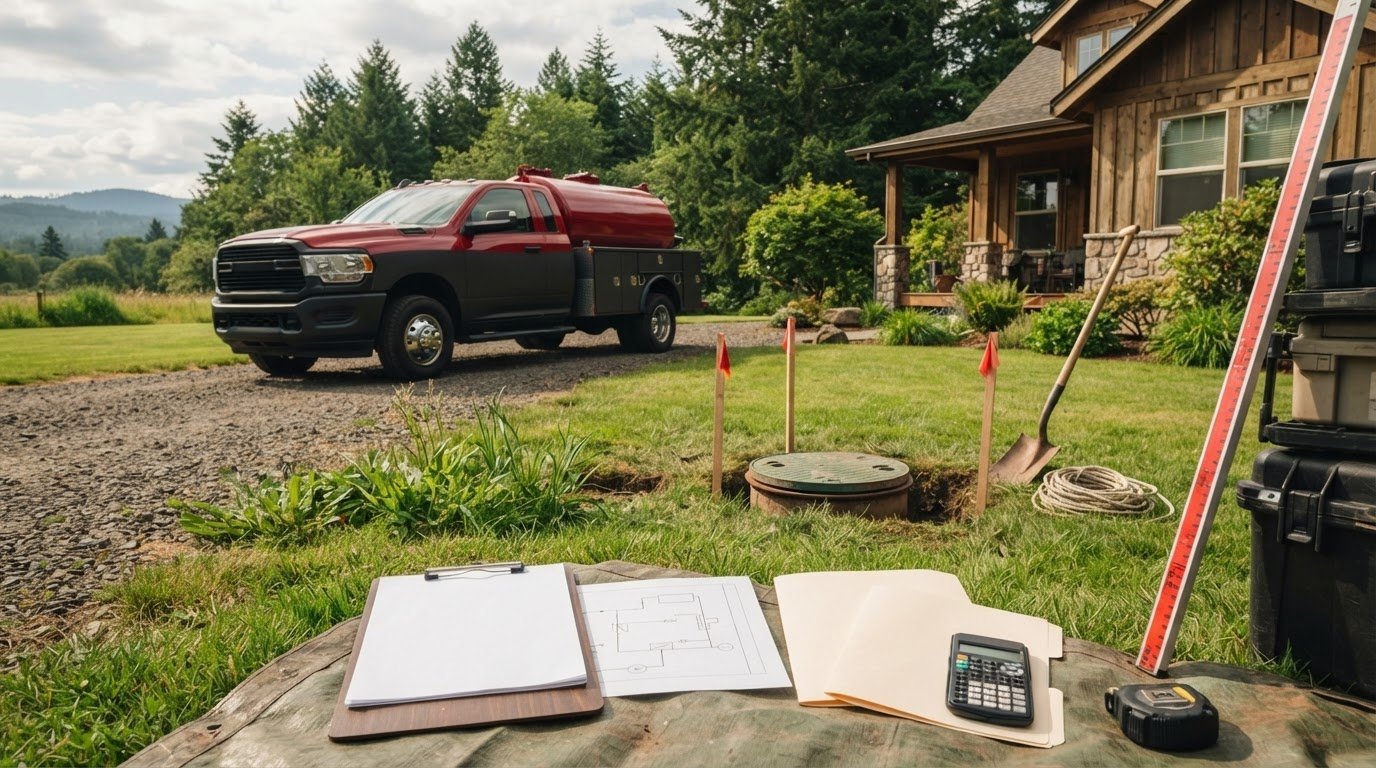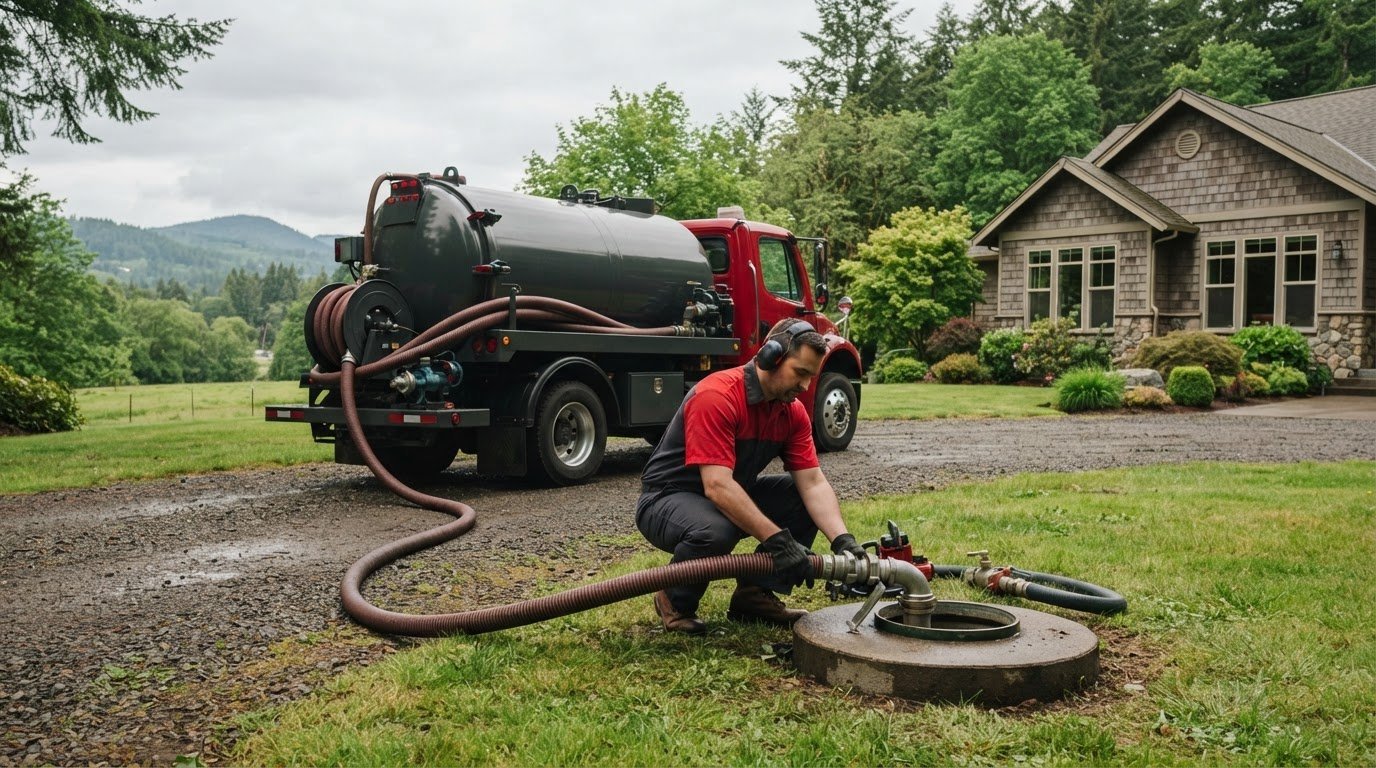
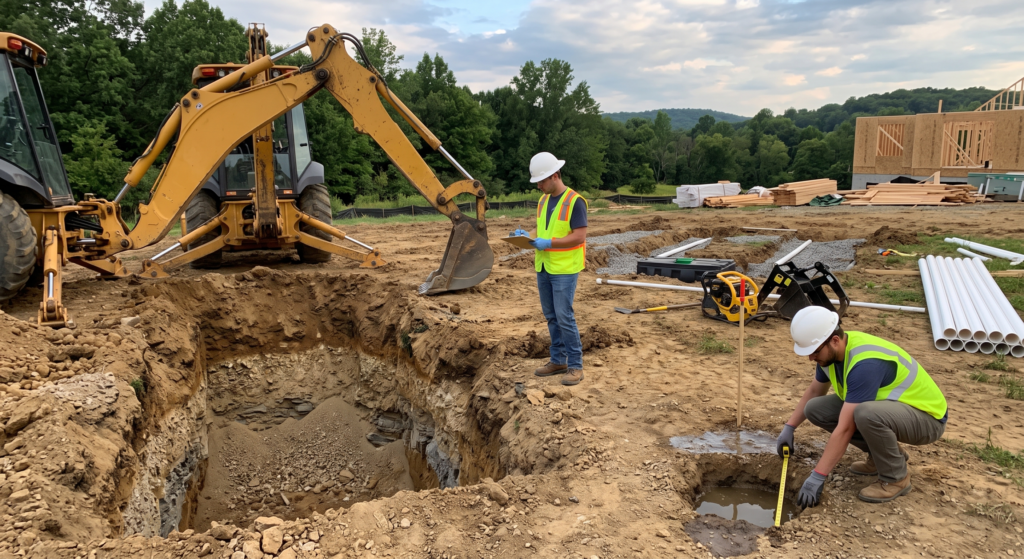
If your property has failed a perc test or sits on a high water table, you may have been told that a sand filter septic system is your only option. In many cases, that is not true — there are legitimate strategies and modern systems that can help you avoid the cost, maintenance burden, and land-use limitations that come with a sand filter Understanding those options early can save you significant money and preserve more of your usable yard space.
Sand filters are often recommended by default, but they are not always the most practical or cost-effective solution for every property. We work with homeowners, builders, and real estate professionals who want to know what alternatives exist before committing to an elevated, above-ground system that can dominate a landscape and complicate future development.
In this article, we cover the key strategies for avoiding a sand filters, including soil improvement approaches, lot evaluation techniques, and advanced treatment options. We also explain how Advanced Treatment Technology (ATT) systems work and why they are increasingly being used as a code-compliant alternative in situations where a conventional or sand filter system would otherwise be required.
Strategies to Avoid Installing a Sand Filter Septic System
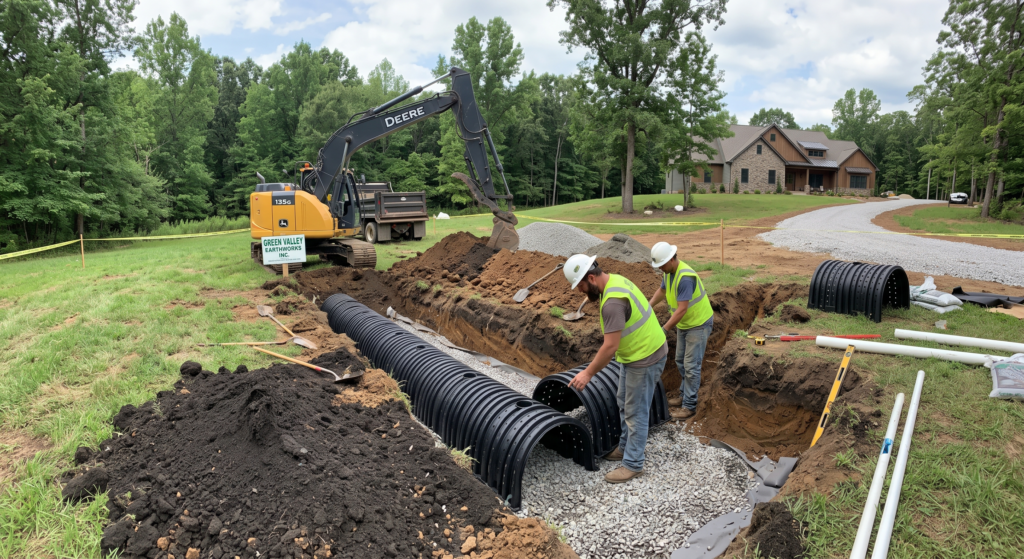
Understanding Why Sand Filters Are Required
Sand filters are required when a site fails to meet the minimum soil conditions for a conventional in-ground septic system. Specifically, they become mandatory when:
- Seasonal high water table is within 24 inches of the surface
- Soil percolation rate is too slow (typically slower than 60 min/inch) or too fast
- Restrictive soil layers such as hardpan, clay, or bedrock sit too close to the surface
- Minimum separation distance between the drain field bottom and limiting layer cannot be achieved
Knowing exactly which condition applies to your site is the first step. A licensed soil scientist or septic designer can identify the specific limiting factor through perc testing and soil profile evaluation—and that diagnosis determines which avoidance strategies are actually viable.
These approaches are not universally effective. A site with a bedrock shelf at 18 inches cannot be remediated through drainage improvements alone. We recommend getting a clear written assessment from a certified designer before investing in site work.
Alternative Septic System Designs and Upgrades
When site conditions cannot be improved enough for a conventional system, alternative system designs can often substitute for a sand filter while remaining fully code-compliant.
Common alternatives include:
- Aerobic Treatment Units (ATUs) – Pre-treat effluent to a higher standard, reducing the soil treatment burden and separation distance requirements
- Pressure-dosed systems – Distribute effluent more evenly across the drain field, preventing localized saturation
- Shallow pressure distribution – Works in low-permeability soils where conventional gravity systems fail
Each of these systems requires pre-approval from the local regulatory authority. We always verify current county or state-specific requirements before recommending a specific design path.
Maximizing Lot Utilization and Property Value
A sand filter can occupy 1,500–4,000 square feet of usable yard space and typically carries a construction cost premium of $10,000–$25,000 over a conventional system. Avoiding one has a direct impact on both property value and livable space.
Strategic site planning helps maximize lot use:
- Locate the septic area early in the design process, before finalizing the house footprint
- Use setback mapping to identify all restricted zones (wells, property lines, structures) and find compliant drain field locations
- Consider system footprint size when choosing between alternatives— ATUs often require less dedicated land area than a filter
- Work with a licensed designer and surveyor together to optimize placement and preserve landscaping or buildable area
A smaller system footprint also reduces clearing, grading, and restoration costs. In real estate transactions, a conventional or compact alternative system is consistently easier to explain to buyers than an elevated filter structure.
Advanced Treatment Technology (ATT) Systems: A Modern Alternative to Sand Filters
When a site fails a perc test or presents a high water table, an ATT system often provides a code-compliant path forward without the cost, space, and disruption of a sandfil. These systems treat wastewater to a higher standard on-site, which allows them to function in conditions that would otherwise disqualify a conventional system entirely.
How ATT Systems Work in Challenging Soil and Site Conditions
ATT systems use multi-stage treatment processes to reduce pathogens, nitrogen, and suspended solids before effluent ever reaches the soil. This is a critical distinction from conventional septic, which relies heavily on the soil itself to do the filtering.
Because ATT systems deliver pre-treated effluent, they require far less vertical separation distance between the dispersal point and the seasonal high water table. Where a conventional system might need 48 to 60 inches of suitable soil, an approved ATT system may reduce that requirement to 12 to 24 inches depending on your local regulations.
Common ATT treatment technologies include:
- Aerobic Treatment Units (ATUs) – inject air into the treatment tank to accelerate biological breakdown
- Textile filters (e.g., Advantex, Bioclere) – pass effluent through engineered media for additional filtration
Key Advantages of ATT Systems Over Traditional Sand Filters
| Feature | Sand Filter | ATT System |
| Footprint | Large, elevated | Compact, low-profile |
| Soil requirements | Strict | Flexible |
| Effluent quality | Primary/secondary | Tertiary (highly treated) |
| Maintenance | Minimal | Periodic (quarterly or annual) |
| Suitable for small lots | Rarely | Often yes |
Sand filters require significant horizontal and vertical space, and they are visually prominent. An ATT system, by contrast, can be installed under a lawn with no visible surface disruption.
The higher effluent quality produced by ATT systems also reduces the risk of groundwater contamination, which matters on lots near wells, wetlands, or surface water setbacks.
Real-World Example: Upgrading a High Water Table Lot Refused for Conventional Septic
Consider a half-acre residential lot in a low-lying area with a seasonal water table sitting 18 inches below grade. A conventional gravity system and a sand filters were both denied due to insufficient separation distance and available area.
The homeowner installed an Advantex AX-20 textile filter unit. The system met the state’s required 12-inch separation standard because the pre-treated effluent quality satisfied the reduced-setback criteria. The lot was approved, the home was built, and the system has operated without issue.
This type of outcome is common when engineers match the right ATT technology to the specific site constraints rather than defaulting to conventional options.
Selecting the Right ATT Solution for Your Needs
Not every ATT system fits every site. Selection depends on several site-specific factors:
- Lot size and shape – needs adequate lateral area
- Soil type – sandy soils drain differently than clay, affecting loading rates
- Depth to water table – determines which treatment level and separation distance you need
- Local health department approval list – not all ATT products are approved in every jurisdiction
- Household size – daily flow volume (gallons per day) determines system sizing
We recommend working with a licensed site evaluator or professional engineer early in the process. Getting ATT system sizing and product selection wrong at the design stage is far more costly to fix after installation than it is to get right upfront.
Frequently Asked Questions
Site conditions, soil behavior, groundwater depth, and system design choices all shape whether a property ends up requiring a sand filter — and what alternatives are actually on the table.
What site conditions typically lead local health departments to require a sand filter system?
Health departments typically require a sand filter when a site fails to meet minimum soil absorption standards for a conventional in-ground system. The most common triggers are a seasonal high water table within 24 inches of the surface, percolation rates slower than 60 minutes per inch, or less than 18–24 inches of suitable soil above fractured bedrock.
Shallow restrictive layers — whether clay hardpan, fragipan, or rock — leave insufficient vertical separation between the drain field and groundwater. When that buffer doesn’t exist naturally, regulators require the system to be elevated above grade, which is exactly what a sand filter accomplishes.
How do high groundwater levels, clay soils, or shallow bedrock affect septic options and permitting timelines?
High groundwater is the single most common reason a conventional system gets rejected at the permitting stage. When seasonal water tables rise within two feet of the proposed drain field bottom, regulators require additional vertical separation that the natural grade simply can’t provide.
Clay soils absorb water slowly and swell when wet, which limits how quickly effluent can move through the soil column. A perc rate slower than 60 min/inch in clay often disqualifies a site from standard leach field designs entirely. Shallow bedrock creates a similar problem by eliminating the biological treatment buffer between effluent and groundwater.
What role do Advanced Treatment Technology (ATT) units play in meeting strict discharge limits, and when are they required?
ATT systems are engineered to treat wastewater to a measurably higher standard before it ever reaches the soil. Where a conventional septic system typically delivers effluent with BOD and TSS levels around 150–200 mg/L, a certified ATT unit can reduce those levels below 30 mg/L — and nitrogen-reducing ATT systems can cut total nitrogen to under 19 mg/L or even lower depending on the technology.
Regulators require ATT systems in three primary scenarios:
- The site has failed a perc test and doesn’t qualify for any gravity-based alternative.
- The available drain field area is too small to safely handle conventional septic volumes without exceeding soil loading limits.
- The site is in a nitrogen-sensitive or environmentally sensitive area where raw septic effluent poses an unacceptable risk to groundwater or nearby surface water.
We also see ATT systems required when a property is within a mapped watershed protection zone or within a set distance of tidal or freshwater wetlands. The cleaner effluent produced by ATT units allows regulators to approve a smaller, shallower drain field — which is often what makes an otherwise unbuildable lot viable.
How do cost, maintenance, and long-term reliability compare between conventional systems, sand filters, and ATT-based alternatives?
A conventional gravity septic system typically costs between $5,000 and $12,000 installed, requires pumping every 3–5 years, and has no mechanical components to service. It is the lowest-cost option when site conditions support it, but it produces the least treated effluent of the three options.
Sand filters carry a higher upfront cost — generally $15,000 to $30,000 — because of the imported sand, engineered fill, and larger installation footprint. They also require a pump, which introduces a mechanical failure point and adds to long-term operating costs.
ATT systems typically range from $15,000 to $40,000 depending on the technology and site complexity. They require annual or semi-annual service contracts, which run $300–$600 per year on average, and periodic media or component replacement. That said, they produce the highest quality effluent, qualify for the smallest drain fields, and are often the only compliant path forward on challenging sites.
| System Type | Installed Cost Range | Annual Maintenance | Effluent Quality |
| Conventional Gravity | $20,000- $30,000 | Pump-out every 3–5 yrs | Standard |
| Sand Filter | $30,000- $40,000 | $500–$800/yr contract | Moderate |
| ATT System | $30,000– $40,000 | $500–$800/yr contract | High |
Reliability across all three systems depends heavily on installation quality and how consistently maintenance schedules are followed. ATT systems have more components, but modern units from certified manufacturers have multi-year performance records.