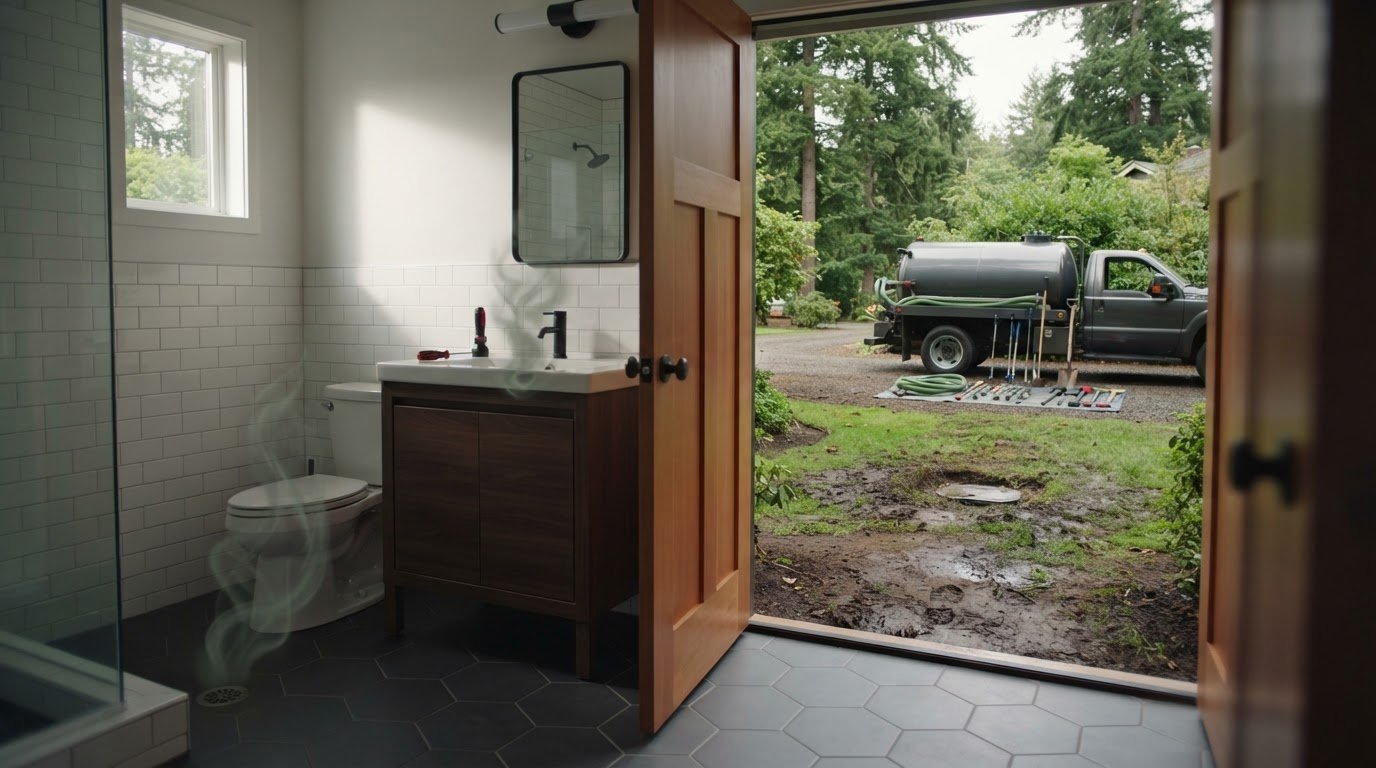
A rotten-egg smell indoors doesn’t automatically mean your septic tank needs pumping. Septic odor in the house can point to a dry drain trap, loose seal, vent problem, or leaking pipe; wet, spongy soil outside can signal a septic-system issue. If you’re searching “septic odor in house what it means,” note where the smell occurs and whether drains gurgle or wastewater backs up.
It’s understandable to worry when a sewage smell appears, especially if you can’t tell whether it’s coming from a drain, toilet, or yard. “Septic odor in house what it means” has no single answer: the odor’s location and related signs help narrow down the cause. A dry trap may be simple to address, while persistent odors or signs of a backup need closer attention.
This guide explains how sink drains, toilet vents and seals, dry P-traps, leaking pipes, and saturated soil can cause septic odors. You’ll also learn what to check safely and when a septic inspection may help identify the source.
Key Takeaways
- Refill infrequently used drains with water to restore the trap seal that helps keep sewer gases out of the home.
- Gurgling drains or a toilet that seems slow may point to a blocked plumbing vent or a drainage issue.
- Check for loose plumbing joints and a damaged toilet seal when odors are strongest near sinks or bathrooms.
- Wet, spongy soil or unusually green patches near the drainfield can signal a septic-system problem.
- If the smell persists or appears alongside signs of a backup, a septic inspection can help identify whether the system is involved.
1. Can Sink Overflow Drains Cause Foul Odors?
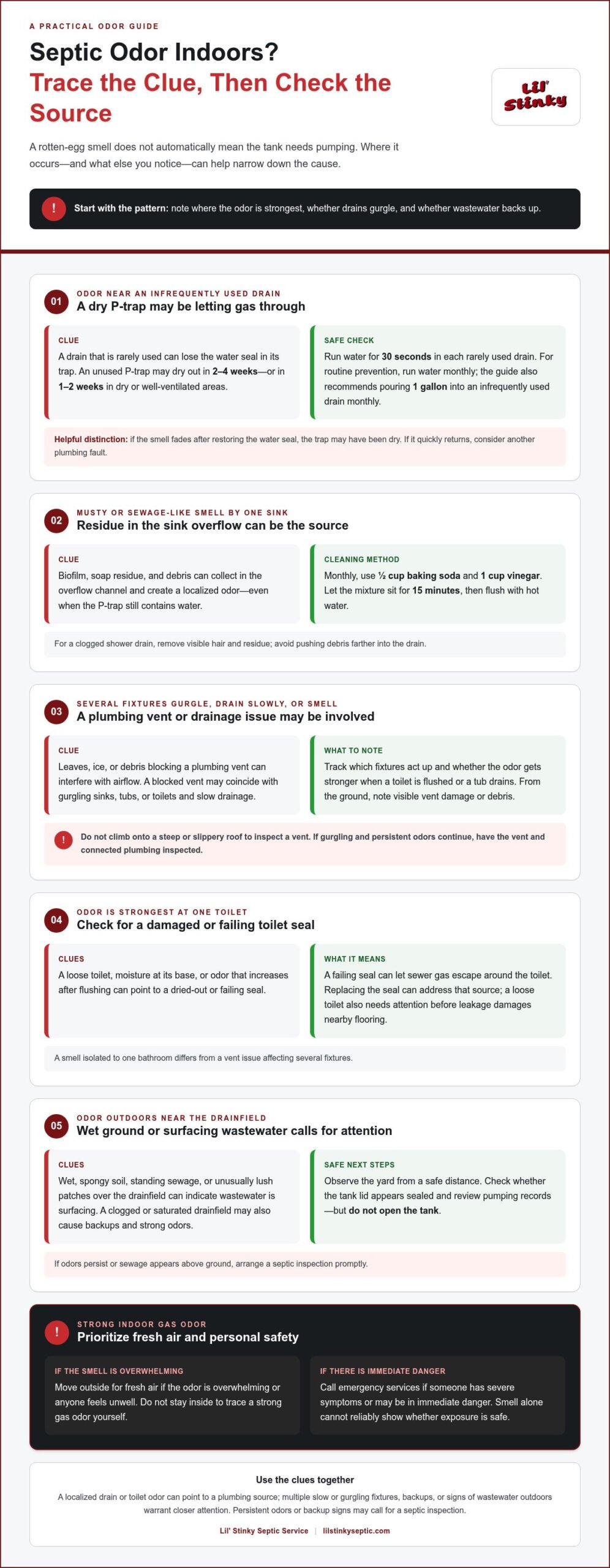
Yes. A dry drain trap can let septic gas travel indoors because its water seal is gone. Run water for 30 seconds in each drain you rarely use, including a basement floor drain or guest-bathroom sink. If the smell fades, the trap may have been dry. An unused P-trap typically dries out in 2-4 weeks, and in dry or well-ventilated areas it can dry in 1-2 weeks. Running water monthly helps keep the seal in place.
The sink overflow channel can also hold biofilm, soap residue, and debris. That buildup often creates a localized musty or sewage-like smell near the basin, even when the P-trap still contains water. Clean the overflow monthly with 1/2 cup of baking soda and 1 cup of vinegar. Let the mixture sit for 15 minutes, then flush with hot water. For a clogged shower drain, remove visible hair and residue; avoid pushing debris farther into the drain.
Check the plumbing vent and accessible seals next. A roof vent clogged by leaves or ice can interfere with airflow through the drains. A loose cleanout plug or poorly sealed septic tank lid can also release odors. Don’t climb onto a steep or slippery roof to inspect a vent. From the ground, note gurgling drains, slow fixtures, or odors that change when water runs. Those details can help distinguish a vent or plumbing issue from a septic-system problem.
Can an indoor septic odor indicate a dangerous sewer-gas leak or health risk? It can signal escaping gas, although indoor odors are not typically present at dangerous concentrations. The National Institute for Occupational Safety and Health reports considerable variation in hydrogen sulfide odor thresholds, ranging from 0.0005 to 0.3 ppm. Smell alone can’t reliably show whether exposure is safe.
Do septic odors indoors require evacuation, and when should you call emergency services? Move outside for fresh air if the odor is overwhelming or anyone feels unwell. Call emergency services if someone has severe symptoms or may be in immediate danger. Don’t stay inside to trace a strong gas odor yourself.
Finally, inspect the yard from a safe distance. Wet, spongy soil, standing sewage, or unusually lush patches over the drainfield can indicate that wastewater is surfacing. A clogged or saturated drainfield may cause backups and strong odors. Check whether the tank lid appears sealed and review pumping records, but don’t open the tank. A septic odor doesn’t automatically mean the tank needs pumping; if odors persist or sewage appears above ground, arrange a septic inspection promptly.
2. Toilet vent pipes, seals, and septic blockages
A plumbing vent balances pressure as wastewater moves through drainpipes. If leaves, ice, or debris block the vent, sinks, tubs, and toilets may gurgle, drain slowly, or smell like sewer gas. These signs can occur together because air cannot move properly through the plumbing. Note which fixtures act up and whether the odor gets stronger when someone flushes a toilet or drains a tub. That pattern helps distinguish a vent issue from a dry trap or isolated drain.
A blocked vent is not the only concern. A cracked or damaged pipe can let sewer gas escape before it reaches the roof. From the ground, look for visible damage or debris near the vent opening, but don’t climb onto a roof to investigate. A frozen vent may thaw after a warm day or two; leaves blocking the opening need removal. If gurgling and persistent smells continue, have the vent and connected plumbing inspected by a professional team like Flow Heating, Cooling & Plumbing Services instead of relying on odor alone.
Wind can also affect where vent odors travel. A change in wind direction may create a downdraft that pushes vent air toward a window, roof opening, or outdoor living area. The odor may seem stronger in certain weather, even if the plumbing hasn’t changed. A professional may determine that raising the existing vent pipe could help redirect odors. This changes where vent air disperses; it does not repair a blockage, leak, or septic-system failure.
Check the toilet base if the smell is strongest in one bathroom. A dried-out or failing wax seal can let sewer gas escape around the toilet, and replacing the seal can address that source. Look for a loose toilet, moisture at its base, or odor that increases after flushing. Don’t confuse this localized pattern with a vent problem affecting several fixtures. A loose toilet can also signal a seal issue that needs prompt attention before leakage damages nearby flooring.
Septic or drain-line blockages usually cause more than odor alone. Watch for several fixtures draining slowly, wastewater backing up, or gurgling after a flush. A blockage can prevent wastewater from moving through the system, while a saturated drainfield may cause backups and outdoor sewage odors. Avoid repeated flushing when wastewater is rising. Note affected fixtures and when symptoms occur, then arrange an inspection if the problem persists or sewage surfaces.
A vent-pipe carbon filter can reduce odor emissions from a septic tank, but it won’t clear a blocked pipe or correct a damaged seal. These filters typically need changing annually to remain effective. Keep track of the last replacement and whether odors return afterward. For recurring smells, a septic system odor diagnosis can help distinguish vent emissions from a blockage or system problem, so the next step addresses the source rather than masking it.
3. Dry P-traps and leaking pipes
A P-trap is the curved plumbing section beneath a sink or shower. Water sits in its bend and forms a seal that blocks sewer gas from entering the room. If a drain goes unused, evaporation lowers that water until odors pass through. Restore the seal by pouring 1 gallon of water down an infrequently used drain monthly. Include laundry-room floor drains, basement sinks, and guest showers in your routine. If the smell returns quickly, look beyond evaporation for a leak or another plumbing fault.
For a seasonal or vacation home, evaporation can continue during a long absence. Add 1-2 tablespoons of mineral oil to each P-trap before leaving; the oil slows water evaporation. Don’t use this as a substitute for checking drains after you return. Run water and note whether the smell clears. A dry trap usually affects the nearby fixture, while odors in several rooms can point to a shared plumbing problem or leaking pipe.
Inspect visible plumbing under sinks and around exposed drain lines. Check joints for looseness, drips, corrosion, or residue that may indicate an old leak. A leak can release wastewater or sewer gas into a cabinet, wall, or floor cavity. Look for damp material, staining, or a musty smell near the pipe. Keep the area clear while you observe it, and avoid touching sewage. A damaged joint needs repair, not air freshener or drain cleaner.
Odor that persists after you refill traps and check visible seals needs a closer plumbing diagnosis. A hidden crack can sit inside a wall or beneath flooring, with no obvious puddle. A professional can blow smoke into drain lines; smoke escaping at a joint or damaged section reveals a likely leak path. Trusted plumbing providers such as ProServ Las Vegas can help diagnose and resolve these concealed fixture and piping faults. This test helps distinguish a plumbing leak from odors coming through an intact drain trap. Record which room smells strongest and whether running a fixture changes the odor.
Biofilm and buildup inside a shower drain can also create a localized foul smell. Remove the drain cover and clear visible hair or soap residue, then flush the drain with water. For routine drain cleaning, use 1 gallon of hot, not boiling, water to flush a home drain-cleaning mixture. Don’t pour boiling water into plumbing. If the shower still smells after cleaning, or nearby flooring feels damp, stop treating it as surface buildup. Persistent odor alongside moisture calls for inspection of the drain connection and nearby pipes.
4. Heavy rain, saturated soil, and high water tables
After heavy rain, a septic drainfield may struggle to absorb wastewater because the surrounding soil is already saturated. A high water table can create a similar condition by leaving less unsaturated soil available to receive and treat effluent. When water cannot disperse through the soil treatment area, it may collect near the surface, back up through plumbing, or escape as sewage. An odor after a storm, along with soggy ground above the drainfield, deserves attention.
Walk the yard and observe the ground without stepping into standing wastewater. Note wet or spongy soil, puddles, unusually lush green patches, and sewage odors near the drainfield. These signs can indicate that wastewater is reaching the surface instead of dispersing underground. Don’t drive or park over the drainfield; vehicle weight can compact soil and interfere with drainage. Keep children and pets away from suspected sewage, and avoid contact with standing water.
Rain can also make existing system weaknesses more noticeable. If a drainfield is clogged or saturated, added moisture may worsen a backup or odor. A properly sealed tank cover helps prevent gases from escaping at the tank, but sealing the lid won’t resolve a saturated soil treatment area. Septic gas can contain methane, which is odorless and can catch fire, and hydrogen sulfide, which has a rotten-egg smell. Don’t approach an open or damaged tank to investigate an odor.
Use water efficiently while the soil is wet. Spread out laundry loads, avoid running several water-using appliances together, and fix dripping fixtures that keep adding wastewater to the system. These steps reduce the extra water entering the tank during wet weather. They don’t remove standing sewage or repair a drainfield, but they can limit additional loading while you observe whether the ground remains wet after rainfall ends.
Record when the smell began, where it is strongest, and whether indoor drains or toilets also back up. Compare those notes with recent weather and the location of wet patches. Persistent odors around the soil treatment area, standing sewage, or spongy ground need prompt professional attention because sewage at the surface creates a public health threat that must be corrected immediately. Keep people away from the affected area and arrange an inspection to determine whether saturation, blockage, or another system fault is preventing wastewater from draining properly.
5. Septic odor inspection and diagnosis
Start by mapping the odor instead of guessing at its cause. Note which room smells strongest, whether it worsens after flushing toilets, and whether several drains gurgle. Check exposed plumbing, toilet seals, and joints under sinks for looseness, dampness, or visible damage. Outside, record any standing water, unusually wet soil, or odor near the drainfield. These details help distinguish a local plumbing leak from a septic-system fault.
Call a plumber when the smell stays near one fixture, such as a toilet with a loose base, or a sink with a damp drain joint. Call a septic service company when odors occur outdoors near the tank or drainfield, wastewater backs up at multiple fixtures, or the yard has wet, spongy areas. A septic inspection can assess system components and help identify causes that a fixture-level check can’t resolve.
What should you do immediately if you smell septic gas inside your home? Move outside for fresh air if the odor is strong, and keep others away from the affected area. Don’t use a flame or remain inside to search for a leak; call emergency services if anyone becomes seriously ill or faces immediate danger. The National Institute for Occupational Safety and Health (NIOSH) warns that hydrogen sulfide’s rotten-egg odor quickly becomes unreliable as a warning of continued exposure.
A methodical inspection follows the odor’s path. The inspector can examine accessible drain connections, toilet seals, cleanout plugs, and the tank cover for loose fittings, broken parts, or cracks. If visible plumbing and seals look sound but the smell persists, smoke blown into drain lines can reveal leaks. Smoke escaping from a joint or pipe points to a path where sewer gas may also escape. Don’t open the septic tank or enter a confined space to investigate.
The septic-system check should also consider the tank, pretreatment unit, and soil treatment area. Persistent odor near a pretreatment unit or strong smells over the drainfield can indicate poor system performance. A properly functioning, well-maintained system should not produce noticeable odors indoors or outdoors. An inspection considers where the smell occurs, recent backups, visible wet soil, and the condition of accessible components, rather than assuming pumping is the fix.
Arrange a septic odor inspection within 1-2 weeks for a persistent smell, and act sooner if sewage is surfacing or wastewater is backing up. Keep a brief log of odor location, affected toilets, weather, and any changes after water use. That record gives the inspection a useful starting point. Schedule a septic inspection to help trace persistent odors to plumbing, tank, or drainfield concerns.
Lil’ Stinky Septic Service: Septic Tank Pumping
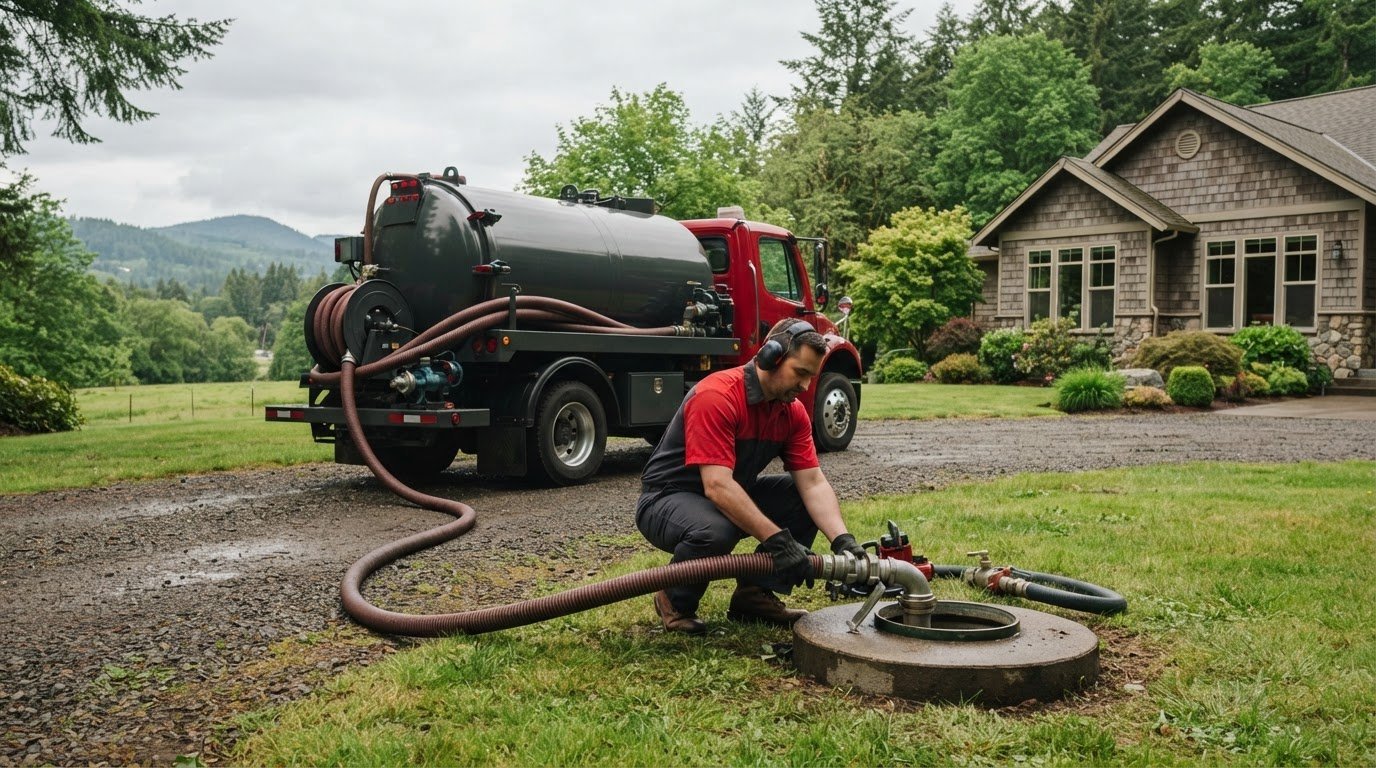
Lil’ Stinky Septic can help determine whether a persistent odor points to a septic-system issue. A septic inspection can assess the tank and drainfield when you notice outdoor sewage smells, wet soil, or recurring backups. If the tank needs service, septic pumping may be an appropriate next step; pumping won’t fix a dry trap, damaged pipe, or blocked plumbing vent.
Share where the odor occurs, when it started, and whether toilets or drains are backing up. Those details help focus the inspection on likely causes instead of assuming every smell means the tank needs pumping. If you’re dealing with a persistent odor or signs of a system problem, contact Lil’ Stinky Septic Service to discuss an inspection.
Take the Next Step Toward a Clear Answer
Understanding what septic odor in your house means starts with noticing its pattern and acting on warning signs, rather than masking the smell. Record where it appears, when it changes, and whether plumbing or yard conditions shift alongside it. That simple record can help an inspection focus on the source and the right remedy.
Lil’ Stinky Septic offers septic inspections to assess system concerns, pumping when tank maintenance is needed, and installation for system replacement needs. If you’re still wondering what a septic odor in the house means, inspection findings can help distinguish a septic issue from a plumbing fault. The right service depends on what the inspection finds.
Contact Lil’ Stinky Septic Service to discuss a septic concern and arrange an inspection. Knowing what a septic odor in your house means is a useful first step toward addressing its cause with confidence.
Frequently Asked Questions
How Does a Blocked or Damaged Sewer Line Cause Sewage Smell?
A blockage can slow wastewater, trap waste in the line, and allow odors to escape through weak joints or nearby fixtures. A damaged private drain line may also leak into soil or a crawl space, creating a smell away from the bathroom. Notice whether several fixtures act up together and whether the odor follows heavy water use. That pattern can help distinguish a shared-line issue from one troublesome fixture.
What causes septic smell inside the house?
Indoor septic odors usually enter through a break in the barrier between drain plumbing and the room. For example, a guest bathroom that smells after months without use may have an empty trap, while a toilet odor limited to one corner may point to its floor connection. A smell that appears in several rooms after water use suggests a broader vent or drainage concern. Track the location and timing before investigating.
Can Improperly Installed Toilets Cause Sewer Gas Leaks?
Yes. A toilet set unevenly or connected with a poorly seated wax seal can leave a gap for sewer gas. A toilet that rocks when used, shifts after cleaning, or smells strongest at its base deserves attention. Don’t simply caulk around the toilet to hide the odor, since that can conceal moisture escaping beneath it. The underlying seal and toilet stability need correction to stop the leak source.
Can Sink Overflow Drains Cause Foul Odors?
Yes. The narrow overflow opening beneath a sink’s rim can collect soap film, toothpaste, and other residue that regular basin use may not rinse away. If the odor is strongest when you lean over one particular sink, inspect the overflow opening with a flashlight for visible grime. Clean the channel without pushing tools deep into the plumbing. If odor remains after surface buildup is removed, investigate the trap and drain connections.
How Can You Prevent Sewer Gas Smell in Your Home?
Keep drain openings clear, use infrequently used fixtures, and avoid flushing wipes, grease, or other non-biodegradable materials into septic-connected drains. Harsh chemical cleaners can disrupt the bacteria that help break down waste in a septic tank, so choose septic-compatible maintenance methods. During household projects, make sure drain connections and vent pipes remain connected and intact. These habits reduce preventable plumbing problems without masking odors with fragrance.
Is it normal to smell septic occasionally?
A brief outdoor odor near a vent can shift with the wind, but recurring or noticeable odors indoors aren’t expected from a properly functioning septic system. In Canby, note whether an outdoor smell appears only under certain wind conditions or remains near the tank, pretreatment unit, or drainfield. An odor that returns, spreads indoors, or coincides with slow drains deserves investigation rather than being treated as a normal feature of septic ownership.
What Are the Most Common Causes of Sewer Gas Odor Indoors?
Common sources include a dry trap, leaking drain connection, toilet-seal gap, or plumbing vent that isn’t moving air properly. The room matters: a smell inside one vanity cabinet suggests a nearby joint, while odor around one toilet points toward its base. If the smell shifts between rooms or follows water use, record those details. They help narrow the search without assuming the septic tank is the source.
What Happens When Plumbing Vents Are Improperly Installed?
A vent that’s disconnected, damaged, or poorly routed may fail to balance air pressure in the drain system. You might notice odors after a fixture drains or hear gurgling as water moves through another fixture. During a remodel, keep records of plumbing changes and note which fixtures were affected afterward. A proper vent assessment checks the route and connections, then distinguishes installation faults from a blockage or damage elsewhere.