Most residential septic tanks should be pumped every 3-5 years, so holding tank pumping in Canby starts with a schedule, not a guess. That interval is a useful baseline, but household size, tank size, water use, garbage disposal use, and system age all affect when service is due. A tank’s scum and sludge levels also help show when pumping is needed.
If you’re unsure whether your system is due for service, you’re not alone. The right timing matters, and black, grey, and holding tanks each need practical attention. This guide explains how to judge septic tank pumping frequency, what black, grey, and holding tank service involves, and how waste is handled after pumping.
You’ll also learn what affects service time and cost, and what to consider when choosing a contractor. By the end, you’ll have a clearer idea of when to schedule service and what the process involves, without needing to decipher technical terms.
Key Takeaways
- Use 3-5 years as a general septic pumping interval, then account for household size, tank capacity, water use, garbage disposal use, and system age.
- Scum and sludge levels can indicate when pumping is due; the article explains the key outlet-tee measurement to watch.
- Black, grey, and holding tanks have different service needs. For RV tanks, plan pumping before they exceed two-thirds capacity.
- Access, tank volume, and time since the last pumping affect how long service takes and how the job is handled.
- Compare contractors by their relevant septic experience and the services they provide, then choose the service that fits your system.
How Often Should I pump my septic tank?
Most residential septic tanks should be pumped every 3-5 years, but tank condition can bring service sooner. In Canby, Oregon, pumping schedules depend on use; permit planning relates to the specific work proposed, especially installation or system changes.
Recommended Pumping Frequency
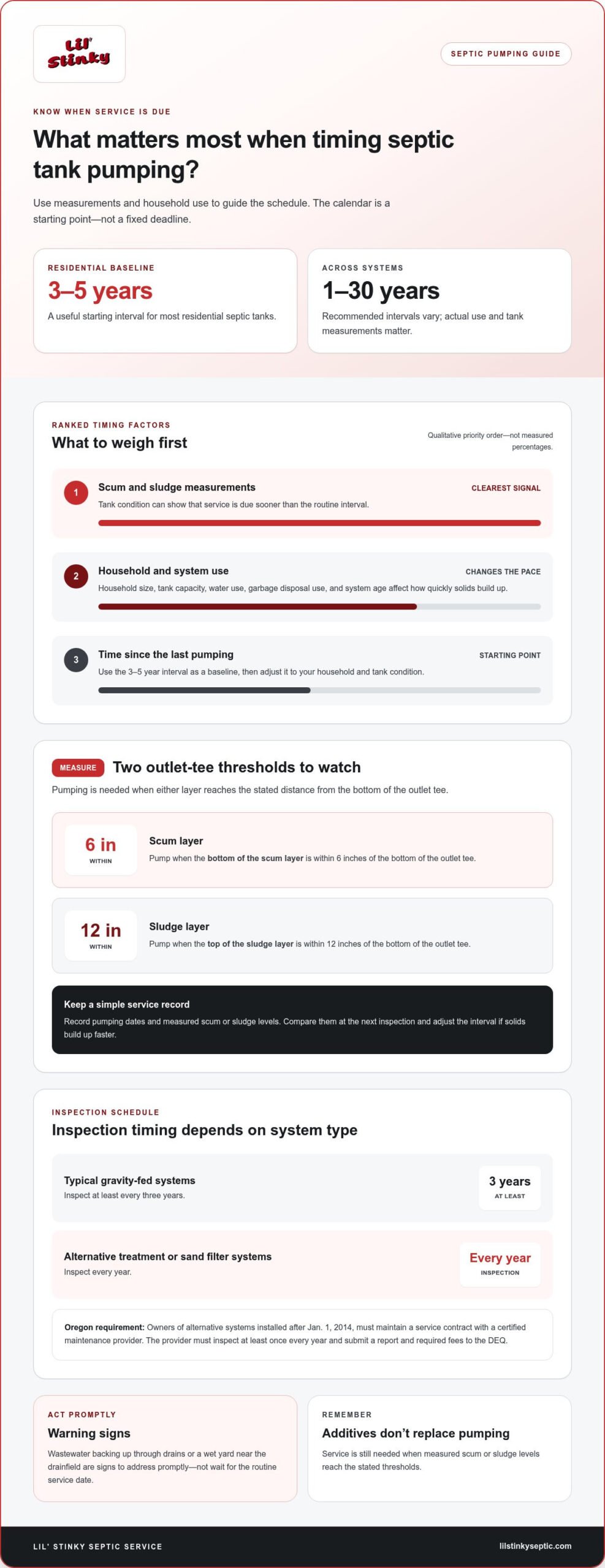
Use 3-5 years as a starting interval for residential septic tank pumping, not a fixed deadline. Household size, tank capacity, water use, garbage disposal use, and system age all affect how quickly solids build up. Across systems, recommended intervals can range from 1 to 30 years, so homeowners should base their schedule on actual use and tank measurements.
Measurements offer a clearer signal than the calendar alone. According to the U.S. Environmental Protection Agency, a septic tank needs pumping when the bottom of its scum layer is within 6 inches of the bottom of the outlet tee. It also needs pumping when the top of its sludge layer is within 12 inches of the tee’s bottom. These checks show how much room remains before solids can reach the outlet.
Keep a record of each pumping date and any measured scum or sludge levels. Compare those records at the next inspection, and adjust the interval if solids accumulate faster. Additives don’t replace pumping: a septic tank still needs service when measured levels reach the stated thresholds. If wastewater backs up through drains or the yard becomes wet near the drainfield, address the signs promptly rather than waiting for a routine service date.
Frequency by Household Size
Household size affects how quickly a tank fills because more people usually send more wastewater and solids into the system. A smaller household may use less water, while frequent visitors or heavier laundry use can increase demand. Consider the number of regular occupants, tank size, and household habits together instead of relying on a household-size chart alone.
For example, a home with several occupants and a garbage disposal may need pumping sooner than a lightly used home with the same tank capacity. Track changes such as a new resident, increased water use, or a shift in daily routines. These details can explain why an interval that once worked may no longer be suitable.
Inspection timing also depends on system type. Typical gravity-fed septic systems should be inspected at least every three years, while alternative treatment technology and sand filter systems should be inspected every year. In Oregon, owners of those alternative systems installed after Jan. 1, 2014, must maintain a service contract with a certified maintenance provider. That provider must inspect the system at least once every year and submit a report and required fees to the DEQ. Keep the inspection schedule alongside pumping records, so the next maintenance step is clear.
Black, grey, and holding tank service
Black and grey tanks collect different wastewater, while a holding tank stores wastewater until it’s pumped. If a tank is nearing capacity or sewage is backing up, reduce water use and arrange prompt service in Canby.
First, identify the type of tank and what it serves. Knowing the difference helps you monitor capacity, plan service, and avoid treating an RV tank like a household septic system.
Holding Tank Pumping in Canby
In an RV, the black tank receives toilet waste, while the grey tank collects water from sinks and showers. A holding tank stores wastewater until it’s pumped. Check each tank’s monitor and plan service before either RV tank exceeds two-thirds capacity. Pumping time also depends partly on tank size, so a larger tank may take longer to service.
Before scheduling, note which tank needs service and its approximate fill level. Keep the access point clear, and explain whether the tank is black, grey, or a separate holding tank. This information helps the service provider prepare for the right connection and distinguish RV wastewater from a residential septic system.
For ongoing care, RV owners should sanitize and deep-clean black and grey tanks annually. RV-friendly toilet paper breaks down more efficiently in RV tanks. These habits support tank maintenance, but they don’t replace pumping when a tank approaches its capacity limit.
Emergency Pumping Near Canby
If an RV tank is close to two-thirds full, arrange pumping before it exceeds that level. If the fill monitor rises quickly, pause water use where practical and identify which tank needs attention. Since black and grey tanks serve different fixtures, naming the affected tank helps explain the issue clearly.
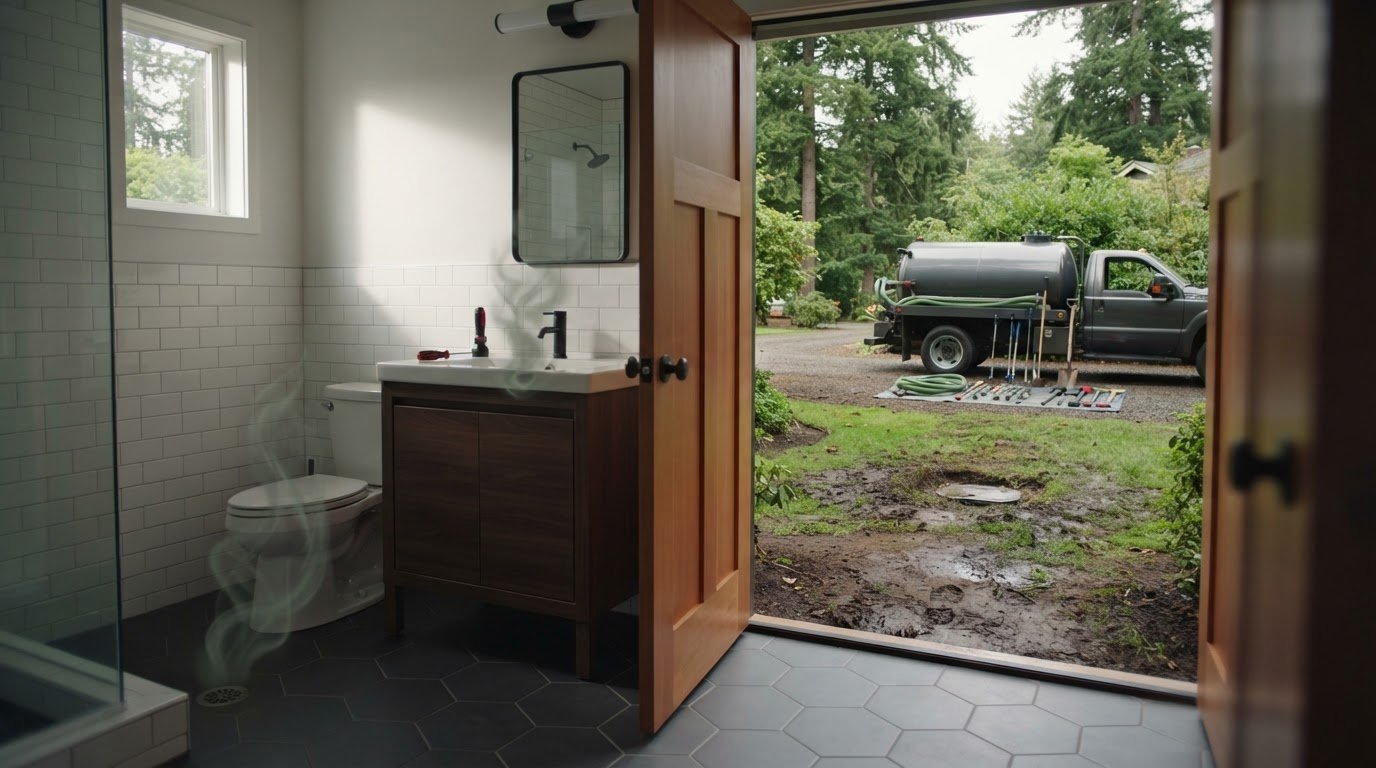
Sewage backing up through household drains is different from an RV tank nearing capacity. Reduce household water use and arrange prompt septic service, since continued use adds wastewater to the system. Don’t assume septic service covers RV tanks: the equipment and access points differ.
Before service, clear a safe route to the RV’s tank connection and keep the opening accessible. Have the vehicle’s tank information ready, including which tank needs pumping and its approximate level. For a household system, septic tank pumping addresses the septic tank rather than RV black or grey tanks. This distinction helps you request the service that matches the wastewater system.
Waste disposal
Pumping removes wastewater and accumulated solids from septic tanks, but the work doesn’t end there. In Oregon, thorough service also involves managing the removed material after it leaves your property. Understanding the basic steps helps explain why access, tank condition, and pumping history affect the job.
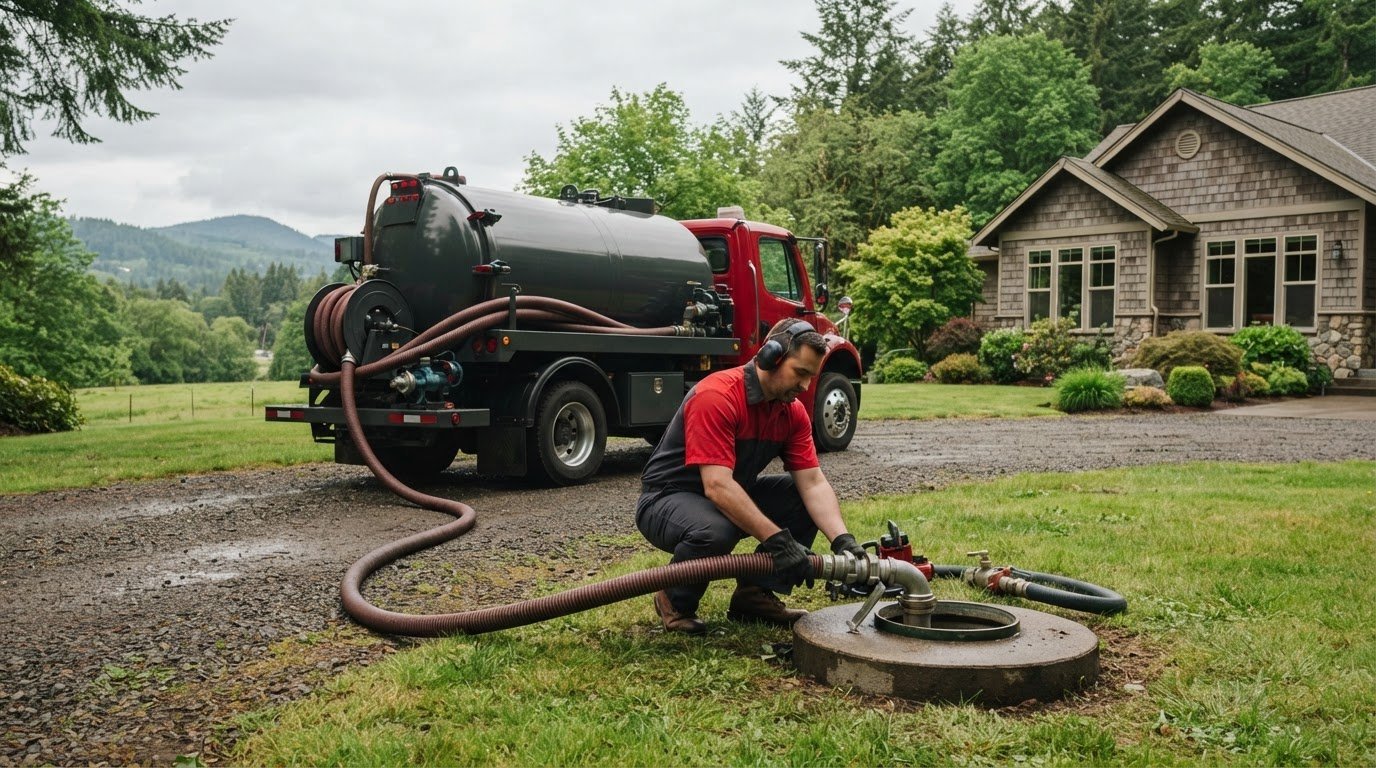
During pumping, a vacuum truck connects to the tank access and draws out liquid and solids. The crew may need to reach different areas of the tank to remove settled material. Keeping the lid accessible helps the work proceed efficiently. Septic pumping in Canby generally takes about an hour, depending on access, tank volume, and time since the last pumping.
After removal, the collected wastewater must be taken off the property for appropriate handling. This step matters because septic waste contains both liquid and solids. Don’t pour pumped material onto the ground, into a storm drain, or into a household drain. These routes don’t treat the waste and can spread wastewater beyond the system.
The next steps depend on the waste-handling process used for the service. Keep a record of the pumping date, tank access location, and any observations made during the visit. This information helps explain changes at the next service and provides a useful maintenance history if the system later needs inspection or repair.
Keep these practical points in mind before service:
- Clear plants, stored items, and other obstacles from the septic tank access.
- Share the date of the previous pumping, if you have it.
- Note any recent backup, slow drains, or wet ground near the system.
- Record observations about the tank and disposal process for future maintenance.
These details connect waste removal with the condition of the rest of the septic system. For example, a tank that fills quickly after pumping may reflect changes in household water use or a system concern. Pumping removes accumulated waste, but it doesn’t repair a damaged tank, blocked pipe, or drainfield problem. Additives don’t replace regular pumping, even if they may somewhat speed up solid-waste decay.
Keep disposal choices separate from routine household waste habits. Don’t flush medicines or hazardous materials down a septic drain, and avoid sending items that don’t break down readily into the plumbing. These choices reduce unnecessary material entering the tank, while scheduled pumping removes the solids that remain. Careful use and proper service help you track system care and recognize when a separate inspection may be useful.
Contractor experience and homeowner recommendations
Choose septic service based on relevant experience, clear details about the work, and a reliable maintenance record. In Canby, local ratings can be one comparison point. Then focus on whether the service matches your system and current needs.
For septic tank pumping in Canby, look for a licensed contractor who can explain the work, access needs, and waste-handling steps. Ask for license information and confirm that the proposed service suits your system. Pumping an RV holding tank differs from pumping a residential septic tank, so describe the tank before arranging service.
To arrange holding tank pumping in Canby, share the tank type, location, access details, and reason for service. Mention whether the tank is nearing capacity, sewage is backing up through a toilet, or drains have slowed. These details help clarify the work needed and whether an inspection may also be useful.
Experience matters when a job involves more than routine pumping. A contractor who performs septic inspections can assess visible system conditions and explain whether a separate repair or installation issue needs attention. For example, repeated backups after pumping may point to a problem beyond accumulated solids. Pumping alone doesn’t resolve every system fault.
Homeowner reviews can help set expectations, but read them for specific details rather than relying on a score alone. Angi reports an average homeowner rating of 4.7 for septic tank services in Canby, Oregon. Look for comments about communication, arriving prepared, explaining the work, and leaving the access area orderly. One rating doesn’t describe every service visit or system.
Before scheduling, gather the details that make the service call more efficient:
- Record the last pumping date and any inspection notes.
- Identify the tank type and its access location.
- Describe slow drains, backups, or other recent changes.
- Explain whether the issue is routine or an emergency.
Use your notes to describe the problem clearly and understand the proposed work. A toilet backup, for example, calls for a different explanation than a routine pumping request. Ask for a straightforward account of what the visit covers and whether the technician noticed a separate concern. Clear records help you track work over time, spot recurring issues, and plan future septic care without treating every symptom as a simple pumping need.
Holding tank pumping services in Canby, Oregon
For holding tank pumping in Canby, first identify the tank and its access point. A household septic tank and an RV holding tank serve different systems, so the service plan should suit the tank, its volume, and the reason it needs pumping.
Septic pumping in Canby generally takes about an hour, though access, tank volume, and time since the previous pumping can affect the job’s duration. A clear path to the lid helps the crew reach the tank, while buried or difficult-to-reach access can add work. When arranging a visit, share what you know about the tank location and last service date.
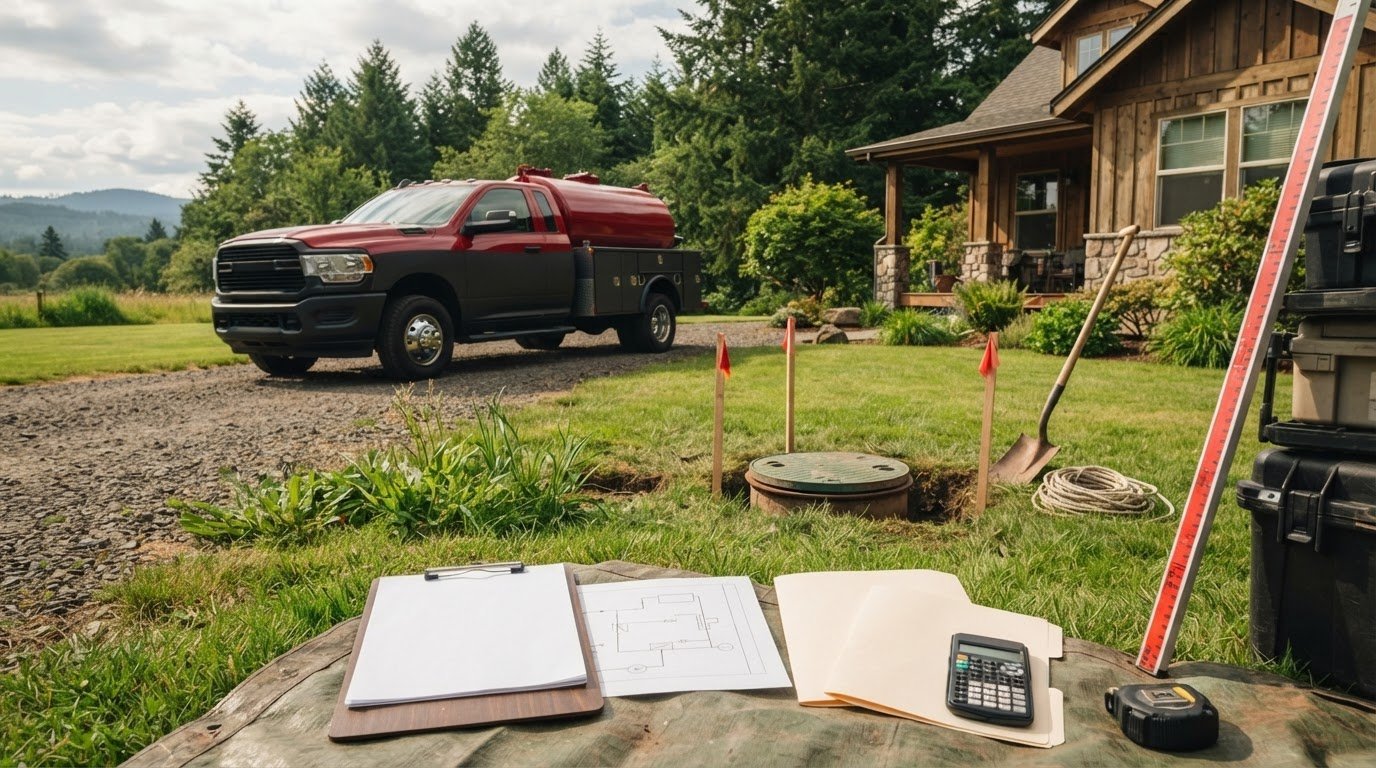
Before service, locate the tank access and clear stored items, vehicles, and other obstacles from the work area. If you have a site plan or previous service notes, keep them handy. Marking the location can save searching across the yard and help the visit proceed smoothly.
The work starts with access to the tank and connection of pumping equipment. The crew removes wastewater and accumulated solids, then handles the waste through the appropriate disposal process. For a household septic system, pumping removes tank contents; it doesn’t repair a damaged tank, blocked pipe, or drainfield problem. Mention slow drains, backups, or wet ground so these concerns aren’t mistaken for routine pumping needs.
Planning also depends on why you need service. A routine appointment may involve a known tank and an established maintenance record. A tank approaching capacity calls for clear information about the system and access. For an RV holding tank, identify whether the black or grey tank needs service, since they collect wastewater from different fixtures.
Keep these details ready before scheduling:
- Tank type and location, such as a residential septic tank or RV tank.
- Approximate tank volume, if available from system records.
- Date of the previous pumping and any recent service notes.
- Symptoms such as slow drains, backups, or a tank nearing capacity.
These details help describe the job accurately and distinguish pumping from an inspection or repair concern. If the system is a household septic tank, schedule septic tank pumping to arrange service. Share the access location and maintenance history so the visit can be planned around the property and system.
Lil’ Stinky Septic Service: Septic Tank Pumping
Lil’ Stinky Septic Service pumps household septic tanks for routine maintenance and accumulated waste removal. If you need service for an RV black or grey holding tank, identify it separately from a residential septic tank so the service suits the system.
For household systems, septic inspections can assess conditions beyond the tank, while septic installation addresses a different need: setting up a system. Lil’ Stinky Septic Service also offers ATT Systems. When describing the work you need, share your tank type, access location, and any symptoms.
If your Canby property needs septic tank pumping or an inspection, contact Lil’ Stinky Septic Service to discuss the appropriate next step.
Make your next maintenance step count
Turn your notes into a clear maintenance plan: identify the system, record what has changed, and keep service history together. This makes it easier to explain whether holding tank pumping in Canby involves an RV tank or a residential septic system, and to describe the right next step.
For residential systems, Lil’ Stinky Septic Service offers septic tank pumping and septic inspections. The company also installs septic systems when a new setup is needed. Choose the service that matches the issue rather than treating every backup or slow drain as a pumping problem.
Have the tank location, access details, previous service records, and a short description of current symptoms ready. These practical notes help clarify the situation and keep the conversation focused on your property’s needs.
For help with a residential septic system, contact Lil’ Stinky Septic Service. A clear next step can make system maintenance easier to manage.
Frequently Asked Questions
How Much Does Septic Pumping Cost?
Septic pumping costs depend on the conditions of the job, not a single standard rate. Tank size, lid accessibility, tank depth, property location, and whether service is needed during an emergency or weekend can affect the estimate. For a Canby property, note whether the lid is exposed or buried and share the tank’s approximate size. Request a free estimate from Lil’ Stinky Septic Service for honest, upfront pricing.
What are signs my tank is full?
Slow drains in several fixtures, sewage backing up, or unusually wet ground near the system can signal a septic problem. A single slow sink may point to a local drain issue, so note whether other fixtures are affected. Record when symptoms began and whether they worsen after heavy household water use. This information helps distinguish a tank nearing capacity from a separate plumbing or system concern.
Holding Tank Pumping Cost in Canby, OR
The cost of holding tank service in Canby depends on the tank and site conditions. Tank size, lid access, depth, and property location affect the estimate, and emergency or weekend timing can also matter. For holding tank pumping in Canby, identify the tank type and access point, then describe its condition and recent use. These details help Lil’ Stinky Septic Service establish the work involved without relying on a generic cost range.
How Often Should a Holding Tank Be Pumped?
A holding tank’s pumping schedule depends on its capacity and how quickly wastewater enters it. For an RV, arrange pumping before the tanks exceed two-thirds capacity. A residential septic tank follows a different schedule, with most pumped every 3-5 years. For holding tank pumping in Canby, compare the level with the tank’s capacity and keep service dates recorded. More frequent use may mean the tank needs pumping sooner.
What Is Included in Holding Tank Pumping Service?
Holding tank pumping generally removes stored wastewater and solids through an accessible service opening, then transports the waste for disposal. The exact work depends on tank type, location, and access. Before service in Canby, clear a route to the opening and identify whether the tank serves an RV or residence. After service from Lil’ Stinky Septic Service, add the date and any notes about tank condition to your maintenance records.
Holding Tank Pumping Versus Septic Tank Pumping
A holding tank stores wastewater until it’s removed, while a conventional septic system treats wastewater through a tank and drainfield. Pumping a holding tank removes its stored contents; septic tank pumping removes accumulated solids and wastewater from the tank. This distinction matters when arranging service: identify whether your property has a holding tank or septic system, and describe where the wastewater goes after leaving the tank.
Signs a Holding Tank Needs Pumping
A rising level indicator, high-level alarm, or wastewater nearing the tank’s capacity can signal that pumping is due. In an RV, check black and grey tank readings separately because they collect waste from different fixtures. Don’t wait for a backup to identify which tank is filling. Note the indicated level and recent use, then arrange service with Lil’ Stinky Septic Service before the tank exceeds its safe working capacity.
Canby Oregon Holding Tank Pumping Regulations and Permits
Permit planning relates to the specific work proposed, especially installation or system changes. In Oregon, alternative treatment technology and sand filter systems installed after Jan. 1, 2014, require a service contract with a certified maintenance provider and at least yearly inspections.