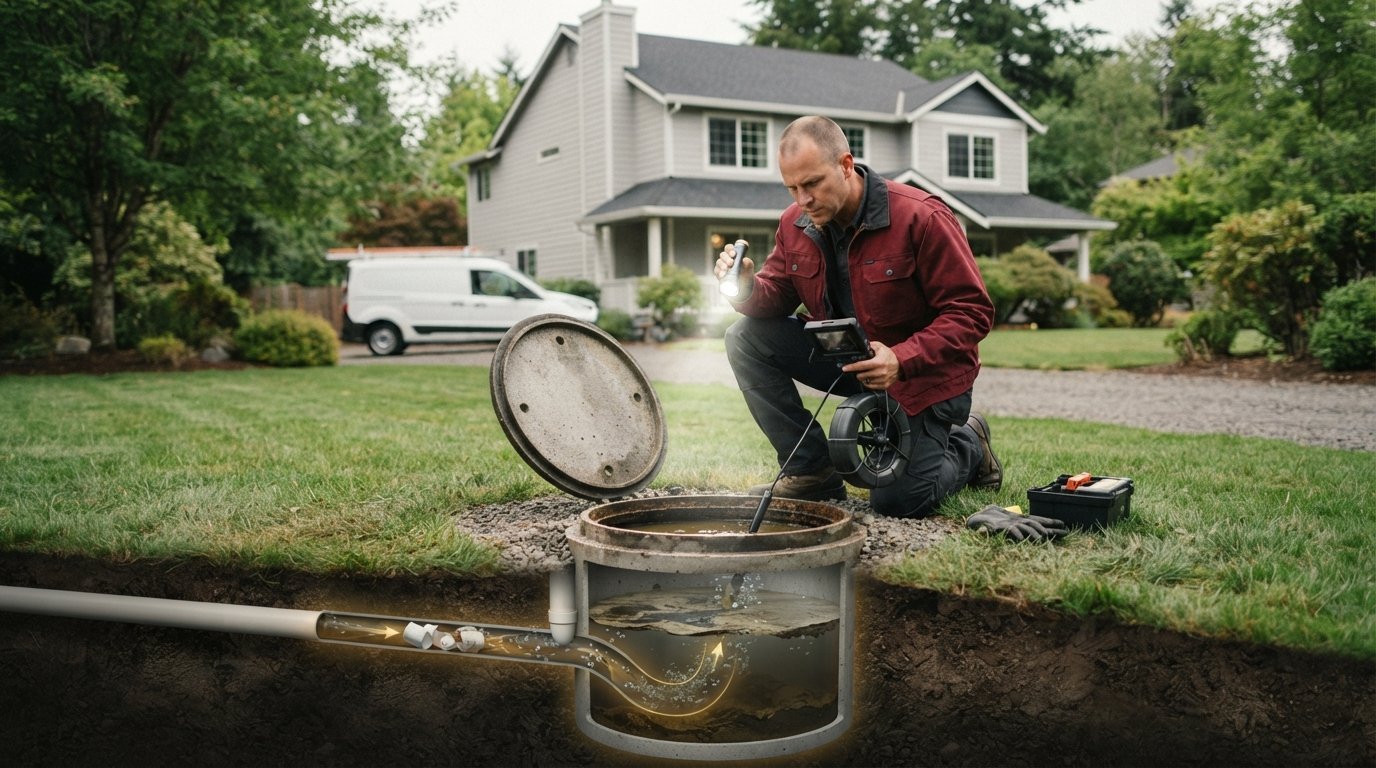
Last month, a homeowner in the Willamette Valley discovered that their “budget” septic repair wasn’t just leaking; it was illegal because the installer lacked the proper DEQ credentials. It’s stressful enough dealing with septic issues without worrying if your contractor actually knows the difference between a CCB license and a DEQ certification. You want the job done right the first time so you can stop thinking about what’s happening underground. We understand that anxiety. You need a professional who protects your property, your family, and your wallet.
This 2026 guide will show you exactly how to identify, verify, and hire a licensed septic contractor Oregon property owners can actually trust to stay compliant with state regulations. Whether you’re preparing for a real estate transaction or installing a new ATT system, getting the paperwork right is your only shield against environmental liability. We’ll walk you through the current DEQ license types, explain the mandatory bond requirements, and provide a clear path to finding a reliable specialist who values your peace of mind and property safety.
Key Takeaways
- Learn the difference between DEQ and CCB credentials to ensure your contractor is legally authorized to work on Oregon wastewater systems.
- Discover how to verify a licensed septic contractor Oregon using state databases to prevent fines and system failures.
- Use our five-question hiring checklist to vet professionals on their permitting knowledge and experience with complex ATT systems.
- Protect your property value and ensure smooth real estate inspections by hiring only certified specialists who follow 2026 regulations.
- Find out how to avoid the common pitfalls of hiring unlicensed labor that lead to environmental hazards and expensive property damage.
Why Hiring a Licensed Septic Contractor in Oregon is Non-Negotiable
In Oregon, a “licensed septic contractor” isn’t just someone with a truck and a shovel. The Oregon Department of Environmental Quality (DEQ) regulates this industry strictly because a single failed system can contaminate local groundwater for miles. To operate legally, a licensed septic contractor Oregon must hold a specific sewage disposal service license from the DEQ and a separate license from the Construction Contractors Board (CCB). Hiring someone without these credentials isn’t just a risk to your yard; it’s a legal liability that can lead to heavy state fines and the immediate shutdown of your system.
Before we dive into the paperwork, it helps to understand what a septic system is and why its design is so sensitive to local soil conditions. In places like the Willamette Valley, where the water table is high and the clay soil is thick, an amateur installation is a recipe for a backup. Licensed pros have the training to navigate these geological hurdles, ensuring your system functions safely for decades. They understand how to match a system to the specific percolation rates of your property, which is something an unlicensed laborer simply isn’t qualified to do.
The Environmental Protection Factor
Oregon’s natural beauty depends on clean water. With approximately 450,000 septic systems currently in use across the state, the collective impact of poorly maintained tanks is massive. Licensed professionals follow strict DEQ standards for waste disposal and environmental safety. They ensure that nitrogen and pathogens don’t leach into the soil, protecting the rivers and streams we all enjoy. When you hire a certified expert, you’re paying for the specialized knowledge required to keep Oregon’s groundwater safe from contamination. These pros are the front line of defense for our local ecosystems.
Real Estate and Legal Compliance
If you plan on selling your home, an unpermitted septic system is a deal-breaker. Most lenders won’t approve a home loan without a certified septic inspection Oregon. Oregon law also mandates “Time of Transfer” inspections in many scenarios, requiring a DEQ-certified professional to sign off on the system’s health. Using unlicensed labor for repairs or installations creates a cloud over your property title. It can lead to failed inspections, forced system replacements at the eleventh hour, and potential lawsuits from buyers who discover non-compliant work after the sale. Protecting your property value starts with hiring someone who does the job right the first time.
DEQ vs. CCB: Understanding Oregon’s Licensing Requirements
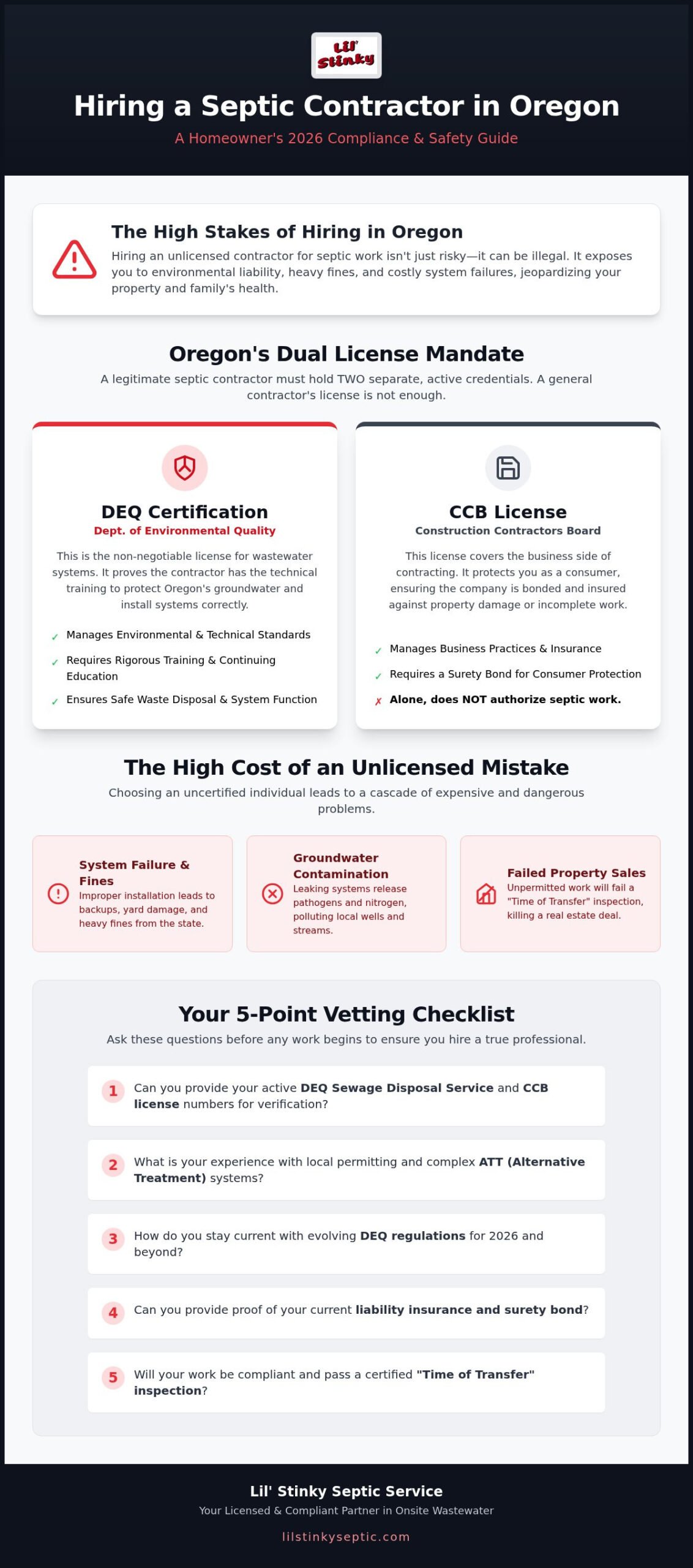
Many homeowners assume that if a contractor has a license number on their truck, they’re legally cleared for any job. In the world of onsite wastewater, that’s a dangerous assumption. A licensed septic contractor Oregon must navigate a dual-regulatory environment. You aren’t just looking for a general contractor; you’re looking for a specialist who answers to two different state agencies. The Department of Environmental Quality (DEQ) handles the environmental and technical standards, while the Construction Contractors Board (CCB) manages the business, bonding, and insurance side of the operation.
A “handyman” or a general excavator might have a CCB license to dig a trench or build a fence, but without a DEQ sewage disposal service license, they are legally prohibited from touching your septic system. Hiring someone who lacks this specific DEQ credential can result in your project being red-flagged by the county, leading to expensive “re-do” work and potential fines. Always verify that your contractor holds both active credentials before they break ground.
The DEQ Onsite Wastewater Certification
The DEQ doesn’t just hand out licenses; they require rigorous training and ongoing education. There are three primary types of sewage disposal service licenses: Installer, Pumper, and a combined Pumper/Installer license. To maintain these, professionals must complete an Initial Installer Certification course through Chemeketa Community College and renew their certification every three years. This renewal requires 18 hours of approved continuing education to stay current with Oregon’s septic regulations.
This specialized training is especially critical for Alternative Treatment Technology (ATT) systems. These systems are more complex than standard gravity setups and require a contractor with specific ATT certification. If your property has unique soil challenges, you need a pro who understands the technical nuances of these advanced systems to ensure long-term reliability.
The CCB License: Bonding and Insurance
While the DEQ ensures the technician knows the science, the CCB ensures the business is financially responsible. As of 2024, residential specialty contractors must carry a $15,000 bond, while residential general contractors must carry $20,000. This bond is a form of consumer protection; it provides a fund that homeowners can claim against if a contractor fails to complete a project or violates state building codes. Lil’ Stinky Septic Service maintains CCB #189693, ensuring every job is backed by the required bonding and liability insurance. If you’re unsure about a contractor’s status, you can consult with our experienced specialists to learn how to verify these numbers for your own protection.
How to Verify an Oregon Septic License: A Step-by-Step Guide
Verifying a contractor’s credentials might feel like extra homework, but it is the only way to ensure your property remains compliant with state law. A legitimate licensed septic contractor Oregon homeowners can trust will never hesitate to provide their documentation. In fact, Oregon law requires contractors to display their CCB number on all advertisements, contracts, and service vehicles. If the numbers aren’t visible, that is your first sign to dig deeper.
Follow these four steps to confirm you are hiring a qualified professional:
- Step 1: Request the Numbers. Ask the contractor for their DEQ sewage disposal service license and their Oregon CCB number. A prepared professional will have these ready.
- Step 2: Check ‘Your DEQ Online’. Visit the Oregon DEQ’s digital portal to search for the business. This database confirms if the company is authorized for pumping, installation, or both.
- Step 3: Verify the CCB Status. Use the Oregon Construction Contractors Board search portal. Ensure the license is “Active” and check for a history of complaints or civil penalties.
- Step 4: Confirm Local Authorization. While the DEQ sets the rules, they delegate permitting authority to 33 of Oregon’s 36 counties. Make sure your contractor is familiar with the specific requirements in Clackamas, Marion, or whichever county you reside in.
Red Flags to Watch For
Keep your guard up during the bidding process. If a contractor refuses to provide a license number upfront or gives vague answers about their permit history, walk away. Another major warning sign is an extremely low bid. Some unlicensed operators save money by avoiding proper disposal fees at authorized DEQ sites, which leaves you legally liable for “illegal dumping” if the waste is traced back to your property. Professionalism starts with transparency and fair, honest pricing.
Verifying Local Expertise
Local roots matter in this industry. A Canby-based contractor understands the specific soil conditions of the Willamette Valley better than a national chain. We know how the high water tables in Marion County affect drainage differently than the rocky soil in parts of Yamhill. When you choose a business with over 25 years of local reputation in the Portland area, you are hiring decades of experience with Oregon’s unique geology. Always check for a physical business address within the state to ensure your contractor is a permanent member of the community, not a “storm chaser” looking for a quick job.
Hiring Checklist: 5 Questions for Your Septic Contractor
Once you’ve verified credentials, you need to vet the contractor’s specific capabilities. Not every licensed septic contractor Oregon offers the same level of service or technical skill. Use these five questions to separate the true professionals from the average installers. This ensures your project stays on track and within the legal boundaries set by the state.
- “Are you certified for both standard and ATT septic systems?” Many properties in Oregon require Alternative Treatment Technology (ATT) because of soil limitations or high water tables. If they aren’t certified for both, you might be hiring the wrong person for your specific lot.
- “Do you handle the DEQ permitting process from start to finish?” Navigating county paperwork is a major headache for homeowners. A full-service pro manages the applications, site visits, and final inspections so you don’t have to.
- “What are the septic system installation cost Oregon variables for my specific lot?” Costs change based on soil type, tank size, and proximity to water sources. Get a clear breakdown of why the price is what it is before any dirt is moved.
- “Do you offer 24/7 emergency response if a backup occurs?” Septic failures don’t happen on a 9-to-5 schedule. You need a partner who answers the phone at 2:00 AM on a Sunday when your drains stop working.
- “Can you provide a written report that meets lender requirements for real estate sales?” If you’re selling a home, a verbal “it looks fine” won’t satisfy a bank. You need official DEQ-compliant documentation to close the deal.
Identifying System Backups
When a system fails, the symptoms are often messy and stressful. A licensed pro knows how to diagnose septic tank full symptoms before they turn into a total disaster. Sometimes you just need a simple pump-out. Other times, slow drains or soggy spots in the yard indicate a failing drain field or a broken line. Knowing the septic drainfield failing signs early can mean the difference between a minor repair and a full system replacement. Don’t let a contractor talk you into a full replacement if a thorough drain line cleaning would solve the issue. We believe in “straight talk” that saves you money and solves the actual problem.
Experience Matters
There is no substitute for time in the field. A newly licensed startup might have the paperwork, but 25 years of experience in Oregon means we’ve seen every soil type from the clay of Clackamas County to the rocky hills of Yamhill. We offer a best-price guarantee because we know our efficiency and local relationships allow us to provide superior value. If you’re facing a maintenance emergency or planning a new build, reach out to Lil’ Stinky Septic Service for a consultation that prioritizes your property’s safety and your peace of mind.
Lil’ Stinky Septic Service: Your Licensed Partner in Canby and Beyond
Lil’ Stinky Septic Service is more than just a business; we are a family-owned legacy with over 25 years of experience rooted right here in Canby. As a premier licensed septic contractor Oregon residents rely on, we’ve built our reputation on doing things correctly the first time. We hold CCB #189693 and are fully licensed for everything from routine septic tank pumping and drain cleaning to complex ATT systems and new installations. We don’t just work in the community; we are part of it.
Our expertise spans five critical counties: Clackamas, Multnomah, Washington, Marion, and Yamhill. This broad coverage means we understand the specific permitting nuances and soil conditions of the entire greater Portland area. Whether you need a protection plan to prevent future headaches or a full system design for a new property, we provide the technical expertise and “straight talk” you deserve. We treat your property with the same care we would our own, ensuring every project meets strict DEQ standards and protects our local environment.
Why Canby Homeowners Trust Us
Local roots make a massive difference when it comes to underground infrastructure. Over the last two and a half decades, we’ve transitioned from a small local operation to a seasoned specialist capable of handling both residential and commercial needs. We don’t hide behind corporate ambiguity or confusing technical talk. Our approach is direct: we diagnose the problem, explain the resolution clearly, and execute the job with precision. This transparency is why our neighbors continue to choose us for their most critical home maintenance needs. We take pride in being the dependable ally you can call when things go wrong.
Ready for Professional Support?
Don’t wait for a small leak to become a major environmental hazard or a failed real estate inspection. If you need to schedule a routine inspection or a tank pumping, our team is ready to help. We understand that septic failures don’t follow a schedule. That’s why we provide a emergency septic service Portland Oregon can count on 24/7 for rapid response. We are always ready to jump into action to protect your home and health.
When you call us, you’re getting a commitment to quality backed by full DEQ and CCB compliance. We offer a best-price guarantee alongside our professional licensing to ensure you get the best value in the region. Reach out today for a consultation and a quote. Let us show you why being a licensed septic contractor Oregon homeowners trust is a responsibility we take seriously.
Secure Your Property with Professional Septic Care
Choosing the right professional is about more than just digging a hole; it’s about protecting your investment and staying compliant with state law. By verifying DEQ and CCB credentials, you ensure your system is handled by someone with the technical training and financial bonding required in our state. A licensed septic contractor Oregon property owners can rely on will always be transparent about their permits and local experience.
With over 25 years of experience and a commitment to “straight talk,” Lil’ Stinky Septic Service is here to handle your pumping, inspections, and installations. We maintain CCB #189693 and offer 24/7 emergency response because we know septic issues don’t wait for business hours. Don’t risk fines or system failure by cutting corners with unlicensed labor.
Hire a Licensed Oregon Septic Expert Today. You don’t have to navigate these regulations alone. Let our team provide the peace of mind you need to keep your home safe and your system running smoothly for years to come.
Frequently Asked Questions
Do I really need a licensed contractor for a simple septic pump-out in Oregon?
Yes, Oregon law requires anyone pumping a septic tank to hold a specific sewage disposal service license from the DEQ. This ensures the waste is disposed of at an authorized facility rather than illegally dumped. Hiring an unlicensed pumper puts you at risk for environmental fines and potential property damage. A licensed septic contractor Oregon homeowners trust will always provide proof of their pumper certification before starting the job to protect your liability.
How do I find a contractor’s Oregon CCB number?
You can find a contractor’s Oregon CCB number on their service vehicles, official contracts, and advertisements, as the state requires this display. To verify the status, visit the Oregon Construction Contractors Board search portal and enter the business name or license number. For example, Lil’ Stinky Septic Service operates under CCB #189693. Always check that the license is “Active” and that the business carries the mandatory bonding and insurance for your protection.
What is the difference between a septic installer and a maintenance provider license?
An installer license allows a professional to physically build, alter, or repair a system’s infrastructure. In contrast, a pumper or maintenance license is specifically for cleaning tanks and performing routine system health checks. Some companies hold a combined license that covers both areas. It’s vital to hire a pro with the correct certification for your specific needs, whether you’re installing a new tank or just need a routine maintenance pump-out at your home.
Does Oregon require a specific license for ATT (Alternative Treatment Technology) systems?
Yes, Oregon requires contractors to have specialized certification to work on Alternative Treatment Technology (ATT) systems. These systems are more complex than standard gravity setups and require advanced technical knowledge to maintain or install. Not every licensed septic contractor Oregon has this specific credential. Always ask your provider if they are DEQ-certified for ATT systems specifically to ensure your advanced wastewater setup remains compliant and functional for the long term.
What happens if I hire an unlicensed septic worker and something goes wrong?
If you hire an unlicensed worker, you assume all financial and legal liability for any mistakes. Homeowner’s insurance rarely covers damage caused by unlicensed labor, and you could face significant DEQ fines for non-compliant work. Additionally, you’ll have no recourse through the CCB’s bonding system if the worker disappears or leaves the job unfinished. It’s much safer to hire a fully licensed and bonded specialist from the start to protect your property and peace of mind.
Can a general plumber perform a DEQ-certified septic inspection in Oregon?
No, a general plumbing license isn’t enough to perform a DEQ-certified septic inspection in Oregon. While plumbers handle indoor pipes, septic systems require a specific sewage disposal service license from the DEQ. For real estate transactions or “Time of Transfer” requirements, the inspector must be a DEQ-certified professional. This ensures the inspection meets state standards and provides the official documentation that lenders and county officials require for property sales and permit approvals.
How often should a licensed professional inspect my septic system?
Most standard septic systems should be inspected every three years, though systems with mechanical components or ATT technology often require annual checks. Regular inspections help identify small issues before they turn into expensive backups. During an inspection, a pro will check the sludge levels, the condition of the tank baffles, and the health of the drain field. Staying on a consistent schedule with a local expert in Canby ensures your system remains environmentally safe.
Is Lil’ Stinky Septic Service licensed to work in Multnomah and Washington counties?
Yes, Lil’ Stinky Septic Service is fully licensed to provide septic pumping, inspections, and installations in both Multnomah and Washington counties. Based in Canby, we serve the entire greater Portland area, including Clackamas, Marion, and Yamhill counties. Our team has the local expertise and state credentials (CCB #189693) to handle projects across these jurisdictions while following all specific county permitting rules and DEQ regulations for the region.