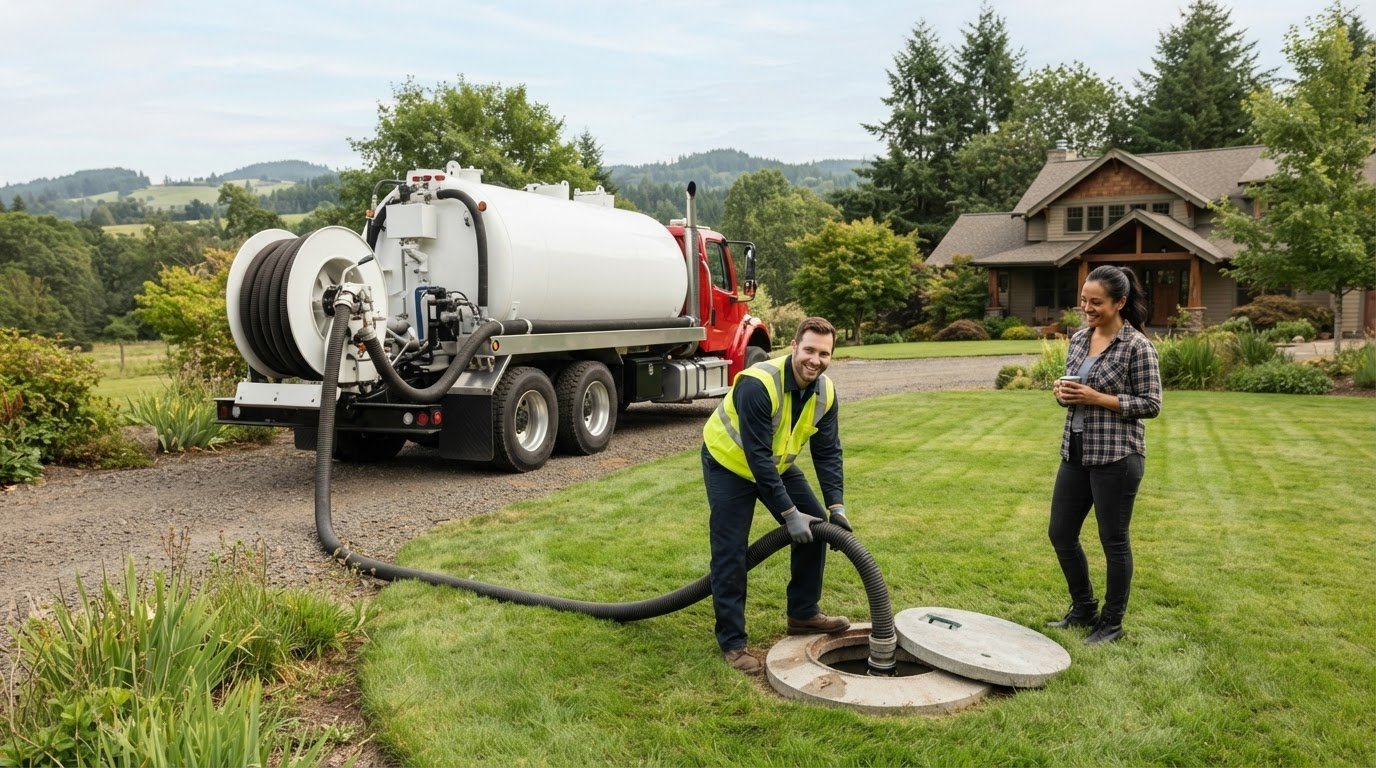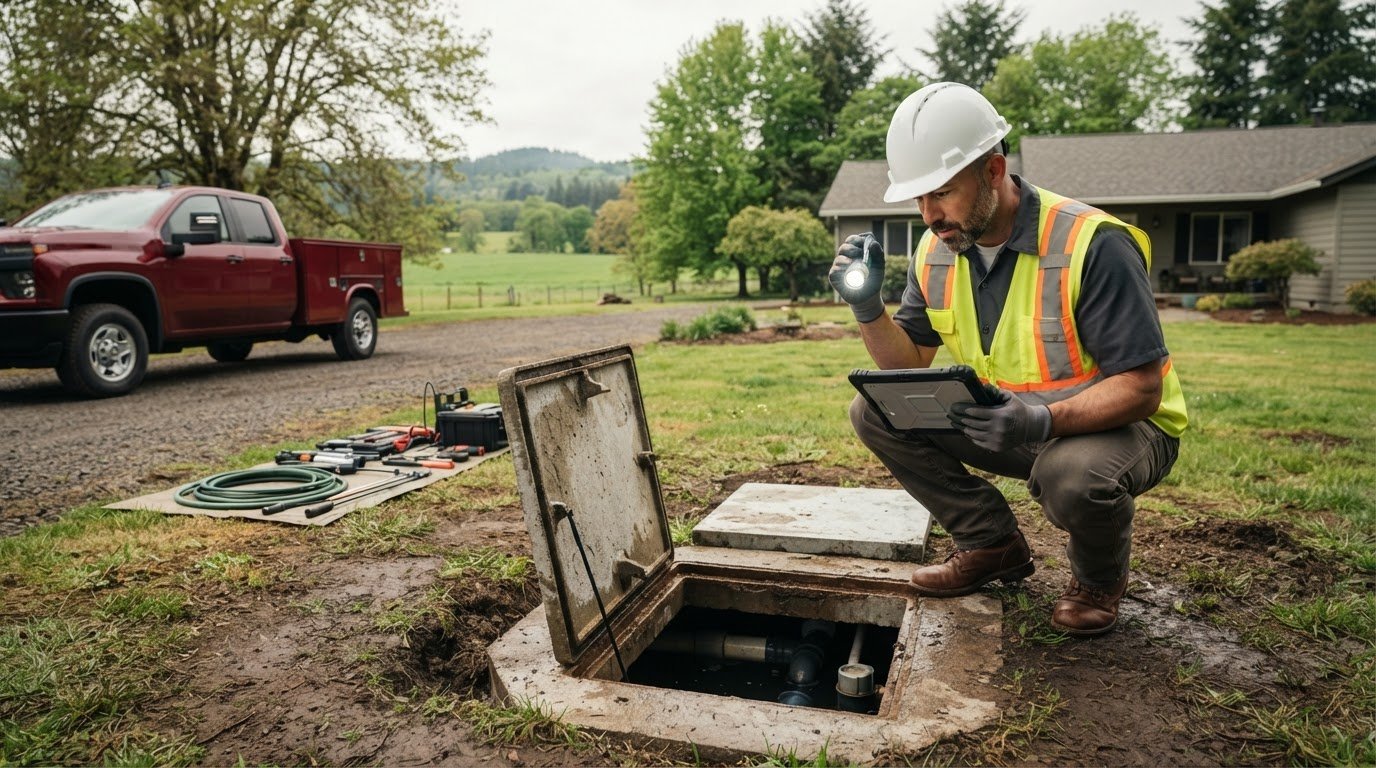
Imagine waking up to a gurgling drain and a yard that smells like a swamp on a Saturday morning. Most homeowners think they can squeeze one more year out of their system to save a few bucks, but that delay often leads to the exact disaster they’re trying to avoid. Understanding exactly what happens if you don’t pump your septic tank is the difference between a routine maintenance visit and a total property nightmare. It’s easy to ignore what’s underground when the toilets still flush, but by the time you see the signs, the damage is often already done.
We know how stressful home maintenance can be, especially when it involves unbudgeted repairs and messy backups. You want to protect your property and your peace of mind without overcomplicating things. In this article, you’ll discover the hidden stages of septic failure and how a simple pumping schedule can save you from a $20,000 system replacement. We’ll walk you through the mechanical risks of neglect, the specific signs of a full tank, and how to keep your system healthy. With over 25 years of local experience and CCB license #189693, we’ve seen how a little prevention goes a long way.
Key Takeaways
- Learn how your septic tank functions as a living biological filter and why maintaining the balance between scum, effluent, and sludge layers is critical for system health.
- Identify the deceptive “red flags” of a full tank, including why unusually lush, green grass over your drainfield is actually a sign of impending failure.
- Understand exactly what happens if you don’t pump your septic tank, from permanent soil saturation in your leach field to avoiding a total system replacement.
- Discover how neglecting maintenance affects home value and real estate transactions under Oregon DEQ requirements and local Clackamas County standards.
- See how a professional pumping visit by a CCB licensed (#189693) specialist provides a comprehensive health check to keep your home’s infrastructure running smoothly.
The Septic Ecosystem: Why Pumping is Mechanically Mandatory
Think of your septic tank as a miniature, underground wastewater treatment plant. It’s much more than a simple holding tank; it’s a living biological filter that relies on a delicate balance of bacteria to function. These microscopic workers perform anaerobic digestion, breaking down organic matter so your system doesn’t overflow immediately. However, even the most efficient bacteria have limits. They can’t process everything you flush, which is why understanding how septic systems work is the first step in avoiding a disaster. Sludge accumulation is the inevitable buildup of inorganic solids that bacteria cannot digest.
The Three Layers of Your Septic Tank
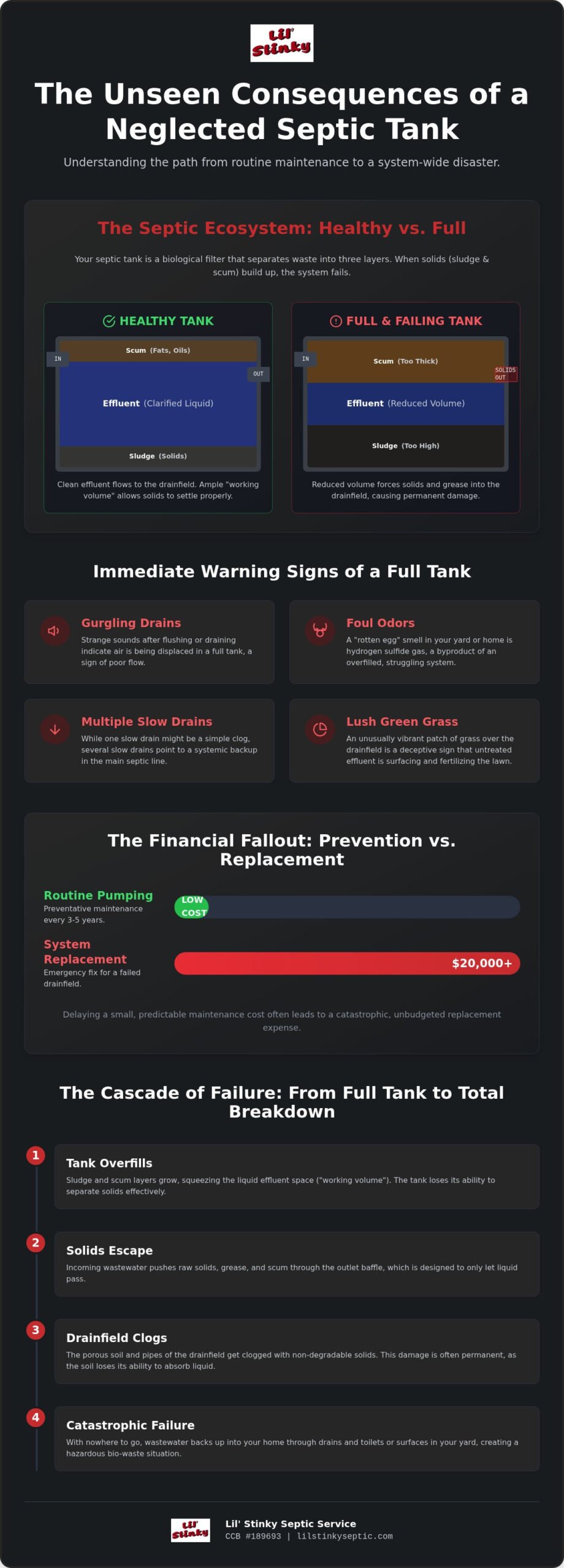
Inside a healthy tank, gravity does the heavy lifting. As wastewater enters, it naturally separates into three distinct zones that must stay balanced to prevent failure.
- Scum: This top layer consists of fats, oils, and grease. It floats at the surface, creating a seal that keeps the environment anaerobic for the bacteria below.
- Effluent: This is the middle layer of clarified liquid. In a properly functioning system, this is the only part that should leave the tank and enter the drainfield.
- Sludge: This bottom layer contains heavy solids, like sand, grit, and undigested waste. Since these materials don’t float and won’t break down, they require physical removal through professional pumping.
What Happens When the ‘Working Volume’ Shrinks?
Every tank has a specific “working volume,” which is the space available for effluent to sit and settle before it moves to the drainfield. When you ignore maintenance, the sludge layer at the bottom and the scum layer at the top grow closer together. This reduces the time the water has to separate. If you’ve wondered what happens if you don’t pump your septic tank, the answer starts with “short-circuiting.” This occurs when incoming waste moves through the tank so fast that it doesn’t have time to settle properly.
Instead of clean effluent exiting the tank, raw solids and grease get pushed out through the outlet baffle. The baffle is a critical component designed to keep solids inside the tank. But even a well-maintained baffle can’t stop a tidal wave of sludge if the tank is overfilled. Once those solids escape, they head straight for your drainfield, which is where the real expenses begin. Keeping that sludge layer low ensures your system has the capacity to treat waste effectively. As a CCB licensed (#189693) specialist, we always emphasize that maintaining this working volume is the only way to protect your home’s infrastructure from mechanical failure.
Immediate Warning Signs of a Neglected Septic Tank
Many homeowners fall into a dangerous psychological trap. They believe that if the toilets still flush, the system is perfectly fine. This “out of sight, out of mind” mentality is the most common reason for catastrophic failures. By the time sewage backs up into your bathtub, you aren’t looking at a simple maintenance task; you’re looking at an emergency. Recognizing the early red flags of a full tank allows you to act before the damage becomes irreversible. If you’re wondering what happens if you don’t pump your septic tank, the first stage is rarely a sudden explosion. It’s a series of subtle, easy-to-ignore warnings that your system is reaching its limit.
Smells and Sounds: Your System’s Early Warning
Your plumbing talks to you before it fails. Listen for gurgling. Have you noticed a strange sound coming from your drains after you flush? This is often air displacement. It happens when the tank is too full to handle new waste efficiently. You might also notice a persistent “rotten egg” smell around your house or yard. This is hydrogen sulfide gas. It’s a byproduct of the anaerobic process that occurs when the tank is overfilled and solids begin to ferment near the surface. While one slow drain might be a simple hair clog, multiple slow drains across the house point to a systemic issue. Following EPA guidelines on septic care by pumping every three to five years prevents these gases and drainage issues from becoming a permanent headache.
Surface Indicators in Your Yard
The most deceptive sign of a failing system is extra-green grass. It looks healthy at first glance. However, this “Green Patch” phenomenon indicates that surfacing effluent is acting as an unintended fertilizer. Your soil is already saturated and can no longer absorb liquid properly. Look for spongy or wet soil, even during dry Oregon summers. If you see standing water near the drainfield, your system has reached a critical point. The soil pores are likely clogged with solids that have escaped the tank. As a CCB licensed (#189693) specialist, we recommend a septic inspection if you notice any of these changes in your landscape. Acting now is significantly cheaper than waiting for the system to fail completely.
The Silent Killer: Drainfield Failure and Soil Saturation
Most homeowners focus on the tank because it’s the part we physically pump. However, the drainfield, or leach field, is actually the most expensive part of your entire system. While the tank is a durable concrete box, the drainfield is a delicate network of pipes and soil. If you’ve been wondering what happens if you don’t pump your septic tank, the most devastating answer involves your soil losing its ability to breathe. Once the soil fails, the system stops working, regardless of how clean the tank is.
This failure happens through a process involving “Biomat.” Biomat is a slimy layer of anaerobic bacteria and organic solids that naturally forms at the bottom of your drainfield trenches. In a healthy system, a thin layer of biomat helps filter out viruses and pathogens. But when a tank is neglected, the biomat grows too thick. It creates an impermeable seal that prevents liquid from soaking into the ground. This is the “silent killer” because it happens completely out of sight until the system reaches a breaking point.
How Solids Destroy Your Drainfield
When your tank is over-full, “suspended solids” don’t have enough time to settle at the bottom. Instead, they get pushed out into the perforated pipes of your leach field. These tiny particles act like grout, filling the microscopic pores in the soil. Once those pores are blocked, the water has nowhere to go. This issue becomes even more critical during Oregon’s rainy season. When the ground is already saturated with rainwater, a compromised drainfield can’t handle the extra load from your household. You might need professional Septic Drain Cleaning in Clackamas County to clear out the lines, but if the soil itself is ruined, a simple cleaning won’t solve the problem.
Permanent vs. Temporary Failure
There’s a massive difference between a temporary tank backup and a permanent soil failure. If your tank is full, we can pump it out and restore flow immediately. That’s a fixable, temporary problem. But once the soil around your drainfield reaches the “point of no return,” the failure is catastrophic. Soil failure means the ground has lost its absorption capacity forever. At this stage, you aren’t looking at a maintenance visit; you’re looking at a total system replacement.
Regular pumping acts as a vital filter for your property. It ensures that only clarified liquid reaches the leach field, keeping the soil porous and functional for decades. As a CCB licensed (#189693) team with over 25 years of local experience, we’ve seen too many Portland area homeowners lose their entire systems to this avoidable issue. Pumping is the only way to prevent solids from migrating into the ground and sealing off your system’s ability to process waste.
The Financial Fallout: Pumping Costs vs. System Replacement
When we talk about the cost of septic maintenance, it’s helpful to look at the numbers with total transparency. Pumping your tank every three to five years is a manageable maintenance expense that fits into a standard home care budget. In contrast, replacing a failed system is a major financial event that can cost as much as a new car. If you’ve wondered what happens if you don’t pump your septic tank, the ultimate result is a shift from simple preventative care to a mandatory, high-stakes construction project. For many Portland area properties, especially those requiring specialized Alternative Treatment Technology (ATT) systems, the price of neglect is steep. You can learn more about these variables in our guide on Septic System Installation Cost in Oregon.
A Tale of Two Homeowners: Maintenance vs. Neglect
Consider the different paths two neighbors might take. Homeowner A views septic pumping as a routine task, similar to changing the oil in a truck. They spend a few hundred dollars every four years to have their tank cleared and inspected by a CCB licensed (#189693) professional. Homeowner B ignores the system for over a decade, assuming that because there are no backups, everything is fine. Eventually, the escaped solids destroy the drainfield, and Homeowner B faces a $20,000 replacement bill. A well-maintained septic system can last 30 years or more, while a neglected one often fails within 10 to 15 years. This importance of reliable professional maintenance is a standard shared by experts in other regions; for example, We are a trusted plumbing & heating company providing reliable, high-quality services across London and Kent.
The financial impact goes beyond the cost of the hardware. In Oregon, the Department of Environmental Quality (DEQ) sets strict standards for system operation. If a system is found to be failing or polluting groundwater due to neglect, you may face significant fines or mandated repairs that must be completed on a strict timeline. This becomes especially critical during property transactions. A failed septic inspection can completely kill a home sale in Canby, Portland, or anywhere in Clackamas County.
Most buyers today are savvy; they won’t close on a deal without a Certified Septic Inspection Oregon to prove the system is healthy. If you haven’t pumped your tank, the accumulation of sludge will be immediately obvious to an inspector, potentially devaluing your home by tens of thousands of dollars overnight. Keeping your maintenance records up to date is the best way to protect your property’s equity. If you aren’t sure when your tank was last serviced, it’s time to schedule a professional pumping visit to ensure your system meets local standards.
Professional Pumping: Protecting Your Portland Area Home
Professional pumping is much more than a waste removal service; it’s a comprehensive health check for your home’s most critical infrastructure. While the previous sections detailed the mechanical and financial disasters that occur when maintenance is ignored, a routine service visit is designed to prevent those scenarios from ever reaching your front door. By the time most homeowners ask what happens if you don’t pump your septic tank, they are already seeing the early signs of failure. Taking a proactive approach ensures your system remains a silent, efficient part of your property rather than a source of constant stress.
During a Lil’ Stinky service visit, our technicians perform a methodical three step process: extraction, inspection, and disposal. We don’t just suck out the liquid; we remove the settled sludge and floating scum that bacteria can’t process. Once the tank is empty, we perform a visual inspection of the inlet and outlet baffles to ensure they are structurally sound. We also check for cracks in the tank walls or signs of backflow from the drainfield. This thoroughness is why we recommend reading our guide on Septic Tank Pumping in Portland OR to understand the full value of a professional visit.
The Lil’ Stinky Difference: 25 Years of Expertise
Our family-owned team brings over 25 years of local experience to every job site. We understand the specific soil conditions and DEQ requirements that affect properties in Clackamas County and the wider Portland metro area. Because we are CCB licensed (#189693), you can trust that our workmanship meets the highest professional standards. Our technicians are trained to identify early stage baffle issues or pipe clogs that could lead to a $20,000 repair if left alone. If you’ve already waited too long and are facing a backup, we offer 24/7 emergency response to get your household back on track. For high-quality plumbing solutions in other regions, you can check out Plombier Laval 24/7 as a trusted resource. We also provide a best-price guarantee because we believe that essential home maintenance should be accessible and transparent.
Don’t wait for a gurgling drain to remind you about your septic system. For most Canby families, we recommend a pumping interval of every three to five years, though larger households may need service every one to two years. Scheduling your service before the Oregon rainy season begins is a smart move; it ensures your tank has the maximum working volume available when the ground becomes saturated. We make the process simple and stress-free. You can get a free, honest quote and book your appointment with a quick phone call or click. Contact Lil’ Stinky for a professional septic pumping quote today! and let us help you protect your home’s value and your family’s peace of mind.
Protect Your Property and Your Wallet
Your septic system is one of the most vital components of your home’s infrastructure. Ignoring it won’t make the sludge go away; it only ensures that eventually, you’ll face a mechanical failure that could cost tens of thousands of dollars. By maintaining the balance of your tank’s layers and protecting your drainfield from solids, you ensure your system lasts for decades. Understanding what happens if you don’t pump your septic tank is the first step toward avoiding the stress of sewage backups and the legal complications of DEQ non-compliance.
Don’t let a routine maintenance task turn into a property nightmare. With over 25 years of local Portland experience and CCB license #189693, our team is ready to provide the reliable, honest service you deserve. Whether you need a regular health check or 24/7 emergency response, we are your trusted local specialists. Schedule your septic pumping with Lil’ Stinky’s experts today! and enjoy the peace of mind that comes with a healthy, functional home. We take pride in doing the job correctly the first time so you can get back to your life.
Frequently Asked Questions
How often should I pump my septic tank to avoid failure?
You should pump your tank every three to five years to ensure long-term stability and system health. This interval depends on your household size and daily water usage habits. Larger families in Canby often require service every one to two years to prevent sludge from reaching critical levels. Routine maintenance is significantly cheaper than emergency repairs. Our CCB licensed (#189693) team can help you establish a schedule that fits your property’s specific needs.
Can I pump my own septic tank to save money?
Pumping a septic tank is not a DIY project for homeowners. It requires heavy-duty vacuum equipment and a DEQ-licensed disposal site for the waste. Attempting to do this yourself is dangerous due to toxic gases and is often illegal under local environmental regulations. Professional pumping includes a system health check that a homeowner cannot perform alone. Our team has the specialized tools and 25 years of experience to handle the job safely.
Will my septic system fail immediately if I skip one year of pumping?
Your system might not fail the day you skip a service, but the risk increases exponentially with every month that passes. Sludge buildup is a gradual process that reduces the working volume of your tank. Skipping even one year can lead to short-circuiting, where raw waste flows directly into your drainfield. This is exactly what happens if you don’t pump your septic tank regularly; you invite permanent soil damage that a simple pump-out cannot fix.
Is there a way to tell if my septic tank is full without digging it up?
You can check for signs like slow drains or lush grass, but a truly accurate measurement requires professional tools. Technicians use a Sludge Judge to measure the specific thickness of the sludge and scum layers. Since most tanks are buried, looking for surface indicators is helpful, but it’s not a substitute for a physical inspection. We recommend a professional check every few years to monitor these levels before they cause a plumbing backup.
Do septic tank additives replace the need for pumping?
Additives do not replace the physical removal of waste from your tank. While some products promote bacterial growth, they cannot dissolve inorganic materials like sand, grit, or non-biodegradable fibers. These solids will always settle at the bottom and accumulate over time. Relying solely on additives often gives homeowners a false sense of security, leading to the very drainfield clogs they were trying to avoid. Only mechanical pumping ensures these solids are removed completely.
What happens if my septic tank overflows into the yard?
An overflow creates a serious biohazard in your yard that requires immediate professional intervention. Surfacing effluent can contaminate local groundwater and attract pests, leading to potential fines from the Oregon Department of Environmental Quality. If you notice pooling water or foul smells, stop using your water immediately and call for an emergency pump-out. We offer 24/7 response in the Portland area to handle these high-stress situations before they damage your property further.
Can a neglected septic tank cause indoor plumbing backups?
Indoor backups are a common result of a neglected system that has reached its maximum capacity. When the tank is full of undigested solids, new wastewater has nowhere to go, causing it to push back through your home’s main sewer line. You will usually see this first in the lowest drains of the house, such as basement showers or floor drains. This is a clear indicator that your system needs professional attention from a licensed specialist immediately.
How much does it cost to replace a failed drainfield in Oregon?
Replacing a drainfield is a major capital expense that requires professional engineering and DEQ permitting. It is significantly more costly than routine maintenance because it involves extensive excavation and new materials. In the Portland area, specific soil requirements can further complicate the installation process. Investing in regular pumping is the most effective way to avoid this massive, unbudgeted repair bill and keep your system running for 30 years or more.