A routine septic pump is the only small investment that prevents a thirty thousand dollar disaster in your front yard. It sounds like a bold claim, but for homeowners in the Pacific Northwest, it is the simple truth. Most people do not think about their waste system until the drains slow down or a strange smell drifts across the lawn. You might feel a bit of anxiety about what is happening underground, especially when scheduling septic tank pumping in Portland OR. With the 2026 Oregon DEQ regulation changes and the fear of getting hit with hidden fees during an emergency visit, it is easy to feel overwhelmed. You deserve to know exactly what is happening with your property.
This guide will help you take control. You will learn how to protect your home with expert advice on maintaining your system and how to spot the early warning signs of a failure before it becomes a crisis. We will provide the straight talk on local pricing factors and explain how the new July 2026 permit and evaluation fee increases impact your budget. By the end of this article, you will have a clear understanding of the pumping process and the peace of mind that comes from knowing your system is healthy and compliant with all current local standards.
Key Takeaways
- Learn why Oregon households should stick to a 3-to-5-year maintenance interval to keep their systems running smoothly and avoid costly failures.
- Understand the full process of professional septic tank pumping Portland OR, from locating buried lids to the final extraction of waste.
- Pinpoint the specific factors that affect your final bill, including the depth of your tank lids and the length of hose required for the job.
- Recognize the five major red flags that signal a backup is imminent, helping you act before an emergency strikes your property.
- Find out how to verify CCB licensing and local experience so you can hire a contractor who provides honest, straight talk and reliable results.
Why Septic Tank Pumping in Portland OR is Essential Maintenance
Most homeowners don’t realize that their septic system is essentially a living ecosystem. Understanding what a septic tank is helps you see why pumping is non-negotiable. Pumping is the physical removal of accumulated sludge, the heavy solids at the bottom, and scum, the fats and oils at the top. If you let these layers grow too thick, they exit the tank and clog your drainfield pipes. Once those pipes are ruined, you’re looking at a full replacement rather than a simple service call. Routine maintenance is a controlled process, while emergency extraction is a stressful race against a sewage backup.
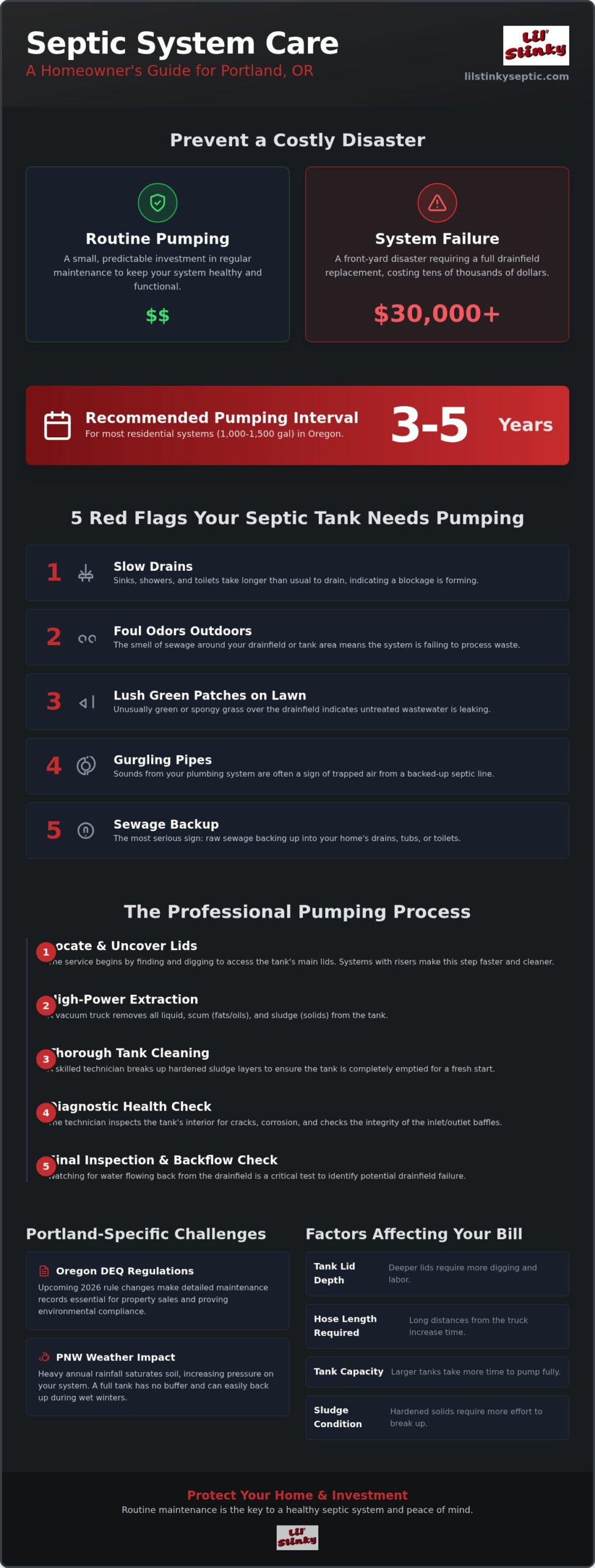
In Oregon, we recommend a 3-to-5-year interval for most residential systems. This isn’t a guess. It’s based on the average 1,000 to 1,500-gallon tank capacity and typical household water usage. If you want to understand exactly how often to pump septic tank systems based on your specific household factors, our 2026 maintenance guide breaks down the precise variables that determine your ideal schedule. Regular septic tank pumping Portland OR keeps the system balanced. It ensures the clear zone in the middle of your tank is large enough to allow wastewater to settle properly before moving to the drainfield. If you wait until you smell odors, you’ve likely waited too long.
The Role of Oregon DEQ Regulations
Oregon’s Department of Environmental Quality (DEQ) sets strict standards because our local watersheds are sensitive. Regular pumping is your best proof of care when it’s time to sell your home. Since the 2026 rule updates, keeping detailed maintenance records is even more critical for property transfers. It shows you’ve protected the groundwater from contamination and followed state law. Compliance isn’t just about paperwork; it’s about ensuring your system doesn’t leak nitrogen or pathogens into the local environment. If you are planning to sell your property, understanding the requirements for a certified septic inspection Oregon regulators and lenders require can help you avoid last-minute delays at closing.
PNW Weather and Your Septic System
Portland’s weather adds a unique layer of stress to underground systems. In Clackamas and Multnomah counties, our heavy annual rainfall saturates the soil for months at a time. When the ground is soaked, your drainfield works much harder to disperse liquid. If your tank is already overdue for a pump, that extra hydraulic load during a wet winter can trigger an immediate backup. A full tank has no buffer for heavy rain. Maintaining the scum layer balance ensures that only liquid reaches the saturated soil, preventing a total system “drowning” during a typical Oregon storm.
What Happens During a Professional Septic Pumping Service?
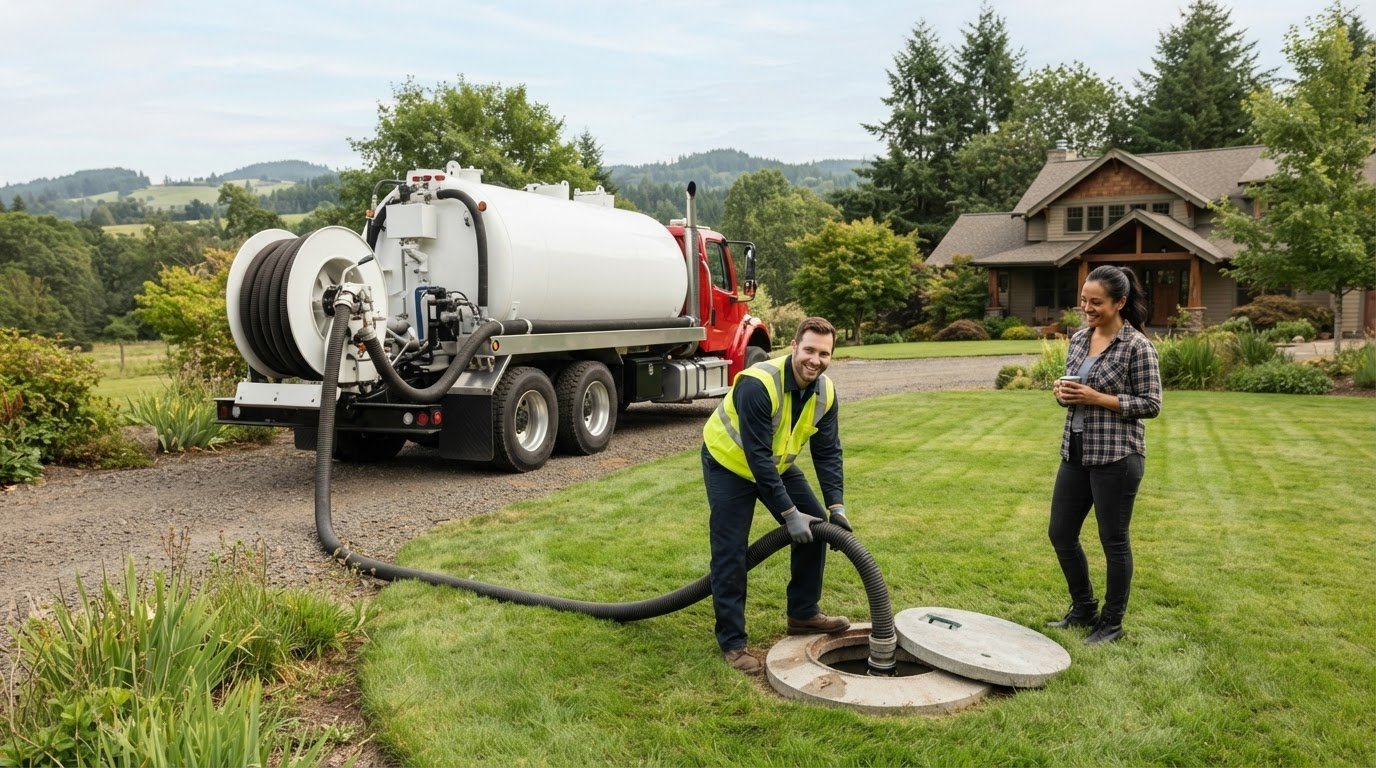
When the vacuum truck arrives, the first task is locating the access ports. If your system has risers installed, this part of the job is quick and clean. Without risers, a technician must probe the soil and dig to reach the lids. Once the lids are open, the high-powered vacuum equipment begins the extraction. It isn’t just about removing the liquid; a skilled technician uses a tool to break up the solid layers so they can be fully removed. This thorough cleaning of the tank floor is what separates a professional septic tank pumping Portland OR from a rushed job that leaves heavy solids behind.
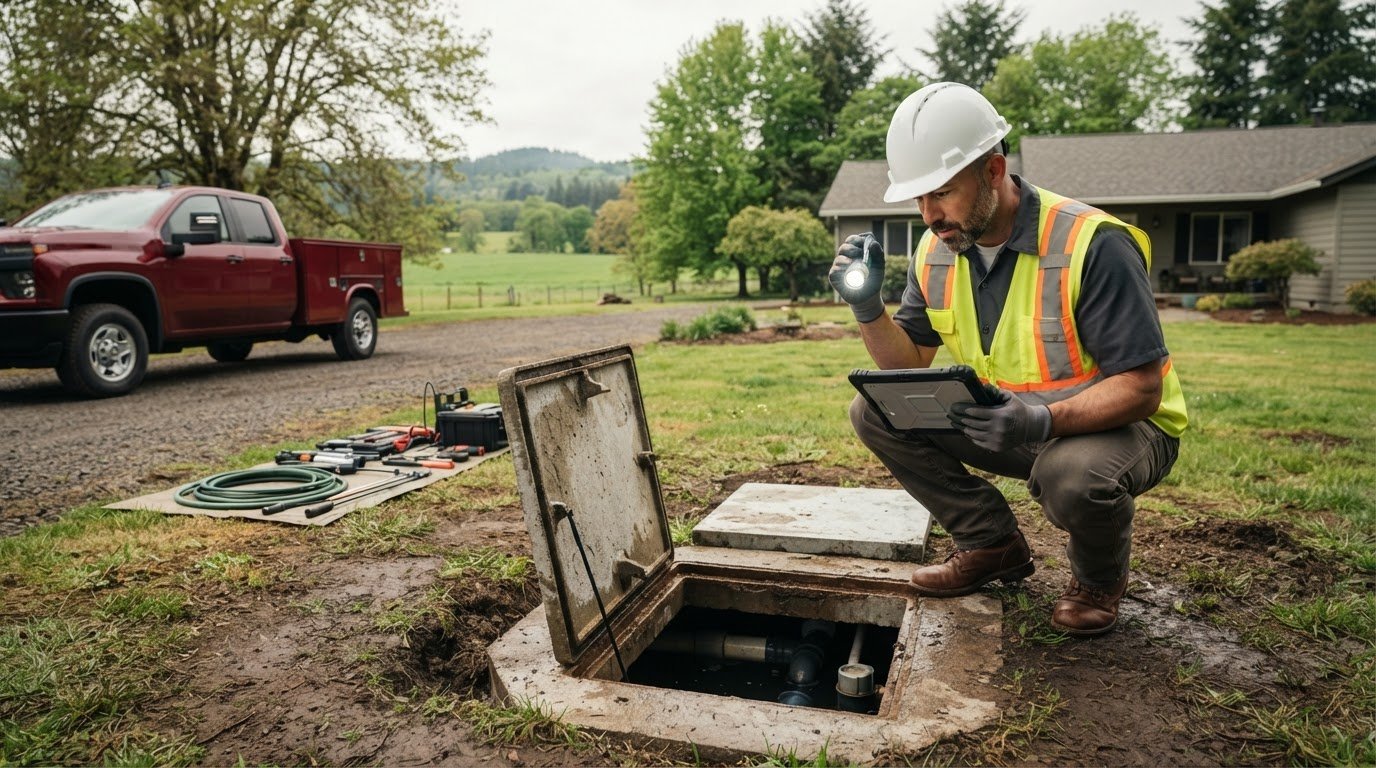
Following a consistent schedule for septic system maintenance ensures that these visits remain routine and predictable. After the tank is empty, the technician performs a visual inspection of the tank’s interior. They look for structural integrity, checking for cracks or signs of concrete corrosion that could lead to system failure. This is the best time to catch small issues before they turn into property-damaging emergencies.
The Diagnostic Health Check
A professional pump-out includes a close look at the inlet and outlet baffles. These components direct the flow of wastewater and prevent solids from entering your drainfield. We also check for root intrusion, which is common in the leafy neighborhoods of the Portland metro area. One of the most important checks is watching for “backflow.” If water flows back into the tank from the drainfield during the pump, it signals that your soil is saturated or your pipes are failing. If you suspect your system is struggling, scheduling a professional septic inspection can identify these hidden problems early.
Sludge and Scum Analysis
The technician evaluates the composition of the waste layers to understand how your system is performing. Sludge is the heavy layer of solids that settle at the bottom of the tank over time. If this layer is deeper than expected, it often points to household habits like heavy garbage disposal use or flushing non-biodegradable items. We also look at the scum layer of fats and oils. This analysis helps us give you “straight talk” advice on whether you need to pump more frequently or change how you use your water to protect your investment.
Evaluating Septic Pumping Costs in the Portland Metro Area
When you call for septic tank pumping Portland OR, you want a clear number, not a list of “maybes.” We believe in straight talk about what drives the cost of your service. The most significant factor is your tank size. Most residential systems in our area range from 1,000 to 1,500 gallons, and the volume of waste we extract directly impacts the disposal fees we pay at local Oregon waste treatment facilities. Beyond volume, the depth of your tank lids plays a major role. If your lids are buried deep under layers of dirt or heavy landscaping, the additional labor required to access them will reflect in the final price.
To minimize these labor costs during future service calls, many property owners opt for strategic yard designs. Examples from professional hardscaping firms like Cascade Outdoor Services demonstrate how to create high-end outdoor environments that still prioritize easy access to essential underground infrastructure.
Accessibility is another variable that many homeowners overlook. Our vacuum trucks are heavy, and we must keep them on stable ground to prevent property damage. If your tank is located far from the driveway or a paved surface, we may need to use extra lengths of hose. This setup takes more time and effort, which can influence the total service cost. To better understand how these technical factors and your household size play into your long-term budget, you can review detailed guides on septic systems and their maintenance. Ultimately, a routine pump-out is a small price to pay when you compare it to the cost of a total system replacement, which can easily reach tens of thousands of dollars. If your system is beyond repair and you are facing a full replacement, understanding the septic system installation cost Oregon homeowners face in 2026, including the upcoming 33% DEQ permit fee increase, can help you plan your budget before the work begins.
Standard Pumping vs. Emergency Response
Proactive scheduling is the best way to keep your costs down. When you wait for a backup to occur, you’re often forced into an emergency response situation. After-hours, holiday, and weekend calls carry a premium rate because they require immediate dispatching of a crew and equipment. We offer 24/7 emergency availability for residents throughout the Portland metro area, ensuring you aren’t left stranded during a crisis. However, we always encourage our neighbors to book their septic tank pumping Portland OR before the red flags appear to avoid those extra fees.
The Lil’ Stinky Best-Price Guarantee
We take pride in being a local, family-owned business that treats people fairly. Our Best-Price Guarantee is a core part of that commitment. If you receive a lower quote for a comparable service from another licensed contractor, we will match it. We operate with full professional accountability under CCB #189693, giving you the security that the job is done correctly the first time. You won’t find hidden “upselling” tactics here; just honest work from a team with over 25 years of experience in Clackamas and Multnomah counties.
5 Red Flags Your Portland Septic Tank Needs Pumping Now
You don’t need to be a professional technician to recognize when your system is struggling. Most homeowners wait for a full-blown sewage backup before they call for help, but your system usually sends out distress signals weeks in advance. Recognizing these early “red flags” is the difference between a routine maintenance visit and a costly emergency restoration. If you notice any of the following signs, it’s time to schedule septic tank pumping Portland OR before the situation escalates and damages your drainfield.
Indoor Warning Signs
Your home’s plumbing is the first place you will notice a capacity issue. If a single sink is draining slowly, you likely have a simple hair clog. However, when every sink, tub, and toilet in the house becomes sluggish at the same time, the problem is deeper in the system. You might also notice water backing up into lower-level fixtures, such as basement showers or utility sinks, after you run the dishwasher or laundry. Another common indicator is a distinct gurgling sound coming from the pipes. That gurgling sound is trapped air struggling to move through a plumbing system that is already backed up with liquid and waste. While these are not the acoustics anyone wants to experience, if you are interested in high-fidelity audio production, you can see how professionals at Starsound Studios capture crystal-clear sound.
Outdoor Environmental Clues
The area around your tank and drainfield can tell a detailed story about the health of your system. In the Portland metro area, we are used to damp soil, but you should look for specific anomalies that stand out from the typical Pacific Northwest landscape. Keep an eye out for these three major clues:
- Unpleasant Odors: A healthy septic system should be odorless. If you catch a whiff of “rotten eggs” or raw sewage near the tank lids, the gases are escaping because the tank is overfilled or the vent is blocked.
- Lush, Bright Green Grass: While a beautiful lawn is usually a goal, a suspiciously fast-growing patch of grass over your septic area is a major warning. It means your system is no longer filtering waste correctly and is “over-fertilizing” the surface with untreated effluent.
- Standing Water or Spongy Soil: During our dry spells, the ground over your drainfield should be just as dry as the rest of your yard. If you find puddles or soil that feels like a wet sponge, your system has reached its limit.
In Clackamas and Multnomah counties, our heavy rainfall can mask these issues by keeping the ground perpetually wet. This is why it’s critical to look for “surfacing effluent,” which often looks darker or oilier than standard rainwater. If you see water pooling where it shouldn’t, contact us immediately for septic tank pumping to protect your property and your family’s health.
Choosing the Best Septic Pumping Service in Portland
Picking a provider for septic tank pumping Portland OR isn’t just about finding the lowest price on a search engine. You are inviting a contractor onto your property to handle a critical utility. Your first step should always be verifying their credentials. A legitimate specialist must hold a current Construction Contractors Board (CCB) license and carry comprehensive insurance to protect your home from accidental damage. We operate under CCB #189693, which provides a layer of professional accountability that national franchises often lack. If a company cannot produce a license number, they shouldn’t be touching your system.
Experience in the local area is equally vital. Portland’s unique soil types, high rainfall patterns, and specific DEQ regulations require a technician who understands the Pacific Northwest environment. A company with 25+ years of local experience has seen every possible system failure and knows how to navigate the specific permitting requirements in Clackamas and Multnomah counties. Transparency is the final piece of the puzzle. You should look for “straight talk” regarding fees and a clear explanation of what the service includes before the truck ever pulls into your driveway. If you are buying or selling a home, pairing your routine maintenance with a certified septic inspection Oregon DEQ and lenders require for property transfers ensures you meet all Time of Transfer obligations without last-minute surprises.
The Lil’ Stinky Difference
We are a family-owned service with deep roots in Canby and the greater Portland metro area. Unlike large corporations, we treat our customers like neighbors. This means we lead with a Best-Price Guarantee. If you find a lower quote from a licensed competitor for the same scope of work, we will match it. Our approach is built on a “no hidden fees” policy for every maintenance call. We know that a septic crisis doesn’t wait for business hours, which is why our 24/7 response team is always ready to handle Clackamas County emergencies. You get the reliability of a seasoned expert and the friendliness of a local neighbor.
Next Steps for Your Home
Ready to get your system back on track? Preparing for your service visit makes the process faster and more efficient for everyone. Start by clearing any overgrown brush, heavy potted plants, or debris from the area around your tank lids. If you have a property map or previous inspection reports from the last time you had septic tank pumping Portland OR, have them ready to show your technician. These documents provide a roadmap of your system’s history and help us identify potential trouble spots quickly.
If you cannot find your lids, don’t worry. We have the tools to locate them with minimal disruption to your landscaping. Taking action now prevents the red flags we discussed earlier from turning into a total system failure that could cost you thousands. Schedule your Portland septic pumping with Lil’ Stinky today! and secure the peace of mind that comes with a healthy, professionally maintained septic system.
Secure Your Property with Professional Maintenance
Protecting your home starts with looking beneath the surface. You now know that routine maintenance is the only way to avoid a thirty thousand dollar replacement and keep your system compliant with the latest 2026 Oregon DEQ regulations. By recognizing early red flags like gurgling pipes or unusually lush grass, you can act before a messy backup occurs. Managing your waste system doesn’t have to be a source of anxiety when you have a local partner who values straight talk and transparent pricing.
We are here to ensure your system stays healthy year-round. With over 25 years of local experience and 24/7 emergency service available for Clackamas and Multnomah counties, our team at Lil’ Stinky is ready to help. We are fully licensed and bonded (CCB #189693), providing the professional reliability your property deserves. Don’t wait for a crisis to strike your yard. Get a Free Estimate or Schedule Pumping Now for your septic tank pumping Portland OR. We look forward to keeping your home safe and your system running smoothly.
Frequently Asked Questions
How often should I have my septic tank pumped in Portland?
You should have your septic tank pumped every 3 to 5 years to maintain a healthy system. This frequency depends on your household size and the capacity of your tank. Larger families or homes with garbage disposals may need service closer to the 3-year mark. Regular maintenance prevents the buildup of solids that can damage your drainfield and lead to expensive repairs.
How much does septic tank pumping cost in the Portland area?
The cost of service depends on several technical factors, including your tank’s total gallon capacity and how deep the lids are buried. Accessibility also plays a role, as longer hose requirements or difficult terrain can impact the labor involved. We focus on providing straight talk and transparent pricing without hidden fees. For a precise quote tailored to your property, it’s best to request a free estimate.
Do I need to be home when the septic tank is pumped?
You don’t need to be home for your appointment as long as our technicians have clear access to the tank lids. Ensure that gates are unlocked and any pets are secured indoors before the truck arrives. If we need to discuss specific findings or diagnostic issues, we can follow up with you via phone. This flexibility makes it easy to maintain your system without disrupting your workday.
What happens if I never pump my septic tank?
Neglecting your system will eventually lead to a total drainfield failure or a sewage backup into your home. Over time, solids fill the tank and begin flowing into the absorption area, clogging the soil and pipes. Once the drainfield is ruined, you’ll face a replacement cost that can reach tens of thousands of dollars. Routine septic tank pumping Portland OR is the most effective way to avoid this disaster. If your system has reached the point of no return, reviewing the septic system installation cost in Oregon for 2026 will help you understand what a full replacement project involves and how to budget for it properly.
Can heavy rain cause my septic tank to fill up faster?
Heavy rain can significantly impact your system by saturating the soil around the drainfield. While the rain doesn’t technically fill the tank with waste, it prevents the wastewater from leaving the tank efficiently. This creates a hydraulic load that can cause the water level to rise and potentially back up into your home. Keeping your tank pumped ensures you have the maximum buffer during wet Oregon winters.
Is there a difference between septic pumping and septic cleaning?
Pumping typically refers to removing the liquid and floating scum, while cleaning involves a more thorough removal of the hardened sludge at the bottom. A professional cleaning uses tools to agitate the solids so they can be vacuumed out completely. We focus on a comprehensive service that leaves your tank floor clear. This thoroughness ensures that the system is truly reset for the next few years of use.
What is the best-price guarantee offered by Lil’ Stinky?
Our Best-Price Guarantee means we’ll match any written quote from a licensed and bonded competitor for the same scope of work. We believe in providing fair, local pricing to our neighbors in Clackamas and Multnomah counties. This commitment ensures you receive high-quality service without worrying about overpaying. It’s part of our dedication to integrity and straight talk in an industry that sometimes lacks transparency.
How do I find my septic tank lids if they are buried?
Technicians use soil probes or electronic locating equipment to find buried lids with minimal impact on your yard. If you have an original plot map or a previous inspection report, these documents often provide the exact measurements from the foundation of your home. Once we locate the lids, we often recommend installing risers. This makes future septic tank pumping Portland OR much faster and prevents the need for digging. To build a complete pumping schedule tailored to your home, review our guide on how often to pump septic tank systems and what the 2026 Oregon DEQ updates mean for your maintenance plan.