What if the most expensive home repair on your property was actually 100% preventable? Most homeowners in the Willamette Valley don’t think about their septic system until the drains slow down or the back yard starts smelling. It’s a stressful, messy situation that feels like a ticking financial time bomb, especially when you start worrying about strict Oregon DEQ regulations. Learning how to prevent drain field failure Canby families often deal with is about more than just luck; it’s about understanding that failure is usually the result of hydraulic mismanagement you can control.
We understand that the thought of a five-figure replacement bill is enough to keep anyone up at night. At Lil’ Stinky Septic Service, we’ve spent over 25 years as a licensed contractor (CCB #189693) helping our neighbors avoid these exact disasters. You deserve peace of mind and a system that works without constant worry. This guide provides a clear maintenance checklist and local insights to help you protect your property value and extend the life of your existing drain field for decades to come.
Key Takeaways
- Identify the signs of hydraulic overloading and solid carryover before they saturate your soil and cause an expensive backup.
- Implement simple household habits and water-spreading techniques to learn exactly how to prevent drain field failure Canby properties are susceptible to.
- Protect your underground infrastructure from root intrusion and soil compaction by following specific landscaping guidelines for your yard.
- Discover why routine septic tank pumping and annual inspections are the most cost-effective ways to avoid a total system replacement and protect your property value.
What is a Septic Drain Field and Why Does It Fail?
Understanding What is a septic drain field is the first step toward protecting your home. It’s essentially the final stage of your septic system, consisting of a series of perforated pipes buried in gravel-filled trenches. While your septic tank captures heavy solids, the drain field handles the liquid effluent. It uses the natural biology of the soil to filter and purify wastewater before it returns to the groundwater. This process is silent and invisible when it works correctly, but it’s the most sensitive part of your entire infrastructure.
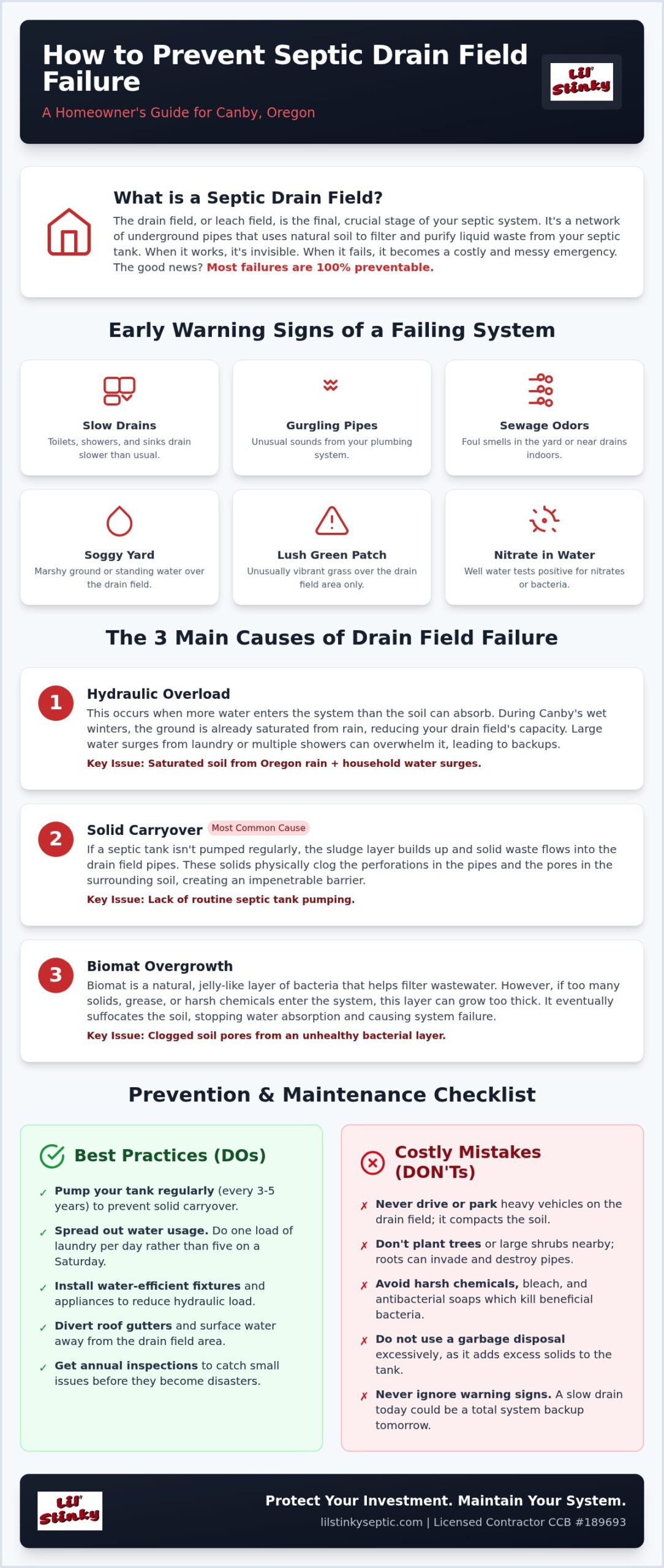
Failure occurs when the soil can no longer absorb the liquid waste being sent from the tank. When the ground becomes saturated, the effluent has nowhere to go but up or back. You might notice your yard feeling like a marsh even when it hasn’t rained, or you might catch a distinct sewage smell near the tank area. Other red flags include gurgling pipes and slow indoor drains. These symptoms suggest the ground is already overloaded and can’t take another drop of water.
The Role of Soil in Canby Septic Systems
Canby sits in the heart of the Willamette Valley, which means we deal with unique geological challenges. Our soil often contains high clay content or silty loam that drains differently than sandy coastal regions. Clay particles are tiny and pack together tightly, which naturally slows down water movement. During our famous Oregon winters, the water table rises significantly. This leaves less room in the soil for your septic system to “breathe” or process waste efficiently. If you’re planning a repair, a percolation test is mandatory to determine how quickly your specific patch of land can process water. Without this data, it’s impossible to know how to prevent drain field failure Canby weather patterns often trigger.
Understanding Biomat: The Silent Killer
Biomat is a black, jelly-like layer of anaerobic bacteria that naturally forms where the gravel meets the soil in your leach field. In a healthy system, this layer helps filter out pathogens and fine particles. However, if the system is overloaded with too many nutrients or solids, the biomat grows too thick. It eventually creates an impermeable waterproof barrier that stops effluent from reaching the soil. This leads to surfacing sewage or backups in the house. Biomat is the primary cause of soil clogging in older systems.
The 3 Main Causes of Drain Field Failure in Oregon
Most drain field issues aren’t caused by a single event. They’re usually the result of long-term habits or environmental factors that finally push the system over the edge. Understanding these triggers is essential for anyone looking for how to prevent drain field failure Canby homes often face. While soil type plays a part, human behavior and Oregon’s climate are the biggest contributors to premature failure. Beyond the big three causes, things like chemical interference from harsh cleaners and physical damage from heavy vehicles or tree roots can also compromise your system’s integrity.
Hydraulic Overload and Canby Rainfall
Hydraulic overloading happens when you send more water into the system than the soil can physically absorb. In Canby, this is a major concern during our wet winters. When the ground is already soaked from weeks of Oregon rain, your drain field is already working at a reduced capacity. If you add “laundry day” surges to a saturated field, the system can’t keep up. The liquid has nowhere to go, which leads to surfacing sewage or slow drains inside the house. You can help your system by ensuring your gutters and downspouts are diverted far away from the septic area. This simple step prevents thousands of gallons of rainwater from unnecessarily taxing your soil.
Solid Carryover from Delayed Pumping
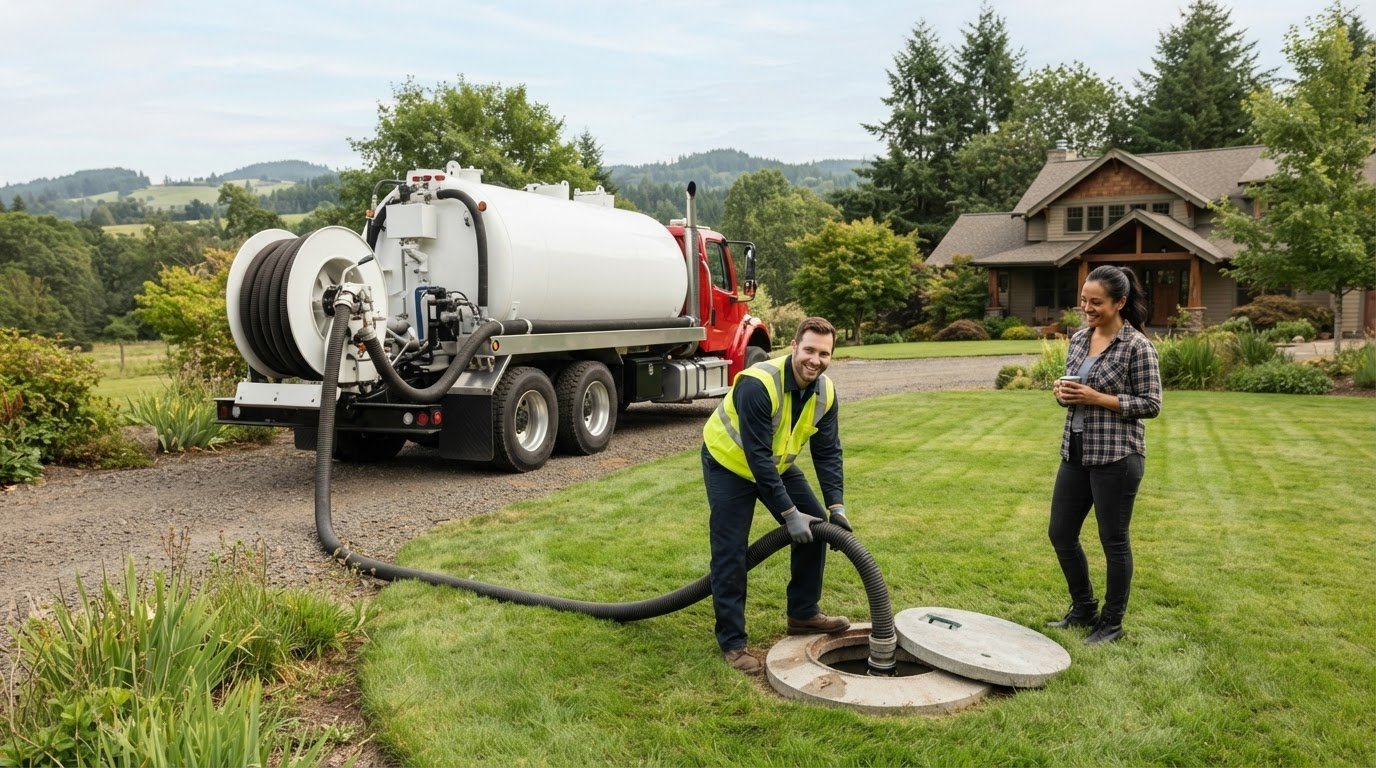
Solid carryover is the most common reason for total field failure. Your septic tank is designed to act as a settlement basin where solids sink to the bottom. If you wait too long between service visits, the sludge layer grows until there’s no room left for separation. At this point, solid waste flows directly into the perforated pipes of your drain field. These solids physically plug the holes in the pipes and the pores in the soil, effectively “waterproofing” the trenches. Following a reliable schedule for septic tank pumping Portland OR is the best way to ensure solids stay in the tank where they belong.
Proper septic system care and maintenance also involves watching what goes down your drains. Excessive use of bleach, caustic drain openers, or antibacterial soaps can kill the beneficial bacteria that break down waste. Without these microbes, the biomat grows out of control and clogs the soil. Additionally, avoid driving vehicles or heavy equipment over the field area. Compacting the soil destroys the air pockets necessary for drainage and can crush your underground pipes. If you’re worried about the current state of your system, a professional inspection can identify these issues before they turn into a full-scale emergency.
Daily Habits to Extend Your System’s Lifespan
Your daily routine inside the house has a direct impact on the health of your soil outside. While major failures often seem sudden, they are usually the result of small, repeated stresses on the system. If you want to know how to prevent drain field failure Canby homeowners often experience, start by treating your septic tank like a living organism. It relies on a delicate balance of bacteria to break down waste. When you overload that balance with too much water or the wrong materials, the system begins to struggle. Be mindful of what enters the “Lil’ Stinky”; only the 3 Ps (Pee, Poop, and Paper) should go down your drains.
One of the best changes you can make is to stop using a garbage disposal entirely. These devices send finely ground organic matter into the tank, significantly increasing the sludge layer and the risk of solid carryover. Instead, compost your food scraps or throw them in the trash. Additionally, switch to biodegradable, septic-safe cleaning products. Harsh chemicals like concentrated bleach and ammonia kill the “good” bacteria that digest waste, which is one of the Common causes of drain field failure seen in older residential systems.
Smart Water Management in the Household
Managing your water volume is a powerful way to reduce hydraulic stress. Start by installing low-flow showerheads and faucet aerators to cut down your daily output. It’s also vital to check for “silent” toilet leaks. A leaky flapper can send hundreds of gallons of water into your tank in a single day, essentially flooding your drain field while you sleep. Stagger your heavy water usage to give the system time to recover. Don’t run the dishwasher and the washing machine at the same time, and try to spread laundry loads throughout the week rather than doing five loads on a Saturday morning.
The ‘Never Flush’ List for Canby Homeowners
For homeowners who depend on a private well for their water supply, ensuring your pump is functioning efficiently is a key part of water management; WaterWise Pumps Inc offers expert installation and repair to keep your system running smoothly.
Stick to the “3 Ps” rule to keep your system running smoothly. Even if a product is labeled as “flushable,” it doesn’t belong in a septic system. These wipes don’t break down like standard paper and quickly clog your tank’s inlet and outlet baffles. Be equally careful with fats, oils, and grease (FOG). When these substances cool, they solidify and coat the soil in your drain field, preventing water absorption. Chemical additives are usually unnecessary and potentially harmful to the natural bacterial environment in your tank. By following these simple rules, you can significantly reduce the risk of a system backup and help your infrastructure last for its full intended lifespan. Understanding these daily habits is the most practical way how to prevent drain field failure Canby residents can implement today without spending a dime.
Landscaping and Yard Care for Septic Health
Your yard is more than just a lawn; it’s a functional component of your home’s wastewater treatment system. Protecting the ground surface is just as important as watching what you flush down the toilet. Many homeowners spend thousands on interior renovations but forget that the soil in their backyard is actually doing the heavy lifting for their home’s sanitation. Keeping this area clear and properly managed is a fundamental part of how to prevent drain field failure Canby residents need to master to avoid a massive replacement bill. When you treat your yard as a piece of infrastructure rather than just a garden, you significantly extend the lifespan of your system.
Septic-Safe Landscaping in Canby
In the Willamette Valley, the best choice for covering your drain field is simple, shallow-rooted grass. Grass helps stabilize the topsoil and utilizes excess moisture without interfering with the underground pipes. It’s the only cover that allows for the necessary evaporation and oxygen exchange that the soil needs to process waste. Trees and large shrubs are a different story. Their roots are naturally drawn to the nutrient-rich moisture inside septic lines. Once a root finds a tiny crack or a pipe perforation, it will grow inside and eventually block the flow entirely. To avoid this, keep any woody plants at least 30 feet away from your drain field lines. During the peak of the rainy season in Canby, you might notice the ground over your field stays damp longer than other areas. This is normal, but don’t make it worse by planting water-loving species that require frequent summer irrigation in that specific spot.
Avoiding Soil Compaction
Soil compaction is a silent system killer that can’t be easily undone. Your drain field depends on tiny air pockets in the soil to process effluent and allow oxygen to reach the aerobic bacteria. When you drive a car, park a trailer, or even run heavy commercial lawn mowers over the field, you crush those air pockets. This “suffocates” the system and leads to a total loss of drainage capacity. You should also never build permanent structures like sheds, decks, or even temporary features like above-ground pools over any part of the septic system. These structures block access for maintenance and prevent the soil from breathing correctly. If you see signs that your soil has become hard-packed or water pools on the surface even during dry spells, your drainage capacity is likely compromised. Managing your property’s surface drainage is equally vital. Ensure that all runoff from driveways and roof gutters is directed far away from the septic area. If you’re unsure where your lines are located and want to avoid accidental damage, schedule a professional septic inspection with our team to map out your system safely.
Professional Maintenance: The Final Line of Defense
Even with perfect household habits, your system needs periodic professional care to remain functional. Routine pumping is the single most cost-effective tool in your arsenal. It removes the accumulated sludge and scum layers that would otherwise migrate into your disposal pipes. An effluent filter adds another essential layer of security. This is a specialized screen installed at the tank’s outlet baffle that catches fine particles, hair, and lint before they can enter your soil trenches. Cleaning this filter during a routine service visit is a critical part of how to prevent drain field failure Canby families use to maintain their property value and system health.
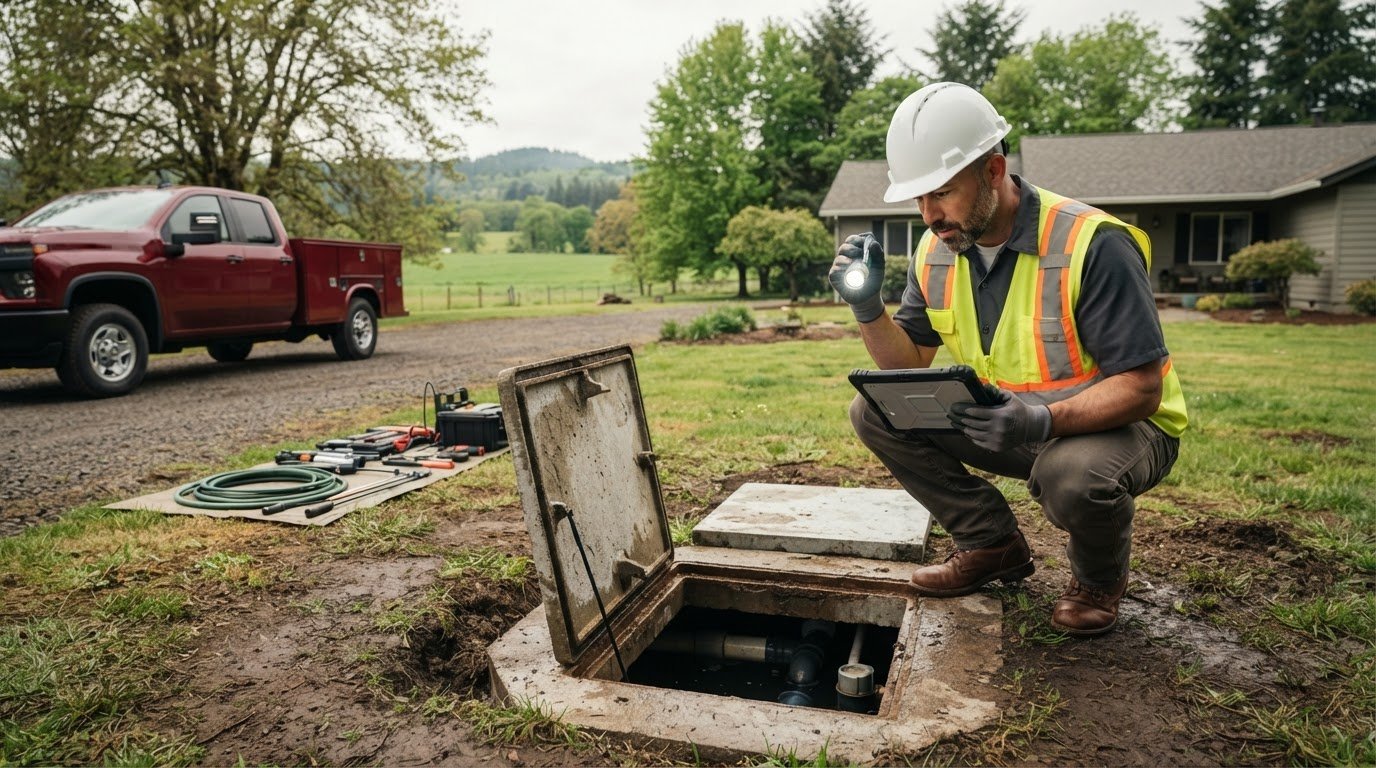
Modern technology has changed how we diagnose underground problems. Video camera inspections allow us to see the exact condition of your lines without disturbing your landscaping. This process identifies crushed pipes, early root intrusions, or sagging sections that collect water and promote biomat growth. Annual inspections catch these minor structural issues before they evolve into a yard-flooding disaster. If we find a small problem now, it’s often a simple repair. If you wait until the system backs up, you’re looking at a much more complex and expensive situation.
The Importance of a Septic Maintenance Plan
Consistency is what keeps a system alive for 40 years instead of 15. A regular schedule takes the guesswork out of system health and ensures you never miss a critical pumping window. In Clackamas County, DEQ-certified inspections are often required for property transfers, but they’re also a smart annual investment for any homeowner. Signing up for a septic maintenance plan Portland OR residents trust ensures your system is always in compliance and operating at peak efficiency. We track the data so you don’t have to worry about when the last service occurred.
When to Call Lil’ Stinky Septic Service
We’ve spent over 25 years serving our neighbors in the Canby area. As a fully licensed contractor (CCB #189693), we bring a “Trusted Local Specialist” approach to every job site. We focus on straight talk and meticulous technical work to ensure your system is handled correctly the first time. If you’re already seeing slow drains, gurgling pipes, or soggy patches in the yard, our emergency septic service Portland Oregon team is available for 24/7 rapid response. Don’t wait for a total backup to compromise your home’s safety and comfort. Schedule your inspection today to keep your system running smoothly and reliably for years to come.
Secure the Future of Your Septic System Today
Your drain field’s the most expensive part of your septic infrastructure, but its survival is largely in your hands. By managing your daily water volume and keeping trees and heavy vehicles away from your lines, you’ve already won half the battle. The secret to how to prevent drain field failure Canby homeowners often struggle with is simple; keep the solids in the tank and the water flowing at a manageable pace.
At Lil’ Stinky Septic Service, we bring over 25 years of local experience and DEQ-certified expertise to every property. As a licensed contractor (CCB #189693), we offer a best-price guarantee on routine pumping because we believe maintenance should be accessible to everyone in our community. Don’t wait for a slow drain to become a yard-flooding emergency.
Protect your home and schedule a septic health check with Lil’ Stinky today!
You’ve taken the right first step by learning how your system works. With a little bit of care and professional oversight, you can enjoy peace of mind and a reliable system for decades to come.
Frequently Asked Questions
Can I use septic additives to fix a failing drain field?
No, chemical additives cannot fix a failing drain field and may actually cause more harm to your system. These products often claim to break down sludge, but they can stir up settled solids and push them directly into your soil trenches. This increases the risk of permanent clogging. Instead of relying on a “magic” solution, focus on professional pumping and water management to protect your system’s long-term health.
How do I know if my drain field is already failing?
You can identify a failing field by looking for surfacing sewage, persistent odors, or unusually lush, spongy grass over the leach lines. If your indoor drains are gurgling or slow despite having the tank pumped, the soil is likely saturated. In our local area, these signs often intensify during the wet winter months when the water table is high. Catching these red flags early is vital for how to prevent drain field failure Canby homeowners want to avoid.
Is it okay to plant a vegetable garden over my septic field?
It is not safe or recommended to plant a vegetable garden over your septic field. The primary concern is the risk of pathogenic contamination from the effluent that your crops could absorb into their root systems. Additionally, the frequent watering and tilling required for a garden can saturate the soil and lead to compaction. Stick to shallow-rooted grasses to ensure your system can breathe and process waste without interference.
How much water can a standard Canby septic system handle daily?
Most standard systems are designed to handle approximately 120 to 150 gallons of water per bedroom each day. For a three-bedroom home, this means a daily limit of roughly 360 to 450 gallons. It’s important to remember that this capacity includes all water from showers, toilets, and appliances. Exceeding this limit consistently will lead to hydraulic overload, especially during heavy Oregon rainstorms when the ground is already soaked and less absorbent.
What happens if my drain field fails during the rainy season?
If your system fails during the rainy season, the saturated soil simply stops accepting wastewater. This often leads to immediate backups into the home or sewage pooling on the lawn. Because the ground is already waterlogged from local rainfall, the system has no “recovery” time to drain properly. In these cases, you must drastically reduce water usage immediately and call for a professional inspection to determine if the issue is temporary saturation or permanent failure.
Can a professional cleaning or ‘jetting’ save a clogged drain field?
Professional hydro-jetting can clear out accumulated sludge or roots within the pipes, but it cannot fix a failure caused by clogged soil. If your pipes are structurally sound but the surrounding soil has formed a thick, impermeable biomat, jetting is only a temporary fix. We use video camera inspections to see if the blockage is inside the pipe or if the soil itself has lost its ability to absorb liquid waste.
How often should I have my septic tank pumped to protect the field?
Most households should have their tank pumped every three to five years to ensure solids don’t escape into the leach field. This frequency depends on the number of people in your home and your daily water usage habits. Routine pumping is the most effective strategy for how to prevent drain field failure Canby residents can use. It keeps the sludge layer low, ensuring only clear liquid effluent reaches your delicate soil trenches.
Does Oregon DEQ require specific inspections for drain field health?
The Oregon DEQ requires a certified inspection during most property transfers and home sales to verify the system is functioning correctly. These inspections must be performed by a DEQ-certified professional who understands local soil conditions and setback requirements. While not mandated annually for every home, these regular checks are highly recommended to catch small structural issues before they lead to a total and expensive system failure that could impact your property value.