Imagine sitting down after a long day, only to hear a rhythmic “glub-glub” echoing from your bathroom. It’s a sound that stops you in your tracks because you know it isn’t normal. Your first thought likely jumps to the worst-case scenario: is a gurgling toilet septic tank full sign a warning that a messy, expensive backup is about to hit your hallway? That fear is completely understandable. Nobody wants to deal with the stress of a system-wide failure, especially when you aren’t sure if you’re facing a simple pipe clog or a saturated drain field.
We know how much you value your home’s safety and your own peace of mind. In this guide, we’ll give you a clear diagnosis of what those sounds actually mean so you can stop guessing. You’ll learn how to tell the difference between a venting issue and a tank at capacity, helping you decide whether to call a plumber or schedule an emergency pumping. We’ll walk through the specific signs of hydraulic overload and the preventative steps you can take right now to avoid a disaster. By the end, you’ll have a straightforward plan to handle the noise and protect your property.
Key Takeaways
- Identify the difference between a local pipe clog and a system-wide failure to determine whether you need a plumber or a septic specialist.
- Understand whether a gurgling toilet septic tank full alert is a sign of a simple air pressure issue or a serious system capacity problem.
- Discover why a healthy septic tank is always liquid-full and why excessive sludge levels are the real indicators that it’s time for a professional pump-out.
- Find out the immediate steps to take when the gurgling starts to protect your home from a messy and expensive sewage backup.
- Learn how advanced tools like video camera inspections can pinpoint the exact cause of the noise without unnecessary digging or guesswork.
Understanding the Gurgle: What Your Plumbing Is Trying to Tell You
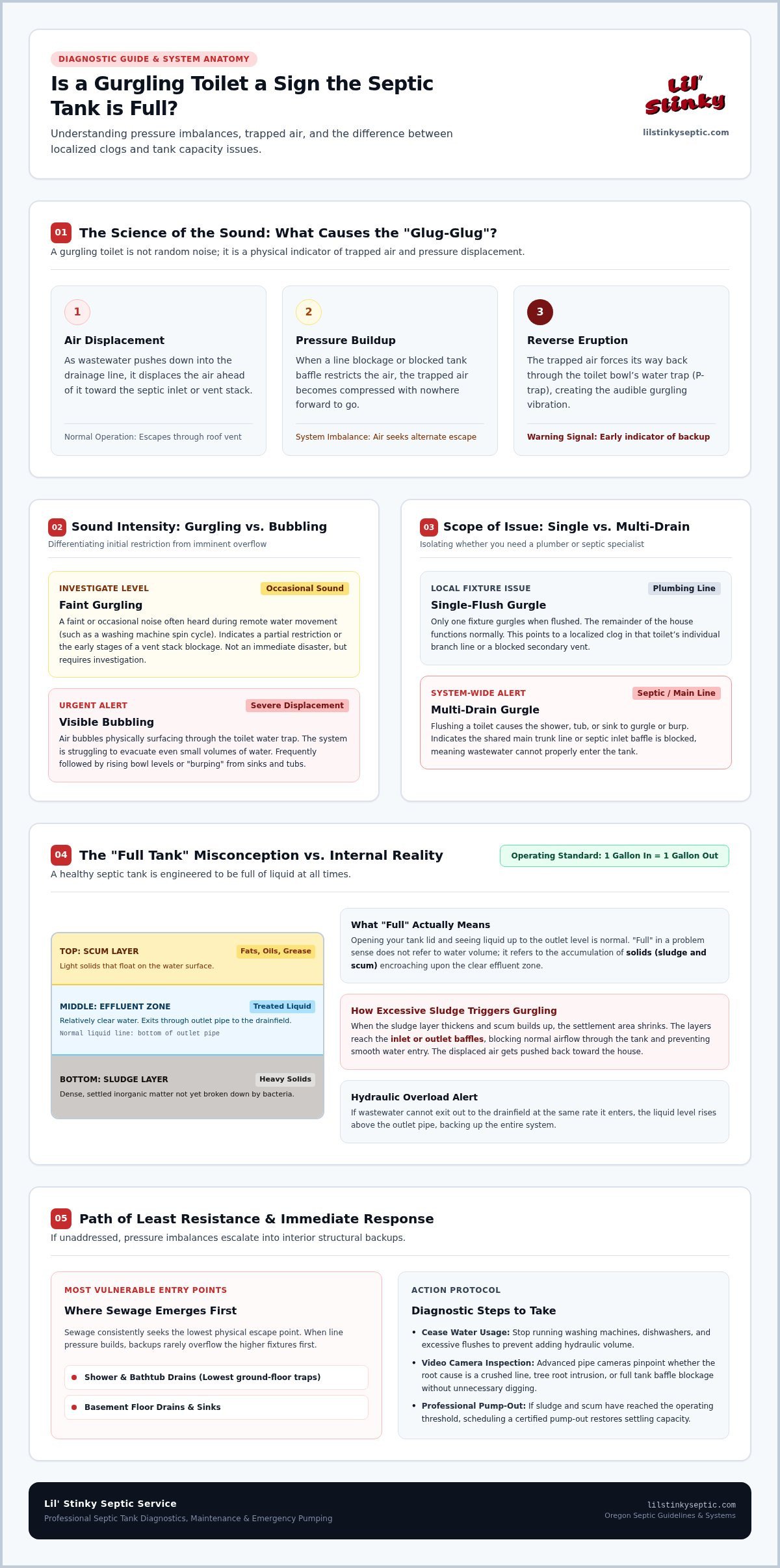
That rhythmic glugging sound coming from your toilet isn’t just a nuisance; it’s a direct message from your pipes. When you hear it, your first worry is likely whether a gurgling toilet septic tank full situation is about to flood your bathroom. Physically, that gurgle is the sound of air bubbles being forced back through the water trap in the toilet’s base. It happens because of a displacement of air that has nowhere else to go but up and out through your fixtures. Simply put, a gurgling toilet is a symptom of a pressure imbalance in the drainage or septic system.
Think of this sound as the early warning system for your home. It usually shows up before a total system backup occurs, giving you a small window of time to act. If you ignore it, the pressure imbalance eventually leads to slow drains. Ultimately, sewage finds the path of least resistance, which is often your shower floor or basement drain.
The Science of Trapped Air in Septic Lines
For water to flow smoothly from your house to the septic tank, air has to move freely within the pipes. This balance is maintained by your drain-waste-vent system, which typically exits through a stack on your roof. When a blockage occurs in the main line or the septic tank’s inlet, wastewater pushes air ahead of it. If that air can’t escape through the vent stack, it gets compressed and forced back through the nearest P-trap.
You should pay close attention to which drains are involved. A ‘single-flush gurgle’ might just be a local clog in that specific toilet’s branch line. However, a ‘multi-drain gurgle’, where the shower gurgles while the toilet flushes, usually points to a more significant problem further down the line or a gurgling toilet septic tank full warning. This happens because the shared drain line is struggling to vent the air displaced by the larger volume of water.
Gurgling vs. Bubbling: Spotting the Difference
The intensity of the sound tells you how close you are to a disaster. A faint, occasional gurgle often suggests a partial restriction or the beginning of a vent stack blockage. It’s a sign to investigate, but it might not be an immediate emergency. You can often hear this when water is draining elsewhere in the house, like when the washing machine is on its spin cycle.
Bubbling is a different story. If you see air bubbles physically rising through the water in the toilet bowl, you’re looking at an urgent sign of air displacement. This means the system is struggling to move even small amounts of water. As the system reaches its breaking point, these bubbles will often be followed by rising water levels or “burping” sounds from other fixtures like your kitchen sink or bathtub.
Is Your Septic Tank Full? Comparing Gurgling to Other Warning Signs
Many homeowners panic when they open their septic lid and see water right near the top of the tank. However, there is a common “full tank” misconception you should understand. Your septic tank is actually designed to be full of liquid at all times. In a healthy, functioning system, every gallon of wastewater that enters the tank from your home displaces a gallon of treated effluent out to the drainfield. If the water level is at the bottom of the outlet pipe, your system is operating exactly as it should. The tank only becomes a problem when the balance of solids and liquids is thrown off.
When we talk about a gurgling toilet septic tank full scenario, we’re really talking about a capacity issue involving solids or a hydraulic backup. If your toilet is making noise, it’s vital to recognize common septic tank full symptoms before sewage backs up into your home. The real culprit is usually excessive sludge or a thick scum layer that has reached the inlet or outlet baffles. This buildup restricts the airflow and water movement needed for a smooth flush, creating that distinct gurgling sound as air is forced back toward your house.
The Three Layers of Your Septic Tank
Inside your tank, waste separates into three distinct zones: the scum, effluent, and sludge layers. The top scum layer consists of floating fats, oils, and grease. The bottom sludge layer is made of heavy solids that bacteria haven’t broken down yet. In between is the effluent, which is the relatively clear water that exits to your drainfield. When the sludge layer grows too thick, it reduces the “settling time” needed for new waste to separate. Under Oregon DEQ rules, your tank should be pumped when combined solids reach 40% of the liquid capacity. Periodic septic tank pumping in Portland OR is the only way to remove these accumulated solids and prevent them from clogging your baffles or drainfield.
Secondary Signs the Tank is at Capacity
How do you know if the gurgle is a tank issue rather than a simple pipe clog? Look for signs that affect the entire house. If every drain in your home is slow, the problem is likely at the tank or the main line. You should also check for sewage odors near the tank or drainfield. According to the EPA’s septic system warning signs, the smell of “rotten eggs” (hydrogen sulfide gas) is a major red flag. Another visual cue is lush, bright green grass or soggy patches over the septic area. This often means the soil is saturated and can no longer absorb wastewater. If you spot these issues alongside a gurgling toilet septic tank full warning, it’s a good idea to contact a local specialist for a professional inspection before a messy backup occurs.
Clog vs. Capacity: How to Diagnose the Root Cause
Before you panic about a total system failure, it’s essential to figure out where the problem actually lies. Is it just one toilet acting up, or is the whole house glugging? If only the guest bathroom makes noise, you’re likely dealing with a local clog in that specific branch line. However, if every fixture in the home is struggling, it’s a strong indicator of a main line blockage or a gurgling toilet septic tank full situation. A blockage at the inlet baffle of your tank creates the same backpressure as a tank that has reached its solids capacity, forcing air back toward your home.
You can perform a simple ‘Main Cleanout Test’ to gain some clarity. Locate the main cleanout pipe outside your home, which is usually a white PVC pipe with a screw-on cap. Carefully unscrew the cap to see what’s happening inside. If the pipe is empty, the clog is located somewhere between your house and that cleanout. If you see standing water filling the pipe, the problem is further down toward the septic tank or within the tank itself. This quick check helps you decide whether you need a standard plumber or a septic specialist.
Testing Your Fixtures for a Pattern
Pay close attention to how your fixtures interact with each other. Does flushing the toilet cause the bathtub drain to gurgle? Does the toilet bubble or “burp” when the washing machine enters its drain cycle? These patterns help you pinpoint exactly where the air pocket is trapped. According to this Penn State Extension guide on septic maintenance, these interactive sounds are often the first sign that solids are overloading the tank and preventing the system from venting properly. When the main line is partially restricted, the large volume of water from a flush or a laundry cycle has to fight for space, pushing air out through the nearest available trap.
Environmental Factors in the Portland Area
Our local climate and soil types have a massive impact on how your septic system performs. In Clackamas County, many properties have heavy clay soils that don’t drain quickly. During the peak of a Portland rainy season, the ground can become completely saturated. When the drainfield is “drowning” in rainwater, it can’t accept effluent from the tank, and it stops the system from “breathing.” This creates gurgling toilet septic tank full symptoms even if your tank isn’t actually overdue for a pump-out.
If your system only seems to struggle during heavy rain, you might need septic drain cleaning in Clackamas County to clear out any sludge or mineral buildup that’s slowing things down. We’ve spent over 25 years navigating these specific Oregon soil conditions, and we know that sometimes the weather is just as much of a factor as your tank’s maintenance schedule.
Immediate Steps: What to Do When the Gurgling Starts
When you hear that first glub-glub sound, you are officially in a race against a potential sewage backup. Stop using all water in the house immediately. This includes the washing machine, the dishwasher, and especially the showers. If the gurgling toilet septic tank full warning is real, every gallon of water you add to the system increases the pressure and brings the waste closer to your floor drains. Think of your plumbing as a closed loop that’s currently over-pressurized; adding more volume only makes the situation worse.
Once the water is off, do a quick walk around your property. Head outside and check the area around your septic tank and drainfield for standing water or unusually soggy patches. If you notice a foul odor or see liquid pooling on the surface, your system is likely experiencing hydraulic failure. You should also safely check your plumbing vent stack on the roof if you have a ladder and clear access. Bird nests, leaves, or even dead squirrels can block these pipes, cutting off the airflow your drains need to function quietly.
Never use chemical drain cleaners in a septic system because they destroy the essential bacteria needed to break down solids. These harsh chemicals can cause long term damage to your tank’s ecosystem and rarely solve the underlying pressure issue.
Safety First: Avoiding a Health Hazard
It is tempting to grab a shovel and open the tank lid yourself, but you should never do this without professional training. Septic tanks produce dangerous gases like methane and hydrogen sulfide that can be fatal in enclosed spaces. If you smell a strong “rotten egg” odor inside your home, open the windows for ventilation and move outside. This is the moment to call for emergency septic service in Portland Oregon. A certified technician has the proper safety gear and vacuum equipment to stabilize the system without putting your family at risk.
Simple Checks Before Calling a Pro
If you suspect a local clog, you can try using a flange-style plunger on the gurgling toilet. Work slowly and carefully to avoid splashing. While you’re outside, look for signs of tree root intrusion near the main line, such as heaving ground or a line of particularly vibrant bushes. Finally, verify your last pumping date. If it’s been more than three to five years, you’re likely overdue. Reviewing your septic maintenance plan in Portland OR can help you determine if this gurgle is a predictable result of a neglected schedule. If you are hearing that warning sound right now, contact our team for 24/7 rapid response to stop a backup before it starts.
Professional Solutions: How Lil’ Stinky Septic Restores Your System
When your bathroom starts making noise, you need more than a quick fix. A professional pump-out is about more than just clearing the tank; it’s a comprehensive health check for your entire system. If you’ve been losing sleep over a gurgling toilet septic tank full situation, our team doesn’t just empty the tank and drive away. We investigate the “why” behind the sound. We’ve spent over 25 years serving Canby and the greater Portland community, and we know that a gurgle is often a symptom of a much larger story within your pipes.
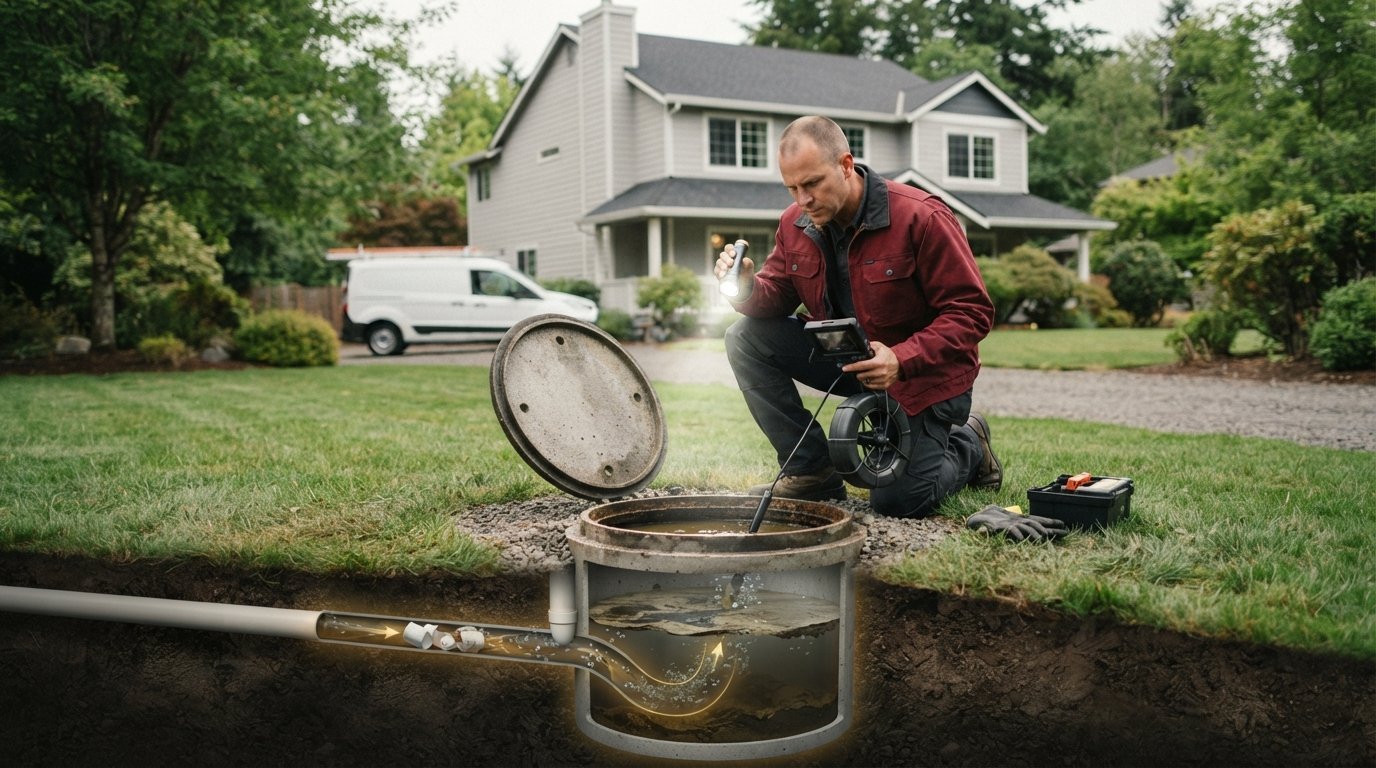
Our approach is grounded in transparency and straight talk. We use advanced tools like fiber-optic video camera inspections to look deep inside your main lines. This technology allows us to find crushed pipes, root intrusions, or stubborn clogs that a standard plumbing snake might miss. By seeing exactly what’s happening underground, we can provide a clear diagnosis without unnecessary digging or guesswork.
Our Diagnostic Process
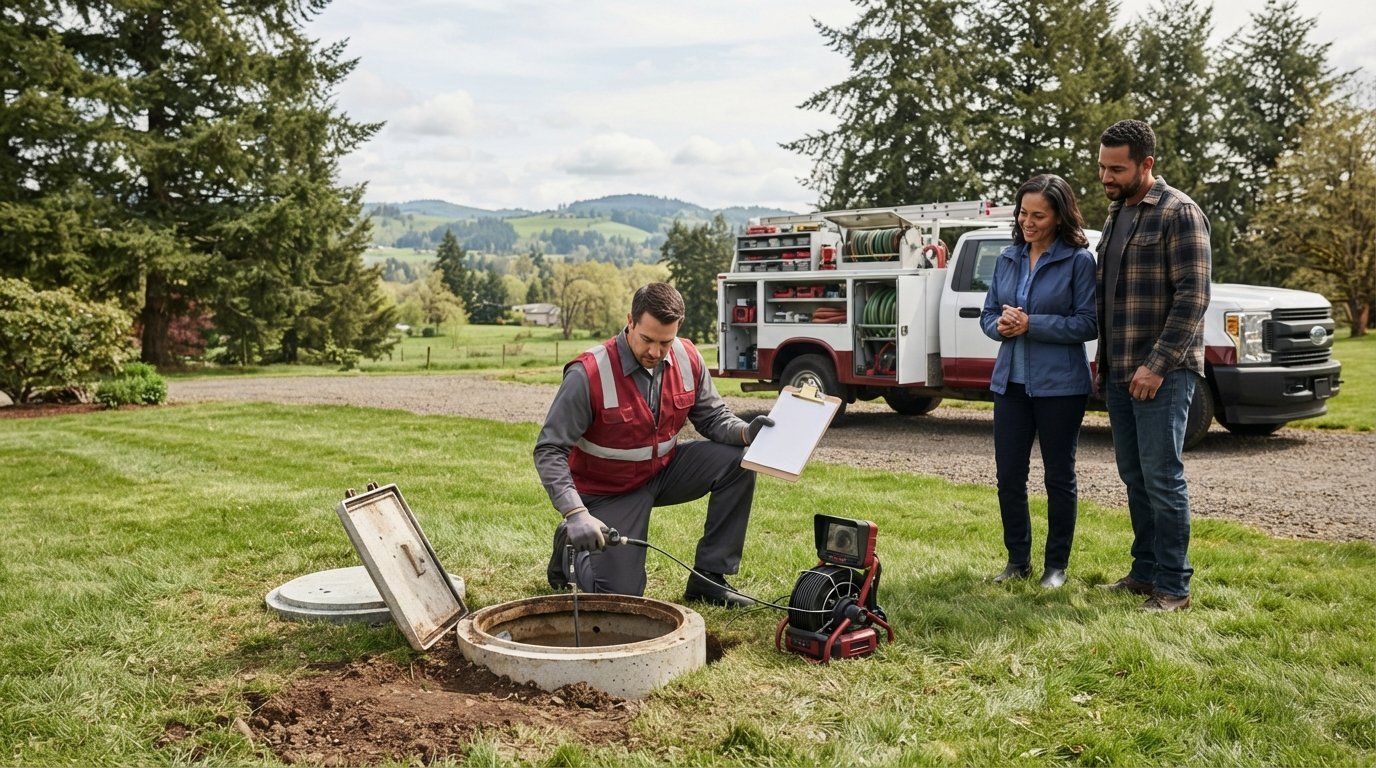
Every service call includes a meticulous diagnostic check. Our technicians inspect the inlet and outlet baffles to ensure they’re structurally sound and free of debris. We also measure the scum and sludge layers to help you establish a precise pumping frequency tailored to your household’s actual water usage. This data-driven maintenance is vital for identifying potential drainfield issues before they become catastrophic. We treat your property with the same care we’d give our own, ensuring every component of your system is functioning as it should.
Why Experience Matters for Your Septic System
Navigating Oregon’s unique environmental regulations and varied soil conditions takes years of hands-on work. As a family-owned business with DEQ-certified inspectors, we understand the specific challenges of maintaining a system in the Pacific Northwest. We take pride in our craft and our commitment to doing things correctly the first time. This expertise is why we can offer a best-price guarantee for our pumping services across Multnomah, Clackamas, and Washington counties.
You don’t have to wait for a messy backup to take action. If those glugging sounds are making you nervous, let a seasoned expert give you the peace of mind you deserve. Our team is ready to provide the bold problem-solving and meticulous service your home needs to stay safe and clean. Don’t let a small noise turn into a major emergency. Schedule your inspection or pumping today and see why your neighbors have trusted Lil’ Stinky Septic for over two decades.
Take Control of Your Septic Health
Hearing a glugging sound in your bathroom is a clear signal that your plumbing needs immediate attention. You now know that a gurgling toilet septic tank full warning doesn’t always mean your system is failing; it could be a simple vent blockage, a local clog, or a reaction to heavy Oregon rainfall. The key is acting quickly before that air pressure turns into a sewage backup on your bathroom floor.
With 25+ years of local experience, our team knows exactly how to handle the unique soil conditions in the Portland area. We are DEQ-certified inspectors and fully licensed, bonded, and insured (CCB #189693). We take pride in providing straight talk and honest solutions for your property. Stop the gurgle before it becomes a backup—contact Lil’ Stinky Septic for 24/7 service! You don’t have to tackle these home emergencies alone. We are ready to restore your peace of mind and keep your property safe.
Frequently Asked Questions
Is a gurgling toilet always a sign of a full septic tank?
No, it isn’t always a sign of failure. While it’s a common gurgling toilet septic tank full indicator, it can also signal a blocked vent stack or a local pipe clog. A gurgle simply means air is being forced through the trap. In many cases, the tank is fine, but the path to the tank is restricted. You should check if multiple fixtures are affected before assuming the tank has reached its solids capacity.
Can a clogged vent pipe cause a toilet to gurgle?
Yes, a blocked vent pipe is a frequent cause of plumbing noises. Your drain-waste-vent system needs air to move wastewater smoothly. If bird nests, leaves, or debris block the stack on your roof, a vacuum is created. This suction pulls air through your toilet’s P-trap, resulting in a gurgling sound. Clearing the roof vent often resolves the issue without needing to pump the tank or dig up any lines.
How much sludge is too much for my septic tank?
According to Oregon DEQ standards, your tank needs pumping when total solids reach 40% of the liquid capacity. If the sludge layer at the bottom or the scum layer at the top gets too thick, waste won’t have enough time to settle. This leads to clogs in the outlet baffle and can cause a gurgling toilet septic tank full scenario. Regular inspections every one to three years help track these levels.
What happens if I ignore a gurgling toilet for too long?
Ignoring the sound often leads to a complete sewage backup into your home. The gurgle is an early warning that air and water cannot flow freely. If you wait, the restriction will likely become a total blockage. This forces raw sewage out through the lowest drains in your house, such as showers or basement floor drains. This results in expensive cleanup costs and potential health hazards for your family.
Why does my toilet gurgle only when it rains heavily?
Heavy rain can saturate the soil in areas like Clackamas County, preventing the drainfield from absorbing effluent. When the ground is saturated, the water in your tank has nowhere to go. This hydraulic overload creates backpressure that forces air through your toilet traps. If this only happens during storms, it may indicate your drainfield is struggling or reaching the end of its functional lifespan in our wet Portland climate.
Can tree roots cause the gurgling sound in my pipes?
Tree roots are a major cause of main line restrictions that lead to gurgling. Roots seek out the moisture in your sewer lines and can enter through tiny cracks or joints. Once inside, they grow into a thick mass that catches debris and slows water flow. This creates the air displacement that makes your toilet bubble. We often use video camera inspections to confirm root intrusion in Canby and other local Portland properties.
Will pumping my septic tank stop the gurgling sound immediately?
Pumping stops the noise only if the issue was a high sludge level or a clogged baffle. If the tank was truly over-capacity, removing the waste restores the necessary airflow and drainage space. However, if the gurgle is caused by a blocked roof vent or a clog in the pipe between the house and the tank, pumping won’t fix it. A professional diagnostic check ensures you aren’t paying for unnecessary services.
Are chemical drain cleaners safe for septic systems?
No, you should avoid using chemical drain cleaners if you have a septic system. These harsh products kill the beneficial bacteria that break down solids in your tank. Without these microbes, your tank will fill with sludge much faster, leading to system failure. Instead of chemicals, use mechanical methods like plunging. You can also call a professional for a safe drain cleaning service that won’t damage your tank’s delicate ecosystem.