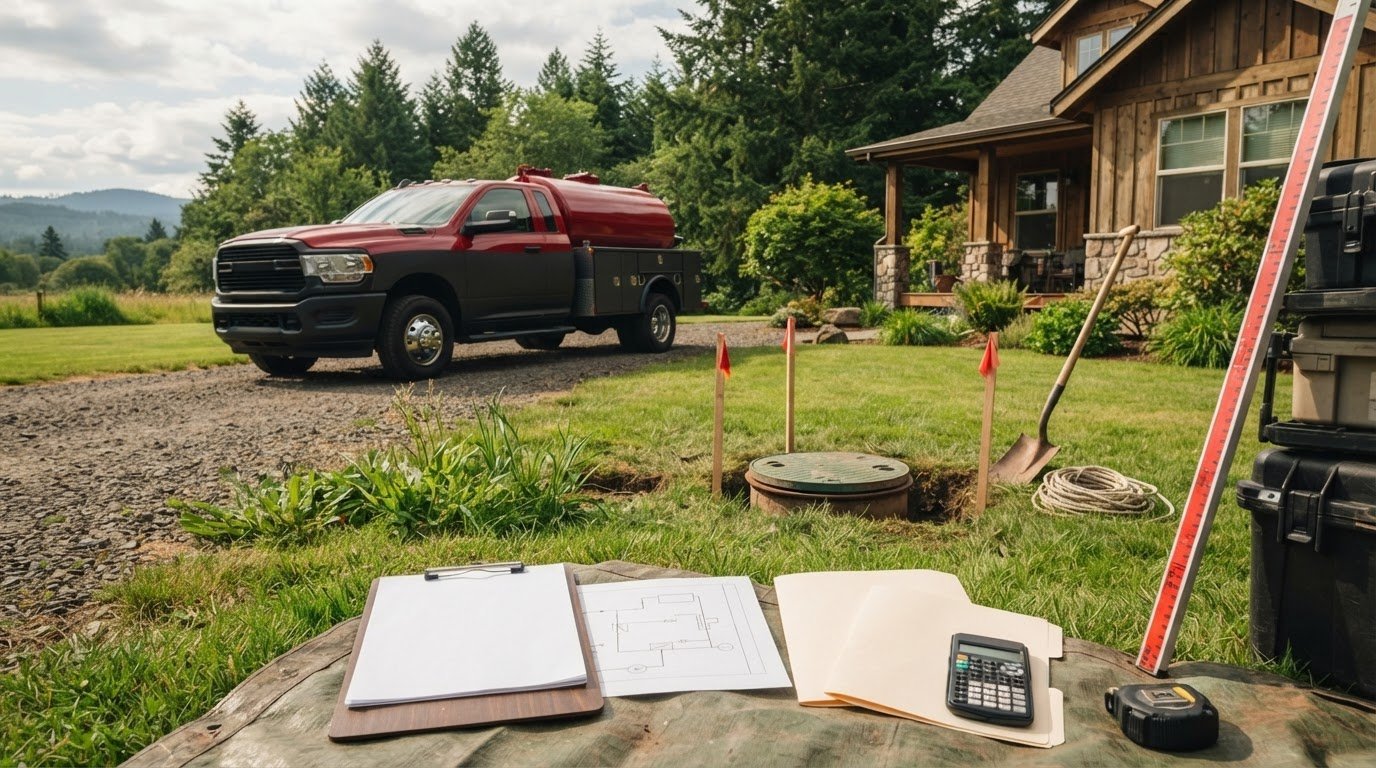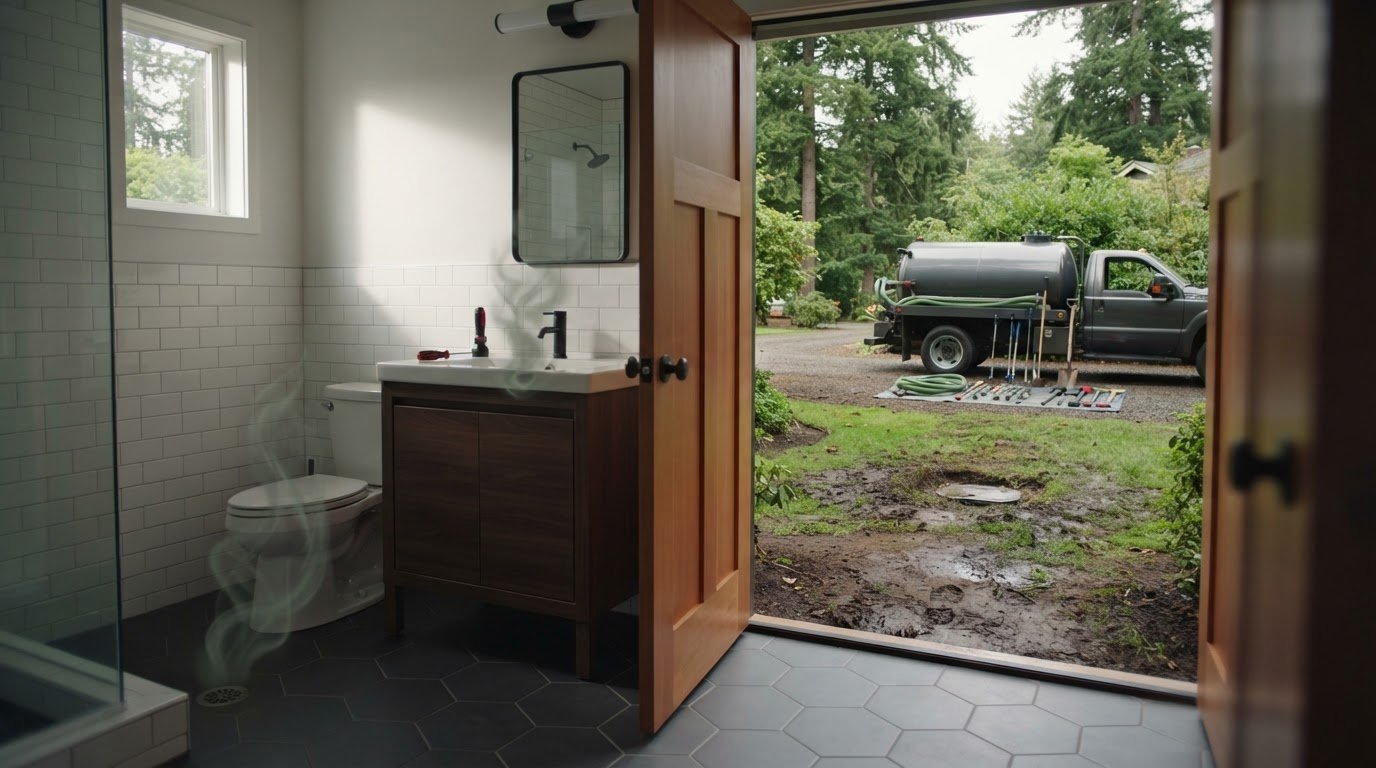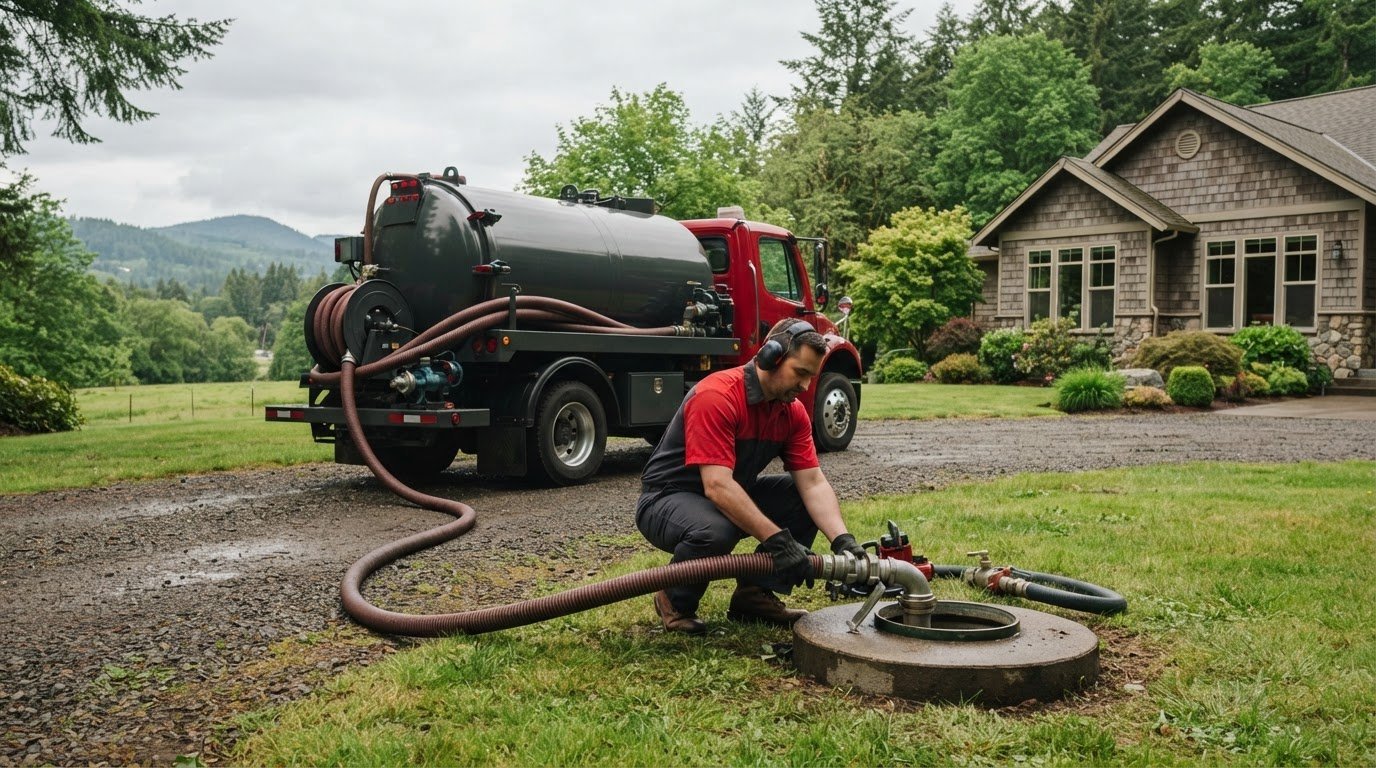
What if the best way to avoid a septic surprise is to act before you notice a problem? A backup or drainfield issue can be stressful and costly to address. For Canby homeowners, preventative septic maintenance starts with steady habits, not guesswork. Use this practical checklist to build a routine for your home.
What you should handle between service visits depends partly on your system. Keep its maintenance history together and follow guidance in your inspection or service records. If you do not know where a component is, do not dig to find it.
This guide shows you what to observe around your home, how to keep useful records, and which changes deserve prompt attention. You’ll also learn how to prepare for wet weather and when professional pumping or an inspection can help assess your system. A simple, documented routine supports better decisions, though it cannot prevent every problem.
Key Takeaways
- Keep a maintenance record with the system’s known location and components, service dates, and available reports.
- Use this preventative septic maintenance Canby checklist to separate everyday homeowner habits from work best handled by a professional.
- Observe changes around the tank and drainfield, especially after rainfall leaves the ground saturated, and note when and where they occur.
- Record household and property changes so you can share relevant context during a professional inspection or pumping visit.
- Use routine observations to guide a maintenance plan. Don’t treat every change as an emergency, but don’t wait for a backup before paying attention.
Preventative septic maintenance in Canby: what it protects and why it matters
For Canby homeowners, the goal is to reduce avoidable septic trouble by observing the property, keeping useful records, and arranging appropriate service. Routine observations can help you catch changes and give a technician helpful context. They cannot prevent every failure or eliminate the possibility of repairs.
Preventative septic maintenance combines homeowner observations and recordkeeping with professional inspections and pumping, rather than waiting to respond to an emergency. Build the routine around your system’s history and needs, not a one-size-fits-all schedule.
Start with the records you have. System design, household use, and past service can all affect what maintenance makes sense. Use your documentation and professional guidance to plan service for your property.
Which septic components should Canby homeowners understand?
The septic tank receives wastewater from the home. Heavier solids settle inside, while lighter materials collect near the surface. Partially clarified liquid flows out through the tank’s outlet. A septic system relies on the tank and the components that carry wastewater onward working together.
From the outlet, wastewater may pass through a distribution box, which directs flow to the drainfield. Buried pipes and surrounding soil receive and further treat the liquid. System designs vary, so your property may not match this basic layout. Never excavate to find or inspect buried components. Use your records and professional evaluation instead.
Why a maintenance routine beats waiting for a problem
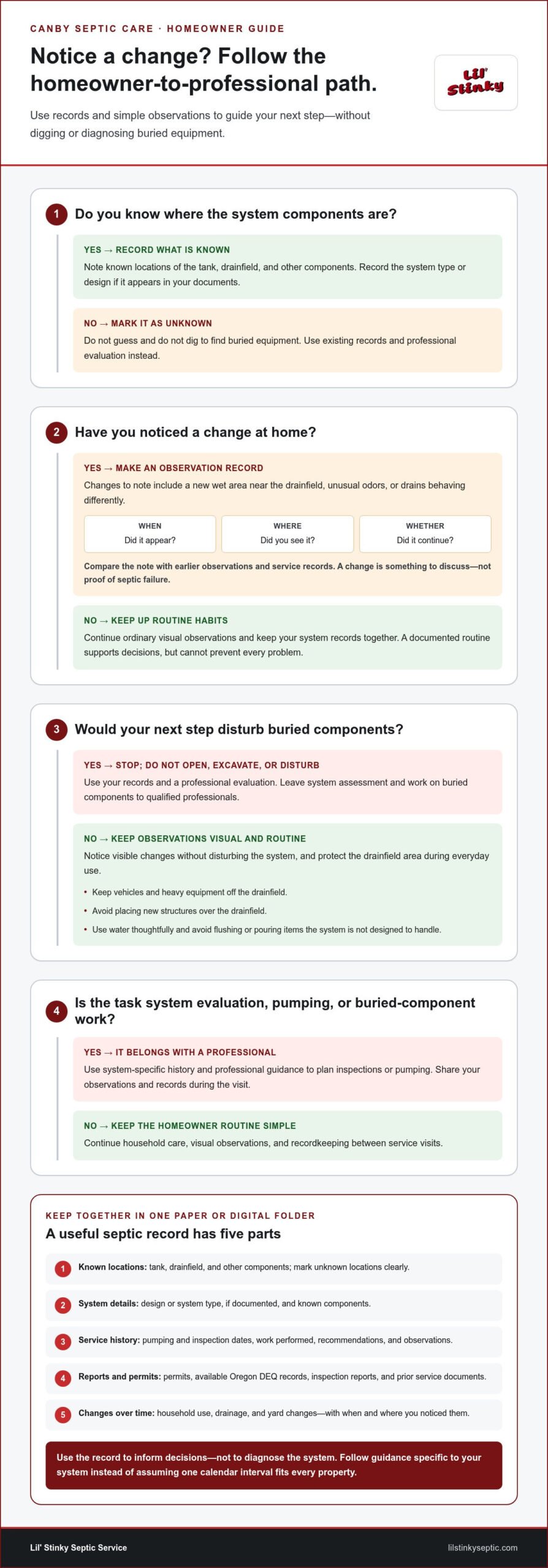
A backup is an obvious reason to seek help, but you don’t have to wait for one to pay attention. Record changes such as a new wet area near the drainfield, unusual odors, or drains behaving differently. These are observations to discuss, not proof of septic failure. Other conditions around your home may also affect what you notice.
For each change, write down when it appeared, where you saw it, and whether it continued. Compare your notes with earlier observations and service records. That timeline can help a technician understand what has changed and decide what to examine. Use this checklist to stay organized between service visits, not to diagnose or repair buried equipment yourself.
A Canby septic maintenance checklist for records, household use, and routine observations
What system information should you keep together?
Collect the documents you already have. Mark missing details as unknown rather than guessing, and don’t dig to locate buried equipment.
- System location: Note known locations of the tank, drainfield, and other components. Mark any unknown locations clearly.
- System details: Record the design or system type if it appears in your records, along with known components.
- Service history: Log pumping and inspection dates, work performed, and any recommendations or observations from each visit.
- Reports and permits: Keep permits, available Oregon DEQ records, inspection reports, and prior service documents together.
- Changes over time: Note changes in household use, drainage, or the yard, including when and where you noticed them.
Keep the record accessible so you can share it during a professional visit. For service timing, use guidance specific to your system rather than assuming one calendar interval suits every property. The U.S. Environmental Protection Agency’s septic care guidance also covers household practices and drainfield care.
What can you check without opening or disturbing the system?
Make simple visual observations while going about your normal routine outdoors. Look for changes above known components, such as a new wet spot or an area that looks different from its usual condition. Record what you see and when. A change is a reason to pay attention, not a diagnosis.
- Notice changes in household drainage, and record which fixtures are affected and when.
- Keep vehicles and heavy equipment off the drainfield area.
- Avoid placing new structures over the drainfield.
- Don’t open, excavate, or disturb buried components to investigate a concern.
Checklist in brief: Handle routine observations, household care, and recordkeeping yourself. Leave system evaluation, pumping, and work on buried components to qualified professionals.
When your records point to a service visit, Lil’ Stinky Septic Service provides septic inspections and pumping in Canby. Learn more about septic inspections and pumping.
DIY septic care versus professional maintenance in Canby: what belongs on each list?
Maintenance is useful before a backup appears, but not every observation calls for a service visit. Homeowners can protect the system through everyday habits and keep a useful record. Pumping and evaluating buried components belong to trained professionals. This distinction makes preventative septic maintenance manageable without turning routine care into guesswork.
| Homeowner task | Professional task |
|---|---|
| Use water thoughtfully and avoid flushing or pouring items the system isn’t designed to handle. | Pump the tank to remove accumulated solids when system condition and service guidance indicate it’s needed. |
| Observe household drainage and the ground above known system areas. Record changes and dates. | Inspect the system to assess its condition, especially when records are missing or concerns need evaluation. |
| Keep vehicles, heavy equipment, and disruptive landscaping away from the drainfield. | Open and evaluate system components, and perform work on buried equipment. |
What septic tasks can a homeowner handle safely?
Focus on care that doesn’t involve opening or disturbing the system. Use water thoughtfully, dispose of household waste appropriately, and keep a dated log of observations, maintenance, and conversations about system condition. Protect known system areas from traffic, soil disturbance, and unplanned landscaping changes. When planning yard improvements, tree trimming, or major cleanups near buried infrastructure, operations like Statement Tree Care show how professional tree management and site cleanup help keep heavy equipment away from sensitive ground. These habits support good upkeep, but they can’t rule out every issue. Michigan State University Extension offers practical septic maintenance routine guidance on household use and care.
When does professional septic maintenance make sense?
Arrange a professional evaluation when you need a clearer picture of the system’s condition, particularly if service records are incomplete or you’ve noticed a persistent change. Pumping removes accumulated solids, and a pumping visit can also include a system health check. The right timing depends on the system, household use, and condition, so don’t treat one interval as a rule for every Canby property. Lil’ Stinky Septic Service provides septic pumping and inspections. For more detail, see this septic pumping guide.
Keep DIY care to observation and protection. Leave opening, entering, or excavating a septic system to professionals. A septic tank can contain dangerous gases, and buried parts can be damaged or disturbed. If you’ve recorded a change but aren’t sure what it means, use your notes to support a professional inspection rather than trying to diagnose it yourself.
For a system check or pumping, explore septic inspection and pumping service.
Canby septic maintenance through changing seasons: protect the system and track changes
Seasonal conditions can change what you notice around your septic system. Rainfall and saturated ground aren’t proof of a problem, but they are good reasons to observe known system areas carefully and record changes that persist. A steady review helps you distinguish a one-time observation from a pattern worth discussing during an inspection.
How should Canby homeowners check the property after wet weather?
After wet weather, look from stable ground rather than walking over saturated areas. Check only locations you can identify from your records. Note unusual pooling, soft ground, or other visible changes, but don’t diagnose the tank or drainfield by appearance alone. Keep vehicles, parking, and heavy loads off the drainfield, especially when the ground is wet.
How can local records help guide maintenance decisions?
Permits and available Oregon DEQ records may help identify your system type and approved layout. Those details matter because maintenance needs and applicable requirements can differ by system. Use property records and verified guidance instead of assuming every Canby home follows the same schedule. If you’re unsure which records or requirements apply, check with the appropriate Oregon or Clackamas County office. For questions about inspections and documentation, see this Oregon septic inspection guide.
Use this recurring review to plan, observe, document, and respond:
- Plan ahead. Before seasonal weather shifts, review your system records and note the known locations of the tank, drainfield, and other components. If system-specific guidance indicates a service visit is due, arrange it before a concern becomes urgent.
- Observe the property. After heavy rain or periods of saturated ground, look for visible changes around known system areas from a safe, stable spot. Don’t walk across soft ground or disturb buried components.
- Document what you see. Record the date, location, weather context, and whether a change continues or clears. Add relevant changes in household use or drainage to the same log.
- Respond appropriately. Treat a single observation as information, not a diagnosis. If a change persists, worsens, or appears alongside drainage concerns, share your notes and records during a professional evaluation.
This routine makes preventative septic maintenance more consistent for Canby homeowners without treating every wet patch as an emergency. It also gives a technician useful context about timing and conditions. For a system evaluation or pumping visit informed by your records, schedule a septic inspection with Lil’ Stinky Septic Service.
Build a preventative septic maintenance routine with a Canby service team
Your observations are most useful alongside the system’s history. Records of prior service, known components, and changes around the property help a technician understand what has happened over time. They also give you a practical starting point for discussing next steps without trying to diagnose the system yourself.
What should you prepare before scheduling septic maintenance?
Gather what you have, even if the file is incomplete. Useful documents include system plans, permits, inspection reports, service dates, and notes from previous visits. Add brief observations about recent changes, such as when a drainage issue began or where you noticed a change in the yard.
Describe what you saw and when. For example, note whether the change appeared after wet weather and whether it persisted. Avoid labeling it as a tank or drainfield failure. A professional evaluation can assess the system, and clear notes help focus the service discussion and connect current observations with past work.
How can Lil’ Stinky help Canby property owners stay ahead?
Homeowner recordkeeping and professional service work together. Lil’ Stinky Septic Service provides septic pumping and inspections for Canby property owners. Pumping removes accumulated solids, while an inspection provides an opportunity to evaluate system condition. The appropriate next step depends on the system and its history, so bring your records and questions to the conversation.
Lil’ Stinky is based in Canby and brings more than 25 years of experience to septic service. The company is a licensed contractor, CCB #189693. Its local roots and experience support a straightforward discussion about your system’s records, observations, and maintenance needs.
A repeatable approach to preventative septic maintenance is simple: keep your records together, note changes as they occur, and use professional pumping or inspection when the system’s history or condition calls for it. You don’t need to wait for a backup to start that conversation.
If you’re ready to review your system’s maintenance needs, schedule septic maintenance with Lil’ Stinky. Bring the records you have and discuss an appropriate next step for your property.
Make your septic care routine one you can keep
Good septic upkeep isn’t guesswork or a guarantee against every problem. It’s a repeatable habit: keep system records together, note changes around the property, and protect the drainfield from traffic and disturbance. Use those observations to guide a professional inspection or pumping visit when your system’s history or condition calls for one.
That’s the practical value of preventative septic maintenance for Canby homeowners. Clear records help you explain what you’ve noticed and give a technician useful context without trying to diagnose buried components yourself.
Lil’ Stinky Septic Service is based in Canby, brings more than 25 years of experience, and is a licensed contractor, CCB #189693. To discuss a sensible next step for your septic system, schedule septic maintenance with Lil’ Stinky.
Start with the records you have and keep the routine simple. A little organization can help you approach septic care with more confidence.
Frequently Asked Questions
How often should a septic system be maintained in Canby?
Maintenance timing depends on your system design, household use, and service history. For an average household, tank pumping is generally recommended every three to five years, but that’s a planning range, not a rule for every property. Typical gravity systems should be inspected at least every three years, while alternative systems may need annual inspections. Review your records and system-specific guidance to plan preventative septic maintenance in Canby.
What can I do to prevent septic problems between service visits?
Use water thoughtfully, dispose of household waste appropriately, and keep vehicles, heavy equipment, and new structures off the drainfield. Watch for changes in household drainage or the ground above known system areas, then record when and where you notice them. These habits support good care but can’t guarantee problems won’t occur. Don’t open or dig around buried components to investigate. Share persistent concerns with a professional.
Do I need to pump my septic tank if there are no warning signs?
Possibly. A septic tank can accumulate solids without obvious symptoms, so the absence of a backup or odor doesn’t establish that pumping can wait. Review past pumping dates and available inspection reports, then use system-specific guidance and a qualified evaluation to decide on timing. Pumping removes accumulated solids, and the visit can include a system health check. Don’t rely on visible trouble as your only maintenance cue.
Can heavy rain affect a septic system in Canby?
Heavy rain can leave soil saturated, which may change what you observe around a tank or drainfield. That alone doesn’t mean the system has failed. After wet weather, look from stable ground for unusual surface changes near known system areas, and note whether they persist. Avoid walking across saturated ground or driving over the drainfield. If a change continues or occurs alongside drainage concerns, share your notes during a professional evaluation.
What septic system records should Canby homeowners keep?
Keep available permits, Oregon DEQ records, system plans, inspection reports, and service documentation together. Record known locations and components, pumping and inspection dates, recommendations, and changes you notice around the property or in household drainage. Note when and where an observation occurred rather than labeling it as a diagnosis. If records are incomplete, mark unknown details clearly and use a professional inspection to help assess system condition.
Is septic system maintenance something I can do myself?
You can handle routine observation and protection: use water carefully, keep the drainfield clear of traffic and heavy loads, and maintain a dated record of changes. Leave pumping, inspections, and work on buried components to professionals. Never enter a septic tank or excavate to find equipment. Tanks can contain dangerous gases, and disturbing buried parts can create hazards or cause damage. Home care supports professional maintenance; it doesn’t replace it.
When should I schedule professional septic maintenance?
Arrange service based on your system’s records, design, use, and applicable guidance, even if you haven’t noticed a warning sign. Consider an inspection if records are missing, the system’s condition needs assessment, or a change in drainage or the yard persists. Lil’ Stinky Septic Service provides septic pumping and inspections in Canby. Bring your service history and dated observations so the technician can understand the context and discuss an appropriate next step.