Could adding a bedroom or connecting a new structure change the septic approvals your project needs? In Clackamas County, the right path depends on the property, the existing system, and the work planned. Understanding Clackamas County septic permit requirements before work begins can help you identify the right review and prepare the information the county needs.
If you’re unsure whether your project calls for a site evaluation, repair or alteration permit, or approval to connect to an existing system, start by clarifying what will change. County and state responsibilities overlap, and incomplete system records or site details can make it harder to determine the right application.
This 2026 guide explains which septic projects may need permits, how county review fits into the process, and what property and system information to gather. Use it to map the steps from site evaluation and design through application review, construction, and inspection before work starts.
Key Takeaways
- Clackamas County septic permit requirements depend on the work planned and property-specific conditions. Identify the project type before choosing an approval path.
- Soil, slope, usable space, and nearby water features can affect site evaluation and system design.
- Gather parcel, ownership, existing-system, and project details early to prepare for application review.
- Previous approval for a property doesn’t automatically cover new work. Changes to a home or septic system may need a fresh review.
- Septic design and installation must align with county review and inspection requirements. Don’t start work based on an assumption that approval is guaranteed.
Clackamas County septic permit requirements: when a project needs approval
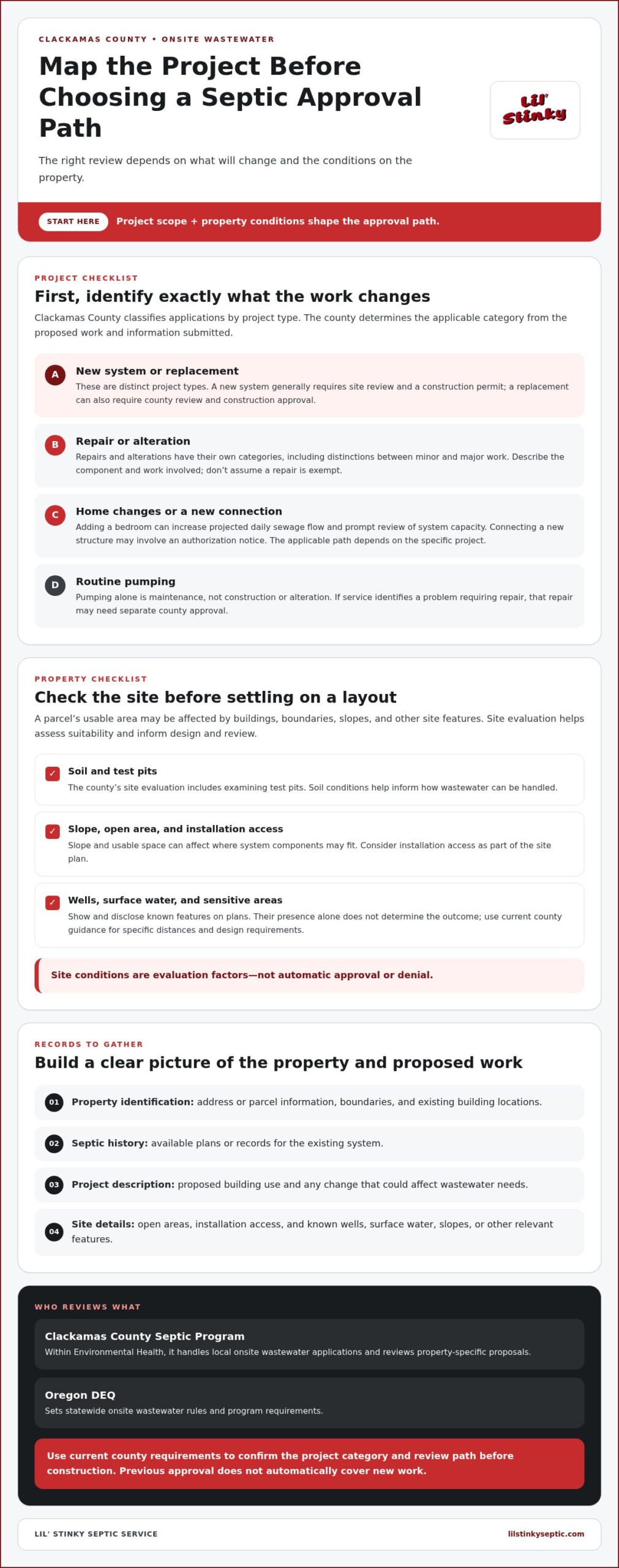
The approval path depends on the proposed work and the property’s conditions. A new system, replacement, repair, or change that could increase wastewater flow may each require a different review. The project scope and the property’s septic history matter, so don’t assume an earlier approval covers work you’re planning now.
A septic permit is county approval for specified work on an onsite wastewater system, such as construction, repair, or alteration. Clackamas County classifies applications by project type, including construction, repair, and alteration permits. A connection to an existing system may instead involve an authorization notice. The county determines the applicable category based on the proposed work and the information submitted.
Which septic projects may require a Clackamas County permit?
Installing a new system and replacing an existing one are distinct project types, even though both involve putting a system in the ground. A new system generally requires site review and a construction permit. A replacement can also require county review and construction approval. The property and proposed design determine the appropriate path.
Repairs and alterations have their own categories, and the county distinguishes minor from major work. Don’t assume a repair is exempt just because it affects one system component. Describe exactly what needs repair so the county can determine which review applies.
Changes to a home or its use can affect wastewater flow. Adding a bedroom, for example, can increase projected daily sewage flow and prompt a review of whether the existing system can serve the home. Connecting a new structure to an existing system may require an authorization notice. Use the current county requirements for the specific project rather than treating every connection or addition alike.
Routine septic tank pumping is maintenance, not construction or alteration. Pumping alone generally follows a different path from work that changes or repairs system components. If an inspection or service visit identifies a problem that needs repair, that repair may require separate county approval.
Who reviews septic permits in Clackamas County?
Clackamas County’s Septic Program, within Environmental Health, handles local onsite wastewater applications and reviews. Oregon DEQ sets statewide onsite wastewater rules and program requirements. In practice, the county reviews property-specific septic applications within the broader framework of state rules.
The property address and project scope help determine the right review path. Before planning work, gather the address or parcel information, records for the existing system, and a clear description of what will change. Then compare the project with the county’s current application categories. A home improvement that appears small can still affect system capacity or require a different approval, so settle the classification before construction begins.
How property conditions shape septic permit requirements
A parcel that looks spacious from the road may have less usable area once slopes, buildings, property boundaries, and other site features are mapped. That’s why site suitability and system design should be considered early, before you settle on a layout or begin work. Clackamas County’s Septic Program uses site evaluation to assess whether a property can support a system and inform the next design and review steps.
Site conditions can change both the septic system design and the review path a property needs. Soil, slope, available installation area, and nearby water features are factors for evaluation, not automatic reasons for approval or denial. Don’t rely on a generic diagram or assumed setback distance. Use current county guidance for the property and proposed project.
What site details can affect septic review?
Start by gathering information that shows how the proposed work fits the parcel. A clear site plan and available records connect existing conditions with the project’s needs. Useful details include:
- Parcel boundaries and the location of existing buildings.
- Plans or records for the existing septic system, if available.
- The proposed building use and any change that could affect wastewater needs.
- Open areas that may be considered for system components and installation access.
- Known wells, surface water, slopes, or other site features that may affect evaluation.
Clackamas County’s site evaluation process includes examining test pits to assess site suitability. Soil conditions help inform how wastewater can be handled, while slope and usable area can affect where system components may fit. Nearby wells, surface water, and sensitive areas are relevant details to disclose and show on plans. Their presence alone doesn’t determine the outcome. Get specific distances and design requirements from current county guidance.
For local procedures and current application information, consult the Clackamas County Septic Program. Its guidance connects property-specific evaluation with the county’s review process, rather than relying on a one-size-fits-all plan.
When might an alternative treatment system be considered?
If site conditions make a conventional system design unsuitable, an alternative may be considered through the applicable site evaluation and agency review. The county uses the term Alternative Treatment Technology, or ATT, for a system that uses approved treatment technology as part of onsite wastewater treatment. The term doesn’t mean every challenging parcel qualifies for an ATT or that a particular design will be approved.
System selection follows the property assessment. Provide accurate site details, existing-system records, and the intended use so the design reflects actual conditions. A local septic design and installation team can help turn site information into a project plan. Septic system design and installation support can help you prepare for the steps ahead, while county review determines the required approval.
Clackamas County septic permit steps, documents, and review
Once you’ve identified the project type, organize the application around the property and the work proposed. Clackamas County handles septic applications electronically through its Development Direct portal. Required documents and review steps depend on the application category, so follow the county’s current instructions rather than relying on an old checklist or another property’s application.
The Clackamas County Septic Program provides current program guidance and application information. Review it before applying for the latest forms, submission instructions, and fee schedule. Review timelines and project-specific charges can vary, so use the county’s current materials when planning.
What information should an applicant gather?
Start with the basics: the property address and parcel identification, ownership information, a clear description of the proposed work, and records for the existing system if available. A detailed site plan is required with septic applications. Depending on the project, the county may also require a site evaluation, design materials, a Land Use Compatibility Statement, an Existing System Evaluation Report, or product information for proposed components. Follow the current checklist for your application category.
Clackamas County requires septic applications to be submitted through Development Direct. The portal works with Chrome or Edge, so prepare electronic files and make sure each document is legible and complete before uploading. If system records are missing, note what you have and what is unavailable instead of filling gaps with guesses.
What happens after the application is submitted?
Use this sequence to understand the process. The county’s current instructions determine the exact names and order of reviews required for your project:
- Identify the application path. Match the proposed work to the county’s current category, such as site evaluation, construction, repair, alteration, or authorization.
- Assemble the materials. Gather parcel, ownership, project, and existing-system information, along with the site plan and other documents listed for that application.
- Submit through Development Direct. Upload the application and supporting documents as directed in the portal.
- Respond to county review. Read county comments carefully and provide requested corrections or additional information. Review time depends on the project and application, so don’t plan around an assumed turnaround.
- Follow approval and inspection directions. Wait for the required written approval before starting work. Complete construction and inspections at the checkpoints specified by the county for that permit.
- Complete closeout requirements. Submit final records or obtain further authorization if the county directs you to do so for the project.
Approval applies to the submitted project, not unrelated work. Keep county correspondence, approved plans, inspection records, and final documentation together. Before scheduling construction, review the conditions in the written approval and note any inspections that must happen as work progresses. These steps help you meet Clackamas County septic permit requirements without relying on assumptions.
Common septic permit mistakes that can delay a Clackamas County project
An old septic approval can be useful, but it doesn’t automatically authorize a new project. Clackamas County septic permit requirements depend on the work proposed now, the system on record, and the property’s current conditions. Treat past plans as reference material, not permission to change the home or system without determining whether the new scope needs review.
Can an existing septic approval cover a new project?
Compare the planned work with the approved system documentation. An approval for an existing home, for example, may not address a later addition, a different building use, or a new connection to the system. Even if the tank and drain field haven’t changed, the project may affect expected wastewater flow or require a separate review. County records can show what was approved for the property, but the county determines how those records apply to new work.
Missing or outdated records can also create uncertainty. If plans don’t match what’s on the ground, don’t guess which version is correct. Gather available permits, system evaluations, inspection documents, and site plans, and identify any discrepancies. This gives the county a clearer basis for reviewing the proposed scope and can help prevent avoidable back-and-forth.
How can property owners avoid preventable permit delays?
Some steps, such as submitting a detailed site plan and using the county’s electronic application process, are county instructions. Others are practical ways to keep the application consistent. Before submitting, use this checklist:
- Confirm the project description. State what will be built, repaired, altered, or connected, and use the same description across plans and application materials.
- Match building use to the documents. Describe the proposed use and relevant details, such as bedroom count, consistently wherever they appear.
- Collect available system records. Include existing plans or evaluations when the current county checklist calls for them, and note gaps rather than guessing.
- Review the site plan. Check that it accurately represents the property and proposed work, including the locations of existing buildings and septic components when known.
- Wait for clear direction. Don’t begin construction or repair work until the applicable written approval is issued and you understand any inspection checkpoints.
A change in scope after submission can require updated plans or further county review. Moving a proposed addition or changing its intended use, for instance, may affect the information used to assess the septic system. Tell the county about meaningful changes instead of relying on an earlier application version. Use current application instructions and written direction to distinguish required permit steps from general planning advice.
Careful coordination keeps permit documents, design, and planned work aligned, though it can’t guarantee approval. For help planning septic work around your property and project scope, discuss your septic project with Lil’ Stinky Septic Service.
Plan septic design and installation support for your Clackamas County property
A septic project moves through connected stages: property assessment, system design, county review, installation, and required inspections. Each stage informs the next. Design needs to reflect the site and intended use, and construction must follow approved plans and county direction. Coordination helps keep the project aligned, while the county makes the approval decision.
When can professional septic design and installation support help?
Site conditions and project details can make septic planning difficult to coordinate. An experienced team can help turn property information into a system design and installation plan for the applicable review process. Lil’ Stinky Septic Service provides septic system design and installation in Clackamas County and the greater Portland region. Based in Canby, the locally owned company has over 25 years of experience and holds Oregon CCB license #189693.
That support is most useful when you bring project details together early. Share available system records, the intended building use, and known site constraints. A design and installation team can use those details to plan the work around required county steps. The county remains responsible for review and approval decisions, and its project-specific instructions guide required inspections.
If you’re weighing the scope and planning considerations for a new system, the Oregon septic system installation cost and planning guide explains factors to consider before moving from planning to a project proposal.
What should homeowners do before moving forward?
Keep the next steps straightforward. Confirm current requirements and project-specific directions with Clackamas County, then organize records so everyone involved is working from the same information. A useful project folder can include:
- Parcel and ownership details, plus the property address.
- Available septic permits, system plans, evaluations, and inspection records.
- The proposed work description and plans showing the intended building use.
- County application materials, review comments, approvals, and inspection directions.
For work involving an existing system, records or an inspection may help clarify its condition and what has previously been documented. The certified septic inspection guide for Oregon offers background on inspections and system documentation.
Before construction begins, understand the applicable written approval and the county’s inspection instructions. Keep approved plans and correspondence accessible, and submit project changes through the proper review process rather than assuming an earlier version covers them. This groundwork helps you approach Clackamas County septic permit requirements with a clear plan.
To discuss design or installation for your property, contact Lil’ Stinky Septic Service with your project details and the records you’ve gathered.
Take the next step with a clear septic project plan
Before committing to a layout or scheduling work, turn what you’ve learned about Clackamas County septic permit requirements into a practical starting point. Write down the work you’re considering, collect available property records, and note questions about the site or existing system. Use current county direction to shape the path forward.
A well-organized project is easier to discuss and plan. Design and installation support can connect the property’s conditions with the proposed work and the approvals and inspections the county requires. Let the county’s decisions guide the project plan and its next steps.
Lil’ Stinky Septic Service is locally owned and based in Canby, serving Clackamas County. With over 25 years of experience and Oregon contractor license CCB #189693, the team provides septic design and installation support for local projects.
Plan your septic project with Lil’ Stinky Septic Service’s local team and take the next step with a clearer path ahead.
Frequently Asked Questions
Is a septic permit required to add a bedroom in Clackamas County?
Adding a bedroom can require septic review because it may increase the home’s projected daily wastewater flow. The county determines which application or approval applies based on the property, existing system, and proposed work. Gather available septic records and give the Clackamas County Septic Program the proposed bedroom count and project details. Don’t assume the existing system approval covers the change.
Can I apply for a Clackamas County septic permit as a homeowner?
Homeowners can submit septic project applications electronically through Clackamas County’s Development Direct portal. Some applications also require technical documents, such as system design materials or an Existing System Evaluation Report prepared by a qualified septic professional. Use the current checklist for your project category, and have the property and project details ready before starting the portal submission.
How much are septic permit fees in Clackamas County?
Fees depend on the application type. The county’s available schedule lists construction permits at $1,700 for a standard system, $2,000 for pressure distribution or alternative treatment technology, and $2,300 for a sand filter. A $159 Oregon DEQ surcharge applies to each site evaluation, report, and permit. The schedule is undated and may be adjusted, so use the county’s current fee schedule to determine the applicable fees and total.
Are septic permits required for properties inside a Clackamas County city?
City limits alone don’t determine whether septic approval is needed. The key questions are whether the property uses an onsite septic system and what work is proposed. A home connected to municipal sewer has a different wastewater setup than one served by a septic system. Provide the property address and project description to the county to identify the right review path rather than relying on the city name alone.
What happens if a septic permit expires before construction is complete?
Clackamas County installation permits are valid for one year. If yours is close to expiring, review the permit conditions and follow the county’s renewal process before continuing work. The county lists renewal options with and without a field visit, but the applicable option depends on the project. Don’t assume an expired permit remains valid or that construction can continue under the original approval.
Can a septic system permit be transferred to a new property owner?
Don’t assume a permit transfers automatically when a property changes hands. The answer may depend on the permit’s status, approved scope, and county records. Before relying on an existing approval, provide the county with the property address, permit number if available, and ownership change details. Confirm whether the approval remains active and whether renewal, updated information, or another action is needed before the planned work proceeds.
Where can I find septic permit records for a Clackamas County property?
Start with the Clackamas County Septic Program and provide the property address or parcel number when requesting records. Development Direct is the county’s electronic portal for septic project applications, but older permits or system plans may not be available there. If you’re preparing for a sale, addition, or repair, request the relevant property file early and compare the records with the system information available on site.