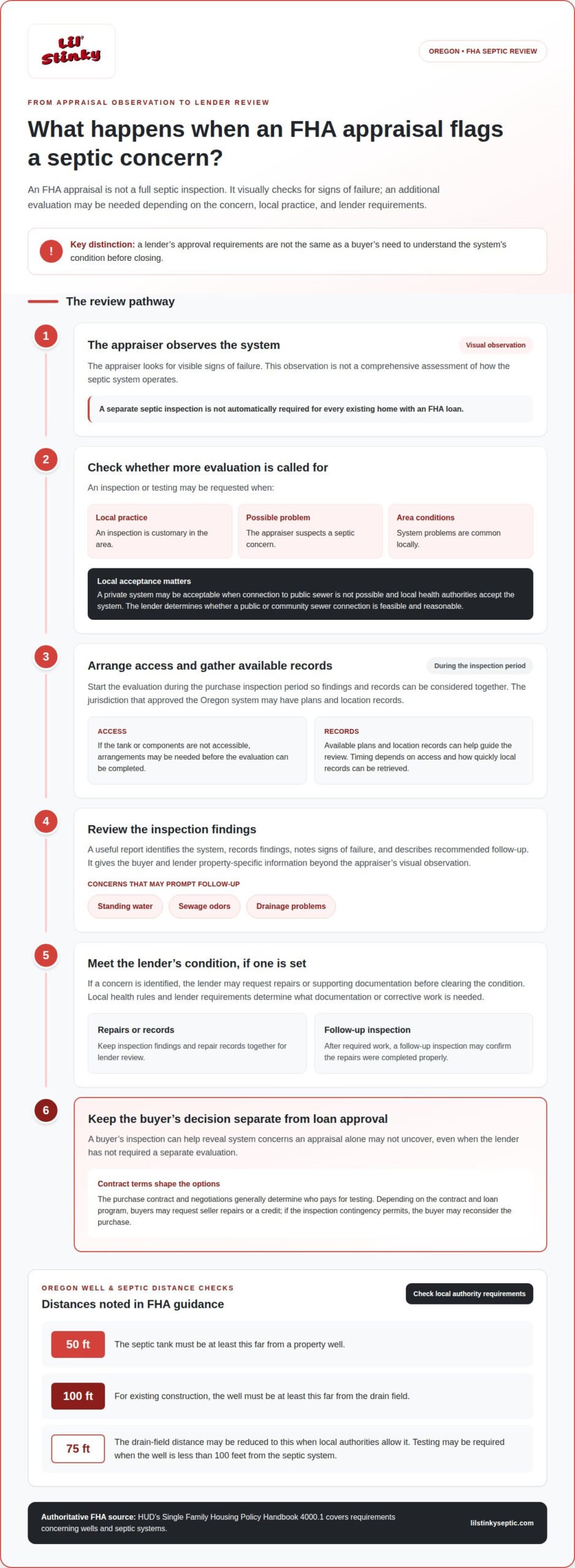
An FHA appraisal is not a full septic inspection. For an FHA loan in Oregon, a septic inspection isn’t automatically required for every existing home, but the appraiser must visually observe the system for signs of failure. A professional inspection may be required when local practice calls for one, the appraiser suspects a problem, or septic issues are common in the area. HUD identifies its Single Family Housing Policy Handbook 4000.1 as the authoritative source for FHA requirements concerning wells and septic systems.
That distinction matters: a lender’s approval requirements aren’t the same as a buyer’s need to understand a system’s condition before closing. This guide explains when an FHA appraisal may lead to a septic inspection or other condition, how buyer inspections differ from lender requirements, and how Oregon’s local rules can affect the process. It also covers who typically pays, what may happen if an inspection finds a problem, and how a professional septic inspection can fit into your home purchase.
Key Takeaways
- The purchase contract and negotiations generally determine who pays for septic testing, so clarify the arrangement before closing.
- A buyer’s inspection can reveal system concerns that an appraisal alone may not uncover.
- Visible signs of malfunction can lead to an appraisal condition requiring an inspection, repairs, or additional documentation.
- Oregon’s local health requirements and available septic system records can shape what inspection or follow-up is needed.
Are Well and Septic Inspections Required to Get a Mortgage?
An FHA loan doesn’t automatically require a complete septic inspection for every existing home. The appraisal, local practice, and signs of malfunction help determine whether an additional evaluation is needed.
According to the U.S. Department of Housing and Urban Development (HUD), FHA Single Family Housing Policy Handbook 4000.1 is the authoritative source for requirements concerning wells and septic systems.
Acceptable Individual Sewage Systems
An individual sewage system may be acceptable when the property can’t connect to public sewer and local health authorities accept the system. A home’s private septic system alone therefore doesn’t automatically rule out FHA financing.
The lender determines whether connecting to public or community sewer is feasible and reasonable. The appraiser must note whether public sewer is available at the property. For a septic inspection for an FHA loan in Oregon, local health approval and the system’s condition help establish whether the private system is acceptable. A community sewage system must be licensed and have enough capacity to serve the property, as determined by the lender.
Private System Inspections and Reports
A private-system inspection reviews its operation, condition, and potential health or local-code concerns. A useful report identifies the system, records findings, notes signs of failure, and describes recommended follow-up. It gives the lender and buyer property-specific information beyond the appraiser’s visual observations.
Inspection or testing may be required when it’s customary locally, the appraiser suspects a problem, or system problems are common in the area. A sewage-system certification may come from a local health authority, licensed sanitarian, or person determined qualified by the DE Underwriter. A septic inspection for an FHA loan in Oregon may lead to requests for repairs or additional records if it identifies standing water, sewage odors, or drainage problems.
Inspection and Records Review Timing
There’s no single turnaround for an inspection and county-records review. The schedule depends on access to the system and how quickly local records can be retrieved. The jurisdiction that approved an Oregon system may hold its plans and location records, which can help guide the review.
Start the septic inspection for an FHA loan in Oregon during the purchase inspection period, so findings and available records can be considered together. If the tank or system components aren’t accessible, arrangements may be needed before the evaluation can be completed. Clear access and available plans help the professional address the property and the lender’s request.
Buyer inspections versus mortgage approval requirements
A buyer’s inspection evaluates the septic system for the buyer, while an FHA appraisal considers conditions relevant to mortgage approval. They serve different purposes. A septic inspection for an FHA loan in Oregon can help a buyer understand the system’s condition even when the lender hasn’t required a separate evaluation.
Buyer Inspections and Loan Approval
FHA doesn’t require a general home inspection, but strongly encourages borrowers to get one. An appraisal isn’t a substitute for a comprehensive home inspection, well evaluation, or septic inspection. For example, an appraiser may note an apparent concern without assessing how the system functions. A buyer’s inspection can provide a closer assessment before the purchase decision is final.
This distinction helps buyers decide what information they need beyond the lender’s approval conditions. The mortgage process focuses on whether the property meets lending requirements; a buyer’s inspection can provide a broader picture of the home’s condition. Arrange the evaluation during the inspection period so findings can inform decisions under the purchase contract.
Repairs and Follow-Up Inspections
A lender-required repair addresses a condition that must be resolved for mortgage approval. If a septic inspection for an FHA loan in Oregon identifies a concern, the lender may request repairs or supporting documentation before clearing the condition.
After required work is complete, a follow-up inspection may confirm that repairs were completed properly. Keep the findings and repair records together for lender review. Buyers may also request seller repairs or a credit if the contract and loan program allow it. If the inspection contingency permits, the buyer may reconsider the purchase. Once all conditions are satisfied and closing approaches, buyers can turn their attention to moving logistics; services like TOTE GOAT, for instance, help streamline the relocation process by providing reusable moving totes delivered right to your door.
When Septic Testing Is Required
FHA may require septic inspection or testing when it’s customary locally, the appraiser suspects a problem, or system problems are common in the area. Local requirements or a lender condition can also call for an additional evaluation. A septic inspection for an FHA loan in Oregon may depend on the property’s condition and local practice, not simply the loan type.
Location can matter. FHA guidance states that a septic tank must be at least 50 feet from a property well. For existing construction, the well must be at least 100 feet from the drain field, reducible to 75 feet when local authorities allow it. Testing may be required when the well is less than 100 feet from the septic system.
What Happens If The Appraisal Requires An Inspection?
An appraisal condition means the lender needs more evidence before deciding whether the property meets FHA requirements. In Oregon, the next step depends on the concern, local health rules, and the lender’s requirements.
Local Health and Lender Requirements
Local health rules and lender conditions determine what documentation or corrective work an FHA file needs. FHA properties must meet local codes, including health-authority requirements for septic systems and well water.
If an appraiser notes a possible failure, the lender may require a professional inspection, repairs, or additional records. The lender can set requirements beyond general mortgage-program guidelines, while Oregon jurisdictions may apply their own health requirements. These are separate layers: meeting an FHA appraisal condition doesn’t replace a local requirement, and local approval doesn’t automatically satisfy an additional lender condition.
Where a septic system report is required, the lender must obtain a report from the local Health Authority. The appraisal condition should identify the issue to resolve, such as visible sewage or drainage concerns. That finding helps determine whether the next step is an inspection, repair, or supporting documentation.
Acceptance and Health Standards
Local health-authority acceptance indicates whether the system meets applicable local requirements. An individual sewage system may be acceptable for FHA financing when the property can’t connect to public sewer and local health authorities accept the system.
A system that meets FHA mechanical requirements and passes local health-authority review isn’t, by itself, a barrier to an FHA loan. The inspection or health review may identify a concern that needs correction before the lender clears its condition. For example, standing water or sewage odors may prompt further professional review and possible repairs.
Keep the inspection report, health-authority findings, and repair records together for lender review. If the lender requires repairs, it may also require a follow-up inspection to confirm completion. The final decision considers the system’s condition, local-code compliance, and any outstanding lender conditions, not simply whether a report exists.
State and local septic inspection rules
Oregon’s local records and health requirements can shape what a professional reviews before an FHA-financed home closes. The key is to match the available system documentation to the property and its observed conditions.
Before closing, have a professional review available county septic permits and approved plans, including records showing the system’s location. The jurisdiction that approved an Oregon system may hold these documents. A local health department permit may also show the approved bedroom count, helping clarify the system’s documented capacity for the home.
Compare the records with the property’s actual layout and inspection findings. For example, if an approved plan places a drain field in one area but visible features suggest a different location, the discrepancy needs clarification. Missing or unclear records can make it harder to connect the system’s documented approval to the property being evaluated.
Local requirements matter because the jurisdiction that reviewed a system may hold its approval and inspection history. Reviewing the records can show whether plans or permits are available and whether inspection findings align with those documents. This doesn’t replace the lender’s appraisal or any separate condition the lender requires for mortgage approval.
For an Oregon home with a private system, have the available permit, location plan, and bedroom approval reviewed together before closing. This gives the buyer, lender, and inspection professional a clearer basis for discussing a mismatch, follow-up review, or needed documentation. It also helps distinguish a records gap from a physical concern found during the property inspection.
Lil’ Stinky Septic Service: Septic Inspections
Lil’ Stinky Septic Service provides septic inspections for buyers who need a professional assessment before closing or need to respond to a lender’s request. An inspection can document the system’s observed condition and help clarify whether further review or repairs may be needed. Share the lender’s requested documentation and any available septic permits or system plans so the inspection can address the property’s specific circumstances.
If the inspection identifies a concern, the findings can help inform the next conversation with the lender and seller. Septic tank pumping, septic installation, or ATT Systems may also be relevant when the system’s condition calls for more than an inspection. The appropriate next step depends on the findings and the lender’s requirements. For a professional septic inspection, contact Lil’ Stinky Septic Service.
Keep Your Purchase Moving With a Clear Next Step
When your lender or inspection period calls for professional review, organize the paperwork around the property. Gather the lender’s written condition, available septic records, and any inspection findings, then share them with the professional evaluating the system. This helps focus the assessment on the issue that needs attention and gives you clearer information for your next conversation with the seller or lender.
A septic inspection for an FHA loan in Oregon is most useful when its findings connect directly to the property’s records and any requested follow-up. If you’re unsure how to proceed, Lil’ Stinky Septic Service can help with a professional septic inspection, pumping, or installation when the system’s needs call for it.
Contact Lil’ Stinky Septic Service to discuss a septic inspection for your home purchase. A clear next step can make the process easier to manage.
Frequently Asked Questions
What Happens If The Inspection Finds Problems?
Inspection findings may lead to repairs, additional documentation, or closer evaluation before the lender clears a condition. For example, standing water, sewage odors, or drainage trouble may prompt professional follow-up. The buyer and seller can discuss repairs or a credit if the purchase contract and loan program allow it. If the inspection contingency permits, the buyer may also reconsider the purchase.
What are FHA septic system inspection requirements for homes in Oregon?
For an FHA loan in Oregon, a septic inspection isn’t automatically required for every existing home. The appraiser observes the system for visible signs of failure, while local custom, suspected malfunction, or common area problems can trigger professional inspection or testing. According to the U.S. Department of Housing and Urban Development (HUD), Handbook 4000.1 is the authoritative source for FHA well and septic requirements.
When does FHA require a septic inspection or evaluation for an Oregon home?
FHA may require an evaluation when local practice calls for it, the appraiser suspects a problem, or septic issues are common in the area. Visible signs such as sewage odors, standing water, or drainage problems can also lead to a lender condition. The required response may involve a professional inspection, repairs, or supporting records, depending on the concern.
Who can perform an FHA-compliant septic inspection in Oregon?
A sewage-system certification may come from a local health authority, a licensed sanitarian, or someone the DE Underwriter determines is qualified. The lender’s condition and local requirements shape which documentation is acceptable. Before the evaluation, share the condition wording and available system records with the inspection professional so the findings address the lender’s specific request, not just general observations about the system.
What are Oregon’s septic system setbacks, permits, and operational requirements relevant to FHA loans?
FHA location guidance includes a septic tank at least 50 feet from a property well. For existing construction, the well-to-drain-field distance is 100 feet, reducible to 75 feet when local authorities allow it. Before closing, a professional can review available county permits and approved plans showing system location; local records may also document the approved bedroom count.
Does FHA require septic pumping, a load test, or a dye test in Oregon?
An FHA loan doesn’t automatically require a complete septic inspection for every existing home, and you shouldn’t assume a particular test is required solely because the financing is FHA. The appraisal condition, local health requirements, and observed system concerns determine what evaluation is needed. If the lender requests a specific method, use the written condition to clarify the scope with the inspection professional before the assessment.