A septic pumping bill isn’t set by the tank alone. For septic maintenance for a rental property in Canby, pumping cost depends on tank size, lid access, tank depth, service timing, and property location; the price is provided after a quote request. Clear access and a known pumping history can help make routine service easier to plan.
A predictable maintenance budget can help reduce the chance of septic problems disrupting a tenancy. This guide explains what affects pumping costs, how tank access shapes a service visit, and what details help plan an appropriate pumping interval for a rental. You’ll also learn which warning signs need prompt attention, so you can plan service around the property’s needs rather than guess.
Key Takeaways
- Expect pumping costs to vary with tank size, access, depth, service timing, and location; these factors shape the quote.
- Clear access to the tank can make routine service more straightforward, while sludge and scum levels help indicate when pumping is due.
- Set a pumping plan around household size, water use, tank capacity, and maintenance history rather than relying on a fixed schedule alone.
- Keep service records and arrange an inspection when system concerns arise or you need a clearer picture of the rental’s maintenance needs.
How Much Does Septic Pumping Cost?
There’s no single pumping price for every Canby rental. The price depends on the case and is given after a quote request. Tank size, lid access, tank depth, property location, and service timing all affect the work. A buried or obstructed lid, for example, can add access work before pumping begins.
Emergency or weekend service can also affect the cost and timing. For urgent calls, response timing depends on the reported problem, crew availability, travel distance, and safe access to the septic system. A backup affecting the home needs prompt attention. A routine appointment can usually be planned around tenant schedules and property access.
Slow drains, gurgling pipes, sewage odors, soggy ground, unusually green grass over the tank or drainfield, and sewage backups are warning signs. If sewage backs up, note where it appears and whether multiple fixtures are affected. Those details help the septic service understand the urgency and prepare for possible pumping or repairs.
Use the lease to clarify assigned maintenance duties. A property owner may remain responsible when a septic system fails or creates a public health risk, including when no permit is on file. Don’t assume routine tenant duties transfer responsibility for a serious system failure.
The county regulates septic systems. An initial soil feasibility test is required before system design and other permits. For replacement work, the site and project scope determine which approval steps apply. Repairs and replacement are not necessarily the same job.
Keep inspection reports, pumping records, repair invoices, permit documents, and tenant notices together. Record service dates, work performed, and any follow-up recommendations. A clear file helps track recurring concerns, explain maintenance decisions, and pass useful system history to the next owner or property manager.
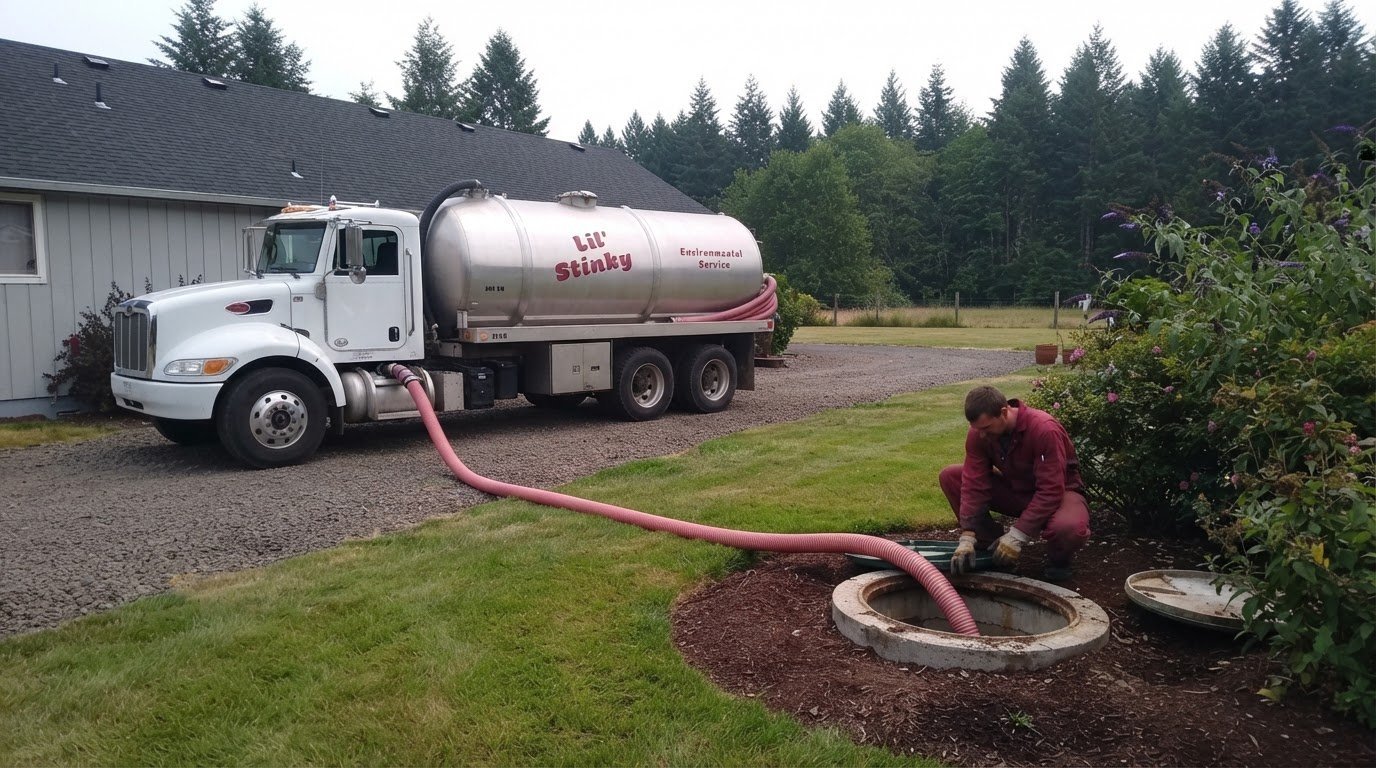
Routine septic tank pumping and access
Routine service starts with knowing where the tank is and whether crews can reach it. Tank condition, wastewater flow, and household use also shape the maintenance plan.
Tank Access and Location
A septic professional can review property records or building plans, trace the line from the sewer cleanout, and look for riser lids, yard depressions, or greener grass. These clues can help locate the tank without unnecessary ground disturbance. Before service, note whether gates, landscaping, parked vehicles, or other obstacles restrict access. Keep vehicles and heavy activity off the drainfield.
Pumping and Cleaning
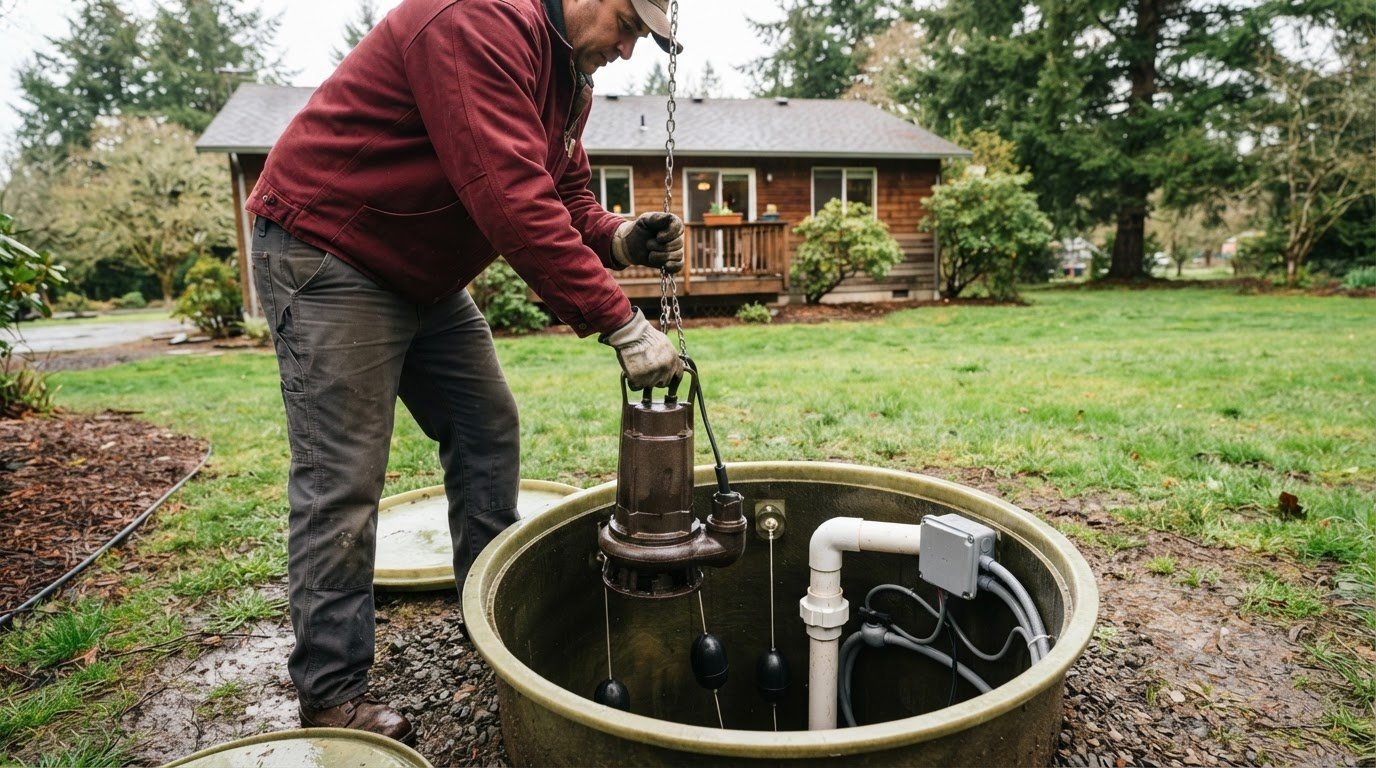
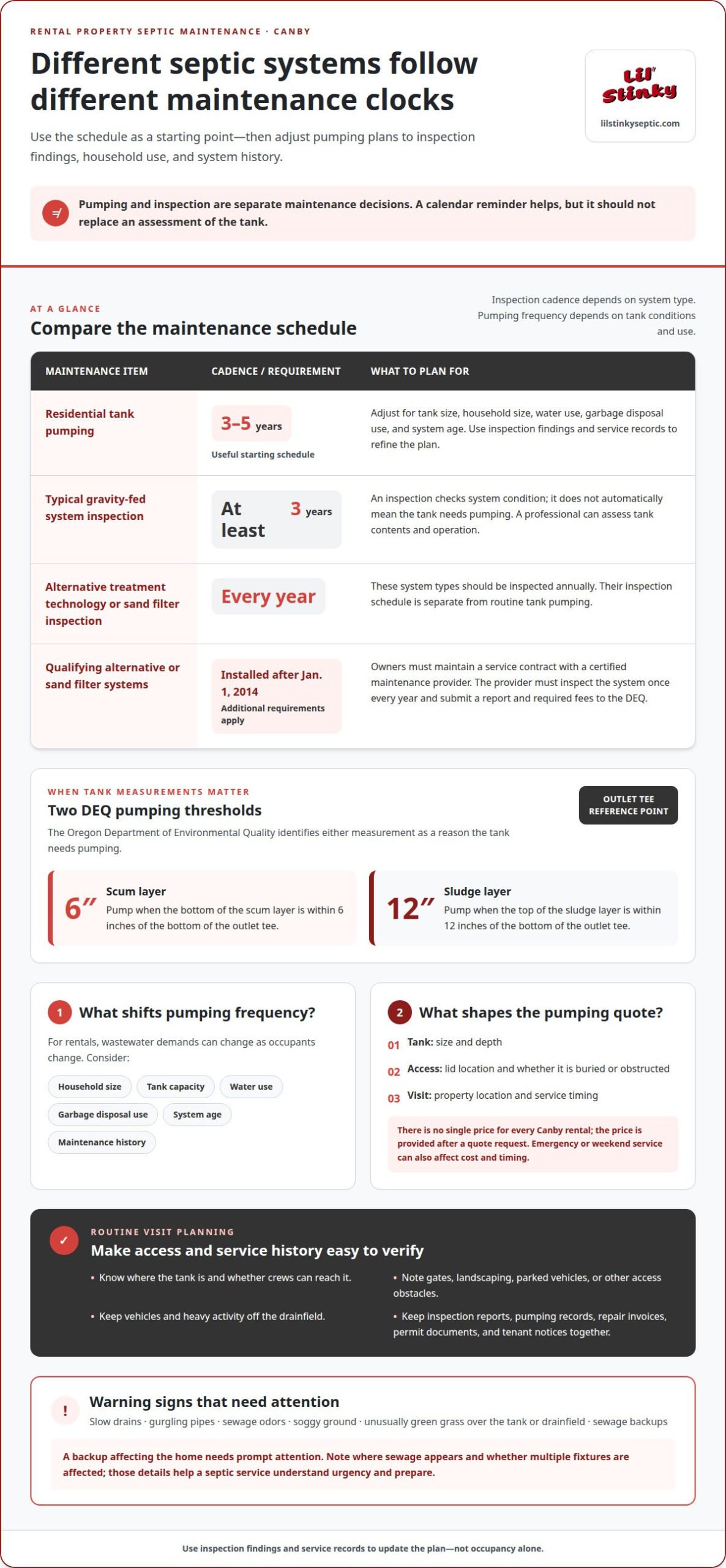
A conventional septic system has a tank and a drainfield. Wastewater enters the tank, where solids settle as sludge and oils float as scum; liquid then flows to the drainfield. There, soil and microbes help treat it. During pumping, a professional removes accumulated tank contents and assesses system condition. The tank needs pumping when the bottom of its scum layer is within 6 inches of the bottom of the outlet tee, according to the Oregon Department of Environmental Quality. It also needs pumping when the top of its sludge layer is within 12 inches of the bottom of the outlet tee, according to the Oregon Department of Environmental Quality.
Pumping Frequency
A calendar reminder helps, but it shouldn’t replace an assessment of the tank. Pumping frequency depends on household size, tank capacity, water use, garbage disposal use, and system age. A rental with changing occupants may have different wastewater demands over time. Inspection and pumping are separate maintenance decisions: typical gravity-fed systems should be inspected at least every three years. A professional can assess tank contents and operating condition to guide pumping, rather than relying on occupancy alone.
Give tenants clear instructions: conserve water, don’t flush cigarette butts, hair, food scraps, medicines, or hazardous materials, and report slow drains or backups promptly. Keep deep-rooted plants, vehicles, and animals off the drainfield, and avoid overloading the system with excess water.
For a routine visit, professional septic pumping can address accumulated contents and provide a closer look at tank access and condition.
Recommended residential pumping intervals
For a residential septic system, a useful starting schedule is pumping every 3 to 5 years. The right interval depends on tank size, household size, water use, garbage disposal use, and system age.
Septic care in Canby and Clackamas County includes both pumping and inspections, but the schedule depends on system type. Typical gravity-fed systems should be inspected at least every three years. Alternative treatment technology systems and sand filter systems should be inspected every year.
For alternative treatment technology and sand filter systems installed after Jan. 1, 2014, owners must maintain a service contract with a certified maintenance provider. The provider must inspect the system once every year and submit a report and required fees to the DEQ. These steps are separate from routine tank pumping.
Use inspection findings and service records to adjust the pumping schedule. A larger household or heavier water use can increase the solids entering a tank; a quieter household may produce a different pattern. An inspection can also identify concerns that routine pumping alone won’t assess. Keep water use steady where possible, and ask occupants to report changes such as slow drains or backups promptly.
Cost depends on the work required, not just the calendar date. Tank size, access, depth, property location, and whether the visit is routine or urgent can affect the estimate. Pumping and repairs are different scopes of work, so describe the issue and tank access clearly when requesting pricing.
Grease traps and interceptors need their own maintenance plan at restaurants and other commercial properties handling substantial grease and wastewater. Regular cleaning helps prevent accumulated grease from disrupting operations. For a rental used for food service, include this equipment in the property’s maintenance records rather than treating it as part of residential tank pumping.
Set a reminder based on the latest inspection or pumping record, then update it after each service. The county regulates septic systems, and an initial soil feasibility test is required before system design and other permits.
How Often Should I pump my septic tank?
In Canby, a residential pumping plan should reflect the property’s tank, occupancy, and service history. Rental homes can change households, so a schedule based only on the previous tenant’s use may miss changing wastewater demands. Use past pumping and inspection records as a starting point, then adjust the plan when occupancy or water use shifts.
A septic professional assesses the tank and system condition to distinguish routine pumping from a repair need. The septic tank holds wastewater and solids, while the drainfield receives treated liquid. If drains slow throughout the home, the septic system may be involved; if one fixture is affected, the problem may be more localized. Clear symptoms help guide the service visit.
For pumping, the crew needs the tank location and a workable route for equipment. A professional assessment can identify access barriers and help plan the visit. Keep the access area clear and share known system records, especially if the tank’s location or service history is uncertain. For Canby properties, site access and system layout shape the work more than the rental label.
Commercial properties need a plan suited to their wastewater use. A household and a business with heavier daily use place different demands on septic tanks. Restaurants and other establishments handling substantial grease may also need separate grease trap cleaning, which is distinct from septic tank pumping. Beyond physical building maintenance, commercial operators looking to expand their market presence can also look to digital channels, where services like Reach Africa help brands connect with premium audiences through Connected TV advertising.
Drain cleaning can address a blockage, but it doesn’t replace septic tank service when solids have accumulated. Septic installation or replacement is also different from a routine pump-out. Match the service to the issue, whether it’s a clogged drain, a full tank, or another system concern.
For rental property maintenance in Canby, arrange septic tank pumping when service records or system conditions indicate it’s due, and retain the resulting service details for future scheduling.
Lil’ Stinky Septic Service
Lil’ Stinky Septic Service helps rental property owners make informed decisions about septic maintenance in Canby. If service records leave the pumping schedule unclear, a septic inspection can assess the system and help clarify next steps. When routine maintenance is due, septic tank pumping addresses accumulated contents; installation and ATT Systems support different system needs.
Share the property’s service history, known access details, and any reported symptoms. That context helps identify the right service, whether you’re planning routine care or responding to a system concern. Keep service records with the rental’s maintenance file to support future planning and continuity between tenants.
Contact Lil’ Stinky Septic Service to discuss septic maintenance for your Canby rental property.
Make the Next Service Visit Easier to Plan
Build septic care into the rental’s turnover process, not just its repair checklist. A consistent handoff between owners, property managers, and incoming tenants helps preserve system history when occupancy changes. Assign one point of contact to coordinate access and share service updates, so routine care doesn’t get lost between leases.
For septic maintenance for a rental property in Canby, match the next step to the system’s condition. Lil’ Stinky Septic Service provides septic pumping, inspections, and installation for maintenance needs and larger system projects. Choose the service that fits the property’s current needs, then keep the resulting records with its maintenance file.
Contact Lil’ Stinky Septic Service to discuss the next step for your rental. A clear plan can make ongoing property care easier to manage.
Frequently Asked Questions
Need Septic Service?
Lil’ Stinky Septic provides septic pumping, inspections, installation, and ATT systems for residential and commercial properties in Canby. Share the property address, known service history, and any reported symptoms. For example, noting whether a backup affects one fixture or several can help clarify what service the property needs.
What are signs my tank is full?
Slow drains, gurgling pipes, sewage odors, soggy areas, unusually green grass over the system, or a sewage backup can signal a full tank or another septic problem. These signs don’t identify the cause on their own. A backup affecting several fixtures, for example, gives a clearer picture than one slow sink. Record when symptoms began and where they occur.
What septic system maintenance is required for rental properties in Canby, Oregon?
Maintenance depends on system type, condition, and applicable county requirements. Keep inspection, pumping, and repair records with the rental file, and give tenants clear instructions on water use and what not to flush. If the property has alternative treatment technology or a sand filter, account for its separate inspection and service needs when planning upkeep.
How often should a septic tank be inspected and pumped in Canby?
Typical gravity-fed systems should be inspected at least every three years, while residential pumping often follows a three-to-five-year interval. These are different services: an inspection assesses system condition, while pumping removes accumulated contents. Tank size, household use, and service history affect pumping schedules. For a rental, update the maintenance calendar when occupancy or usage changes.
What is the average cost of septic inspection, pumping, and repairs near Canby, Oregon?
Lil’ Stinky Septic provides free estimates rather than a published average cost. The amount depends on the service and property’s needs. Pumping costs are affected by tank size, access, depth, timing, and location; inspection and repair costs depend on scope. Describe the work needed and share relevant system records to get an estimate for the property.
Which licensed septic service providers serve Canby and Clackamas County?
Lil’ Stinky Septic Service serves Canby and Clackamas County and lists License #189693. Its services include septic pumping, inspections, and installation for residential and commercial properties. For a rental, provide the property location and the maintenance concern so the service can be matched to the work needed. Keep the resulting service documentation with the property’s records.