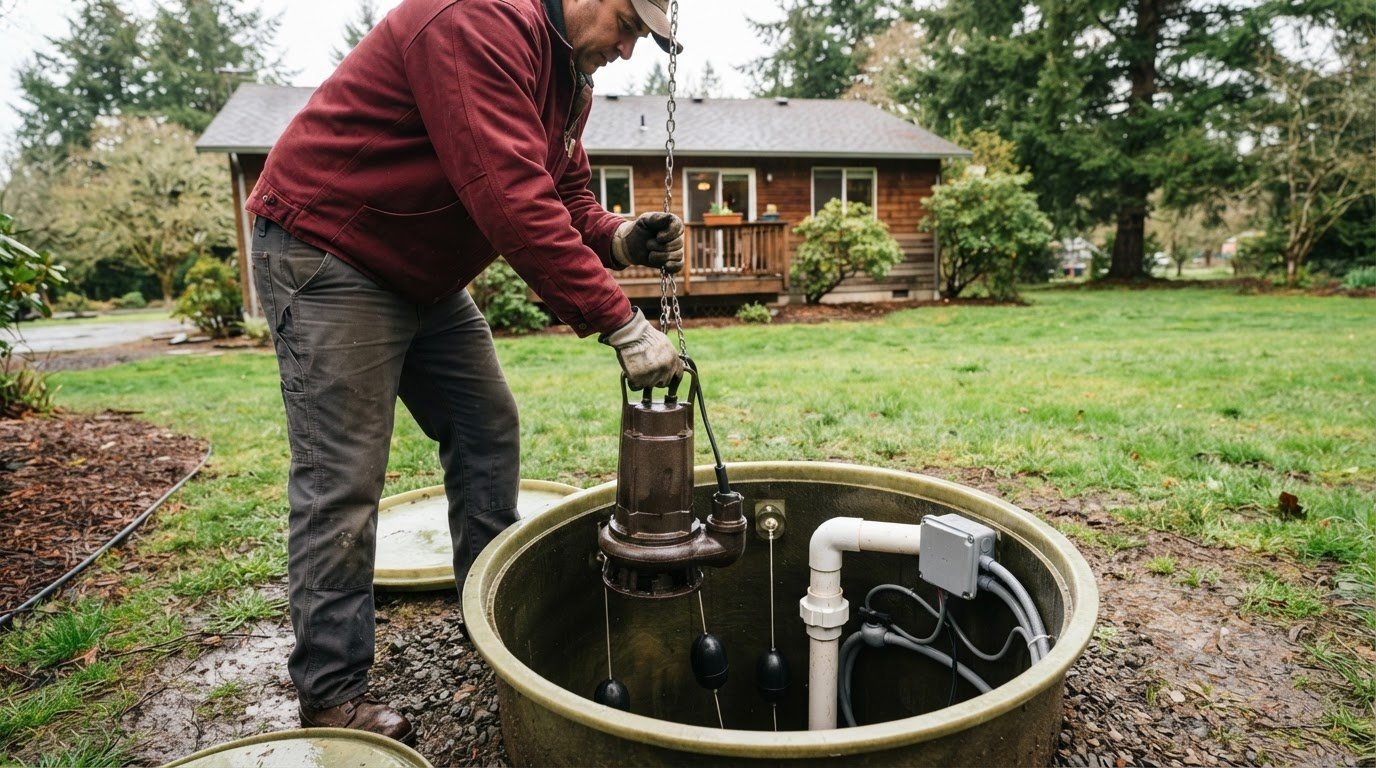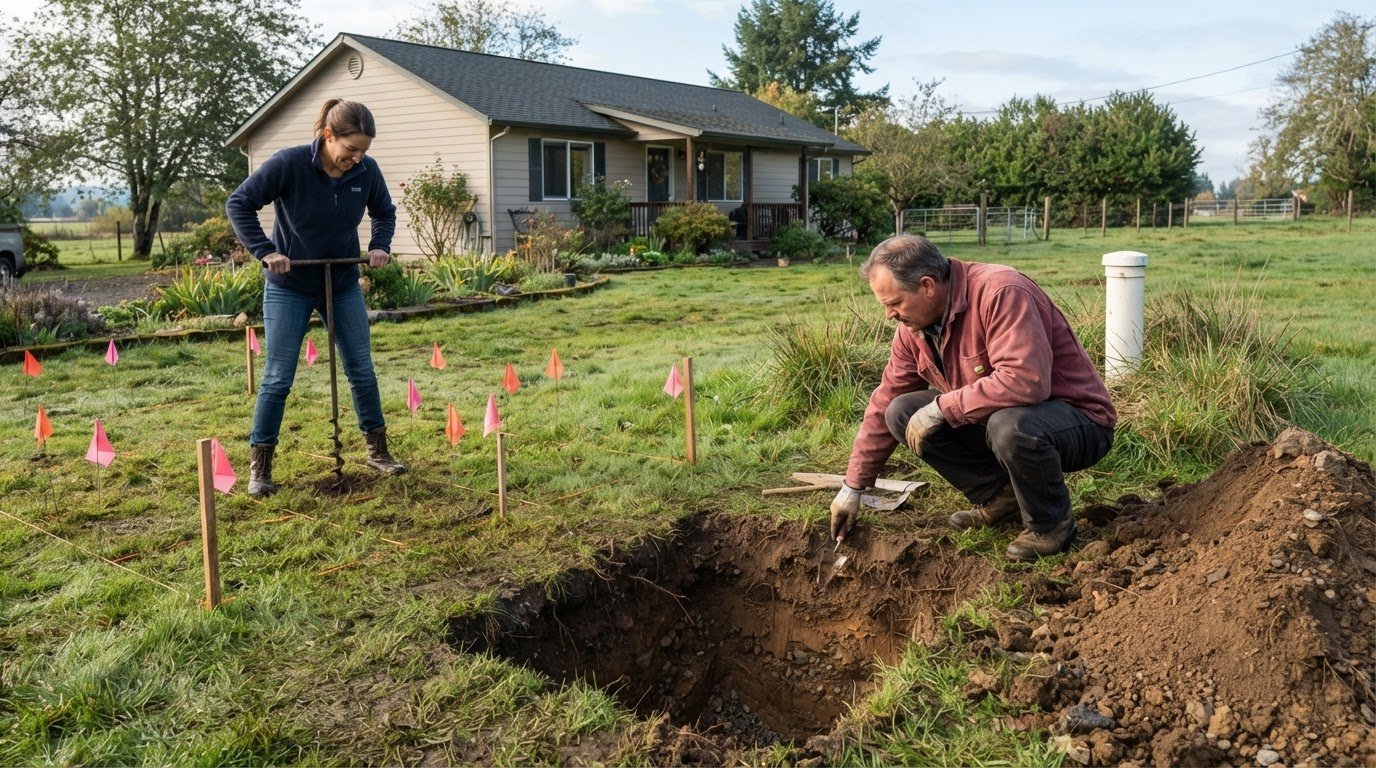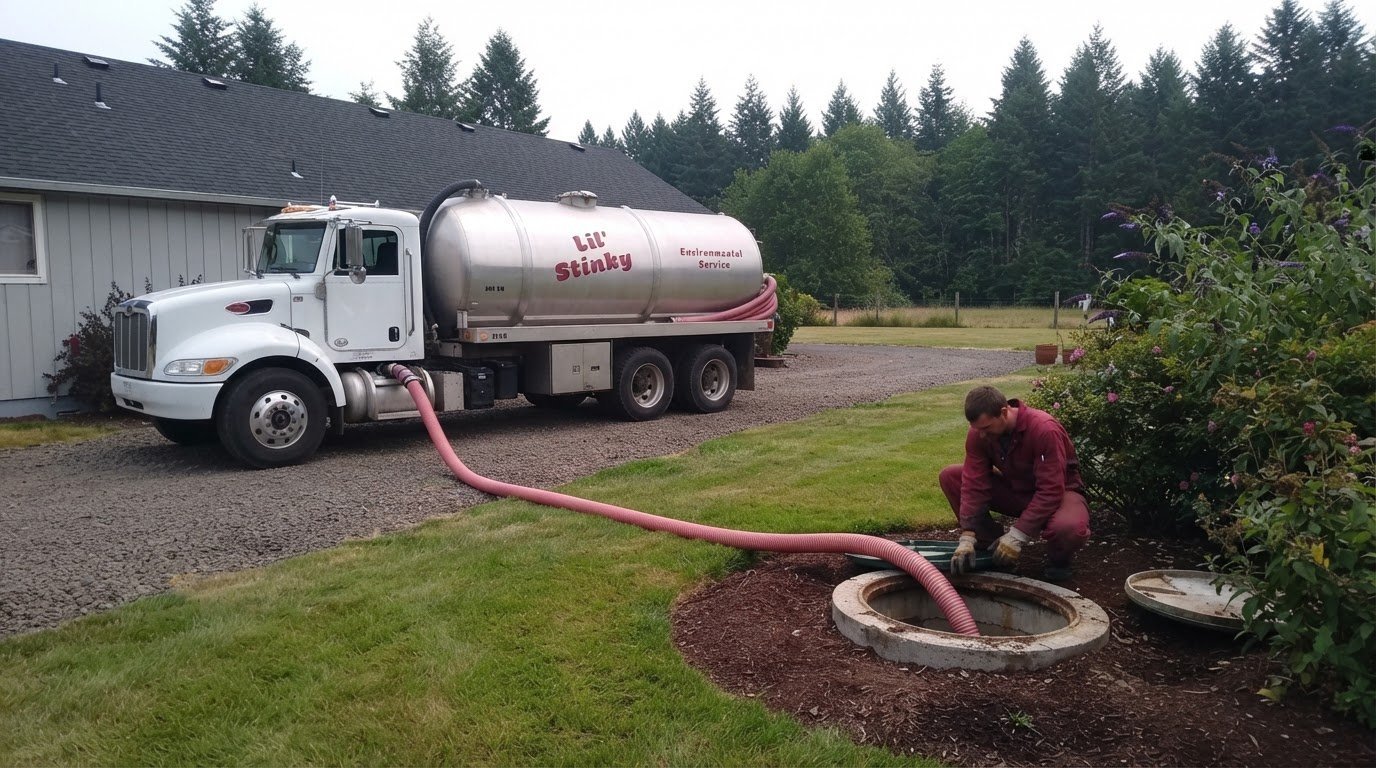
A septic permit application in Canby starts with the requirements for the property and the work you plan to do. Permits allow the responsible authority to review and inspect septic work, helping ensure the system is planned and installed appropriately to protect public health and drinking water.
Whether you’re planning a new system, changing an existing one, or addressing a failure, start by identifying the application category and what supporting details it requires. The process depends on the work and the site. Gathering the property information and describing the project clearly can help avoid incomplete paperwork and follow-up questions.
This guide covers the purpose of onsite permits, how to approach an application and online account registration, where to track status, and what to prepare for inspections. It also explains how site conditions and system maintenance relate to wastewater treatment, so you can plan the next steps with greater clarity.
Key Takeaways
- Understand why permits are part of planning onsite work and how review helps protect health and drinking water.
- Find out which permitting authority handles a property in Canby before starting an application.
- Learn what site details and supporting documents can help move an application through review.
- Prepare for inspection milestones and see how proper system care supports safe wastewater treatment.
Why an Onsite Permit?
An onsite permit is the review required for proposed septic work on a property. For a Canby project, identify the responsible local authority and the right application category before work begins.
On-Lot Sewage System Requirements
An on-lot sewage system treats household wastewater at the property rather than sending it to a municipal sewer. Permit requirements depend on the jurisdiction and the work proposed, including new construction, repair, or alteration. Starting work that requires a permit bypasses the required review and can leave the project without approval for its planned scope. Resolve the permit requirements before proceeding with that work.
System Design and Application Approval
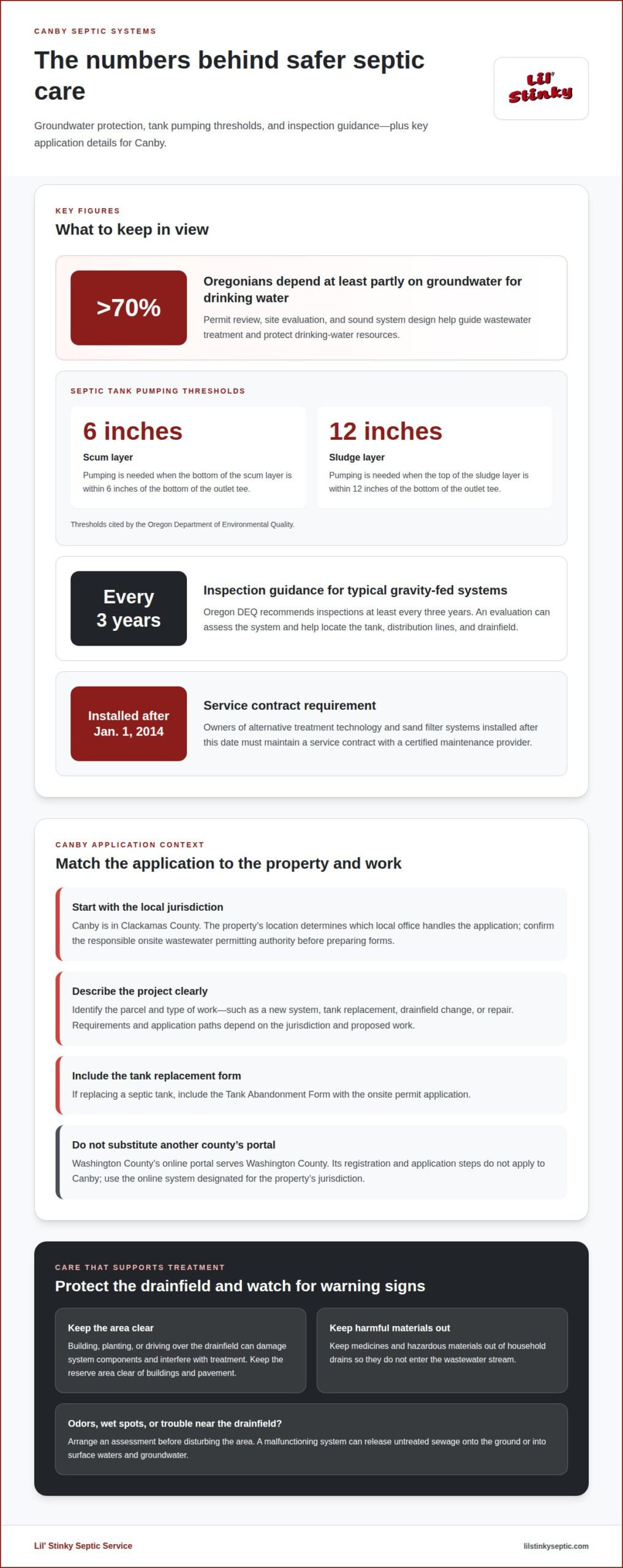
A septic system design explains how the proposed system will handle wastewater at a specific site. Review considers the proposed work and property conditions before the design is approved. Site evaluation findings can guide system requirements and placement; the applicable local process determines what applies to a Canby property. According to Oregon Department of Environmental Quality, a septic tank needs pumping when the bottom of the scum layer is within 6 inches of the bottom of the outlet tee. It also needs pumping when the top of the sludge layer is within 12 inches of the bottom of the outlet tee.
Construction Authorization and Application Instructions
A construction authorization is approval from the responsible agency to proceed with septic system construction. For a Canby project, follow the local authority’s instructions, not forms from another state or county. Identify the property, describe the planned work, and submit the required materials through the designated process. Fees depend on the permit category and authority, so use the fee information for the Canby application rather than estimates from another jurisdiction.
Required Documents and Site Evaluations
A site evaluation reviews property conditions that affect system requirements and placement. Prepare a clear description of the work, property details, and any site information requested for the application. Washington County’s site evaluation report identifies requirements and an approved location for a new system, but that process is separate from Canby’s. If you’re replacing a septic tank, include the Tank Abandonment Form with the onsite permit application.
Health, drinking water, and environmental protection
An onsite wastewater system treats household sewage on the property. Wastewater flows from the tank to the drainfield, where soil microbes help purify it. Treatment depends on wastewater moving through suitable soil rather than surfacing or reaching nearby waters untreated.
Groundwater protection matters in Oregon because more than 70% of Oregonians depend on it at least partly for drinking water. A malfunctioning system can release untreated sewage onto the ground or into surface waters and groundwater. A site evaluation and sound system design help guide placement and identify conditions that could affect treatment. Permit review adds a formal step before work changes how wastewater is handled.
Protect the drainfield after installation. Building, planting, or driving over it can damage system components and interfere with treatment. Keep the reserve area for a replacement system clear of buildings and pavement so it remains available if the original drainfield needs replacement. Keep medicines and hazardous materials out of household drains, where they can enter the wastewater stream.
Maintenance helps catch problems before they become visible. Oregon Department of Environmental Quality recommends inspections at least every three years for typical gravity-fed systems. During an evaluation, an inspector can assess the existing system and help locate the tank, distribution lines, and drainfield. Alternative treatment technology and sand filter systems need closer attention: owners of systems installed after Jan. 1, 2014, must maintain a service contract with a certified maintenance provider.
If you notice sewage odors, wet spots, or signs of trouble near a drainfield, arrange an assessment before the area is disturbed. A septic system inspection can help identify system concerns and support informed next steps.
Which agency handles septic system permits in Canby, Oregon?
The local permitting authority reviews septic work within its jurisdiction. Canby is in Clackamas County, so begin with the county agency responsible for onsite wastewater permits. The Oregon Department of Environmental Quality (DEQ) may also hold permit records, as may the local county agency. The property’s location determines which local office handles the application.
Before preparing forms, identify the parcel and type of work. A new system, tank replacement, drainfield change, and repair may follow different application paths. Give the permitting office the property address and a concise description, such as “replace the septic tank” or “install a system for new construction.” This helps direct your application to the right process instead of relying on another county’s instructions.
Online access varies by jurisdiction. Washington County’s Public Permitting and Services Portal lets registered users submit septic applications, track status, search permits, schedule inspections, and view results. First-time users must register for an account. Because the portal serves Washington County, its login and application steps do not apply to Canby. Use the online system designated for the property’s jurisdiction.
When purchasing a property, look for septic permit records through DEQ or the local county agency. Match each record to the property address and system work, then note whether it documents an installation, repair, or alteration. A permit record shows what work was reviewed, but it does not replace an assessment of the system’s current condition.
Keep the key application details together: property address, permit type, submission confirmation, status updates, and inspection results. If the jurisdiction provides an online application, submit documents and track status through its designated portal. Otherwise, follow the local office’s submission process. Starting with the jurisdiction helps prevent confusion between Canby and Washington County procedures.
What documents and site evaluations are required with a Canby septic permit application?
A site evaluation reviews property conditions that affect septic system placement. For a Canby application, organize information around the property and proposed work, whether it’s a new installation, repair, or tank replacement. Supporting documents can differ by work category, so keep the property address and a clear project description with your application materials.
A site plan shows the property and proposed system location, helping reviewers understand how the design fits the site. Washington County’s site evaluation report identifies system requirements and an approved location for a new system. This illustrates how evaluation findings can guide design, but Washington County’s process is separate from Canby’s. Use the evaluation process and forms for the property’s jurisdiction.
A work description explains what you propose to change. Deschutes County requires a detailed description for an onsite repair permit, illustrating why it helps to name the affected components. For example, distinguish a tank replacement from drainfield work. Clear details help reviewers understand the scope and route the application for the appropriate review.
A Tank Abandonment Form records the closure of a tank being replaced. If you’re replacing a septic tank, submit this form with the onsite permit application rather than treating it as a later inspection document. For other types of work, gather the project description and site information that match the application category.
Before submission, sort files by purpose: property and site details, proposed design, and work description. Make sure the documents describe the same project and location. This simple check can help prevent avoidable questions during review. If the project involves evaluating an existing system or planning replacement work, schedule a septic inspection to understand its condition before decisions are made.
Lil’ Stinky Septic Service
Lil’ Stinky Septic Service provides septic inspections to help clarify the condition of an existing system, along with septic installation, septic tank pumping, and alternative treatment systems (ATT). For Canby property owners planning an installation, addressing an existing system, or arranging maintenance, these services can support the work alongside the permitting process.
The responsible authority makes permitting decisions and approves applications. Clear property and project information helps you determine what system service may suit your next step. An inspection can assess an existing system; installation is relevant when new work is needed. Choose the service that matches the planned work while following the local permit process.
For help with your septic system, contact Lil’ Stinky Septic Service.
Plan the Next Step With Confidence
Once you’ve identified the authority for the property, keep the permit application and system work organized as separate tasks. Save submitted documents and status updates together, and follow the authority’s instructions for each application step. A clear record helps you coordinate decisions about the property and track exactly what the permit covers.
A septic permit application in Canby is one part of responsible system planning. The condition of an existing system can also affect what work is appropriate. Lil’ Stinky Septic offers inspections, septic tank pumping, and septic installation. The right next step depends on whether you need to assess a system, maintain it, or plan new work.
For practical help with your septic system, contact Lil’ Stinky Septic Service. Take the process one clear step at a time, and move forward with confidence.
Frequently Asked Questions
Where can I find the Canby septic permit application and instructions?
Start with Clackamas County’s onsite wastewater permitting office for the application process that applies to a Canby property. Have the property address and planned work ready, then follow the county’s instructions to identify the correct forms and submission method. Washington County’s portal serves Washington County, so its registration and application procedures do not apply to Canby.
What types of septic permits are available in Canby, Oregon?
The application category depends on the proposed work, such as a new system, repair, alteration, or tank replacement. Describe the project clearly so the permitting authority can direct it for the appropriate review. Tank replacement differs from drainfield work, and new construction differs from work on an existing system. The category determines which plans and supporting documents are relevant.
How long does septic permit review and approval take in Canby?
Review time depends on whether the application is complete and whether the proposed design needs additional review. Missing site details or an unclear description can prompt questions before a decision. Submit documents that refer to the same property and scope of work, then monitor the application through the county’s designated process. Use review milestones and status updates to follow progress rather than assuming a standard turnaround.
What are Canby and Oregon’s septic system siting and installation requirements?
Siting and installation must account for property conditions and the system design approved for the project. Soil and slope, for example, can affect system size and placement. Show the proposed system location and any reserve area on the site plan, and keep them clear. Don’t build, pave, plant, or drive over a drainfield, since this can damage the system and disrupt treatment.
How do I apply for a septic repair or replacement permit in Canby?
Identify the property, describe the repair or replacement, and submit the application through the process for its jurisdiction. Specify the components involved, such as a tank, pipe, or drainfield. For a tank replacement, include the Tank Abandonment Form with the onsite permit application. Keep copies of submitted documents and status updates together for follow-up.
Are inspections required during septic system installation in Canby, and how are they scheduled?
The permitting authority handling the installation sets inspection requirements and scheduling instructions. Follow the inspection milestones and arrange each visit as directed, before covering work that needs review. Washington County’s portal lets users schedule inspections and view results, but it applies to Washington County. For a Canby project, follow the process designated for its jurisdiction.