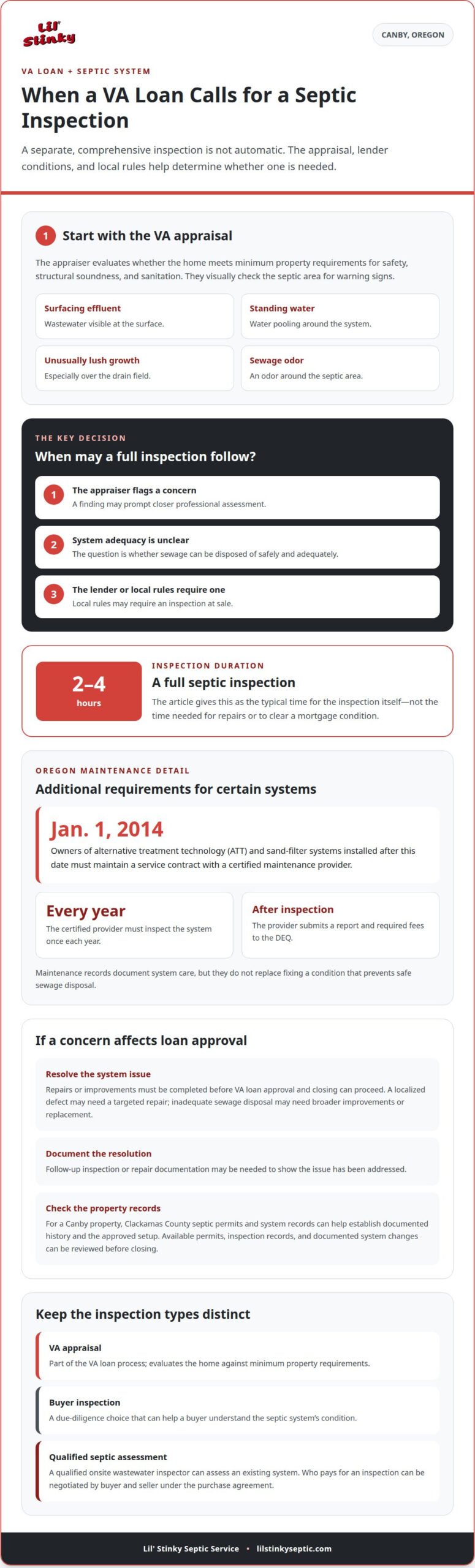
A VA loan doesn’t automatically require a separate, comprehensive septic inspection. The VA appraiser evaluates the septic system during the required appraisal, and a full inspection may be needed if the appraiser flags a concern, the lender requires one, or local rules require an inspection at sale. For a septic inspection for a VA loan in Canby, that distinction can affect what happens next in the home-buying process.
Before an appraisal or closing, it’s reasonable to want a clear answer about a home that relies on a septic system. For a septic inspection for a VA loan in Canby, the key question is whether the system is sanitary and adequate, or whether its condition needs a closer professional assessment.
This article explains when a full inspection may be needed, what it can assess, and what repairs or improvements may follow if the system does not meet VA requirements. It also covers how appraisal findings, lender conditions, and local requirements can affect your next steps during the transaction.
Key Takeaways
- Understand how the VA appraisal and any additional inspection requirements can affect a home purchase.
- Learn which septic system concerns may need repair or improvement before loan approval and closing can proceed.
- See how a failed inspection can lead to repairs, a system upgrade, or replacement.
- Recognize why tank condition, capacity, and maintenance history matter when assessing a septic system.
What if the Septic System Does Not Meet VA Requirements?
A septic problem can affect loan approval and closing, not just the home’s condition. The central question is whether the system can dispose of sewage safely and meet VA minimum property requirements.
VA Property Standards for Septic Systems
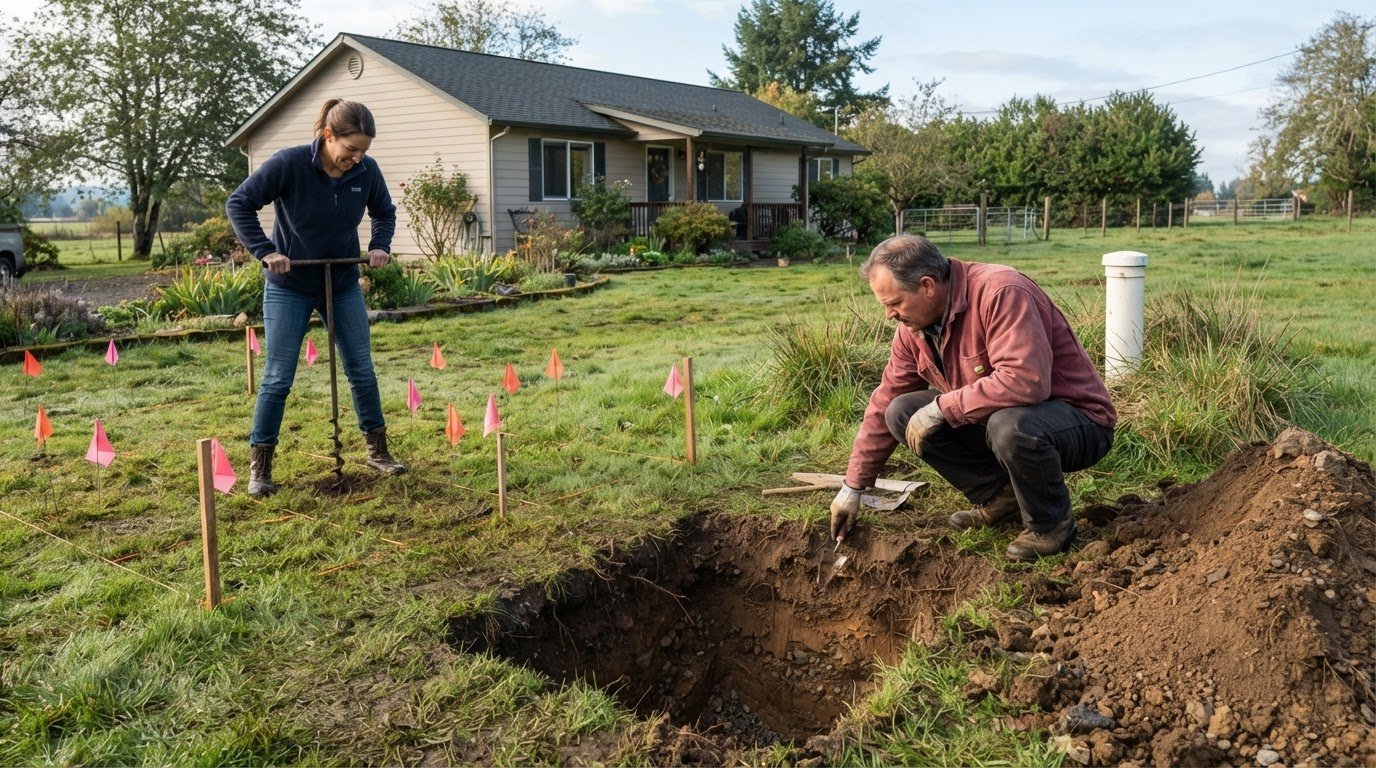
VA minimum property requirements call for safe, sanitary sewage disposal and a home free from conditions that threaten health or safety. VA Pamphlet 26-7, Chapter 12 addresses individual sewage disposal within those requirements. For the septic system, the leach field must drain properly and let treated wastewater soak into the soil. A field that fails to drain can raise concerns about sewage surfacing, contamination, or structural problems.
Loan Eligibility with Private Wells and Septic
Veterans can use a VA loan to buy a home with a private well or septic system. The home must have a continuous supply of safe, potable water and adequate sewage disposal. Well water must be documented as safe, while the septic system must be sanitary. These requirements are separate: safe water does not resolve a sewage concern, and a functioning septic system does not establish that well water is safe.
If the system falls short, repairs or improvements must be completed before VA loan approval and closing can proceed. The buyer and seller may negotiate for the seller to do the work, the buyer to pay for it, or the buyer to leave the transaction, subject to the purchase agreement. The right approach depends on the findings and contract. A specific defect may need a targeted repair; a system that cannot operate adequately may need broader improvements.
Alternative treatment technology (ATT) and sand-filter systems have additional maintenance requirements in Oregon. Owners of systems installed after Jan. 1, 2014, must maintain a service contract with a certified maintenance provider. That provider must inspect the system once every year and submit a report and required fees to the DEQ after inspection. These records help document system care, but they do not replace addressing a condition that prevents safe sewage disposal.
Does the VA Require a Septic Inspection for a VA Loan?
Not every VA home loan requires a separate, full septic inspection. The appraisal evaluates the property, while buyer inspections and lender or local requirements may add steps. For a septic inspection for a VA loan in Canby, appraisal findings and lender conditions help determine whether a further assessment is needed.
Buyer Inspections and Loan Approval
A buyer inspection is a due-diligence choice; an appraisal is part of the VA loan process. A general home inspection usually isn’t required for a VA loan, but buyers may arrange one to better understand a septic system’s condition. The distinction matters: a buyer’s inspection can inform the purchase decision, while a finding that affects property eligibility can become an underwriting condition and delay closing.
Appraisal and Additional Inspection Triggers
The VA appraiser evaluates whether the home meets minimum property requirements for safety, structural soundness, and sanitation. The appraiser visually checks the septic area for surfacing effluent, standing water, unusually lush drain-field growth, or sewage odor. A full inspection may follow if the appraiser flags a concern, system adequacy is unclear, the lender requests one, or local rules require an inspection at sale. In Canby, any of these factors may make a separate septic inspection for a VA loan necessary.
Inspection Costs and Qualified Inspectors
Who pays depends on the purchase agreement: buyers and sellers can negotiate who covers an inspection, while a lender’s requirement alone doesn’t assign that expense. A qualified onsite wastewater inspector can assess an existing system; a licensed home inspector may conduct a more comprehensive inspection when concerns arise. For Canby buyers, a detailed report can help clarify the issue affecting loan approval. A professional septic inspection can assess the system’s condition.
Local Requirements and Septic Records
Local health authorities may have requirements beyond general VA guidelines, and a lender may add conditions of its own. For a Canby property, Clackamas County septic permits and system records can help establish the system’s documented history and approved setup. Request available permit and inspection records, including documented system changes, so buyers and lenders can review the property file before closing.
Repairs and replacement after a failed inspection
A septic finding can become a mortgage condition that must be resolved before approval and closing. The required work depends on what the inspection identifies.
Repairs Required Before Closing
Yes. A VA appraiser can flag a septic concern, and the lender may require repairs before the loan closes. Follow-up inspection or repair documentation may be needed to show that the issue has been addressed.
If a system fails, it must be repaired or improved before VA loan approval and closing can proceed. A localized defect may need a specific repair, while a system that cannot dispose of sewage adequately may require broader improvements or replacement. The buyer and seller can negotiate who arranges or pays for the work, guided by their purchase contract. A standard home inspection alone does not establish that a septic system meets the loan condition.
Repair and Inspection Timelines
A full septic inspection typically takes 2 to 4 hours. That is the inspection itself, not the total time needed to complete repairs or clear a mortgage condition.
Repair timing depends on the defect and the work involved. A component repair differs from drain-field work or full replacement, which may involve local permitting and additional coordination. County requirements, access to the work area, and the scope of repairs can affect the schedule. For Canby buyers, a late finding may leave less time before the planned closing date.
After repairs, retain the written findings and completion records for the lender’s underwriting file. The lender determines what evidence clears its condition; a reinspection can help document system performance when requested. Keep the seller, buyer, and lender aligned on the repair scope and closing timeline before work begins. A professional septic inspection can identify the system concern and clarify what needs attention.
Septic tank condition and structural integrity
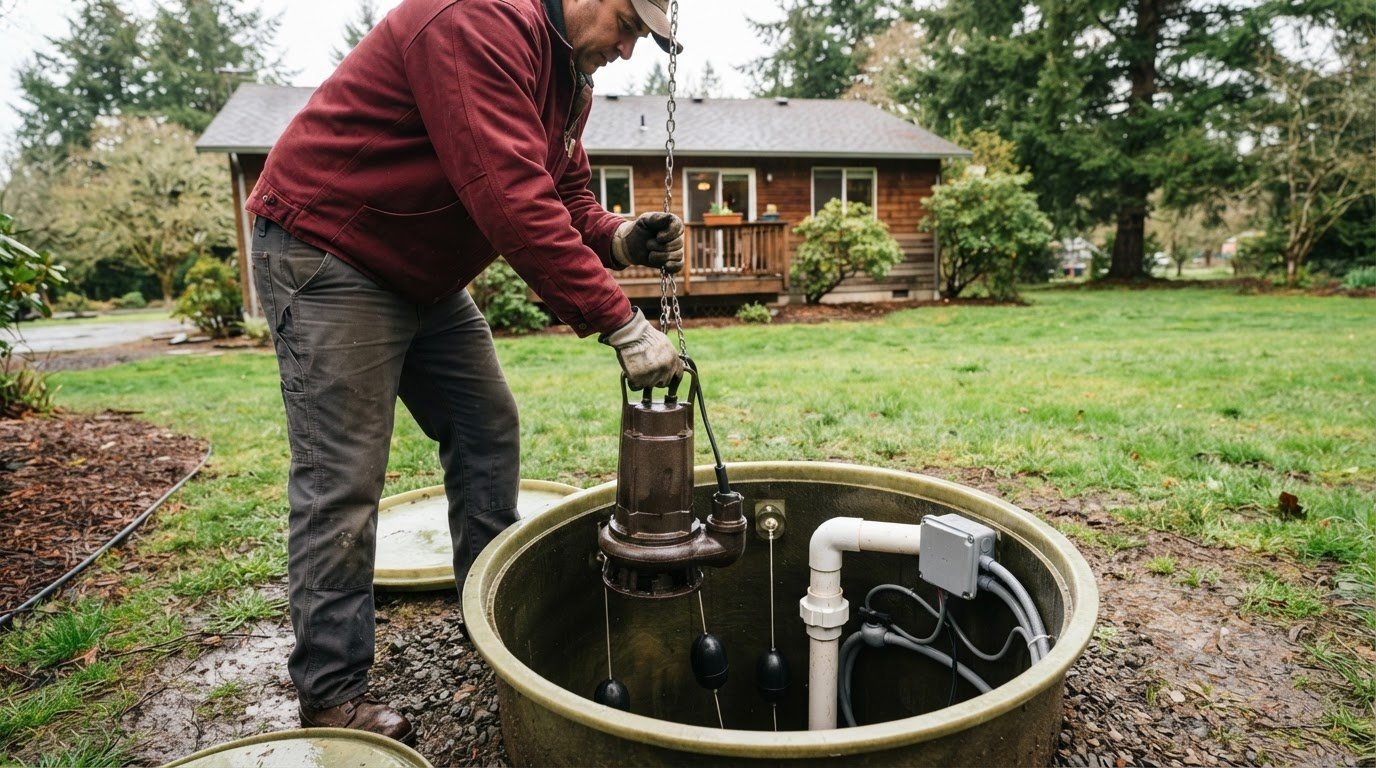
For a VA loan, the septic tank must be in good overall condition and appropriately sized for the home’s sewage needs. Significant cracks, leaks, or structural damage can allow sewage to escape and create contamination concerns. During a professional assessment, the inspector evaluates the tank and related components and documents visible defects that may affect system operation.
Capacity matters, too. A septic system for a three-bedroom home typically needs a minimum capacity of 1,000 gallons, subject to local requirements. Household size and bedroom count help indicate expected wastewater demand. If a home has been expanded, the existing tank may no longer match its use. VA guidelines focus on whether the system can handle the property’s sewage needs, not just whether the tank is present.
The tank and drainfield work together. The tank separates solids from wastewater, while the drainfield disperses treated wastewater into the soil. A functioning tank cannot make up for a drainfield that fails to absorb wastewater. An inspection also measures scum and sludge levels, as accumulated solids can reduce usable tank capacity and affect flow through the outlet.
- Pumping may be needed when the scum layer’s bottom is within 6 inches of the outlet tee’s bottom.
- Pumping may also be needed when the sludge layer’s top is within 12 inches of the outlet tee’s bottom.
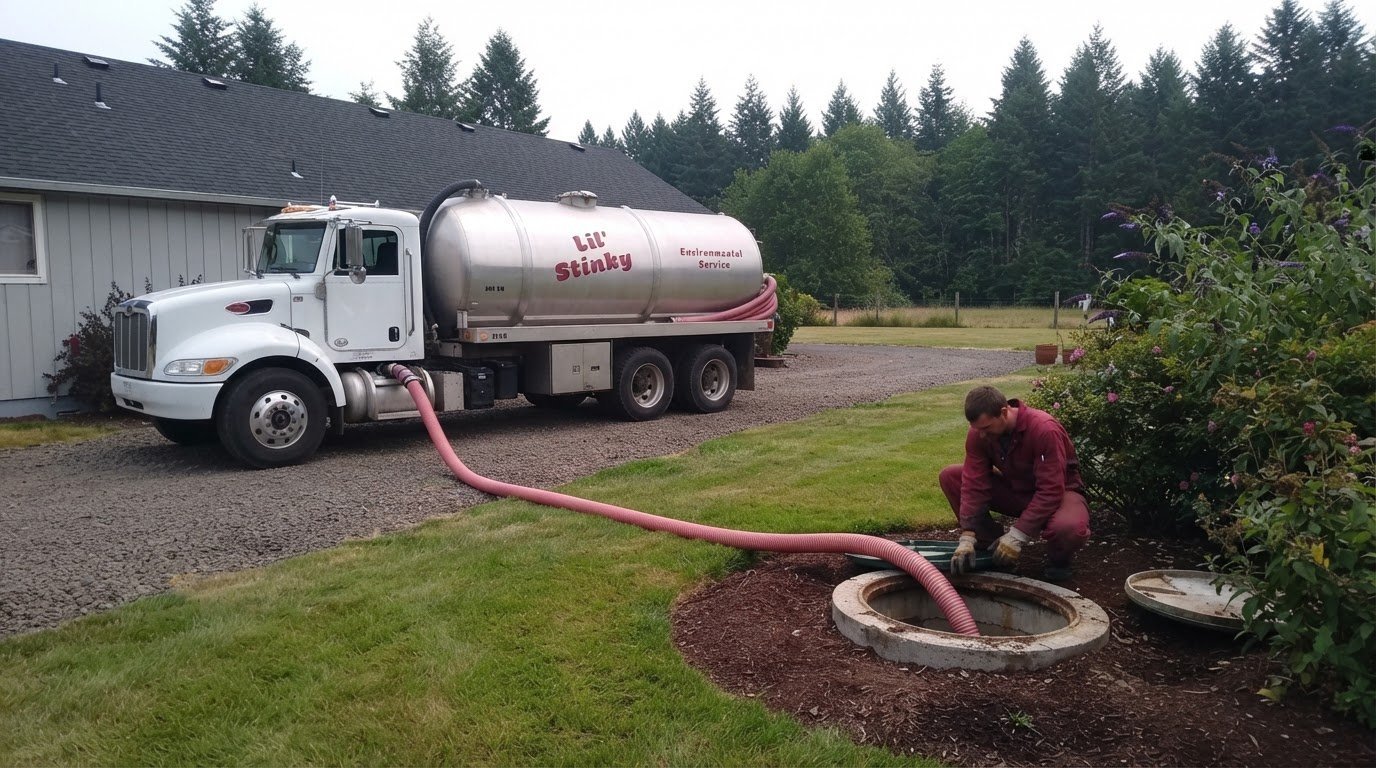
A sludge level above one-third of tank capacity may lead a lender to condition the loan on pumping before closing. Maintenance, pumping, and repair records can help buyers understand the system’s history and identify concerns before purchase. If inspection findings point to accumulated solids, schedule septic tank pumping to address that maintenance need.
Lil’ Stinky Septic Service: Septic Inspections
Lil’ Stinky Septic Service provides septic inspections for buyers who need a clearer picture of a system during a VA-financed purchase. A DEQ-certified technician can assess the system and provide an eight-page DEQ inspection form. The inspection can help identify concerns with the tank or drainfield, but it does not replace the VA appraisal or determine loan approval.
If the findings point to accumulated solids, septic pumping may address that maintenance need. More extensive problems may call for septic installation or system repairs. The right next step depends on the condition identified and the work required.
For an inspection or help addressing a septic system concern, contact Lil’ Stinky Septic Service.
Keep Your Canby Purchase Moving
As you move toward a purchase decision, include the septic system in discussions with the seller and lender. A written assessment can help everyone understand the system’s condition, any needed work, and how it fits the transaction timeline. Keep the conversation focused on the specific findings and agreed next steps so septic concerns do not get lost among other closing details.
If you need a septic inspection for a VA loan in Canby, a professional assessment can clarify the system’s condition and identify concerns that may need attention. Share the findings with the people handling your purchase so decisions about the property and financing can move forward with useful information.
For help with the septic system at a home you’re buying, contact Lil’ Stinky Septic Service. A well-informed next step can make the purchase process easier to manage.
Frequently Asked Questions
Does a VA Loan Require Public Water and Sewer?
No. A VA-financed home can use a private well and septic system instead of public utilities. The water must be documented as safe, and the sewage system must be sanitary and adequate. Concerns about either system may affect the home’s acceptability and require further assessment.
Can the Seller Refuse to Fix the Septic System?
A seller may decline to take on repairs, but that does not remove a loan condition requiring the system to meet VA requirements. Subject to the purchase contract, the buyer and seller can negotiate for the seller to complete repairs, the buyer to pay, or the buyer to leave the transaction. If neither party agrees, the buyer may need to reconsider the purchase.
Can the Lender Require More Than the Agency Guidelines?
Yes. A VA lender may impose well and septic requirements beyond general VA program guidelines. For example, the lender may request a more comprehensive septic assessment if the appraisal raises concerns or system adequacy remains unclear. This underwriting condition is distinct from a general home inspection, which usually is not required for a VA loan.
How Does Soil Percolation Affect the VA Appraisal?
Percolation describes how quickly water moves through soil, which affects whether a drainfield can absorb treated wastewater. Health departments commonly accept rates between 1 and 60 minutes per inch, depending on jurisdiction; a typical ideal range is 5 to 30 minutes per inch. Very sandy soil under 1 minute per inch may let contaminants pass before adequate treatment. Soil findings can inform concerns about system adequacy.
What Happens If The Appraisal Requires An Inspection?
A flagged concern can lead the lender to request a more comprehensive septic inspection before underwriting proceeds. This provides a closer assessment of system condition and function than a visual appraisal. For a Canby purchase, the findings can clarify whether the issue involves the tank, drainfield, or another component, and what documentation the lender needs.
What Happens If The Inspection Finds Problems?
The findings are shared with the parties handling the transaction, and the lender may require the problem to be resolved before approval and closing. A specific defect may need a repair, while a system that cannot dispose of sewage adequately may require improvement or replacement. The buyer and seller can negotiate responsibility under the purchase contract, then provide any requested repair records or follow-up findings.