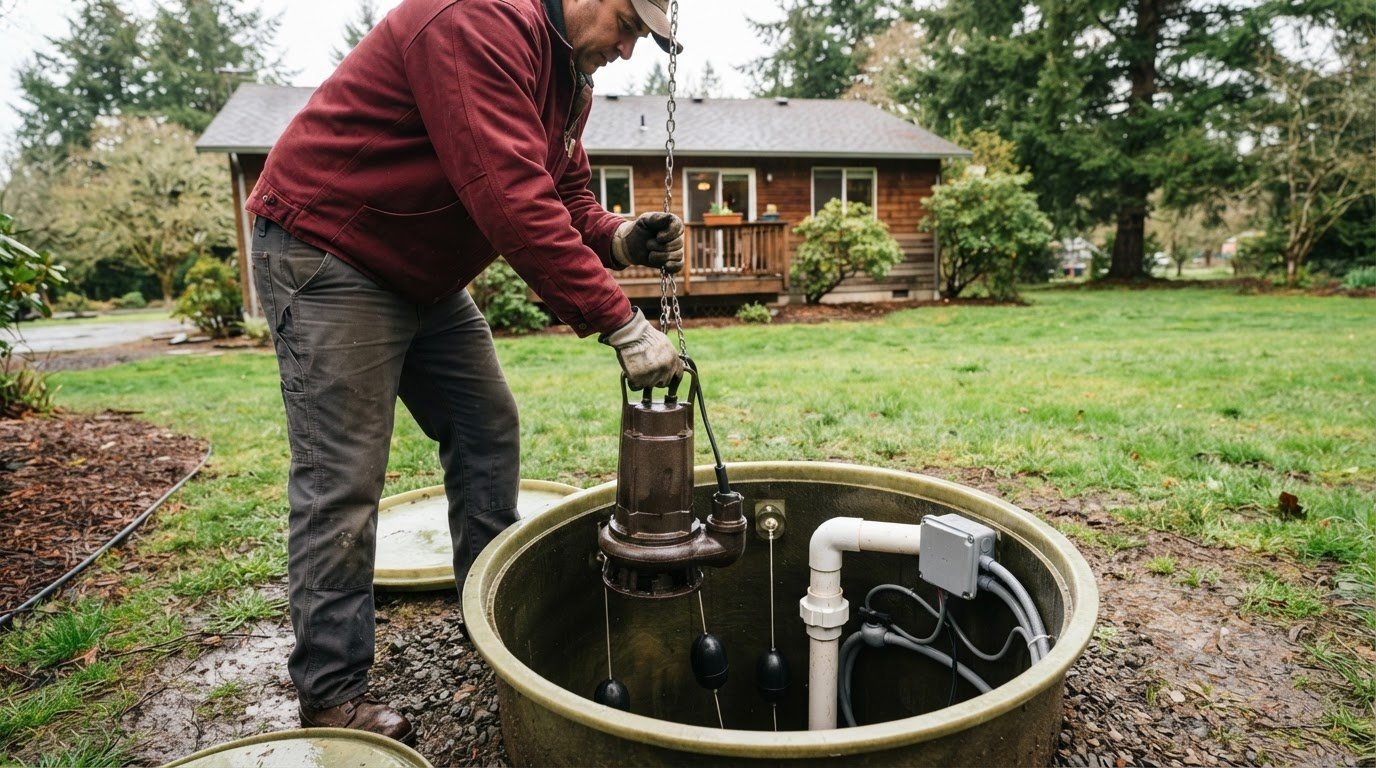
A failed septic pump doesn’t automatically mean the whole system needs replacing. Septic pump replacement in Canby may be the right solution when the pump can no longer move wastewater properly. If the problem is limited to a repairable component, a targeted repair may be enough.
A professional assessment of the pump and the rest of the system can identify the cause and help prevent unnecessary work. Lil’ Stinky Septic Service offers septic services in Canby, including system repairs, pumping, inspections, and installation.
This article explains how pump repair and replacement fit into septic system installation and repair, what can affect the scope of work, and what experience and licensing to look for in Canby. You’ll also learn how tank pumping and system inspections relate to ongoing care, and what to expect when planning a septic project.
Key Takeaways
- A soil feasibility test comes before septic system design, while household bedroom count helps determine tank size.
- In Canby, installation takes about a week from groundbreaking to initial operation, excluding planning and permitting time.
- Septic system requirements are regulated by the county where the job site is located, so local knowledge matters when planning work.
- The U.S. Environmental Protection Agency recommends pumping septic tanks every three to five years; inspections can help identify maintenance or repair needs.
Septic system installation, repair, and replacement
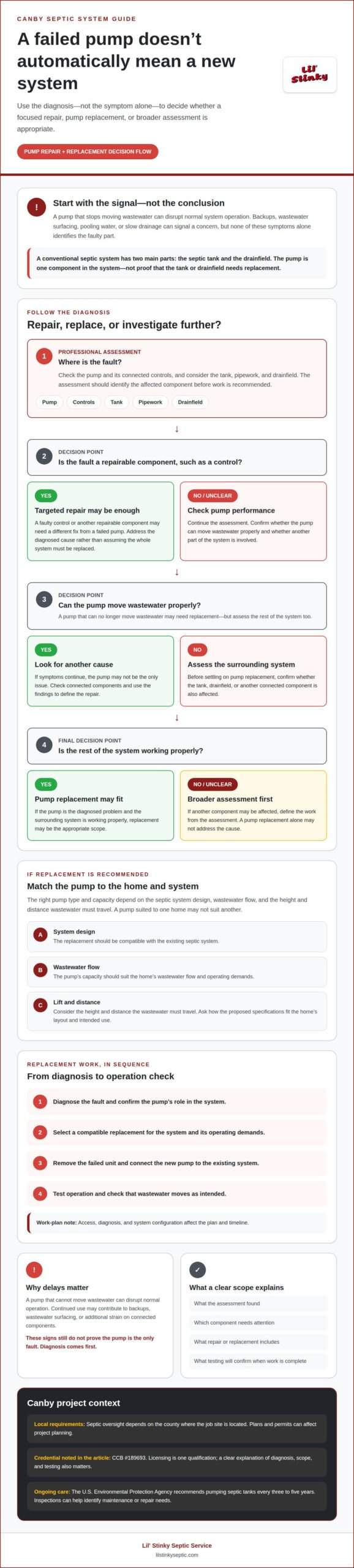
A conventional septic system has two main parts: a septic tank and a drainfield. The tank separates wastewater solids from liquid before the liquid moves toward the drainfield. If a pump stops moving wastewater, that component may need repair or replacement. A failing pump alone doesn’t prove that the tank or drainfield needs replacing. A professional assessment can identify the affected component and define the work. For septic pump replacement in Canby, assessing the pump alongside the rest of the system helps distinguish a targeted repair from a larger project.
Planning a new system begins with a soil feasibility test, which must happen before system design. Household bedroom count is a primary factor in determining the required septic tank size, while soil and site conditions help shape the system layout. Plans and permits are part of the project timeline, not the installation week itself. In Canby, installing a new septic tank takes about a week from groundbreaking to initial operation, excluding time for plans and permits. Keep that distinction in mind when planning a new system or replacement.
Conventional and ATT systems are both installation options, but the appropriate design depends on the property and project requirements. A conventional system connects its tank to a drainfield. An ATT system uses a different treatment approach, so its design and installation must suit the site. Installation follows the selected layout, connecting system components and placing the dispersal area. A mismatch between the design and property conditions can affect system operation.
Drainfield repair begins with identifying whether the problem is in the field, tank, pump, or another component. Pooling water or slow drainage can signal a system concern, but neither symptom alone identifies the cause. The assessment guides whether focused repair or broader replacement is appropriate. Septic system oversight can depend on the location of the job site. For a site in Clackamas County, the county regulates septic work there; plans and permits also affect installation planning. Homeowners should pump tanks every three to five years, according to the U.S. Environmental Protection Agency.
Septic system repair
Repair starts by identifying whether the fault is in the pump, tank, controls, or pipework. This diagnosis helps distinguish a targeted fix from a larger system replacement.
Septic Pump Repair and Replacement
A technician assesses the pump and its connected controls before recommending repair or replacement. For septic pump replacement in Canby, the decision depends on the diagnosed fault, the pump’s condition, and whether the surrounding system is working properly. A faulty control may require a different repair from a pump that can no longer move wastewater. The assessment should also consider how the repair affects wastewater treatment.
Pump Selection for Canby Homes
The right pump type and capacity depend on the septic system design, wastewater flow, and the height and distance wastewater must travel. A pump suited to one home may not suit another. The technician should match the replacement to the existing system and its operating demands, rather than choosing by appearance alone. Ask how the proposed pump’s specifications fit the home’s layout and intended use.
Replacement Process and Timeline
The process starts with diagnosing the fault and confirming the pump’s role in the system. The technician then selects a compatible replacement, removes the failed unit, and connects the new pump to the existing system. The final step is testing operation and checking that wastewater moves as intended. Access, diagnosis, and system configuration all affect the work plan and timeline.
Risks of Delayed Replacement
A pump that can’t move wastewater can disrupt normal system operation. Continued use may contribute to backups, wastewater surfacing, or additional strain on connected components. These symptoms don’t prove the pump is the only fault, so diagnosis matters before repairs begin. Prompt attention helps identify whether the pump, tank, or drainfield needs work and supports an appropriate repair plan.
Tank problems and pipe problems need separate diagnosis: a septic tank holds and settles wastewater, while a sewer line carries it. A municipal sewer line is distinct from a private septic system connection. Warranty coverage follows the written work agreement, while financing has separate terms. A septic system inspection can help clarify the condition of connected components before work proceeds.
Company experience and licensing
For septic work in Canby, licensing and relevant experience help establish a contractor’s qualifications. The contractor is fully licensed under CCB #189693. A license number is a concrete credential, but it doesn’t explain how a pump diagnosis or replacement will be handled. Look for a clear account of the work, from identifying the fault through testing the finished repair.
Experience matters when it helps identify the actual problem. A pump issue can involve the pump, its controls, or connected components, so a thorough assessment should distinguish among them before work begins. For example, if wastewater is backing up, the technician should determine whether the pump is failing or another part of the system is affected. That diagnosis helps avoid replacing a component without addressing the cause.
Clear communication is another practical sign of professional work. The scope should explain what the assessment found, which component needs attention, and what the repair or replacement includes. If a new pump is proposed, the explanation should connect its selection to the septic system design and operating needs. You should understand the planned steps and what testing will show when the work is complete.
For a Canby property, local project knowledge matters because Oregon septic systems are regulated by the county where the job site is located. A contractor should explain how plans and permits relate to the project, rather than treating installation as a stand-alone task. This context is particularly useful if a pump repair reveals a larger system concern.
Assess the proposed work in a simple sequence: review the contractor’s license credential, understand the diagnosis, and confirm that the scope addresses the identified fault. Then look for a clear explanation of the completed work and the system’s tested operation. These steps help you judge whether the service is relevant to the property and focused on resolving the septic problem.
Septic pump replacement companies serving Canby, Oregon
For a Canby home, compare proposed work by starting with the actual fault, not a broad replacement recommendation. A pump problem may involve the pump itself, its controls, or the wastewater system around it. A clear assessment identifies the affected component and explains why repair or replacement fits the findings, giving you a practical basis for understanding the work.
Local project knowledge matters because septic systems in Oregon are regulated by the county where the job site is located. In Canby, that means Clackamas County is relevant to septic system work. Installation planning may involve plans and permits, while a pump-only repair has a different scope. A contractor’s explanation should distinguish those project types and describe how the site’s existing system affects the work.
Look for a defined work sequence covering diagnosis, pump selection, repair or replacement, and testing after installation. Pump type and capacity depend on the system design and the home’s operating needs, so the recommendation should explain how those factors relate to the selected equipment. A useful completion summary describes what was changed and how the system performed during testing.
A clear scope also helps prevent confusion about related components. A septic tank stores and settles wastewater; a drainfield disperses treated wastewater into the soil. A sewer line carries wastewater through a pipe and is not the same as a septic system. If symptoms point beyond the pump, the assessment should identify whether another component needs attention instead of treating every issue as pump failure.
For a Canby replacement, the next step is to describe the symptoms, property location, and known system details. That context helps focus the assessment and clarify whether the work involves the pump alone or a broader septic concern. If you need help evaluating septic system work in Canby, request a septic system assessment to discuss the problem and next steps.
The pump type and capacity should match the septic system’s design and the home’s operating needs. A system assessment can help determine the appropriate equipment.
Lil’ Stinky Septic Service: Septic Tank Pumping
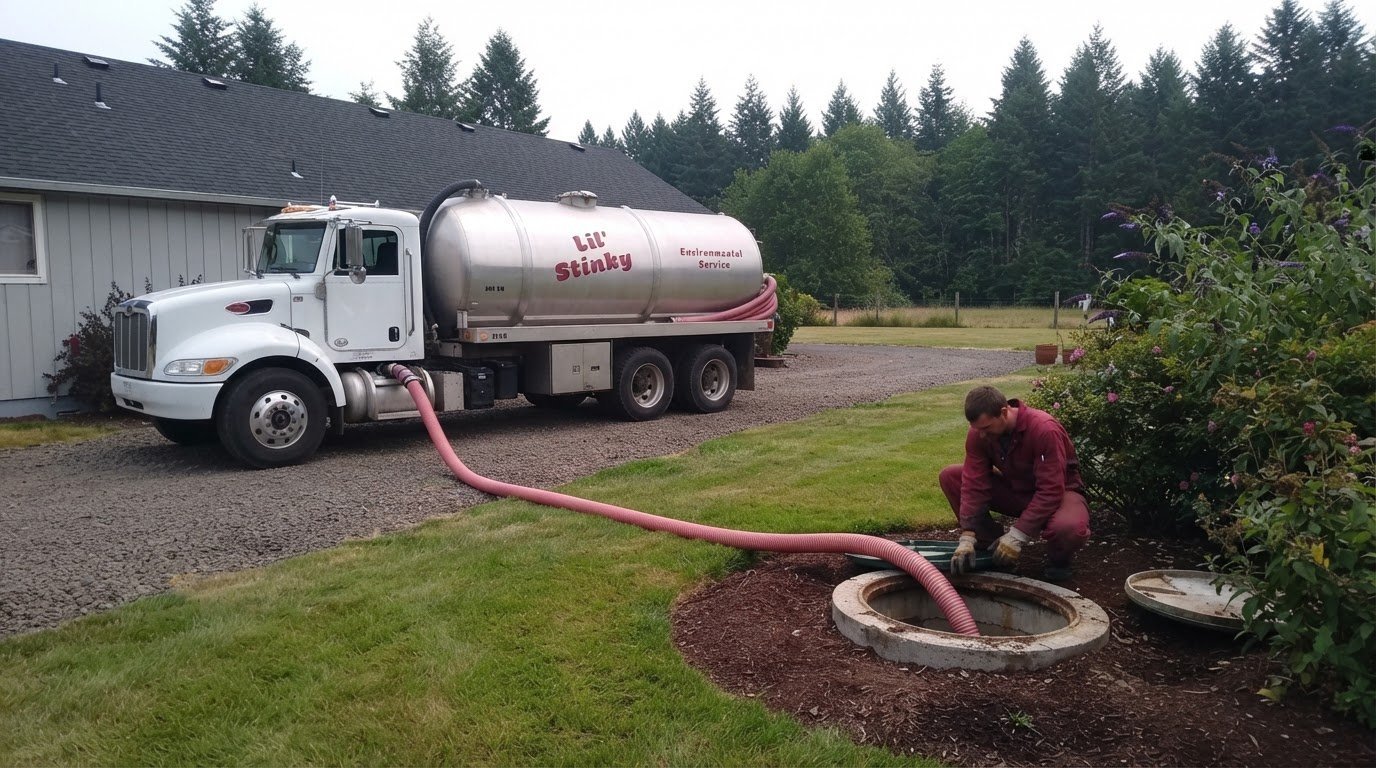
Lil’ Stinky Septic provides septic tank pumping, inspections, installation, and system repairs in Canby. Pumping supports routine tank maintenance, while an inspection can help clarify whether a reported problem involves the tank or another part of the system. For a larger project, the company also handles septic installation and ATT Systems.
For a pump concern, an inspection can help identify whether the issue extends beyond the pump and what work the system needs. Choose pumping when the tank needs routine service, and discuss installation when the existing system requires a larger project. Each service addresses a different need, so an assessment can help determine the right next step.
Contact Lil’ Stinky Septic Service to discuss your septic system and the work it may need.
Take the Next Step Toward a Clear Septic Plan
Septic pump replacement in Canby starts with understanding what the system needs, not assuming every fault calls for the same work. An assessment can help you decide whether to focus on maintenance, inspect the system, or plan a larger installation project. Share the symptoms you’ve noticed and relevant details about your property with Lil’ Stinky Septic to discuss the next step.
Lil’ Stinky Septic offers septic tank pumping, septic inspections, and septic installation in Canby. These services address routine tank maintenance, assessment of system condition, and installation planning. Contact the company to discuss the service that matches your concern.
Contact Lil’ Stinky Septic Service to discuss your septic system and possible next steps. A thoughtful plan can make it easier to move ahead with confidence.
Frequently Asked Questions
How can I tell if a septic pump needs replacement?
A septic alarm, sewage backup, foul odor, or pooling water can signal a pump or system problem. These signs don’t identify the failed part on their own. An alarm, for example, may accompany a pump issue, while a backup can involve another component. Arrange a professional assessment to determine whether the pump needs replacement or the system needs different attention. For septic pump replacement in Canby, diagnosis comes first.
How do septic pump repair and replacement costs and lifespans compare?
Repair and replacement costs depend on the diagnosed fault, pump requirements, site access, and whether connected components also need work. A repair may address a limited problem, while replacement involves removing and fitting a pump suited to the system. Pump lifespan varies with operating conditions, system demands, and maintenance. There isn’t one lifespan or cost for every Canby home; the system’s condition and work required determine both. Lil’ Stinky Septic offers free estimates.
Is emergency septic pump service available near Canby, Oregon?
Yes. Lil’ Stinky Septic Service offers 24/7 emergency response and serves Canby, Oregon. A sewage backup, septic alarm, foul odor, or wastewater pooling can warrant prompt attention. When calling about an urgent problem, describe the symptom and property location so the issue can be understood clearly. Emergency response does not mean every symptom requires pump replacement; an assessment determines what part of the septic system needs attention.
Clackamas County septic pump replacement regulations
Septic systems are regulated by the county where the job site is located. For a Canby property, septic work falls under Clackamas County.