
What should you do when sewage backs up and you can’t tell whether the problem is a clogged drain or your septic system? If you’re searching for 24/7 septic service Canby OR, start by stopping water use in the house. This can help limit further wastewater entering the system while you arrange professional help.
A septic emergency is stressful, especially when you’re worried about exposure or damage to your home. Based in Canby, Lil’ Stinky Septic Service provides 24/7 emergency response, with over 25 years of experience handling septic pumping and drain-cleaning needs. The team is licensed in Oregon under CCB #189693.
This guide explains what to do before help arrives, which signs may point to a septic issue rather than a single clogged drain, and what information to share when you call. You’ll also learn what to expect during a service visit, so you can protect your property and help the team assess the problem.
Key Takeaways
- Recognize signs that call for urgent attention and professional assessment.
- Know which details about the backup and your system to share when calling for 24/7 septic service Canby OR.
- Compare common drain-clog and septic-system symptoms, while remembering that overlapping signs don’t confirm the cause.
- Reduce wastewater use and keep children and pets away from visible sewage or suspected overflow while waiting for help.
- See how Lil’ Stinky’s local experience and emergency response can help Canby homeowners address septic problems.
24/7 Septic Service in Canby, OR: When a Problem Needs Urgent Attention
A sewage backup, overflow, or sudden change in your plumbing can be unsettling. You may wonder whether the cause is a blocked drain, a septic-system problem, or something that can wait. You don’t need to diagnose it yourself. Note what’s happening, limit water use, and seek professional guidance if wastewater is backing up or escaping where it shouldn’t.
A septic emergency is an active backup, overflow, or sudden system disruption that may expose people to wastewater or cause further property damage if it continues. This definition focuses on what you can observe, not a remote diagnosis. A professional assessment can help determine whether the issue involves the tank, drain field, or a household drain.
Understanding the basic role of a septic tank can make a service conversation easier, but you don’t need to inspect system components yourself. If you’re looking for 24/7 septic service Canby OR, clear observations and a few immediate precautions are more useful than guessing at the cause.
Which septic problems should prompt an emergency call?
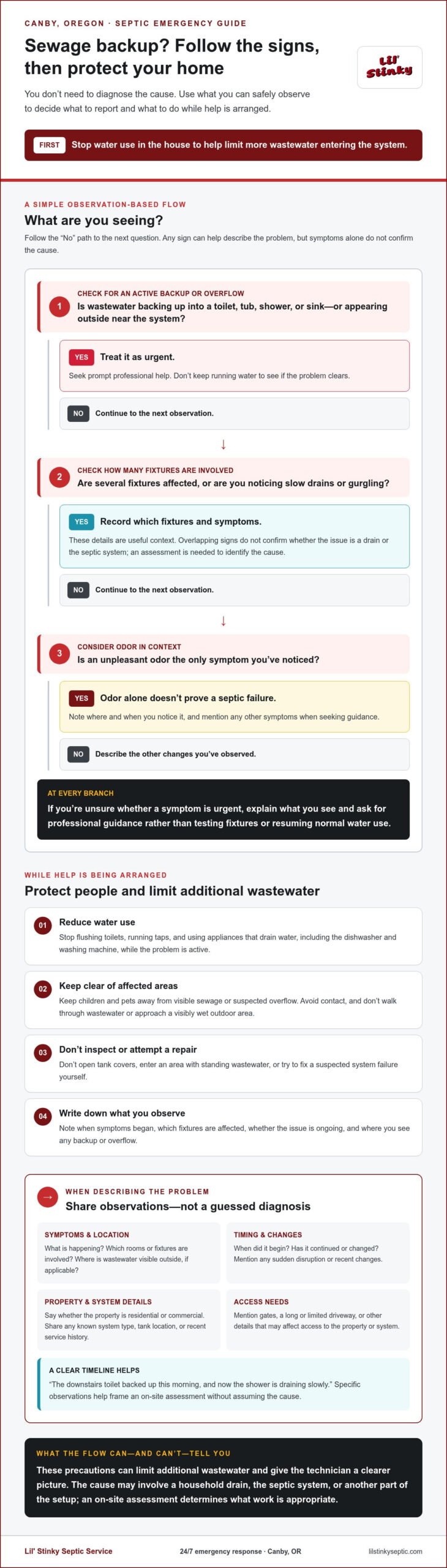
Seek prompt professional help if sewage backs up into a toilet, tub, shower, or sink, or if wastewater appears outside near the system. A sudden system failure or visible overflow also deserves urgent attention. Don’t keep running water to see whether the problem clears.
An odor can be unpleasant, but smell alone doesn’t prove a specific septic failure. Note where and when you notice it, and mention any other symptoms. Slow drains, gurgling, or changes in several fixtures are useful context, but only an assessment can identify the cause. If you have a maintenance concern without an active backup or overflow, describe what you’re seeing to get guidance on next steps.
What should Canby residents do before help arrives?
Take simple precautions while arranging help. Don’t open tank covers, enter an area with standing wastewater, or try to fix a suspected system failure yourself. Keep children and pets away from visible sewage or suspected overflow, and avoid contact with the affected area.
- Reduce wastewater use. Stop flushing toilets, running taps, and using appliances that drain water, including the dishwasher and washing machine, while the problem is active.
- Keep clear of affected areas. Don’t walk through wastewater or let others approach it. If the overflow is outdoors, stay back from the visibly wet area.
- Record what you observe. Note when the symptoms began, which fixtures are affected, whether the issue is ongoing, and where you see any backup or overflow.
- Share the details. Describe your observations without trying to diagnose the system. Mention any recent changes, such as a sudden disruption or multiple affected fixtures.
These steps won’t resolve the underlying problem, but they can limit additional wastewater entering the system and give the technician a clearer picture. If you’re unsure whether a symptom is urgent, describe it and ask for professional guidance rather than testing fixtures or resuming normal water use.
How 24/7 Septic Service Works After You Call from Canby
You don’t need to know what failed before making an emergency call. Explain what you’re seeing so the team can understand the situation, arrange service, and assess the issue on-site. For 24/7 septic service Canby OR, a clear description is more helpful than a guess about the cause.
Share what’s happening, where and when it started, and what you know about the property’s septic system. These details help frame the next steps, but they don’t replace an on-site assessment. The appropriate work depends on what the technician finds.
What information helps the team understand the emergency?
Before calling, gather details you can safely observe. Be specific, but don’t delay seeking help because you don’t know every answer. The EPA SepticSmart Homeowners guide also offers general information on septic care and common problems.
- Describe the symptoms. Say whether wastewater is backing up, a fixture is draining slowly, or you’ve noticed an outdoor overflow. Mention whether one fixture or several are affected.
- Give the location. Identify the rooms or fixtures involved and where visible wastewater appears outside, if applicable.
- Note when it began. Tell the team when you first noticed the issue and whether it has changed or continued.
- Describe the property. Clarify whether the site is residential or commercial.
- Share known system details. If you know the system type, tank location, or recent service history, mention it. Don’t dig or open covers to find information.
- Explain access needs. Point out gates, a long or limited driveway, or other details that may affect access to the property or system.
A simple timeline is useful: “The downstairs toilet backed up this morning, and now the shower is draining slowly.” That’s more informative than saying only that the septic system is broken, because it describes symptoms without assuming a diagnosis.
What happens during an on-site septic assessment?
Once service is arranged, the technician evaluates the reported symptoms and relevant system conditions. The assessment helps determine whether the concern is associated with the septic system, a drain, or another part of the setup. Be ready to explain what has happened since the call and point out affected fixtures or areas.
Depending on the findings, septic tank pumping or drain cleaning may be appropriate. The right service can’t be determined from the call alone. The technician can explain what the observed conditions indicate and what work is recommended before proceeding. The assessment helps define the scope of service.
If you’re dealing with active symptoms, you can find septic service information and share the observations you’ve gathered. Clear details help start the conversation; the on-site assessment guides the next step.
Septic Emergency or Drain Backup? Understanding the Difference in Canby
A backup can start at one fixture, travel through a drain line, or signal a broader septic-system concern. The pattern offers clues, but it can’t confirm the cause on its own. Lil’ Stinky serves Canby with both septic services and drain cleaning, so an assessment can help determine which work fits the situation.
Use this comparison to describe what you observe, not to diagnose the problem yourself. Symptoms can overlap, and the location of a backup doesn’t always reveal where the underlying issue is.
| What you notice | What it may suggest | What to do |
|---|---|---|
| One sink, toilet, or tub drains slowly or backs up | A localized fixture or drain-line clog is one possibility. | Note the affected fixture and whether other drains are working normally. |
| Several fixtures in different parts of the home are affected | A shared drain line or septic-system issue may be involved. | Describe which fixtures are affected and whether symptoms began together. |
| Wastewater backs up inside or appears outdoors near the system | A more extensive drain or septic problem may be present. | Limit water use and seek professional guidance. |
| Gurgling, slow drains, or an unusual odor occurs without visible backup | These observations can have different causes and don’t prove system failure. | Record when they occur and mention any other changes. |
What can visible symptoms tell you, and what can’t they tell you?
A single backed-up fixture may point toward a nearby drain, while problems across several fixtures can raise concern about a shared line or septic system. Neither pattern is conclusive. A drain backup and a septic issue can produce similar symptoms, and odors alone don’t identify the source.
Keep a short record for the technician: which fixtures are affected, when the problem started, whether it’s getting worse, and any recent changes. These observations help guide the assessment without relying on a guess. If sewage is backing up or escaping outdoors, treat it as urgent rather than waiting for the pattern to become clearer.
When may drain cleaning be part of the solution?
Drain cleaning may be appropriate when an assessment indicates a blockage in a drain line. If the cause appears to involve the septic system, a different septic service may be recommended. Lil’ Stinky also offers camera inspection to help examine relevant drain conditions. The findings guide the next step; one symptom doesn’t automatically mean one particular service will resolve it.
Don’t pour chemical drain products into a fixture during a septic emergency. They won’t identify where the problem is and may complicate an assessment. Share what you’ve observed and let the service team evaluate the issue. If you’re looking for 24/7 septic service Canby OR, clear symptom notes can help distinguish a possible drain-line concern from a broader septic-system issue.
What Canby Homeowners Can Do Safely While Waiting for Septic Help
An active septic problem can make it tempting to investigate or try a quick fix. Focus on safety instead. Reduce water entering the system, avoid contact with wastewater, and leave tank access and repairs to trained professionals. These steps help you prepare without putting yourself, your household, or the property at greater risk.
How can you reduce additional strain on the system?
Use this checklist while waiting for professional guidance. If you’ve received specific instructions for your situation, follow those first.
- Pause nonessential water use. Avoid showers, laundry, dishwashing, and other activities that send wastewater into the system. Don’t run several water-using appliances at once.
- Stop flushing and keep items out of drains. Don’t flush wipes, paper towels, or other items in an attempt to clear a backup. Avoid pouring chemical drain products or other chemicals into fixtures as a quick fix.
- Keep people and pets away from wastewater. Block access to areas where sewage is visible or an overflow is suspected. Don’t walk through affected areas or let children and pets investigate.
- Stay out of the system. Don’t open tank covers, enter a tank or other confined space, dig to locate components, or attempt repairs. These tasks can expose you to serious hazards and should be left to qualified professionals.
- Keep the situation easy to describe. Note what has changed and when, and which fixtures or areas are affected. Avoid testing additional fixtures if doing so could add wastewater or worsen the backup.
A safe response doesn’t require you to find the failure. If wastewater is visible, treat the area as contaminated and keep clear until a professional can assess it. Don’t touch or move tank lids, even if you believe you know where the tank is.
What details should you prepare for the service visit?
Share the tank or system location if you already know it, but don’t open covers or dig to confirm. If practical, make the route to the property and relevant access area clear without approaching wet or contaminated ground. Gather system records, such as service notes, only if they’re immediately accessible. Don’t delay seeking help to search for paperwork.
These preparations can help the team understand the situation and access the property, while leaving diagnosis and recommended work to the on-site assessment. Use Lil’ Stinky Septic Service’s 24/7 septic service Canby OR information to connect your situation with emergency septic help.
Call Lil’ Stinky for 24/7 Septic Service in Canby
A septic emergency calls for clear information and experienced help. Based in Canby, Lil’ Stinky Septic Service provides 24/7 emergency response for septic concerns. With over 25 years of experience, the team helps local customers manage backups, overflows, and other septic problems. Describe the symptoms plainly; you don’t need to diagnose the system before calling.
Why Canby customers call Lil’ Stinky
Local roots matter during a stressful service call. Lil’ Stinky is based in Canby and serves Clackamas County, bringing over 25 years of septic experience to the area. The company is an Oregon licensed contractor, CCB #189693.
The team handles septic tank pumping, inspections, installation, ATT systems, and drain cleaning. That range matters because a backup can involve a drain line or the septic system, and the right service depends on the conditions found. An on-site assessment helps determine the appropriate next step. Lil’ Stinky provides emergency response around the clock.
What to have ready when requesting emergency help
A few clear details can help the team understand what’s happening. Share the property location and whether it’s residential or commercial. Describe the symptoms in everyday language, including which fixtures are affected and when you first noticed the issue. Say directly if wastewater is actively backing up inside or overflowing outside.
- Location: Provide the Canby-area property address and any useful access details.
- Symptoms: Explain what you see, where it’s happening, and whether the problem is continuing.
- System details: Share what you know about the septic system or prior service, but don’t open covers or dig to find information.
- Safety concerns: Mention visible wastewater or areas people and pets are being kept away from.
You don’t need every detail or to know whether the issue is a drain clog or septic failure. Report what you’ve observed. While arranging help, limit wastewater use and keep everyone clear of affected areas. This gives the technician useful context and helps you avoid unnecessary risks while waiting.
Searching for 24/7 septic service Canby OR during an emergency can feel overwhelming. Keep the call focused: give the property location, describe the main symptom, and say whether wastewater is actively backing up or overflowing. You don’t need a perfect explanation. Direct observations are enough to begin the conversation.
Take the Next Step Toward a Clear Plan
If a septic problem is disrupting your home, don’t wait until you can name the cause before asking for help. A technician can assess the situation and explain the findings. After the immediate concern is addressed, use that conversation to understand what follow-up, if any, makes sense for your system. A clear next step can make a stressful situation feel more manageable.
Searching for 24/7 septic service Canby OR during an emergency? Keep your call focused: give the property location, describe the main symptom, and say whether wastewater is actively backing up or overflowing. You don’t need a perfect explanation; honest, direct details are enough to start.
Frequently Asked Questions
Can heavy rain cause a septic system to back up?
Yes, heavy rain can affect how a septic system drains when surrounding soil is saturated, but rainfall alone doesn’t confirm system failure. Note whether symptoms began during or after the rain and whether they continue as conditions change. If a backup is active, reduce water use in the home and seek professional guidance. Describe any visible pooling without walking through it or assuming the weather is the sole cause.
Should I use a septic additive during an emergency?
No, an additive isn’t an immediate fix for a backup, overflow, or suspected equipment problem. Avoid improvised chemical treatments, which won’t identify the cause or replace an assessment. Focus on limiting wastewater entering the system and contacting a septic professional for guidance. If you’ve already used a product, note its name and when you added it so you can share that information during the service call.
Can I open my septic tank to check what is wrong?
No, don’t open or enter a septic tank during an emergency. Tanks can present serious hazards, and looking inside isn’t worth the risk. Keep clear of covers and access points, and don’t dig to reach buried components. Instead, tell the service team where the tank or system is located, if you know, and describe the symptoms. A trained technician can assess the situation safely.
What information should I have ready when calling for 24/7 septic service?
Have the property address, symptoms, start time, affected fixtures, and any visible wastewater ready to share. If you know the system type or where it can be accessed, mention that too. These details help the team understand the situation for 24/7 septic service Canby OR. You don’t need to diagnose the issue first. Clear observations, such as which rooms are affected, are a useful starting point.
Does a septic alarm always mean the tank needs pumping?
No, an alarm signals a system condition that needs attention, but it doesn’t establish that pumping is required. Note when the alarm appeared and whether you’ve noticed other changes, such as altered system operation or plumbing symptoms. Don’t open equipment to investigate. Contact a septic professional, describe what you observed, and let an on-site assessment determine what the alarm means and what service may be appropriate.
Is a slow drain always a septic emergency?
No, a slow drain can have several causes and doesn’t automatically mean the septic system has failed. A single slow fixture is different from several affected fixtures, though neither pattern confirms the source. Prompt assessment matters more if multiple drains are involved or a backup is worsening. Describe which fixtures are slow, when it began, and whether other symptoms have appeared rather than treating one sign as a diagnosis.
Contact Lil’ Stinky for 24/7 septic service and describe what’s happening at your Canby property, including whether wastewater is backing up or overflowing. While arranging help, limit water use and keep people and pets away from affected areas.