
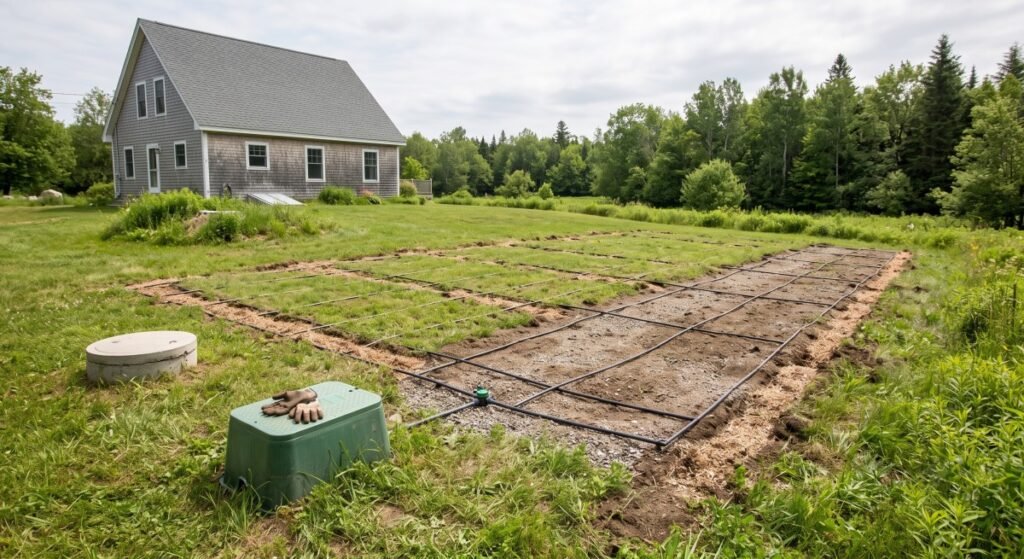
If your property has failed a perc test or simply doesn’t have the space or soil conditions for a traditional sand mound system, you’re not out of options. There are several modern alternatives that can handle wastewater effectively without requiring the large footprint or specific soil conditions that conventional systems demand. Understanding what those alternatives are — and how they compare — can make the difference between a buildable lot and a dead end.
We’ll walk through the most practical alternatives to sand mound systems, from drip irrigation systems and mound-free low-pressure dosing to constructed wetlands and aerobic treatment units. Each option comes with its own set of site requirements, costs, and long-term considerations worth knowing before making a decision.
We’ll also take a close look at Advanced Treatment Technology (ATT) systems, which have become one of the most reliable solutions for sites where conventional systems simply won’t work. Whether you’re a homeowner dealing with a challenging lot, a builder navigating strict local regulations, or a real estate professional trying to salvage a transaction, this guide gives you the information you need to move forward with confidence.
Exploring Alternatives to Traditional Sand Mound Systems
Sand mound systems have a range of well-documented drawbacks — from high costs to strict site requirements — and several proven alternatives exist that can better match specific soil conditions, lot sizes, and regulatory requirements.
Limitations of Sand Mound Systems
Sand mound systems require a large, flat area of land, often 3,000 to 5,000 square feet or more. That footprint rules them out for many residential properties with limited usable space.
They also sit above ground, which creates visual and practical issues. The raised mound can interfere with landscaping, driveways, and outbuildings, and in colder climates, exposed components are vulnerable to freezing.
Cost is another barrier. Installation typically ranges from $10,000 to $20,000 or more depending on soil conditions and system size. Ongoing maintenance, including periodic inspection and pump replacement, adds to that long-term expense.
- Require large, relatively flat installation areas
- Prone to freeze damage in northern climates
- Higher upfront and maintenance costs than in-ground systems
- Aesthetically intrusive due to raised profile
Overview of Alternative Septic Solutions
Several well-tested alternatives exist for properties where sand mounds are impractical or cost-prohibitive.
| Alternative System | Best Suited For |
| Drip Irrigation Systems | Small lots, uneven terrain |
| Aerobic Treatment Units (ATUs) | High water tables, poor soil |
| Constructed Wetlands | Rural properties with space constraints |
| Chambered Leach Fields | Soils with moderate percolation rates |
| ATT Systems | Failed perc tests, clay soil, tight lots |
Each option addresses a specific site challenge. No single alternative fits every situation, which is why soil testing and site evaluation remain essential first steps before selecting a system.
Key Considerations for Selecting an Alternative System
Before choosing a replacement for a sand mound, we need to evaluate several site-specific factors.
Soil percolation rate determines how quickly effluent is absorbed. Clay-heavy or compacted soils require systems with additional treatment capacity, such as ATUs or ATT systems.
Lot size and topography directly limit which systems are physically installable. A sloped or narrow lot may rule out drip fields but accommodate a compact ATT unit.
Other critical factors include:
- Local regulatory requirements — some counties mandate specific system types
- Proximity to water sources — wells, lakes, and wetlands affect setback requirements
- Long-term maintenance capacity — advanced systems require more frequent servicing
- Budget — both installation and lifecycle costs vary significantly between system types
Advanced Treatment Technology (ATT) Systems: The Modern Solution
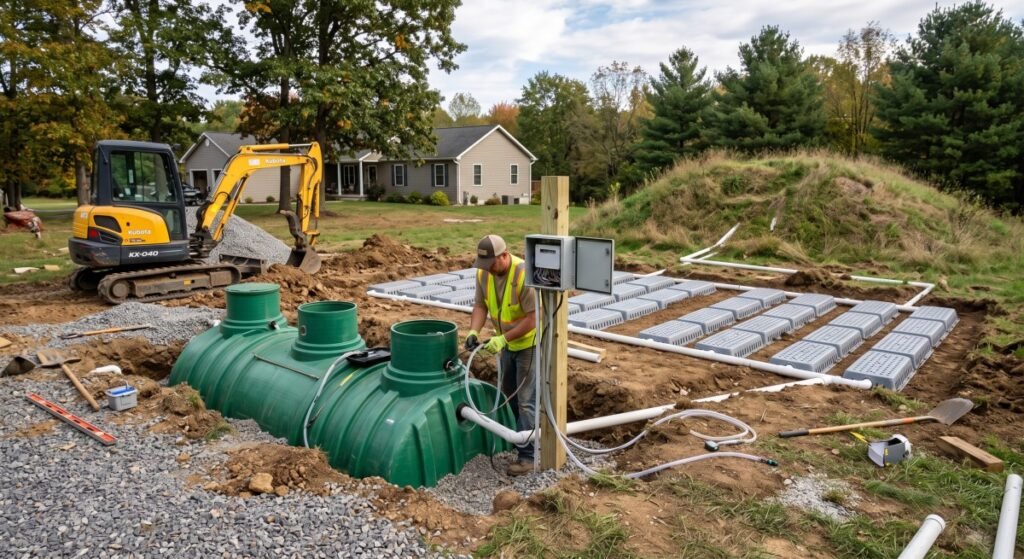
When a sand mound isn’t feasible due to lot size, soil conditions, or regulatory restrictions, ATT systems offer a proven, code-compliant path forward by treating wastewater to a higher standard before it ever reaches the soil.
How ATT Systems Work Differently Than Conventional Septic Solutions
Standard septic systems — including sand mounds — rely heavily on the soil itself to filter and treat effluent. ATT systems shift that responsibility to the unit itself, treating wastewater before dispersal.
Most ATT systems use a multi-stage process:
- Primary treatment – solids separation in a septic or holding tank
- Secondary treatment – aeration or biological processing to break down organic matter
- Tertiary treatment – UV disinfection or filtration to reduce pathogens and nutrients
This means the effluent leaving an ATT system is significantly cleaner than what exits a conventional tank. Discharge quality can meet or exceed standards required for shallow soil absorption or drip irrigation dispersal.
Why ATT Systems Are Effective for Challenging Sites
Sites that fail a perc test or lack the square footage for a sand mound are where ATT systems consistently perform. Because the system pre-treats effluent to a high level, the dispersal area can be smaller and the soil requirements are far less demanding.
Key advantages on difficult lots include:
| Challenge | How ATT Addresses It |
| High water table | Treated effluent reduces contamination risk at shallow depths |
| Clay or compacted soil | Lower dispersal volume needed due to cleaner effluent |
| Small lot size | Drip dispersal fields require significantly less land |
| Failed perc test | Many jurisdictions approve ATT where conventional systems cannot pass |
We often see ATT systems approved on sites where every other option has been exhausted.
Real-World Example: ATT Success on Small or Difficult Lots
Consider a 0.4-acre residential lot with clay-heavy soil and a water table sitting 18 inches below grade. A sand mound would require significant fill material and a large footprint — neither of which is practical here.
An ATT system with drip dispersal was installed instead. The drip field was placed within the usable yard space, and the high-quality effluent output satisfied the health department’s requirements without any soil amendments.
The homeowner kept their buildable lot, met all permit requirements, and avoided the cost of importing fill material for a mound.
Frequently Asked Questions
Properties with limited soil capacity, high water tables, and failed perc tests each call for specific system types, and understanding the technical and regulatory details helps homeowners and builders move forward with realistic expectations.
What septic options work best on properties with a high water table or frequent flooding?
Properties with a seasonally high water table typically cannot support conventional drainfields because effluent cannot move through saturated soil without contaminating groundwater. The most practical options in these conditions are mound systems, drip irrigation systems, and aerobic treatment units (ATUs) with pressure-dosed dispersal.
ATUs treat wastewater to a higher standard before it ever reaches the soil. This means the treated effluent causes less harm even in sensitive hydrologic conditions. Drip irrigation systems disperse effluent just below the surface in small, timed doses, reducing pooling and limiting contact with the saturated zone.
How can a homeowner proceed after a failed perc test without abandoning the building plan?
A failed perc test does not automatically disqualify a property from onsite wastewater treatment. It means conventional gravity-fed drainfields are not viable, but alternative systems often are.
We recommend starting with a licensed soil scientist or engineer who can evaluate whether a mound, drip, or advanced treatment system is feasible. Many states allow alternative systems when supported by a site-specific engineering report. A failed perc test essentially redirects the design process rather than ending it.
Which onsite wastewater solutions are most practical for small lots with limited drainfield area?
Small lots create a footprint problem. Conventional drainfields require large lateral areas that simply do not exist on parcels under a half-acre with existing structures or setback requirements.
- Drip irrigation systems use a network of small-diameter tubing and can be configured around obstacles, trees, and structures more flexibly than trench-based systems.
- Single-pass or recirculating sand filters treat effluent to a higher level, which regulators may allow to be dispersed in a reduced-size drainfield.
- ATUs with a small dispersal field are commonly approved in compact site plans because the treated effluent quality meets stricter standards that justify a smaller dispersal footprint.
In many jurisdictions, a demonstrated reduction in effluent strength directly translates to a permitted reduction in required drainfield square footage.
How do advanced treatment units improve effluent quality before final soil dispersal?
Conventional septic tanks settle solids and produce septic-strength effluent, typically with biological oxygen demand (BOD) levels around 150–200 mg/L and high suspended solids. Advanced treatment units reduce those numbers significantly through aeration, filtration, or both.
Aerobic treatment units introduce oxygen into the treatment chamber, which accelerates microbial breakdown of organic matter. The result is effluent with BOD levels often below 30 mg/L and suspended solids below 30 mg/L before it ever enters the soil. Some systems also incorporate UV disinfection or chlorination as a final step.
This matters because lower-strength effluent is less likely to clog soil pores, extends the functional life of a drainfield, and reduces pathogen loading. On constrained sites, this improved quality is often the only reason a permit gets approved.
What are the typical costs, maintenance requirements, and service intervals for modern treatment-based systems?
Installation costs for alternative systems vary widely by type and site complexity. A drip irrigation system typically runs between $15,000 and $30,000 installed. ATUs with dispersal components commonly range from $12,000 to $25,000 depending on the unit size and local labor rates.
Maintenance is more involved than a conventional septic tank. Most advanced treatment systems require:
- Service contracts with a licensed operator, typically renewed annually
- Quarterly or semi-annual inspections of the treatment unit, air compressor, and dispersal components
- Effluent sampling in some states, required to confirm the system is meeting treatment standards
- Blower or pump replacement every 5–10 years depending on usage and system design
We generally advise homeowners to budget $300–$600 per year for routine service on an ATU-based system, not including any component replacements.
What permitting and inspection steps should builders and real estate professionals expect when specifying alternative onsite wastewater systems?
Alternative systems go through a more detailed permitting process than conventional septic. Expect to submit a licensed engineer’s or soil scientist’s site evaluation, a system design stamped by a licensed professional engineer, and in many cases a management plan that outlines who is responsible for ongoing maintenance.
State and county health departments typically review the design before issuing a construction permit. Once installed, a final inspection confirms the system was built to plan. Many jurisdictions also require an operating permit that must be renewed annually and is tied to proof of a maintenance contract.
Real estate professionals should be aware that these operating permits and service agreements are often transferable but must be disclosed during a property sale. Buyers inheriting an alternative system should receive all documentation, including the original design report, inspection records, and current service provider contact information.