
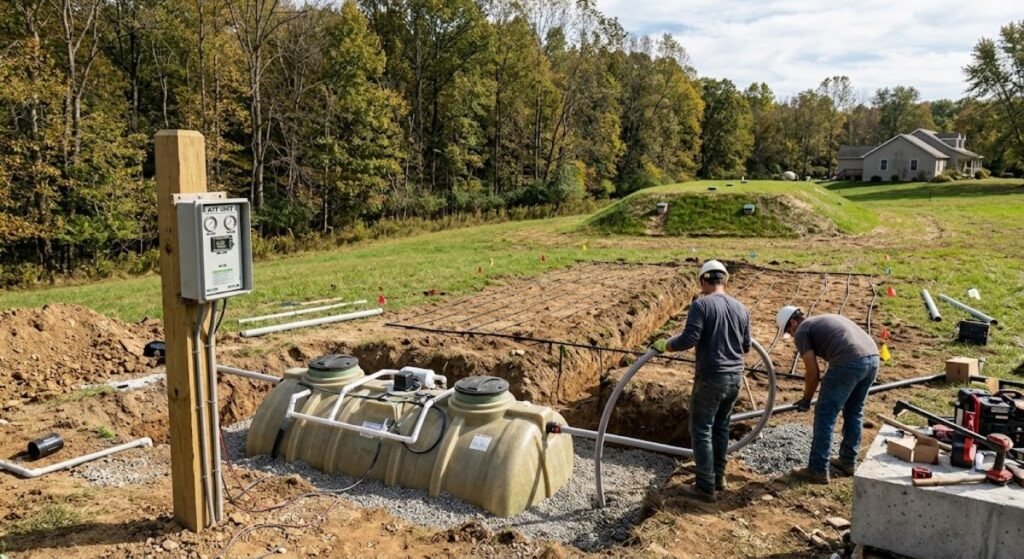
If your property has poor drainage, high groundwater, or shallow soil, a conventional septic system likely won’t work — and a sand mound is often the default recommendation. But it’s not the only option, and for many homeowners and builders, it’s not the best one either.
When site conditions rule out a standard septic system, Advanced Treatment Technology (ATT) systems offer a reliable, code-compliant path forward that conventional and sand mound systems simply can’t match in challenging environments.
In this post, we’ll walk through how sand mounds compare to alternative septic solutions, what makes ATT systems worth considering, and how to determine which approach fits your specific site conditions and goals.
Sand Mound vs Alternative Septic Solutions
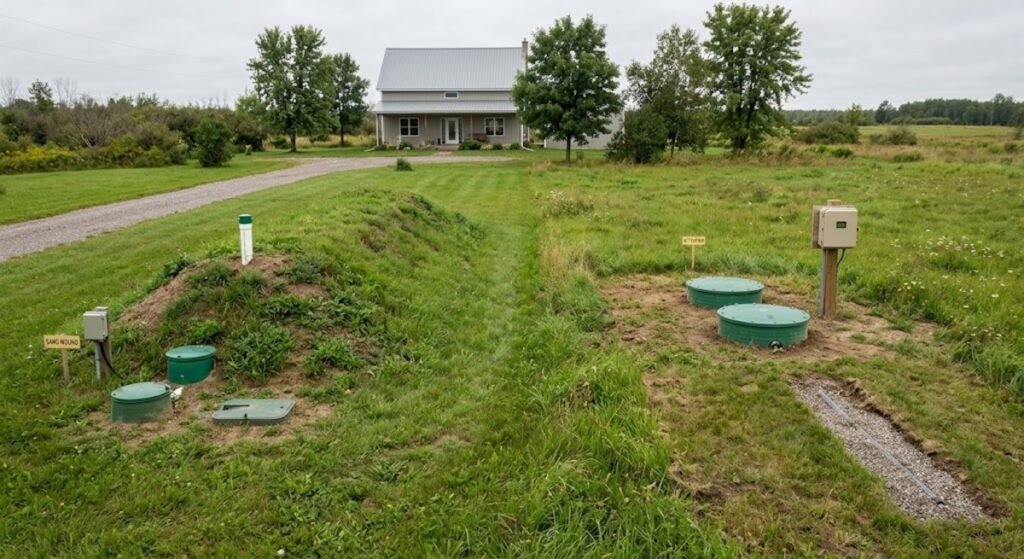
Sand mounds are one of the most common solutions when a standard in-ground septic system isn’t viable, but they come with real trade-offs that push many homeowners toward other options. Understanding how each system functions — and where each one falls short — helps clarify which approach makes the most sense for a given site.
How Sand Mound Systems Work
A sand mound is an elevated septic system built above ground when the natural soil conditions won’t support a conventional drainfield. When a site has a high water table, shallow bedrock, or slow-draining soil, a sand mound creates an engineered layer of clean sand above grade to provide the treatment depth that the native soil can’t offer.
Wastewater flows from the septic tank into a dosing chamber, where a pump delivers effluent in timed doses to the sand bed above. The sand filters and treats the effluent before it disperses into the underlying native soil.
Key components of a sand mound:
- Septic tank and dosing chamber
- Pressure distribution network
- Engineered sand fill (typically 2–4 feet deep)
- Topsoil cap and vegetative cover
Limitations of Sand Mound Septics
Sand mounds are effective, but they carry significant practical drawbacks. The most immediate issue is size — a standard sand mound for a three-bedroom home can require 2,500 to 4,500 square feet of usable land, making them impractical on small or oddly shaped lots.
The above-ground profile is another concern. A sand mound typically rises 2–4 feet above the natural grade, which affects landscaping, yard usability, and property aesthetics in ways that in-ground systems don’t.
Maintenance costs also add up. Dosing pumps require regular inspection and eventual replacement, and the engineered sand bed can fail if it becomes clogged with biomat over time. Replacement costs for a failed sand mound can range from $10,000 to $25,000 or more, depending on site conditions and local regulations.
Overview of Conventional Alternatives
When a sand mound isn’t suitable, several other systems are commonly evaluated:
| System Type | Best Use Case | Key Limitation |
| Conventional gravity drainfield | Level lots with suitable perc | Requires passing perc test |
| Drip irrigation system | Tight soils, small lots | Higher maintenance demand |
| Aerobic Treatment Unit (ATU) | Poor soil, high water table | Ongoing service contracts required |
| Constructed wetland | Rural sites with space | Regulatory restrictions vary widely |
Each alternative addresses specific site constraints. Drip irrigation systems, for example, distribute highly treated effluent through subsurface tubing at low doses, which works well where soil absorption is limited but land area is tight.
Key Considerations in Choosing a System
Selecting between a sand mound and an alternative comes down to four primary factors:
- Lot size and usable area — Sand mounds need significant footprint; drip and ATU systems are more compact.
- Soil percolation rate — Extremely slow or extremely fast perc rates can disqualify certain systems outright.
- Depth to water table or bedrock — Systems requiring vertical separation distance may not be feasible on all sites.
- Long-term maintenance capacity — Mechanical systems require consistent servicing; homeowners should factor in ongoing costs, not just installation.
Regulatory requirements also vary by county and state. Some jurisdictions restrict certain system types entirely, so confirming local approval before committing to a design is a necessary step, not an optional one.
ATT Systems: Advanced Septic Solutions for Challenging Sites
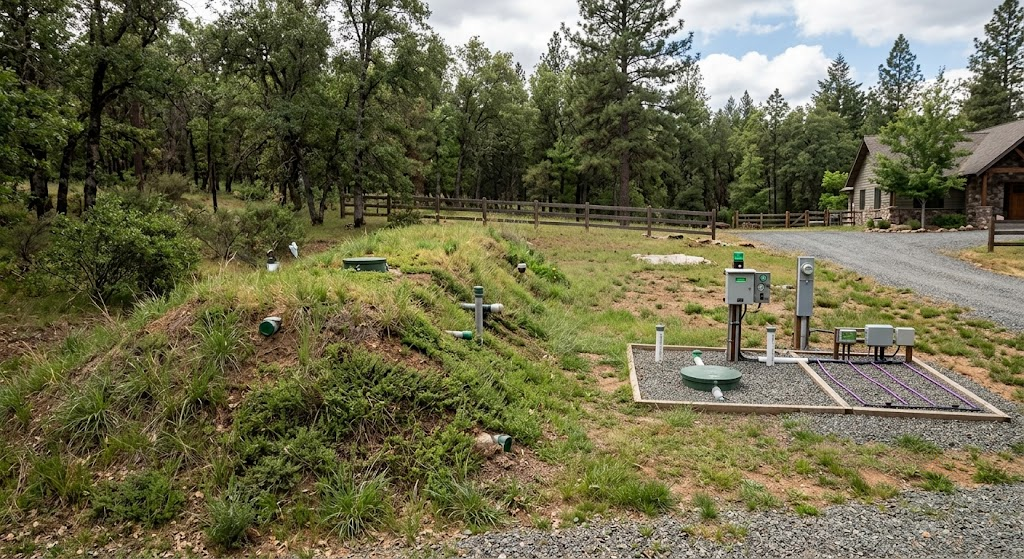
ATT systems treat wastewater to a higher standard than conventional septic, making them viable on sites where sand mounds struggle or fail entirely. They offer a compact, effective solution for properties with poor soil conditions, high water tables, or limited space.
What Are ATT Systems and Why Are They Needed?
ATT (Advanced Treatment Technology) systems are engineered wastewater treatment units that process effluent through multiple treatment stages before dispersal. Unlike a conventional septic tank, which relies heavily on soil absorption to finish the treatment process, an ATT system does most of that work mechanically or biologically within the unit itself.
This matters because not every site has soil capable of handling partially treated effluent. When a property has a high water table, tight clay soils, or a failed perc test, the soil simply cannot do its job.
Common reasons ATT systems are required:
- Failed or marginal percolation tests
- Lot size too small for a sand mound setback footprint
- Seasonal high water table within 24 inches of the surface
- Proximity to wetlands, wells, or surface water
- State or local regulations requiring nutrient reduction
ATT systems are not optional upgrades in these cases. They are often the only permitted path forward.
Advantages of ATT Over Sand Mounds
Sand mounds work by elevating the drain field above poor native soil, but they still depend on that imported fill and the surrounding environment behaving predictably. ATT systems reduce that dependency significantly.
| Feature | Sand Mound | ATT System |
| Footprint | Large, visible above grade | Compact, often below grade |
| Soil dependency | High | Low |
| Effluent quality | Secondary | Secondary to tertiary |
| Nutrient reduction | Minimal | Can remove nitrogen and phosphorus |
| Site flexibility | Limited | High |
ATT systems also produce cleaner effluent, which means the dispersal area can often be smaller. On a tight lot, that difference can determine whether a build permit is approved or denied.
Real-World Applications and Case Examples
A 0.75-acre lakefront lot in a nitrogen-sensitive watershed could not support a sand mound due to setback requirements from the water’s edge. An ATT system with drip irrigation dispersal was installed instead, meeting the state’s strict nutrient limits and fitting within the available footprint.
In another case, a property with a seasonal water table at 18 inches failed its perc test twice. A sand mound was technically possible but required a variance the county would not grant. An ATT system with a pressurized shallow drain field was approved without a variance.
These are not rare scenarios. Difficult sites are increasingly common as more marginal land gets developed and regulations tighten around water quality.
Making the Transition to an ATT-Based Septic Solution
Switching from a planned sand mound to an ATT system starts with a site evaluation from a licensed soil scientist or engineer. They will assess water table depth, soil structure, lot geometry, and local discharge regulations.
Key steps in the process:
- Commission a detailed site and soil report
- Identify which ATT technologies are approved in your jurisdiction
- Work with a designer to select the right system type (aerobic treatment unit, drip dispersal, recirculating media filter, etc.)
- Submit permit applications with engineered plans
- Plan for ongoing maintenance contracts, which most states require for ATT systems
ATT systems do carry higher upfront costs than a basic sand mound, typically ranging from $15,000 to $40,000 or more depending on site complexity and system type. However, on a site where a sand mound cannot be permitted, that cost comparison is irrelevant. The ATT system is not competing with the sand mound — it is replacing an option that does not exist.
Frequently Asked Questions
Sand mound systems and their alternatives involve real trade-offs around soil conditions, lot size, cost, and regulatory requirements. Knowing the specifics helps property owners and builders make decisions grounded in site data rather than assumptions.
When should a sand mound system be chosen instead of other onsite wastewater options?
A sand mound is typically chosen when the soil has a seasonal high water table that sits too close to the surface for a conventional in-ground system, but the lot still has enough area to accommodate an elevated drain field built on imported sand.
Most states and counties require a sand mound when the separation distance between the bottom of a conventional trench and the seasonal high water table falls below 24 inches. If the soil percolation rate also falls within an acceptable range — generally between 3 and 120 minutes per inch — a sand mound remains a permitted and practical option.
When lots are very small, soil is severely limiting, or the water table is extremely shallow, a sand mound may not provide enough separation distance even when elevated. In those cases, regulators often require a more advanced treatment option.
How do soil type, seasonal high water table, and lot size influence which septic alternative is permitted and practical?
Soil type directly affects how quickly effluent moves through the ground and how much natural treatment occurs before it reaches groundwater. Clay-heavy soils with percolation rates slower than 120 minutes per inch typically disqualify a site from conventional trenches and can also disqualify sand mounds if the rate is too restrictive.
The seasonal high water table — measured at its highest annual point, not just during dry months — sets the minimum separation distance required by code. In Pennsylvania, for example, the required separation from the seasonal high water table to the bottom of a sand mound’s infiltrative surface is typically 24 inches.
Lot size determines whether the required setbacks, system footprint, and repair area can all fit within the parcel boundaries. A standard sand mound for a three-bedroom home may require 2,500 to 5,000 square feet of usable area once setbacks from property lines, wells, and buildings are accounted for. Smaller lots frequently cannot physically accommodate that footprint, making compact ATT systems the only viable permitted path.
What are the typical cost ranges, maintenance requirements, and expected lifespan for sand mounds versus other alternative systems?
A sand mound system typically costs between $10,000 and $25,000 installed, depending on site conditions, imported sand volume, pump requirements, and local labor rates. Systems on steep slopes or with difficult access tend to fall toward the higher end.
Maintenance for a sand mound generally includes:
- Septic tank pumping every 3 to 5 years
- Pump and float inspection annually
- Monitoring the mound surface for signs of surfacing effluent or erosion
With proper maintenance, a well-installed sand mound can last 20 to 30 years before the infiltrative surface becomes clogged or the system requires significant repair.
ATT systems — which include drip irrigation, aerobic treatment units, and textile filter systems — typically cost $15,000 to $40,000 or more installed. They require more frequent maintenance, usually under a mandatory service contract requiring quarterly or semi-annual inspections. However, their lifespan is comparable to sand mounds when maintained properly, and in some cases the treatment media or components can be replaced without full system replacement.
How does an Advanced Treatment Technology (ATT) system work, and why is it often required for difficult sites or sensitive environments?
ATT systems treat wastewater to a significantly higher level than a conventional septic tank before it enters the soil. Instead of relying solely on soil absorption for treatment, an ATT system uses mechanical, biological, or filtration processes — or a combination — to reduce pathogens, nitrogen, and suspended solids before dispersal.
Common ATT configurations include aerobic treatment units that inject air into the treatment chamber to accelerate bacterial breakdown, textile filter systems that pass effluent through engineered media, and drip dispersal systems that deliver highly treated effluent through a network of subsurface drip lines at a controlled rate.
Regulators require ATT systems in situations where:
- The seasonal high water table is too shallow for a sand mound to provide adequate separation
- The lot is too small to fit the footprint of a sand mound with required setbacks
- The property sits within a designated wellhead protection area or near a sensitive waterway
- Soil percolation rates fall outside the acceptable range for any gravity or pressure-dosed system
In these circumstances, the higher level of pre-treatment that an ATT system provides compensates for reduced soil treatment capacity.
Can an ATT system reduce the footprint or allow installation on properties that fail a perc test or have limited separation to groundwater?
Yes, and this is one of the primary reasons ATT systems are specified on challenging sites. Because effluent leaving an ATT system is already treated to a much higher standard, many state and county regulations allow reduced setback distances and smaller dispersal fields compared to what a sand mound would require.
For example, a drip dispersal ATT system may be permitted with only 12 inches of separation to the seasonal high water table in some jurisdictions, compared to 24 inches or more for a sand mound. That difference can make a site buildable that would otherwise be unbuildable.
Properties that fail a perc test due to extremely slow or extremely fast soils are often still approvable with an ATT system because the dispersal rate and treatment level are engineered and controlled rather than dependent on natural soil absorption rates. We have seen sites with perc rates exceeding 200 minutes per inch receive approval with an ATT drip system when nothing else would pass regulatory review.
What are the most common reasons sand mound systems fail, and what upgrades or replacements are usually recommended?
The most frequent cause of sand mound failure is biomat formation — a layer of biological material that accumulates at the interface between the sand fill and the native soil, eventually blocking effluent infiltration. This usually develops over 15 to 25 years but can occur much earlier if the system is hydraulically overloaded or the tank is rarely pumped.
Other common failure causes include:
- Pump failure leading to flooding of the distribution system
- Compaction of the mound from vehicles or heavy equipment driving over it
- Root intrusion from trees or shrubs planted too close to the mound
- Poor original design with insufficient sand depth or inadequate sizing for actual household flow