If you’re deciding between an ATT system and a sand filter for your property, the differences in cost, land use, and long-term performance matter more than most people realize. For properties with challenging soil conditions, high water tables, or limited space, an ATT system typically offers more flexibility and a smaller site footprint than a sand filter. The right choice depends on your specific site conditions, local regulations, and budget.
Both options exist because conventional septic systems aren’t always feasible. Sand filters and ATT systems are both engineered alternatives, but they work differently and suit different situations. We’ll walk through how each system functions, where each one performs best, and what factors should drive your decision.
Understanding the tradeoffs between these two systems can save you significant time, money, and frustration during permitting and installation. We’ll also cover how ATT systems handle advanced treatment in ways that standard alternatives often can’t match, along with answers to the questions property owners most commonly ask.
Choosing Between ATT Systems and Sand Filter Systems
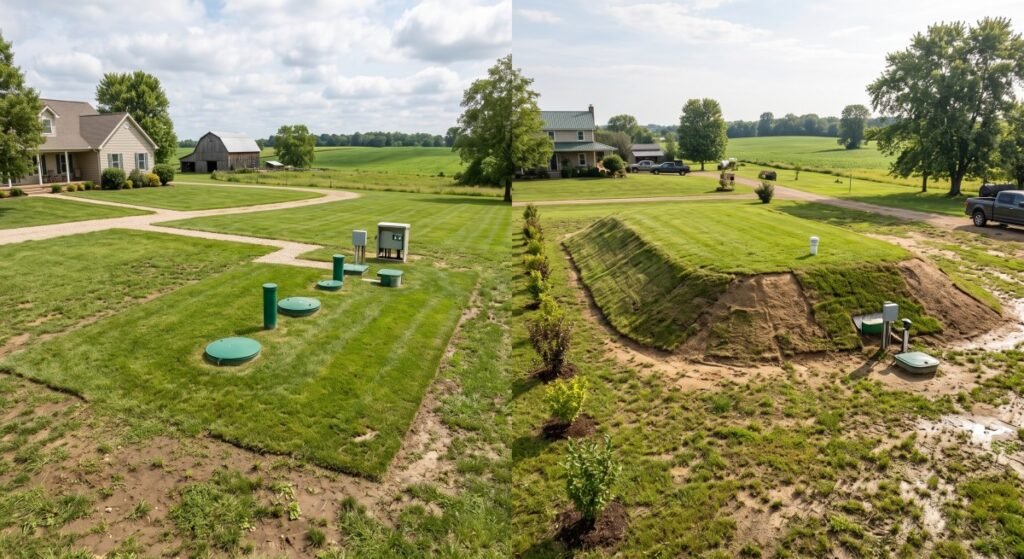
Both ATT systems and sand filter systems offer workable solutions when conventional septic systems aren’t an option, but they differ significantly in how they treat wastewater, what soil conditions they require, and how much space they consume on your property.
Key Differences in System Design
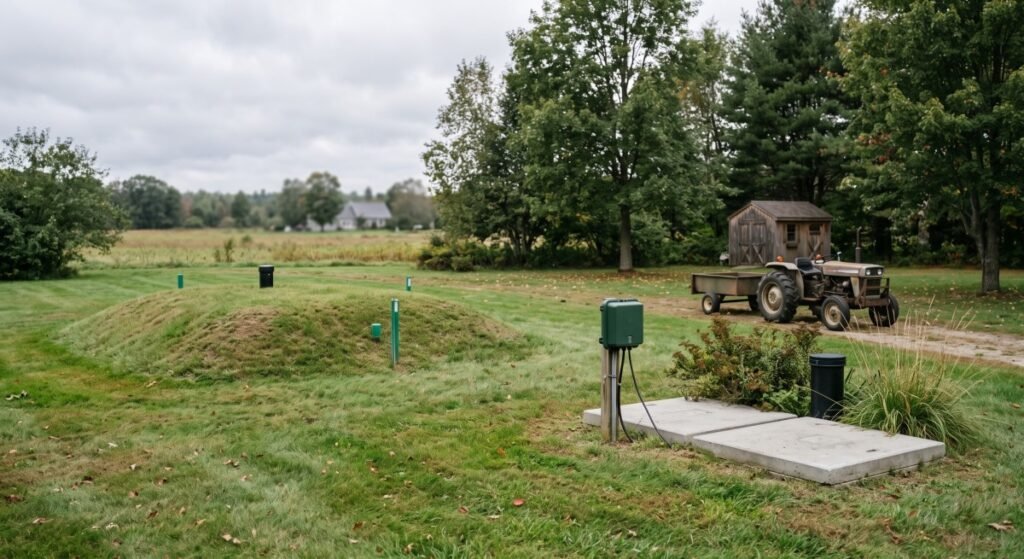
A sand filter system is a raised drainfield built above ground using imported sand fill. It relies on passive filtration — wastewater passes through the sand layer before reaching the native soil below. There are no mechanical treatment components involved.
An ATT system, by contrast, uses active treatment technology to process wastewater before it ever reaches the soil. This typically includes aeration chambers, biofilm media, or UV disinfection depending on the specific unit.
| Feature | ATT System | Sand Filter |
| Treatment method | Active (mechanical) | Passive (filtration) |
| Effluent quality | High (often tertiary) | Moderate (secondary) |
| Moving parts | Yes | No |
| Maintenance requirements | Higher | Lower |
The effluent quality difference is significant. ATT systems consistently produce cleaner output, which matters when you’re dealing with sensitive environmental conditions or strict local regulations.
How Soil and Water Table Affect Your Selection
Sand filter systems work well when the native soil has poor percolation but the water table sits at a manageable depth — typically at least 24 inches below the surface. They compensate for poor soil by elevating the drainfield above it.
When the water table is high or seasonally fluctuating, a sand filter’s performance becomes unreliable. Saturated soil beneath the filter can’t accept effluent properly, which leads to system failure.
ATT systems produce highly treated effluent that can be dispersed into soil with much stricter limitations. They’re approved in many jurisdictions for sites where sand filters would be rejected outright — including lots with water tables less than 18 inches from the surface.
Installation and Space Requirements
Sand filter systems require a large, relatively flat footprint. The filter itself can be 2 to 3 feet tall and may span several thousand square feet, depending on household size and soil conditions. This makes them difficult to fit on smaller or irregularly shaped lots.
ATT systems have a more compact treatment tank but still require a dispersal area. However, because the effluent is pre-treated to a higher standard, smaller drainfields are often permitted, which can make ATT viable on lots where a sand filter physically won’t fit.
Pros and Cons of Each System Type
Sand Filter:
- ✅ Lower upfront cost
- ✅ No mechanical components to maintain
- ✅ Widely understood by local inspectors and regulators
- ❌ Large surface footprint
- ❌ Visible above ground, affecting landscaping and aesthetics
- ❌ Not suitable for very high water tables or tight lots
ATT System:
- ✅ Superior effluent quality
- ✅ Viable on difficult sites and small lots
- ✅ Smaller dispersal area often required
- ❌ Higher installation and maintenance costs
- ❌ Requires regular servicing and inspections
- ❌ Dependent on electrical components functioning correctly
The right choice depends heavily on your specific site conditions, local permitting rules, and long-term budget.
Why ATT Systems May Be the Smarter Choice for Challenging Properties
ATT systems treat wastewater to a higher standard before dispersal, making them viable on sites where conventional systems and sand filters fall short. Properties with limited space, poor soil, or high water tables are where ATT technology consistently outperforms older approaches.
What Makes ATT Systems Distinct
ATT (Advanced Treatment Technology) systems use a multi-stage treatment process rather than relying on the soil alone to filter waste. A conventional septic system deposits partially treated effluent into the ground and depends on soil biology to finish the job. ATT systems do most of that work mechanically — through aeration, filtration, and sometimes UV disinfection — before the effluent ever reaches the soil.
This matters because it separates wastewater treatment from soil quality. The system’s performance is no longer tied directly to what’s underneath your property.
Key treatment stages in a typical ATT system:
- Primary settling — solids separation
- Aerobic treatment — bacteria break down waste using oxygen
- Secondary filtration — removes remaining suspended particles
- Disinfection — UV or chlorine treatment before dispersal
Advantages of ATT Systems for Small Lots and Poor Soil
Sand filters require a large footprint — often 3,000 to 5,000 square feet or more depending on household size and soil conditions. On a small lot, that simply isn’t available. ATT systems can be installed with a significantly smaller drain field because the effluent entering the soil is already highly treated and poses less contamination risk.
Clay soil and high water tables block drainage and cause conventional systems to fail perc tests entirely. ATT systems produce effluent that meets stricter quality thresholds, which means regulators in many states approve smaller, shallower dispersal areas for ATT installations.
| Factor | Sand Filter | ATT System |
| Footprint required | Large | Significantly smaller |
| Performance in clay soil | Poor | Acceptable with proper design |
| High water table tolerance | Low | Higher |
| Effluent quality at dispersal | Moderate | High |
Examples of ATT Success on Difficult Sites
A 0.4-acre lakefront lot in Wisconsin failed its perc test due to a seasonal high water table sitting just 18 inches below the surface. A sand filter was not permitted at that depth. An ATT system with a pressurized shallow drip dispersal field was approved and installed, resolving the issue without relocating the home or purchasing additional land.
In another case, a builder in Pennsylvania faced a narrow infill lot with heavy clay subsoil. The ATT system’s reduced dispersal area fit within the available setbacks where no conventional system could have been permitted.
These aren’t edge cases. They represent the kind of constraints we see regularly on older subdivisions, rural parcels, and waterfront properties.
How ATT Systems Improve Environmental Protection
Because ATT systems reduce nitrogen, pathogens, and biochemical oxygen demand (BOD) before dispersal, they release far less contamination into the surrounding soil and groundwater. A conventional system dispersing 150 gallons per day introduces significantly more nutrients into the ground than an ATT system handling the same volume.
This is especially important near wells, wetlands, and water bodies. Many state and county regulators now require ATT systems within certain setback distances from sensitive water resources precisely because of this difference in output quality.
ATT systems typically reduce:
- Nitrogen levels by 50–70% compared to conventional systems
- Pathogen concentrations to near non-detectable levels after UV treatment
- BOD by up to 90% before soil contact
Frequently Asked Questions
Site conditions, groundwater behavior, soil permeability, and regulatory requirements all play a direct role in determining which wastewater system is permitted and practical for a given property.
What site conditions typically determine whether a raised sand filter is required versus an advanced treatment approach?
A raised sand filter is typically required when native soil has inadequate permeability or when the seasonal high water table sits too close to the surface — usually within 18 to 24 inches. The filter elevates the drainfield above these conditions using imported sand fill.
An advanced treatment system becomes the permitted path when the lot is too small to accommodate a filter’s large footprint, when slopes exceed allowable grades, or when the soil fails to meet minimum standards even for a filter installation. Some jurisdictions also require advanced treatment when a property sits near a protected water body or wellhead protection zone.
How do high water tables and seasonal groundwater changes affect drainfield performance and system selection?
A high water table reduces the vertical separation distance between the drainfield and saturated soil, which is the critical buffer where biological treatment of wastewater occurs. When that buffer is too shallow, partially treated effluent can reach groundwater before adequate treatment takes place.
Seasonal fluctuations matter as much as the measured depth at the time of testing. A site that appears acceptable in late summer may have a water table that rises to within inches of the surface during spring snowmelt or heavy rain events. Regulatory agencies typically require testing during the seasonally high period, and system design must account for the worst-case condition — not the average.
What are the most common reasons a property fails a perc test, and what alternatives are usually permitted afterward?
The most common causes of a failed perc test include:
- Clay-heavy soils that absorb water too slowly, producing perc rates that exceed the acceptable threshold
- Shallow bedrock that limits vertical separation and available absorption area
- Seasonally high water tables that rise above the minimum required separation depth
- Previously disturbed soils where compaction or fill material prevents consistent drainage
After a failed perc test, the two most common permitted alternatives are a raised sand filter— if the lot size and topography allow it — or an advanced treatment system that reduces effluent strength before dispersal. Some states permit a combination of both, where treated effluent from an ATT unit is discharged to a smaller, modified drainfield that would not qualify for a conventional system.
How do upfront costs, long-term maintenance, and lifecycle costs compare between a filters system and an advanced treatment setup?
A raised sand filters typically costs between $10,000 and $25,000 installed, depending on site conditions, the volume of imported sand fill required, and local labor rates. Advanced treatment systems generally range from $15,000 to $35,000 or more, depending on the technology selected and the level of treatment required by the permit.
Maintenance costs differ meaningfully over time. Sand filters require periodic inspection and pump-out like any septic system, but they have no mechanical treatment components. ATT systems involve service contracts — often $300 to $600 per year — for routine inspections, filter cleaning, and mechanical component checks. However, ATT systems can qualify for smaller dispersal areas, which sometimes reduces overall site preparation and excavation costs enough to offset part of the price difference.
Over a 20- to 30-year lifecycle, the total costs tend to be comparable when all factors are included. The deciding variable is often not cost alone but which system the site can actually support.
Which option tends to have a smaller footprint and fewer grading impacts on tight lots or heavily landscaped properties?
Sand filters require significant land area — often 2,500 to 5,000 square feet or more — and they introduce a raised berm that can be 2 to 3 feet above grade. On tight lots or properties with mature landscaping, this physical presence can be a real constraint.
Advanced treatment systems have a substantially smaller footprint. The treatment unit itself is a single tank or compact unit, and the dispersal area required after treatment is reduced because effluent quality is higher. On a lot where a filter would consume most of the usable backyard or require removal of established trees, an ATT system is often the only option that preserves the property’s function and appearance.
Some ATT configurations also allow for drip irrigation dispersal, which distributes effluent through shallow subsurface tubing across a wide area without any visible surface disruption or grading.
What permits, inspections, and ongoing service requirements should homeowners and builders expect with each system type?
Both system types require a site evaluation, soil testing, and a septic system permit from the local health department or environmental agency before installation begins. Design plans must typically be prepared or approved by a licensed engineer or soil scientist, and installation must be performed by a licensed contractor.
For sand filters, inspection requirements generally include a review during installation to verify sand fill depth and pipe placement, followed by a final inspection before the system is covered. After installation, routine pumping every 3 to 5 years is the primary ongoing requirement in most jurisdictions.
ATT systems carry more structured ongoing obligations. Most states require a maintenance contract with a certified service provider as a condition of the operating permit. Inspections are typically required one to four times per year, and service reports must be submitted to the regulatory agency on a scheduled basis. Homeowners should also expect that ATT systems require an electrical connection and that power interruptions can temporarily affect treatment performance.