Last month, a buyer in Clackamas County discovered a massive septic failure just days before closing on their dream home. For many, buying home with septic system Oregon properties feels like a high-stakes gamble where the wrong move costs tens of thousands of dollars. It’s natural to feel uneasy about what’s happening underground, especially when you’re used to the simplicity of city sewers. You want the peace of mind that comes with a functional system and a fair deal, not a hidden disaster waiting to surface.
At Lil’ Stinky Septic Service, we’ve put together this 2026 guide to give you the exact roadmap you need to handle these complexities with confidence. You’ll get a clear look at Oregon DEQ compliance, the red flags that signal trouble, and a step-by-step checklist for your due diligence period. We’ll walk through the latest inspection requirements and show you how to handle repair negotiations like a seasoned pro. By the end, you’ll have the tools to protect your property value and ensure your new rural lifestyle starts on solid ground.
Key Takeaways
- Master the Oregon DEQ “Time of Sale” inspection requirements to keep your closing on track and satisfy lender demands.
- Identify critical red flags like standing water or overly green grass that could signal an expensive repair need before you commit.
- Learn how to use a septic contingency when buying home with septic system Oregon properties to protect your earnest money and negotiate repairs.
- Clarify the roles of the buyer and seller regarding inspection fees and pumping costs before you sign the final papers.
- Establish a long-term maintenance strategy with regular pumping every 3 to 5 years to ensure your system remains compliant and functional.
The Basics of Oregon Septic Systems for Homebuyers
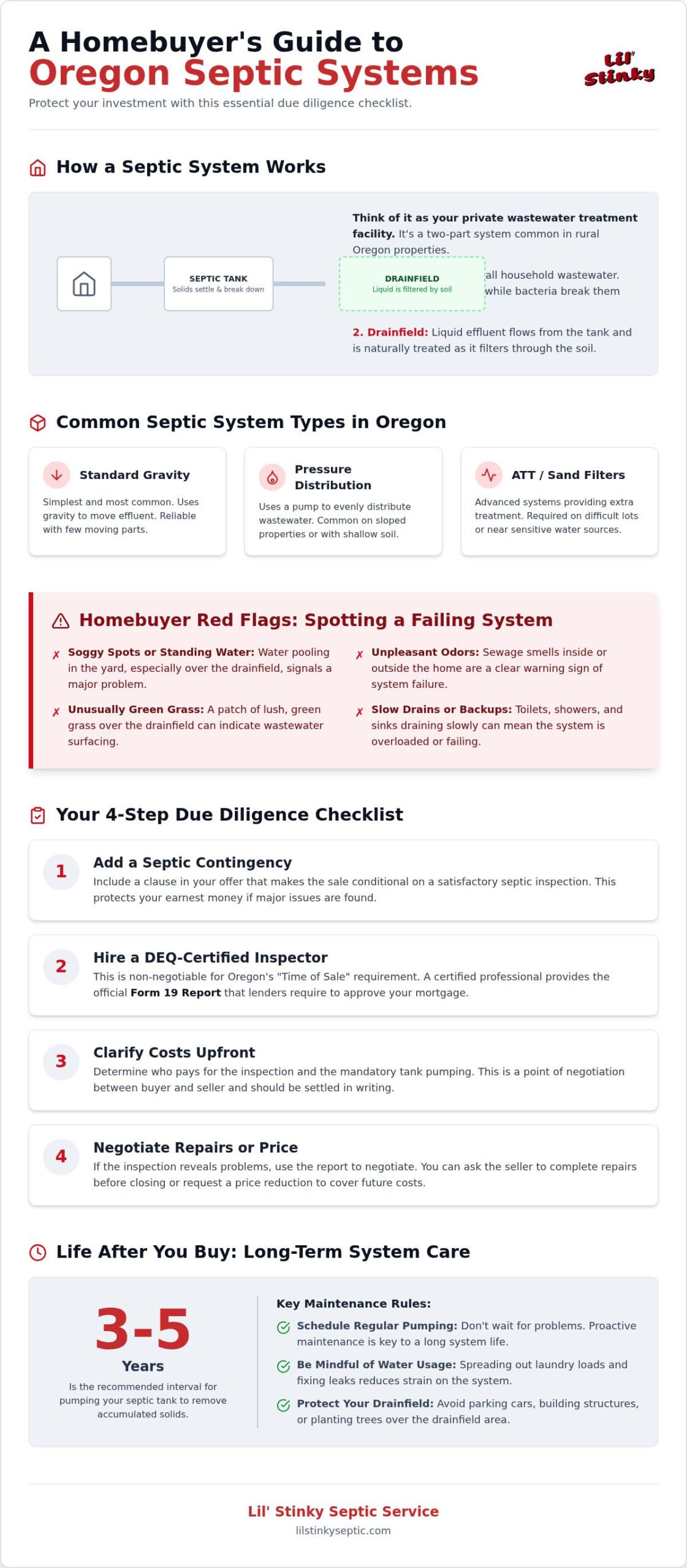
Think of a septic system as your own private wastewater treatment plant. Unlike city dwellers who flush and forget, buying home with septic system Oregon properties means you’re now the manager of your own utility. While you focus on wastewater, you can also discover Great Water Filters to ensure the water entering your home is of the highest quality through premium filtration. The system operates using two main components. First, the septic tank collects solids and allows natural bacteria to break them down. Second, the drainfield (or leach field) treats the liquid effluent by filtering it through the soil. It’s a highly effective process, but it relies entirely on the health of the biology and the ground around it.
In the Willamette Valley, these systems are a standard part of rural and suburban life. While city sewer bills are a predictable monthly expense, septic owners swap that fee for the responsibility of periodic maintenance and pumping. It’s a trade-off that offers independence but requires a proactive approach. If you don’t maintain the system, you’re looking at a repair bill that can easily dwarf a decade of city sewer fees. We’ve seen many buyers overlook this detail, only to face an emergency shortly after moving in.
Why Septic Systems are Unique in the Pacific Northwest
Oregon’s weather plays a massive role in how your system performs. Our heavy seasonal rainfall can saturate the ground, making it much harder for the drainfield to absorb liquid. This is why local soil composition matters so much. In our service area, we see everything from the well-draining Canby silt to the heavy, stubborn Clackamas clay. If the soil can’t process the water fast enough, you might need an Alternative Treatment Technology (ATT) system. These are common in sensitive areas or on smaller lots where standard systems won’t meet environmental codes.
Common Types of Systems You’ll Find in Oregon
You’ll likely encounter one of these three designs while house hunting in the Portland area:
- Standard Gravity Systems: These are the simplest designs. They use gravity to move liquid from the tank to the drainfield. They’re reliable and have the fewest moving parts to break.
- Pressure Distribution Systems: If the property has a slope or shallow soil, a pump is used to distribute wastewater evenly across the drainfield. These require a bit more electrical maintenance than gravity systems.
- Sand Filters and ATT: These high-tech solutions provide extra treatment before the water hits the soil. They’re often required on difficult lots or near water sources to protect the local environment.
Knowing which system is installed helps you plan for future maintenance. Buying home with septic system Oregon permits and records will tell you exactly what’s underground before you sign the closing papers. Always verify the system type before the inspection so you know what to expect.
Decoding Oregon DEQ Requirements and Time-of-Sale Inspections
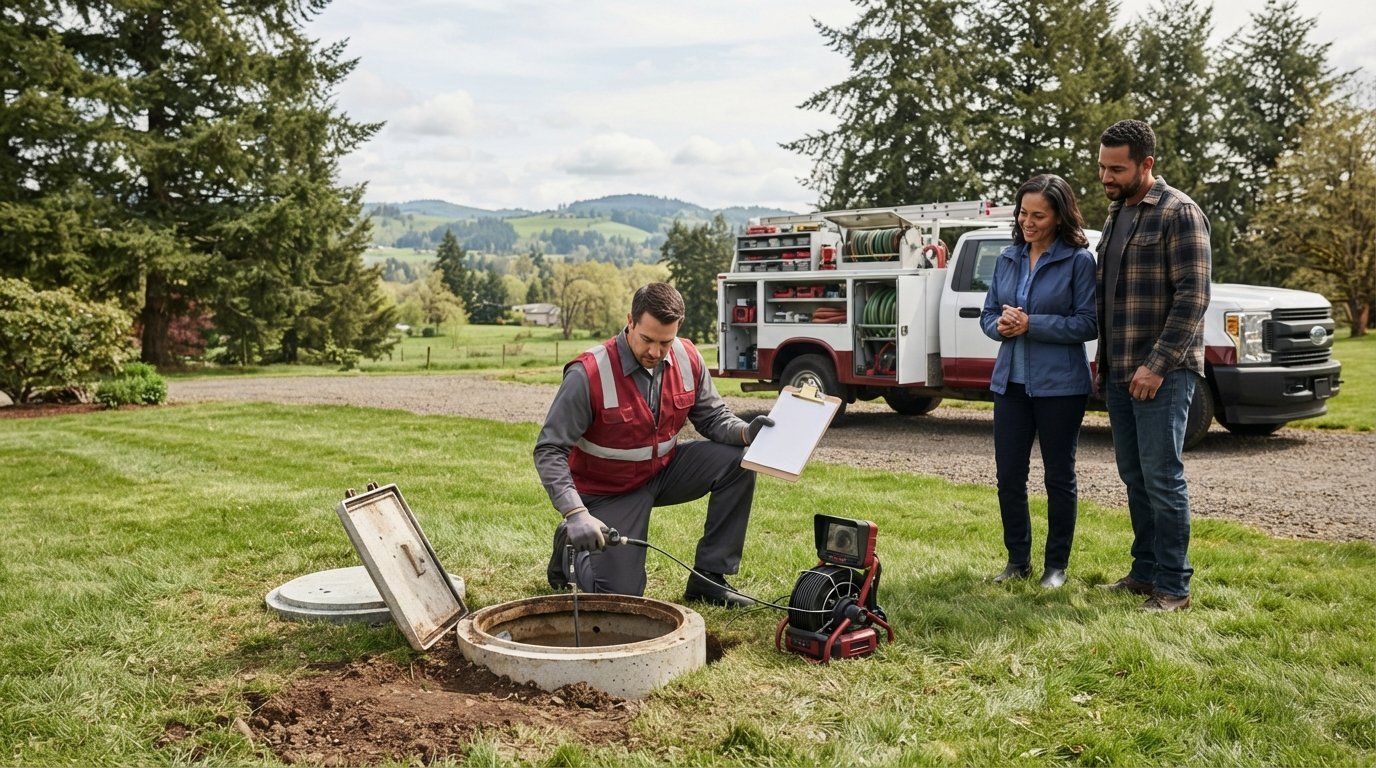
The Oregon Department of Environmental Quality (DEQ) is the authority that regulates every septic system in the state. If you’re buying home with septic system Oregon properties, you can’t skip the “Time of Sale” inspection. Lenders view these systems as a potential liability. They require a professional sign-off before they’ll fund your mortgage. It’s not just about satisfying the bank, though. It’s about knowing if you’re inheriting a functional utility or a failing mess that costs thousands to fix. Hiring a DEQ-certified inspector like Lil’ Stinky Septic Service gives you the technical accuracy you need. We provide the “straight talk” you deserve during a stressful transaction. You can find more details in our Certified Septic Inspection Oregon guide.
The Oregon DEQ Form 19: What You Need to Know
Form 19 is the official “Report of Onsite Wastewater Treatment System Evaluation.” It serves as the legal record of the system’s current health. Lenders rely on this document to ensure the property meets basic environmental and functional standards. If the system fails the evaluation, it could stall your financing entirely. When buying home with septic system Oregon houses, this paperwork is non-negotiable for most rural home sales in Clackamas and Multnomah counties. Form 19 must be submitted to the DEQ by the inspector within 30 days of the evaluation. This ensures the state has an updated record of the property’s infrastructure. We handle this filing for our clients to keep their escrow moving smoothly.
What Happens During a Certified Oregon Septic Inspection?
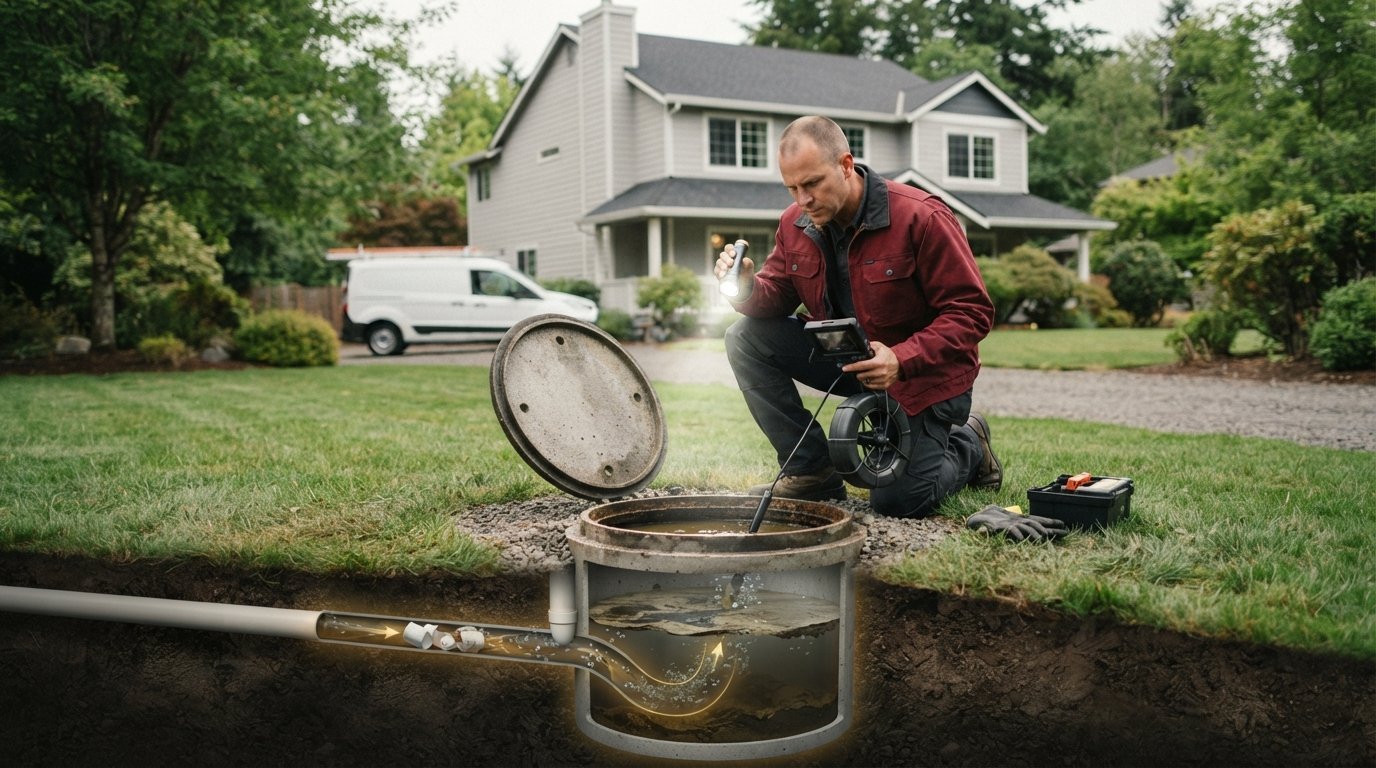
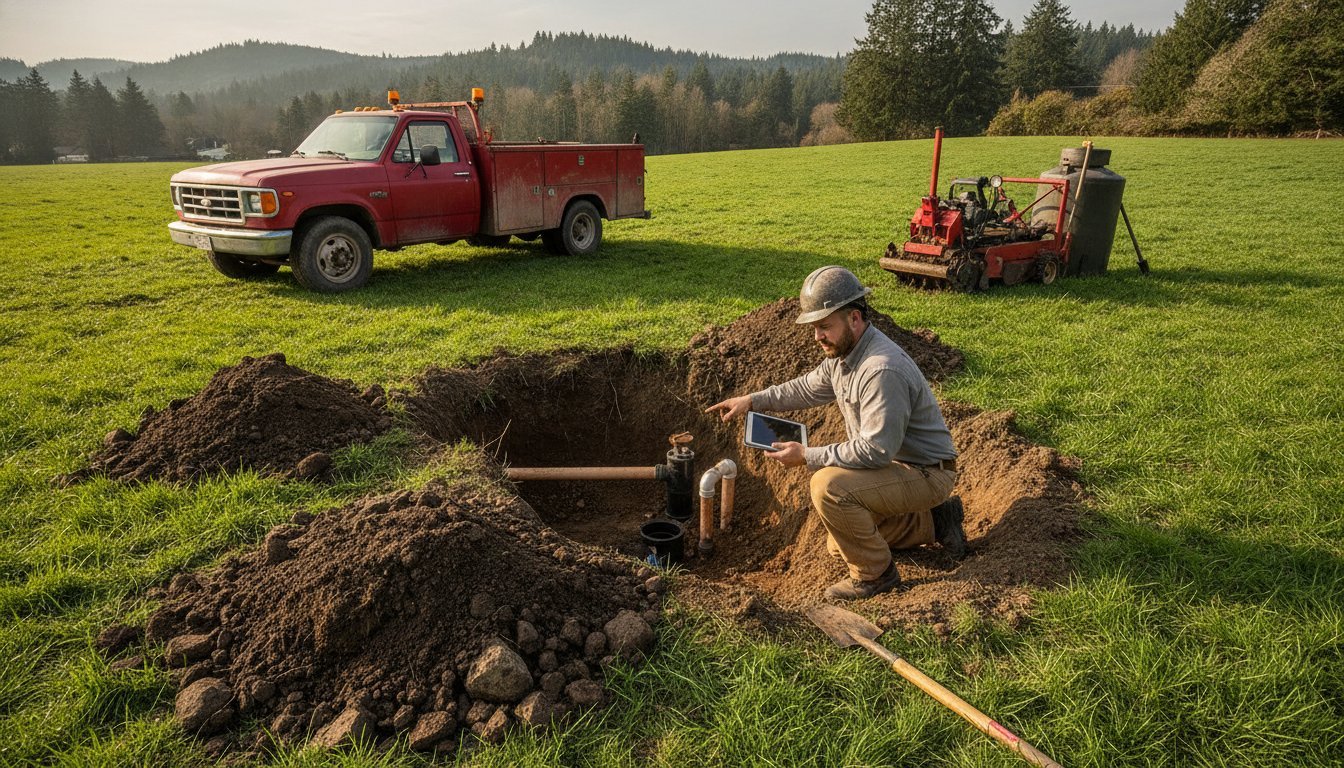
A proper inspection is a methodical process that goes far beyond a surface-level check. We don’t just look for green grass. We get into the components that actually do the work. First, we locate and uncover the septic tank lids. This often requires some digging if they aren’t already at grade. Once open, we check the liquid levels and the structural integrity of the tank itself. We’re looking for cracks, root intrusion, or signs of backflow from the drainfield. The most critical step is stress-testing the drainfield. We run a controlled volume of water through the system. This confirms the soil can handle a typical household load without backing up or surfacing. For a closer look at our methods, read about Septic Inspection in Portland Oregon for Home Sales.
If your closing date is approaching, you can book a certified inspection with our team to ensure everything stays on schedule.
Homebuyer Red Flags: How to Spot a Failing Septic System
When you’re touring a property, don’t just focus on the updated kitchen or the view from the deck. You need to look at the yard with a critical eye. A failing septic system often leaves visible clues long before a total backup occurs. One of the most common signs is a patch of lush, vibrant green grass directly over the drainfield. While it might look healthy, seeing a “golf course” lawn in the middle of a dry Oregon summer is a major red flag. It usually means the soil isn’t properly filtering the effluent, and the wastewater is rising to the surface to fertilize the grass.
Keep an eye out for soggy spots or standing water in the yard, especially if it hasn’t rained in a few days. If the ground feels “squishy” under your feet near the tank or drainfield, the system is likely saturated and failing to drain. Inside the house, pay attention to the plumbing. Slow-draining sinks or strange gurgling sounds after you flush a toilet are often the first signs of a blockage. If you notice a distinct sewage odor while walking the property line, it’s a clear signal that the system is venting improperly or the tank seal has failed. These issues are common when buying home with septic system Oregon properties that haven’t been maintained.
Investigating the “Paper Trail” of the Property
A well-maintained system always has a history you can track. Ask the seller for the last pumping record. Ideally, this should have been done within the last 3 to 5 years. If they can’t produce a receipt, it’s a sign of neglect. You should also request the “As-Built” drawings. These official maps show the exact location of the tank, lines, and drainfield. Without them, you’re guessing where it’s safe to build a fence or plant a garden. Finally, check for any permits related to major repairs. If a system was recently “patched” without a permit, it might not meet current DEQ standards and could lead to legal headaches later. If you’re on the other side of the transaction, understanding the septic system repair requirements for home sale Oregon sellers must meet can help you anticipate what disclosures and fixes may be expected.
Oregon-Specific Environmental Warning Signs
Our local landscape presents unique challenges for septic health. Oregon has strict setback rules regarding the proximity of septic components to wells, streams, and other water bodies. If the property is near a creek or has a private well, ensure the system isn’t encroaching on these protected areas. You also need to consider our famous Douglas Firs. While beautiful, their aggressive root systems can easily crush or clog septic pipes. Lastly, be wary of “hydraulic overload” during our heavy Portland winters. If the system is already struggling, the massive influx of rainwater can push it into a total failure. We see this often in the Willamette Valley when systems aren’t designed for our high-rainfall climate.
Spotting these signs early can save you from a multi-thousand dollar mistake. If you see any of these red flags, it’s time to call in a specialist before you move forward with the purchase.
The Septic Contingency: Negotiating Repairs and Costs
When you’re buying home with septic system Oregon properties, the real estate contract is your first line of defense. You must ensure your agent includes a specific septic inspection contingency in your Oregon Real Estate Agency (OREA) agreement. This clause gives you a set window, usually 10 to 14 days, to perform a professional evaluation. If the results are unsatisfactory, the contingency allows you to renegotiate the price or back out of the deal entirely without losing your earnest money. It’s your escape hatch in case the underground infrastructure isn’t what it seems.
One common question involves who picks up the tab. While every deal is different, the buyer typically pays for the inspection as part of their due diligence. However, a proper inspection requires the tank to be pumped so the technician can see the bottom and check for cracks. Traditionally, the seller covers the cost of the pumping since it’s a maintenance task they should have performed anyway. If the seller refuses, this becomes a point of negotiation. Don’t let a small pumping fee stop you from getting a full picture of the system’s health.
Negotiating a Failed Inspection in Oregon
If the inspection uncovers a failure, don’t panic. You have several ways to move forward. You can request a price reduction based on professional repair estimates, allowing you to handle the work after closing. Another option is an escrow holdback. This is where a portion of the seller’s proceeds is kept in a neutral account to pay for repairs that can’t be finished before the move-in date. Always ensure any work is performed by a licensed Oregon septic contractor to maintain DEQ compliance. For sellers navigating this situation, reviewing the Oregon septic repair requirements for home sellers can clarify exactly what the state mandates before a deal can close. If the issues are too severe, you have every right to walk away from the purchase.
Understanding Potential Replacement Costs
If a total replacement is necessary, several factors will influence the final bill. Soil conditions and the required system type, like a standard gravity vs. an ATT system, play the largest roles. You’ll also need to navigate the permit process through your specific county office, whether that’s Clackamas or Multnomah. In some cases, a full replacement isn’t needed. For example, septic drain cleaning in Clackamas County can sometimes resolve line clogs that mimic a total system failure. For a deeper look at the numbers, check out our guide on septic system installation cost in Oregon.
If you’re facing a tough negotiation, we can provide the clear, professional documentation you need to reach a fair deal. Contact Lil’ Stinky Septic Service today to schedule your pre-purchase inspection.
Life After the Move: Maintaining Your Oregon Septic System
Once the keys are in your hand, the real work of homeownership starts. Maintaining your system is the only way to avoid the stress of a sudden failure. The most important rule is routine pumping. Depending on your household size, you should schedule a pump-out every 3 to 5 years. This prevents solids from overflowing into your drainfield, which is the leading cause of system death. For a worry-free experience, consider the ultimate guide to a septic maintenance plan in Portland OR. A dedicated plan ensures you never miss a service date and keeps your property in compliance with local standards.
You also need to physically protect your system from the surface. Never drive vehicles or park heavy equipment over the tank or drainfield. The weight compacts the soil and crushes pipes, leading to expensive repairs that aren’t usually covered by insurance. Keep the area clear of trees with invasive roots and only plant grass or shallow-rooted groundcover. When you’re buying home with septic system Oregon properties, remember that the land above the system is just as important as the components below it.
Septic Dos and Don’ts for New Owners
It’s easy to treat your toilets like trash cans, but your septic system isn’t designed for that. Stick to the “Septic No-No” list. Never flush “flushable” wipes, feminine products, grease, or harsh chemicals like bleach in large quantities. These kill the beneficial bacteria that break down waste. You should also manage your water usage. Spreading out laundry loads over the week instead of doing five loads on Saturday prevents overwhelming the tank. Check out the essential septic system maintenance checklist for a daily guide on protecting your investment.
Partnering with a Local Specialist
Having a “go-to” expert makes all the difference for your peace of mind. When you’re buying home with septic system Oregon properties, you want a partner who knows the local soil and regulations. At Lil’ Stinky Septic Service, we bring over 25 years of local experience to every job in Canby, Clackamas, and the surrounding areas. We offer 24/7 emergency response because we know that septic issues don’t always happen during business hours. Whether it’s a last-minute escrow hurdle or a routine check-up, we provide the honest, straight talk you need to keep your home running smoothly.
Schedule your DEQ-certified inspection with Lil’ Stinky today!
Secure Your Investment with Confidence
Buying home with septic system Oregon properties shouldn’t be a source of constant worry. You now have the roadmap to navigate complex DEQ Form 19 requirements and spot the subtle red flags that signal a failing drainfield. Remember that a solid septic contingency in your contract is your best tool for negotiation. Once you move in, sticking to a proactive maintenance plan will keep your system functional for decades. It’s about being a prepared owner who understands the ground beneath their feet and protects their property value from the start.
Lil’ Stinky Septic Service brings over 25 years of local Oregon experience to your side. As DEQ-certified inspectors (CCB #189693), we provide the precise reporting your lender requires to fund your mortgage. We even offer 24/7 emergency response to handle those last-minute escrow issues that can threaten your closing date. Don’t leave your property’s health to chance when expert help is just a phone call away.
Schedule Your Certified Septic Inspection with Lil’ Stinky to ensure your new home is sitting on a healthy, compliant foundation. You’re ready to enjoy your new rural lifestyle with total peace of mind and the security of a well-vetted system.
Frequently Asked Questions
Is a septic inspection required by law in Oregon when buying a house?
Oregon law doesn’t technically mandate an inspection for every private sale, but DEQ rules require a “Time of Sale” evaluation for most property transfers. Almost all lenders require a certified Form 19 report before they’ll fund a rural mortgage. It’s a standard requirement for homes in Clackamas and Multnomah counties to ensure environmental compliance. If you skip this step, you’ll likely face major delays with your financing or closing.
Who pays for the septic inspection in Oregon, the buyer or the seller?
This is a negotiable point in the real estate contract, but the buyer usually pays for the inspection as part of their due diligence. The seller typically covers the cost of pumping the tank, which is necessary for a thorough evaluation. We often see savvy buyers include these specific terms in their OREA contract to avoid confusion. Clear communication between agents helps determine who handles which fee before our technician arrives on site.
How much does a septic inspection cost in the Portland area?
Costs vary based on the system’s depth, its location, and whether the lids are already exposed or need digging. Factors like the size of the tank and the complexity of the drainfield also play a role in the final service fee. While we don’t quote flat rates here, you should account for both the inspection fee and the pumping service. Contact a local specialist for a specific quote based on the property’s unique records.
What happens if a septic system fails the DEQ inspection during escrow?
A failure doesn’t have to kill the deal. You can negotiate a price reduction, ask the seller to fund repairs before closing, or set up an escrow holdback. If the system requires a total replacement, the buyer and seller must decide who assumes that significant cost. In many cases, the buyer may choose to exercise their septic contingency and walk away with their earnest money. This protects you from inheriting a multi-thousand dollar repair bill.
How can I find the septic records for a house I am buying in Oregon?
You can request “As-Built” drawings and permit history from the local county environmental health department. In Canby or Clackamas County, these public records show the system’s layout, age, and any past repairs. If the county doesn’t have them on file, you may need a technician to perform a locate service. Having these documents is vital when buying home with septic system Oregon properties to understand exactly what infrastructure is underground.
Can I use a regular home inspector for my septic system check?
No, a standard home inspection doesn’t cover the septic system’s internal components or the health of the drainfield. While a comprehensive provider like Total Inspections is essential for evaluating the rest of the house’s structure and systems, Oregon requires a DEQ-certified inspector to sign off on the official Form 19 evaluation for property transfers. General inspectors often just flush toilets to see if they drain properly. A specialist like Lil’ Stinky Septic Service uses specific tools to check tank integrity and perform hydraulic load tests that a general home inspector simply isn’t equipped to provide.
Most households in the Portland area should pump their tank every 3 to 5 years. This timeline depends on the number of people living in the home and the system’s overall capacity. Regular pumping prevents sludge from entering the drainfield, which is the most expensive part of the system to replace. Staying on a consistent schedule is the best way to protect your investment after buying home with septic system Oregon and avoid emergency backups.
What is an ATT septic system and why are they common in Oregon?
Alternative Treatment Technology (ATT) systems provide a higher level of wastewater treatment than standard gravity setups. They use aerobic processes or advanced filters to clean the effluent before it reaches the soil. They’re common in Oregon’s sensitive environments or on lots with poor soil drainage. While they require more frequent maintenance and electrical components, they allow for home construction on land that wouldn’t support a traditional system. This makes them essential for many local rural properties.