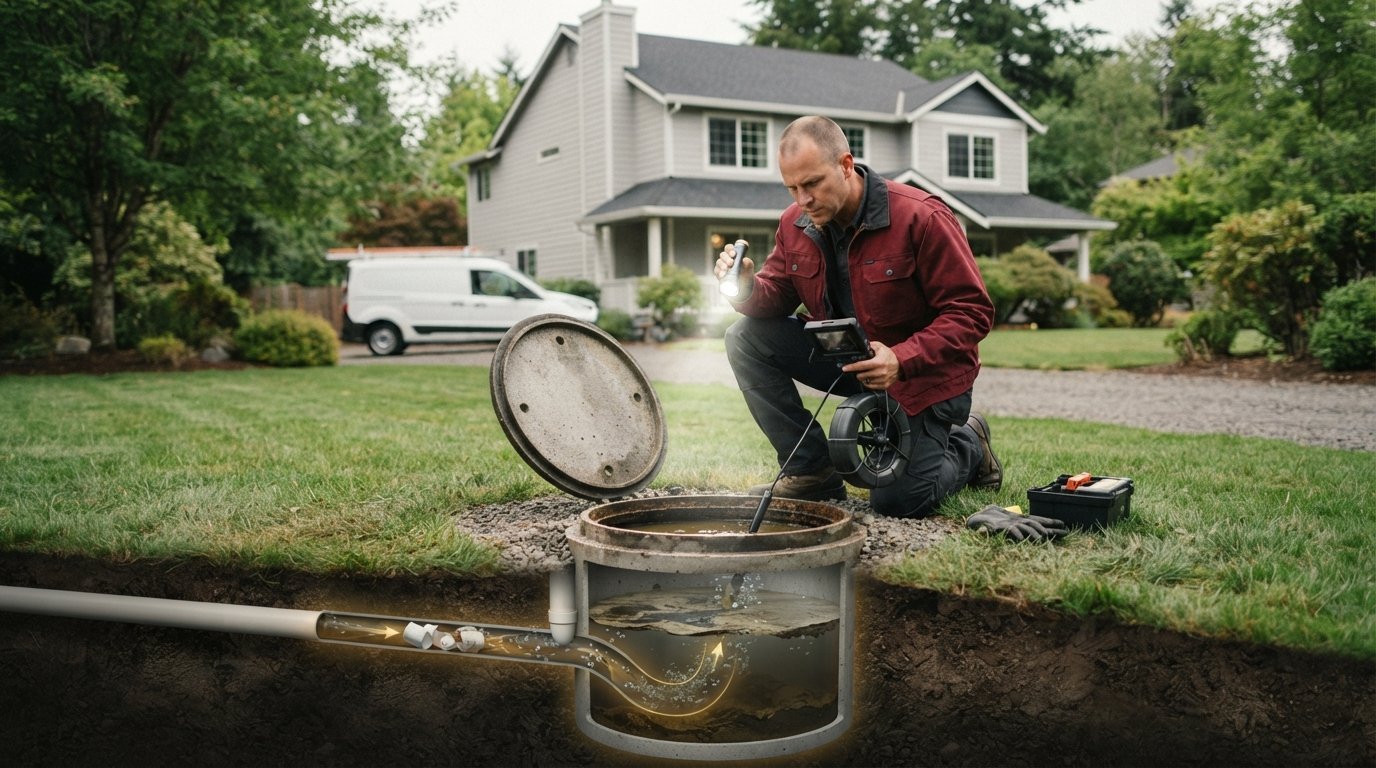
Did you know that the average septic system repair in 2026 costs homeowners around $3,500, with major failures often exceeding $15,000? It’s a staggering figure, but most of these expenses are completely avoidable with the right septic system maintenance tips. We understand the “out of sight, out of mind” mentality, but neglecting your tank is a gamble that eventually leads to messy backups and expensive emergency calls. You deserve a home that runs smoothly without the constant fear of a plumbing catastrophe.
You probably want the peace of mind that comes with a healthy system, yet it’s easy to feel confused by conflicting advice on pumping schedules or “septic-safe” chemicals. This article promises to clear the air and put you back in control. We’ll provide a straightforward, printable checklist to extend your system’s life for decades and ensure you never have to guess about its condition again. You’ll learn about the latest 2026 technology trends, like smart monitoring sensors, and exactly when it’s time to bring in the pros from Lil’ Stinky Septic Service for an inspection.
Key Takeaways
- Learn essential septic system maintenance tips to manage daily water flow and avoid overloading your tank during peak times like laundry day.
- Identify the “Big Three” indoor enemies, grease, wipes, and chemicals, that cause the most damage to your system’s bacterial balance.
- Protect your drainfield by following the “Golden Rule” of landscaping to prevent soil compaction and root intrusion.
- Establish a reliable professional pumping and inspection schedule based on your specific household size and tank capacity.
- Spot the early warning signs of system failure, such as gurgling pipes or slow drains, before they turn into a full-blown emergency.
The Essential Septic System Maintenance Checklist
Managing a septic system doesn’t have to be a guessing game. It’s about small, consistent habits that prevent massive headaches. Following these septic system maintenance tips ensures you aren’t part of the statistic of homeowners facing $15,000 replacement bills. Your system is a living biological filter. Treat it well, and it will serve you for decades.
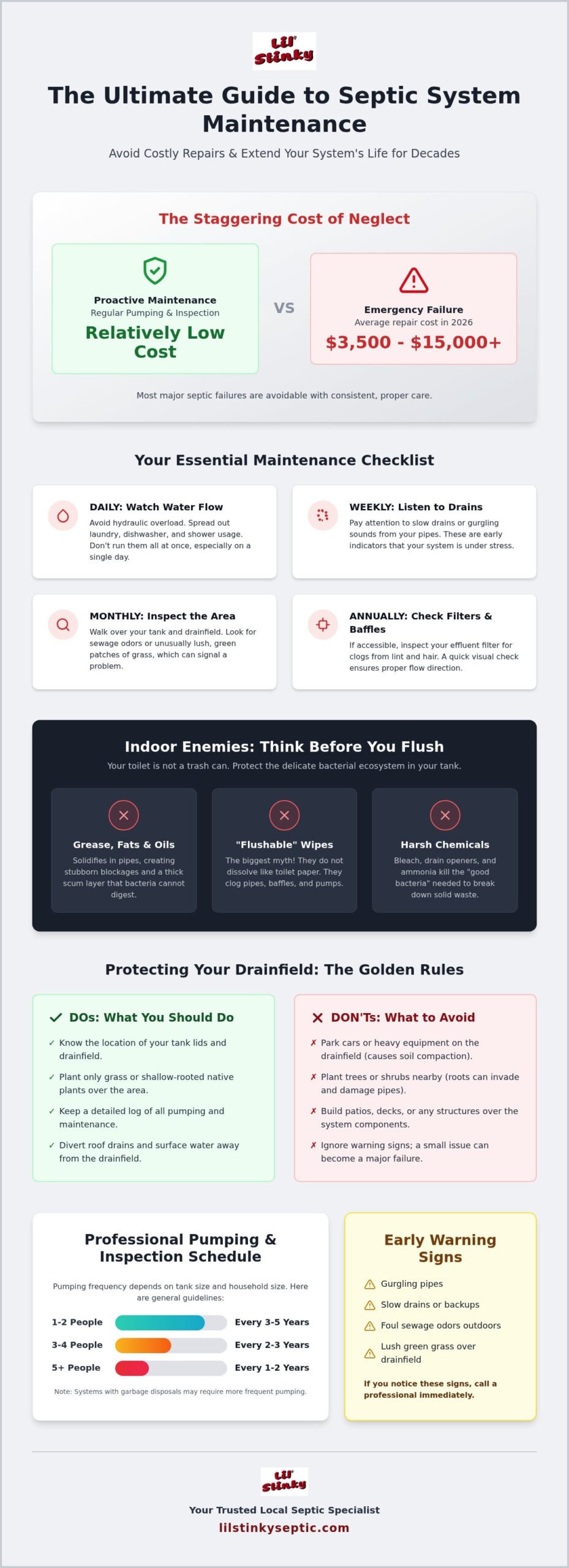
- Daily: Watch your water flow. Your tank needs time to separate solids from liquids. If you run the dishwasher, washing machine, and three showers simultaneously, you risk hydraulic overload. This pushes solids into your drainfield. Spread laundry loads throughout the week instead of doing five loads on Saturday.
- Weekly: Pay attention to your drains. If they’re moving slowly or you hear a distinct gurgling sound in the pipes, your system is trying to tell you something. Catching these early signs can be the difference between a simple cleaning and a major repair.
- Monthly: Take a walk over your tank and drainfield. Check for sewage odors or patches of grass that look suspiciously lush and green compared to the rest of the yard. This unusual lushness often means effluent is rising too close to the surface.
- Annually: If you have access, check your effluent filter. These filters prevent hair and lint from reaching the soil. A quick visual inspection of the baffles ensures they’re still intact and directing flow correctly.
Setting Up Your Maintenance Calendar
Consistency is the single most important factor in preventing system failure. Think of it like changing the oil in your car; skip it long enough, and the engine eventually seizes. Keep a detailed log of every pump, inspection, and minor fix. A complete maintenance log is the most valuable document for your home’s resale value. It proves to future buyers that you’ve protected their investment. Use a simple digital calendar or a physical folder to track these dates.
The ‘Straight Talk’ Baseline for New Homeowners
If you’re new to rural living, you need to understand how septic systems work. The tank catches the solids, while the drainfield treats the liquid. You must know where your tank lids are located. Never bury them under several feet of dirt or a new patio. If a technician can’t find the lid, they can’t help you quickly. Establishing a relationship with a local specialist like Lil’ Stinky Septic Service now means you have a trusted ally on speed dial before an emergency strikes. We’ve seen every scenario over the last 25 years, and being proactive is always the cheaper route.
Think Before You Flush: Indoor Waste Management Tips
Your toilet is not a magic portal. It is the gateway to a sensitive biological ecosystem located just a few yards from your back door. Many homeowners believe that if waste disappears down the drain, the problem is gone. In reality, you are often just moving the problem to a place where it becomes much more expensive to fix. Following smart septic system maintenance tips inside the house is the first line of defense against a system failure.
The “Big Three” enemies of any septic tank are grease, “flushable” wipes, and harsh chemicals. Grease and fats should never go down the sink. They solidify as they cool, creating stubborn blockages and a thick scum layer in the tank that bacteria cannot break down. “Flushable” wipes are perhaps the biggest industry myth. Unlike toilet paper, they do not dissolve. They snag on pipe joints and tank baffles, leading to messy backups. Similarly, harsh cleaners like bleach or ammonia act as poison to your tank. A healthy system relies on a delicate biological balance of “good bacteria” to digest solids. When you kill those bacteria with chemicals, the solids build up and eventually clog your drainfield.
Your garbage disposal is another major offender. It is often a septic tank’s worst nightmare because it sends finely ground food particles into the system that don’t settle easily. This doubles the amount of solids in your tank and forces you to pump much more frequently. For the best results, use septic-safe laundry detergents and cleaners that are specifically labeled as biodegradable. For a deeper look at household habits, the US EPA provides comprehensive septic system care guidelines that every homeowner should review.
The Definitive ‘Do Not Flush’ List
Items like feminine hygiene products, cigarette butts, and paper towels must always go in the trash. They simply do not belong in a septic environment. You should also avoid chemical drain openers. These products are caustic and can damage your plumbing while simultaneously wiping out the beneficial bacteria in your tank. Finally, never flush medications. These chemicals can leach into local Oregon groundwater, impacting the environment and the health of your neighbors. If your pipes are already sluggish from years of misuse, a professional drain cleaning can clear the way without the need for toxic chemicals.
Water Efficiency: The Secret to System Longevity
Too much water entering the tank at once creates a “hydraulic load” that pushes solids out into the drainfield before they can settle. Fixing a single running toilet can save hundreds of gallons of water per day and prevent your tank from overflowing. Installing high-efficiency showerheads and low-flow toilets is one of the most effective septic system maintenance tips for long-term health. Avoid the “laundry day” trap by spreading your washing machine loads across the entire week. This simple change gives your system time to process the water and keeps the biological treatment cycle moving smoothly.
Protecting Your Drainfield: The Outdoor Maintenance Guide
Your drainfield is the most expensive part of your system to replace. While the tank handles the initial separation of waste, the soil in your leach field performs the final treatment of the effluent. If this area becomes compromised, your entire system stops working. One of the most vital septic system maintenance tips is to follow the “Golden Rule”: never park vehicles or drive heavy equipment over your drainfield. The sheer weight of a car or trailer compacts the soil and can easily crush the perforated pipes buried just beneath the surface. Once the soil is packed too tight, it loses the oxygen and porosity needed to filter wastewater effectively.
Landscaping choices also play a massive role in system health. Grass is the only safe cover for your disposal area. Its shallow roots provide enough stability to prevent erosion without invading your pipes. You must also be careful about where your house’s water goes. Ensure that gutters, downspouts, and sump pumps are all directed away from the tank and drainfield. In Canby, we face unique challenges with heavy winter rainfall. Our clay-heavy soils saturate quickly, and adding extra runoff from your roof can drown the system. Following EPA septic system maintenance guidelines for water diversion is essential to keep your yard from turning into a swamp during a Canby winter.
Trees, Roots, and Clogged Lines
Roots are naturally attracted to the moisture and nutrients inside your septic lines. As a standard precaution, keep all trees at least 30 feet away from your system. Thirsty species like willow, elm, and birch are particularly aggressive. They will seek out even the smallest hairline crack in a pipe and grow into a thick mat that completely blocks the flow. If you suspect root intrusion, don’t wait for a total backup. We can often use specialized equipment to clear these lines before the roots cause permanent structural damage to your pipes.
Drainfield Warning Signs
Pay attention to the ground conditions in your yard. If the soil feels “spongy” under your feet or if you see standing water when it hasn’t rained, your system is struggling to process effluent. While many homeowners are happy to see a patch of vibrant, lush grass, unusually green growth over the leach field is actually one of the primary septic drainfield failing signs. It indicates that wastewater is rising too close to the surface because it can no longer drain downward. If you notice these symptoms, it is time to call Lil’ Stinky Septic Service for a professional evaluation.
Establishing Your Professional Pumping and Inspection Schedule
Setting a schedule isn’t just about picking a random date on the calendar. It requires a bit of math and a lot of consistency. Following professional septic system maintenance tips ensures you’re pumping when necessary, not just when a backup forces your hand. At Lil’ Stinky Septic Service, we’ve seen that the most successful homeowners treat their system like a scheduled utility rather than a hidden mystery.
- Step 1: Identify your tank size. Most modern homes use a 1,000 or 1,500-gallon tank. Combine this with your daily household usage to see how much strain you’re putting on the system.
- Step 2: Schedule a professional inspection every three years. This is the EPA standard. In the Canby area, DEQ-certified inspections are the gold standard for ensuring your system meets environmental requirements and local compliance.
- Step 3: Pump the tank when the sludge layer reaches 25% of the total volume. A technician will measure this during your inspection to tell you exactly how much “room” you have left before solids risk escaping into the drainfield.
- Step 4: Keep every report. These records are the backbone of your home’s Protection Plan. They provide a clear history of care that is essential for maintaining property value and simplifying future home sales.
How Often Should You Really Pump?
The common “every three to five years” advice is a broad average that doesn’t fit every home. A family of six will fill a tank significantly faster than a retired couple living alone. If you use a garbage disposal, you’re adding heavy solids that don’t break down easily. This habit alone can double your required pumping frequency. To stay ahead of potential issues, you might consider a septic maintenance plan in Canby to keep your system running for decades without a hitch.
What Happens During a Professional Inspection?
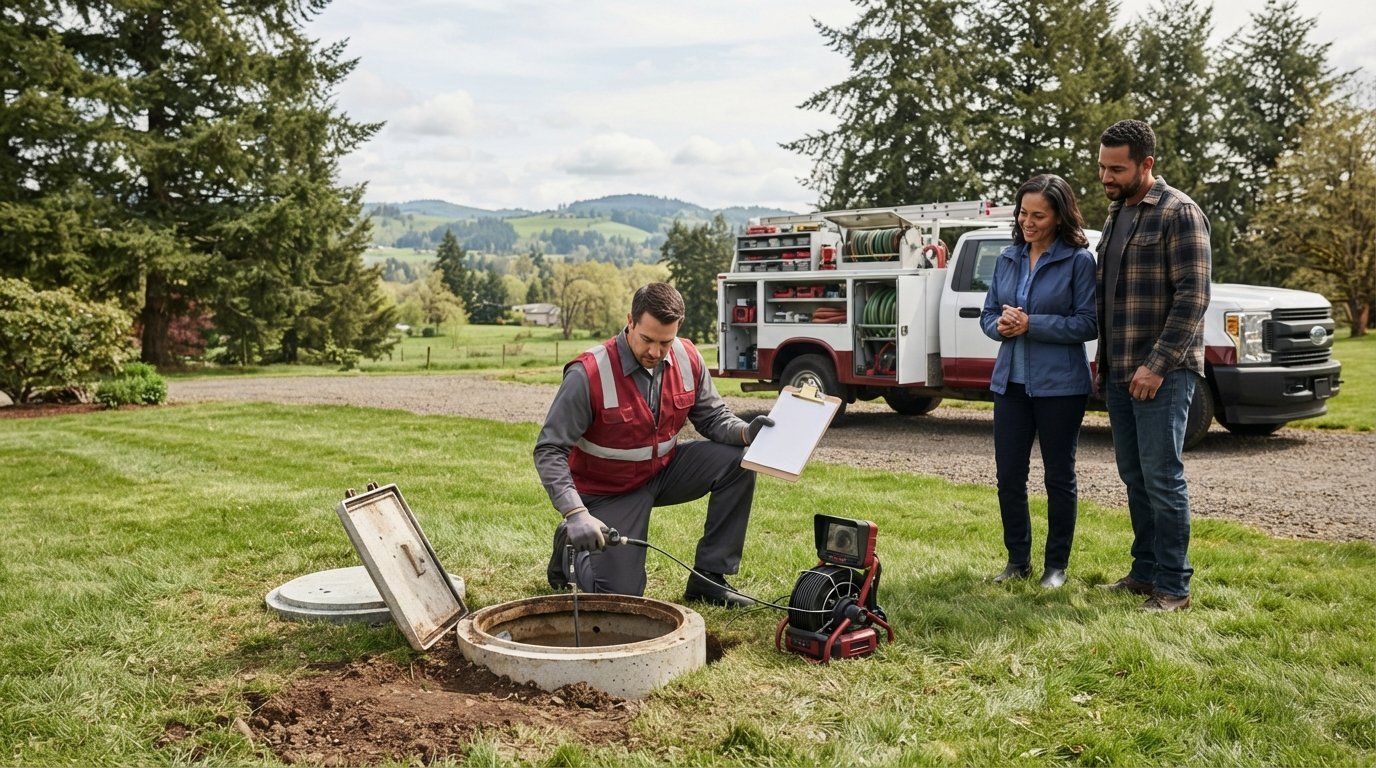
When we arrive for an inspection in Canby, we do much more than just open the lid. We check the structural integrity of the inlet and outlet baffles to ensure waste is flowing correctly and not short-circuiting the tank. We use specialized tools to measure the exact depth of the scum and sludge layers. We also pull and clean the effluent filter, which is your last line of defense against clogs in the drainfield. If it’s been more than three years since your last check, it’s time to schedule a septic inspection with our experienced team.
Recognizing Failure: When Maintenance Turns into Emergency Service
No homeowner wants to deal with a septic emergency. However, ignoring the warning signs only makes the eventual repair more expensive. While following septic system maintenance tips usually keeps your tank in top shape, you must know when the system has reached a breaking point. A failure doesn’t always happen all at once. It often starts with subtle cues that escalate into a full-blown property disaster if left unaddressed.
The first sign is usually slow drains throughout the entire house. If only your kitchen sink is slow, it’s likely a local clog. If every drain in the home is sluggish, your tank or drainfield is likely full. You might also hear gurgling sounds in the plumbing when a toilet is flushed or the washing machine drains. This is the sound of air being trapped by rising wastewater. Persistent sewage odors, whether they are inside your bathroom or lingering near the tank outside, are a clear signal that gases are escaping where they shouldn’t. The most severe sign is a backup in low-level drains like basement floor drains or showers. If you see dark water rising here, your system has failed.
Immediate Steps to Take During a Backup
If you suspect a backup, you must act fast to minimize property damage. Stop all water usage immediately. Don’t flush the toilet, don’t run the dishwasher, and definitely don’t take a shower. Every drop you send down the drain will only end up on your floor. Locate your main cleanout pipe in the yard and carefully check for standing water. If it’s full, the blockage is either in the main line or the tank itself. At this stage, call a 24/7 emergency septic specialist. Lil’ Stinky Septic Service provides around the clock response because we know that a few hours can be the difference between a quick pump and thousands of dollars in restoration costs.
The Cost of Neglect vs. The Value of Prevention
The math is simple but brutal. A routine pump and inspection are small, manageable investments. In contrast, a full drainfield replacement in 2026 can exceed $15,000. Beyond the immediate repair costs, a failing system is a massive liability during a real estate sale. Buyers want proof of a healthy system, and a DEQ-certified inspection report is your best selling tool. If you are currently buying a home with a septic system in Oregon, understanding this maintenance history is one of the most critical steps in your due diligence. Sellers should also be aware of the septic system repair requirements for home sale Oregon transactions to avoid costly surprises at closing. A well-documented history of care functions as a “Protection Plan” for your home’s equity. Don’t wait for a backup. Contact Lil’ Stinky Septic Service for a routine checkup today!
Take Command of Your Home’s Health Today
Protecting your property starts with a commitment to the small details. By following these septic system maintenance tips, you’ve taken the first step toward avoiding the $15,000 replacement costs that catch many homeowners off guard. Remember to spread out your laundry loads, keep the wrong items out of your drains, and respect the boundaries of your drainfield. These habits, combined with a rock-solid maintenance log, ensure your system remains a silent, reliable asset rather than a source of stress.
You don’t have to manage this alone. With over 25 years of local experience and a best-price guarantee, Lil’ Stinky Septic Service is here to be your trusted partner. Whether you need a DEQ-certified inspection or a 24/7 emergency response, our team has the “straight talk” you need to keep your home safe. Take control of your system’s longevity today and stop worrying about what’s happening underground.
Schedule your routine septic pumping with Lil’ Stinky today! Your future self, and your wallet, will thank you for the foresight.
Frequently Asked Questions
How often should I pump my septic tank in Oregon?
Most Oregon households should pump their tanks every three to five years. This timeline depends on your specific household size and whether you use a garbage disposal. A family of four with a standard 1,000-gallon tank should lean toward the three-year mark to be safe. Regular DEQ-certified inspections will tell you exactly when the sludge layer reaches the 25% threshold that makes pumping necessary for your system’s health.
What are the most common signs of a failing septic system?
Look for slow drains throughout the entire house, gurgling sounds in your pipes, or sewage backing up into low-level showers and sinks. Outside, you might notice “spongy” soil or unusually lush, green grass over the drainfield even during dry summer months. Persistent sewage odors inside or outside are also major red flags that your system isn’t processing waste correctly and needs immediate professional attention to prevent property damage.
Can I use additives to avoid pumping my septic tank?
No, additives cannot replace regular pumping. While some products claim to break down solids, they often just suspend them in the liquid, allowing them to flow into and clog your drainfield. The best septic system maintenance tips involve supporting natural bacterial balance rather than using store-bought chemicals. Pumping is the only way to remove the inorganic sludge that bacteria simply cannot digest, protecting your system’s long-term functionality and soil health.
Is it safe to plant a garden over my septic drainfield?
You should only plant grass over your drainfield area. Vegetable gardens are risky because the soil could be contaminated with harmful pathogens from the effluent. Additionally, the constant watering and tilling required for a garden can saturate the soil or damage the buried pipes. Deep-rooted plants or trees should be kept at least 30 feet away to prevent roots from seeking out moisture and clogging your lines or crushing the pipes.
Why does my yard smell like sewage after a heavy rain?
Heavy rain saturates the soil in your drainfield, which prevents it from absorbing and filtering wastewater properly. This causes gases to be pushed back up through the ground or through your home’s plumbing vents. If the smell persists, it might mean your tank is flooded or the drainfield is failing. Diverting gutter runoff away from the tank area is one of the most effective septic system maintenance tips for rainy Northwest winters.
What should I do if my septic alarm goes off?
Silence the alarm but stop all water usage immediately. The alarm usually indicates a high water level in the pump chamber or a mechanical failure. Check your circuit breaker to see if a switch has tripped. If the power is on and the alarm continues, you have a limited amount of storage capacity before a backup occurs. Call for emergency service right away to diagnose the pump or float switch before waste reaches your home.
Are ‘flushable’ wipes really safe for septic systems?
Absolutely not. Despite the marketing label, these wipes do not break down like standard toilet paper. They remain intact in your tank and often snag on the inlet or outlet baffles, leading to immediate blockages and messy backups. Over time, they contribute to a thick scum layer that bacteria cannot process. To keep your system running smoothly, only flush human waste and standard toilet paper. Everything else belongs in the trash can.
How do I find my septic tank lids if they are buried?
Start by checking your home’s original plot plan or septic permit on file with the county. If you don’t have those, look for a 4-inch PVC pipe, known as the cleanout, between the house and the tank. You can use a thin metal soil probe to gently feel for the concrete or plastic lids about 10 to 20 feet from the house. If you’re still stuck, we can use electronic locating equipment to find them quickly.