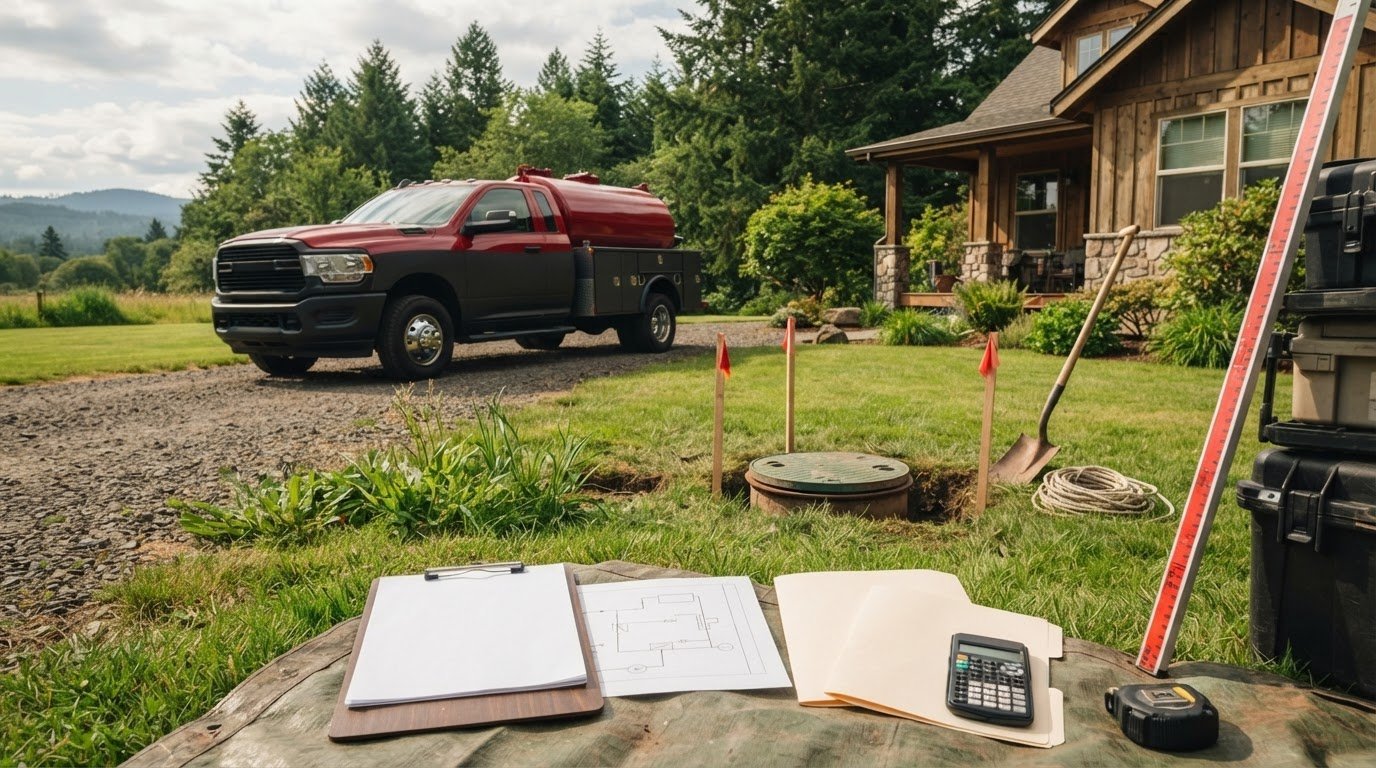
Slow drains, gurgling, odors, or soggy ground can signal a septic problem, but they don’t prove that the tank needs pumping. It’s reasonable to want to avoid both an unnecessary pump-out and a preventable backup.
If you’re asking, “does my septic tank need pumping?” the best answer comes from evidence, not guesswork. Maintenance records, household use, and the tank’s measured sludge and scum levels can help determine what’s needed. If you don’t know when the tank was last pumped, you can still take practical steps without relying on an assumed date.
This guide explains which symptoms deserve attention, why plumbing trouble can have more than one cause, and when a pumping assessment makes sense. Lil’ Stinky Septic Service provides residential and commercial septic pumping and maintenance in Canby and the greater Portland area.
Key Takeaways
- Ask “does my septic tank need pumping?” by considering tank condition and maintenance history, not plumbing symptoms alone.
- Tank size, household use, system setup, and previous service all help inform a pumping assessment.
- Use service records and professional findings to decide whether pumping is due or monitoring makes sense.
- If records are missing, gather available tank information, note changes in household use, and arrange an assessment before deciding on next steps.
- Lil’ Stinky Septic Service provides residential and commercial septic pumping and maintenance in Canby and Clackamas County.
Does my septic tank need pumping, or is the system working normally?
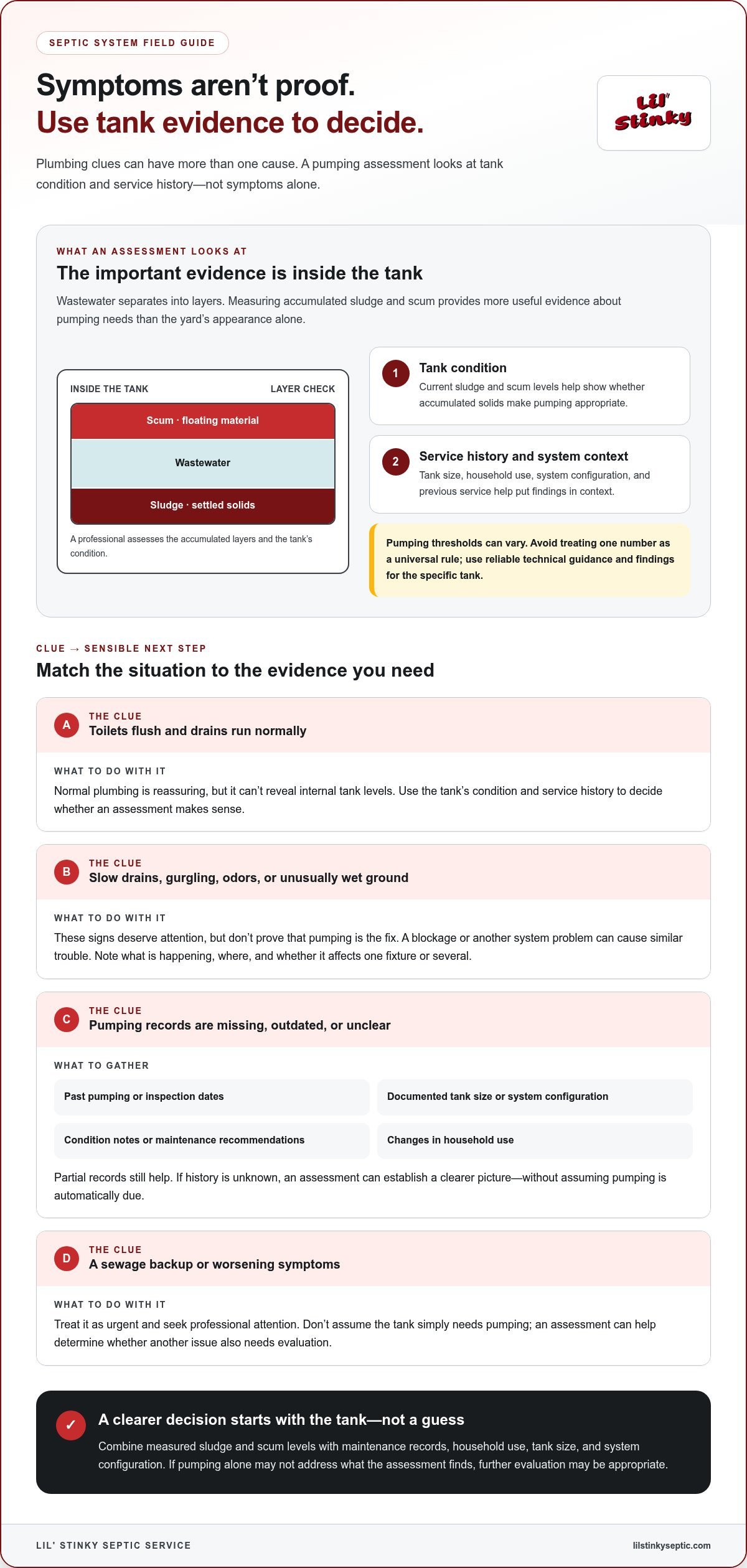
If your toilets flush and your drains run normally, it’s natural to wonder whether pumping is necessary. But normal plumbing can’t show how much sludge and scum have built up inside the tank. To answer “does my septic tank need pumping,” consider the tank’s condition and service history, not just how the fixtures behave.
A pumping assessment reviews the tank’s condition and service history to help determine whether accumulated solids make pumping appropriate. A professional can assess the tank’s contents instead of relying on symptoms or assumptions. A septic tank separates solids from wastewater, and some of those solids remain inside as sludge and scum until they’re removed.
Why a working system may still need an assessment
Wastewater can continue flowing through the system even as solids accumulate in the tank. A household may have no obvious warning signs while its service records point to a need for a closer look. Normal flushing and drainage are reassuring, but they don’t reveal internal tank levels.
Start with the last pumping date, if you have it. If records are missing, outdated, or unclear, an assessment can establish a more reliable picture. That doesn’t mean the tank automatically needs pumping. It means you can replace guesswork with information about its present condition and maintenance history.
Tank size, household use, system configuration, and previous service all shape the assessment. For example, a change in the number of people using the home may affect how the system is used, while an unknown tank size can make the service timeline harder to interpret. Share what you know, even if the details are incomplete.
Why waiting for a backup is not a reliable plan
A sewage backup is a serious warning that calls for prompt attention, but it isn’t a sensible maintenance target. Waiting until wastewater reaches a fixture or the home can turn uncertainty into an urgent disruption. A routine assessment helps you make a maintenance decision before a backup forces the issue.
Symptoms don’t identify the cause on their own. Slow drains or gurgling may accompany a full tank, but a blockage or another system problem can cause similar trouble. Foul odors or unusually wet ground also deserve attention, yet they don’t prove that pumping alone will solve the issue. Note what’s happening, where it occurs, and whether it affects one fixture or several. Those details can help guide an assessment.
- Plumbing works normally: Don’t treat that as proof the tank is empty or that pumping is due.
- Maintenance history is unclear: Gather any records you can find and arrange an assessment to establish the tank’s condition.
- A backup or worsening symptoms appear: Treat the situation as urgent and seek professional attention rather than assuming the tank simply needs pumping.
For broader maintenance context, the article on septic tank pumping in Portland explains how pumping fits into routine care. A tank assessment and service history offer a clearer basis for deciding what to do than waiting for a backup.
How tank condition and service records show whether pumping is due
A reliable answer combines what’s inside the tank with what’s known about its history. A service date provides context, but it doesn’t show the tank’s current contents. A tank measurement is most useful when considered alongside tank size, household use, system configuration, and previous maintenance.
Measurements of sludge and scum provide more useful evidence about pumping needs than the yard’s appearance alone. A tidy lawn can’t reveal how much solid material has collected inside the tank, and a wet patch by itself can’t establish that pumping is the solution. A professional assessment connects observations and records to the actual system.
What a professional checks inside the septic tank
Inside the tank, wastewater separates into layers. Scum is the floating material near the top, while sludge is the settled solids at the bottom. A professional assesses these accumulated layers and considers the tank’s condition rather than guessing from plumbing symptoms or the appearance of the yard.
An assessment can also bring other concerns to light. If the tank or system shows an issue beyond accumulated solids, pumping alone may not address it, and further evaluation may be appropriate. Pumping thresholds can vary by guidance and system context, so avoid treating a single number as a universal rule. Base the decision on reliable technical guidance and the findings for the specific tank.
How to use your pumping and maintenance records
Gather any paperwork you have before the assessment. Previous pumping dates show the known service history, while inspection notes may record tank details, observed conditions, or recommendations. Even partial records can help a professional understand what has been done and what information is missing.
Look for details such as:
- Dates of past pumping or inspections
- Tank size or system configuration, if documented
- Notes about tank condition or maintenance recommendations
- Changes in household use since the last recorded service
Tank size and use matter because systems don’t all accumulate solids at the same pace. A larger household may place different demands on a system than a smaller one, and system configuration can affect what should be examined. Past service matters, too. A recent, documented pump-out tells a different story from an unknown history, but neither replaces a current assessment when the condition is uncertain.
If records are missing, don’t fill the gap with an assumed schedule or decide that pumping is automatically due. Arrange an assessment to establish a useful baseline. Afterward, keep the service report with your home maintenance documents and save any recommendations. That record will make the next decision clearer.
If your records leave you unsure, Lil’ Stinky’s septic pumping service can help assess and maintain your system.
Pumping now versus monitoring: how to weigh the evidence
Once you have records or an assessment, decide whether the evidence supports pumping now or continued monitoring. A recent service record may support following the technician’s recommendations, while an unknown history or findings that indicate accumulated solids call for a closer look. Symptoms matter, too, but they don’t reveal the cause by themselves.
| What you know | How to use it | Practical next step |
|---|---|---|
| Recent, documented service | Review the service notes and any follow-up recommendations. | Monitor as advised, and pay attention to new changes in the system. |
| Unknown or incomplete history | There isn’t enough information to judge the tank by dates alone. | Arrange a professional assessment rather than assuming pumping is or isn’t due. |
| Professional findings indicate pumping | The recommendation is based on observed tank condition and accumulated solids. | Discuss pumping as the next maintenance step. |
This table can help organize what to do next, but it can’t replace an assessment of the tank itself. Weigh what you know alongside professional findings. There’s no universal wait period that fits every system, so don’t turn “monitor” into a fixed schedule without considering your tank and its service advice.
When records support monitoring rather than an immediate pump-out
If recent documentation shows service and includes follow-up recommendations, use those details as your reference point. Monitoring means staying alert to changes and following the advice provided, not ignoring a new symptom or assuming the system will remain unchanged. Keep the service notes handy so future decisions build on what’s already known.
When uncertainty or concerning changes call for professional help
If you can’t establish the service history, an assessment can replace guesswork with information about the tank’s current condition. A professional finding that pumping is appropriate is also a clear reason to discuss the next step.
Act promptly if you have a backup, persistent drainage changes, or wastewater surfacing outside. These signs need attention, but none proves by itself that a full tank is the cause. A blockage or another system issue may create similar symptoms. If the trouble seems tied to a drain line, a septic drain-cleaning guide can help explain why line-related problems may need a different response than tank pumping. Describe what you’re seeing and have the system assessed rather than diagnosing the cause remotely.
For the question “does my septic tank need pumping,” separate the evidence into three parts: documented history, current tank findings, and changes in system performance. That gives you a practical basis for choosing between monitoring, further assessment, and pumping without treating one symptom as a diagnosis.
What to do next if you are unsure whether pumping is due
If you’re still asking, “does my septic tank need pumping?” take a few practical steps before deciding. Gather what’s known, describe what has changed, and use an assessment to guide the next move. You don’t need to diagnose the system yourself or follow a calendar that may not fit your tank.
Prepare useful information before requesting an assessment
Before scheduling, look for available tank and maintenance records. Service dates, inspection reports, tank details, and written recommendations help build a clearer picture. Also note any recent changes in household use or plumbing performance. Share what you’ve observed without assuming the cause. A symptom can be useful information even when it doesn’t point directly to pumping.
Use this simple process:
- Gather records. Check home files, previous owner documents, and available service paperwork for pumping dates, inspection notes, and system details.
- Note changes. Write down changes in household use and when any drainage issues began. Include where they occur and whether they are ongoing.
- Arrange an assessment. If the history is unclear or the tank’s condition is uncertain, have the system assessed instead of guessing from symptoms or an assumed schedule.
- Follow the findings. Keep the assessment notes and use the recommendations to decide whether pumping or another next step makes sense.
If your records raise broader questions about the system’s condition, a septic inspection can provide a fuller review. Keep new service documentation with your other home maintenance records so it’s easier to make informed decisions later.
Know when a routine question has become urgent
A sewage backup or wastewater surfacing outside calls for prompt professional attention. Limit use of plumbing fixtures connected to the affected system while arranging service, since adding more wastewater may worsen the immediate situation. Don’t assume pumping is the only answer. An assessment can help identify whether the tank, a drain line, or another system issue needs attention—such as a damaged or blocked sewer pipe requiring intervention from drain repair specialists like SOS Plombiers.
For non-urgent uncertainty, gather your information and plan an assessment. For active signs of a problem, act promptly and describe exactly what you see. Requirements can vary by location, so check applicable guidance from Oregon DEQ and the relevant local authority rather than relying on a general pumping calendar.
If your records are incomplete or you need help deciding on a practical next step, arrange a septic pumping assessment with Lil’ Stinky Septic Service.
How Lil’ Stinky helps Canby-area homeowners decide whether pumping is due
If you’re unsure whether your tank needs service, discuss its maintenance history and arrange an assessment. Lil’ Stinky Septic Service provides residential and commercial septic pumping and related maintenance in Canby and Clackamas County, as part of its greater Portland service area. The company brings more than 25 years of experience and holds Oregon CCB license number 189693.
Pumping isn’t only a response to a backup. It removes accumulated waste from the tank, helping homeowners make maintenance decisions based on system condition rather than waiting for a disruption. If records are missing, share what you know about the tank and any changes you’ve noticed. That information gives the service conversation a useful starting point without requiring you to diagnose the system yourself.
What to expect when arranging septic pumping
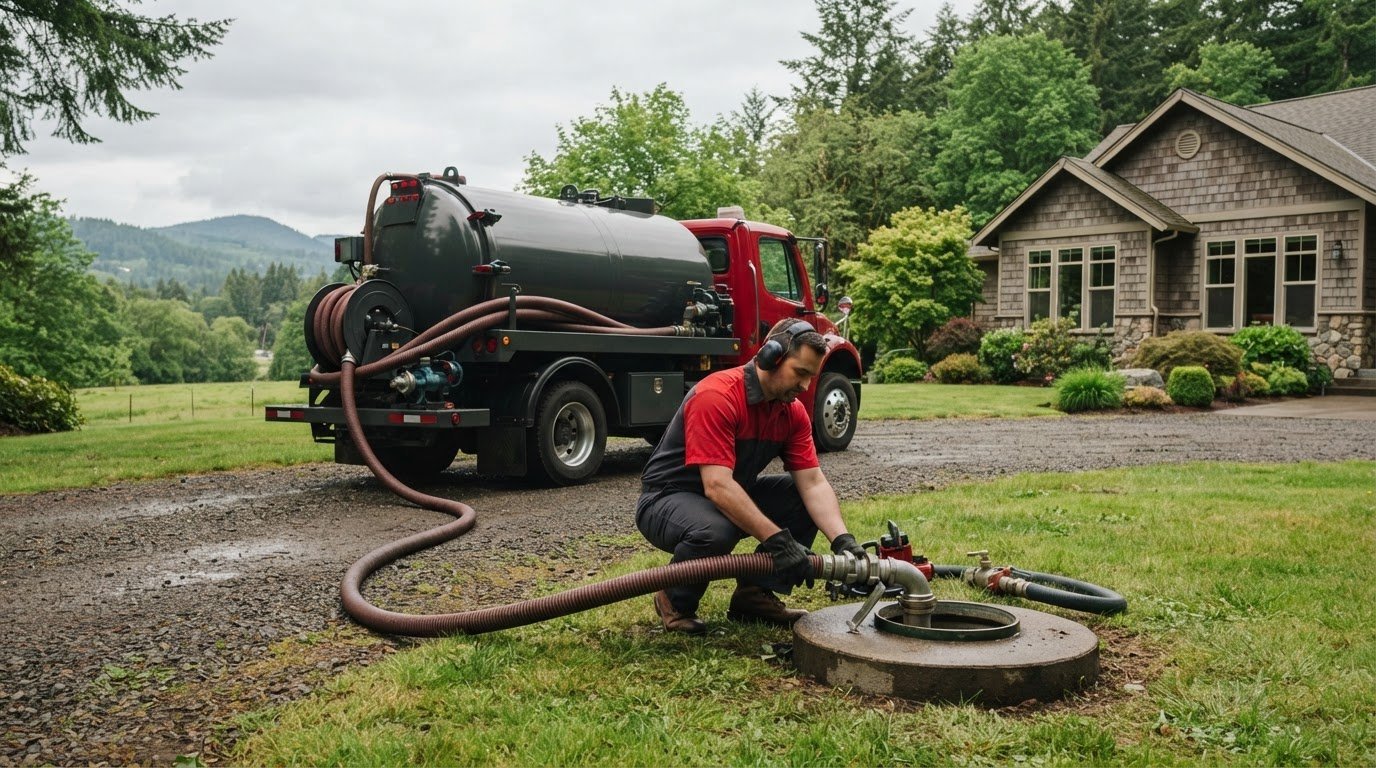
Septic pumping removes accumulated waste from the tank and includes disposal of the removed material and a system health check. The check can provide useful context about the system’s condition, but it shouldn’t be treated as a promise that every possible issue will be diagnosed or resolved. Share relevant service records and observations so the work can be considered in light of your system’s history.
Be ready to mention whether you know the tank’s location or size, when it was last serviced, and whether household use has changed. If details are unavailable, say so. A clear account of what you know, and what you don’t, is more helpful than relying on a guessed service date or assuming that one symptom proves the tank is full.
A practical next step for Canby and greater Portland homeowners
For homeowners asking “does my septic tank need pumping,” an unclear maintenance history is a good reason to discuss the system and arrange an assessment. Lil’ Stinky serves Canby and Clackamas County as part of its greater Portland service area. The next step should be informed by your tank’s history and condition, whether that means pumping or considering the findings first.
If sewage is backing up or wastewater is surfacing, treat the situation as urgent. Lil’ Stinky provides 24/7 emergency response for urgent septic situations. Limit use of affected plumbing while arranging service, and describe what’s happening when you call. For non-urgent questions, collect available records before scheduling so the discussion can start with the details you have.
If you’re ready to discuss your tank’s condition or arrange septic pumping, contact Lil’ Stinky Septic Service for a practical next step.
Make your next maintenance decision with confidence
Uncertainty doesn’t have to linger until a plumbing problem forces a decision. Keep assessment findings with your home records, note any recommendations, and use that information to guide future care. A useful service history gives you a better starting point next time instead of leaving you to piece together dates and observations from memory.
If you’re still wondering, “does my septic tank need pumping?” you don’t need to settle the question by guessing. A professional assessment can help you understand what the tank’s condition indicates and what action makes sense for your system. If the findings point to pumping, you can move forward with a clearer reason for the service. If they don’t, you’ll still have practical information to keep on file.
Contact Lil’ Stinky Septic Service about pumping your septic tank to take the next step toward informed maintenance. A little clarity now can help you care for your system with greater confidence.
Frequently Asked Questions
Can a septic tank seem fine and still need pumping?
Yes. Toilets and drains can work normally even as solids collect inside the tank, so everyday performance can’t answer “does my septic tank need pumping?” on its own. A household may have no plumbing complaints but still lack a clear record of previous service. Use available maintenance documents and a professional assessment to decide what’s appropriate, rather than treating normal operation as proof that the tank is empty.
Can a septic tank go years without being pumped?
It depends on the tank and how the system is used, so the number of years alone can’t determine whether pumping is due. Tank size, household use, system configuration, and service history all affect the decision. A neighbor’s schedule may not fit your home. If you’ve recently moved into a Canby property and don’t know its maintenance history, look for prior service documents and arrange an assessment.
What happens if I wait until my septic tank backs up?
Waiting for a backup can turn a maintenance question into an urgent household disruption. A backup may involve accumulated material in the tank, but an obstruction or another system issue may also be responsible. Stop using affected fixtures as much as practical and seek professional help promptly. Note which drains are affected and whether wastewater is coming up inside or surfacing outdoors. Those details can help guide the assessment.
Can pumping a septic tank fix slow drains?
Not always. Pumping removes accumulated material from the tank, but it doesn’t necessarily clear a blocked drain line or correct a damaged component. For example, if one sink drains slowly while other fixtures work normally, the problem may be closer to that fixture, where general home repair support from services like American Handyman can resolve isolated plumbing issues and clogs. If several drains are affected or the slowdown continues, have the system assessed so the cause can be identified before assuming a pump-out will solve it.
Should I pump a septic tank if I don’t know when it was last serviced?
Unknown service history is a reason to seek information, not proof that pumping is automatically due. Check home files for past invoices, inspection reports, or paperwork from a previous owner. If those records don’t establish the tank’s condition, arrange an assessment and use its findings to decide what comes next. Keep the resulting documentation with your home maintenance records so future decisions aren’t based on memory alone.
Does a garbage disposal mean my septic tank needs more frequent pumping?
A garbage disposal can send additional food solids into the septic system, but that fact alone doesn’t set a pumping schedule. The effect depends on the tank and household use. If you use a disposal regularly, mention it during an assessment along with any changes in how many people live in the home. A professional can consider that information alongside the tank’s condition and available maintenance history.
Is septic tank pumping the same as a septic inspection?
No. Pumping removes accumulated waste, while an inspection evaluates the system and may provide documentation for a specific purpose. A pumping visit that includes a system health check shouldn’t automatically be treated as a certified inspection or an official report. If you’re preparing for a real estate transaction in Canby, explain that need when arranging service so the appropriate inspection and reporting can be addressed.