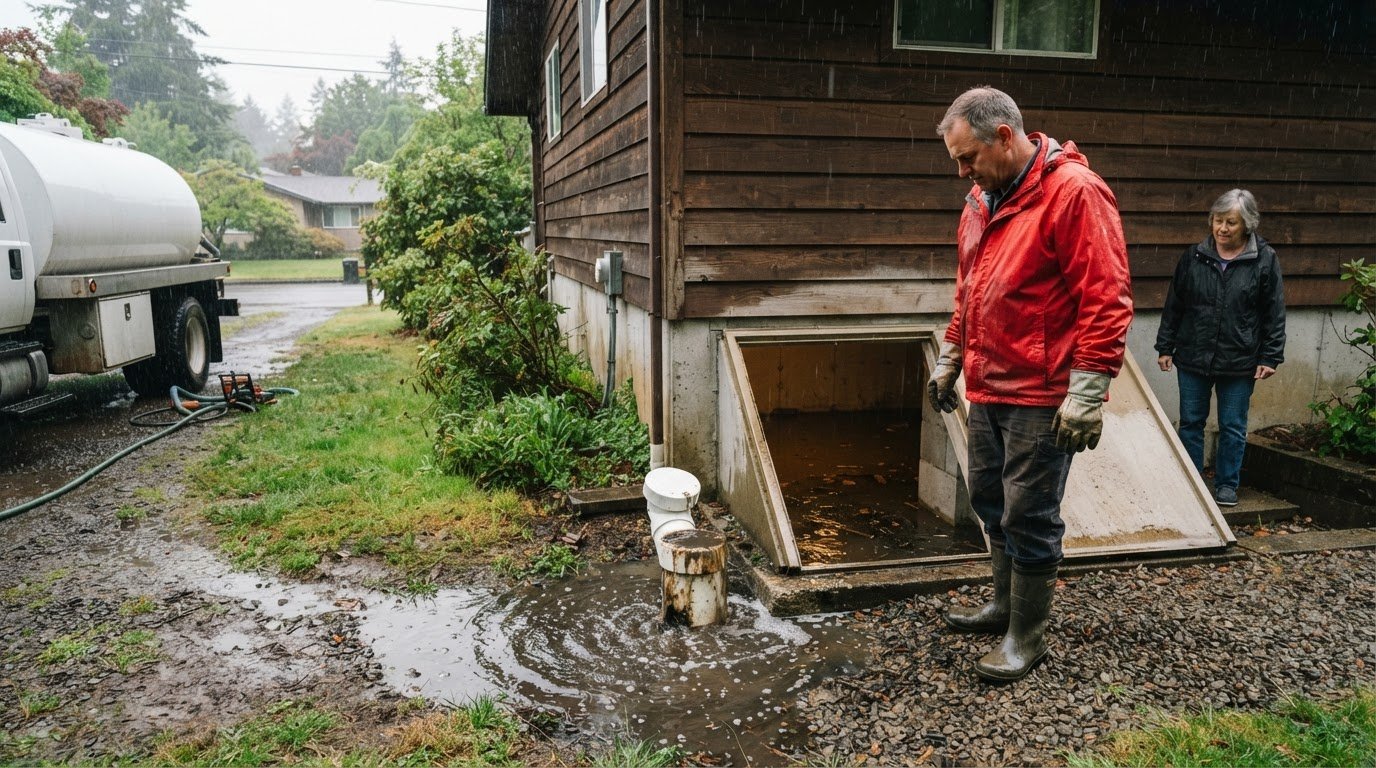
For drain field replacement in Canby, most residential projects take two to four days once permits are approved and the site is prepared, assuming a conventional system and reasonably accessible terrain. The excavation and installation are only part of the timeline, so permitting and site preparation can affect when work begins.
When a failing drain field disrupts your home, it’s natural to want a clear plan. The right solution depends on the cause and extent of the problem: a repair may be possible, or the field may need replacement.
This guide explains what happens during excavation and installation, what factors shape the timeline, and how a suitable location for a new field is chosen. You’ll also learn what signs can point to failure, which conditions affect repair options, and what an assessment considers before work proceeds.
Key Takeaways
- Most conventional residential replacements take two to four days once permits are approved and the site is prepared; excavation and installation shape the on-site timeline.
- A suitable new field location depends on soil condition, drainage, and keeping clear of trees, buildings, and vehicle traffic.
- Pooling water, unusually green grass, slow drains, or foul odors can signal a problem, but an assessment helps distinguish repair options from full replacement.
- Project costs depend on site access, excavation conditions, system design, and installation needs, so understanding the scope is key to comparing the work involved.
Excavation and replacement installation
For a conventional residential system, replacement work on site typically takes two to four days after permits are approved and the property is prepared. Excavation and installation make up that work, while permit approval and site preparation happen before the on-site timeline begins.
Drain Field Excavation
Planning starts with locating the affected field and determining access for the replacement. Excavation removes soil from the work area and creates space for the new field components. The layout, terrain, and equipment access all affect the work, so keeping the route to the site clear can help crews get started.
During installation, the new field is placed in the prepared area and connected to the septic system. The excavated area is then covered with soil. Keep vehicles and heavy equipment off the field, since compacted soil can interfere with drainage. Plan for limited yard access while work is underway.
Permit and Inspection Oversight
In Clackamas County, permit records for homes in the Canby Utility service area may be held by Oregon DEQ or the local county agency. Those agencies are relevant when locating septic permit and inspection records. The permit approval must come before the typical two-to-four-day excavation and installation period described for a conventional replacement.
Gather any septic records that show the tank, distribution lines, or drain field location. They can help technicians assess the existing layout and plan the work. If records aren’t available, the system components and site conditions still need to be identified during planning. This helps determine how a replacement field can connect to the existing system.
Pumping records can also help clarify the tank’s condition. According to Canby Utility, a septic tank in a Canby Utility service-area home needs pumping when the bottom of the scum layer is within 6 inches of the bottom of the outlet tee. According to Canby Utility, the tank also needs pumping when the top of the sludge layer is within 12 inches of the bottom of the outlet tee. These measurements relate to tank maintenance, not the replacement field’s installation timeline.
Choosing a new drain field location
A suitable replacement site needs room for the field and soil conditions that support wastewater drainage. In Canby, planning should account for the existing system, areas that stay saturated, nearby trees, and any reserve area set aside for a future system.
Map the septic tank, distribution lines, existing drain field, buildings, and access routes. This helps identify usable space and avoid conflicts with existing components. Tree roots can damage field pipes and disrupt drainage, so the proposed field location should account for nearby trees and their root growth.
Soil history matters. Long-term saturation may affect soil structure and whether a location is suitable for replacement. An evaluation considers the ground as well as the proposed field location. If the old field has stayed wet, moving the replacement a short distance may not resolve the underlying drainage issue.
When choosing a septic contractor in Canby, look for a licensed provider who can assess the site, explain the proposed layout, and describe the excavation and installation work. Ask for a clear explanation of the evaluation and proposed scope so you understand the plan before work begins.
Protect the drain field by keeping planting, building, and vehicle traffic off it. Preserve any reserve area intended for a future replacement system, and don’t build or pave over it. After installation, continue to keep vehicles and heavy equipment away to avoid compacting the soil.
How can you prepare your property and maintain a new drain field? Mark the field and reserve area, keep them clear, and avoid deep-rooted planting nearby. If you need help understanding existing components before choosing a location, a septic inspection can support a clearer site evaluation.

Drain field repair or replacement assessment
Pooling water, unusually green grass, slow drains, and foul odors can be signs of a failing drain field in Canby. An assessment considers these symptoms alongside the system’s condition to determine whether repair or replacement is appropriate.
Assessing Repair or Replacement
Consider the whole septic system, not just the wet area. Solids or grease escaping the tank can clog drain field soil, and excessive water use can strain the system. An improperly installed or undersized system may also contribute to failure. If the tank is structurally intact, correctly sized, and functioning properly, it may remain in place during field replacement.
Some older Canby systems may be repairable or upgradable without replacing the entire system. The assessment should consider symptoms, tank condition, drainage, and installation history to identify the work needed.
Replacement Permit Requirements
Drain field replacement in Canby requires planning for permits before work begins. Septic permit and inspection records for a property may be held by Oregon DEQ or the local county agency. Records can help establish the system’s history, but they don’t determine the work needed on their own.
Include permit approval and site preparation in the project schedule. If the tank, distribution lines, or drain field locations are unknown, an evaluation can help locate them. Those details clarify what a proposed replacement involves.
Factors Affecting Replacement Cost
Project scope depends on the work required, not just the size of a visible wet patch. Site access affects how equipment reaches the field, while terrain and soil conditions influence excavation and installation. A layout that needs more excavation or changes to existing connections can involve a different scope than a readily accessible site.
An assessment also considers whether the tank can remain in place or whether problems extend to other system components. A clear scope should describe the proposed excavation, installation, and site-specific work.
Risks That Can Delay Replacement
Permit approval and site preparation come before excavation and can affect when work starts. Heavy rainfall can saturate soil and reduce septic drainage, and long-term saturation may affect soil structure. These conditions can influence both the replacement location and the work plan.
If the tank or field locations are unknown, assessment may involve additional work before installation. Ongoing wastewater overload, such as a leaking fixture, can add strain to the system. Reduce unnecessary water use while planning, and keep vehicles off the field to avoid soil compaction.
What factors affect drain field replacement cost in Canby?
There’s no single standard cost for drain field replacement. In Canby, the project scope depends on access, soil conditions, field layout, and the condition of connected septic components. Lil’ Stinky Septic Service offers free estimates and honest, upfront pricing.
Access affects how equipment reaches the work area. A clear route across an open yard differs from a narrow route around buildings or landscaping. Terrain and soil conditions also influence excavation and installation. Saturated ground, for example, can complicate the work and affect site preparation.
The replacement layout matters, too. The available location, existing distribution lines, and connection to the septic tank help define the work. A suitable open area may involve different excavation from a site constrained by structures, trees, or limited access.
- Site access: Consider the route for equipment and space around the excavation area.
- Soil and drainage: Account for saturation and the condition of the proposed field area.
- System layout: Include the field location, distribution lines, and tank connections.
- Repair versus replacement: Establish whether the problem is limited or the field needs full replacement.
The tank’s condition can affect project scope. A structurally intact, correctly sized tank that works properly may remain in place while the field is replaced. If the assessment identifies problems with the tank or other components, additional work may be needed. A clear scope helps you understand what the proposal includes.
The price depends on the work your property needs. Factors include excavation, site access, soil conditions, system layout, and whether the tank can remain in place. Lil’ Stinky Septic Service provides free estimates with honest, upfront pricing and a Best Price Guarantee.
If slow drains may come from a blockage rather than a failed field, request drain cleaning to address that possible source.
Lil’ Stinky Septic Service: Septic Tank Pumping
Lil’ Stinky Septic Service can help homeowners assess septic tank maintenance needs and plan the next step for a failing system. Septic Tank Pumping supports tank maintenance, while a Septic Inspection can help clarify the condition of system components. If assessment points to a replacement rather than a repair, Septic Installation addresses the installation work.
Pumping isn’t a substitute for assessing a drain field that shows signs of failure. Consider the tank’s condition, field symptoms, and site conditions together to understand what work is appropriate. Lil’ Stinky Septic offers Septic Tank Pumping for tank maintenance, as well as inspections and installation for other system needs.
Contact Lil’ Stinky Septic Service to discuss your septic system and the work it may need.
Take the Next Step With a Clear Plan
For drain field replacement in Canby, start by noting the symptoms you’ve seen and gathering any septic records you have. Share those details when discussing your system’s condition and the work your property may need. Lil’ Stinky Septic offers free estimates and honest, upfront pricing to help you understand the proposed scope.
Lil’ Stinky Septic offers Septic Inspections to assess system condition, Septic Tank Pumping for tank maintenance, and Septic Installations for system work. The right service depends on the issue, whether you’re investigating a symptom or planning a replacement.
When you’re ready to discuss your property, contact Lil’ Stinky Septic Service. A thoughtful next step can make the path forward feel much more manageable.
Frequently Asked Questions
How long does drain field replacement take?
Most conventional residential replacements take two to four days of on-site work after permits are approved and the property is prepared. That estimate covers excavation and installation, not the earlier assessment or approval stages. Terrain, equipment access, and system design affect how the work proceeds. Keep the work area accessible and household traffic clear while crews are working.
Can Old Septic Systems in Canby be Upgraded Instead of Replaced?
Some older septic systems in Canby can be repaired or upgraded without replacing the entire system. An assessment helps distinguish a drain field problem from issues involving the tank or system sizing. If the tank is intact, correctly sized, and functioning properly, it may remain in place while the field is replaced. Age alone doesn’t determine the scope.
What does drain field replacement involve?
Replacement involves preparing and excavating the selected area, installing the new field, connecting it to the septic system, and covering the area with soil. Gather available system records and note known tank or line locations before work begins. Plan for temporary limits on yard access, and keep heavy vehicles away from the field afterward to protect the soil.
How do I know if my septic drain field needs replacement?
Pooling water, unusually green grass, slow drains, or foul odors can point to a failing drain field. Note where symptoms appear and whether they worsen after heavy rainfall or increased water use. This gives an inspector useful context. Similar symptoms can have different causes, so an assessment should consider both the tank and surrounding field rather than relying on one sign alone.
Can a drain field be repaired or rejuvenated instead of replaced?
Repair or an upgrade may be possible, depending on the cause and extent of the problem. Solids or grease escaping the septic tank can clog field soil, and an undersized system can contribute to failure. Pumping may address tank maintenance needs, but it doesn’t reverse field damage by itself. An assessment helps determine whether repair or replacement is appropriate.
How long does drain field replacement take, from assessment to completion?
The full calendar timeline includes assessment, permit approval, and site preparation before excavation and installation begin. The on-site replacement work for most conventional residential systems takes two to four days after approval and preparation. Keep existing system records handy during assessment, and prepare the work area once the site plan is established. These early steps help organize the project sequence.